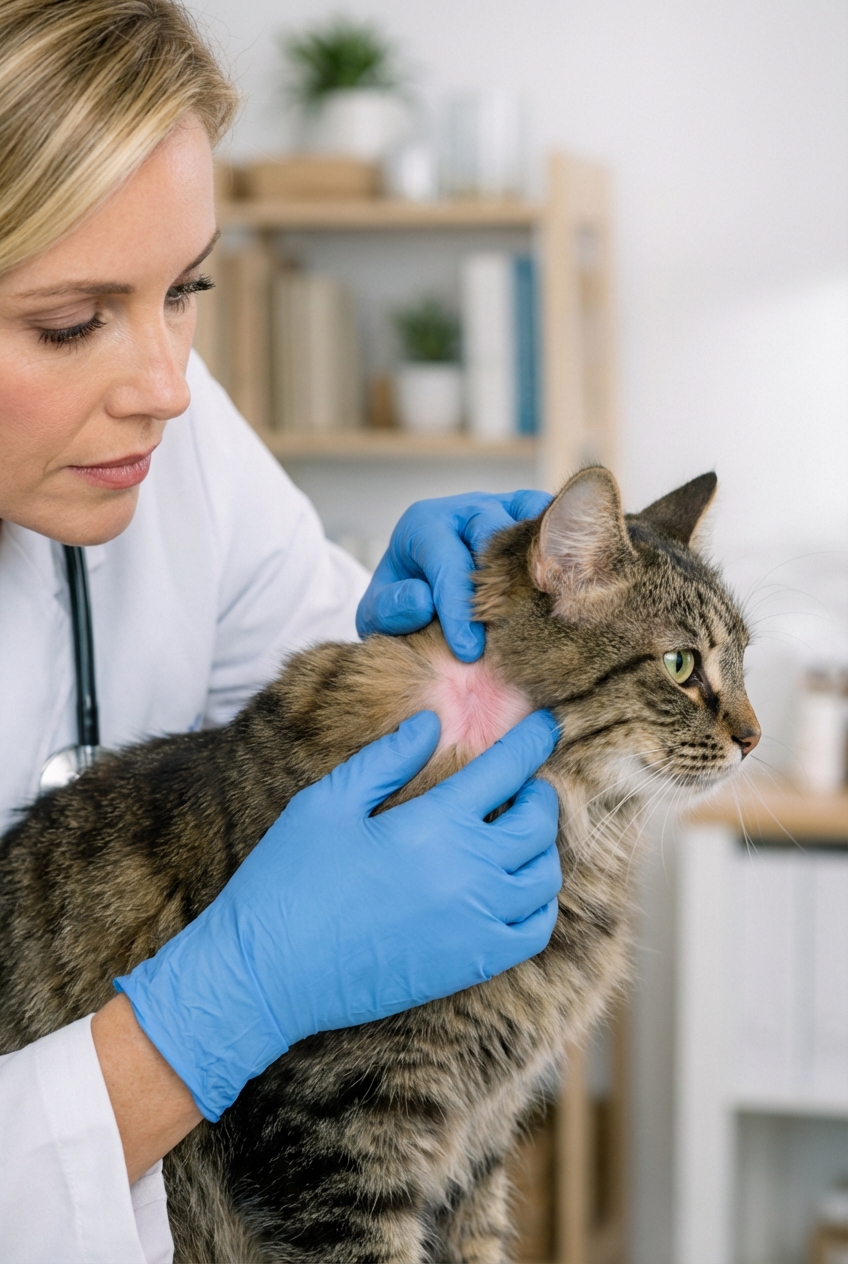
Cancer signs in cats can be easy to miss. Learn subtle red flags—picky eating, weight loss, hiding, vomiting, lumps, bad breath and breathing changes—and...
Article
•
Designer Mixes
Lumps on Cats: When to Worry

Shari Shidate
Designer Mixes contributor
If you just found a lump on your cat, take a breath. Many bumps are benign, but some need quick attention. As a veterinary assistant, I have seen how much easier outcomes can be when we catch problems early, even when the “problem” turns out to be something simple like a small cyst or a healing bite wound.
This guide will help you figure out what a lump might be, how to check it safely at home, and when it is time to call your veterinarian right away.

First: how to check a lump at home
You do not need fancy tools. You just need good light, calm hands, and a simple system so you can describe what you found.
Step-by-step lump check
- Look: Part the fur. Check for redness, a scab, a puncture mark, hair loss, or drainage.
- Check for a tick: If the “lump” appeared suddenly, look closely for tiny legs and a hard attached body. Engorged ticks can look like a firm pea under the fur.
- Feel gently: Use your fingertips to assess size and texture. Do not squeeze hard. If it is painful, stop.
- Measure: Use a ruler or measuring tape. Write down the size in millimeters or centimeters.
- Note the location: For example: “right shoulder near the collar,” “left side of abdomen,” or “under the jaw.”
- Check movement: Does it slide under the skin (more mobile), or feel anchored (more fixed)?
- Take a photo: Same angle, same lighting. This is very helpful if your vet asks you to monitor.
- Track changes: Recheck every 3 to 7 days unless your vet says otherwise, and sooner if you notice any change.
If you can describe a lump by size, location, texture, and change over time, you are giving your veterinarian exactly the information they need to triage and plan next steps.
What “textures” can suggest (not diagnose)
- Soft and squishy: Can be fatty tissue or fluid-filled swelling, but cats can also have soft malignant masses.
- Firm like a pea: Can be a cyst, a benign skin tumor, a reactive lymph node, an attached tick, or something more serious.
- Hard and fixed: More concerning for a tumor attached to deeper tissues, but inflammation can also feel firm.
- Warm or painful: Often infection or inflammation (like an abscess), especially if it appeared quickly.
- Fluctuant like a water balloon: Often fluid, such as a cyst, seroma, or abscess.
Common causes of lumps and bumps in cats
Below are some of the most common categories we see in clinics. A hands-on exam is important because different conditions can feel surprisingly similar.
Abscesses (very common, often urgent)
Abscesses are pockets of infection, often from bite wounds. Cats are masters at hiding wounds under fur, and the skin can close over while bacteria multiply underneath.
- Typical clues: Sudden lump that grows fast, warmth, pain, lethargy, decreased appetite, fever, or hiding behavior.
- Common locations: Near the base of the tail, hindquarters, face, neck, and legs.
- What you might see: A scab or tiny puncture, swelling that feels tight, or later, smelly drainage.
Do not try to lance or squeeze an abscess at home. Cats often need proper draining, pain control, and antibiotics. Delays can lead to deeper infection.
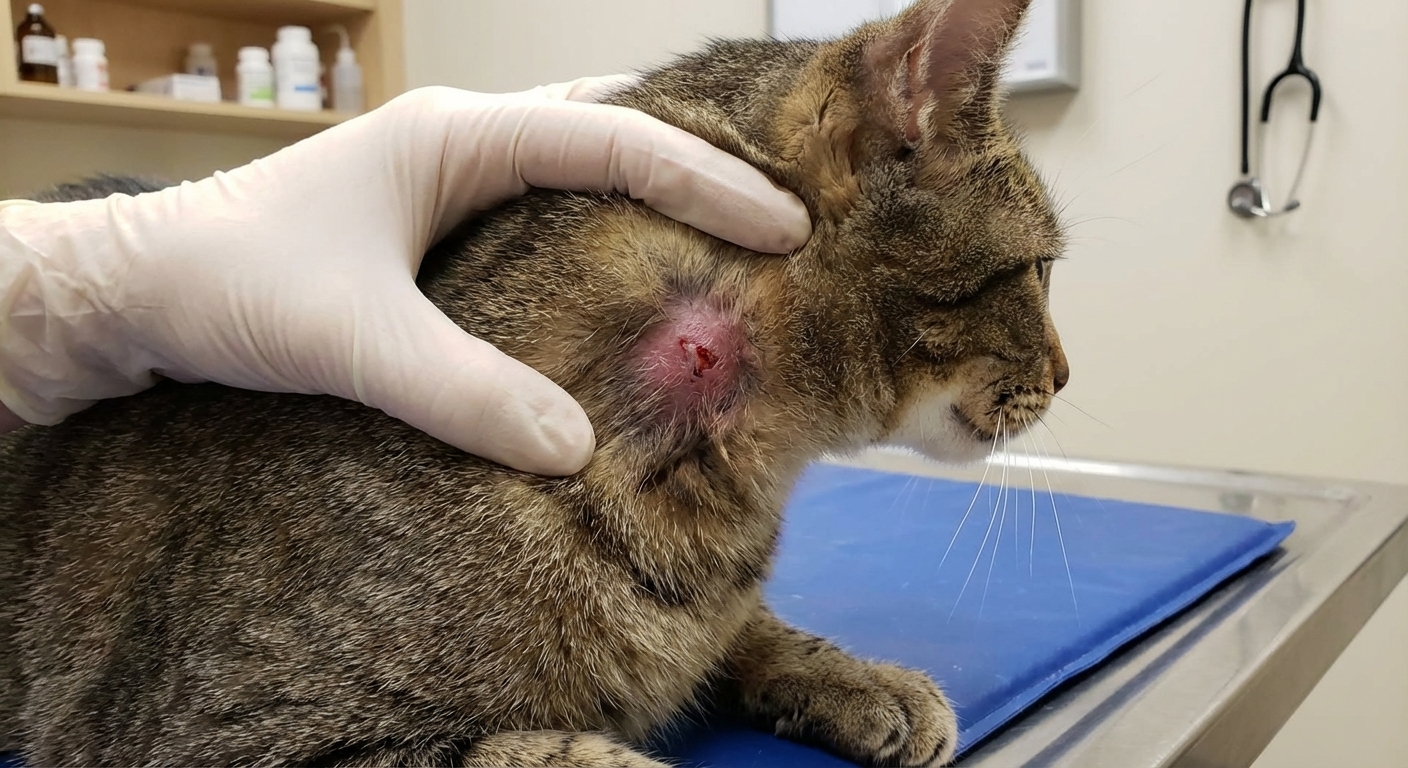
Cysts (sebaceous or follicular cysts)
Cysts are closed sacs under or within the skin. Some stay tiny for years, and some grow or become inflamed.
- Typical clues: Smooth, round bump. May feel like a firm marble under the skin. Sometimes has a small central pore.
- What can happen: They can rupture and leak a thick, toothpaste-like material, then become infected.
- Common locations: Anywhere, but often head, neck, and trunk.
If a cyst changes quickly, becomes red or painful, or starts draining, it is time for a vet visit.
Lipomas and other fatty-feeling masses
Lipomas are benign fatty tumors that are very common in dogs, and less common in cats. In cats, a “fatty-feeling” lump is still worth taking seriously, because true lipomas are relatively uncommon and other masses can feel similar by touch.
- Typical clues: Soft, squishy, usually not painful, slow-growing.
- Important note: You cannot confirm “just a lipoma” by touch alone. Some malignant tumors can feel soft too.
Your veterinarian can often sample the lump with a fine needle aspirate to get a clearer answer without surgery.
Enlarged lymph nodes
Lymph nodes can swell due to infection, inflammation, dental disease, or cancer. Cats have lymph nodes in predictable places, so vets take location seriously. Some nodes (like behind the knees) can be small and hard to feel in normal cats, so do not worry if you cannot “find” them yourself.
- Under the jaw: Can relate to dental disease, mouth infection, or systemic illness.
- In front of shoulders or behind knees: Can enlarge with skin infections, wounds, or more generalized disease.
Because swollen lymph nodes can signal bigger issues, it is a good idea to have these checked sooner rather than later.
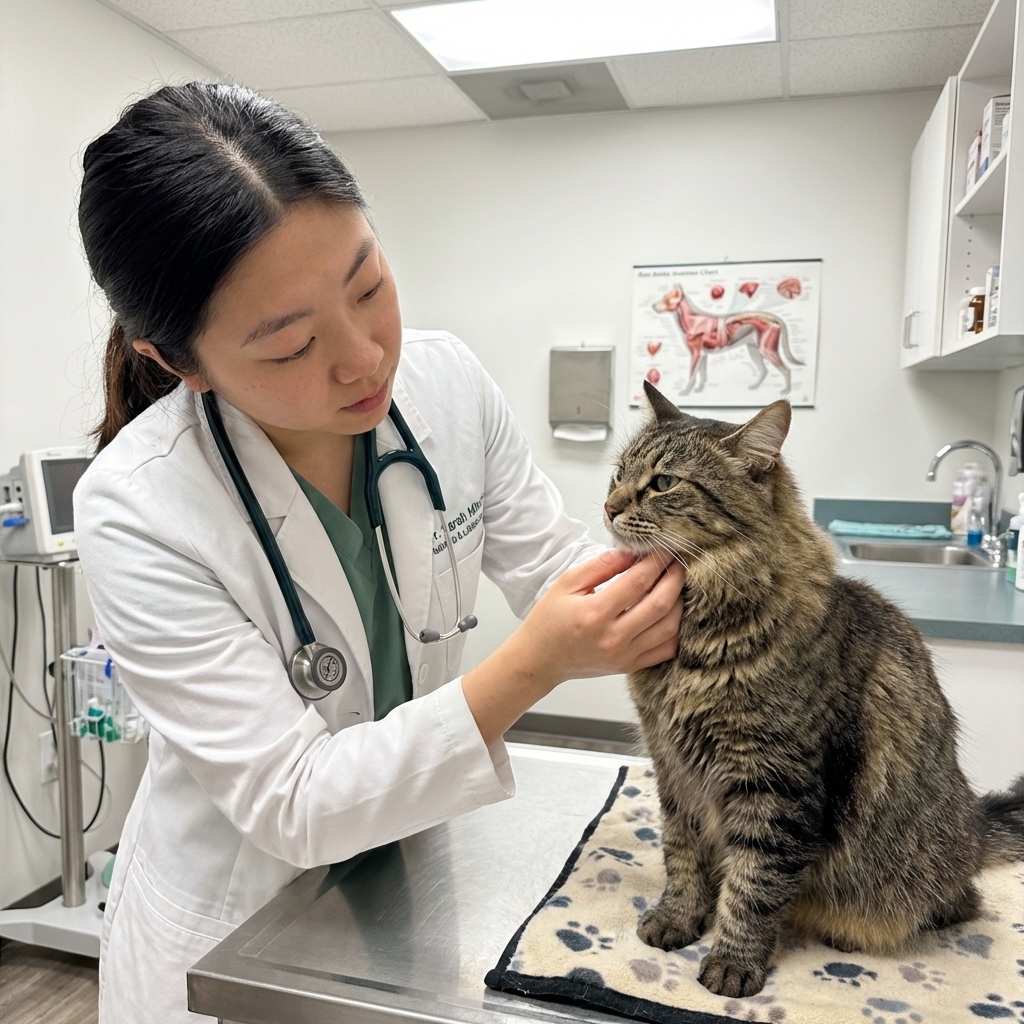
Allergic or inflammatory skin bumps
Cats can develop small raised bumps from allergies, flea allergy dermatitis, eosinophilic granuloma complex, mites, or skin infections.
- Typical clues: Multiple small bumps, itchiness, overgrooming, scabs around the neck or tail base, or hair loss.
- Common locations: Back, neck, tail base, belly.
These are rarely “watch and wait” if your cat is uncomfortable. Relief is possible, but it usually requires diagnosing the trigger.
Ticks
Ticks can look exactly like a sudden new lump, especially once they are engorged. They are often found around the head, neck, ears, and between the toes.
- Typical clues: A firm bump that feels like it is “stuck on,” sometimes with a small darker top. If you part the fur and see legs, it is a tick.
- What to do: If you are not comfortable removing it safely, call your vet. Also ask about parasite prevention, since one tick sometimes means there are more.
Cancerous growths (why we take new lumps seriously)
Not every lump is cancer, but cancer is common enough, especially as cats age, that veterinarians treat new lumps cautiously. The goal is not to panic. The goal is to get answers early.
Common concerning masses in cats
- Mast cell tumors: Can appear as raised skin masses. May be itchy, red, or ulcerated. Some are benign, some are aggressive.
- Squamous cell carcinoma: Often affects lightly pigmented areas like ears, nose, and eyelids, especially with sun exposure. May look like a non-healing sore or crusty lesion.
- Soft tissue sarcomas: Can feel firm and may grow under the skin. Some are associated with previous injection sites, though the overall risk is low.
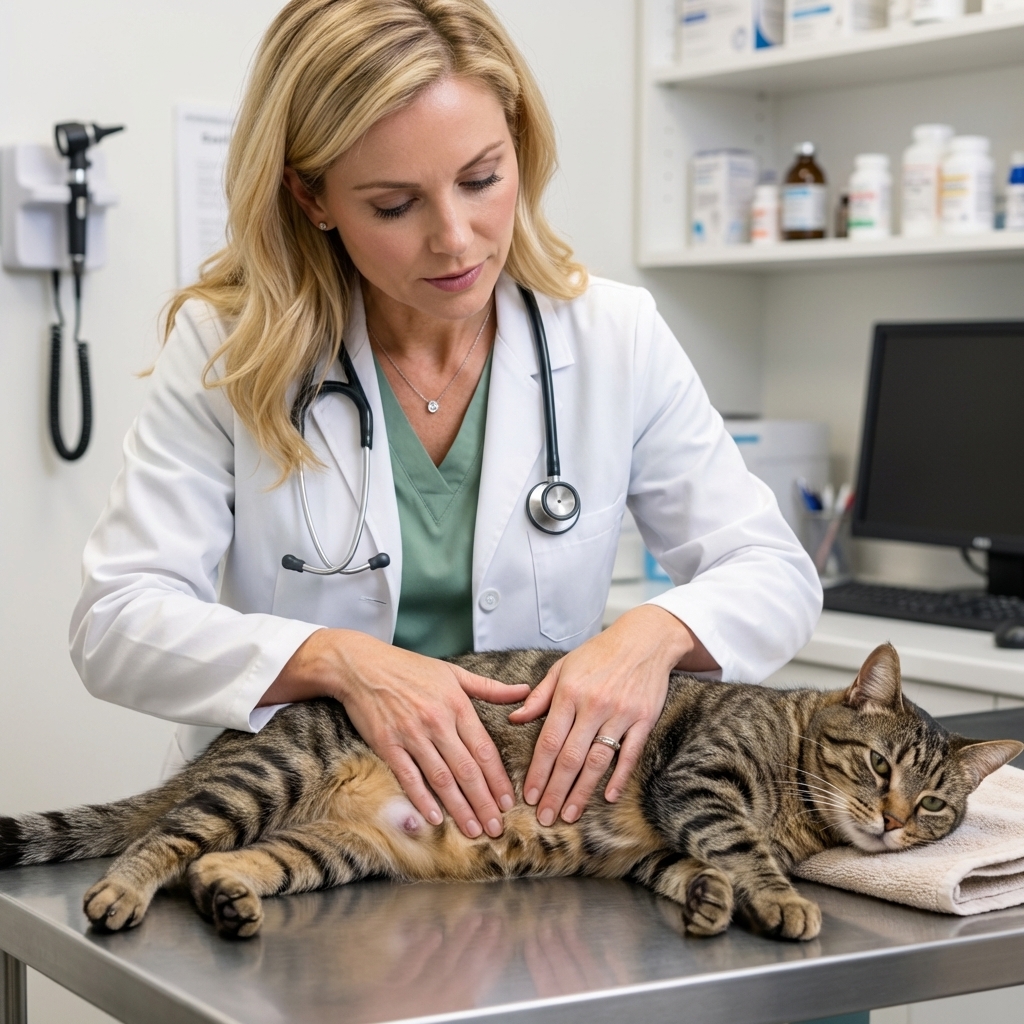
- Mammary gland tumors: Lumps along the belly chain near nipples. In cats, the vast majority (about 85 to 90 percent) are malignant, especially in unspayed or late-spayed females.
Key takeaway: The only way to know what a lump is, is to test it. “Looks fine” is not a diagnosis.
Normal things that get mistaken for lumps
Some “new lumps” are actually normal anatomy or common, non-urgent findings. They still deserve a quick check if you are unsure.
- Nipples: Cats of all sexes have them, and they can feel like small, evenly spaced bumps along the belly.
- Microchip: Often sits between the shoulder blades and can sometimes be felt as a small, rice-sized firm cylinder that can shift slightly.
- Skin tags or small warts: Can look like little flaps or raised growths. These are not always harmless, so mention them at your next visit, especially if they grow or bleed.
Location matters
Where a lump shows up can narrow the possibilities.
- Head, cheeks, or near the eye: Dental root abscess, bite wound, salivary gland issues, cyst, tumor.
- Under the jaw: Lymph node swelling, dental disease, oral masses. Extra clues include drooling, bad breath, pawing at the mouth, or decreased appetite.
- Neck or between shoulder blades: Abscess, cyst, and sometimes injection-site masses. A helpful guideline many clinics use is the 3-2-1 rule: get a post-injection lump checked if it is still there after 3 months, larger than 2 cm, or growing after 1 month.
- Belly near nipples: Mammary masses need prompt evaluation.
- Base of tail or rump: Bite abscesses and flea allergy dermatitis are common here.
- On the ears or nose: Sun-related skin damage and squamous cell carcinoma are concerns, especially with non-healing crusts.
When to see a vet immediately
Use this as your “do not wait” list. If any of these are true, call your veterinarian or an emergency clinic.
- Rapid growth: It doubled in size in days, or appeared suddenly and is getting bigger.
- Pain, heat, or redness: Especially with lethargy, fever, or reduced appetite.
- Open wound or drainage: Blood, pus, or a bad smell.
- Ulcerated or bleeding mass: A sore that does not heal.
- Breathing or swallowing issues: Lumps near the throat or chest that affect breathing are emergencies.
- Limping or difficulty walking: A lump on a limb that affects movement.
- Any lump on the mammary chain: Particularly in unspayed or late-spayed females.
- Your cat is “not acting right”: Hiding, not eating, vomiting, or sudden behavior changes with a new lump.
In cats, “waiting to see” can be risky because they hide pain and illness. If your gut says something is off, trust that instinct and call.
When it may be okay to monitor at home
Monitoring is only appropriate if your cat seems well and the lump is stable. Even then, “monitor” should mean you are actively tracking changes and have a time limit for recheck. If anything changes while you are monitoring, call sooner.
Okay to monitor briefly if all are true
- Small (for example, pea-sized), not growing, and present for only a short time.
- Not painful, not warm, and the skin looks normal.
- Your cat is eating, drinking, and acting normally.
- No drainage, bleeding, or foul odor.
A good monitoring plan
- Measure and photograph it today.
- Recheck in 3 to 7 days.
- If it grows, changes, or lasts longer than 2 to 4 weeks, schedule an exam.
If your cat has not had a wellness exam recently, a new lump is a great reason to book one.
What your vet may do (and why)
Most clinics follow a simple, evidence-based approach. The goal is to identify infection, inflammation, benign growth, or cancer as quickly as possible.
- Physical exam: Size, location, mobility, and checking multiple lymph nodes.
- Fine needle aspirate (FNA): A small needle collects cells for microscope review. This is often the first step and usually does not require sedation.
- Cytology (cells) and or biopsy (tissue): Cytology is the cell evaluation (often from an FNA). A biopsy removes a small piece of tissue for a more definitive answer.
- If results are unclear: Sometimes an FNA is non-diagnostic because the sample did not capture the right cells. Your vet may recommend repeating the FNA, imaging, or moving to biopsy.
- Imaging: Ultrasound or X-rays for deeper masses or to plan surgery.
- Treatment: May include antibiotics and drainage (abscess), removal (some cysts and tumors), or oncology referral if needed.
I know testing can feel scary, but it is often the fastest path to peace of mind.
At-home do’s and don’ts
Do
- Keep your cat comfortable and prevent overgrooming of the area.
- Use a soft cone or recovery collar if your cat is licking or chewing the lump.
- Bring photos and measurements to your appointment.
- Ask your vet about an FNA if a lump is new, growing, or unexplained.
Don’t
- Do not squeeze, pop, or lance a lump.
- Do not give human pain medications. Many are toxic to cats.
- Do not assume “soft means safe” or “hard means cancer.” Texture alone is not enough.
Bottom line
Most cat lumps deserve at least a phone call to your veterinary clinic, and many deserve a quick exam. The earlier you identify an abscess, cyst, tick, or tumor, the easier it is to treat. If you are ever unsure, that is your sign to get it checked.
Before you call, it helps to write down your cat’s age, where the lump is, how long it has been there, whether it is growing, and whether your cat is acting normal. Those details help your clinic guide you to the right next step.