Busy does not mean you cannot be a wonderful cat parent. It just means you need a cat whose day-to-day needs match your schedule, plus a setup at home that supports good behavior and good health.
As a veterinary assistant, I want to say this upfront: no cat is truly “no-maintenance.” Every cat needs daily food and water checks, a clean litter box, enrichment, and veterinary care. That said, some breeds are often described as lower grooming, lower-energy indoors, or more independent, which can feel much more manageable for a hectic household.
One more truth that matters: breed tendencies are averages. Individual personality, early socialization, and life stage (kitten vs adult vs senior) can matter just as much as genetics.
What “low-maintenance” really means
When people search for low-maintenance cats, they are usually hoping for a cat who fits a few practical boxes. Here is what matters most in real life:
- Coat care: Short coats tend to mat less and are easier to brush, though shedding varies by individual and coat type.
- Temperament indoors: Some breeds tend to be calmer, less vocal, or less “busy” around the house, especially as adults.
- Independence: A cat that tolerates alone time well can be a better fit for long workdays.
- Predictable energy needs: Cats who are content with short, consistent play sessions often feel easier than cats who need constant interaction.
Important caveat: Personality varies within any breed. A laid-back kitten can turn into a high-energy teenager, and a calm adult shelter cat can be the most “low-maintenance” option of all because their personality is already known.
If you are truly busy, a realistic baseline is: plan on 10 to 20 minutes of interactive attention daily (play, training, brushing, or cuddles), plus feeding and litter care. Many cats are happy with that rhythm when the home setup is supportive.
Low-maintenance cats to consider
Below are breeds and cat “types” that are commonly described as easier in at least one of these areas: grooming, indoor calm, or independence. I am including honest caveats so you can choose a good match, not just a popular name.
One quick note before the list: if “easiest day-to-day” is your goal, adopting a calm adult or senior cat often beats picking a breed. Seniors can be wonderfully predictable and lower-energy, although they may come with higher medical costs.
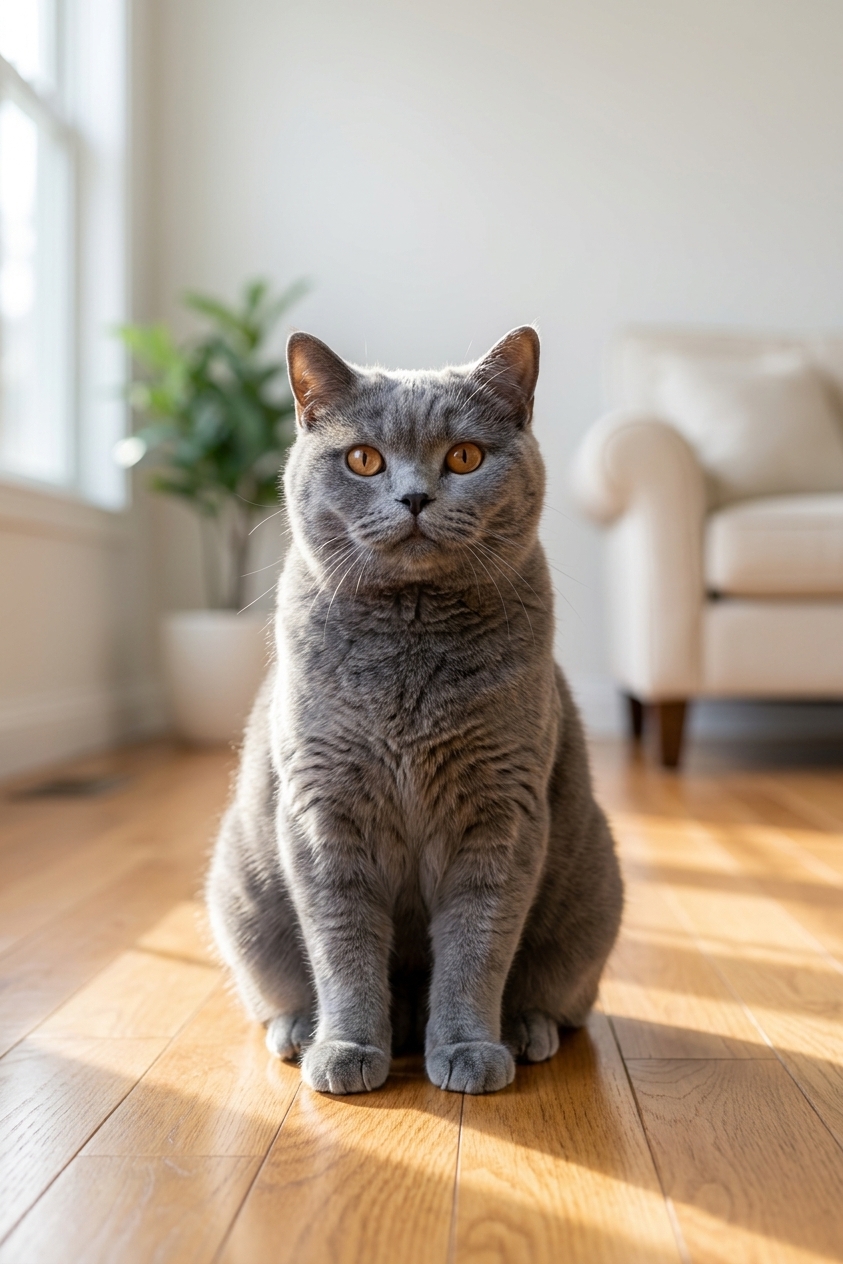
1) British Shorthair
Why it can feel low-maintenance: British Shorthairs are often described as calm, steady, and content to lounge nearby without needing constant entertainment. Their plush short coat is usually manageable with routine brushing.
- Grooming: Weekly brushing is often enough, with more during shedding seasons.
- Good fit for: Busy professionals who want an affectionate but not overly clingy companion.
- Caveat: They can be prone to weight gain if activity is not encouraged. Short, daily play helps a lot.
2) American Shorthair
Why it can feel low-maintenance: Often considered adaptable and even-tempered, American Shorthairs tend to do well in many household styles, including families and quieter homes. Their coat is short and straightforward to maintain.
- Grooming: Quick weekly brushing, plus nail trims.
- Good fit for: Households that want a friendly, sturdy cat with moderate energy.
- Caveat: They still need daily enrichment. Without it, some will “make their own fun,” like counter-surfing or nighttime zoomies.
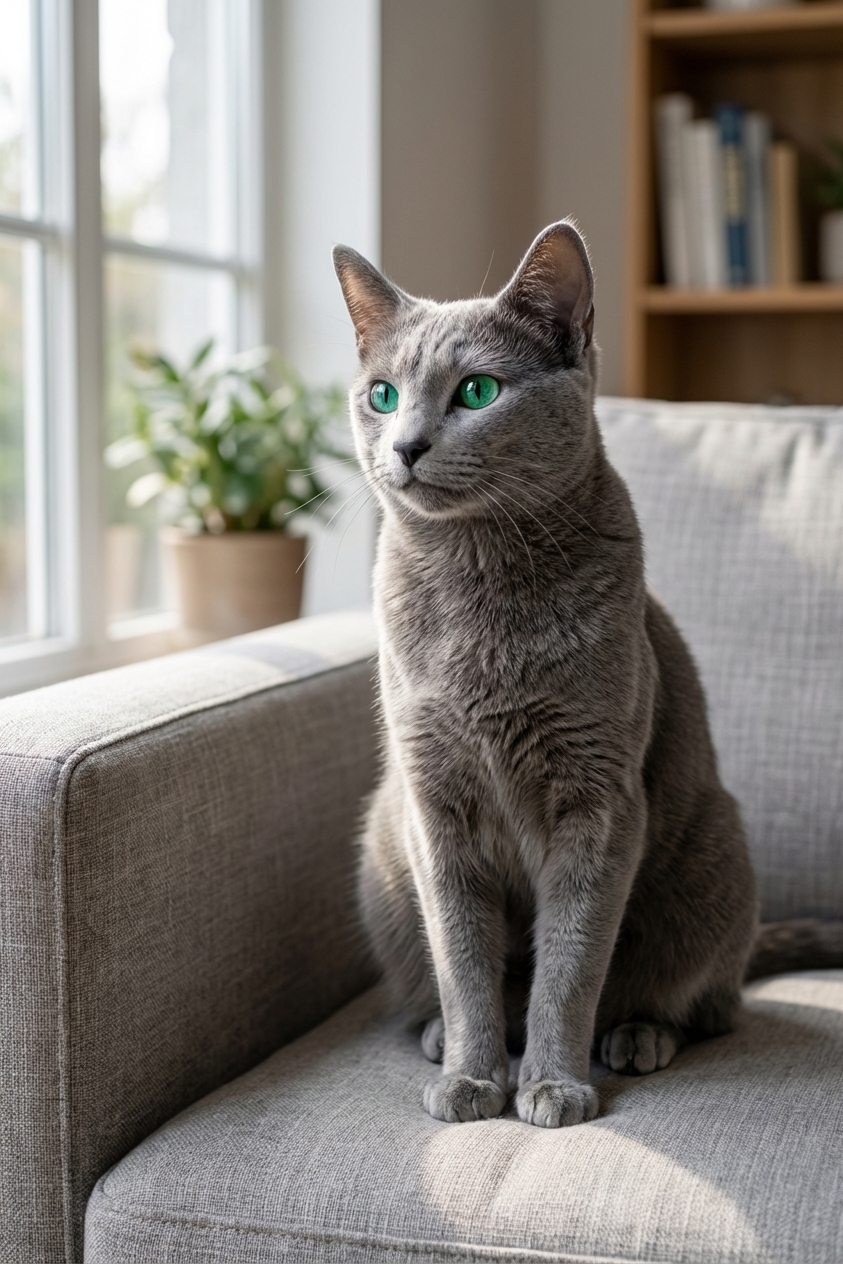
3) Russian Blue
Why it can feel low-maintenance: Russian Blues are often described as quiet and gentle in the home. Their short, dense coat is less prone to matting and fairly easy to groom.
- Grooming: Weekly brushing can help reduce shedding.
- Good fit for: People who want a calm home vibe and a cat that is affectionate but not always underfoot.
- Caveat: Many Russian Blues bond strongly with their people and may be shy with strangers. Provide hiding spots and let them warm up at their own pace.
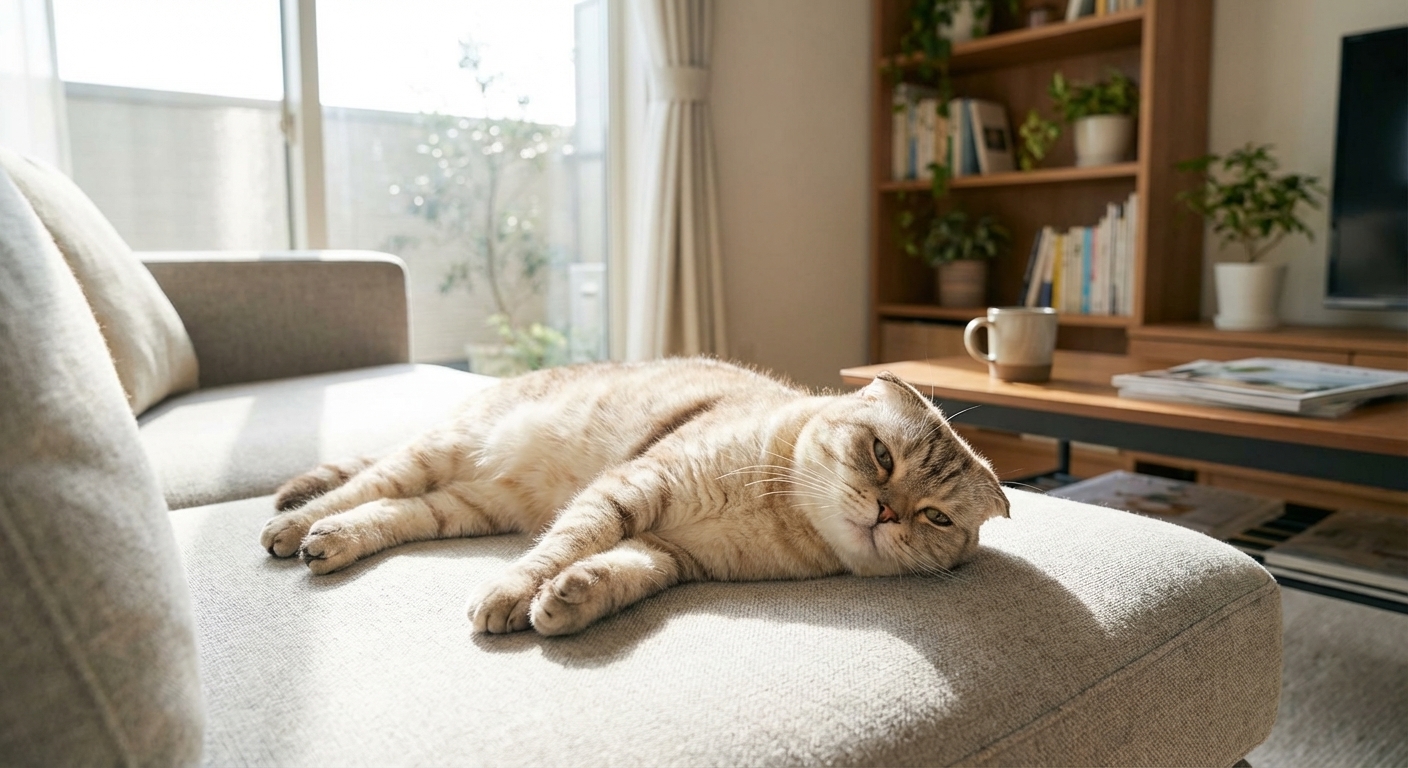
4) Scottish Fold
Why it can feel low-maintenance: Scottish Folds are often described as sweet, mellow, and happy to relax indoors. Coats can be short or long, so grooming needs vary.
- Grooming: Short-coated individuals are simpler; long-coated individuals require more frequent brushing.
- Good fit for: A quieter household that wants a gentle lap companion.
- Caveat: This is an important one. The folded ears are inherently linked to an inherited cartilage and bone condition (osteochondrodysplasia) that can cause painful joint disease. Risk and severity vary, but welfare concerns are significant, and many veterinary organizations discourage breeding for the fold trait. If you consider this breed, talk with a veterinarian first and research health-focused, ethical breeding practices.
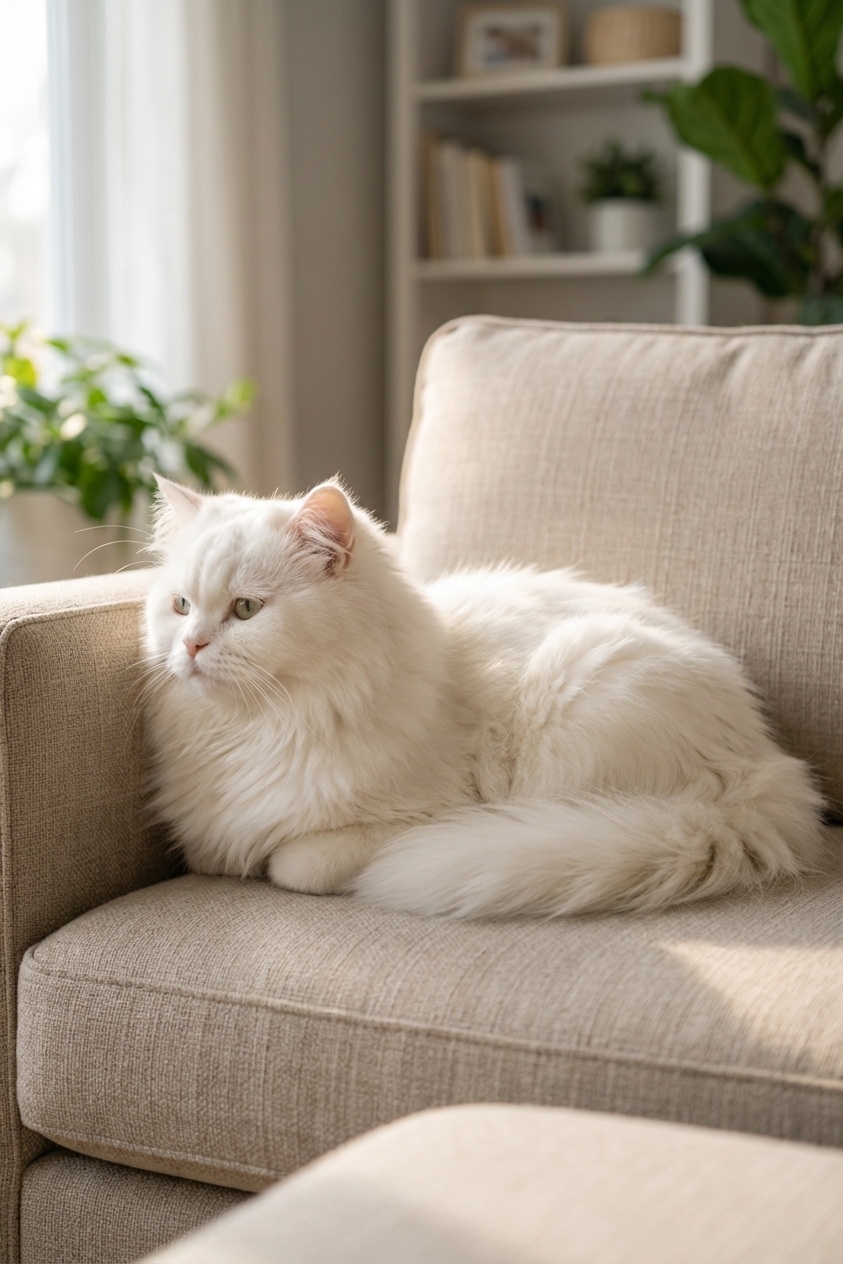
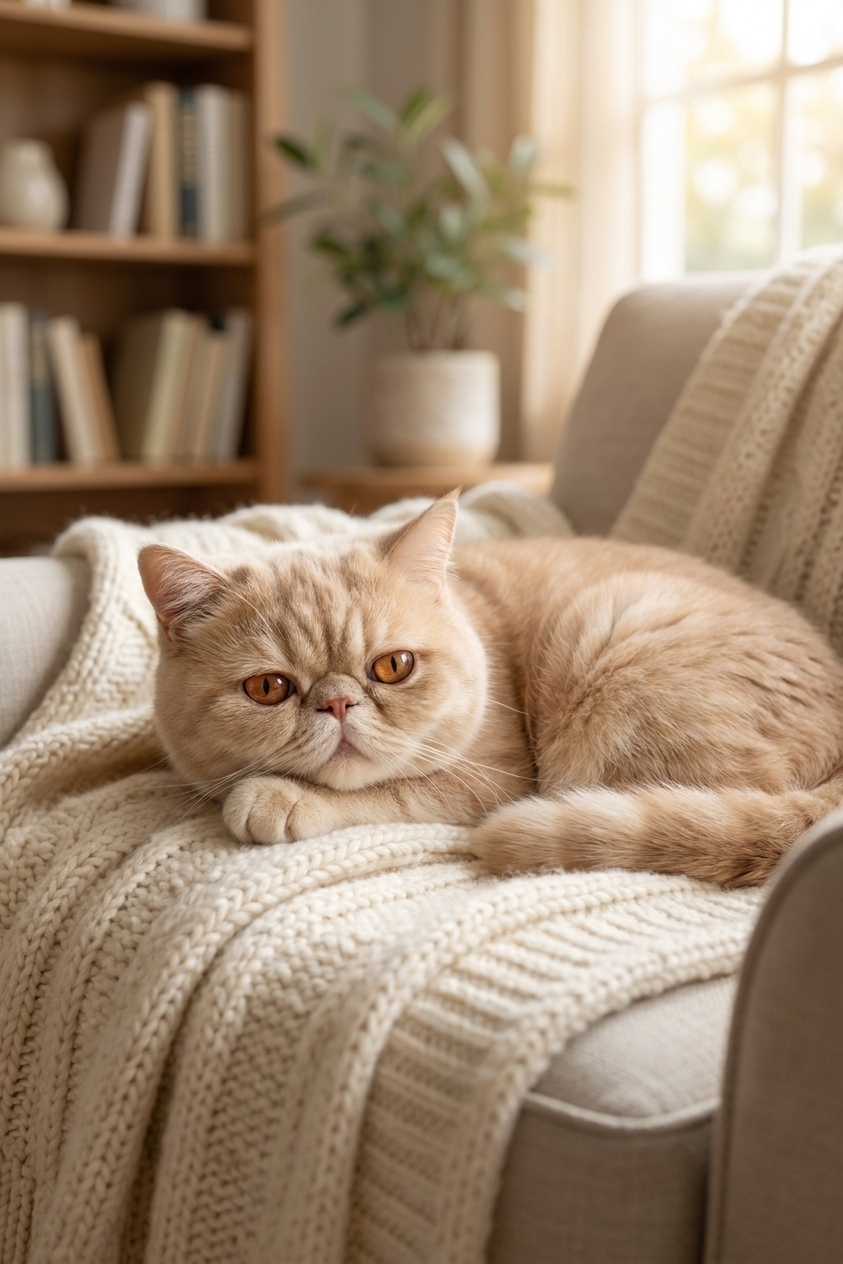
5) Exotic Shorthair
Why it can feel low-maintenance: Often called the “short-haired Persian,” Exotic Shorthairs may have a calmer, more laid-back style, with less coat work than a full long-haired Persian.
- Grooming: More than you would think for a short coat because it is dense. Regular brushing helps.
- Good fit for: People who love a cuddly, quiet cat and do not mind routine grooming.
- Caveat: Flat-faced cats can have breathing and eye-tearing issues. Some need frequent, even daily, face and eye cleaning. Expect more maintenance in health monitoring, and choose breeders carefully.
6) Ragdoll
Why it can feel low-maintenance: Ragdolls are often described as gentle, tolerant, and people-friendly. Many are happy to lounge near you and do not require constant stimulation in the way some high-drive breeds do.
- Grooming: Medium to long coat. Expect consistent brushing to prevent tangles, especially around the ruff and underarms.
- Good fit for: Households that want a calm companion and do not mind a predictable grooming routine.
- Caveat: They are not “set it and forget it” cats. They tend to be social and may not love being left alone every day for long stretches.
7) Domestic Shorthair (the real-world low-maintenance MVP)
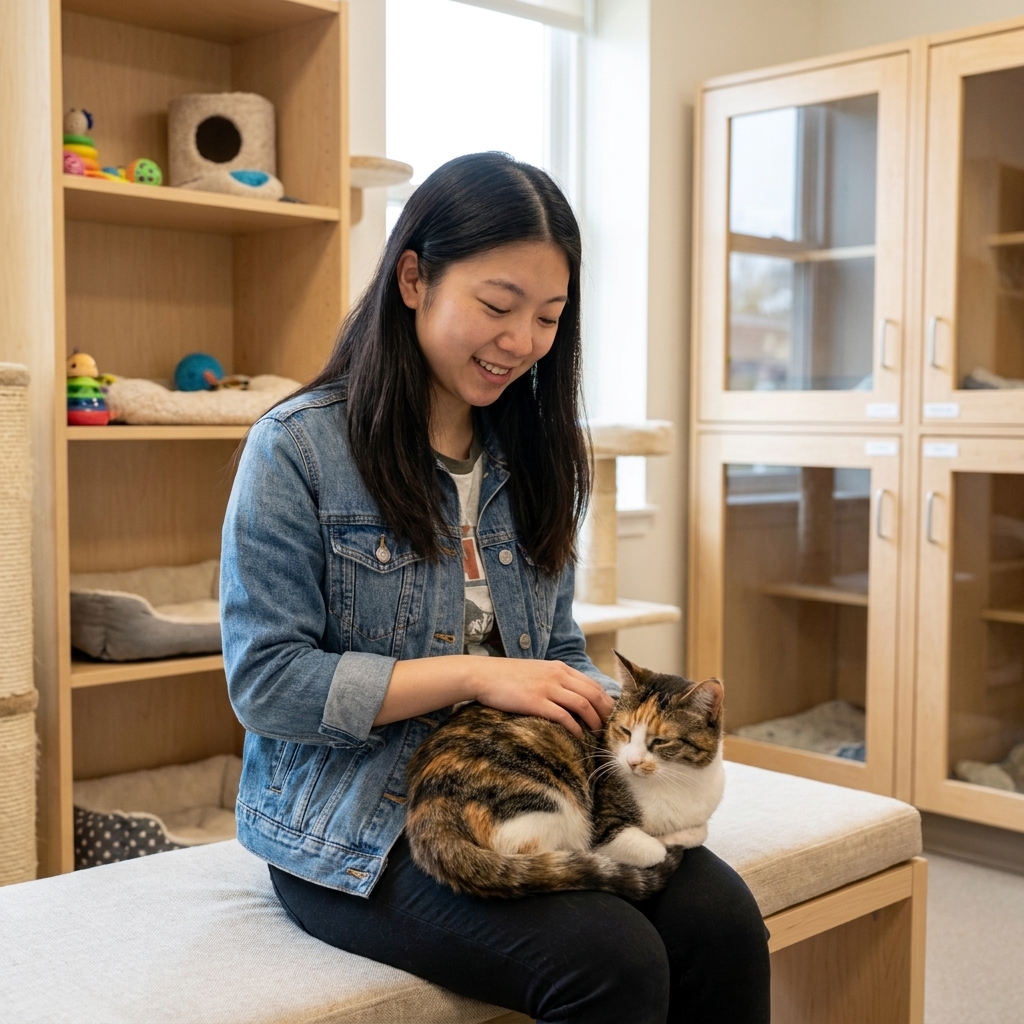
Why it can feel low-maintenance: Domestic Shorthairs are not a breed, but they are often the easiest match for busy homes because shelters can tell you who is calm, independent, confident with kids, or already used to dogs. Adults especially can be wonderfully predictable.
- Grooming: Usually simple.
- Good fit for: Almost anyone who wants to choose by personality, not by a breed label.
- Caveat: Temperament is individual. Ask shelter staff about litter box habits, sociability, and energy level.
Low grooming, high interaction
These cats can be relatively simple on coat care, but they are often emotionally intense, vocal, or prone to boredom. They can be amazing companions, but for a truly busy household they may not feel “low-maintenance,” especially if you are gone long hours.
8) Burmese
Why it can feel easy in one area: Their sleek coat is typically easy to groom, and many Burmese are very people-focused and trainable, which can make routines smoother.
- Grooming: Minimal brushing, often just a quick weekly pass.
- Good fit for: Homes that can provide daily interaction and enjoy a social cat.
- Caveat: Burmese can be very attached to their people and may struggle with long, quiet days alone. If you are gone often, consider a second compatible cat (or a bonded pair), plus robust enrichment.
9) Siamese (and related breeds like Balinese)
Why it can feel easy in one area: Siamese have a short coat that is simple to maintain and they are smart and interactive. For some households, that makes daily care easier because they often “cooperate” with routines.
- Grooming: Easy coat care.
- Good fit for: People who want a highly social, engaged cat and can commit to daily play and interaction.
- Caveat: Many Siamese are vocal and can be demanding if bored, and some do not tolerate alone time well. If your household needs quiet or you are away most of the day, this may not feel low-maintenance.
Often not low-maintenance
Sometimes it helps to know what to avoid if your schedule is tight. Individuals vary, but these are common “more work than expected” categories:
- Very long-haired coats (grooming and mats): Examples include Persians and Maine Coons. They often need frequent brushing to prevent mats and hairballs, and a matted coat can become painful quickly.
- High-energy, high-drive breeds (enrichment demands): Examples include Bengals and Abyssinians. If they do not get enough structured play, climbing, and mental work, behavior issues can pop up.
- Hairless breeds (skin care): Examples include Sphynx cats, who can require regular bathing and skin and ear care.
- Flat-faced breeds (extra health monitoring): Some brachycephalic cats may require extra monitoring for breathing, dental, and eye issues, which can add to the overall care load.
Make any cat easier with the right setup
In practice, your routines and home setup do as much as breed choice. Here are the biggest payoff habits I see in busy households.
Litter box routines
- Scoop daily if possible. It prevents odor and helps you notice health changes early.
- Use the right number of boxes as a goal: one per cat, plus one extra.
- Place boxes in quiet, easy-to-access locations. Avoid loud laundry areas when possible.
A 10-minute enrichment plan
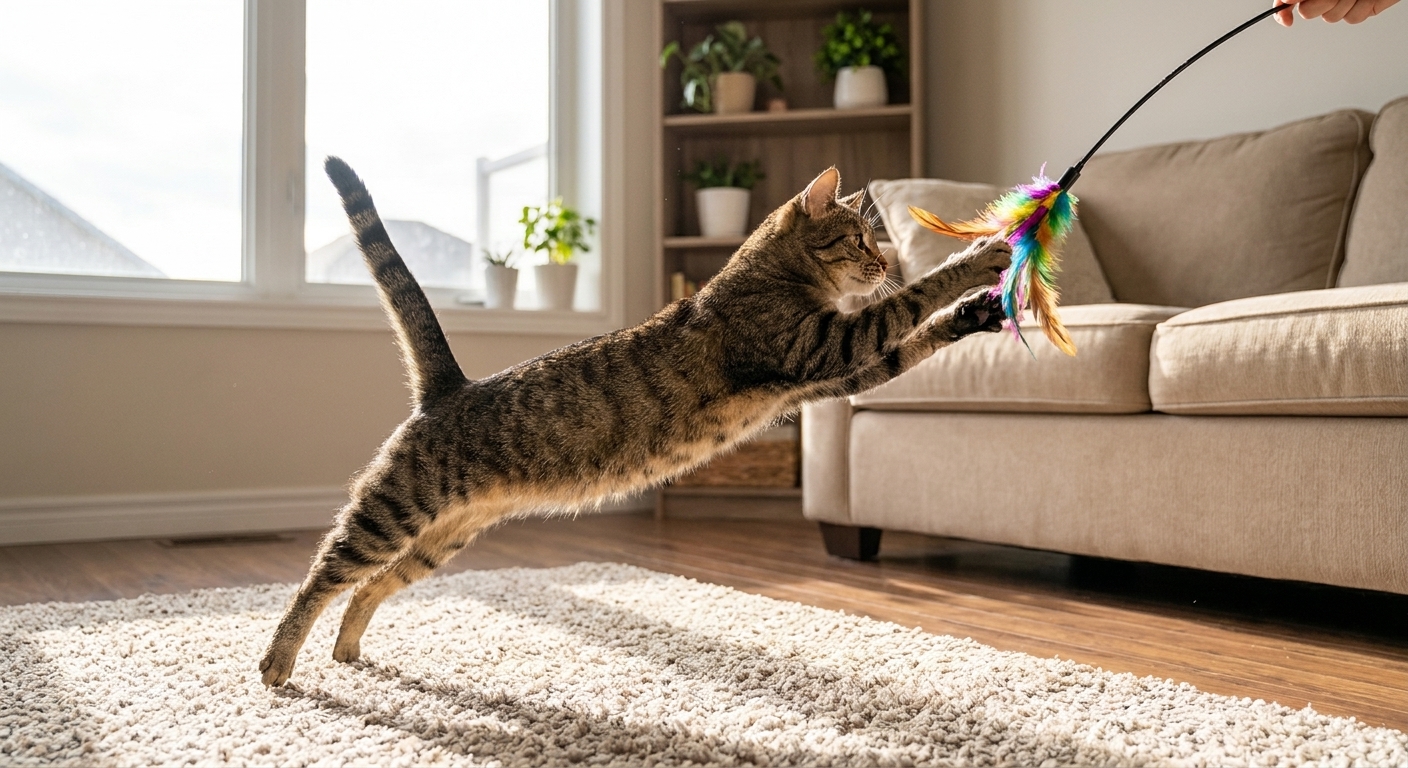
Even calm cats need a little daily hunting-style play. You can do this in short bursts.
- One wand-toy session before dinner
- Food puzzles or treat balls a few times per week
- Window perches for “cat TV”
Quick checklist
- Adult vs kitten: Adults are often more predictable and easier for busy schedules.
- Time alone: If you are away 10 to 12 hours, plan for enrichment and consider adopting a bonded pair.
- Budget: Low grooming does not always mean low medical needs. Keep preventive care in your plan.
- Allergies: No breed is truly hypoallergenic. If allergies are a concern, test your tolerance by spending time with the cat first.
If you want the easiest day-to-day experience, choose based on personality and lifestyle fit first, then coat and breed second. A calm adult cat with good litter box habits is pure gold for a busy home.
When to call a veterinarian
“Low-maintenance” should never mean “hands-off.” Contact your veterinarian promptly if you notice:
- Changes in appetite or water intake
- Vomiting, diarrhea, or constipation that persists
- Straining to urinate, frequent trips to the box, or accidents
- Sudden hiding, irritability, or decreased activity
- Unexplained rapid weight gain or weight loss
These signs can be subtle in cats, and early care often prevents bigger problems later.