A practical pancreatitis-safe list for dogs: lean proteins, gentle carbs, cooked veggies, foods to avoid, simple low-fat meal ideas, and safer treats—with ...
Article
•
Designer Mixes
Low Fat Homemade Dog Food Vets Recommend

Shari Shidate
Designer Mixes contributor
If your dog needs to lose a little weight, has a pancreatitis history or risk, or simply does better on a lighter diet, low fat homemade meals can be a smart option when they are planned with your veterinarian and kept truly consistent. The key is doing it in a way that is actually low fat while still being complete and balanced. As a veterinary assistant in Frisco, Texas, I have seen how quickly good intentions can turn into nutrient gaps when homemade food is not planned.
This is educational and not a substitute for veterinary care. If your dog has a medical condition, your vet (and ideally a board-certified veterinary nutritionist) should set the targets.
In this article, I’ll walk you through what veterinarians typically look for in a low fat plan, how “low fat” is usually defined in practice, what ingredients tend to work best, what to avoid, and a few simple starter templates to help you begin the conversation with your vet.
What “low fat” means
Low fat is not one single number for every dog. Your veterinarian chooses a target based on your dog’s diagnosis, body condition, lab work, and history.
In veterinary nutrition, fat targets are often discussed in two common ways:
- Grams of fat per 1,000 kcal (very helpful for pancreatitis and hypertriglyceridemia planning)
- Percent fat on a dry matter basis (DMB), which helps you compare foods with different moisture levels
Practical takeaway: if your dog has a history of pancreatitis or high triglycerides, ask your vet what fat ceiling to stay under and how they want you to measure it (g per 1,000 kcal or % DMB). Those targets vary, and recurrence risk is multifactorial, so individualized guidance matters.
Common reasons a vet may recommend lowering fat include:
- Weight management: lowering fat can reduce calories while keeping meals satisfying.
- Pancreatitis history or high triglycerides: a stricter fat limit is often used to reduce flare risk, alongside other management steps.
- GI sensitivity: some dogs digest lower fat diets more comfortably.
A practical way to think about it is: choose lean proteins, use measured fats instead of free pouring, and avoid high fat extras that quietly add up.
Important: if your dog has had pancreatitis, Cushing’s disease, diabetes, gallbladder disease, or is on a prescription diet, talk to your veterinarian before switching. Some dogs need a very specific fat level, calorie target, and supplement plan.
How to compare fat
As-fed vs dry matter
Labels and online nutrition panels often show “as-fed” percentages, which include moisture. Canned foods can look lower in fat on the label simply because they are wetter. Dry matter basis removes moisture so you can compare more fairly.
If your vet gives you a % DMB target, ask them (or your clinic) to help convert foods you are comparing, or use a reputable calculator. If your vet gives a g fat per 1,000 kcal target, that is even more direct, because it accounts for calories.
What to ask your vet
- What fat limit should we use for my dog’s history?
- Do you want me to track fat as g per 1,000 kcal or % DMB?
- What daily calories should my dog eat for safe weight loss or maintenance?
Why vets may support homemade
Many veterinarians are comfortable with homemade feeding when it is structured, consistent, and nutritionally complete. Others prefer commercial options unless a veterinary nutritionist is involved. Either way, the “yes” usually depends on whether the plan is balanced and realistic for you to follow.
When it is well-planned, common upsides include:
- Ingredient control: helpful for dogs with intolerance or recurring digestive upset.
- Portion accuracy: easier to manage calories compared with casual scooping.
- Higher moisture meals: can support satiety and hydration.
- Fiber control: vet-approved fiber sources can help stools and weight management.
Quick definitions: “Complete and balanced” means the diet meets established nutrient requirements for your dog’s life stage, including vitamins and minerals, not just protein and calories. A DACVN is a board-certified veterinary nutritionist who formulates therapeutic diets for medical needs.
Best low fat ingredients
Lean proteins
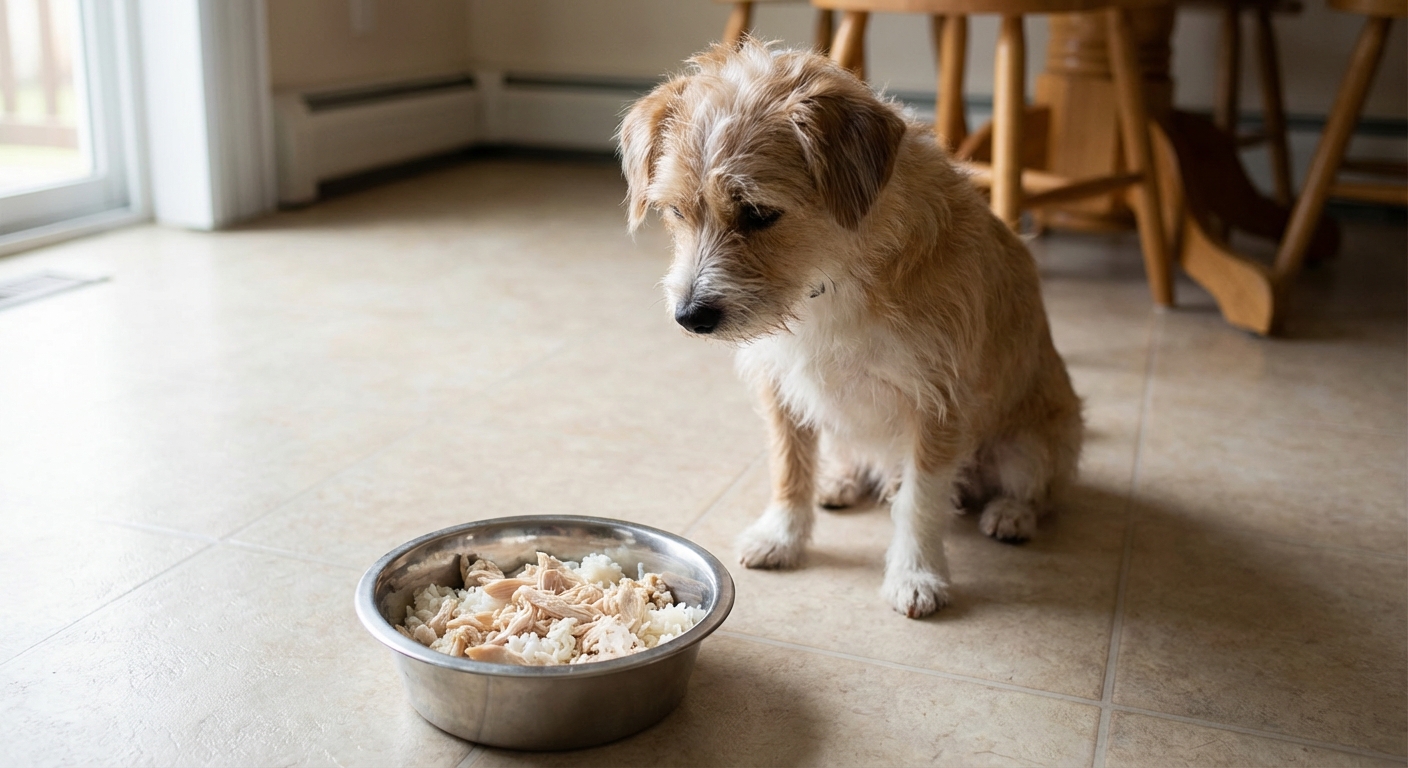
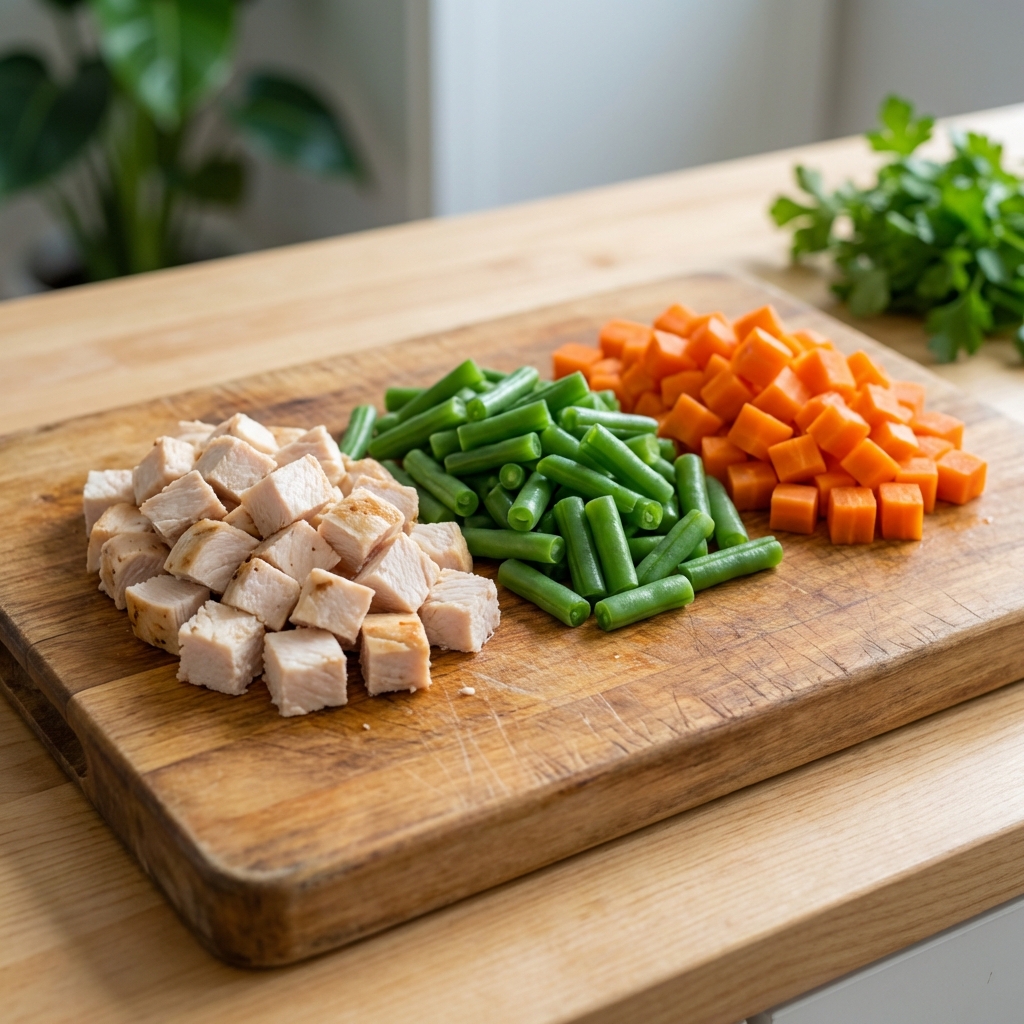
- Skinless chicken breast (poached or baked)
- Turkey breast (avoid skin and most dark meat; skip fatty ground turkey unless it is labeled very lean)
- White fish like cod, pollock, or tilapia
- Egg whites (protein boost without much fat)
- Low fat cottage cheese in small amounts if your dog tolerates dairy
Gentle carbs
- White rice (often used short-term for sensitive stomachs)
- Oats (great fiber, introduce slowly)
- Potatoes or sweet potatoes (baked or steamed, no butter)
Vegetables
Lightly cooked vegetables add nutrients and help many dogs feel fuller with fewer calories.
- Carrots
- Green beans
- Zucchini
- Spinach (small amounts)
- Broccoli (small amounts, can cause gas)
- Pumpkin (plain canned pumpkin, not pie filling)
Foods to avoid
These are common “oops” ingredients that can push a meal from low fat to high fat fast:
- Chicken skin, turkey skin, and fatty meat trimmings
- High fat ground beef or regular ground turkey
- Sausage, bacon, deli meats (fat plus sodium)
- Cheese, heavy cream, butter, oils poured freely
- Peanut butter (not “bad,” just very calorie dense and high fat)
- Fried foods
Also avoid toxic foods like onions, garlic, grapes, raisins, and xylitol-containing products.
The missing piece: balance
This is the part most homemade feeders do not realize at first: meat and grains alone are not balanced. Dogs need a specific nutrient profile over time, including calcium, iodine, zinc, copper, selenium, vitamins A, D, and E, and more.
Calcium and phosphorus: muscle meat is naturally high in phosphorus and low in calcium. Over time, the wrong calcium-to-phosphorus ratio can contribute to bone and metabolic problems.
Essential fatty acids: low fat diets can accidentally become too low in omega-6 and omega-3 fats, which support skin, coat, and immune function. That is why “just remove all fats” is not the goal. The right approach is measured fat that meets essential needs while staying under your dog’s medical target.
Veterinarians commonly recommend one of these evidence-based approaches:
- Work with a veterinary nutritionist (DACVN): best for pancreatitis history, high triglycerides, multiple conditions, or picky eaters.
- Use a complete-and-balanced canine supplement powder: choose one designed for homemade diets and follow the label exactly, including the recipe it is intended to balance.
If your dog needs low fat for a medical reason, I strongly prefer the “vet nutritionist or complete supplement” route. It takes the guesswork out of it.
Starter meal templates
Do not feed these as a long-term diet without a veterinary nutritionist recipe or a complete balancer supplement. These are starter templates to discuss with your vet. The exact amounts must be calculated to meet your dog’s calorie needs and nutrient requirements.
To reduce the chance someone feeds an unbalanced bowl “as-is,” here is the general structure many clinics use as a starting point for low fat, home-cooked meals:
- Lean protein
- Cooked carb
- Cooked vegetable
- Plus a complete balancer (or a nutritionist-formulated supplement plan)
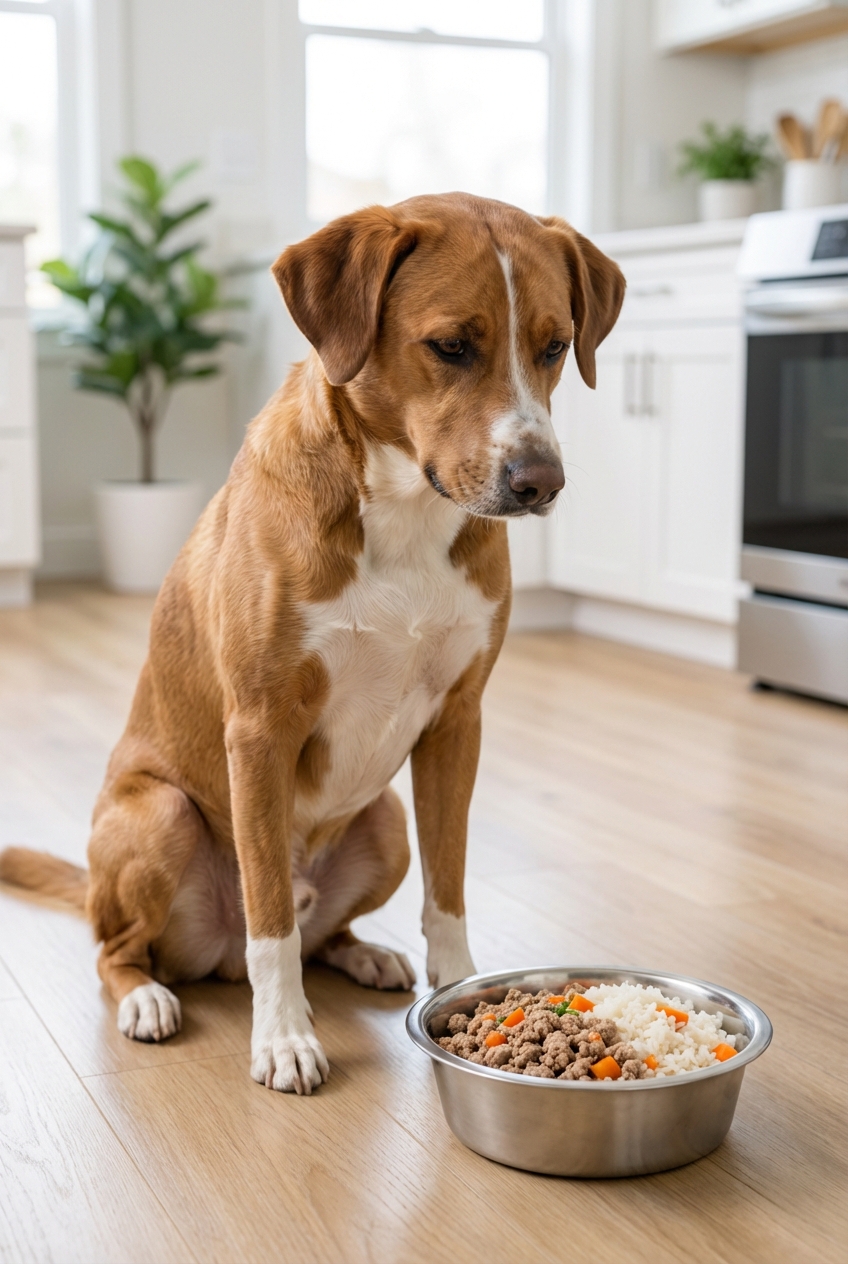
If you want a simple visual, many owners start by discussing a rough 1:1:1 mix by volume (protein:carb:veg) with their vet, then the vet adjusts based on calories, stool quality, and the medical target for fat. Some dogs need more protein, some need more fiber, and some need a different carb. This is why the personalized step matters.
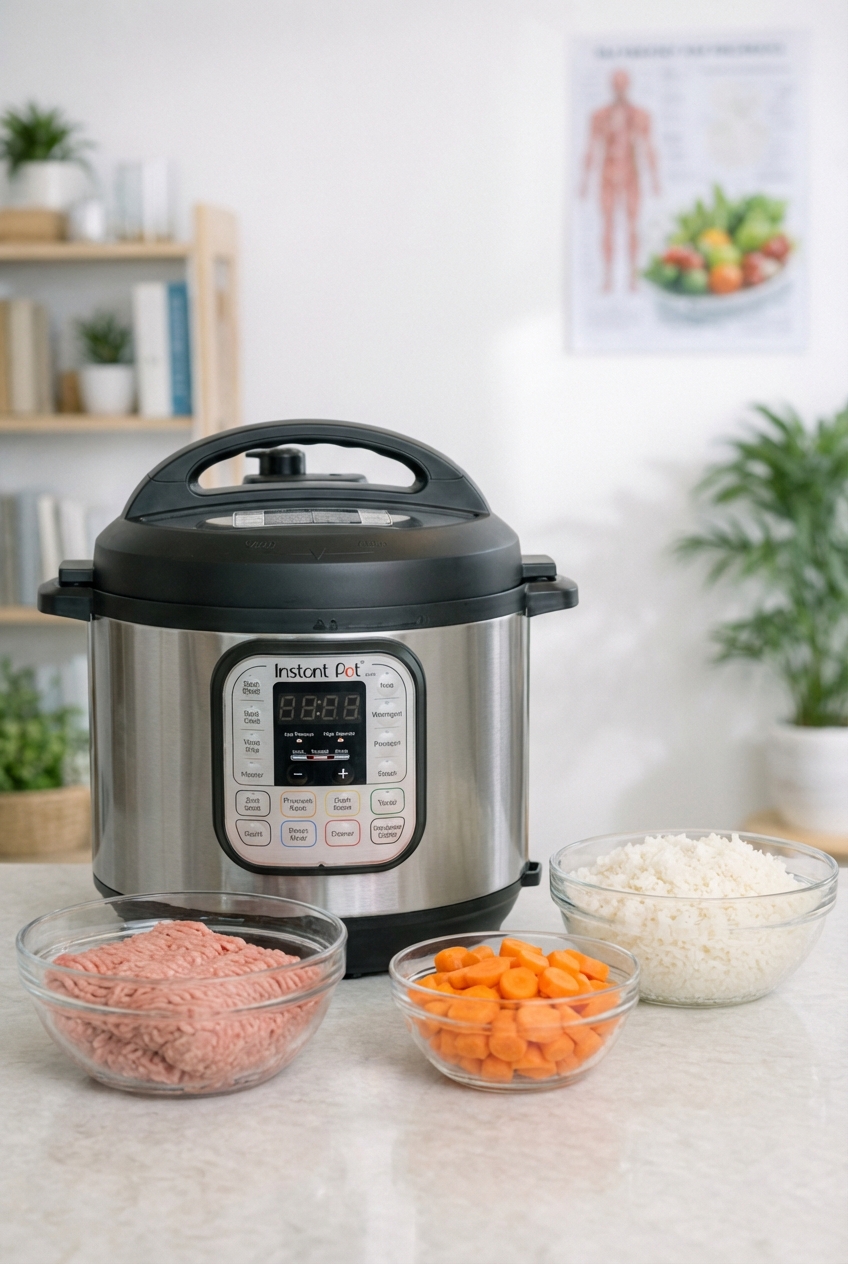
Template 1: Turkey, rice, green beans
- Cooked skinless turkey breast, chopped
- Cooked white rice
- Steamed green beans, chopped
- Optional: small spoonful of plain pumpkin for fiber
Tip: If using ground turkey, choose the leanest available and drain well after cooking.
Template 2: Chicken breast, sweet potato, carrots
- Poached or baked skinless chicken breast
- Baked sweet potato, mashed
- Steamed carrots or zucchini
Tip: Sweet potato is filling, but it is still a carb, so keep it measured.
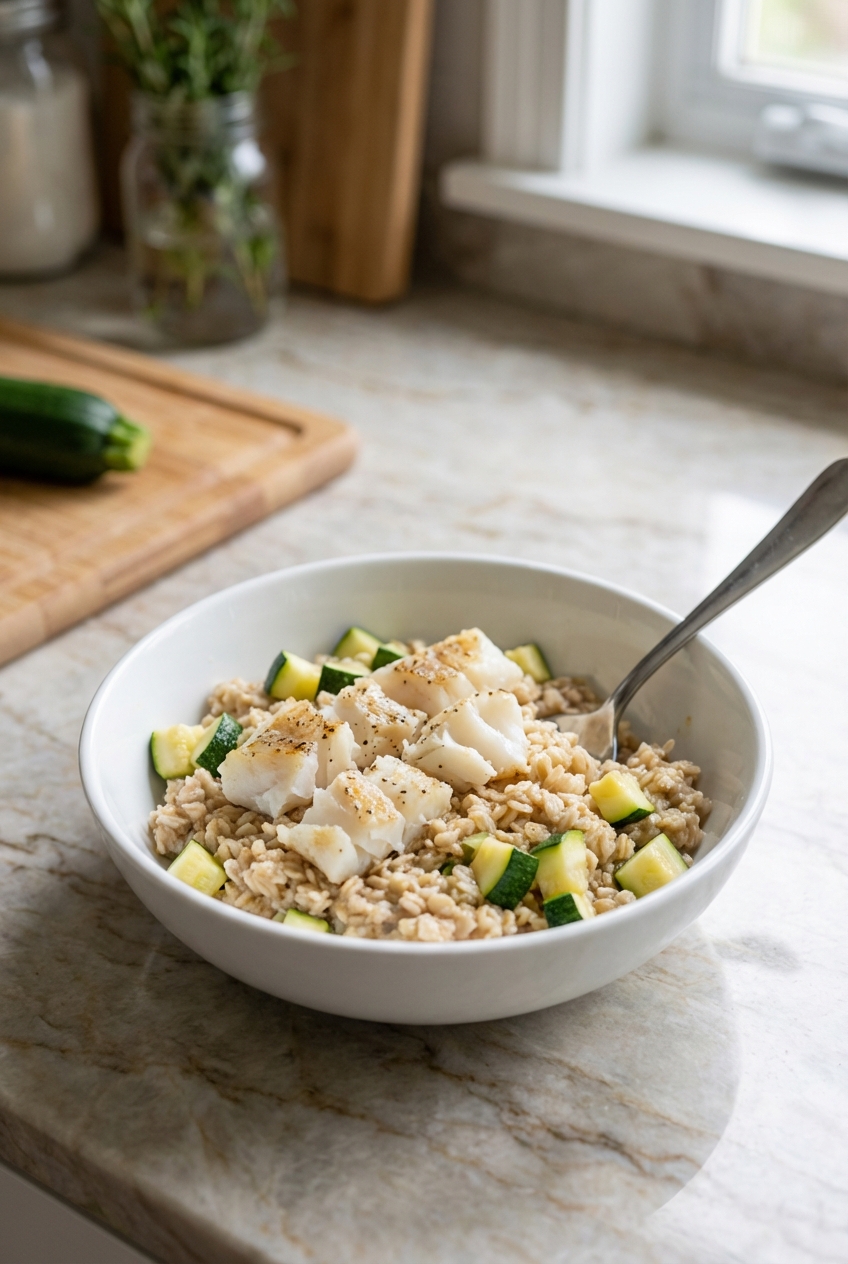
Template 3: White fish, oats, zucchini
- Baked or steamed cod or pollock (check carefully for bones)
- Cooked oats
- Steamed zucchini or green beans
Seasoning note: Skip added salt, butter, and spicy seasonings. Dogs do need sodium as a nutrient, but most complete balancers and properly formulated recipes already account for it. Added salt and rich seasonings can create problems, especially for sensitive dogs.
Food safety basics
- Cook proteins fully and avoid feeding cooked bones.
- Check fish carefully for bones.
- Refrigerate promptly and discard leftovers that have been out too long.
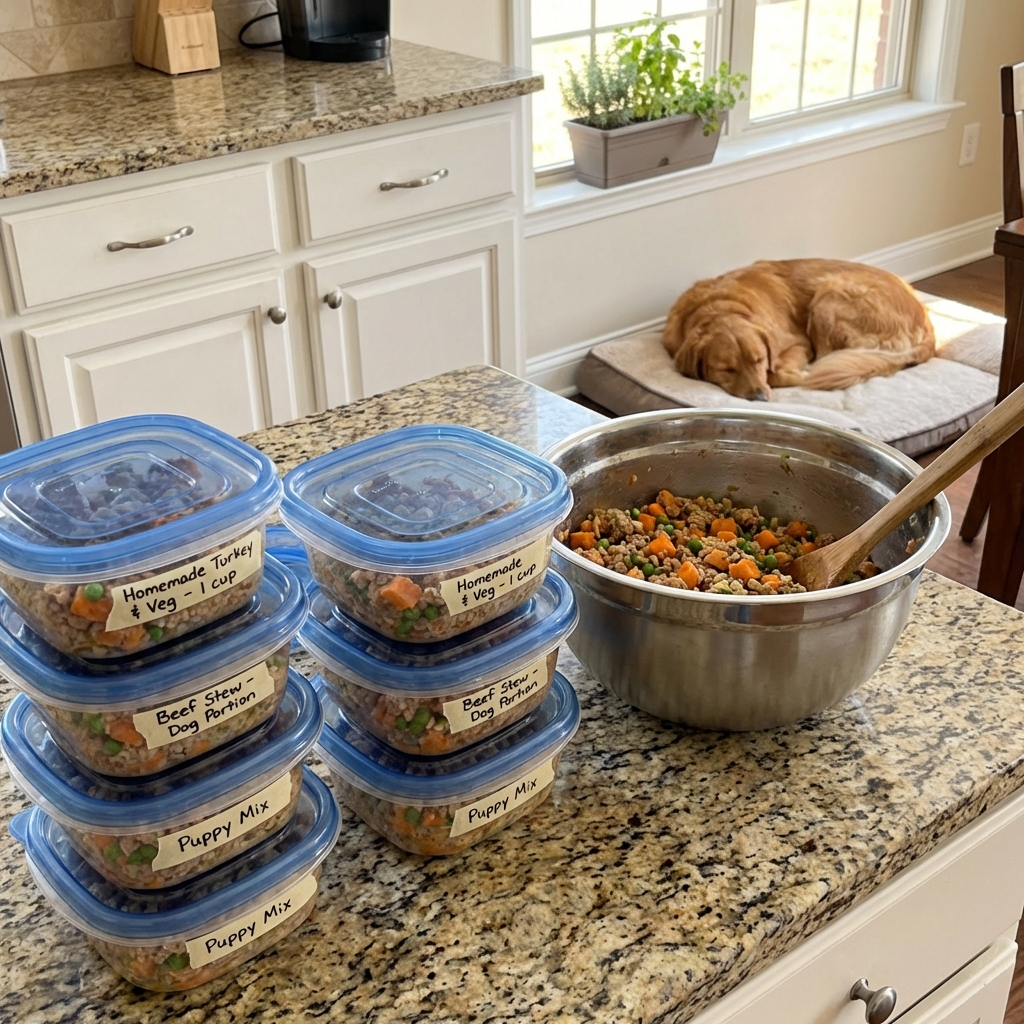
- Freeze portions if you batch-cook for the week.
- Avoid raw diets for dogs in households with infants, elderly family members, or anyone immunocompromised, and ask your vet if your dog is immunocompromised.
Transitioning safely
Even healthy food can cause diarrhea if you switch too fast. Many dogs do well with a gradual transition over 7 to 14 days:
- Days 1 to 3: 25% new food, 75% current food
- Days 4 to 6: 50% new food, 50% current food
- Days 7 to 9: 75% new food, 25% current food
- Days 10 to 14: 100% new food
If your dog has a history of pancreatitis or chronic GI issues, go slower and coordinate with your vet. Sudden diet changes and high fat treats are common triggers for setbacks.
Keeping it low fat
- Measure everything. A small pour of oil can add more calories than you think.
- Use low fat cooking methods. Poaching, baking, steaming.
- Use fiber strategically. Green beans and pumpkin can help some dogs feel full.
- Track body condition. You should be able to feel ribs with a light layer of fat.
- Recheck weight monthly. Adjust portions before small gains become big ones.
Do not forget treats. If your dog is low fat for health, treats should match the plan. Good options include small bits of cooked chicken breast, baby carrots, or a few blueberries. For pancreatitis-prone dogs, I also suggest asking your vet for a treat calorie and fat budget.
Homemade vs prescription diets
For some dogs, especially those with pancreatitis history, hypertriglyceridemia, or multiple medical issues, a commercial therapeutic low fat GI diet can be the safest and simplest choice because the fat level and micronutrients are already controlled.
Homemade can be a good fit when you need ingredient control, your dog refuses therapeutic diets, or your veterinarian and a veterinary nutritionist can build a plan that hits your dog’s specific fat and nutrient targets. If your vet recommends staying on a prescription diet, ask what goal it is meeting (fat grams per 1,000 kcal, fiber type, digestibility), so you understand what a homemade plan would need to match.
When to call your vet
Get veterinary guidance promptly if you notice:
- Vomiting, especially repeated episodes
- Diarrhea lasting more than 24 to 48 hours
- Loss of appetite, lethargy, or a “prayer posture” (front end down, rear end up)
- Abdominal pain or bloating
These signs can be seen with pancreatitis and other GI conditions. It is always better to be cautious.
The bottom line
Low fat homemade dog food can be veterinarian-supported when it is lean, measured, and balanced, and when your vet sets a clear fat target for your dog. Start simple, transition slowly, and work with your veterinarian or a veterinary nutritionist so your dog gets all the nutrients they need, not just fewer calories.