
Turn chicken and rice into a more balanced homemade dog meal with veggies, calcium carbonate, and omega-3s. Includes gram weights, portion guidance, swaps, a...
Article
•
Designer Mixes
Loving Tick Removal for Dogs

Shari Shidate
Designer Mixes contributor
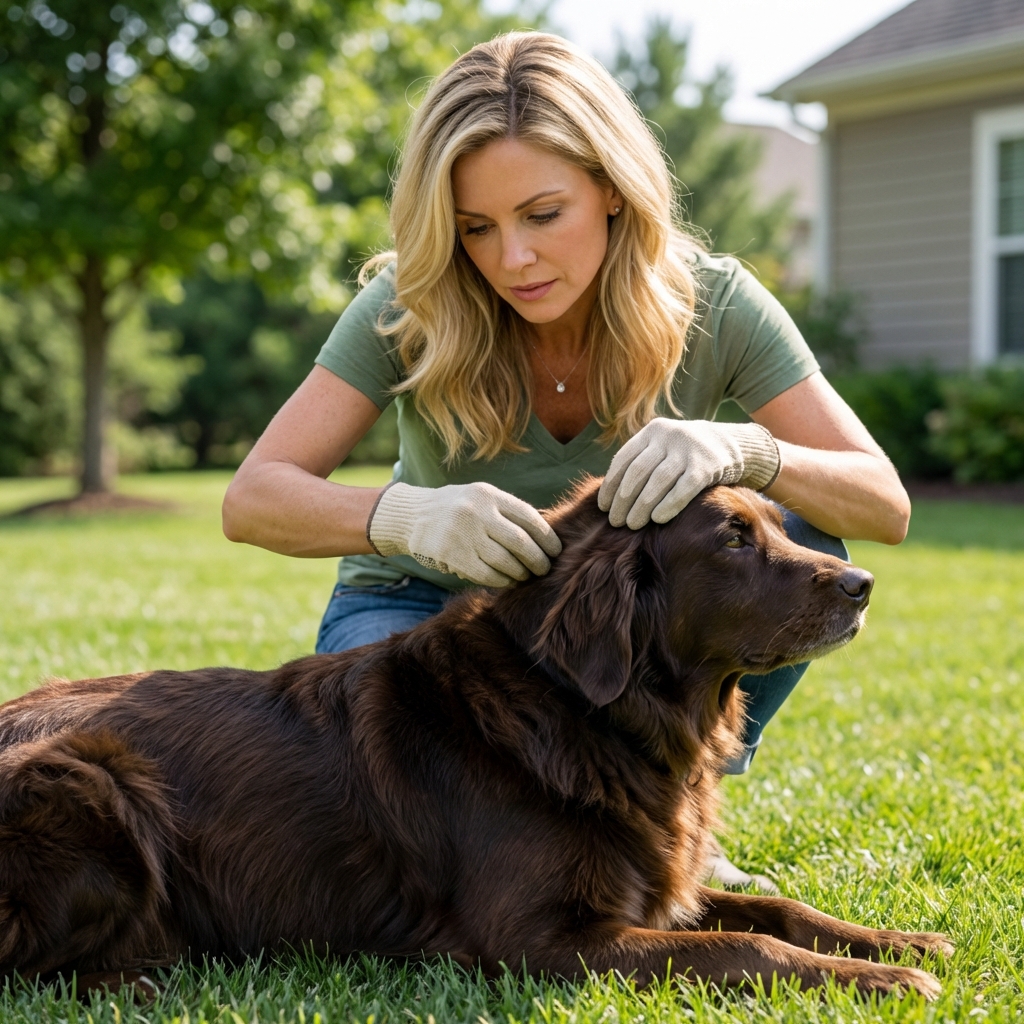
Ticks are one of those “small but mighty” problems. They are tiny, hard to notice, and incredibly good at what they do: latching on, feeding, and sometimes spreading disease. As a veterinary assistant here in Frisco, Texas, I can tell you this with confidence: you do not need to panic when you find a tick, but you do need to act promptly and correctly.
This guide walks you through evidence-based tick removal, what to watch for afterward, and how to prevent future hitchhikers. You’ve got this.
Why ticks matter
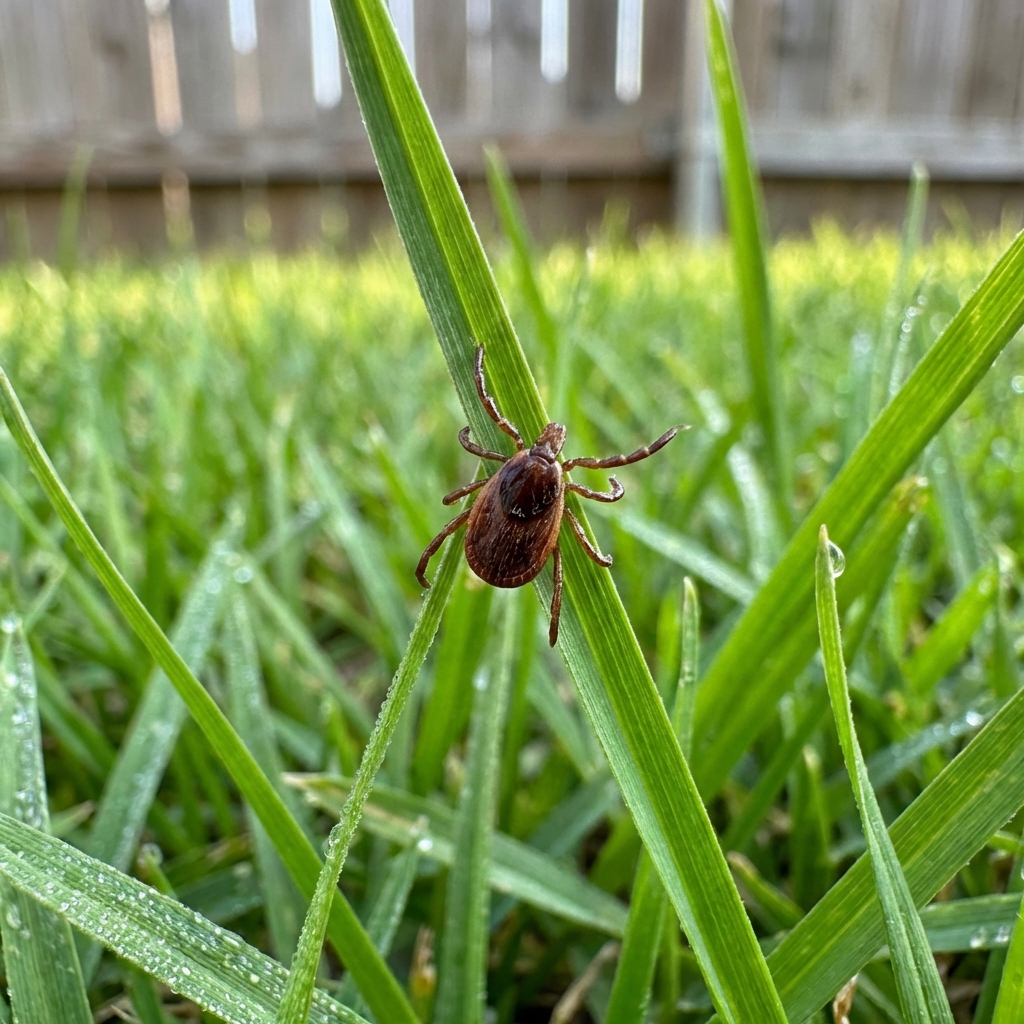
Ticks are external parasites that feed on blood. Beyond the “ick” factor, the real concern is that some ticks can transmit infections while feeding. The likelihood of disease depends on the tick species, your region, how long the tick is attached, and your dog’s overall health.
In Texas and across much of the U.S., veterinarians commonly think about tick-borne illnesses like Lyme disease (more common in some regions than others), ehrlichiosis, anaplasmosis, and Rocky Mountain spotted fever. Not every tick carries disease, and not every bite leads to illness, but it is smart to treat every tick bite as something to take seriously.
Tick removal: step by step
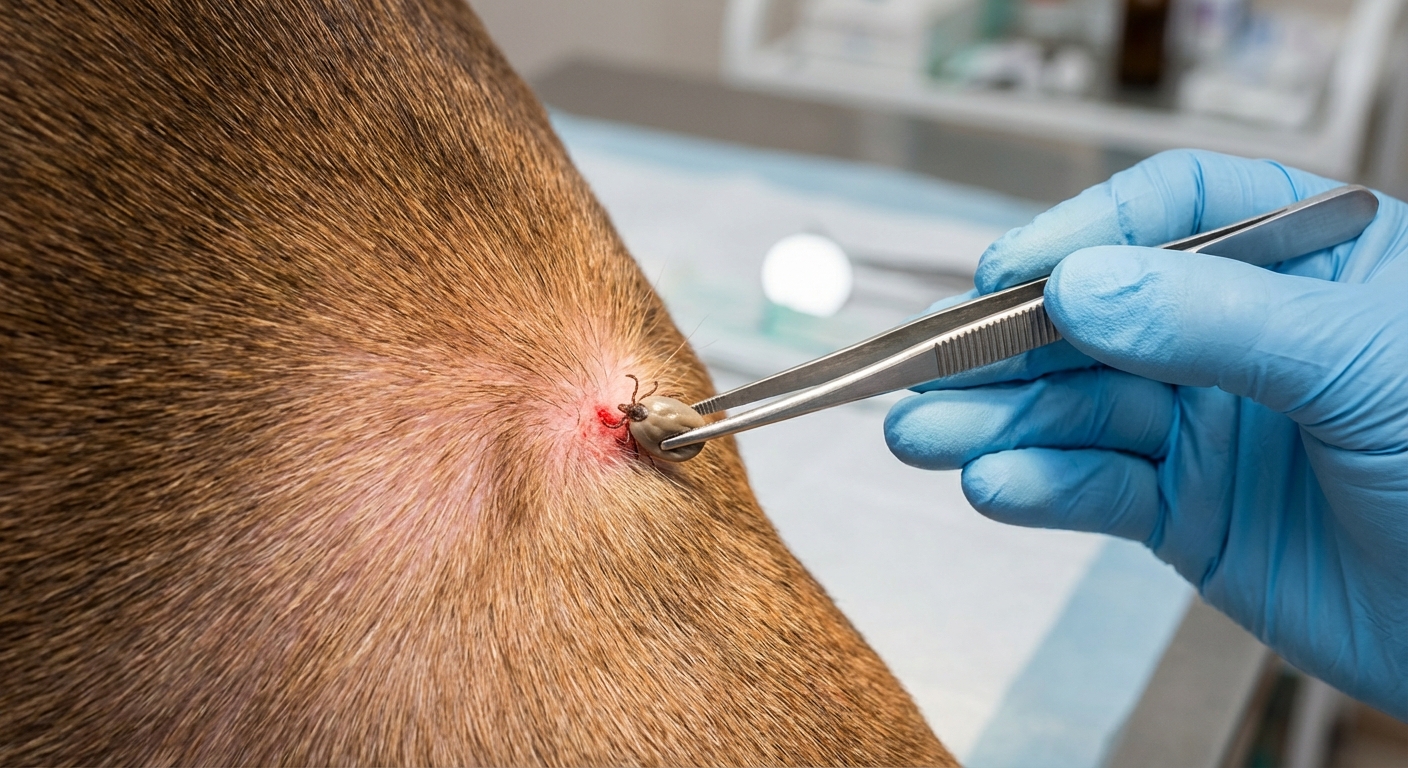
The goal is simple: remove the tick whole, as soon as you can, without crushing it and without irritating your dog’s skin. Use calm, steady movements.
What you need
- Fine-tipped tweezers or a tick-removal tool
- Disposable gloves (recommended)
- Rubbing alcohol or soap and water
- A small container or zip-top bag (to save the tick if needed)
- A treat for your dog (this part really helps)
How to remove a tick
- Part the fur and find where the tick meets the skin. You want to see the head area and the attachment point.
- Grasp close to the skin with tweezers or the tool. Aim for the tick’s mouthparts, not the swollen body.
- Pull with steady, even pressure until it releases. If you are using a tick-removal tool, follow that tool’s directions (some are designed for a gentle lift-and-roll motion).
- Check the site. If a tiny dark speck remains, it may be a mouthpart fragment. This can cause local irritation, but it is usually less risky to leave it alone than to dig aggressively and damage the skin. Call your vet if the area becomes increasingly red, swollen, painful, or oozing.
- Clean the bite area with soap and water or a small amount of rubbing alcohol.
- Dispose of the tick safely or save it. Place it in alcohol, seal it in a bag, or wrap it tightly in tape. Avoid crushing it with bare fingers.
Tip from the clinic: If your dog is wiggly, recruit a helper. One person offers treats and gentle restraint, the other removes the tick.
Extra helpful: Jot down the date and where you found the tick on your dog, and snap a quick photo of the bite site. It makes it much easier to compare changes over the next couple of weeks.
What not to do
- Do not use petroleum jelly, nail polish, essential oils, or dish soap to “smother” the tick.
- Do not burn the tick with a match or lighter.
- Do not squeeze the tick’s body during removal.
Those methods can irritate the tick and the skin, and they may increase exposure risk by prompting the tick to release more fluids at the bite site. The safest approach is steady mechanical removal.
After removal: what to watch for
Most dogs do perfectly fine after a tick bite. Still, it is wise to monitor the bite site and your dog’s overall behavior for the next few weeks.
Normal changes
- Mild redness at the bite site for a day or two
- A small scab
- Brief itching
Call your vet if you notice
- Lethargy, fever, or acting “off”
- Decreased appetite
- Lameness or shifting leg pain
- Vomiting or diarrhea
- Swollen lymph nodes
- Unusual bruising, nosebleeds, or pinpoint red spots on the gums or belly
- A bite site that becomes increasingly swollen, painful, or draining
Helpful note: If you saved the tick, bring it to your veterinary clinic in a sealed bag or container. Identification can sometimes help your vet decide what to watch for, even if testing the tick itself is not always necessary or recommended.
About testing and treatment: In most cases, we do not automatically treat dogs with antibiotics just because a tick was found. Your vet will guide you on whether testing makes sense, especially if symptoms develop.
Tick facts
- Ticks do not jump or fly. They typically crawl from grasses and brush onto pets.
- Attachment time can matter. Some infections are more likely after longer feeding times. That is one reason regular tick checks are so helpful.
- A single tick does not mean you are failing. Even vigilant pet parents find them, especially in tick-heavy areas.
- Indoor dogs can get ticks too. Humans or other pets can carry ticks inside.
Texas note: In North Texas, ticks can be active much of the year, not just in summer. Stay consistent with prevention and checks.

Where ticks hide
When I do tick checks, I follow a simple routine so I do not miss the sneaky spots. Use your fingertips and feel for small bumps.
- Inside and around the ears
- Under the collar
- Around the eyes and muzzle
- Under the front legs and in the armpits
- Between toes and around paw pads
- Groin area
- Under the tail and around the rear
If your dog has a thick coat, consider using a comb and a bright light. Ticks are often easier to feel than to see.
Prevention that works
The most loving tick strategy is prevention. A good preventive helps kill ticks quickly, and some products also help reduce bites by repelling ticks.
Talk with your vet
- Oral prescription preventives (chewables) typically kill ticks after they attach and bite
- Topical preventives may kill ticks and, depending on the product, may also repel
- Tick collars may repel and or kill, depending on the collar
Important safety reminder: Use species-specific products and follow weight guidelines. Never use dog products containing permethrin on cats, and do not use cat products on dogs unless your veterinarian specifically tells you it is safe.
Home and yard habits
- Keep grass trimmed and remove leaf litter
- Create a small barrier between wooded areas and play spaces (gravel or mulch can help)
- Check dogs after hikes, parks, and tall grass
- Wash bedding regularly, especially during peak tick times

When to see the vet
Most ticks can be removed at home, but you should reach out to your veterinary team if:
- The tick is attached in a sensitive location (eye margin, inside ear canal, between toes) and your dog will not hold still
- You see multiple ticks and your dog is not on prevention
- The bite site looks infected or very swollen
- Your dog develops symptoms in the days or weeks after the bite
- You are unsure whether what you are seeing is a tick, a skin tag, or a growth
It is always okay to ask for help. Quick guidance can save a lot of worry.
If a person was bitten
Since ticks can hitch a ride indoors, it is worth doing a quick check on the humans in the household too. If you find a tick on a person, remove it promptly with clean tweezers (steady, straight traction works well), wash the area, and monitor for fever, flu-like symptoms, or an expanding rash. When in doubt, call your healthcare provider.
Closing note
If you found a tick on your dog, take a breath. Remove it carefully, clean the area, and watch your pup for changes. Then make a prevention plan with your veterinarian so you are not fighting this battle every weekend.
Healthy routines add up. A one-minute tick check after your walk can make a big difference for your dog’s comfort and long-term health.