Learn a proven, kind puppy house-training plan with a simple schedule, crate and supervision tips, a repeatable potty routine, cleaning methods, and nighttim...
Article
•
Designer Mixes
Loving Puppy Potty Training Schedule Secrets

Shari Shidate
Designer Mixes contributor
Puppy potty training feels like it should come with an instruction manual. And honestly, it can. The “secret” most families miss is not a fancy trick. It is a predictable schedule plus kind, consistent follow-through.
As a veterinary assistant in Frisco, Texas, I have seen that puppies do best when we set them up for success: frequent bathroom breaks, calm praise, and a home routine that matches their tiny bladder and developing brain.
Why schedules work
Puppies are not being “stubborn” when they have accidents. Most of the time, one of these is true:
- They waited too long. Their bladder is small and control is limited.
- No one noticed the early signals. Sniffing, circling, wandering away, suddenly pausing play.
- Too much freedom too soon. A puppy with access to the whole house will almost always find a corner.
- The routine changes. Visitors, new foods, weather shifts, travel, or a new work schedule.
A schedule helps because you are not guessing. You are proactively offering potty opportunities before urgency hits.
The core potty schedule
Think of potty training like teaching a new language. Repetition is what makes it stick. Start with these “always” potty breaks:
- Immediately after waking up (morning and after naps)
- After eating (often within 5 to 20 minutes, sometimes closer to 30)
- After a big drink of water
- After play (excitement increases the urge and can reduce control)
- Before crating and right after coming out
- Before bedtime
If you follow only one rule, make it this: wake, potty, play, potty, eat, potty, rest, repeat.
The timing rule
You may have heard the guideline that puppies can hold their bladder about one hour per month of age (up to a point). Consider that a rough estimate, not a promise. It varies by puppy, and it often does not apply the same way when they are awake versus asleep, after play, after water, or in stimulating environments. Many small breeds also need more frequent breaks.
Use shorter intervals when:
- Your puppy just ate, drank, or played hard
- Your puppy is distracted (new environments, guests, busy sidewalks)
- Your puppy is small-breed or very young
- Your puppy has had recent accidents
Typical daytime intervals to start
- 8 to 10 weeks: every 30 to 60 minutes when awake
- 10 to 12 weeks: every 45 to 75 minutes when awake
- 3 to 4 months: every 60 to 120 minutes when awake
- 4 to 6 months: every 2 to 3 hours when awake (varies widely)
When in doubt, go out earlier. It is much easier to prevent an accident than to “train it out” later.
A sample daily schedule
Adjust the times to your household, but keep the pattern. Here is a sample day for a young puppy:
- 6:30 am wake up, potty
- 6:40 am breakfast
- 6:55 am potty
- 7:00 am short play, training, cuddle
- 7:20 am potty
- 7:30 am crate/nap
- 8:30 am potty right after waking
- Mid-morning repeat: play, potty, nap cycles
- 12:00 pm lunch (if feeding 3 meals), then potty 5 to 30 minutes later
- Afternoon repeat cycles, add a walk (potty before and after)
- 5:30 pm dinner, then potty
- Evening calmer play, potty breaks every 60 to 90 minutes (more often if extra energetic)
- 9:30 to 10:30 pm last potty, then bedtime
Poop timing tips
Many families find poop timing harder than pee timing. That is normal. A few patterns help:
- After meals: many puppies need to poop within 5 to 30 minutes after eating.
- During or after walks: movement can “wake up” the bowels. A short, calm walk after meals often helps.
- After naps: wake-up potty breaks should include time to poop too.
If your puppy poops outside, reward it the same way you reward peeing outside. You are building the same habit: bathroom business happens outdoors.
Nighttime potty
Night potty breaks are not a failure. They are part of puppyhood.
Best practices
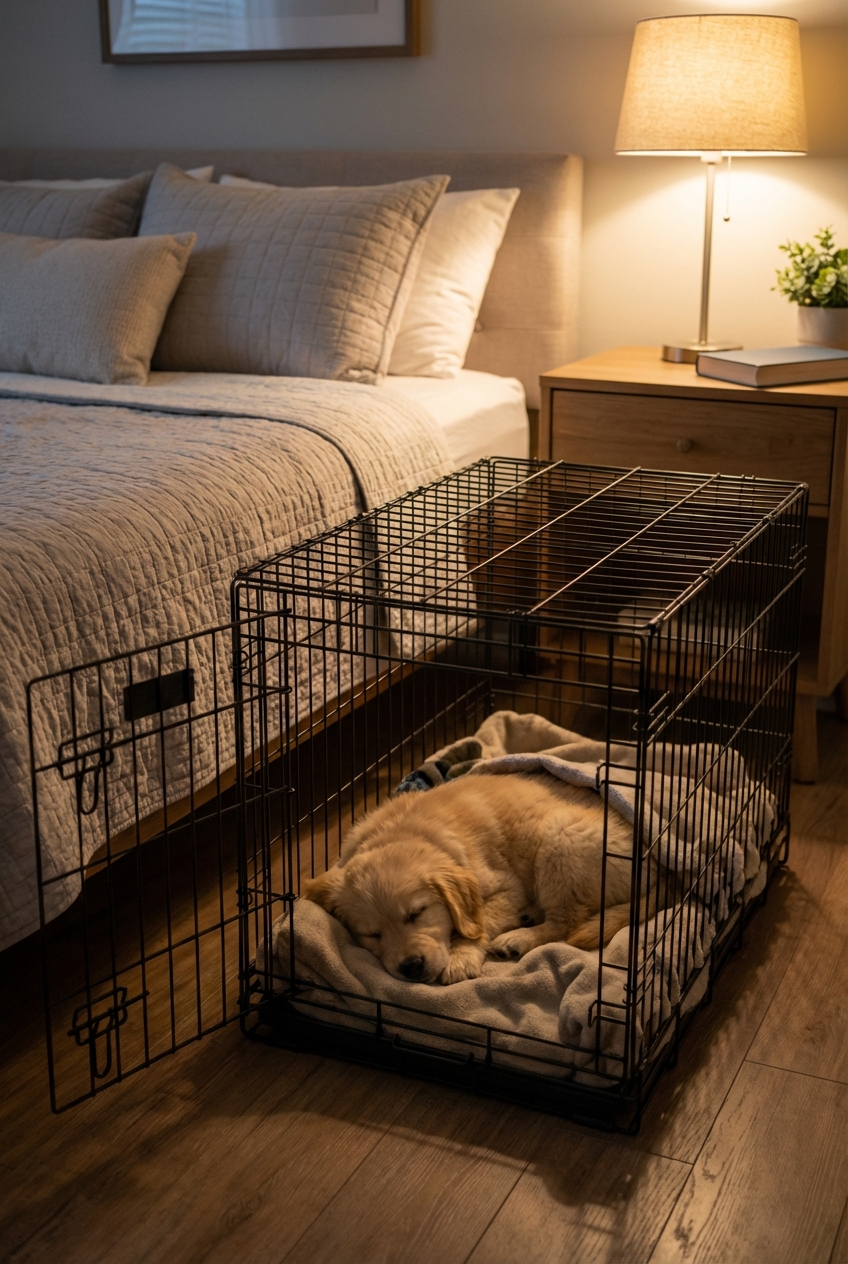
- Use a properly sized crate. Big enough to stand and turn, not so big they can potty in one corner and sleep in the other.
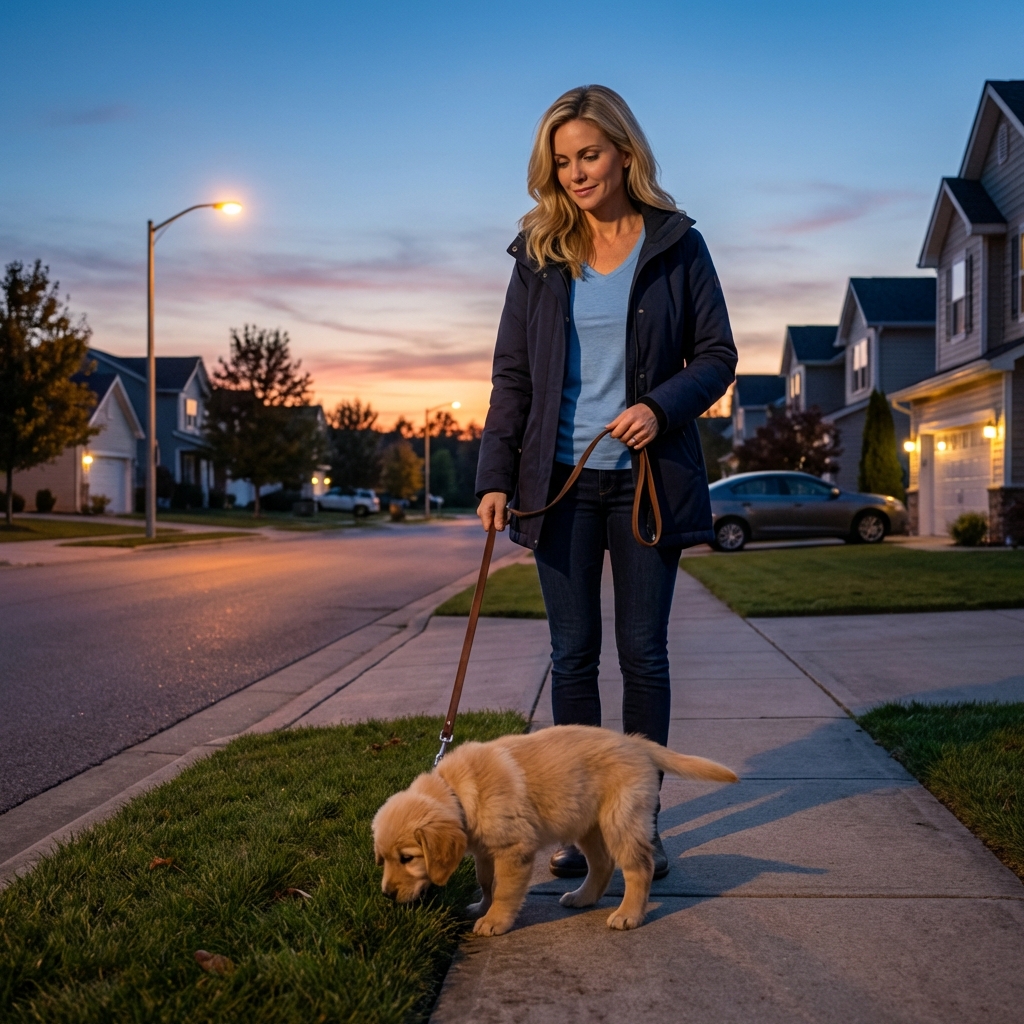
- Last call potty right before bed, on leash, boring and quick.
- Keep nighttime trips quiet. No play, minimal talking, low lights.
- Set an alarm at first (many families do 1 to 2 breaks for young pups).
Water note: Do not restrict water during the day. In warm climates like Texas, hydration matters. If nighttime accidents are a struggle, focus on a consistent bedtime routine and last-call potty. If you are considering adjusting evening water access, ask your veterinarian for guidance, especially for very young puppies.
If your puppy is waking and crying, assume they need to potty first. Take them out calmly. If they do not go within a few minutes, bring them back in and try again shortly.
How you respond
The schedule gets you to the right place at the right time. Your response teaches your puppy what matters.
When your puppy goes outside
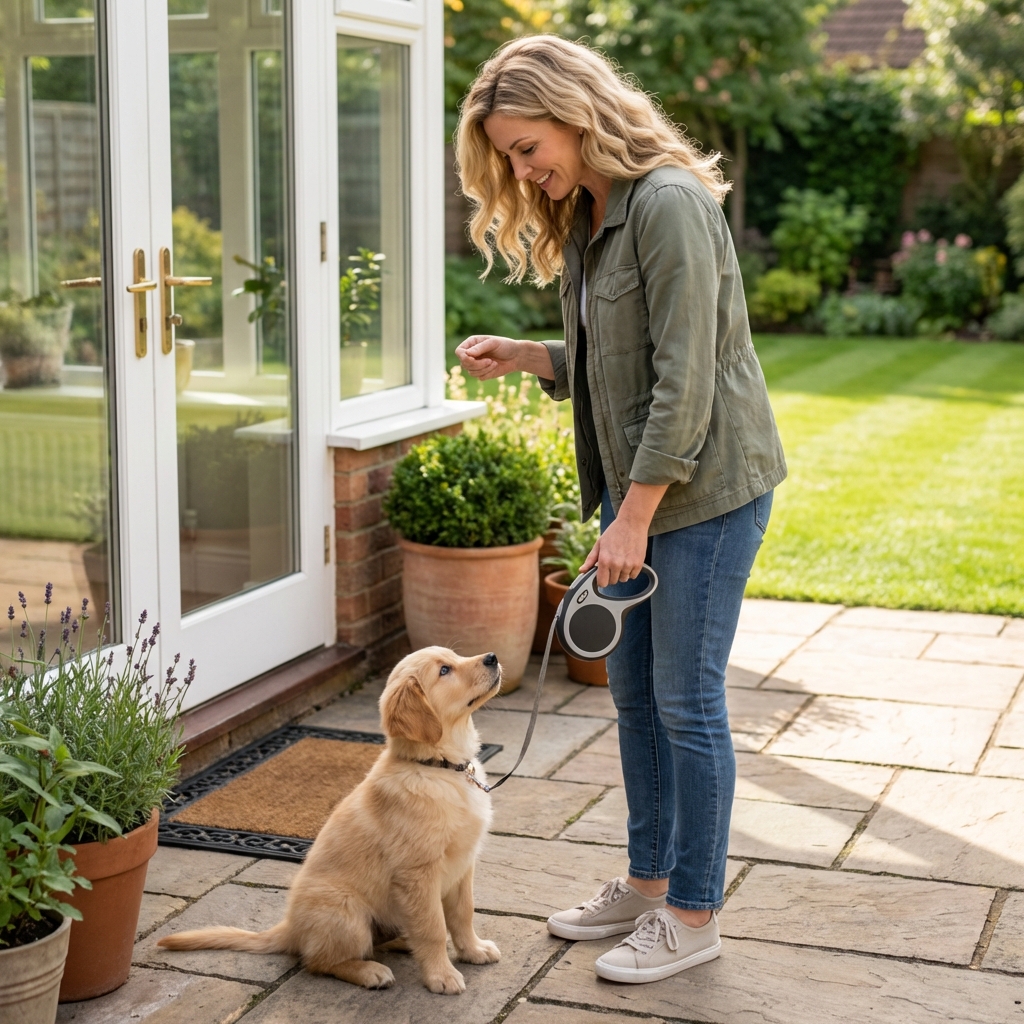
- Reward immediately (within a few seconds): praise plus a tiny treat.
- Be specific: say a cue like “Go potty” while they are finishing.
- Then give freedom. A short sniffy walk or a minute of play teaches: potty first, fun second.
When your puppy has an accident
- Stay calm. No scolding, no rubbing their nose in it.
- Interrupt gently if you catch them mid-stream: a soft “oops,” then carry or leash them outside.
- Clean with an enzymatic cleaner so the smell does not invite repeat accidents.
Punishment can create sneaky potty behavior or fear of going in front of you. We want your puppy to trust you enough to potty on cue, anywhere you take them.
Safe potty spots
For young puppies, safety matters as much as consistency. Until your puppy is fully vaccinated (and your veterinarian says it is safe), avoid high-traffic dog areas like dog parks, shared apartment relief stations, and any spots where lots of unknown dogs potty.
- Choose a low-traffic patch of grass at home, or a designated spot you can keep as clean and controlled as possible.
- Keep your puppy on leash so they can focus and you can steer them away from unsafe areas.
Crates and confinement
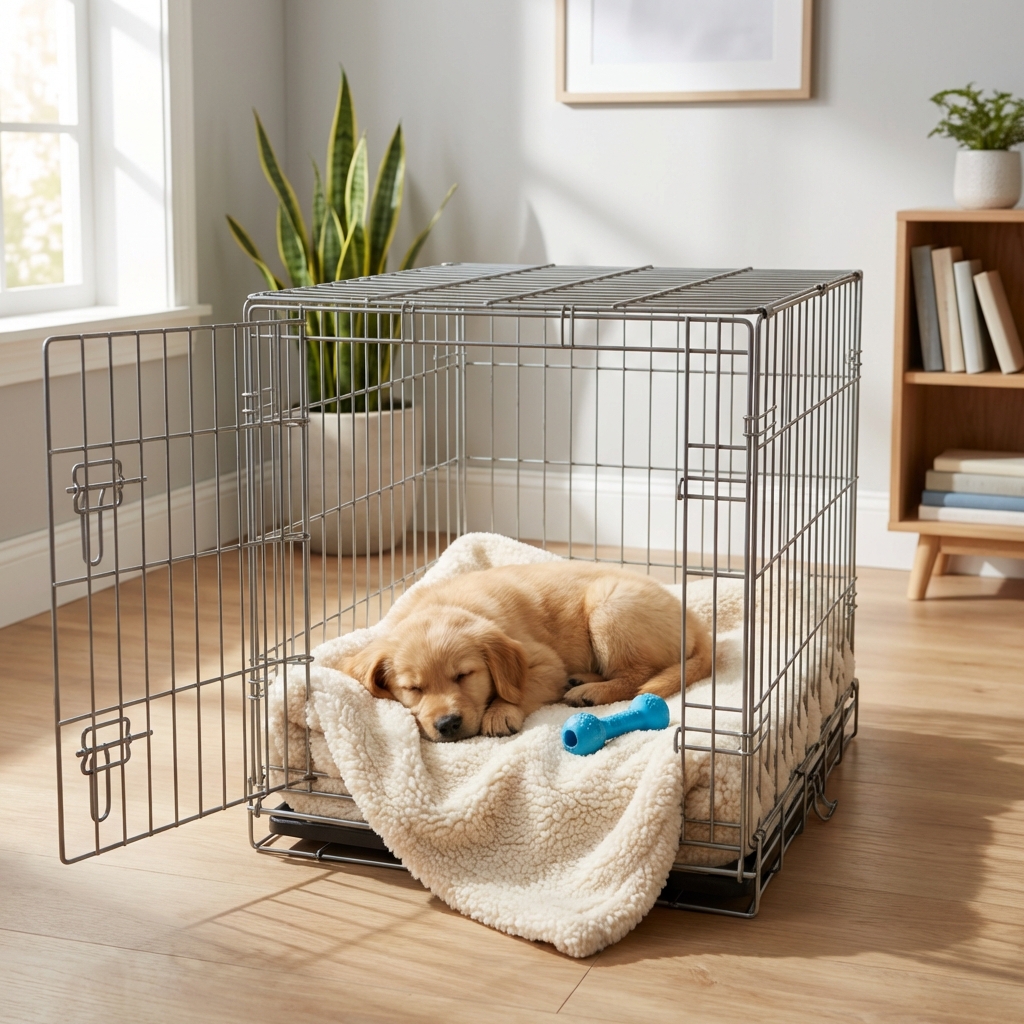
Supervision is the foundation of potty training. When you cannot actively watch your puppy, use a crate or a small puppy-proof area.
- Crate for naps and short downtime between potty breaks.
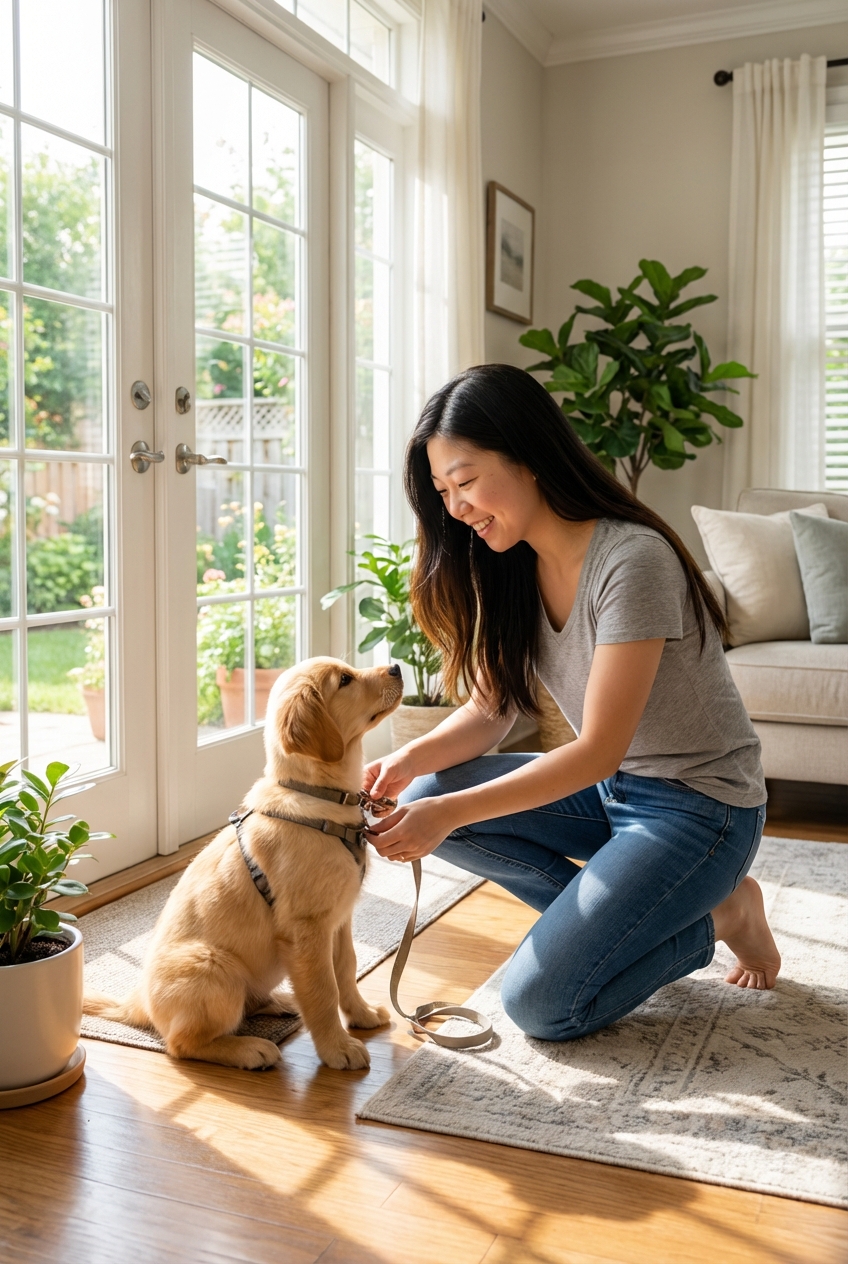
- Leash in the house (tethered to you) during training phases so they cannot wander off to potty.
- Small zone like a gated kitchen when you need hands-free time, with frequent scheduled breaks.
If they will not go outside
This is a common moment, especially with distracted puppies or bad weather. Try this simple loop:
- Go to your potty spot on leash and wait 3 to 5 minutes.
- If they do not go, bring them inside and place them in the crate or a small confined area for 5 to 10 minutes.
- Try again right away.
This prevents the classic pattern of “held it outside, peed inside.” When they do go outside, reward warmly.
When to adjust
If accidents keep happening, it is usually a timing issue. Try these fixes for 3 to 5 days:
- Shorten the interval between potty trips by 15 to 30 minutes.
- Increase supervision (more leash time indoors, less free roaming).
- Track patterns for two days: note the time of meals, naps, play, water, and accidents.
- Make the potty spot consistent. Same patch of grass, same cue, same routine.
Common hiccups
Pees right after coming inside
This often means they were distracted outdoors. Next time, stay out a bit longer, keep them on leash, and return to the same quiet potty spot. Reward the moment they finish.
Only potties when I am not looking
This can happen after scolding. Reset with kindness: frequent trips, praise, treats, and calm neutrality indoors. Trust comes back quickly when rewards are consistent.
Was doing great, then accidents again
That is common during growth spurts, schedule changes, or around teething. Tighten the schedule for a week and treat it like a refresher course.
Diarrhea or frequent urination
That is not a training issue. Digestive upset, urinary tract infections, parasites, and other medical problems can cause accidents. If you see vomiting, blood, straining, lethargy, loss of appetite, or sudden frequent urination, call your veterinarian promptly.
Optional: teach a signal
Once your schedule is working and your puppy is regularly going outside, you can add a simple way for them to “ask” to go out.
- Bells on the door: ring the bells with your hand every time you head out to potty. Reward potty outside, not bell ringing alone.
- Sit at the door: ask for a sit before you open the door. Soon the sit becomes their request.
Keep the schedule even after they learn a signal. The signal is extra communication, not permission to skip supervision.
Quick checklist
- Potty after every transition (sleep, eat, drink, play, crate).
- Use a leash so your puppy does not get distracted.
- Reward immediately with praise and a tiny treat.
- Limit freedom indoors until reliability is strong.
- Clean accidents with an enzymatic cleaner.
- Adjust the schedule before you assume your puppy is “regressing.”
With a loving schedule and consistent follow-through, many puppies make noticeable progress in days and build solid habits in weeks. Some take longer, and that is okay. You are not just teaching “where to go.” You are teaching trust, communication, and a routine your puppy can lean on for life.