Make meals more tempting and nutritious with simple dog food toppers: bone broth, cooked eggs, sardines, pumpkin, and steamed veggies—plus portions, storag...
Article
•
Designer Mixes
Loving Good Veg for Dogs

Shari Shidate
Designer Mixes contributor
As a veterinary assistant here in Frisco, Texas, I hear this question all the time: “Do dogs really need vegetables?” If your dog eats a complete and balanced diet, the evidence-based answer is: they do not need vegetables to meet basic nutrition. But many dogs can benefit from small, safe servings of vegetables as a topper or treat. Veggies are not meant to replace protein or a balanced diet, but they can support your dog’s health with fiber, antioxidants, and key micronutrients. And the best part is you can start small and keep it simple.
Think of vegetables like a health “booster” that can help round out the bowl. For many dogs, the right vegetables may help support stool quality, encourage a healthier gut environment, and help with weight management when used in place of higher-calorie treats. Individual dogs vary, so we always adjust based on how your dog responds.
Why vegetables can help
Dogs are omnivorous and can utilize nutrients from both animal and plant foods. They thrive on animal-based protein, and many can also benefit from plant nutrients when those plants are prepared in a dog-friendly way.
- Fiber for digestion: Can support regular bowel movements and help some dogs feel fuller between meals.
- Phytonutrients and antioxidants: Compounds in colorful vegetables can support overall cellular health.
- Weight support: Non-starchy vegetables can add volume with relatively few calories.
- Variety: Rotating safe vegetables adds nutritional diversity, especially for dogs eating the same food daily.
Helpful research note: An observational Purdue University study in Scottish Terriers reported that dogs who ate certain vegetables (especially leafy green and cruciferous vegetables) multiple times per week had lower odds of developing transitional cell carcinoma (a type of bladder cancer). This does not prove vegetables prevent cancer, and observational studies can be influenced by other factors. Still, it is an interesting reason to take veggie intake seriously as one part of overall wellness.
How much to feed
For dogs eating a complete and balanced food, the safest standard guideline is the 10% rule: keep all treats and toppers (including vegetables) to no more than 10% of daily calories to avoid unbalancing the diet.
By volume, low-calorie veggies like green beans can look like “a lot” in the bowl without adding many calories. That is why some people talk about higher percentages by volume. The calorie rule is the one that protects nutrition balance.
- Start: 1 to 2 teaspoons for small dogs, 1 to 2 tablespoons for medium dogs, and 2 to 4 tablespoons for large dogs.
- Increase gradually over 7 to 14 days to reduce gas or loose stool.
- Monitor stool quality: It is one of the best real-time indicators of how your dog is tolerating the change.
If your dog has a pancreatitis history, chronic GI disease, kidney disease, diabetes, heart disease risk, urinary stone history, or is on a prescription diet, check with your veterinarian before changing the bowl.
Best vegetables for dogs
Many dogs do better with vegetables that are lightly cooked, steamed, chopped small, or pureed. Cooking and pureeing often improves digestibility and nutrient availability.
Easy starters
- Carrots: Steam or serve finely grated. Great crunch for some dogs, but go slow if raw.
- Green beans: Steamed or thawed from frozen. A classic low-calorie topper.
- Zucchini: Lightly steamed or sautéed plain. Easy on many sensitive stomachs.
- Pumpkin (plain): Can help with stool consistency. Use plain canned pumpkin, not pie filling.
- Cucumber: Fresh, sliced, and plain. A hydrating, low-calorie option.
- Bell pepper: Small pieces, raw or lightly cooked, no seasoning.
Greens (small amounts)
- Spinach: Cooked, small amounts. Spinach contains oxalates, so limit or avoid it in dogs prone to calcium oxalate urinary stones or with certain kidney concerns.
- Kale: Lightly cooked, small amounts for many dogs. Too much (especially raw) can cause GI upset in some dogs.
- Broccoli: Steamed, small portions to avoid gas.
Starchy veggies (count the calories)
- Sweet potato: Baked or steamed, no sugar or butter added.
- Potato: Fully cooked only, plain. Never serve raw potato.
- Peas: Fine as an occasional topper in moderation. Try not to rely on peas and other legumes as major diet ingredients, especially for dogs with heart disease risk. Ask your vet if you are concerned about diet-associated DCM.
Serving tip: Add a splash of warm low-sodium broth or a spoonful of your dog’s regular food to help picky eaters accept new textures.
Vegetables to avoid
Not all vegetables are safe, and some are safe only when prepared correctly.
- Onions, chives, leeks: Avoid. They can damage red blood cells and cause anemia.
- Garlic: Many veterinarians recommend avoiding it due to toxicity risk, especially in small dogs or at higher doses.
- Raw cruciferous overload: Large amounts of raw broccoli, cauliflower, or cabbage can cause gas and GI upset.
- Corn on the cob: The cob is a serious obstruction risk.
- Mushrooms: Only dog-safe culinary mushrooms in small amounts. Wild mushrooms are a hard no.
Also be careful with seasonings. Many human veggie recipes include onion powder, heavy butter, or lots of salt. For dogs, keep it plain.
Quick reminder: Grapes and raisins are not vegetables, but they are common produce hazards. Avoid them completely.
Simple prep ideas
You do not need to become a chef to do this well. Here are three methods I recommend all the time because they are fast, consistent, and easy on digestion.
1) Steam and chop
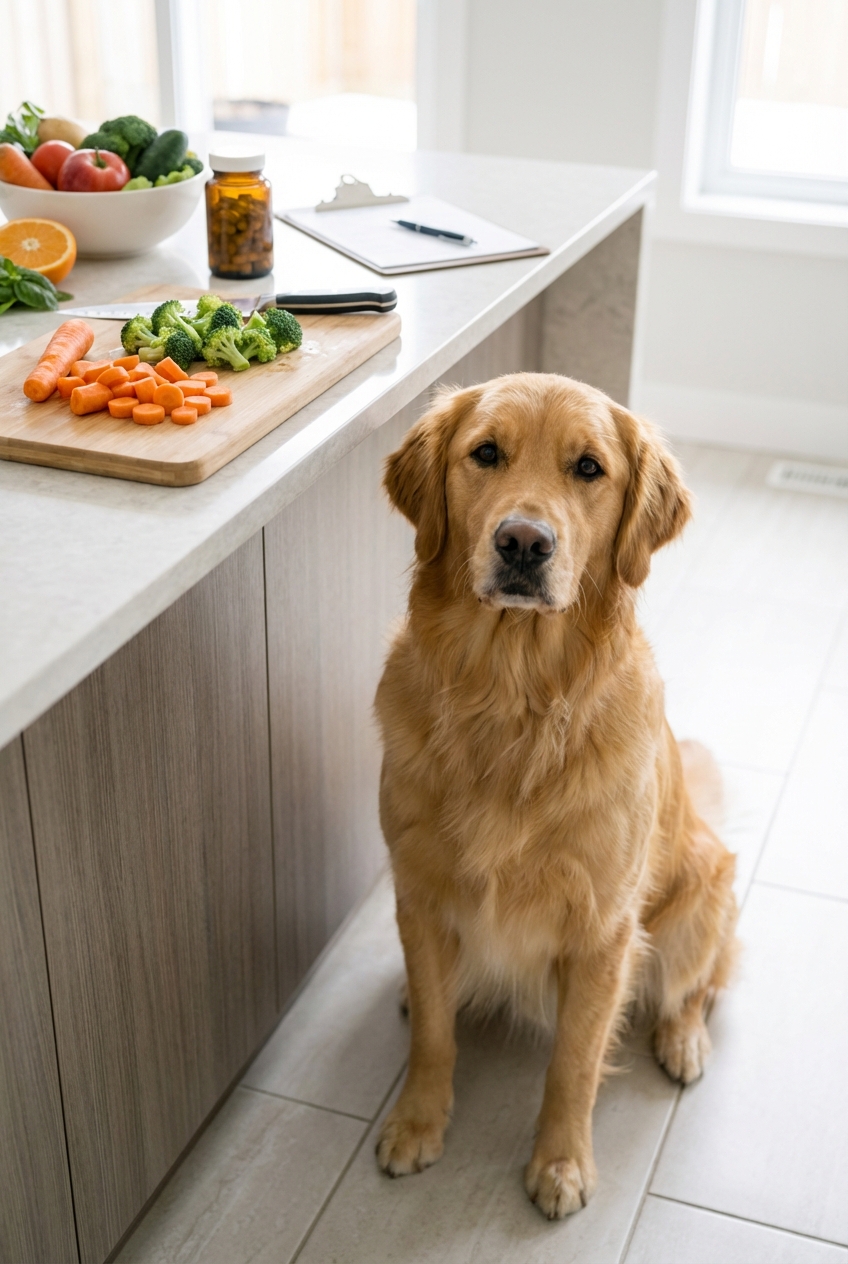
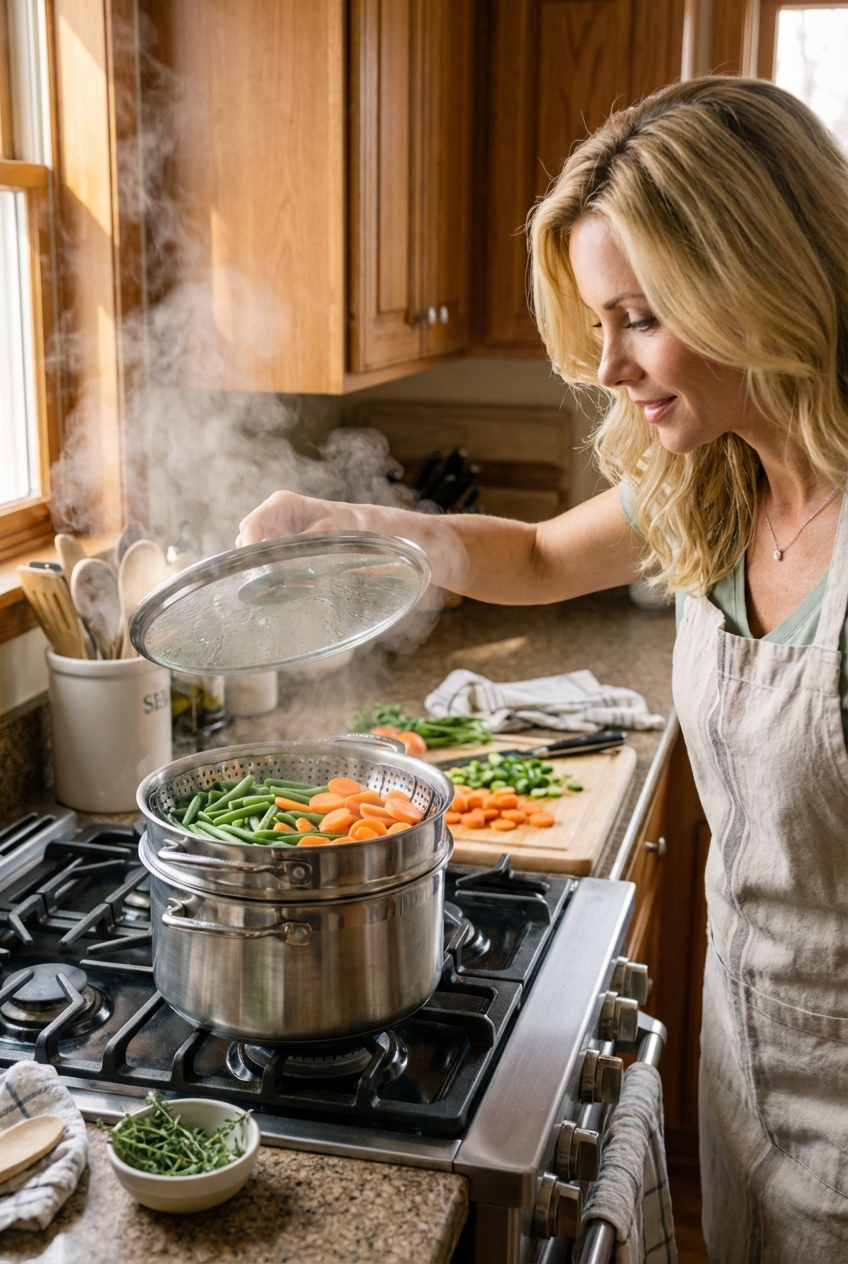
Steam a batch of carrots, green beans, and zucchini. Cool, chop bite-size, and store in the fridge for 3 to 4 days.
2) Puree for picky eaters
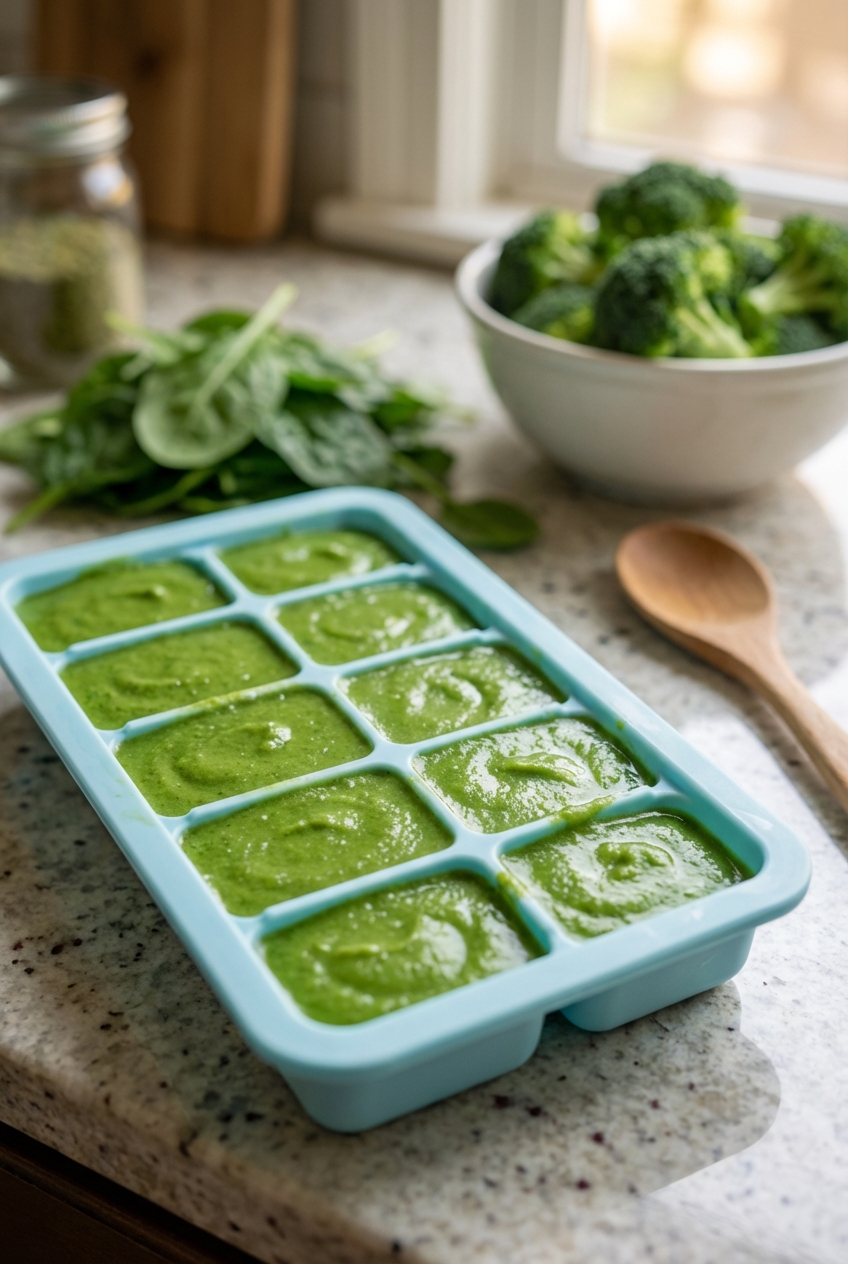
Puree steamed vegetables with a little warm water or low-sodium broth. Spoon a small amount into meals, then increase slowly.
3) Freeze toppers
Freeze pureed veggies in an ice cube tray. Thaw one cube as a topper for dinner.
Veggie rules to follow
- One new veggie at a time: This makes it easier to spot sensitivities.
- Keep extras under 10% of daily calories: This helps protect the balance of your dog’s main diet.
- Plain only: No butter, oils, salt, onion powder, or spicy seasonings.
- Cut small: Bite-size pieces reduce choking risk, especially for small dogs and fast eaters.
- Do not replace a balanced diet: Veggies are toppers and treats, not the foundation.
Easy add-ins
If your dog eats kibble, you can still add vegetables. You are not “doing it wrong” if you are not cooking full homemade meals. Small, consistent improvements matter.
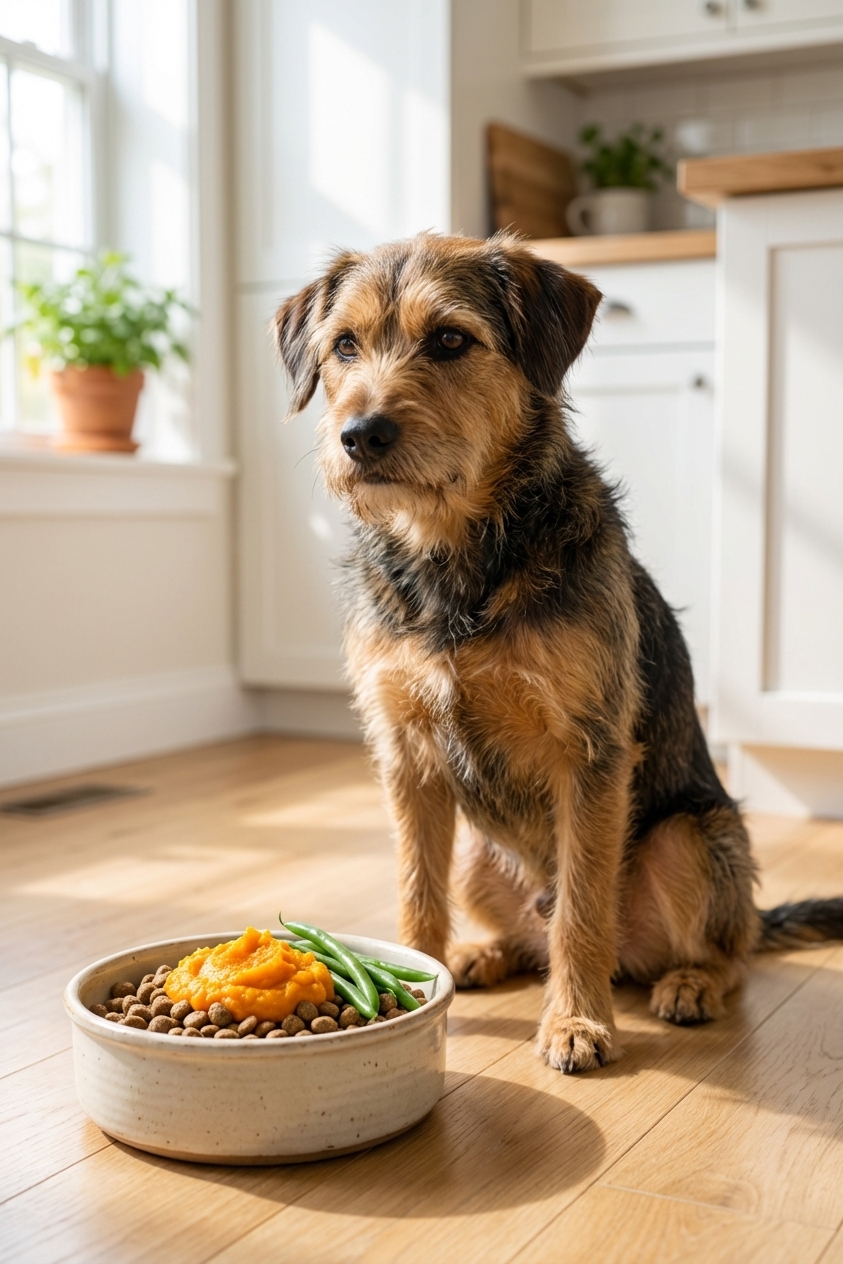
- For hydration and fullness: Add 1 to 3 tablespoons of steamed green beans.
- For stool support: Add 1 to 2 teaspoons of plain pumpkin for small dogs or 1 to 2 tablespoons for larger dogs.
- For senior dogs: Use softer veggies like zucchini or pumpkin to make chewing easier.
- For training: Try tiny steamed carrot coins instead of higher-calorie treats.
When to call your vet
Vegetables should make your dog feel better, not worse. Stop the new veggie and talk with your veterinarian if you notice:
- Vomiting or diarrhea lasting more than 24 hours
- Significant gas, abdominal pain, or loss of appetite
- Blood in stool
- Sudden itching, hives, or facial swelling
Repeated GI upset is a clue. Sometimes the issue is the vegetable. Sometimes it is the portion size. Sometimes it is an underlying sensitivity that needs a plan.
Bottom line
Adding “good veg” is one of the simplest, most loving care habits you can build for many dogs. Start with one gentle vegetable, prepare it in a digestible way, and increase slowly, while keeping toppers within the 10% of daily calories guideline. Your dog’s energy and stool quality often tell the story pretty quickly.
If you want a simple first step, try this: steam green beans tonight and add one tablespoon to dinner. Easy, affordable, and a great place to start.