Stop fleas fast with vet-informed home steps: confirm fleas, flea comb daily, bathe safely, wash bedding, vacuum to break the life cycle, plus yard help, ris...
Article
•
Designer Mixes
Loving Dog Fleas Home Remedy Tips

Shari Shidate
Designer Mixes contributor
Few things are more frustrating than seeing your sweet dog scratch, bite, and lose sleep because of fleas. I get it. As a veterinary assistant, I also know many families want gentle, budget-friendly options before they reach for stronger products.
Here is the loving, evidence-based truth: most home remedies can reduce fleas, but they rarely end an infestation on their own. Fleas have a life cycle that protects them in carpets, bedding, and cracks in the floor. The best results come from pairing safe at-home steps with a solid plan for your dog and your home.
Know the flea life cycle
Understanding the flea life cycle makes home care far more effective. Only a small portion of fleas are actually on your dog at any moment. You may see figures like about 5 percent on the pet and about 95 percent in the environment, but exact percentages vary by source and by home.
- Adult fleas live on your dog and feed on blood.
- Eggs fall off into the environment (bedding, couches, rugs).
- Larvae and pupae hide in carpets and floor edges, often protected from many shampoos and some sprays.
This is why a quick bath might make your dog look better for a day or two, but the scratching returns. The home environment keeps re-seeding your pet.
Confirm it is fleas
Before you start treatments, confirm what you are dealing with. Flea bites often cause itchiness around the tail base and back end, plus the belly and inner thighs. Some dogs itch all over, especially if they have flea allergy dermatitis. You may see tiny dark specks that look like pepper.
Quick check: flea dirt test
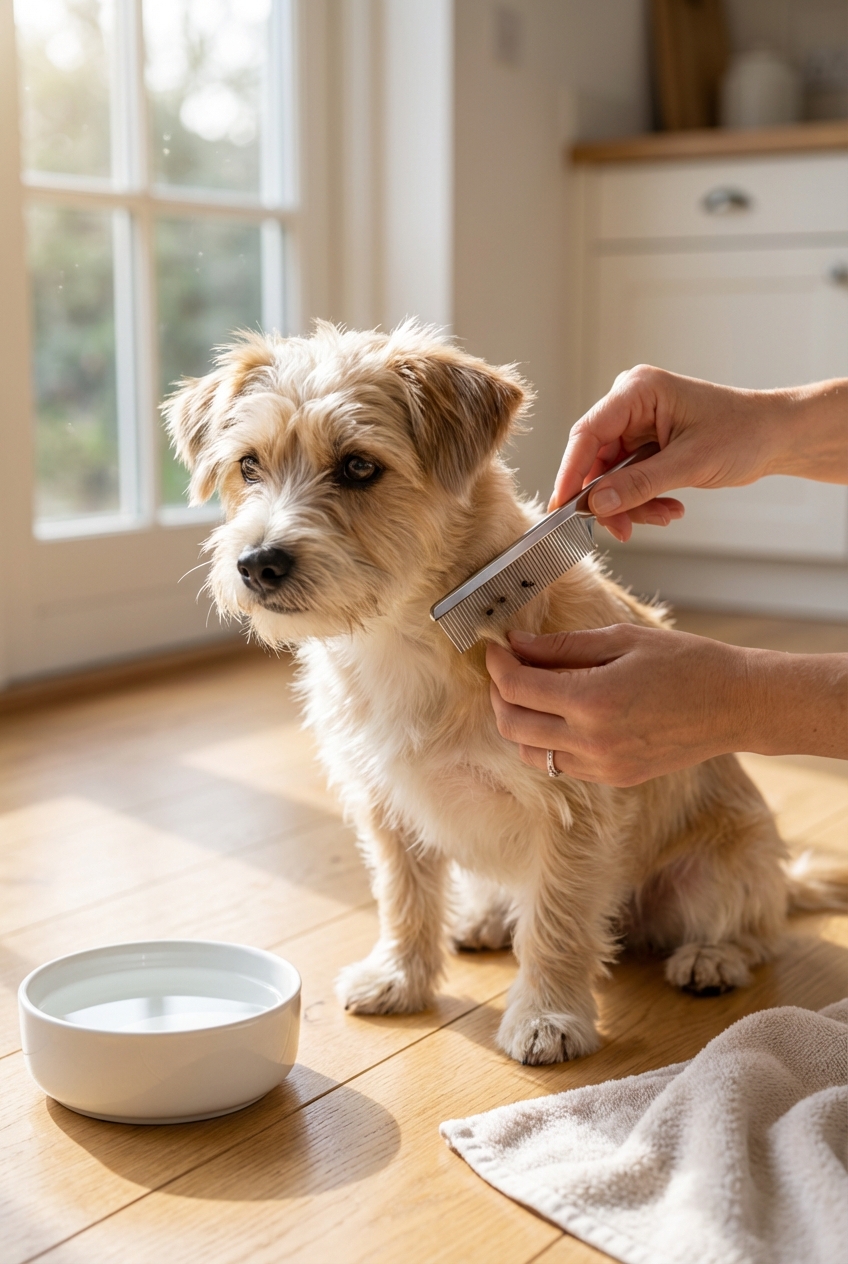
- Run a flea comb through your dog’s coat, especially near the tail base.
- Tap the debris onto a wet white paper towel.
- If the specks turn reddish-brown, that is digested blood, which strongly suggests fleas.
If your dog is intensely itchy and you cannot find fleas or flea dirt, seasonal allergies, mites, or a skin infection may be the real issue. In that case, a vet visit saves time and discomfort.
Home steps that help
These are the at-home steps I see work best when families are consistent. Think of them as a toolbox.
1) Flea combing
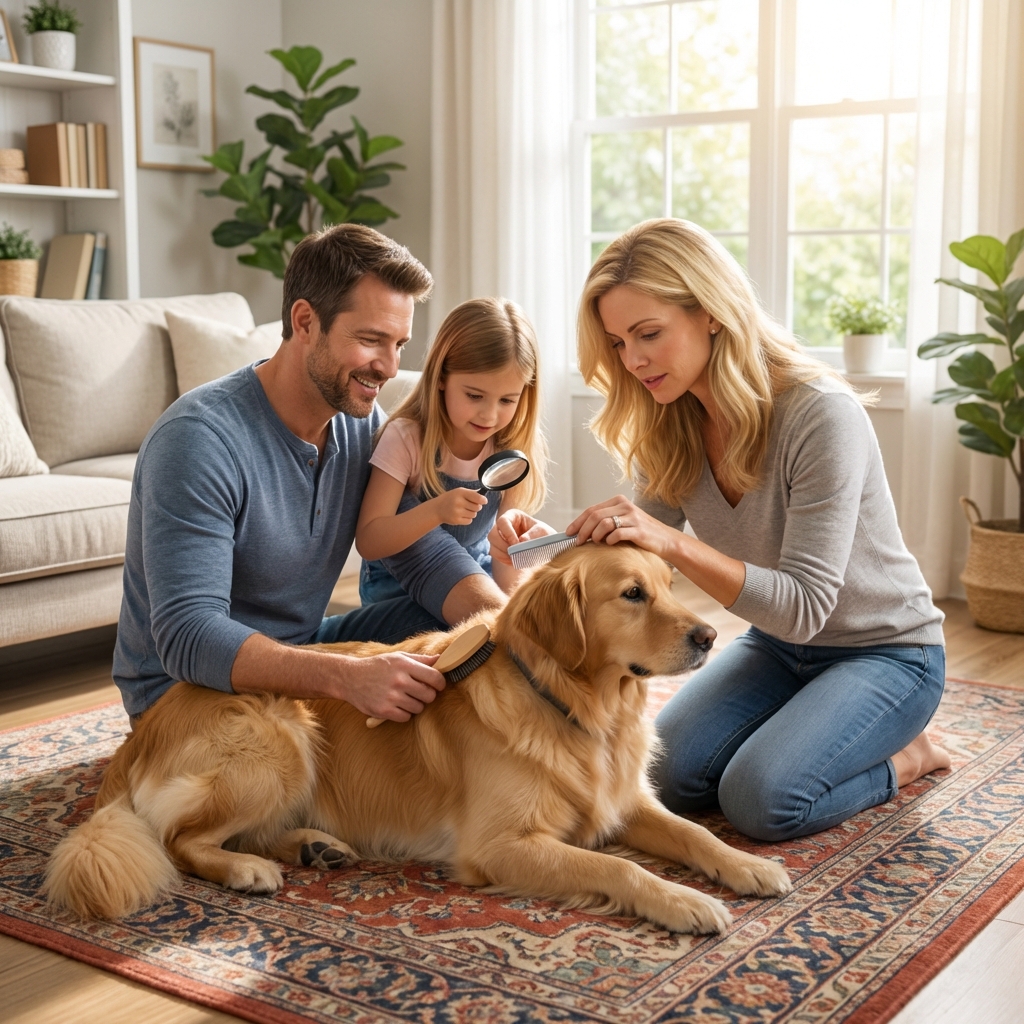
A flea comb physically removes adult fleas and flea dirt. It is safe for puppies, seniors, and dogs with medical issues.
- Comb daily for 5 to 10 minutes.
- Focus on the neck, armpits, groin, and tail base.
- Keep a bowl of warm water with a drop of dish soap nearby and dunk the comb frequently to trap fleas.
2) A gentle bath
Bathing can reduce adult fleas right away. Use a dog-safe shampoo. Some flea shampoos exist, but many have limited residual effect, so they may not prevent new fleas from jumping on later. If you use dish soap, use it sparingly and not as a routine, because it can dry out skin and worsen itching. It is not a long-term flea plan.
- Start by wetting and soaping the neck first to help prevent fleas from rushing to the head.
- Avoid the eyes and inside the ears.
- Rinse thoroughly and towel dry.
- Follow with a flea comb session once the coat is damp or dry.
3) Wash bedding on hot
This is one of the highest-impact steps you can take at home. Wash anything your dog sleeps on, plus throw blankets and removable couch covers.
- Wash at the hottest safe setting.
- Dry on high heat, as hot as the fabric allows, for about 30 minutes or longer.
- Repeat weekly during an active flea problem.
4) Vacuum on a schedule
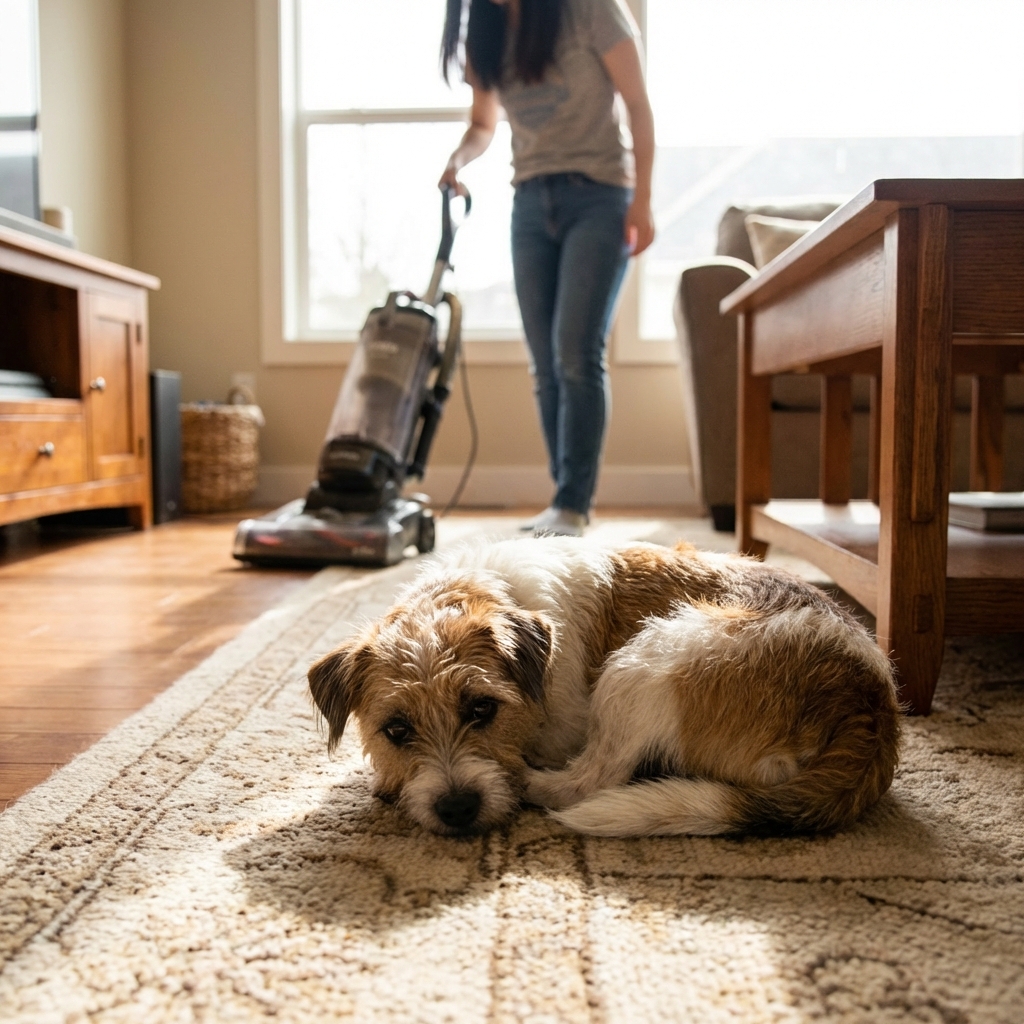
Vacuuming removes eggs, larvae, and flea dirt. It can also help prompt pupae to emerge due to vibration and activity in the home, which can make them easier to eliminate over time.
- Vacuum rugs, carpets, baseboards, and under furniture daily for 1 to 2 weeks.
- Then continue 2 to 3 times per week until you have been flea-free for several weeks.
- Immediately empty the canister outdoors, or seal the bag in a trash bag and discard.
- Wash vacuum attachments occasionally, especially if you have a heavy infestation.
5) Yard basics
Outdoor fleas often hitchhike in on dogs or wildlife (cats, raccoons, opossums). Helpful, low-risk steps include:
- Keep grass trimmed.
- Remove leaf litter and debris where pets rest.
- Discourage wildlife access to pet areas and food bowls.
Treat all pets
One of the biggest reasons fleas keep coming back is that only one pet gets treated. If you have multiple dogs, or a dog and a cat, fleas can bounce between them and your home.
- Talk to your vet about treating every pet in the household at the same time, even if one pet is not scratching.
- Never use a dog flea product on a cat unless your veterinarian confirms it is cat-safe. Some dog products contain permethrins, which can be dangerous or even fatal to cats.
Be careful with these
Some popular “natural” flea tips can be risky or simply not effective.
Essential oils
Many essential oils can irritate a dog’s skin, trigger breathing issues, or be toxic if licked. Tea tree oil is a common example of a product that can cause serious illness when used incorrectly. If you are considering essential oils, talk to your veterinarian first and keep cats in mind, since cats are especially sensitive.
Apple cider vinegar
As a spray, it may make your dog smell less appealing to some pests, but it does not reliably kill fleas. It can also sting inflamed skin. If your dog has hot spots or raw areas, skip it.
Garlic and “flea-repelling” foods
Diet can support skin health, but garlic supplementation is not a safe DIY flea strategy. Dogs can be vulnerable to oxidative damage to red blood cells from allium plants, especially with higher doses or repeat use. Flea control is not the place to experiment.
Diatomaceous earth (DE)
Food-grade DE is often discussed for the home, but the dust can irritate lungs in both people and pets if inhaled. If you choose to use it, do so very cautiously, keep pets out of the area until it settles, and avoid creating airborne dust. In many homes, frequent vacuuming is safer and reliably helpful.
When home care is not enough
If you are seeing any of the signs below, it is time to loop in your veterinarian and consider proven flea preventatives.
- Very young puppies or small dogs with lots of fleas (they can become anemic quickly).
- Pale gums, weakness, fast breathing, or extreme lethargy.
- Skin that is red, oozing, scabby, or has a strong odor (possible infection).
- You are still finding fleas after 2 weeks of daily home efforts.
Modern vet-recommended flea preventatives can be very effective, and your vet can help you choose the right option based on your dog’s age, weight, medical history, and other pets in the home.
A note on home sprays
Cleaning is the foundation, but some homes need an added boost. Your veterinarian or a reputable pest professional may recommend home products that include an insect growth regulator (IGR) like methoprene or pyriproxyfen. These do not just kill adults, they help stop eggs and larvae from turning into biting adults, which is why they can make a big difference when used correctly.
7-day reset plan
If you want an easy checklist to follow, here is a practical one-week reset. Consistency is the secret.
Days 1 to 3
- Flea comb once daily.
- Wash all pet bedding and blankets on hot, dry on high.
- Vacuum floors, rugs, and furniture daily.
- If your dog tolerates it, give one gentle bath and comb afterward.
- Make a plan to treat all pets in the home with vet-approved products.
Days 4 to 7
- Continue daily combing.
- Continue vacuuming daily, especially edges and under furniture.
- Rewash bedding at least once during this window.
- Check for itchy hot spots or scabs and call your vet if skin is worsening.
If you are doing all of this and fleas are still showing up, that is your sign to add veterinarian-guided prevention. You are not failing. Fleas are simply persistent, and they are built to survive.
FAQ
Can I treat my house but not my dog?
It is very hard. If adult fleas are still feeding and reproducing on your dog, your home keeps getting reinfested.
Can fleas live in human hair?
Fleas may jump onto people, but they prefer animal hosts and typically do not live in human hair like lice do.
How long until I see results?
With consistent cleaning and combing, many families notice improvement within a few days, but full control often takes 2 to 6 weeks because pupae can keep emerging.
Do fleas cause tapeworms?
They can. Dogs (and cats) can get tapeworms if they swallow an infected flea while grooming. If you notice rice-like segments in the stool or around the rear, or if your pet has ongoing flea exposure, ask your vet whether deworming is appropriate.
Bottom line
The most loving flea home remedy is not a single ingredient. It is a routine: comb, clean, wash, vacuum, and when needed, combine those steps with veterinarian-recommended prevention. Your dog deserves comfort, and you deserve a home that feels peaceful again.
When you call your vet, be ready to share your dog’s age, weight, and whether you have cats in the home, so they can help you choose the safest prevention for everyone under your roof.