A practical guide to litter box training dogs: choosing the best tray and litter, ideal placement, a simple reward-based routine, and solutions for accidents...
Article
•
Designer Mixes
Litter Training a Puppy: Facts and Tips

Shari Shidate
Designer Mixes contributor
Litter training is not just for cats. Some puppies can learn to use a litter box or indoor potty tray reliably, and for many families it is a practical, humane option for busy workdays, high-rise living, bad weather, or pups who are not fully vaccinated yet. The key is setting it up like a simple, repeatable habit, not a guessing game.
As a veterinary assistant, I love approaches that are evidence-based and kind. Litter training can absolutely be kind when it is clean, consistent, and paired with plenty of outdoor opportunities as your puppy grows.
Is litter training right for your puppy?
Indoor potty options work best when they match your home and your puppy’s needs. Litter training tends to be a great fit for:
- Small breeds and mixes who may struggle with cold, rain, or long walks early on.
- Apartment or condo living where getting outside quickly is hard.
- Families with long workdays who cannot do midday potty breaks consistently.
- During puppy vaccination windows when you want to reduce exposure to high-traffic dog areas.
It can be trickier for very large breeds (space and volume), and it can confuse some puppies if the setup feels too similar to bedding. It also requires excellent cleanliness to prevent odor habits.
It may not be the best choice for:
- Puppies who obsessively eat or shred substrate (even after trying safer materials). Safety comes first.
- Some multi-dog homes where urine marking is already an issue. In those cases, an indoor potty area can sometimes become a “message board.”
- Homes with a strict outdoor-only goal and the ability to take frequent potty breaks. Outdoor-only is completely fine if it is realistic for your schedule.
Facts that make training easier
Puppies learn by location and routine
Dogs are strongly influenced by surface and place. If the “potty spot” always looks and feels the same, learning goes faster. If you keep moving the box, changing the litter type constantly, or allowing free roaming too early, you slow the process down.
Bladder timing matters
A commonly shared rule of thumb is that puppies can hold it for up to about one hour per month of age (plus one) in ideal conditions, especially when resting or crated. But daytime is different. When puppies are awake, playing, or drinking more, many need a potty break as often as every 20 to 60 minutes. If accidents are happening, it usually means the puppy needed a potty break sooner, not that they are being stubborn.
Reward timing is everything
To your puppy, a reward given too late can feel unrelated. Aim to reward within a few seconds after your puppy finishes in the box, every time, especially in the first few weeks.
Choosing the right setup
Box or tray
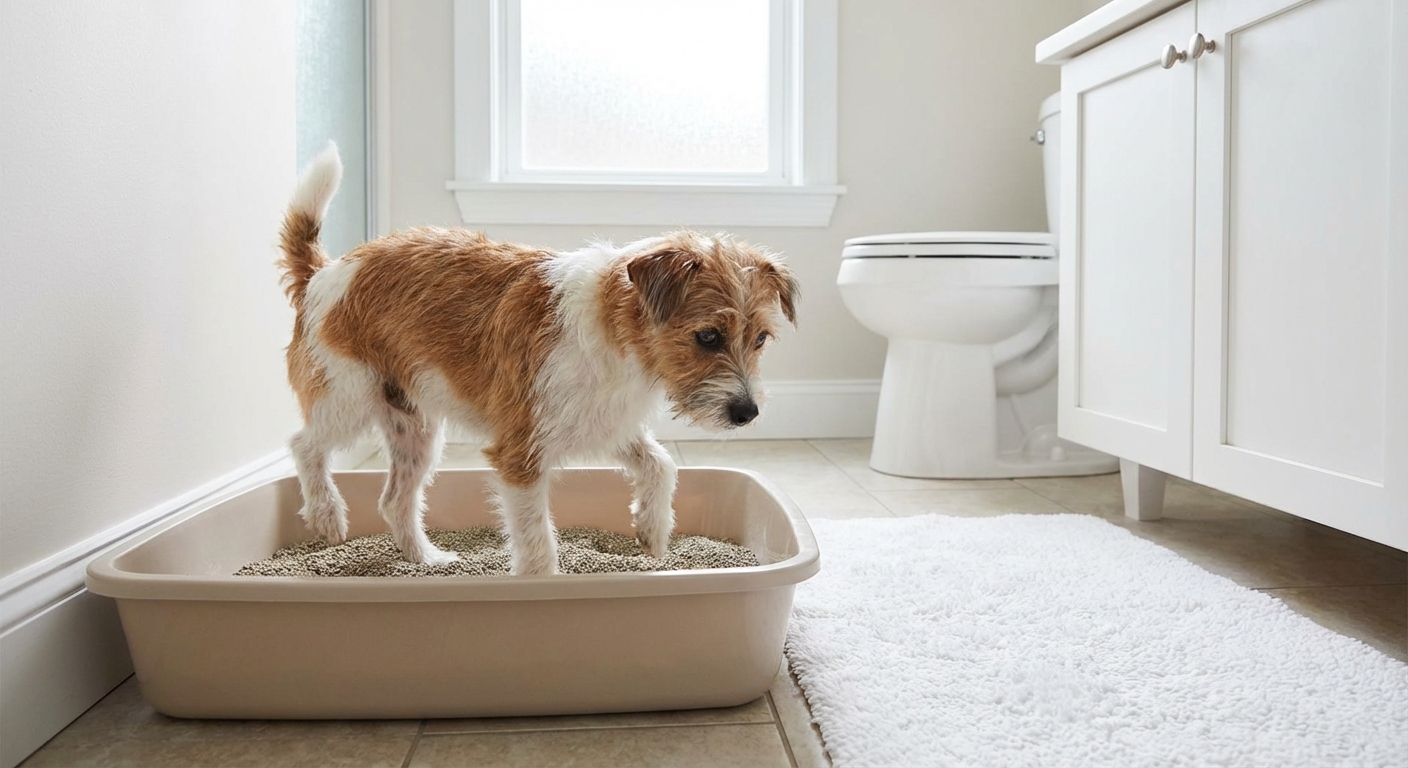
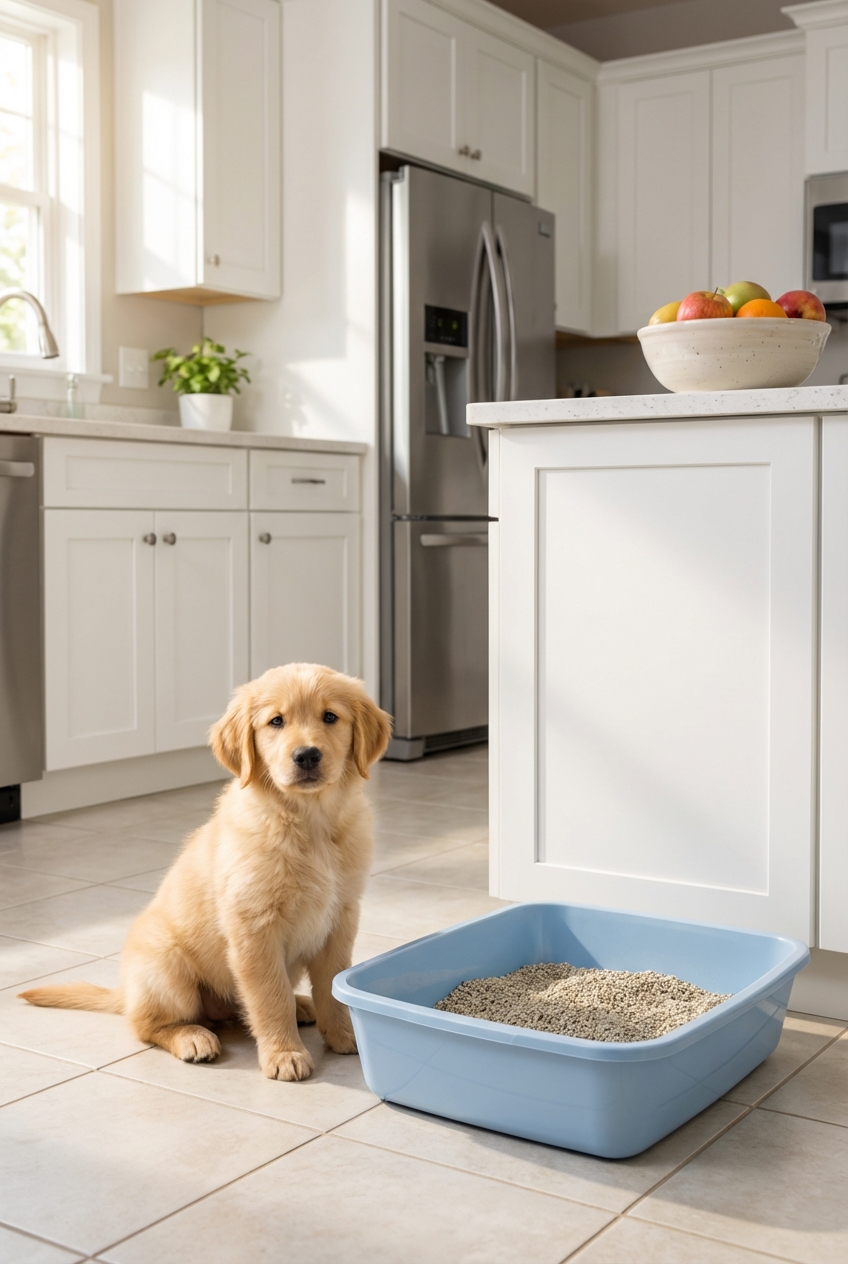
- Low entry so your puppy can step in easily.
- High back or splash guard for males or enthusiastic squatters.
- Large enough for your puppy to turn around comfortably.
What to put inside
There is no single best “litter” for all puppies. The best choice is the one your puppy will use consistently and that you can keep clean. Common options include:
- Paper pellets (low dust, good odor control, gentle on paws).
- Puppy-safe grass pads (real or synthetic) that mimic outdoors.
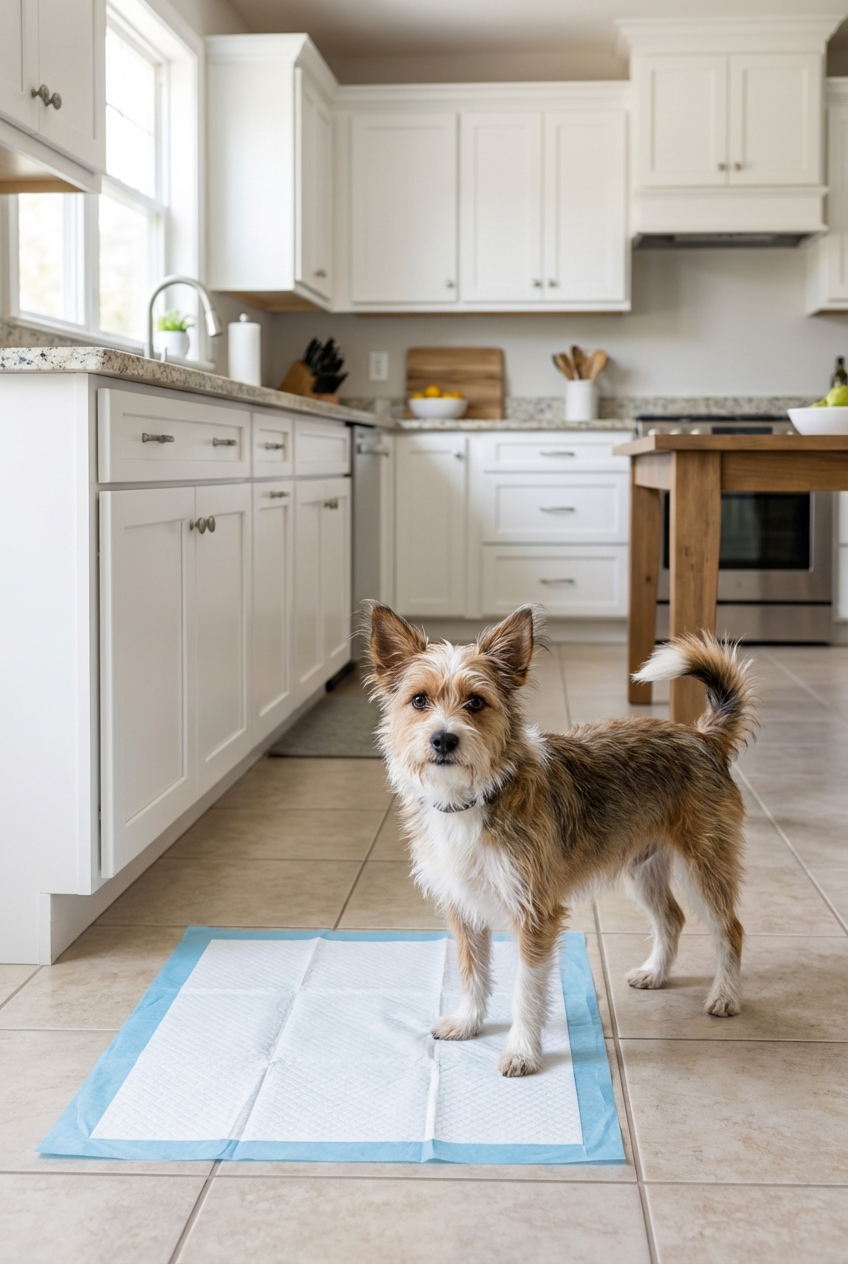
- Disposable potty pads in a holder (easy, but some pups shred them).
Avoid clumping clay cat litter for puppies if there is any chance of eating it. Ingesting clumping clay litter can be risky and may cause gastrointestinal problems. If you suspect your puppy ate any litter (clumping or not), call your veterinarian for advice.
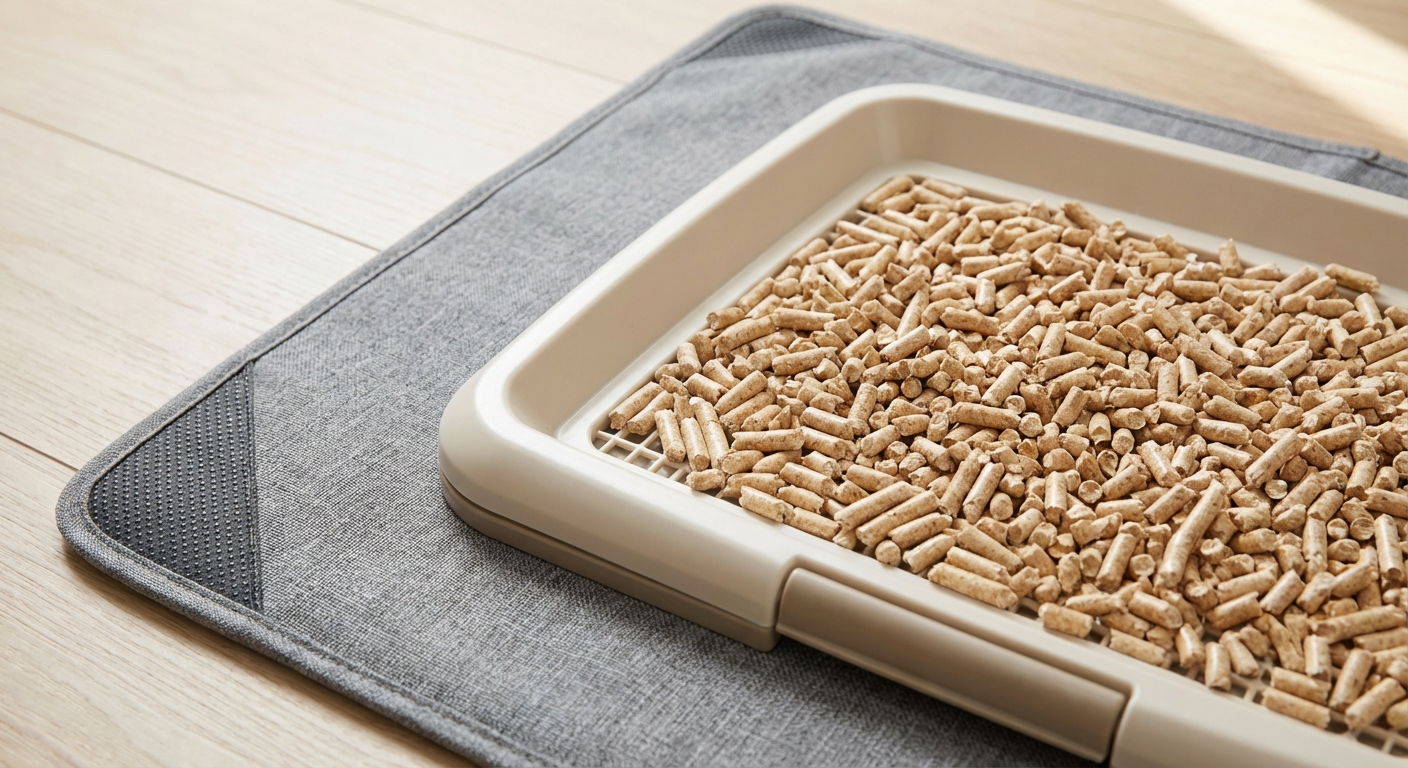
Location
Pick a spot that is:
- Easy to reach quickly, especially from the crate or pen.
- Quiet but not isolated. Puppies do not like feeling abandoned.
- Not near food and water. Most dogs prefer separation.
A simple step-by-step plan
1) Start with management, not freedom
For the first 1 to 2 weeks, use a crate plus puppy pen setup. Inside the pen, create two clear zones:
- Rest zone (crate/bed)
- Potty zone (litter box or tray)
This uses a puppy’s natural instinct to keep their sleeping area clean, while still giving them an approved place to go.
2) Use a schedule that matches puppy biology
Take your puppy to the box:
- Right after waking up
- After eating
- After playtime
- Before and after crating
- Any time you see sniffing, circling, or sudden wandering
3) Add a cue word
Use a short cue like “Go potty” when your puppy is in the box. Say it once, calmly. When they finish, praise and reward.
4) Reward generously
Pick one high-value treat that your puppy does not get at other times. Give it within a few seconds of finishing. This is how you build a strong, reliable habit.
5) Gradually expand the home space
Once your puppy is using the box reliably for a full week with few or no accidents, expand access one small area at a time. If accidents return, shrink the area again. That is not failure, it is feedback.
Common problems and simple fixes
My puppy uses the box sometimes, but not always
- Likely cause: Too much freedom too soon or an inconsistent schedule.
- Fix: Go back to pen management and increase “to the box” trips for a few days.
My puppy plays in the litter or eats it
- Likely cause: Curiosity, boredom, or a litter that is too enticing.
- Fix: Try paper pellets or a grass-style tray, increase enrichment and supervised time, and consider a tray with a grate cover if safe for your pup.
My puppy pees next to the box
- Likely cause: The box is too small, too tall to enter quickly, or the target area is unclear.
- Fix: Size up the box, lower the entry, add a washable splash mat around it, and reward when your puppy is fully in the box or tray.
My puppy shreds potty pads
- Likely cause: Pads feel like a fun toy, especially for teething puppies.
- Fix: Use a pad holder or tray with a grate, limit access unless you are supervising, and offer a legal chew option right away. If shredding continues, switch to paper pellets or a grass tray.
The house smells like a bathroom
- Likely cause: Not cleaning often enough or using the wrong cleaner.
- Fix: Scoop daily, fully change litter on a schedule, and clean accidents with an enzymatic pet cleaner. Avoid ammonia-based cleaners because they can encourage re-soiling.
What should I do right after an accident?
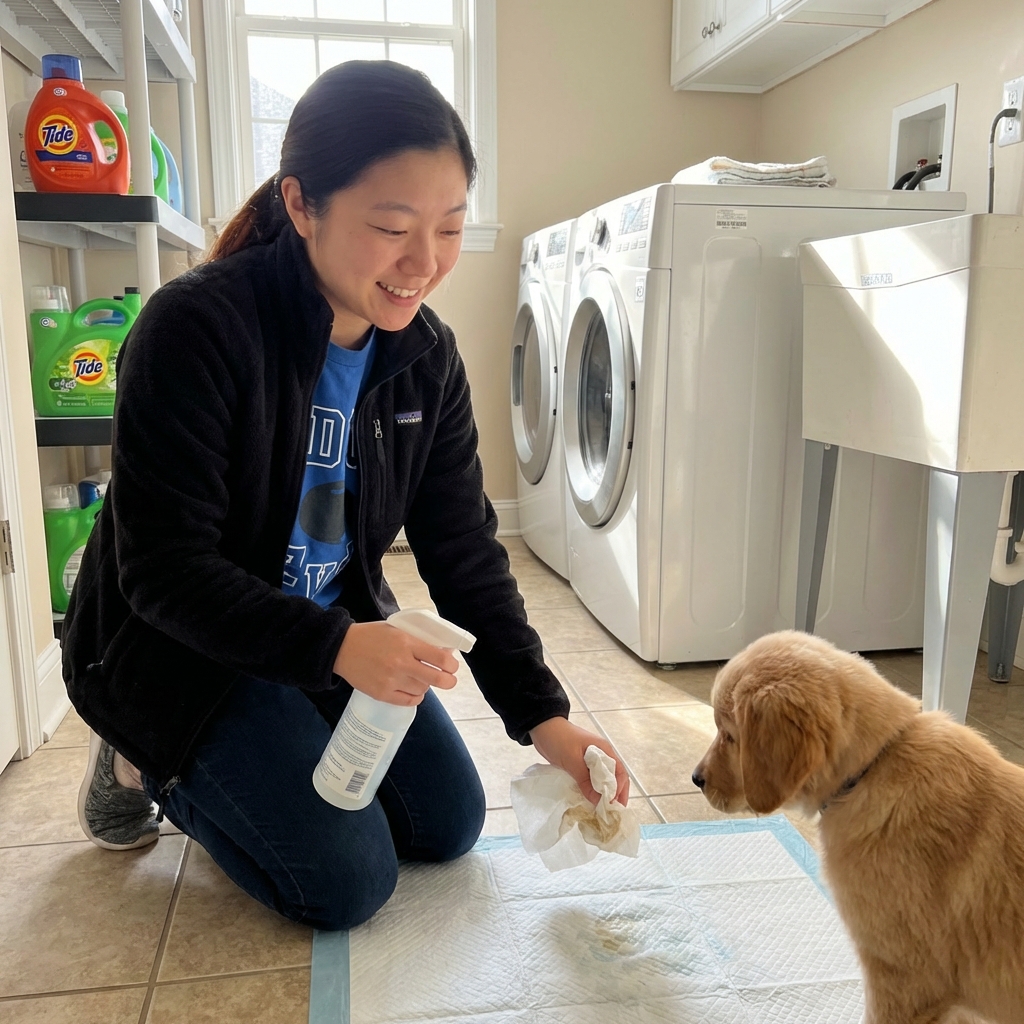
- Step 1: Stay neutral. Do not punish. Just interrupt gently if you catch them mid-stream and guide them to the tray.
- Step 2: Clean thoroughly with enzymatic cleaner and dispose of waste safely.
- Step 3: Adjust management. More supervision, smaller space, and more frequent potty trips for the next day or two.
Indoor and outdoor training can work together
Many families worry that indoor potty habits will prevent outdoor potty success later. In real life, plenty of puppies learn two acceptable options when you make the difference clear:
- Keep the indoor box in one consistent location.
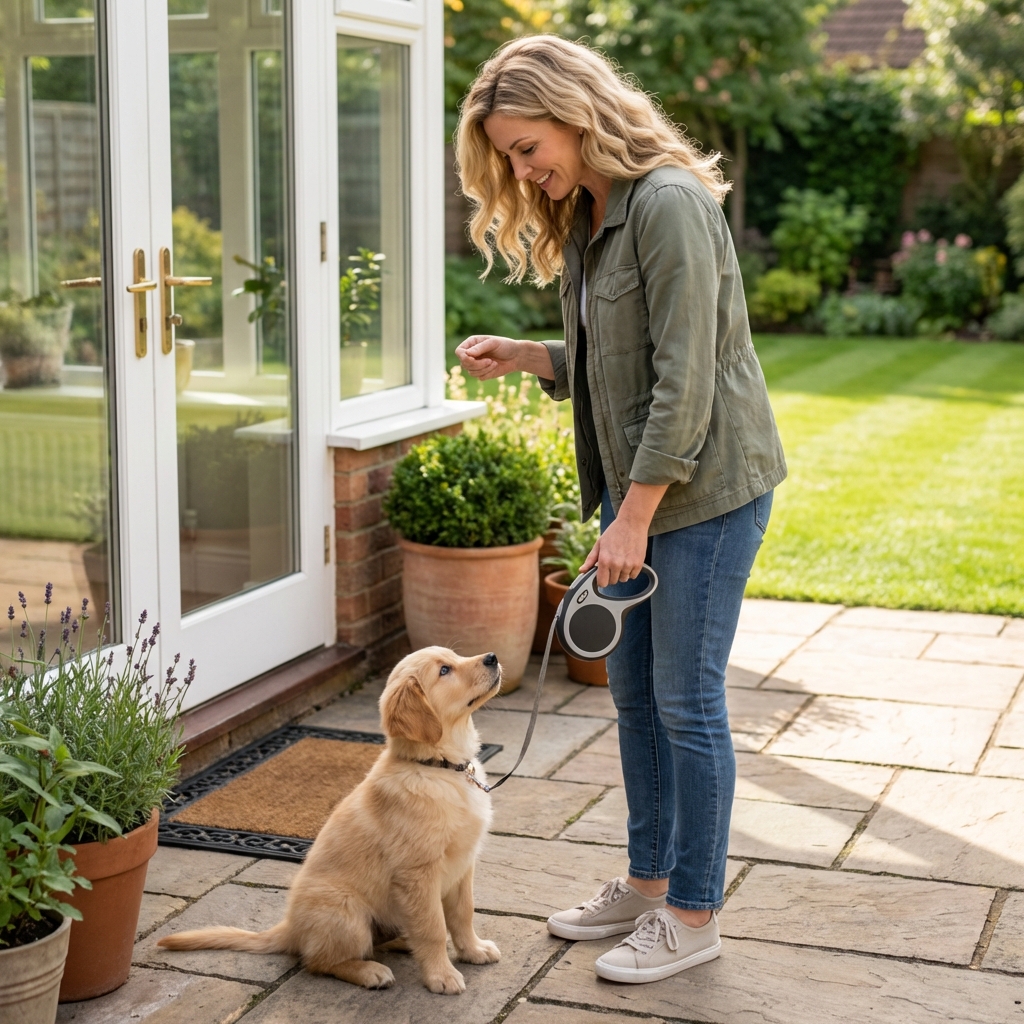
- Use a different cue for outdoors, like “Go potty outside.”
- Reward outdoor potty even more generously as you transition.
- As your puppy matures, you can slowly reduce indoor access if your goal is fully outdoors.
If you are using pads or pellets and your long-term goal is outdoor grass, a helpful bridge is to transition to a grass-style tray indoors first, then move that tray closer to the door over time, and finally outside. Keep the cue word and reward the same throughout.
Cleaning and hygiene
- Scoop and dispose daily. Seal waste in a bag and place it in an outdoor trash bin if possible.
- Wash hands after cleanup. This matters for parasites that are more common in puppies.
- Protect your floors. A washable mat under and around the tray makes cleanup easier and reduces lingering odor.
- Keep it boring. The potty area should not feel like a play zone. The cleaner and simpler it is, the faster training usually goes.
Health and safety notes
- Watch stool and urine. Sudden diarrhea, straining, blood, frequent urination, or accidents after being trained can indicate parasites, dietary upset, or a urinary tract issue. Call your vet.
- Puppies need hydration. Do not restrict water to force “better” potty behavior. Instead, manage timing and supervision.
- Vaccination caution is real. Until your vet confirms your puppy is protected, avoid high-dog-traffic areas where parvo risk can be higher (like shared apartment dog runs). Local risk varies a lot, so follow your veterinarian’s guidance for your region.
Kind training works best: clear setup, clear schedule, and fast rewards. Punishment does not teach the potty location, it only teaches fear and hiding.
Quick checklist: your next 7 days
- Pick one litter type and stick with it for a week.
- Choose one permanent potty location.
- Use a crate and pen to prevent “mystery accidents.”
- Log potty times for 3 days to find your puppy’s pattern.
- Reward within a few seconds after every success.
- Clean accidents with enzymatic cleaner only.
- Scoop daily and wash hands after cleanup.
If you do these basics consistently, most puppies show noticeable improvement quickly. And if you hit a snag, it is usually a small tweak, not a total restart.