Step-by-step daily litter box training for kittens, adult cats, and rescues. Learn ideal box and litter setup, calm placement, accident cleanup, troubleshoot...
Article
•
Designer Mixes
Litter Box Training for Cats

Shari Shidate
Designer Mixes contributor
Litter box training is one of the most rewarding wins you can have with a new kitten or a newly adopted adult cat. The best part is that most cats already want to do the “right thing.” Our job is to set up a bathroom that feels safe, smells acceptable, and is easy to access.
As a veterinary assistant, I have seen that most litter box problems are not “bad behavior.” They are usually a setup issue, stress, or a medical concern like a feline lower urinary tract problem. This guide walks you through a simple, practical approach that aligns with common veterinary and feline behavior guidance.
What you need
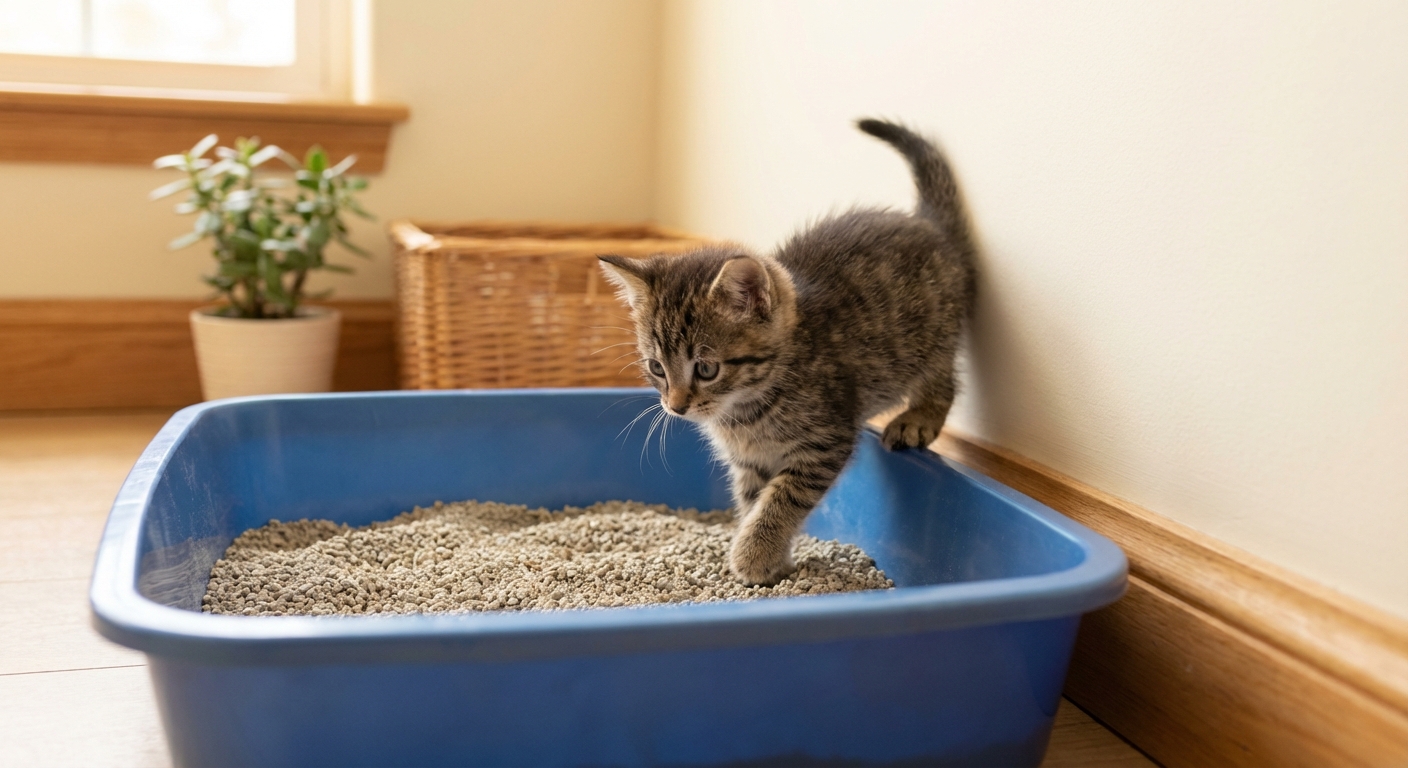
Before training starts, gather the basics. The right supplies prevent most accidents.
- Enough litter boxes. A common feline behavior guideline is one box per cat, plus one extra (often written as the n+1 rule). It helps reduce crowding and conflict.
- A box with the right size and entry. Choose a box large enough for your cat to turn around and dig comfortably. As a rough guide, many cats do best with a box about 1.5 times their body length (not counting the tail). Kittens and seniors often need a low entry, and some cats with arthritis do best with a low-entry box or a shallow step or ramp.
- Unscented litter. Many cats dislike strong perfumes. Unscented clumping litter is often an easy starting point.
- A scoop and a small trash container. Daily scooping matters more than people realize.
- Enzymatic cleaner. Many household cleaners do not fully remove odor, which can pull cats back to the same spot.
- Optional but helpful: a litter mat, a night light near the box, and puppy pads for early training or mobility issues.
Set up the box
Pick the right location
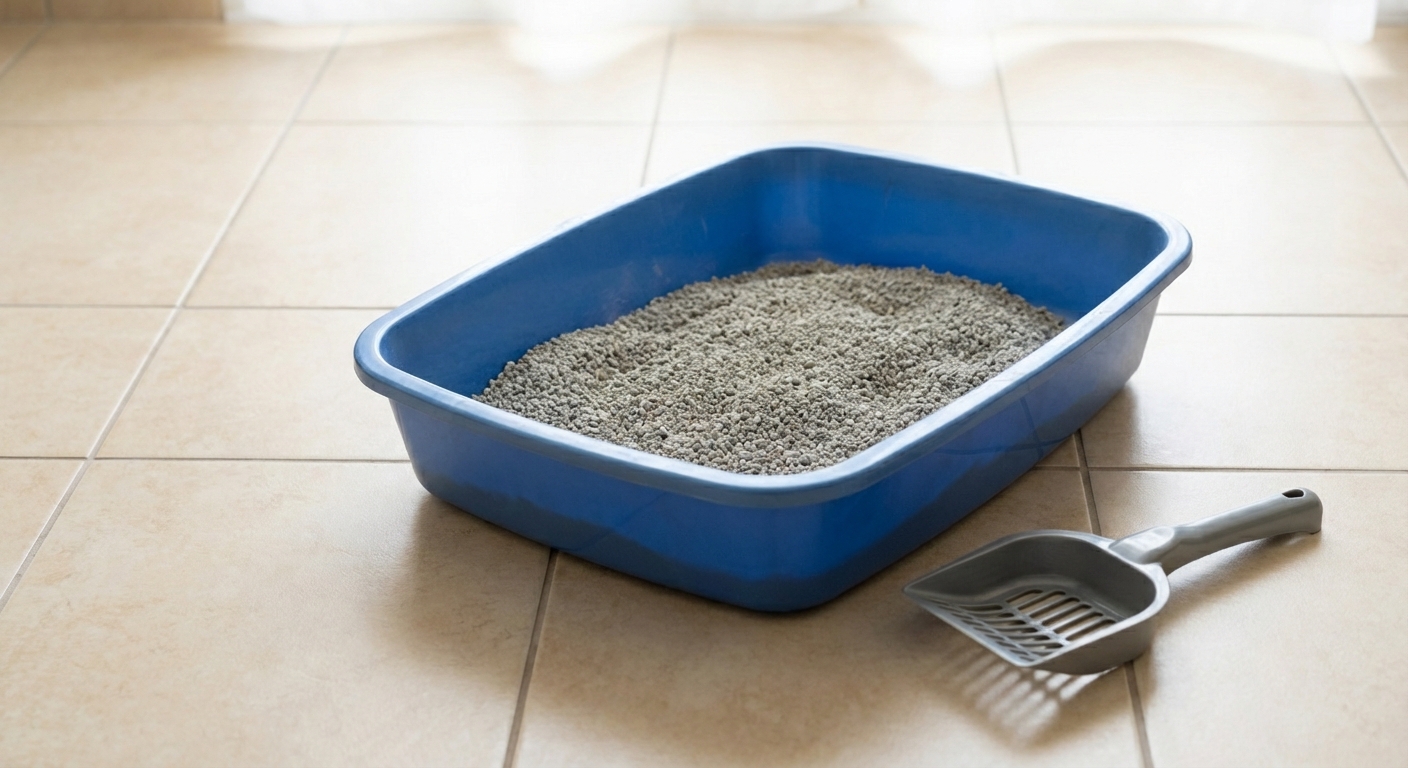
Cats want privacy and safety, not isolation. Choose a spot that is quiet but easy to reach. Avoid placing the box next to loud appliances like washers, dryers, or furnaces. Also avoid dead-end areas where another pet can corner them.
Keep food and water separate. Most cats do not want to eliminate near where they eat.
Make access easy. In larger homes, place a box on each floor. For seniors or cats with mobility issues, reduce stairs and tight turns as much as possible.
Covered or uncovered?
Covered boxes can trap odors and make some cats feel unsafe. If you use a covered box, make sure it is large and cleaned frequently. For training, an uncovered box is usually the easiest choice.
How much litter
Many cats do well with about 2 to 3 inches of litter, but preferences vary. Some cats prefer a thinner layer. Very deep litter can feel unstable for some cats, especially kittens.
Multi-cat homes
Spread boxes out. Putting all boxes in one room often creates a “single bathroom” bottleneck, especially if one cat guards the area.
Kitten training steps
Kittens typically catch on quickly because the instinct is already there. Your goal is repetition and gentle timing.
- Start small. For the first few days, keep your kitten in a smaller “home base” room with the litter box, food, water, and a bed. This helps them build the habit without getting lost.
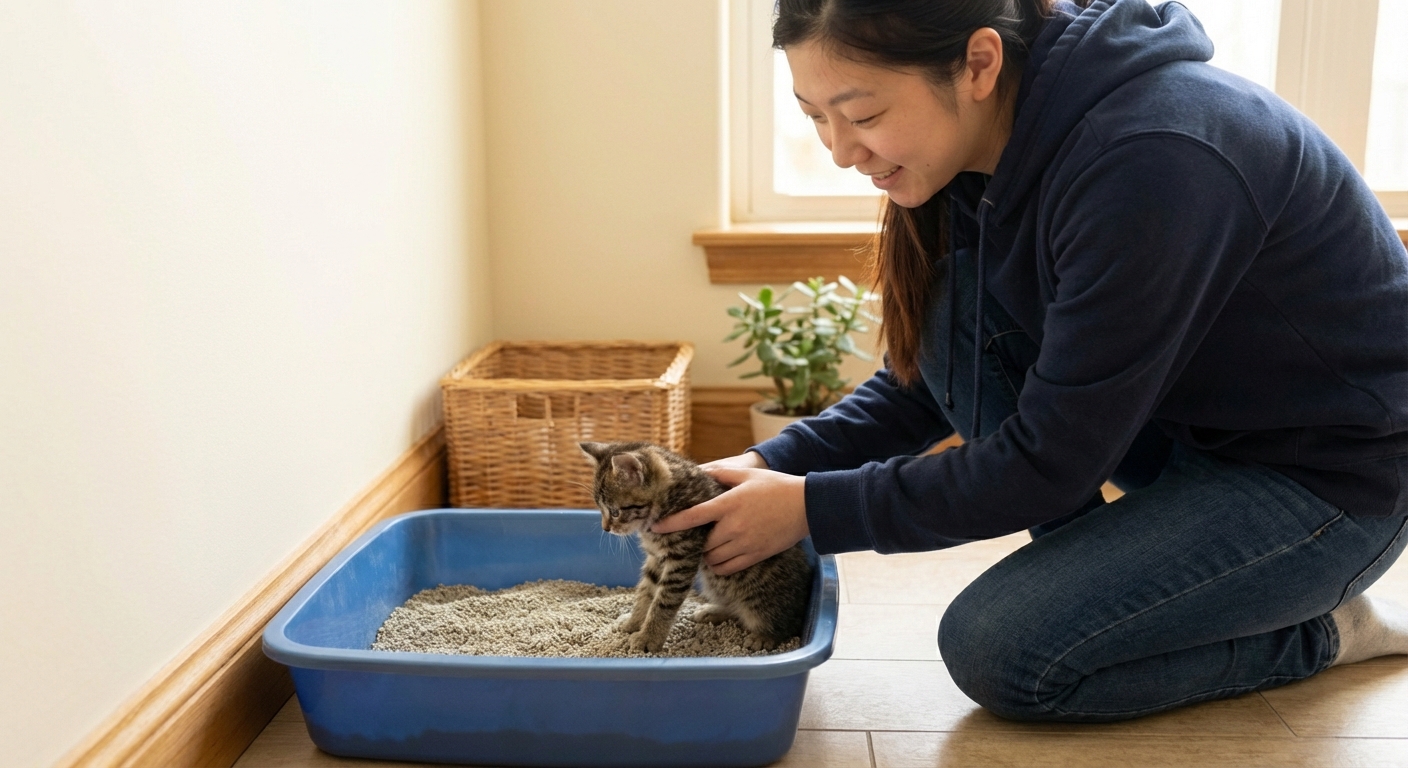
- Place them in the box after key moments. After waking up, after eating, and after play are the most common times kittens need to go.
- Let them step out on their own. If they jump out immediately, calmly place them back once or twice, gently. Do not force them to stay.
- Praise softly after success. A calm “good job” and a gentle pet is plenty. Overexcited praise can startle some kittens.
- Keep the box extra clean. Kittens can be very picky. Scoop at least once daily, ideally twice.
If accidents happen, treat them as information. It usually means the box was too far away, too dirty, or the kitten did not recognize the spot in time.
In the moment: If you catch your kitten mid-act and you can do it without scaring them, quietly interrupt and gently guide them to the box. Then clean the area thoroughly with an enzymatic cleaner.
Adult cat training
Adult cats can learn litter box habits quickly, but they may be coming in with stress, past preferences, or pain. Patience and consistency are key.
Step 1: Rule out medical issues
If your adult cat is urinating outside the box, especially if it is sudden, schedule a veterinary visit. In cats, lower urinary tract signs are often not a simple UTI and can include idiopathic cystitis (bladder inflammation), crystals, or other causes. Kidney disease, diabetes, arthritis, and constipation can also show up as litter box issues.
Urgent red flags: frequent trips to the box with little urine, crying or straining, blood in urine, vomiting, lethargy, or a painful abdomen. Male cats can develop a urinary blockage, which is a life-threatening emergency.
Step 2: Use a reset room
A smaller home base room helps rebuild the habit. Provide:
- One or two boxes
- Unscented litter
- Comfort items like a bed and hiding spot
- Food and water far from the box
Once your cat uses the box consistently for several days, slowly expand access to the rest of the home.
Step 3: Match preferences
If your cat avoids the box, experiment with preferences one change at a time:
- Litter type: many cats prefer fine-grain, sand-like texture
- Box style: uncovered, low entry, or extra-large storage bin style
- Cleanliness: scoop daily, wash the box with mild soap weekly
- Location: quiet, accessible, not trapped
Step 4: Reduce stress
Stress can drive accidents, especially in new homes or multi-pet households. Consider:
- More vertical space like cat trees and shelves
- Predictable routines for feeding and play
- Separate resources in multi-cat homes (food, water, beds, litter boxes)
- Pheromone diffusers if recommended by your vet
Marking vs toileting
Not all “peeing outside the box” is the same problem.
- Toileting accidents are usually puddles on horizontal surfaces and often point to box setup, substrate preference, stress, or a medical issue.
- Urine marking (spraying) is often small amounts on vertical surfaces (walls, furniture legs). It is more common in unneutered cats, but it can happen with stress or territorial tension.
If you suspect spraying, talk to your vet. The plan may include medical rule-outs, reducing household stress, and behavior support. Neutering or spaying can help in many cases.
Best routine
- Scoop: 1 to 2 times daily
- Top off litter: as needed to keep depth consistent
- Full change: follow the litter manufacturer guidance and use odor and cleanliness as your cue. For many clumping litters, a full dump and refresh is often needed every 2 to 4 weeks, but it varies with box size, number of cats, and scooping frequency.
- Wash the box: mild dish soap and warm water, then dry completely
Avoid strongly scented or harsh cleaners that can leave a residue cats dislike. If you use disinfectants like diluted bleach, rinse thoroughly and let the box dry completely. Never mix cleaning chemicals.
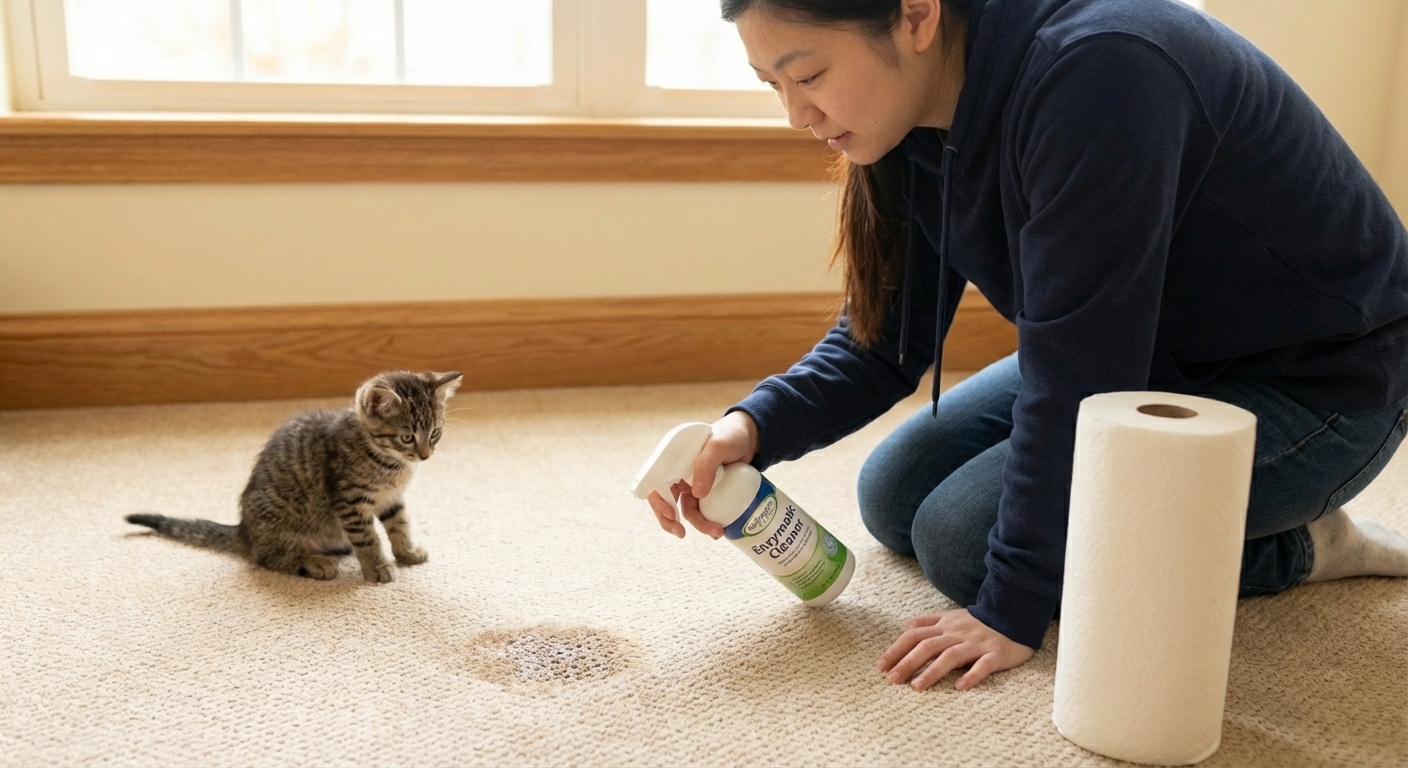
Clean accidents
Cats return to places that smell like a bathroom to them. This is why cleanup needs to be thorough.
- Blot fresh urine immediately. Press firmly with paper towels or a clean cloth.
- Use an enzymatic cleaner. Follow the product directions and allow enough contact time.
- Avoid ammonia-based cleaners. Ammonia can smell similar to urine.
- Block access while training. Use a closed door, a piece of furniture, or a laundry basket turned upside down temporarily.
If your cat keeps choosing a specific surface (like a bed, laundry pile, or bath mat), think “substrate preference.” Add an extra litter box near that spot temporarily and try a different litter texture. Keep soft items picked up until the habit resets.
Common mistakes
- Too few boxes for the number of cats
- Box is too small or has a high entry for kittens or seniors
- Scented litter or liners that feel or smell unpleasant
- Moving the box repeatedly before the habit is established
- Scolding or punishment which increases fear and hiding
- Not addressing pain such as arthritis or constipation
If your cat stops using the litter box, assume it is a health or comfort issue first. Behavior is communication.
Troubleshooting
Peeing next to the box
- Try a larger box and a lower entry.
- Scoop more often.
- Move the box a few feet away from a noisy area.
- Schedule a vet check if this is new or frequent.
Pooping outside the box
- Constipation is common, especially in older cats. A vet visit can help.
- Try adding a second box in a different location.
- Consider litter texture changes, since some cats dislike certain textures.
Using the box sometimes
- Increase the number of boxes.
- Spread boxes across the home.
- Watch for household stressors like new pets, visitors, or schedule changes.
Kicking litter everywhere
- Use a high-sided box or a larger storage bin style box.
- Add a litter mat.
- Keep litter depth moderate so it is easy to dig without launching.
When to call the vet
Please do not wait if you see:
- Straining, crying, or frequent box trips
- Blood in urine or stool
- Sudden litter box avoidance
- Vomiting, lethargy, hiding, or appetite loss
- Any suspicion a male cat cannot urinate normally
Early treatment is not just kinder, it can prevent emergencies and expensive complications.
Bottom line
Litter box training is about creating a bathroom your cat trusts. Keep it clean, make it easy to reach, choose a comfortable litter, and never punish accidents. If things change suddenly, treat it like a health clue and get your vet involved.
With the right setup, most kittens learn in days, and most adult cats can be successfully retrained with a calm, structured routine.
References
- American Association of Feline Practitioners (AAFP) and International Society of Feline Medicine (ISFM): resources and guidelines on feline behavior, house-soiling, and litter box management
- International Cat Care (ISFM): practical guidance on litter trays and feline toileting behavior