Litter train your rabbit fast with a rabbit-safe box and litter, hay placement, gentle redirects, and rewards. Includes cleaning tips, troubleshooting, and s...
Article
•
Designer Mixes
Litter Box Training a Rabbit

Shari Shidate
Designer Mixes contributor
Rabbits are often surprisingly tidy, which is the best news you can hear when you are staring at a pile of hay and wondering how you are ever going to keep your home clean. Many bunnies naturally pick a bathroom corner, and your job is to guide that instinct into a litter box routine.
As a veterinary assistant in Frisco, Texas, I have seen litter box success happen fast when owners focus on the right setup, litter, and calm consistency. Below are the practical facts that make the biggest difference. (This is general guidance, so if your rabbit has health issues or training suddenly falls apart, your rabbit-savvy veterinarian can help tailor a plan.)
Before you start: what “trained” means
Litter training a rabbit is less like training a dog and more like setting up a smart environment. Many rabbits become very consistent with urine in the litter box, while stray poops may still appear around their space. That is normal.
- Urine habits usually improve quickly with the right box placement and litter.
- Poop pellets can be dropped while hopping, eating, or relaxing, even by “trained” rabbits.
- Unfixed rabbits often mark territory, especially after puberty, which can make training frustrating.
Spay and neuter: the biggest factor
If you want the smoothest path to litter box reliability, plan to spay or neuter. Hormones can drive spraying, territorial pooping, and corner marking. Fixing your rabbit often improves litter habits dramatically.
- Neutering males typically reduces spraying and improves consistency.
- Spaying females can reduce marking and also helps prevent serious uterine disease. The risk rises with age in unspayed does, so talk with your vet about ideal timing.
Work with a rabbit-savvy veterinarian and ask about timing, pain control, and post-op care. A calm recovery space also supports litter training because stress can trigger accidents.
Pick the right litter box
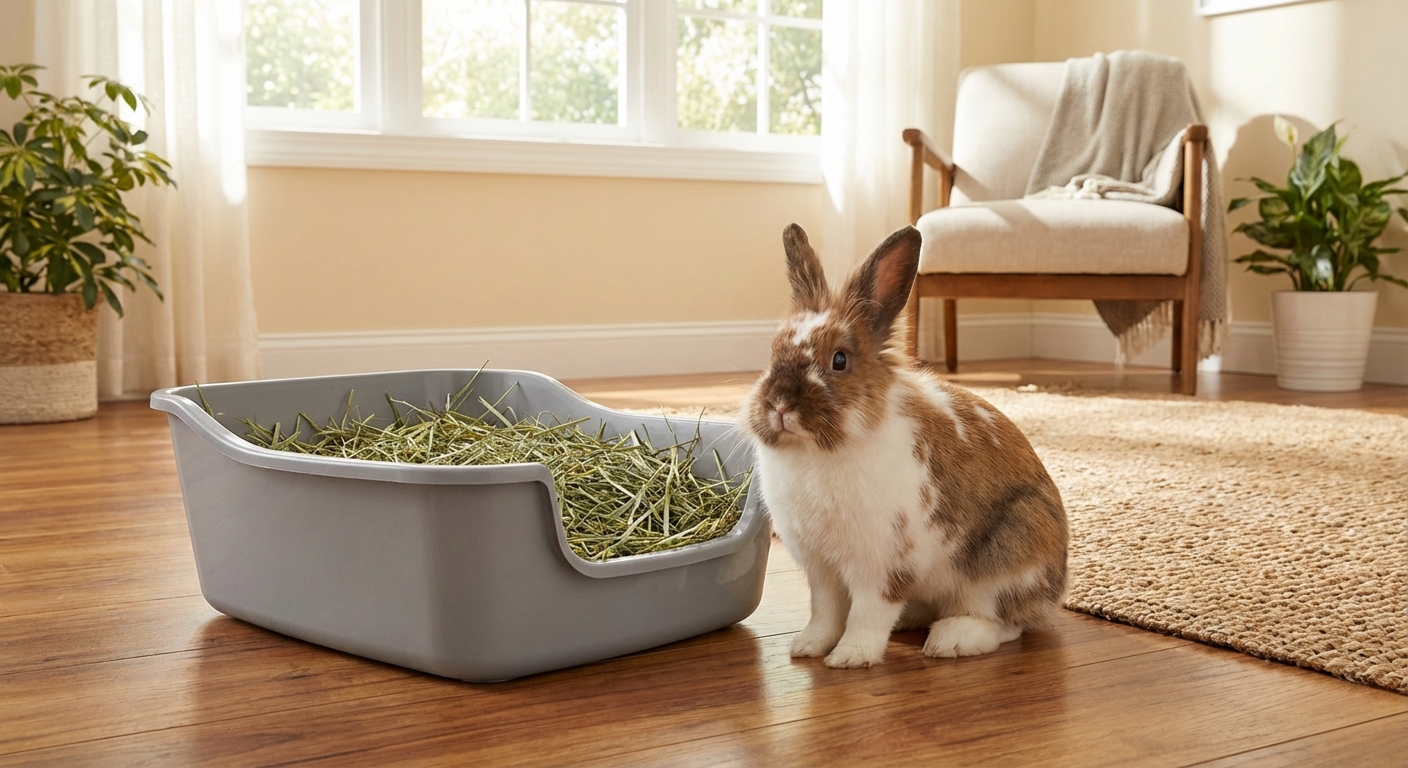
Many “small animal” boxes sold in pet stores are too small. Your rabbit should be able to hop in, turn around, and lounge comfortably.
Best options
- Large cat litter box (simple, roomy, easy to find).
- High-back box if your rabbit pees upward or misses the edge.
- Low-entry box for senior rabbits or rabbits with mobility issues.
Some rabbits prefer an open, hoodless box for comfort and ventilation. Covered boxes can trap odor, so if you use one, monitor smell closely and clean more often.
If your bunny loves to dig, consider a box with taller sides and a stable placement so it does not slide.
Rabbit-safe litter only
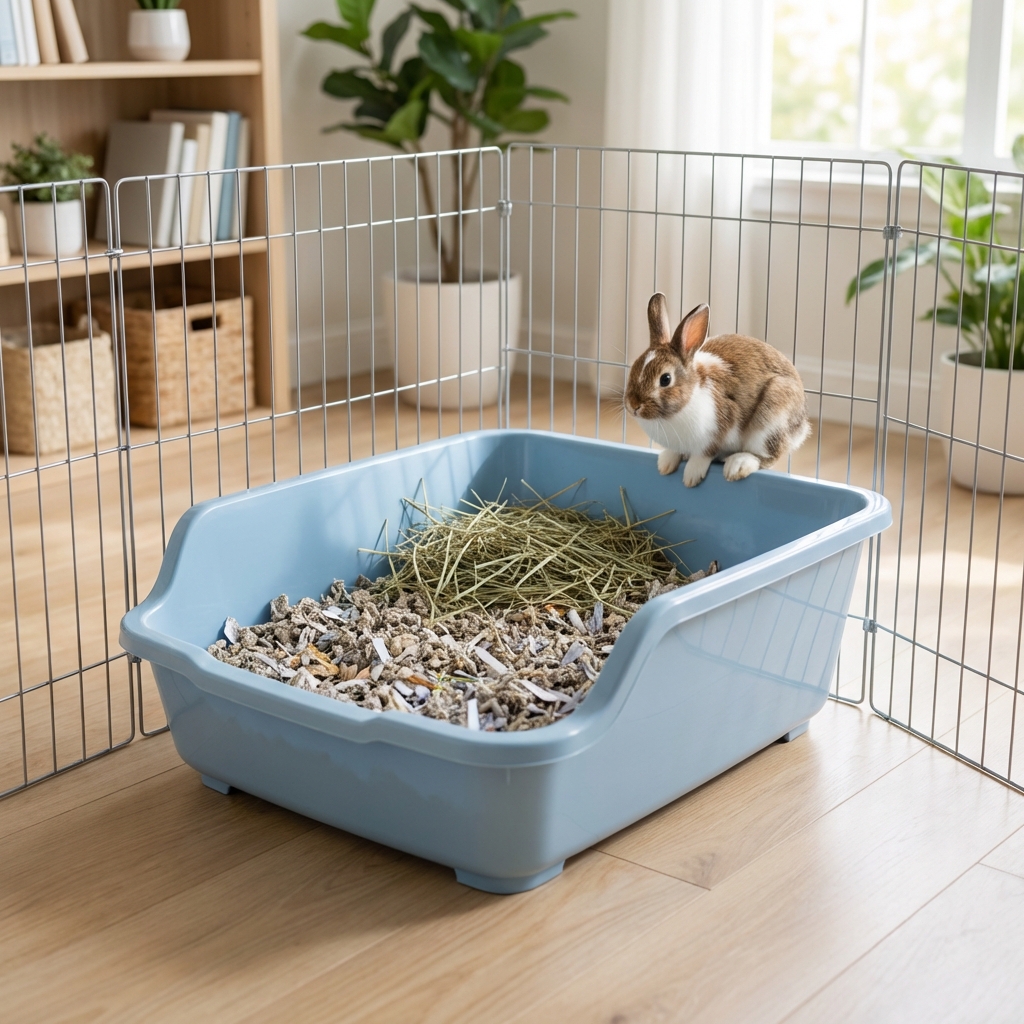
Rabbits spend a lot of time in their litter boxes because that is where the hay is. The litter needs to be safe for delicate lungs and curious mouths.
Good litter choices
- Paper-based pellets (low dust, absorbent).
- Aspen shavings (choose low-dust, ideally kiln-dried; some rabbits are still sensitive).
- Compressed wood pellets (only if untreated and low dust). If you are considering “stove pellets,” verify the brand is 100% untreated wood with no accelerants, additives, or fragrance.
Avoid these
- Clumping clay litter (dusty and can pose a risk of GI blockage if ingested).
- Pine and cedar shavings (aromatic oils can irritate the respiratory tract).
- Anything heavily scented (rabbits are sensitive to strong smells).
Tip: If you are unsure, bring a photo of the litter bag to your rabbit vet and ask if it is appropriate.
Hay placement: the fast track
Many rabbits like to eat and poop at the same time. Use that to your advantage.
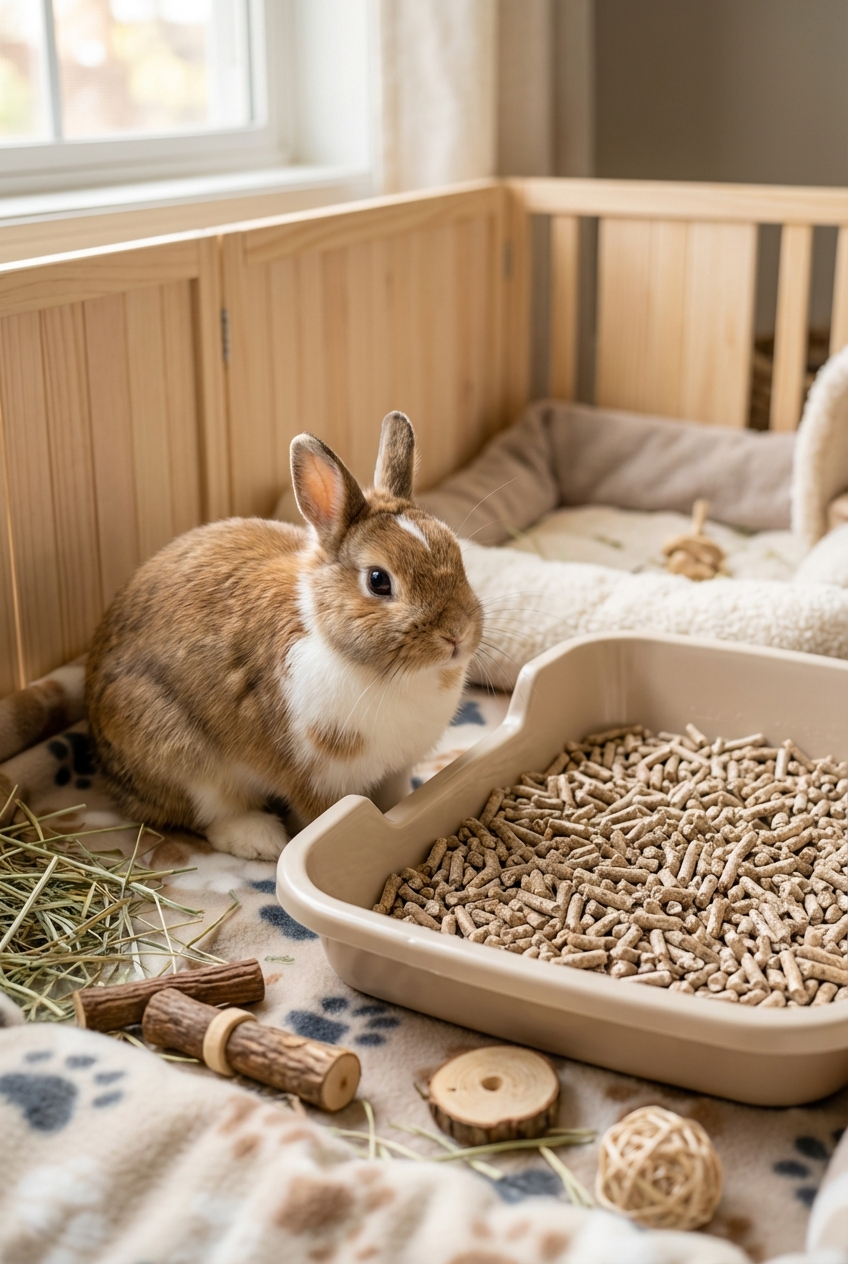
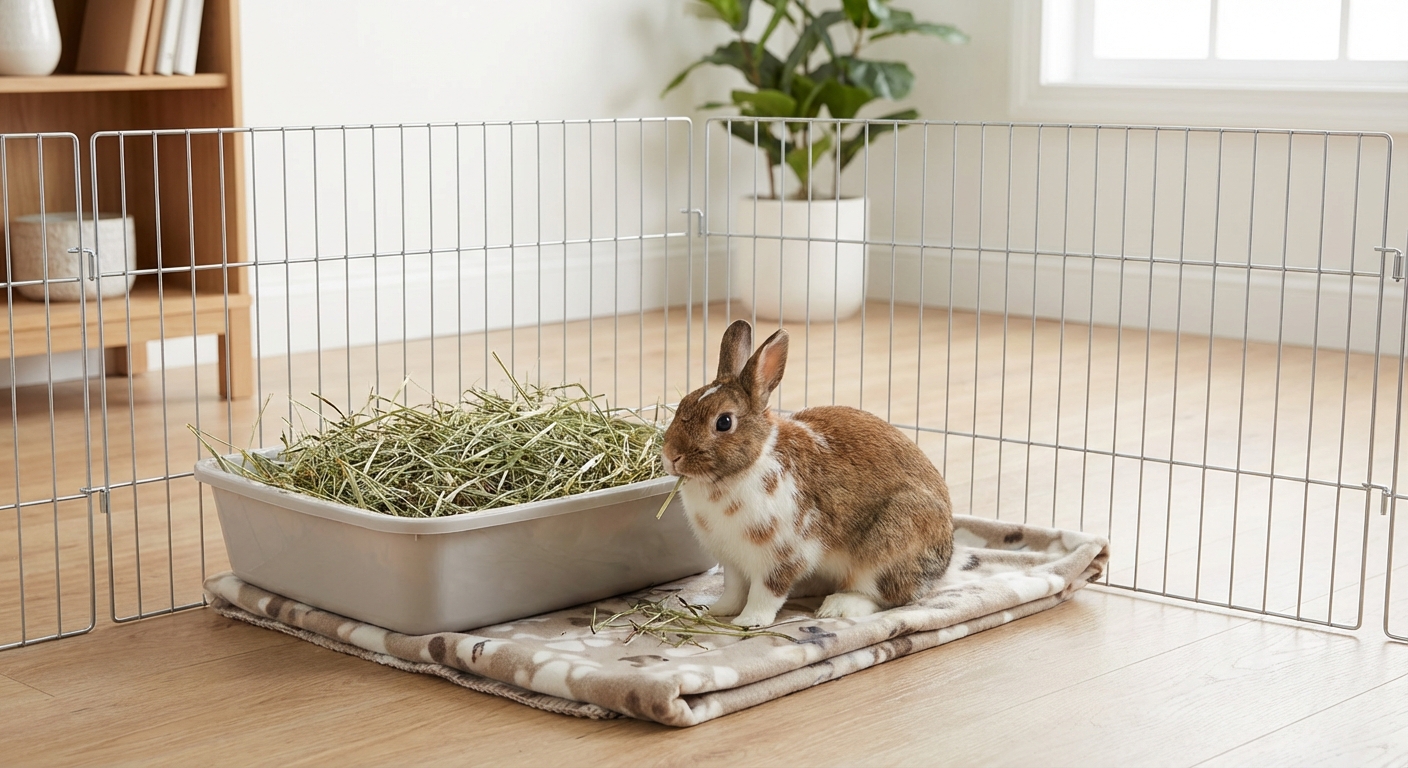
- Put fresh hay directly in one end of the litter box, or place a hay rack so hay falls into the box.
- Offer the best hay only in the box during training. Make the box the most rewarding spot.
- Refresh hay often. If hay is stale, your rabbit may choose another corner.
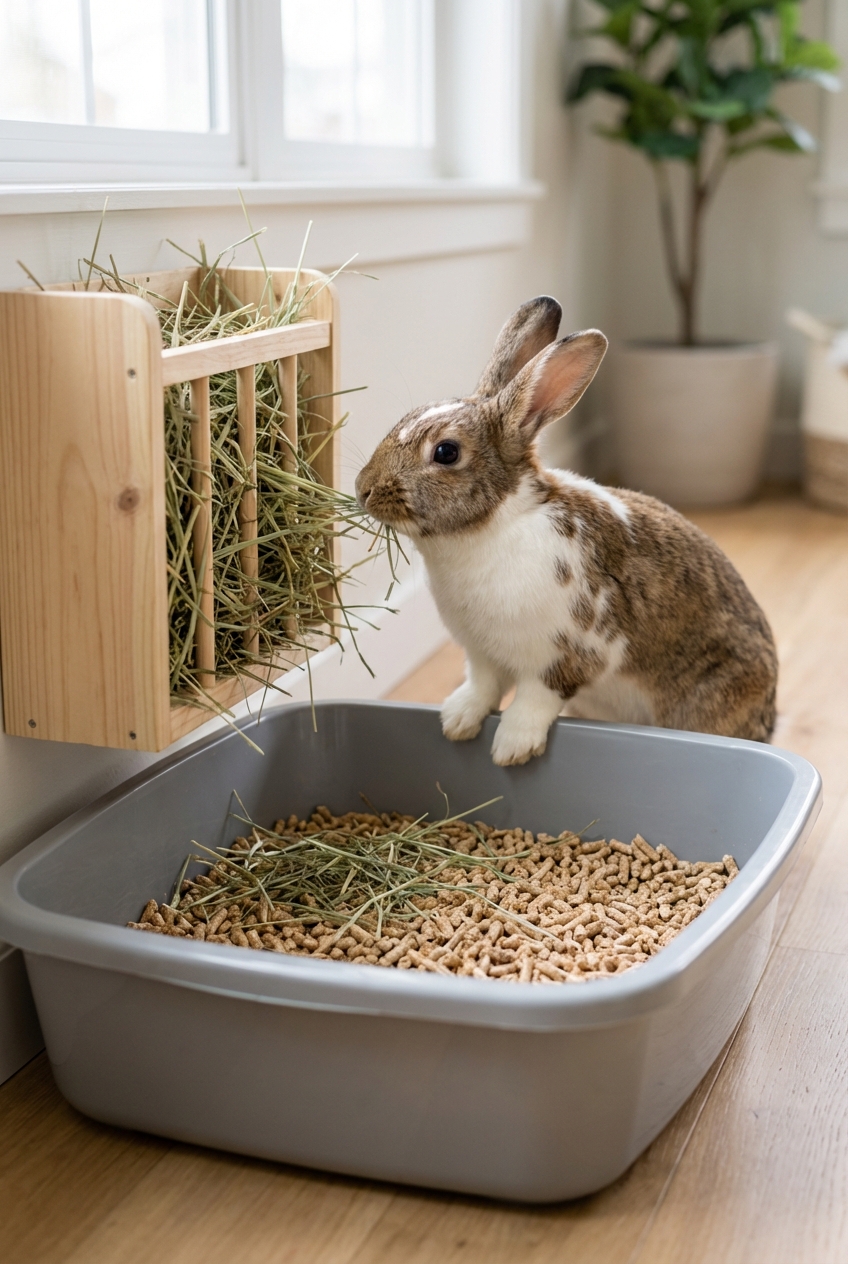
Set up the box correctly
A simple setup keeps your rabbit comfortable and your cleanup easy.
- Add about 1 to 2 inches of pellet litter (paper pellets or untreated wood pellets).
- Put hay on one side of the box, or use a rack so hay drops into the box.
- If odor is a challenge, a thin layer of litter topped with hay often works better than piling litter too deep.
Step-by-step training
1) Start small
Begin in an exercise pen or a small bunny-proofed area. Too much space too soon often leads to multiple “bathroom corners.”
2) Put the box where your rabbit goes
If your rabbit has chosen a corner, put the litter box there. If you put the box where you want it, and not where your rabbit wants it, training takes longer.
3) Add a little “evidence”
Put a few droppings and a small tissue dabbed with urine into the litter box. Use only a small amount, and replace the tissue promptly so the box stays hygienic. This helps your bunny recognize it as the correct bathroom spot.
4) Redirect gently
If you see your rabbit backing into a corner, calmly guide them into the box. No scolding. Fear slows learning.
5) Clean accidents the right way
Use an enzyme cleaner safe for pets on any areas outside the box. Regular soap may not fully remove scent cues, and rabbits tend to return to spots that smell like a bathroom. Avoid ammonia-based cleaners, since that smell can mimic urine and encourage repeat accidents.
6) Expand space slowly
Once your rabbit is reliable in the smaller area for a week or two, expand their roaming space. If accidents start again, shrink the space temporarily and rebuild.
7) Use more boxes for free-roam spaces
If your rabbit has access to multiple rooms, add extra boxes in key locations (near favorite resting spots and along the routes they use most). You can remove extras later once habits are solid.
What not to do
- Do not punish. It increases stress and slows learning.
- Do not move the litter box repeatedly. Let your rabbit build a consistent habit first.
- Do not use strong cleaners or heavy fragrance around the box area.
Cleaning routine
Rabbits may avoid a box that smells too strong or feels wet underfoot, but they also like a familiar scent. Aim for clean, not sterile.
- Daily: remove soaked litter spots and add fresh litter if needed, top off hay.
- Every 2 to 4 days: fully dump and wash the box with mild soap and water, then rinse well and dry. (Do this sooner if the box is damp or starts to smell.)
- If odor persists: use a pet-safe enzyme cleaner on the box, rinse thoroughly.
If you have a rabbit who is prone to sore hocks, keep the litter soft, dry, and supportive, and ask your vet for flooring recommendations.
Troubleshooting
“My rabbit pees next to the box.”
- The box may be too small. Upgrade to a larger box.
- Try a high-back box if your rabbit lifts their rear while urinating.
- Place a second box in the new “chosen” spot while you retrain.
“My rabbit poops everywhere.”
- Some stray pellets are normal.
- Increase hay in the litter box and reduce hay scattered around.
- If your rabbit is not fixed, territorial poops are more likely.
“My rabbit digs out the litter.”
- Use a deeper box and add more hay on top as a distraction.
- Consider a litter box with a grate designed for rabbits, but monitor comfort and cleanliness.
- Provide a separate dig box filled with shredded paper or safe soil to meet that natural need.
“My trained rabbit suddenly has accidents.”
This is a big one. A sudden change can be behavioral, but it can also be medical.
- Stress triggers: new pet, moving, schedule changes, loud construction.
- Environment: dirty box, new litter type, new box location.
- Health concerns: urinary tract issues, bladder sludge, uroliths (stones), pain, arthritis, or GI upset.
If accidents come on quickly, you notice straining, blood-tinged urine, reduced appetite, or fewer poops, contact a rabbit-savvy vet promptly.
Multi-rabbit homes
Bonded pairs can do great with litter boxes, but they usually need more capacity.
- Provide at least one box per rabbit, plus one extra if space allows.
- Use larger boxes or under-bed storage bins for big pairs.
- During bonding, expect marking and temporary setbacks.
Quick checklist
- Spay or neuter for best results
- Use a large box with comfortable entry
- Choose paper pellets or other low-dust, non-clumping litter
- Put hay in the box because eating and pooping go together
- Start with a smaller area and expand slowly
- Clean accidents with enzyme cleaner (skip ammonia cleaners)
- Sudden accidents can mean illness, call your rabbit vet if concerned
If you take one thing from this, let it be this: make the litter box the most comfortable, rewarding place in your rabbit’s space, and your bunny will usually do the rest.