Learn how to litter train a puppy with the right box, litter choices, and location. Get an easy step-by-step plan, reward timing tips, and fixes for common a...
Article
•
Designer Mixes
Litter Box Training a Dog

Shari Shidate
Designer Mixes contributor
Litter box training is not just for cats. For the right dog and the right household, it can be a clean, practical indoor potty option that protects your floors, reduces late-night trips outside, and helps during bad weather or apartment living. As a veterinary assistant, I also love it as a backup plan for senior dogs, small dogs, or pets with limited mobility.
Important note: A litter box is not a substitute for exercise, enrichment, and outdoor time. Think of it as a potty tool, not a lifestyle that keeps a dog indoors all day.
Quick scope note: This is training guidance, not medical advice. If your dog has sudden accidents, pain, or changes in urine or stool, check in with your veterinarian.
Is litter box training a good fit?
Many dogs can learn this skill, but some will take to it more easily than others. Success depends on body size, temperament, your schedule, and the setup you choose. Some dogs may never generalize reliably to an indoor box, especially if they have a strong preference for outdoor elimination.
Common reasons families choose a dog litter box
- Apartment life with long elevator rides or limited outdoor access
- Extreme weather days when outdoor potty breaks are hard
- Small breeds that have tiny bladders and need more frequent bathroom breaks
- Senior dogs who cannot hold it as long or who struggle with stairs
- Recovery after surgery when going outside is temporarily difficult
- Busy workdays as a backup between walks
Dogs who may struggle more
- Very large dogs who do not comfortably fit in standard boxes
- High-marking dogs who prefer vertical targets
- Dogs with anxiety who avoid confined spaces or change
- Pups with frequent diarrhea, which can require a medical plan first
Tradeoffs to consider
- It can blur the rules: Some dogs become more willing to potty indoors in general, especially during the learning phase.
- Travel and guest homes: Your dog may look for an indoor potty option in new places if the habit is strong.
- Outdoor training goals: If your long-term goal is outdoor-only, a box is usually best as a temporary tool or emergency backup.
If your dog is suddenly having accidents after being reliably housetrained, please loop your veterinarian in. Urinary tract infections, gastrointestinal parasites, arthritis pain, diabetes, and cognitive changes can all impact potty habits.
Pick the right setup
There is no single perfect system. The best setup is the one your dog will actually use consistently.
Box options
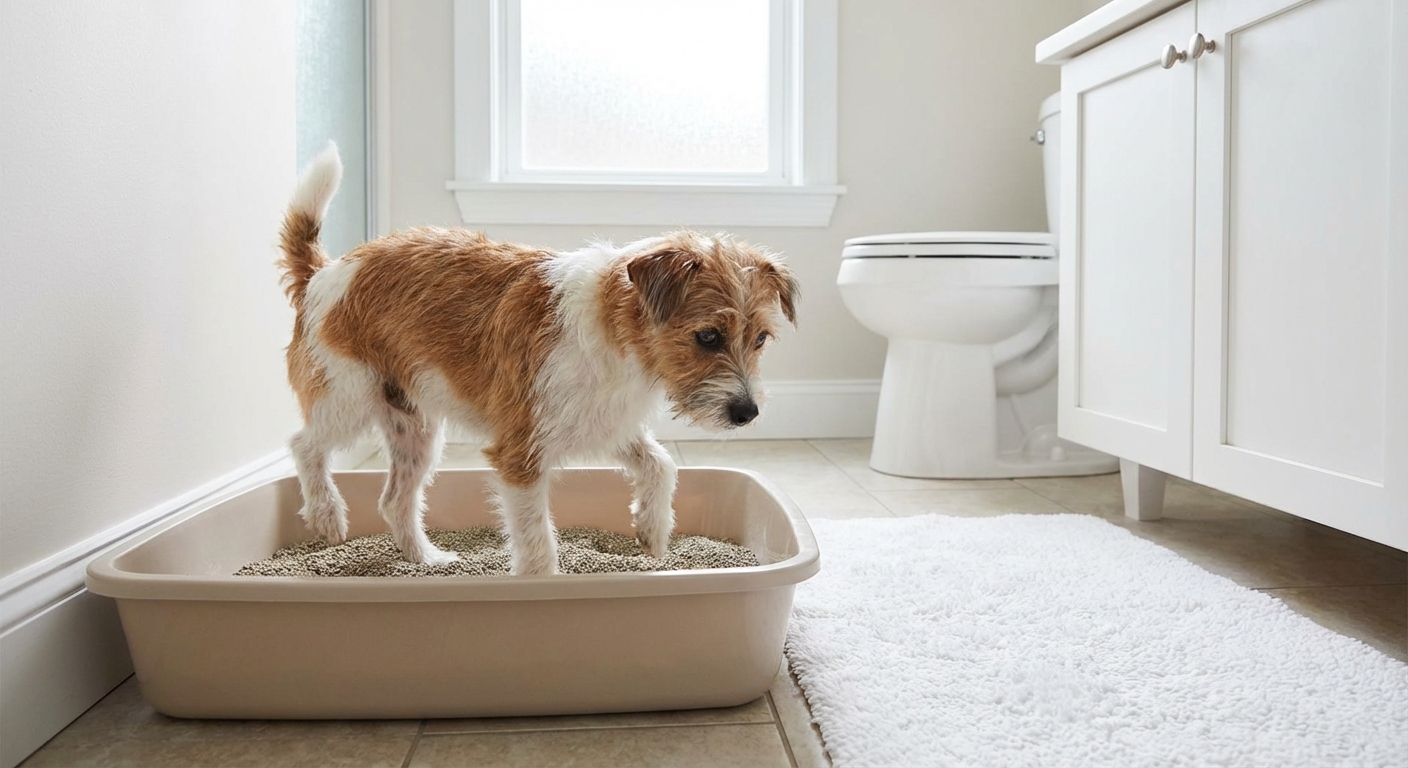
- Low-entry plastic litter pan: Great for small dogs and seniors. Easy to clean.
- Under-bed storage bin: Often large enough for small to medium dogs and inexpensive.
- Dog potty tray with a grate: Keeps paws drier if your dog dislikes texture.
- Indoor grass-style potty: Some dogs prefer this because it feels more like outdoors.
Size and sides
- Go bigger than you think: Your dog should be able to step in, turn around, and squat comfortably.
- Simple sizing rule: Aim for at least about 1.5 times your dog’s nose-to-base-of-tail length, with enough width to turn easily.
- Side height matters: Low entry helps seniors. Higher sides or a splash guard helps dogs that aim high.
What to put inside
Choose an absorbent, low-dust material that is safe if a curious puppy tastes it.
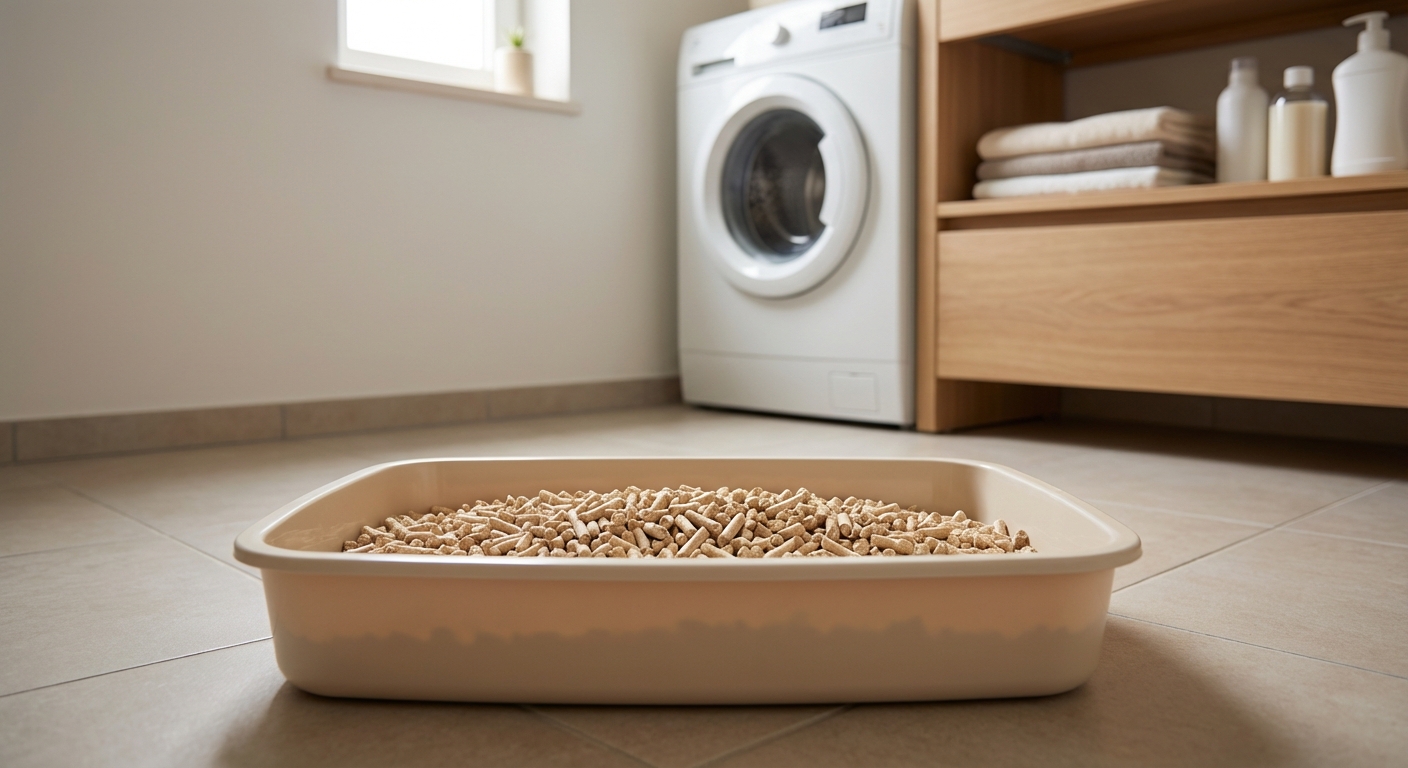
- Paper pellets: Low dust, generally gentle on paws, good odor control.
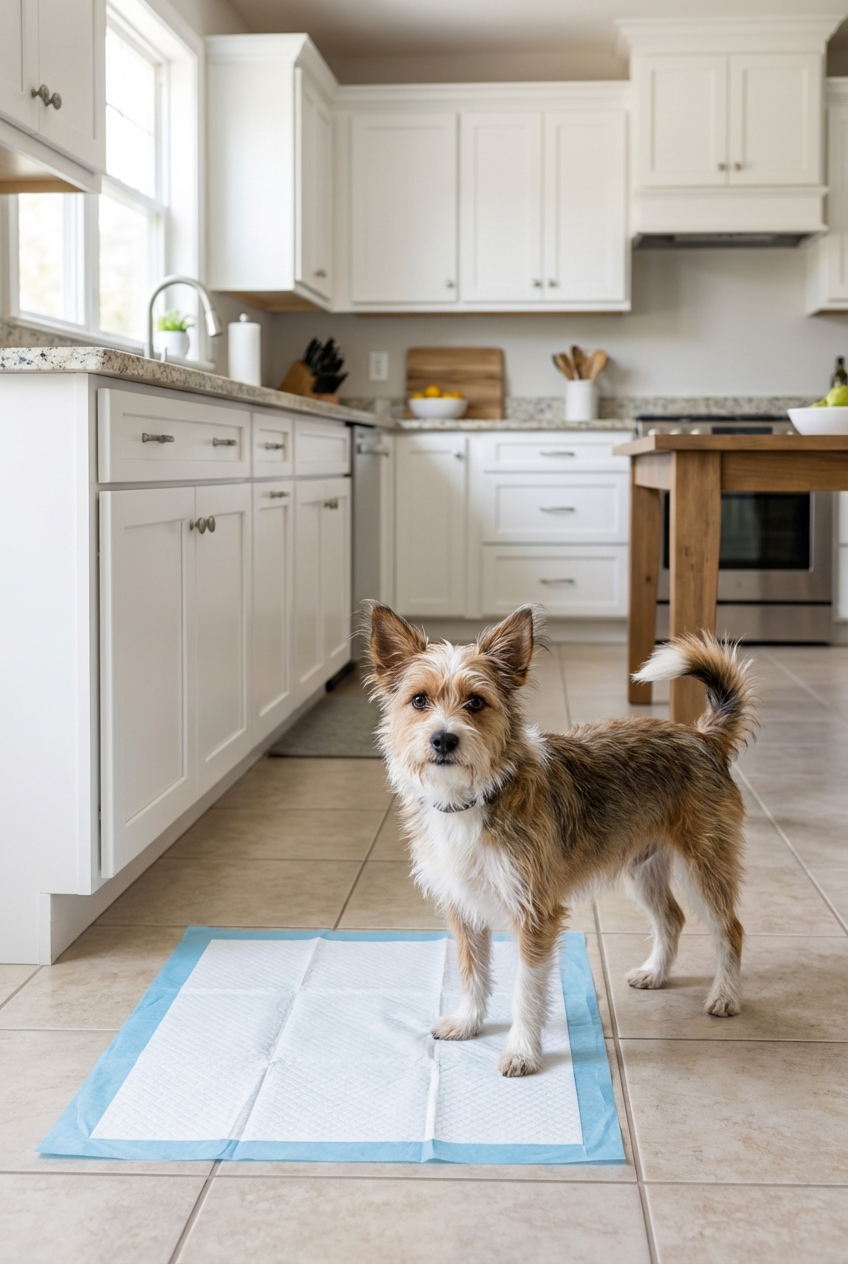
- Pee pads inside the tray: Very easy cleanup, helpful for training, but can encourage shredding in some dogs.
- Non-clumping dog-safe litter: Some families like it, but avoid heavily scented options.
Substrate safety tips:
- Avoid clumping clay litter for dogs who might eat it. It can be dangerous if ingested and you should contact your veterinarian promptly, especially if you see vomiting, lethargy, poor appetite, constipation, or belly discomfort.
- Avoid heavily scented products, including strong fragrance and essential oil scents, which can irritate sensitive noses and skin.
- Be cautious with mouthy puppies: Small pellets and loose litter can be chewed or swallowed. A grate-style tray or pad-in-tray setup can be safer during the chewing phase.
- Avoid silica gel crystal litters for dogs that might ingest them.
Where to place the box
Location can make or break the habit. Many dogs prefer a spot that feels private, calm, and predictable.
- Quiet and low-traffic, but not isolated or scary
- Easy to reach, especially for seniors or small dogs
- Away from food and water
- On a washable floor if possible, like tile or vinyl
If you are transitioning from outdoor potty training, start by placing the box in the area where accidents usually happen. Once your dog is reliably using it, you can slowly move it a few feet per day toward the final location.
Multi-dog homes
If you have more than one dog, consider setting up more than one potty station, especially in the beginning. Multiple options reduce competition, guarding, and last-second rushes. A simple starting point is one box per frequently used area, and add another if you notice crowding or avoidance.
Training steps
Training works best when it is simple, consistent, and heavily rewarded. You are building a new habit and a new surface preference.
Step 1: Introduce the box
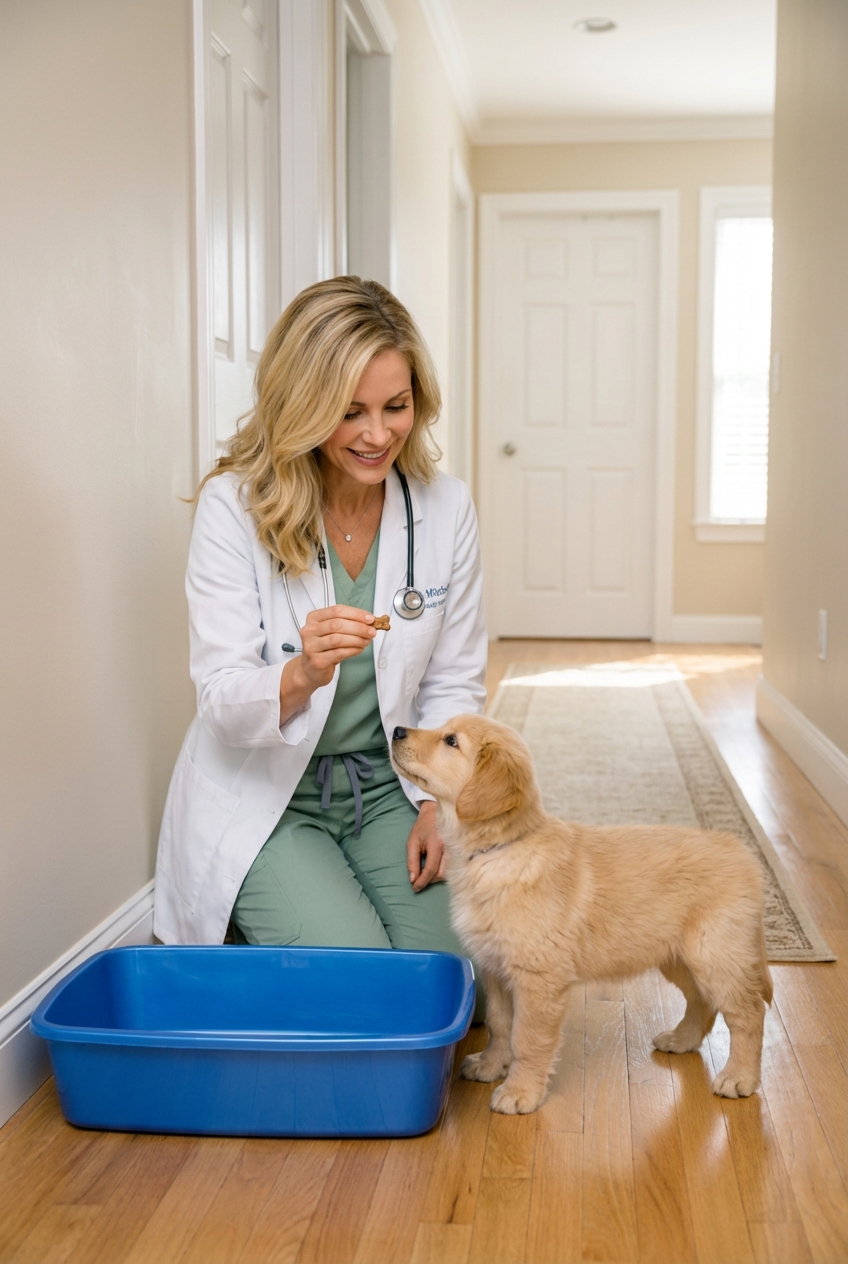
Let your dog sniff the box. Toss a treat near it, then in it, so stepping in becomes normal. Praise calmly.
Step 2: Use a schedule
For the first 1 to 2 weeks, guide your dog to the box:
- First thing in the morning
- After meals
- After drinking
- After play
- After naps
- Before bedtime
Stand quietly and give your dog 3 to 5 minutes. If nothing happens, try again in 10 to 15 minutes (or after a short walk around the home on leash) so you are not creating pressure or frustration.
Step 3: Add a cue and reward
Pick a cue like “go potty.” Say it once when your dog starts to sniff and circle. The second they finish, reward with a small high-value treat and gentle praise. Timing matters more than the treat size.
Step 4: Handle accidents calmly
Accidents are information, not defiance. If you catch your dog mid-accident, calmly interrupt and guide them to the box. If it already happened, clean it thoroughly and adjust your schedule.
Do not punish. Punishment often creates hiding behaviors and anxiety, which can make indoor potty habits worse.
Step 5: Use scent on purpose
Place a tiny piece of soiled pad or a small amount of urine in the box at first, so it smells like the correct bathroom spot. Dogs rely on scent to make decisions.
Cleaning and odor control
Dogs are less likely to use a dirty box, and odor control is key for your comfort.
- Scoop or remove solids right away
- Change pads or stir pellets daily as needed
- Wash the tray with hot soapy water weekly
- Avoid ammonia-based cleaners on accidents because the smell can mimic urine odor and make the spot more attractive
- Use an enzymatic cleaner on any accidents outside the box
If odor is persistent despite good cleaning, consider a vet check. Urine that is unusually strong or frequent can point to dehydration, urinary infection, or other health issues.
Common problems
Fear of the box
- Switch to a lower entry tray
- Use non-slip mats under it so it does not slide
- Feed treats near the box for a few days, no pressure
Steps in but will not potty
- Try a different substrate such as paper pellets instead of pads
- Add a small amount of their scent to the box
- Increase scheduled trips and reward more generously
Shreds pads
- Switch to pellets or a grate-style tray
- Provide more enrichment and chew options
- Supervise access until the habit is stable
Pees next to the box
- Use a larger tray so there is room to turn and squat fully
- Use higher sides or add a washable splash guard behind the box if they aim high
- Confirm the box is not too close to loud appliances
Marking
If your dog is lifting a leg and targeting walls or furniture, you may be dealing with marking rather than potty training. Neutering can reduce marking in some dogs, but training and management still matter. A vet visit is also wise to rule out urinary discomfort.
Age and special cases
Puppies
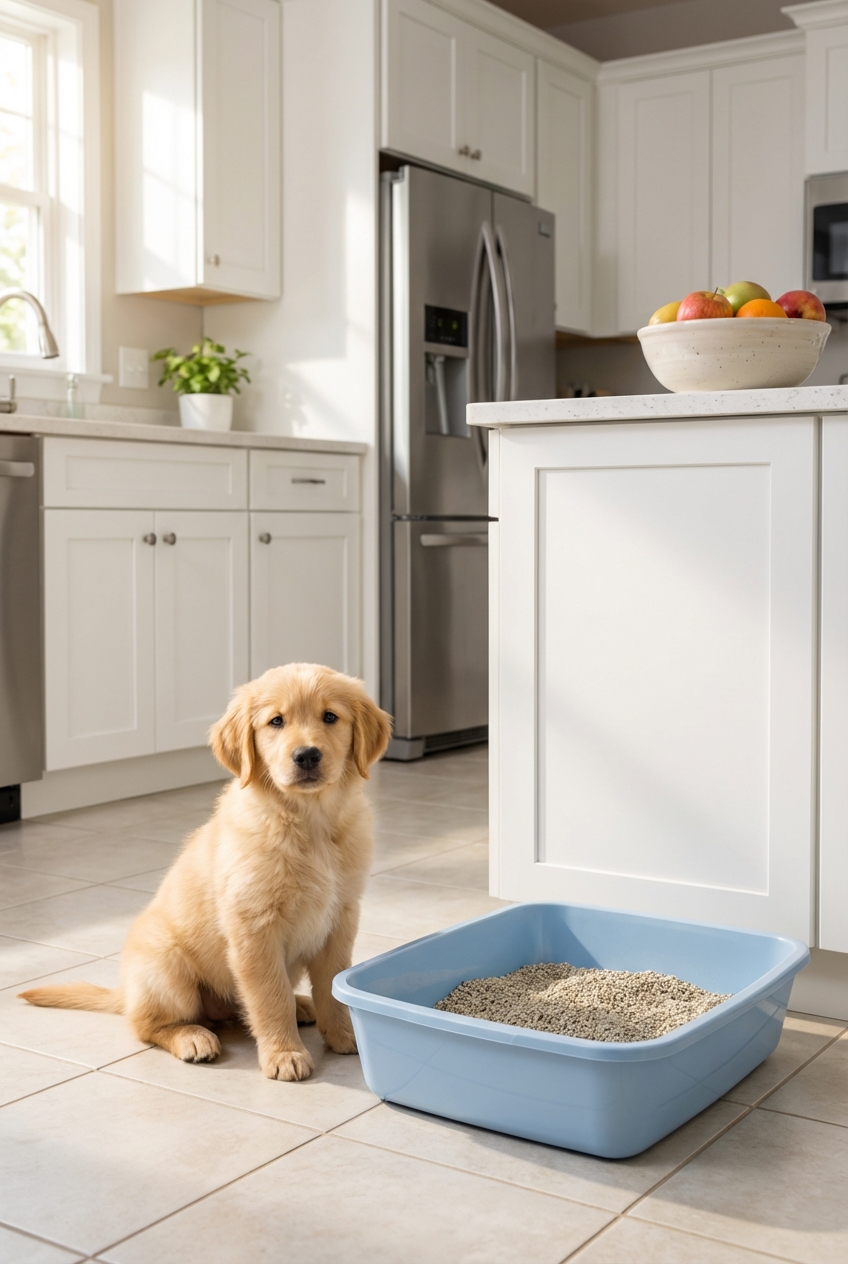
Puppies can learn a litter box, but their attention spans are short and their bladders are tiny. Keep sessions upbeat and frequent. Expect to guide them many times a day at first. If your puppy mouths everything, consider a grate-style tray or pad-in-tray setup to reduce chewing and swallowing risks.
Seniors
Litter boxes can be a kindness for older dogs. Choose a low-entry tray and place it near their sleeping area. If your senior dog is suddenly having accidents, please talk with your veterinarian. Pain from arthritis or a urinary tract infection can change bathroom behavior quickly.
Multi-story homes
If stairs are a barrier, consider one box on each level at first. Once habits are consistent, you can reduce to the most convenient location.
Health and safety
- Watch for constipation or diarrhea. Sudden stool changes should be addressed early.
- Check urine habits. Straining, blood in urine, licking the genitals, or frequent small pees warrant a same-day vet call.
- Keep the box stable. Wobbly trays can create long-term avoidance.
- Wash hands after cleaning and keep children away from the potty area.
The goal is reliability and comfort for both of you. Go slow, reward generously, and make the right choice the easy choice.
Simple starter routine
If you are feeling overwhelmed, keep it simple for the first week:
- Choose one box and one location
- Take your dog to the box on a schedule: morning, after meals, after naps, before bed
- Add extra trips after drinking and after play
- Reward immediately after success
- Clean accidents with an enzyme cleaner
- Adjust the setup if your dog avoids it
With consistency, many dogs start understanding the pattern within days and become more reliable over a few weeks.