Stop fleas fast with a realistic, family-friendly plan. Learn the flea life cycle, how to check for flea dirt, vet-approved treatments, home cleaning steps, ...
Article
•
Designer Mixes
Life Cycle of a Flea

Shari Shidate
Designer Mixes contributor
If you have ever wondered why fleas can seem to come back overnight, you are not imagining things. As a veterinary assistant here in Frisco, Texas, I can tell you that fleas are masters of timing. What you see on your dog or cat is only a small part of the problem. In many homes, a large share of the flea population is actually off the pet, hiding in your home or yard in stages you cannot easily spot.
This article walks you through the life cycle of a flea in clear, practical terms, plus what to do at each stage so you can finally break the cycle.
Why the flea life cycle matters
Fleas go through four life stages: egg, larva, pupa, and adult. The tricky part is that many flea products kill adult fleas quickly, but eggs, larvae, and especially pupae can linger in carpets, cracks in flooring, pet bedding, and shaded outdoor areas.
That is why consistency matters. If you stop too soon, new adults emerge and it feels like the infestation is “back,” when really it never fully ended.
One local note: in North Texas, flea season can be long. Mild winters and warm, humid stretches can keep fleas active for more months than people expect.
How to tell it is fleas
Not every itchy pet has fleas, so here is a quick way to check at home.
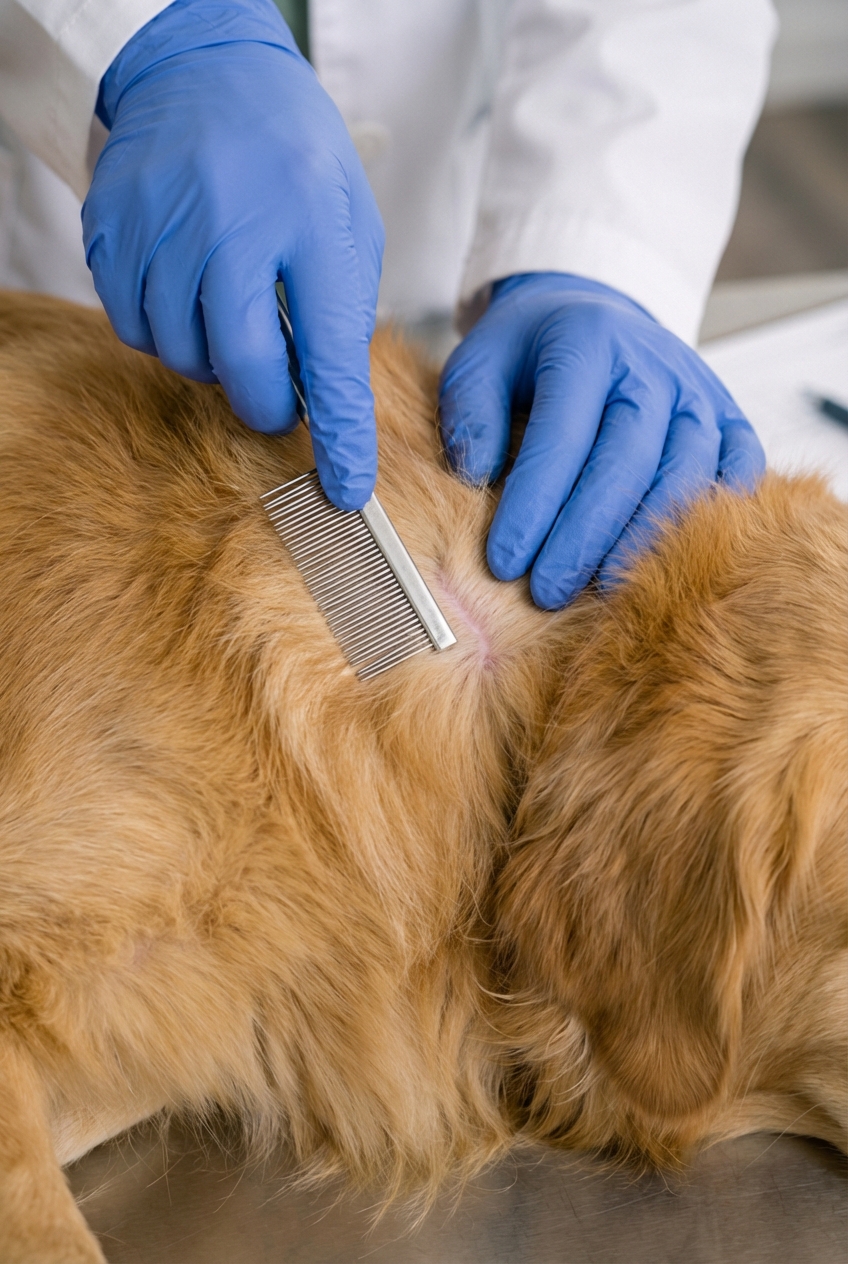
- Use a flea comb: comb along the back, tail base, and belly.
- Look for flea dirt: it looks like black pepper. Put the specks on a damp paper towel. If it turns reddish-brown, that is digested blood.
- What you might see on people: small, itchy bites often around ankles can be a clue that fleas are in the environment.
If you are unsure, your veterinary team can confirm and help you choose a safe plan for your pet’s age and species.
The four stages of a flea
1) Egg stage
After taking a blood meal, adult female fleas lay eggs on the pet, but the eggs do not stay there. They fall off into the environment, which is why you can see fleas on a pet even when the real “nursery” is your home.
- Where eggs are found: carpets, rugs, couch cushions, pet bedding, under furniture, baseboards, and shady outdoor soil
- How many: often 20 to 50 eggs per day under ideal conditions (sometimes more)
- How long this stage lasts: often a few days, but it varies based on temperature and humidity
What helps at this stage: frequent vacuuming (especially edges of rooms and under furniture), washing pet bedding in hot water, and keeping pets on a veterinarian-recommended flea preventive so adults cannot keep laying eggs.
2) Larva stage
Flea eggs hatch into tiny, worm-like larvae. Larvae avoid light, burrowing deeper into carpet fibers, under cushions, and into cracks. They feed on organic debris, including “flea dirt,” which is flea feces made mostly of digested blood that adult fleas drop off the pet.
- Where larvae live: dark, protected areas indoors and outdoors
- What they eat: flea dirt and other organic material
- How long this stage lasts: roughly 1 to 2 weeks in many home environments, longer in cooler or drier conditions
What helps at this stage: vacuuming and laundering are big. In heavier infestations, your veterinarian may recommend an insect growth regulator (IGR) as part of an integrated plan. IGRs help stop immature fleas from developing, but they do not kill adult fleas, so they are typically paired with an adult-killing product and consistent pet prevention.
3) Pupa stage
This is the stage that causes the most frustration. The larva spins a sticky cocoon and becomes a pupa. That cocoon can be tucked into carpet fibers or soil, and it is surprisingly protective.
- Where pupae are found: carpets, crevices, pet resting areas, shaded yard spaces
- Why it is hard to eliminate: cocoons can resist drying and many common sprays. Some professional approaches can help reduce the burden, but no product reliably wipes out all pupae immediately.
- How long this stage lasts: often 1 to 2 weeks, but adults can remain in the cocoon for weeks to months if conditions are not right
Important: vibration, heat, and carbon dioxide can trigger adults to emerge. That means fleas may “appear” when you come back from vacation or after you start cleaning, because movement tells them a host might be nearby.
What helps at this stage: persistence. Continue pet prevention, vacuum frequently, and keep your overall plan going long enough for pupae to emerge and get killed as new adults.
4) Adult flea stage
Once a flea emerges as an adult, it is ready to find a host. Adult fleas prefer to live on animals, where they feed and reproduce. This is the stage most people notice.
- What adults need: a blood meal
- What they cause: itching, hair loss, hot spots, scabs, and in sensitive pets, flea allergy dermatitis
- Extra risk: fleas can transmit tapeworms if a pet swallows an infected flea while grooming
What helps at this stage: veterinarian-recommended flea preventives used on schedule, plus treating all pets in the household. If one pet is untreated, fleas have a safe place to keep the cycle going.
Safety reminder: never use dog-only flea products on cats. Some ingredients (including permethrins) can be dangerous for cats. When in doubt, call your veterinarian before applying anything.
Fast answers
How long is the flea life cycle?
In warm, humid conditions, a flea can go from egg to adult in a few weeks. In less ideal conditions, especially at the pupal stage, it can take much longer. That is why flea control typically requires weeks of consistency, not just a single bath or spray.
Why do I still see fleas after I treated my pet?
Usually because new adult fleas are emerging from pupae in the environment. Your preventive may be working, but you are seeing the next wave. Keep treatment going and focus on environmental cleaning.
Do fleas live in the yard?
Yes, especially in shaded areas where pets rest. Fleas do not love hot, sunny, dry spots, but they can thrive in protected, humid microclimates such as under decks, shrubs, and shaded soil.
Can fleas live on humans?
Fleas can bite humans, but they generally prefer furry hosts and do not typically live on people long-term. If humans are getting bitten, it is a sign there is a population established in the environment.
What to expect
Even when you do everything right, you may still see fleas for 2 to 6+ weeks. That is usually not treatment failure. It is the pupae “catching up” and emerging on their schedule.
The goal is to keep protection steady so each new adult that hatches is killed before it can bite much and before it can lay more eggs.
How to break the flea cycle
Here is the evidence-based approach we most often recommend in clinic, tailored to the reality that fleas have multiple life stages.
- Treat every pet in the home with a veterinarian-recommended flea preventive, on schedule. Skipping doses is one of the biggest reasons fleas persist.
- Vacuum frequently, especially carpets, rugs, baseboards, and under furniture. In heavy infestations, aim for daily for 1 to 2 weeks, then several times a week as you get ahead of it. Empty the vacuum canister or replace the bag promptly.
- Wash pet bedding weekly in hot water and dry on high heat if the fabric allows.
- Ask your veterinarian about an IGR if you are battling a home infestation. IGRs help stop development of immature stages, and they work best as part of a combined plan.
- Use environmental products safely if you use sprays or foggers. Follow the label exactly, ventilate well, and keep pets and children away until the treated areas are fully dry.
- Do not forget the yard if your pets spend time outside. Focus on shaded areas and pet resting spots. Wildlife and visiting pets can also reseed your yard, so persistent outdoor pressure is common. Your local pest professional can help if the outdoor burden is high.
If you remember one thing, let it be this: flea control is not a one-time event. It is a short-term plan you stick with long enough to outlast the flea’s hidden stages.
When to call your veterinarian
Reach out to your veterinarian if your pet has intense itching, hair loss, scabs, hot spots, pale gums, or if you are seeing fleas despite consistent prevention. Puppies, kittens, seniors, and pets with chronic illness can become dehydrated or anemic faster, and they deserve extra caution.
Also ask about tapeworm screening if you have seen rice-like segments in stool or around the rear end, especially in a pet with fleas.
A quick encouragement
Fleas can make even the most loving pet parent feel overwhelmed. You are not failing. You are dealing with a pest that is built for survival. The good news is that once you understand the flea life cycle and stay consistent for long enough, you can absolutely turn the tide.