Teach your cat to enjoy calm, safe outdoor time with a harness and leash. Follow a step-by-step plan, choose the right gear, prevent escapes, and troubleshoo...
Article
•
Designer Mixes
Leash Training a Cat

Shari Shidate
Designer Mixes contributor
Leash training a cat can feel a little intimidating, especially if you have only walked dogs before. But many cats can learn to enjoy safe, supervised outdoor time with the right harness, the right pace, and a whole lot of patience. As a veterinary assistant in Frisco, Texas, I love this topic because it blends enrichment with safety. The goal is not to turn your cat into a “dog walker.” The goal is to help your cat feel confident, curious, and secure while you stay in control of the environment.
Is your cat a good candidate?
Some cats take to leash training quickly. Others will always prefer the indoors, and that is perfectly okay. Before you buy gear, take an honest look at your cat’s personality and health.
- Good signs: curious at doors and windows, enjoys interactive play, adapts well to small changes, food motivated.
- Proceed carefully: easily startled, history of bolting, fear aggression, chronic stress, or severe noise sensitivity.
- Check with your veterinarian first if your cat has heart or respiratory disease, mobility issues, or is significantly overweight. We want the experience to be enriching, not exhausting.
If your cat is a kitten, that is often the easiest time to start. Adult cats can absolutely learn too, it just may take longer.
Harness and leash basics
Using a collar and leash for “walking” is generally not recommended for cats. Cats can slip collars, and pressure on the neck can cause injury. A properly fitted harness is the safer foundation for training.
Choosing a harness
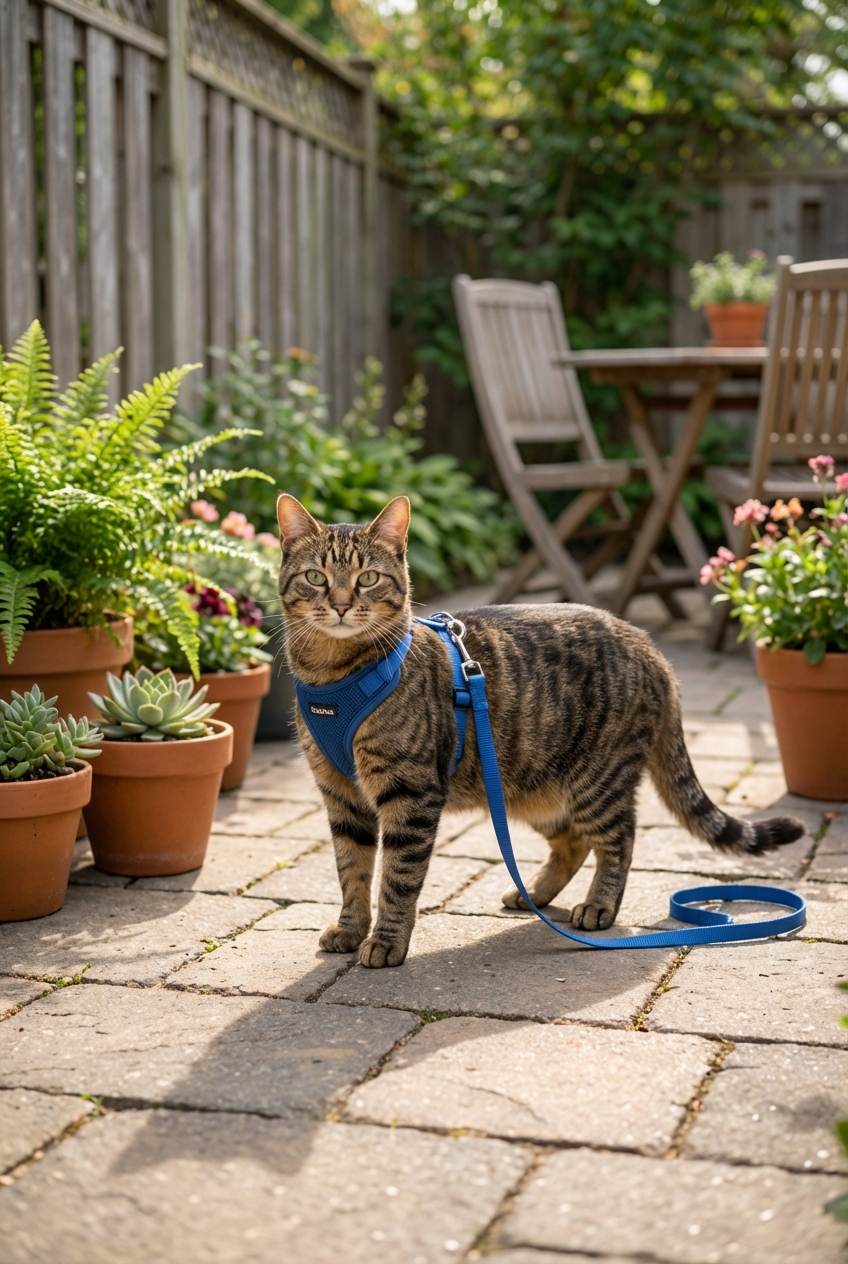
- Look for: an H-style or vest-style harness designed specifically for cats.
- Fit test: you should be able to fit one to two fingers under the straps, but your cat should not be able to back out of it.
- Skip: harsh materials, complicated buckles that pinch fur, or anything that rides up toward the throat.
Leash and accessories
- Leash: a lightweight 4 to 6 foot leash is ideal for training.
- Avoid retractables at first: they can startle cats, create sudden tension, and reduce control. They can also increase escape risk if your cat hits the end at speed.
- ID and microchip: even indoor cats should have current ID, and microchipping is strongly recommended before outdoor adventures.
Step-by-step leash training
Think of leash training as a gentle progression. Your job is to keep sessions short and positive so your cat chooses to participate. As a rule, do not move to the next step until you have at least two calm sessions in a row at the current step.
Step 1: Make the harness a “good thing”
- Place the harness near your cat’s favorite area for a few days.
- Pair it with treats, catnip (if your cat enjoys it), or a short play session.
- Let your cat sniff and investigate. No pressure.
Step 2: Harness on for seconds, then minutes
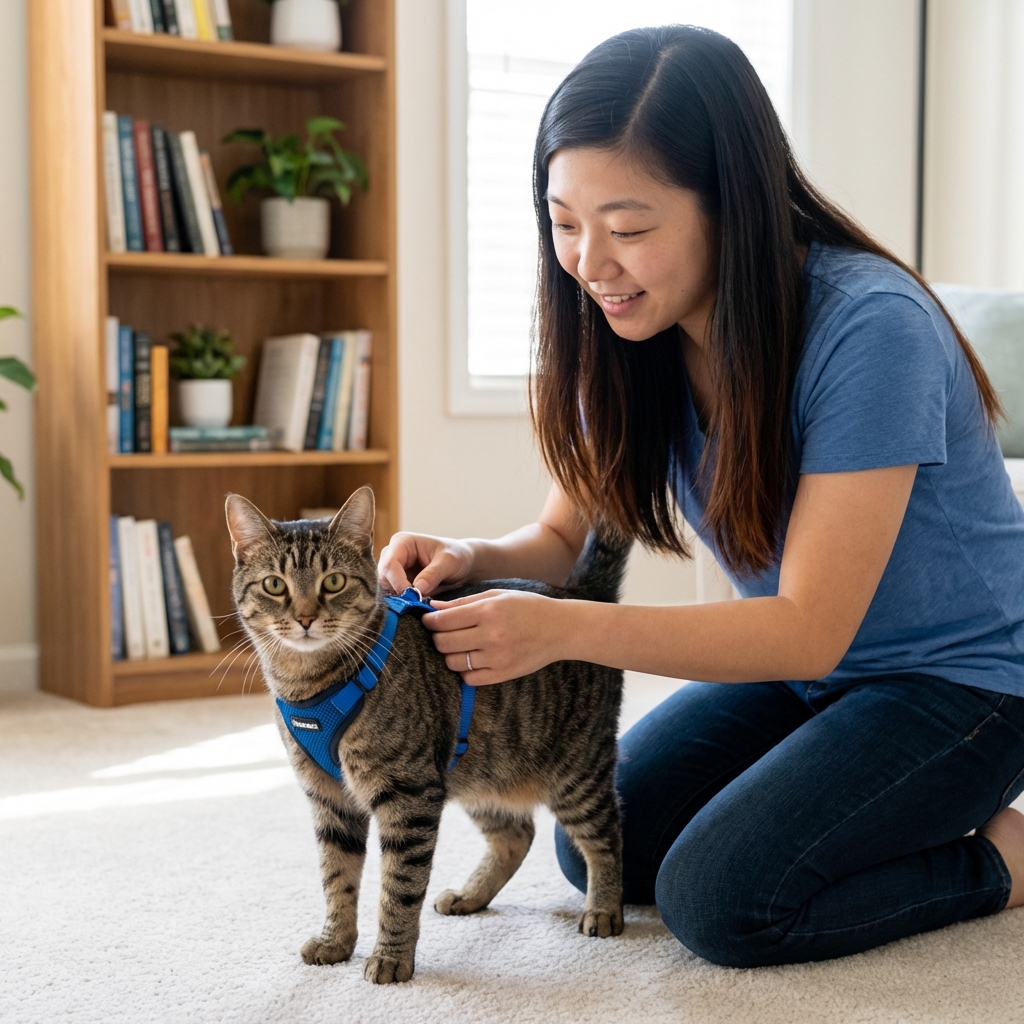
- Gently put the harness on, reward, then remove it after a few seconds.
- Gradually work up to 5 to 10 minutes indoors while your cat eats or plays.
- If your cat freezes or flops over, that is common. Stay calm, distract with a treat trail, then end the session on a good note. Do not pull or force movement.
Step 3: Add the leash indoors
- Clip on the leash and let your cat drag it for a few seconds at a time only in a snag-free room, with constant supervision.
- Then pick up the leash and follow your cat around the house with a loose line.
- Reward any forward movement and calm behavior.
Step 4: Practice at the exit
- Stand near the door, porch, or garage with your cat on harness and leash.
- Let your cat observe outdoor sounds and smells from a safe “threshold.”
- If your cat is tense, back up to easier steps.
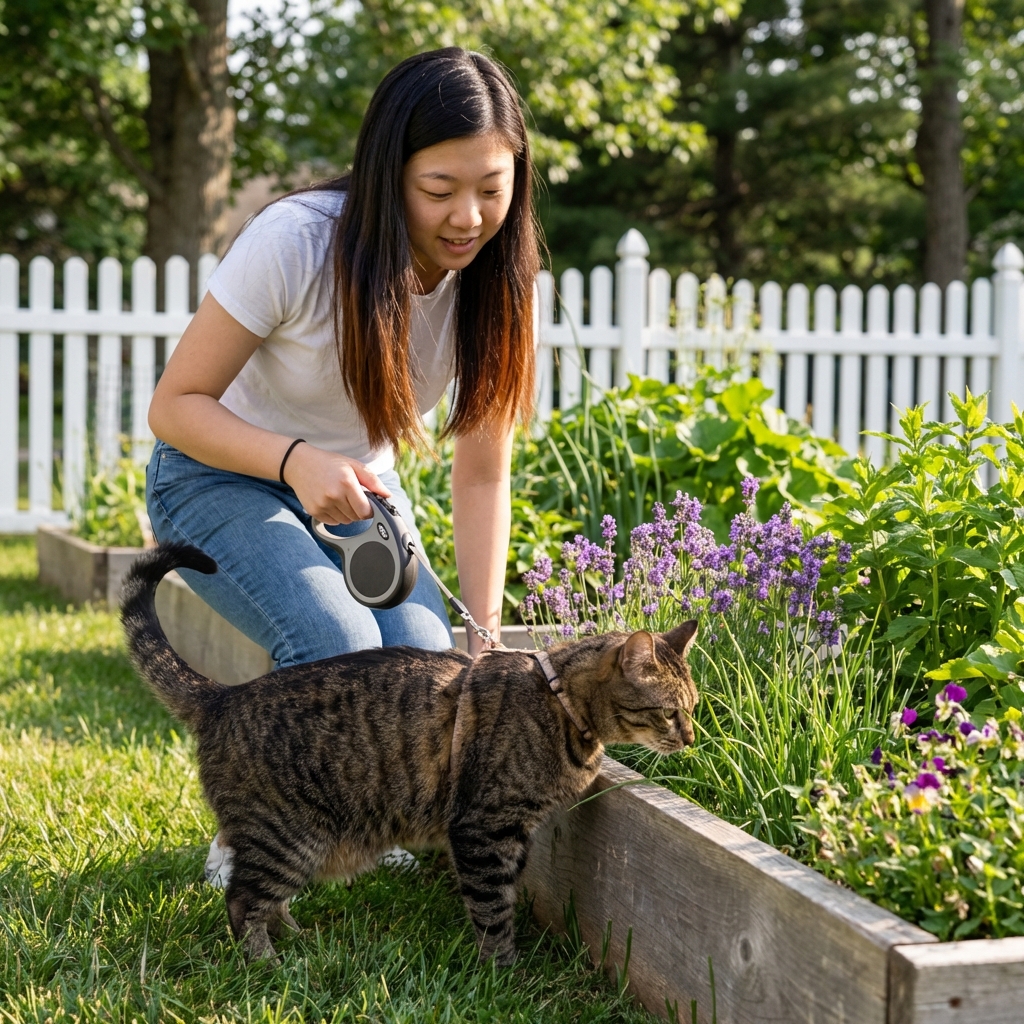
Step 5: First outdoor sessions
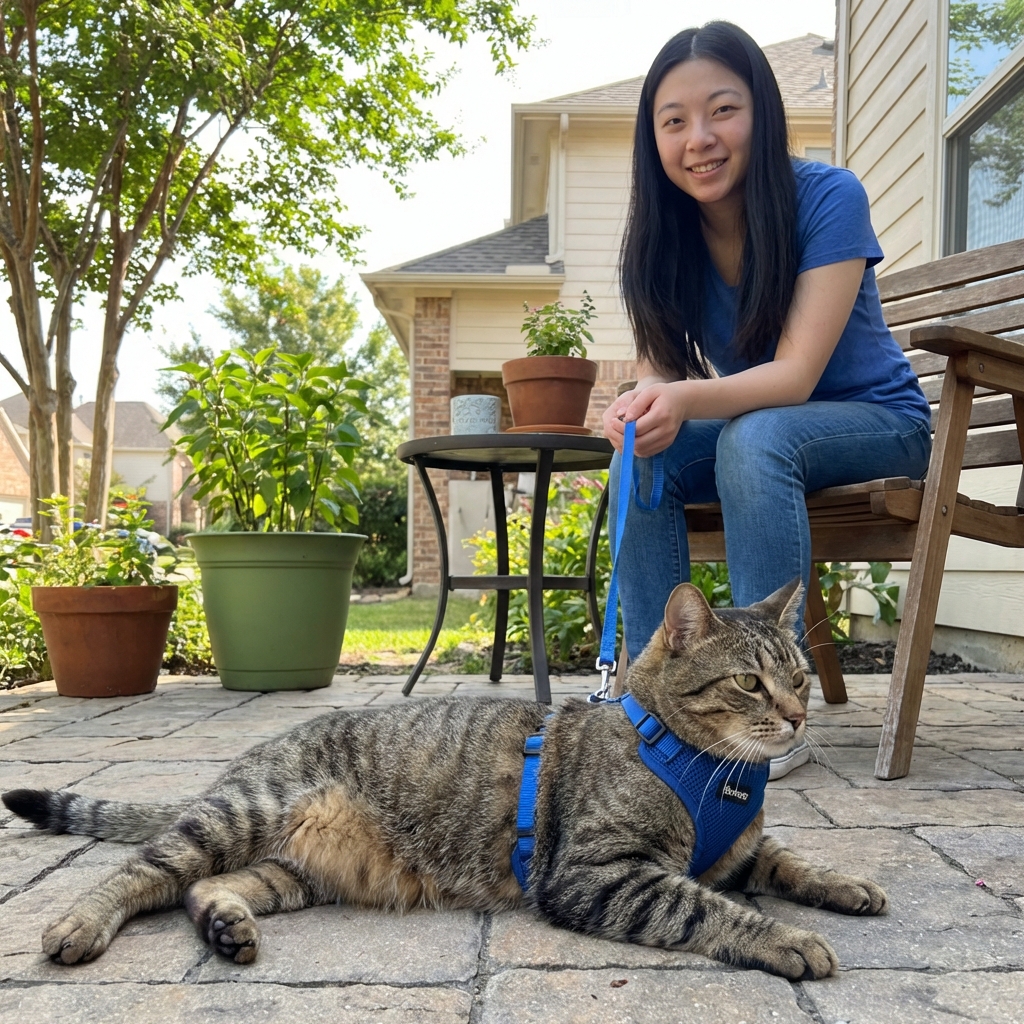
- Start in a contained, low-traffic area like a fenced yard or calm patio.
- Keep the first session very short, even 2 to 5 minutes. Once daily is plenty at first.
- Let your cat lead. Leash training a cat is more like guided exploring.
- Choose times with fewer triggers. Early morning or evening is often best.
What success looks like
For many cats, leash training is not about covering distance. Success is a relaxed body, curious sniffing, and a cat who can recover quickly after a mild surprise (like a distant car door). Here are realistic wins to celebrate:
- Your cat eats treats while wearing the harness.
- Your cat walks normally indoors with the leash attached.
- Your cat chooses to approach the door when you bring out the harness.
- Your cat explores outdoors for a few minutes and returns inside without panic.
Some cats will eventually enjoy longer outings. Others will prefer short porch hangs. Both are enrichment.
Safety and care tips
Parasite prevention
Once your cat goes outside, parasite prevention becomes much more important. Talk with your veterinarian about a monthly flea and tick preventive that fits your cat’s lifestyle and health history. In some regions, your vet may also discuss heartworm prevention for cats.
Vaccines
Ask your vet whether your cat’s vaccines are up to date for any outdoor exposure. This typically includes rabies (often required by law depending on your location) and often FVRCP. Local rules vary, so it is worth confirming for your city and county.
Heat and weather
- In Texas summers, go out early or late. Hot pavement can burn paws.
- Watch for panting, drooling, lethargy, or reluctance to move. If your cat is urgently seeking shade along with other overheating signs, end the session and head inside.
- Avoid storms, high winds, or fireworks seasons when sudden noise is more likely.
Outdoor hazards
- Avoid dogs and unknown animals. Even a friendly dog can overwhelm a cat.
- Skip lawns that may be treated with pesticides, herbicides, or fertilizer.
- Check your area for foxtails, burrs, or sticker weeds that can irritate paws, skin, ears, and eyes.
- Do a quick post-outing check for hitchhikers like ticks, especially around the face, neck, and armpits.
Transport and escape risk
- Consider carrying your cat in a secure carrier to the outdoor spot, especially if your front door opens to a busy area. I keep this as part of my own routine because it prevents door-dashing.
- Always check harness fit each session. Cats can lose weight, gain weight, and wiggle out of a loose setup.
- Never tie the leash to an object and walk away. Even just for a minute.
- If your cat startles outdoors, avoid scooping them up unless you can do it safely. A frightened cat can scratch or twist out of your arms. When possible, guide them calmly back inside or into the carrier.
Common problems and gentle fixes
Your cat flops and will not move
This is usually discomfort or surprise, not stubbornness. Try a lighter harness, shorten the session, and use treat trails or wand play to encourage a few steps. Build confidence slowly, and never drag your cat by the leash.
Your cat bolts or panics outdoors
Go back to indoor training and exit practice. Choose a quieter time and place. If your cat panics repeatedly, leash walks may not be a good fit, and indoor enrichment can be a safer option.
Your cat bites at the harness
Redirect with play and treats. Make sure nothing is rubbing the armpits or pulling on the shoulders. Sometimes a vest-style harness reduces irritation.
Your cat backs out of the harness
That is a fit issue or a fear response. Adjust the harness and practice indoors again. Keep the leash slack and avoid pulling, since tension often triggers the reverse escape maneuver.
Cat stress signals
End the session or move back a step if you notice stress building. Common signs include:
- Ears pinned back, wide eyes, or a fixed, “frozen” stare
- Tail puffing, tail tucked, or fast tail flicking
- Crouching low, trying to hide, or pulling hard to retreat
- Growling, hissing, swatting, or sudden frantic movements
Indoor enrichment options
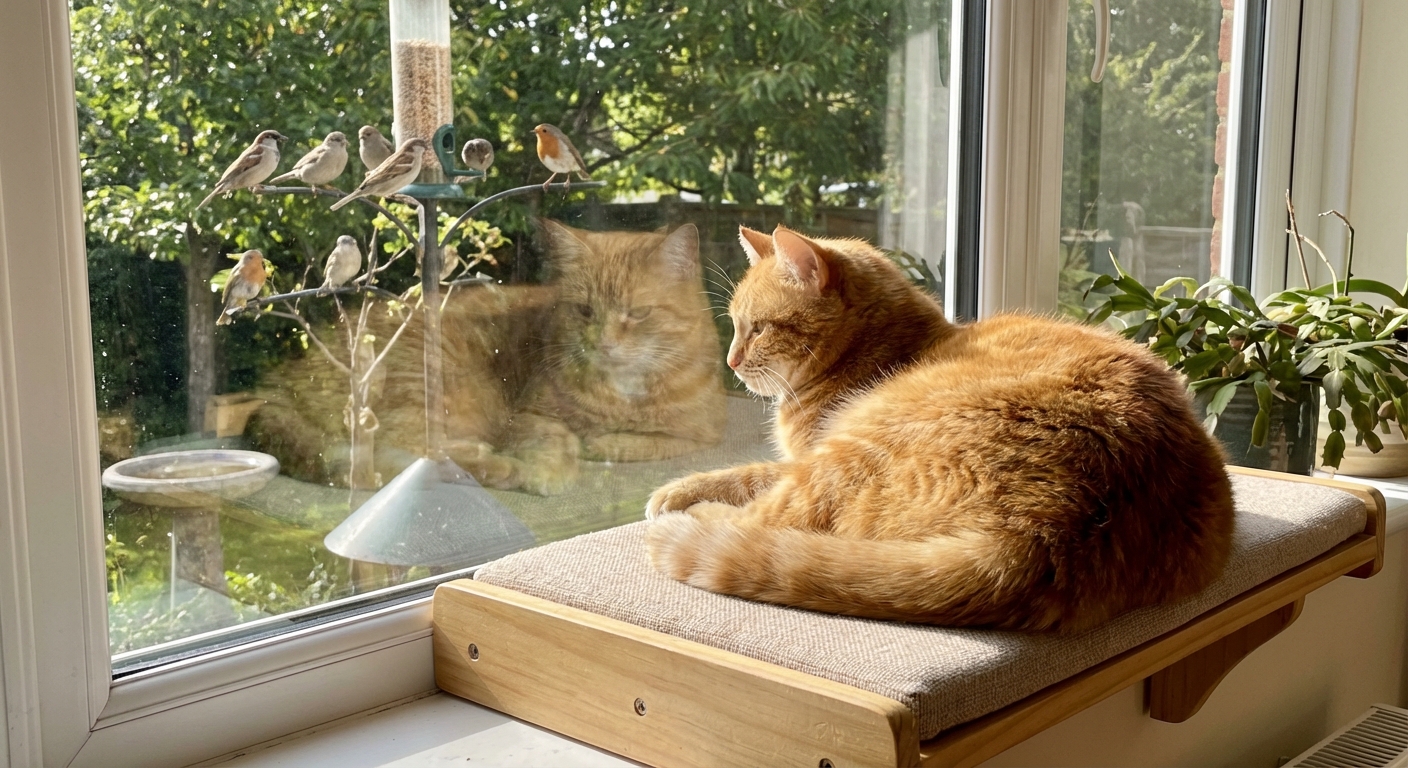
If leash training is not your cat’s thing, you still have wonderful options. In my experience, many cats thrive with consistent, simple enrichment at home.
- Interactive play twice daily for 5 to 10 minutes (wand toys are great).
- Food puzzles or treat balls to encourage natural hunting behavior.
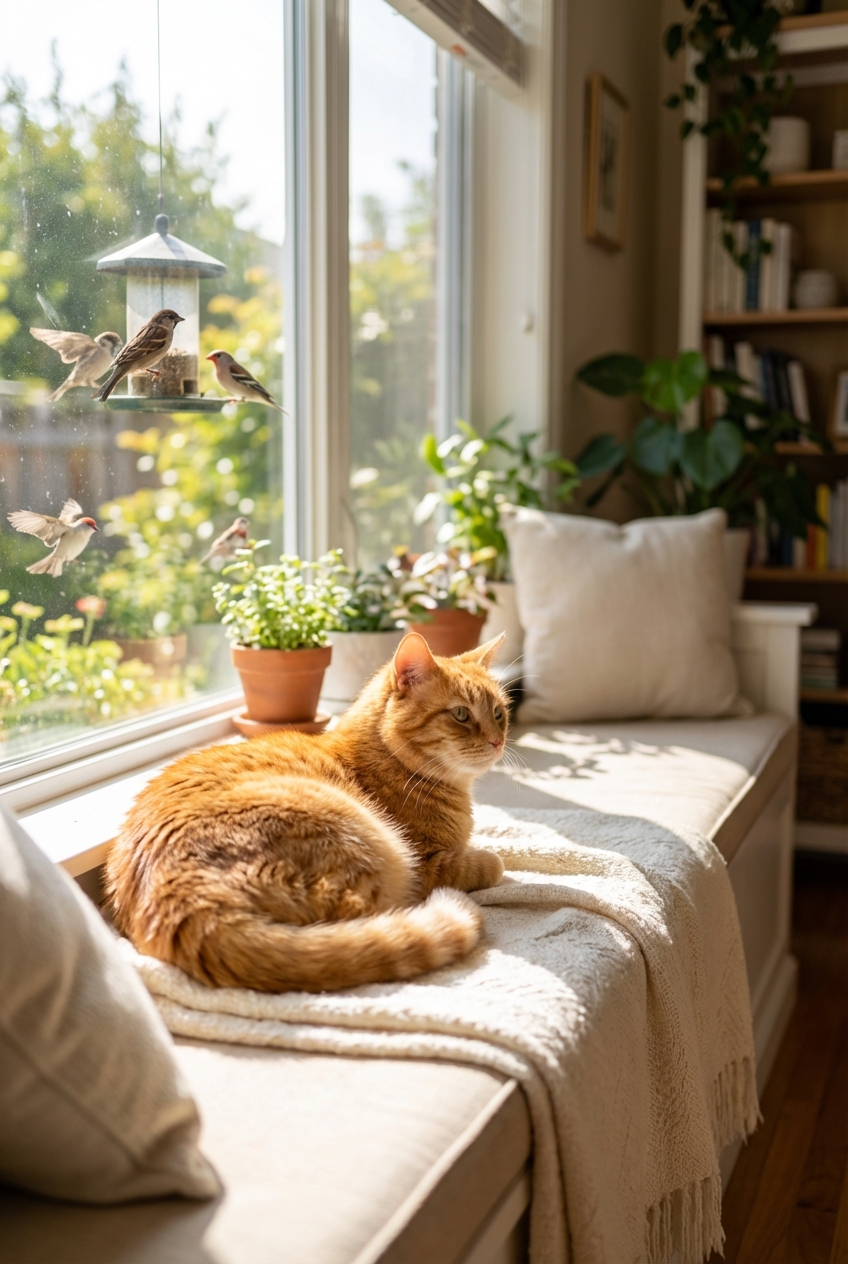
- Window perches and bird feeders outside the window for “cat TV.”
- Cat-safe plants like cat grass, plus scratching posts and vertical climbing space.
When to get help
If your cat shows intense fear, aggression, or persistent stress signals, it is wise to involve your veterinarian and, when needed, a qualified feline behavior professional. There may be underlying pain, anxiety, or past experiences influencing the behavior, and you deserve support.
Go slow, reward what you like, and stop before your cat feels overwhelmed. Confidence is built in tiny moments.