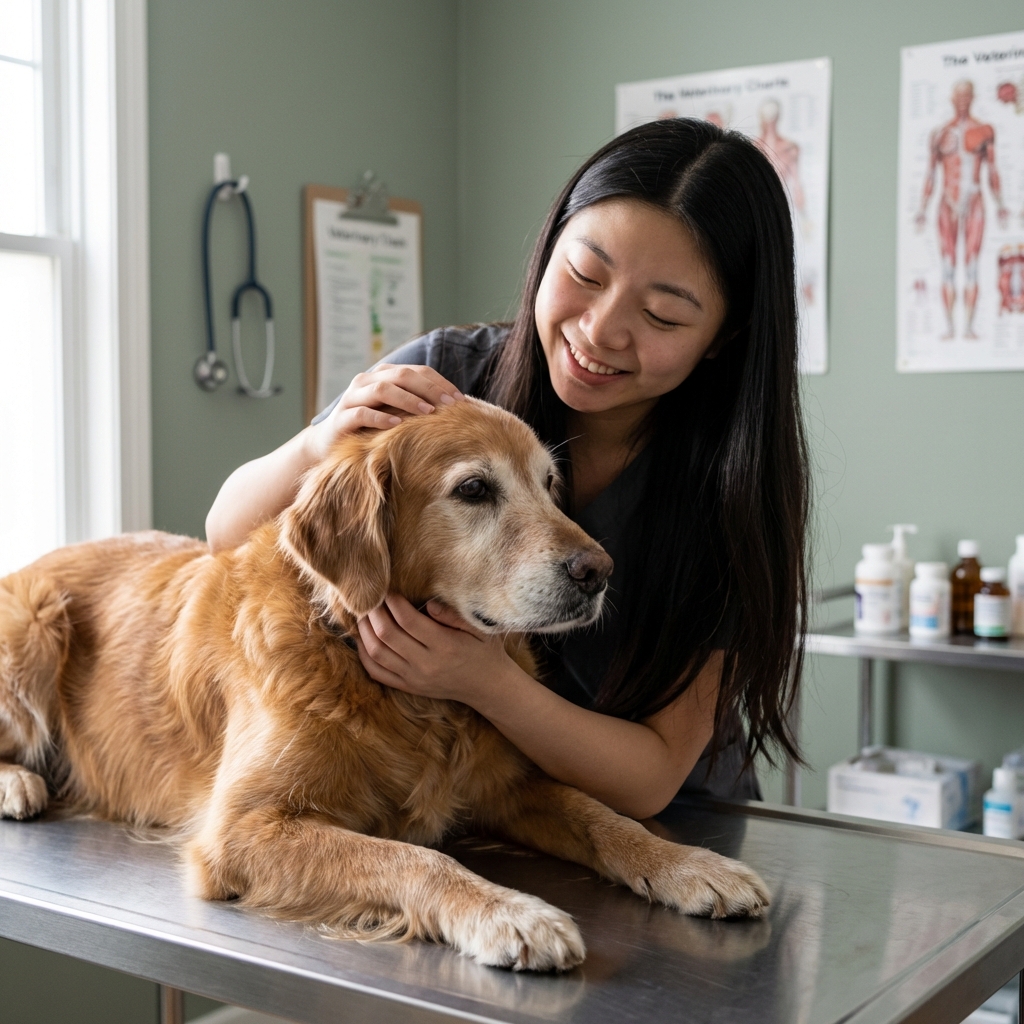
A compassionate guide to deciding when it’s time to euthanize a dog. Learn quality-of-life signs, a daily checklist, urgent red flags, and what to expect a...
Article
•
Designer Mixes
Knowing When It’s Time to Put Your Dog Down

Shari Shidate
Designer Mixes contributor
There are few decisions in life that feel as heavy as choosing euthanasia for a beloved dog. If you are here, you are likely trying to do the most loving thing possible, while also feeling unsure, heartbroken, and maybe even a little guilty. I get it. As a veterinary assistant and lifelong pet lover here in Frisco, Texas, I have sat with families in that quiet exam room and I have also gone home and hugged my own pets a little tighter.
This guide is meant to help you think clearly in a moment that does not feel clear. It is vet-informed, gentle, and practical. And most of all, it is centered on one truth: choosing a peaceful passing can be a final act of love.
Quick note: This article is for education and support. It is not a substitute for veterinary care. If you are worried your dog is in distress, call your veterinarian or an emergency clinic right away.
What euthanasia is and is not
Euthanasia is often translated as “good death.” In veterinary medicine, it is a controlled, humane way to prevent ongoing suffering when quality of life can no longer be maintained.
Euthanasia is not “giving up.” It is not the same as abandoning treatment. It is a medical option that can spare a dog from a painful, frightening end such as respiratory distress, uncontrolled bleeding, repeated seizures, or a crisis that happens at 2 a.m. when your regular clinic is closed.
Many families later tell me the same thing: “I wish I had known sooner.” This article helps you look for the signs before you reach the emergency point.
The main question
One of the simplest and most reliable ways to evaluate end-of-life decisions is to track good days versus bad days. A bad day does not have to mean dramatic suffering. It can be quiet, persistent discomfort, confusion, or withdrawal that is out of character.
If bad days are becoming more frequent, longer, or harder to recover from, that trend matters.
Your dog’s quality of life is mostly:
- Comfort and pain control
- Appetite and nausea
- Mobility and ability to rest
- Breathing and energy
- Toileting and hygiene
- Connection with you
And one important reminder: appetite alone should not be the only deciding factor. Some dogs will still eat even when the rest of their body is struggling. Zoom out and look at the whole picture.
Quality of life checklist
Veterinary teams often use structured quality-of-life tools to take some of the emotion out of the moment and put the focus back on your dog’s daily experience. One commonly used framework is the HHHHHMM scale (Hurt, Hunger, Hydration, Hygiene, Happiness, Mobility, More good days than bad), originally described by Dr. Alice Villalobos.
Hurt
- Pain that is not controlled even with medication, or relief that does not last.
- Restlessness, panting at rest, trembling, hiding, or a “tight” abdomen.
- Whining when moved, unwillingness to lie down, or repeatedly changing positions.
Hunger
- Refusing favorite foods for more than 24 to 48 hours, especially with known disease.
- Eating only with coaxing, then stopping again, day after day.
- Choking, gagging, or struggling to chew and swallow.
Hydration
- Not drinking, or vomiting water back up.
- Dehydration that keeps recurring despite supportive care.
Hygiene
- Repeated accidents because they cannot get up, cannot hold it, or are confused.
- Urine or stool scalding, skin infections, pressure sores, or fur matted with waste.
- Needing frequent cleaning that causes stress or pain.
Happiness
- No longer seeking affection, greeting you, or enjoying normal routines.
- Persistent anxiety, pacing, confusion, or “staring into space.”
- Withdrawing, hiding, or acting “not like themselves” most of the day.
Mobility
- Unable to stand, walk, or reposition without distress.
- Falling often, slipping, or refusing to move due to pain or weakness.
- Needing to be carried outside every time, with no good moments in between.
More good days than bad
When a dog has a chronic condition, you are not looking for a perfect day. You are looking for meaningful comfort. If you are counting good days on one hand each week, it may be time to talk seriously with your veterinarian.
When waiting adds suffering
Some conditions can take a sudden turn. In these cases, planning ahead is often kinder than waiting for a crisis.
- Advanced cancer with unmanageable pain, severe weakness, repeated vomiting, internal bleeding, or fluid buildup.
- Congestive heart failure with frequent coughing, fainting, fluid in the lungs, or labored breathing even at rest.
- Kidney failure with persistent nausea, not eating, dehydration, mouth ulcers, or severe lethargy.
- Neurologic disease with uncontrolled seizures, inability to walk, or severe confusion.
- Severe arthritis when pain and mobility issues stop a dog from meeting basic needs even with medication and support.
- Bloat (GDV) or other surgical emergencies when treatment is not possible and suffering is rapid.
If your dog has one of these diagnoses, ask your vet a straightforward question: “What does a crisis look like, and what would you want me to do if it happens?”
Behavior changes to notice
Dogs may hide pain. Many families miss the earlier signs because they are subtle, and because we love our dogs so much we adjust our routines without realizing it.
- Sleeping far more than usual, or no longer changing spots during the day.
- Not following you from room to room, or avoiding stairs they used to handle.
- Changes in breathing: more panting, faster breathing during sleep, or effortful breaths.
- Increased irritability or growling when touched, often from pain.
- Nighttime restlessness, pacing, or “sundowning” in senior dogs.
When these shifts start stacking up, that is usually the moment to schedule a quality-of-life appointment, even if you are not “ready” for the conversation.
If you are not sure
If you are stuck in the middle, you are not alone. This is where hospice and palliative care can help. The goal is comfort and support, not cure.
- Ask if medications can be adjusted for pain, nausea, appetite, anxiety, or sleep.
- Ask what changes you should expect next with your dog’s specific disease.
- Set a recheck schedule (often every 1 to 2 weeks, or sooner if things change).
- Create a clear plan for what counts as a “hard stop” and what you will do if it happens.
Sometimes the kindest plan is not “wait and see.” It is “support and reassess,” with your dog’s comfort as the North Star.
How to talk with your vet
You do not need perfect words. Bring notes. Bring a list of medications and what is working and what is not.
Questions that help
- What is my dog’s prognosis, realistically?
- What signs tell us suffering is increasing?
- Are we treating the disease, or managing comfort at this point?
- What side effects might these medications cause?
- What can we do at home to improve comfort this week?
- What would an emergency look like, and when should I go to an ER?
- If we choose euthanasia, what are the options and what is the process?
A good veterinary team will not pressure you. They should give you honest information and support your values and your dog’s comfort.
At-home vs in-clinic
Both options can be peaceful. The best choice depends on your dog’s stress level, your budget, your household, and how quickly you need help.
At-home euthanasia
- Often calmer for dogs who fear car rides or clinics.
- Allows a familiar setting, favorite bed, and family members present.
- May take extra planning and may cost more.
In-clinic euthanasia
- Usually easier to schedule quickly, especially if your dog is declining fast.
- Staff can support you and handle aftercare logistics smoothly.
- Some dogs are more anxious in a clinic environment.
If you are unsure, ask your vet which option would be least stressful for your dog specifically.
What happens at the appointment
Families often fear the unknown more than the procedure itself. While each clinic has its own flow, most follow a similar, gentle process. Protocols vary by clinic, your dog’s condition, and how easy it is to access a vein.
- Comfort first: Many vets give a sedative (often as an injection) so your dog becomes deeply relaxed and sleepy.
- The final medication: The final injection is typically an anesthetic medication given at a dose that allows a peaceful passing. It is commonly given through an IV catheter, but your veterinarian may use other routes if IV access is difficult.
- Afterward: Your vet will confirm passing and give you private time.
Some normal reflexes can happen afterward. These can include a final sigh or gasp, small muscle twitches, urination or defecation, and eyes remaining open. While it can be startling, these are not signs of suffering. After the final medication, your dog is unconscious very quickly.
If you have preferences such as staying for the entire procedure, stepping out for part of it, bringing a blanket, or having children present, tell the staff. They want to help you through it.
A loving last day
You do not have to create a picture-perfect final day. Many dogs feel safest when things are familiar and quiet.
Simple ideas
- A slow sniff-walk or time in a favorite sunny spot, if comfortable.
- A special meal that is safe for your dog’s condition, approved by your veterinarian.
- Visitors kept minimal, calm, and respectful of your dog’s energy.
- Photos and paw prints, if that feels right for you.
If your dog is nauseated, in pain, or very tired, do not force a “bucket list.” Sometimes the kindest last day is just warmth, soft words, and being together.
Kids and other pets
If you have children, simple and honest language is usually best. You can explain that your dog’s body is very sick, the doctors cannot fix it, and you are choosing a peaceful goodbye so they do not suffer.
Other pets may also grieve. Some families choose to let a household dog sniff and “see” their friend afterward (at home or at the clinic, if allowed). It is not required, but it can help some pets adjust. If it feels stressful or chaotic, it is okay to skip it and focus on a calm environment.
Costs and planning
Cost is a real part of this decision, and you deserve clear information. Pricing varies widely by location, aftercare choice, and whether the visit is at home or in-clinic.
- Ask for an estimate that includes sedation, euthanasia, and aftercare.
- Ask about payment options, third-party financing (if available), or lower-cost clinics in your area.
- If finances are limiting care right now, tell your veterinarian. They may be able to offer comfort-focused options or help you plan the kindest next step.
Guilt and second-guessing
Even when euthanasia is the right call medically, many people struggle with guilt. Here is what I want you to remember.
You are not choosing death. You are choosing relief from suffering when medicine can no longer offer your dog a life they can enjoy.
A common fear is, “What if I do it too soon?” In my experience, most loving owners wait longer than they needed to, not shorter. If you are making this decision with your veterinarian, with your dog’s comfort at the center, you are acting from love.
Aftercare and memorials
Before the appointment, ask about aftercare so you are not trying to decide through tears. Options vary by location and clinic.
- Private cremation: ashes returned to you.
- Communal cremation: ashes not returned, typically less expensive.
- Home burial: may be restricted by local laws, HOA rules, or safety considerations.
If you are considering burial, ask your veterinarian about common safety concerns like depth, avoiding areas near water sources, and reducing wildlife risk. (This is not legal advice, just practical planning.)
Memorial choices can be simple: a framed photo, a clay paw print, planting a tree, donating to a rescue, or writing a letter to your dog. Grief needs somewhere to go, and rituals can help.
Get help right away
If your dog is experiencing any of the following, contact your veterinarian or emergency clinic right away. These can indicate significant suffering or an urgent decline.
- Labored breathing, blue or pale gums, or repeated collapse.
- Uncontrolled bleeding.
- A seizure lasting more than 5 minutes, or multiple seizures close together without full recovery in between.
- Severe pain, crying out, or inability to settle.
- Suspected bloat: unproductive retching, swollen abdomen, extreme distress.
- Unable to stand and cannot urinate, or appears “stuck” trying to go.
A gentle next step
If you are feeling stuck, do two things today.
- Start a 7-day quality-of-life journal with simple notes: appetite, mobility, breathing, bathroom habits, and one “joy” moment.
- Schedule a quality-of-life visit and bring your notes. Ask your vet to help you define a clear “line” where euthanasia becomes the kindest option.
You do not have to carry this alone. Your dog has trusted you their whole life. Now you get to return that trust by choosing comfort, dignity, and love.
References and guidance often used by veterinary teams include the HHHHHMM Quality of Life Scale (Villalobos) and the AVMA Guidelines for the Euthanasia of Animals.