Cat throwing up after meals? Learn the difference between vomiting and regurgitation, common causes (fast eating, hairballs, diet issues, illness), home step...
Article
•
Designer Mixes
Kitten Vomiting Facts Every Owner Should Know

Shari Shidate
Designer Mixes contributor
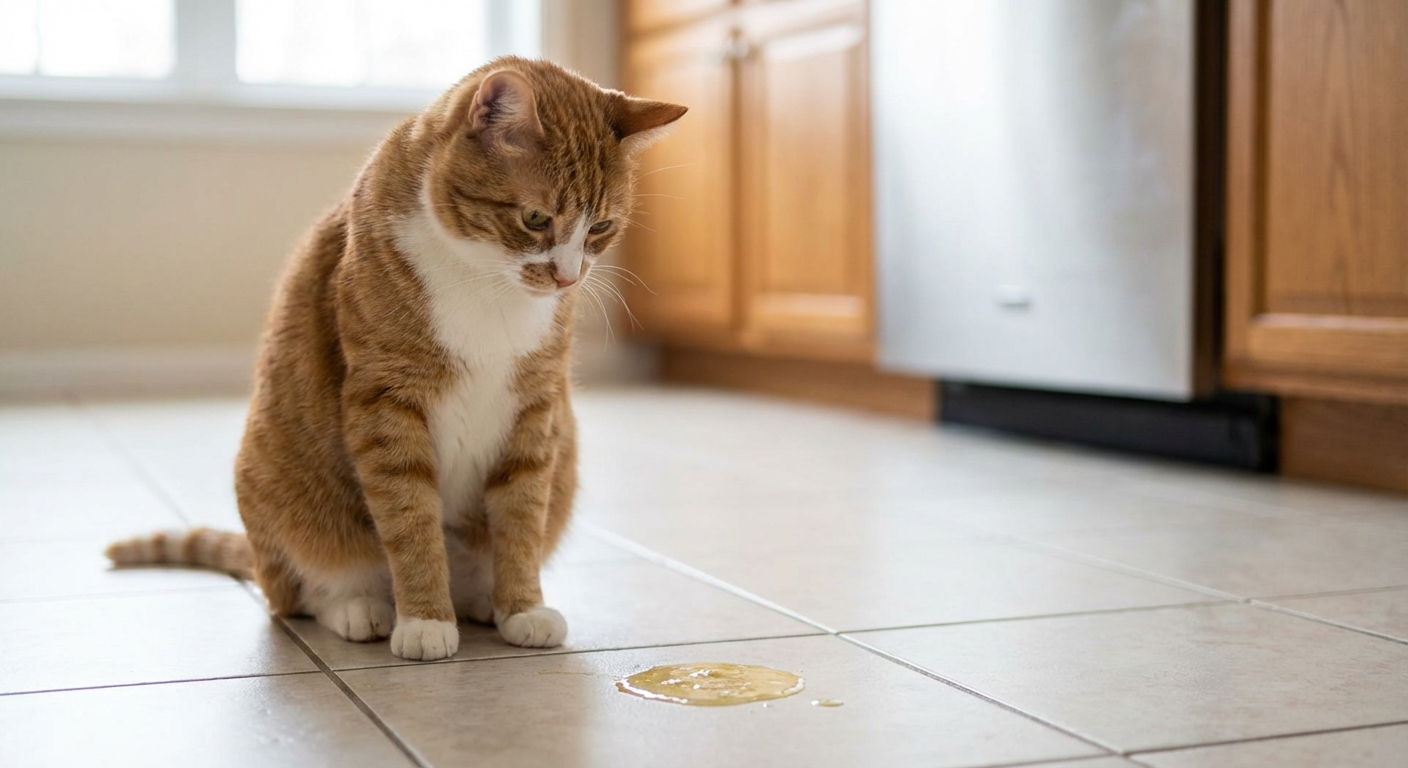
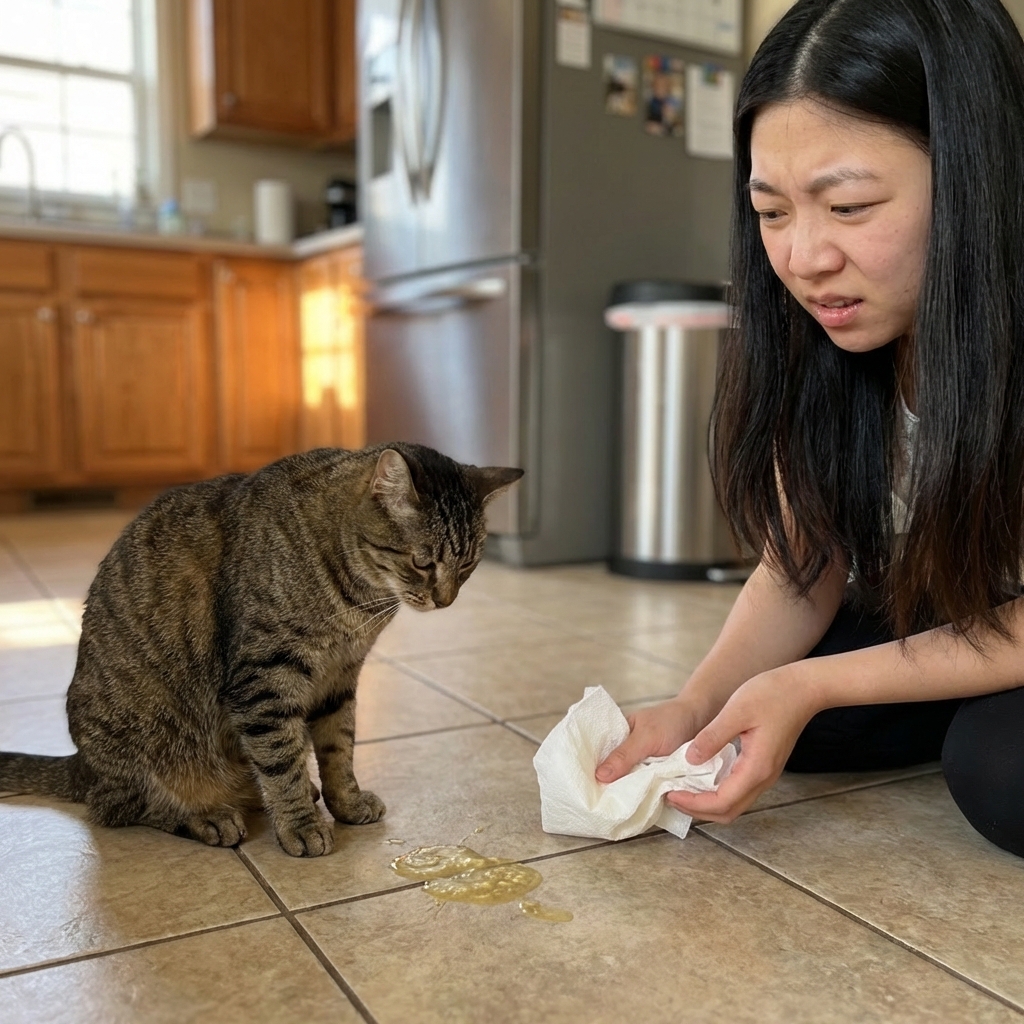
Few things raise your alarm faster than finding a puddle of vomit next to your kitten. The good news is that vomiting can be common in young cats, and many causes are mild and fixable, like eating too fast, a sudden food change, or parasites. The important part is knowing what is normal, what is not, and when to call your veterinarian.
What vomiting looks like in kittens
People often use the word “vomit” for several different things. Sorting out what you are seeing helps your vet and helps you respond the right way.
- Vomiting: active heaving and abdominal effort, then stomach contents come up.
- Regurgitation: passive, sudden “spill” of food or liquid with little effort, often soon after eating. It may look like undigested food in a tube shape (from the esophagus), which is a common point of confusion.
- Hairball: often a heaving episode that brings up a clump of hair, sometimes with foam or fluid. True hairballs are less common in very young kittens.
- Coughing or gagging: can look similar, but may be respiratory, especially if there is wheezing, nasal discharge, or a honking cough.
If you can, take a quick photo or short video of the episode. That simple step can be incredibly helpful for diagnosis.
Common, usually mild causes
Kittens explore with their mouths, have sensitive digestive systems, and are still developing routine eating habits. These are some of the most common non-emergency reasons a kitten may vomit:
Eating too fast
Fast eaters can bring food right back up, especially if they are excited, competing with other pets, or were previously underfed.
Diet change
Switching foods suddenly can trigger vomiting or loose stool. Many kittens do best with a slow transition over about 7 to 10 days.
Hair and grooming
Kittens can vomit foam or fluid from stomach irritation, and as they get older they can start producing hairballs. Grooming-related stomach upset can happen even before true hairballs become common.
Overeating
Large meals can overwhelm a small stomach. Kittens often do better with smaller, more frequent meals.
Mild stomach irritation
Something as simple as a rich treat, dairy, or a new chew can upset a kitten’s stomach.
Causes that need prompt care
Because kittens are small, they can dehydrate quickly, become hypoglycemic, and they are more vulnerable to parasites and infections. Contact your veterinarian promptly if vomiting is persistent, frequent, or paired with other symptoms. This is especially true for kittens under 8 weeks old, unvaccinated kittens, and any kitten who seems “off.”
Intestinal parasites
Roundworms and other parasites are very common in kittens, even those who appear healthy. Vomiting can occur, and you may also see a pot-bellied appearance, diarrhea, poor growth, or worms in stool or vomit. Routine deworming is a standard part of kitten care, but your vet may recommend a fecal test and targeted treatment.
Foreign body (string, ribbon, toy pieces)
Kittens love to chew. Linear items like string, yarn, ribbon, and tinsel are especially dangerous because they can get anchored and cause the intestines to bunch up, leading to obstruction, tearing, or worse. Vomiting, reduced appetite, hiding, drooling, abdominal pain, or repeated attempts to vomit with little coming up can be warning signs.
Infections
Viral and bacterial illnesses can cause vomiting, often with diarrhea, fever, lethargy, or poor appetite. In young kittens, this can become serious fast. If your kitten is unvaccinated or overdue for vaccines, your veterinarian may be extra concerned about severe viral diseases like panleukopenia.
Food sensitivity or allergy
Some kittens do not tolerate certain ingredients. True food allergy is less common in kittens than in adult cats and tends to cause chronic signs, not a one-time episode. If vomiting happens repeatedly, or if it comes with chronic loose stool, itchy skin, or recurrent ear issues, ask your vet whether a diet trial is appropriate.
Toxins
Many household items are risky, including certain plants, essential oils, cleaning agents, rodent poison, and human medications. If you suspect exposure, call your veterinarian or a pet poison helpline immediately. Important: any lily exposure in a cat is an emergency, even if your kitten seems fine at first.
When vomiting is an emergency
Trust your instincts. If your kitten looks “off,” it is always okay to call your vet. Seek urgent veterinary care if you notice any of the following:
- Repeated vomiting, or vomiting that continues over several hours
- Blood in vomit (red or dark coffee-ground material)
- Severe lethargy, collapse, or weakness
- Signs of dehydration: sticky gums, sunken eyes, very low energy, not urinating normally
- Vomiting plus diarrhea, especially if watery
- Black, tarry stool (possible digested blood)
- A swollen or painful belly, crying when picked up
- Straining to vomit with little coming up
- Refusing food and water beyond a single skipped meal, or vomiting repeatedly after drinking water
- Known or suspected ingestion of string, ribbon, lilies, medication, chemicals, or a toxic plant
In kittens, “wait and see” can turn into dehydration or low blood sugar quickly. When in doubt, call your veterinarian for guidance.
What you can do at home
If your kitten vomits once, then acts normal and wants to play, you can often do some gentle, practical steps while you monitor closely. If your kitten is very young (especially under 8 weeks), unvaccinated, or seems unwell, call your vet first.
Step 1: Check the basics
- Look at the vomit: food, clear fluid, foam, bile (yellow), hair, or anything unusual like string.
- Check behavior: energy level, appetite, drinking, and litter box habits (including diarrhea or black, tarry stool).
- Think timing: right after a meal can suggest fast eating or regurgitation.
Step 2: Do not fast a kitten without vet advice
Withholding food is sometimes suggested for adult pets, but kittens can get dehydrated or develop low blood sugar more quickly. Unless your veterinarian tells you to, do not “fast” your kitten. If your kitten is repeatedly vomiting, call your vet before offering more food.
Step 3: Offer small, frequent meals
Once your vet confirms it is okay to feed, small amounts of the regular kitten diet given more frequently can be easier on the stomach than one large meal. Avoid rich treats and avoid cow’s milk.
Step 4: Support hydration
Keep fresh water available. If your kitten prefers moving water, a pet fountain can help. Wet food also increases water intake.
Step 5: Reduce scarf-and-barf
- Use a puzzle feeder or slow feeder bowl.
- Feed kittens separately if they compete at mealtime.
- Try smaller portions spread across the day.
Step 6: Do not give human medications
Many human products are unsafe for cats. Always check with your veterinarian before giving any over-the-counter medication or supplement.
What your veterinarian may do
Vomiting is a symptom, not a diagnosis. Your vet will match the workup to your kitten’s age, vaccine status, history, and exam findings.
- Physical exam: hydration status, abdominal pain, fever, gum color.
- Fecal testing: looks for intestinal parasites and protozoa.
- Bloodwork: checks organ function, infection, blood sugar, electrolytes.
- X-rays or ultrasound: helps rule out foreign bodies or obstruction.
- Supportive care: fluids, anti-nausea medication, diet plan, and deworming as needed.
Prevention tips
Most vomiting prevention is not fancy. It is consistent kitten care and smart home management.
- Keep up with deworming and vet visits: follow the schedule your vet recommends for your kitten’s age and risk.
- Transition foods slowly: mix in the new food gradually over 7 to 10 days.
- Kitten-proof your home: put away string toys, hair ties, ribbon, tinsel, and small chewable items.
- Brush regularly: reduces swallowed hair, especially for medium and long-haired kittens.
- Feed a complete kitten diet: kittens have higher calorie and nutrient needs than adult cats.
- Avoid toxic plants: lilies are especially dangerous for cats, and any exposure warrants urgent care.
Quick checklist for your next vet call
If your kitten vomits, these details help your veterinary team triage quickly:
- Age and approximate weight
- How many times vomiting happened and over what time period
- What the vomit looked like (food, foam, bile, blood, foreign material)
- Appetite, thirst, urination, and stool quality (including diarrhea or black, tarry stool)
- Any possible ingestion (string, plants, medications)
- Diet details and any recent food changes
- Vaccination and deworming status
A final word
One isolated vomit in an otherwise bright, playful kitten can be a simple hiccup. But repeated vomiting, lethargy, dehydration, refusal to eat beyond a single missed meal, or any suspicion of toxin or foreign body is a reason to act quickly. You do not have to guess alone. Your veterinarian is your best partner, and catching problems early is one of the kindest things you can do for your kitten’s long, healthy life.