Cat sneezing, congestion, or watery eyes? Learn common feline URI signs, how long they last, safe home care, vet treatments, what not to give, and when to se...
Article
•
Designer Mixes
Kitten Cold Symptoms: What to Watch For

Shari Shidate
Designer Mixes contributor
If your kitten is sneezing, sniffling, or has watery eyes, it can feel a lot like a “cold” in people. In kittens, these signs are most often caused by an upper respiratory infection (URI). The good news is that many mild cases improve with supportive care. The important part is knowing when it is safe to monitor at home and when to call your veterinarian quickly.
As a veterinary assistant in Frisco, Texas, I have seen how quickly little ones can go from “just a bit congested” to feeling truly miserable. Kittens have tiny airways, small energy reserves, and they can get dehydrated faster than adult cats. This guide will help you spot the key symptoms, respond calmly, and protect your kitten’s long-term health. It is educational and not a substitute for a veterinary exam or diagnosis.
What people call a “kitten cold”
Most kitten “colds” are URIs caused by viruses, sometimes with bacterial involvement. Common infectious causes include feline herpesvirus-1 and calicivirus. These spread easily in shelters, foster homes, multi-cat households, and anywhere kittens share space.
Transmission is most often through respiratory and eye secretions and contaminated objects (like bowls, bedding, and hands) that move those secretions from kitten to kitten.
Even if the trigger is viral, secondary bacteria can take advantage of irritated airways, which is why some kittens need prescription medications and close monitoring. Antibiotics do not treat viruses, but they can be helpful if your veterinarian suspects a secondary bacterial infection.
Other causes to keep in mind
Not every sneeze is a URI. Irritants (dust, litter, smoke, strong fragrances), allergies, a nasal foreign body, parasites, and even lower airway disease can cause similar signs. If symptoms are one-sided, sudden, severe, or not improving, it is worth getting guidance from your veterinarian.
Essential kitten cold symptoms
Not every sneeze is an emergency, but patterns matter. Here are the most common signs that point toward a URI.
Nose and breathing signs
- Sneezing, especially frequent or in clusters
- Nasal congestion or “snuffly” breathing
- Clear, cloudy, yellow, or green nasal discharge
- Mouth breathing or open-mouth breathing (this is urgent)
- Increased effort to breathe, wheezing, or loud congestion, especially while resting
Eye and face signs
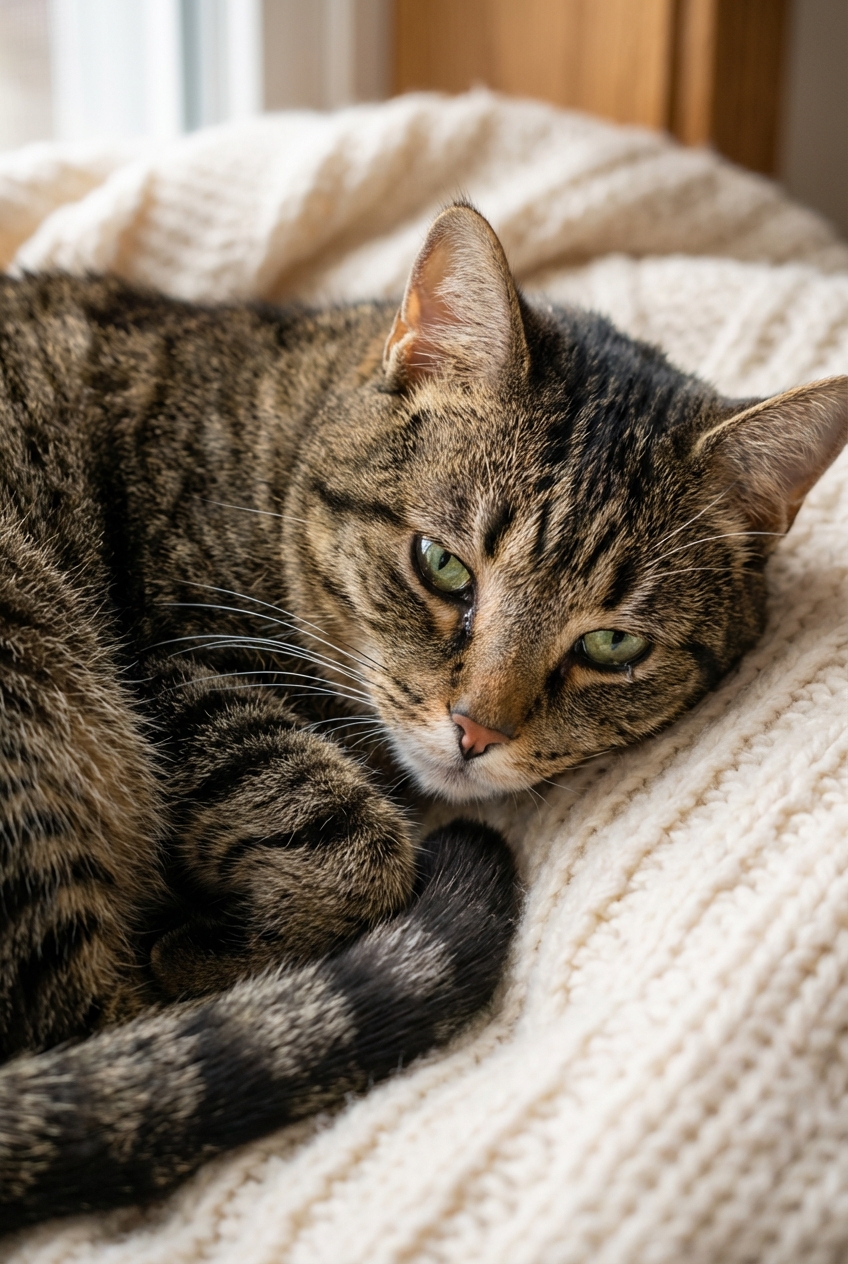
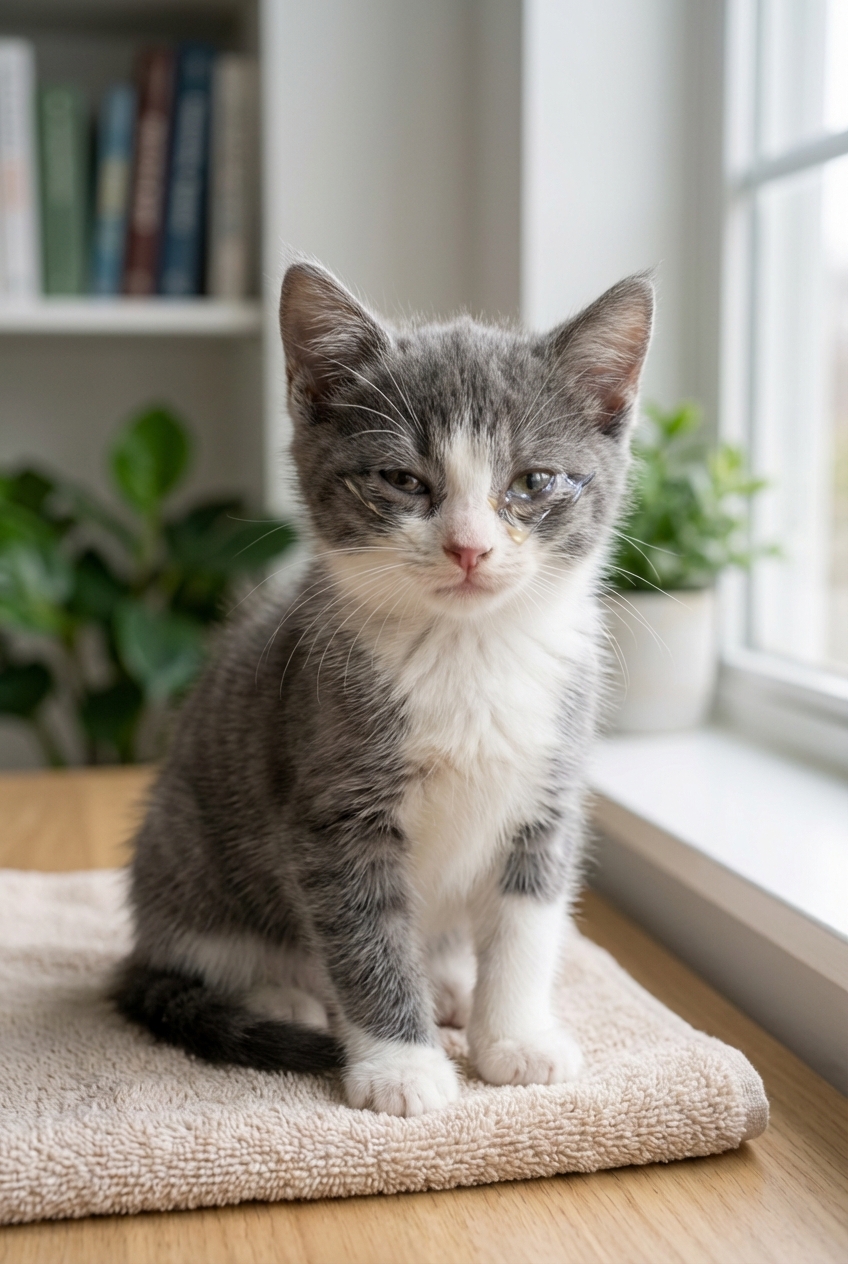
- Watery eyes or eye discharge that crusts on the lids
- Redness, squinting, or holding one eye closed
- Swelling around the eyes
Whole-body signs
- Low appetite or refusing food
- Lethargy, hiding, or less play
- Fever (often suspected when they feel hot and act “off,” but only a thermometer can confirm)
- Drooling or mouth ulcers (more common with calicivirus)
Why appetite matters
Kittens rely heavily on smell to eat. When their nose is blocked, food becomes less interesting. The problem is that kittens can lose weight quickly, and dehydration can sneak up fast.
If your kitten is eating noticeably less than normal for more than a day, or not eating at all, that is a strong reason to contact your veterinarian. Very young kittens who are not nursing normally need help right away.
At-home help that supports recovery
Supportive care can make a meaningful difference for mild cases, especially when your kitten is still bright, drinking, and eating at least some food.
1) Warmth and stress reduction
- Keep your kitten in a warm, quiet room away from drafts.
- Offer a cozy bed and limit stressful handling.
- If you have other pets, separate sick kittens to reduce spread and allow rest.
2) Improve hydration
- Offer fresh water in a shallow bowl.
- Encourage moisture-rich food when appropriate for age, like kitten-formulated wet food.
- Do not force water with a syringe unless your veterinarian has instructed you to do so.
3) Make food easier to smell and eat
- Warm wet food slightly so it becomes more fragrant.
- Try strong-smelling, kitten-safe options like canned kitten food or a veterinarian-recommended recovery diet.
- Offer small, frequent meals rather than one big one.
4) Gentle “kitty steam” for congestion
- Run a hot shower in the bathroom and sit with your kitten in the humid room for 10 to 15 minutes.
- Stay with them the entire time, keep it calm, and do not put them in the shower stream.
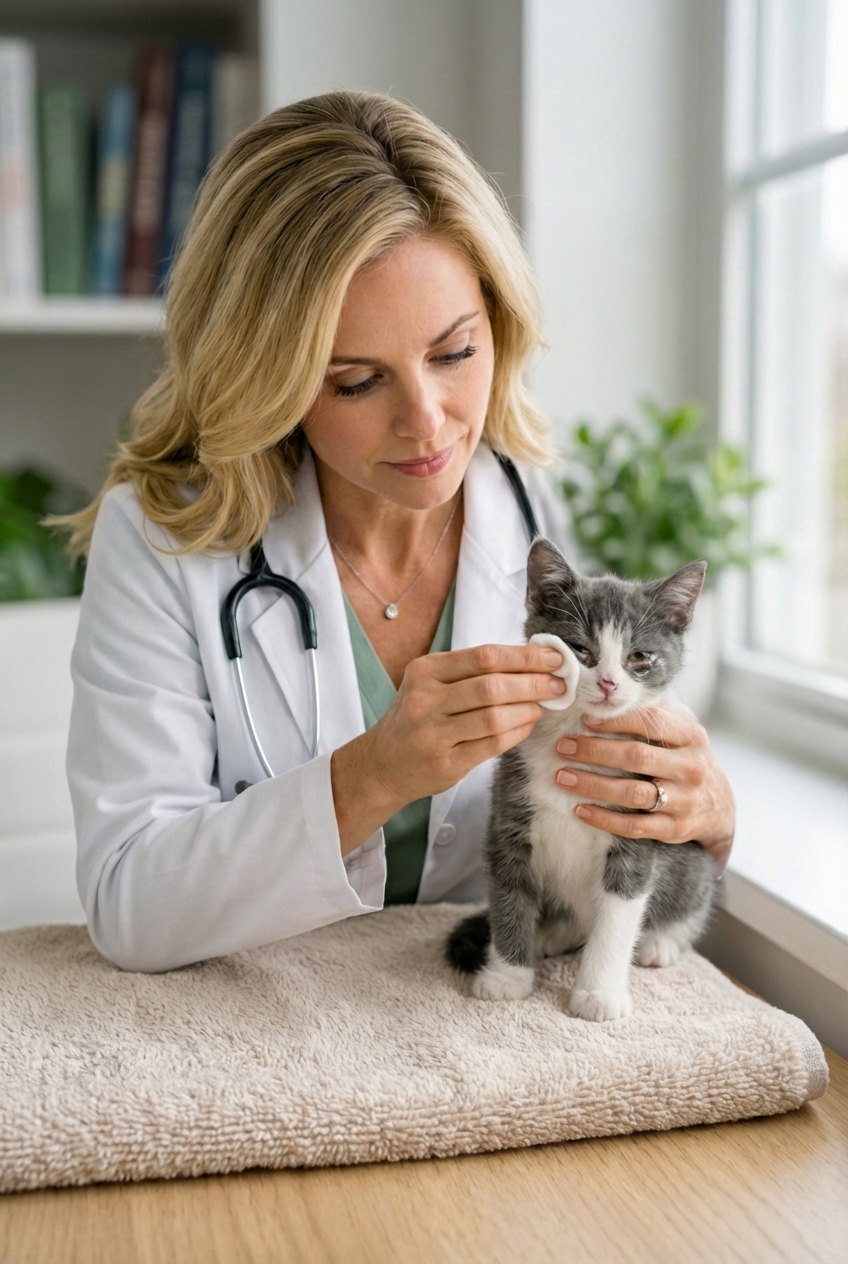
5) Clean the eyes and nose safely
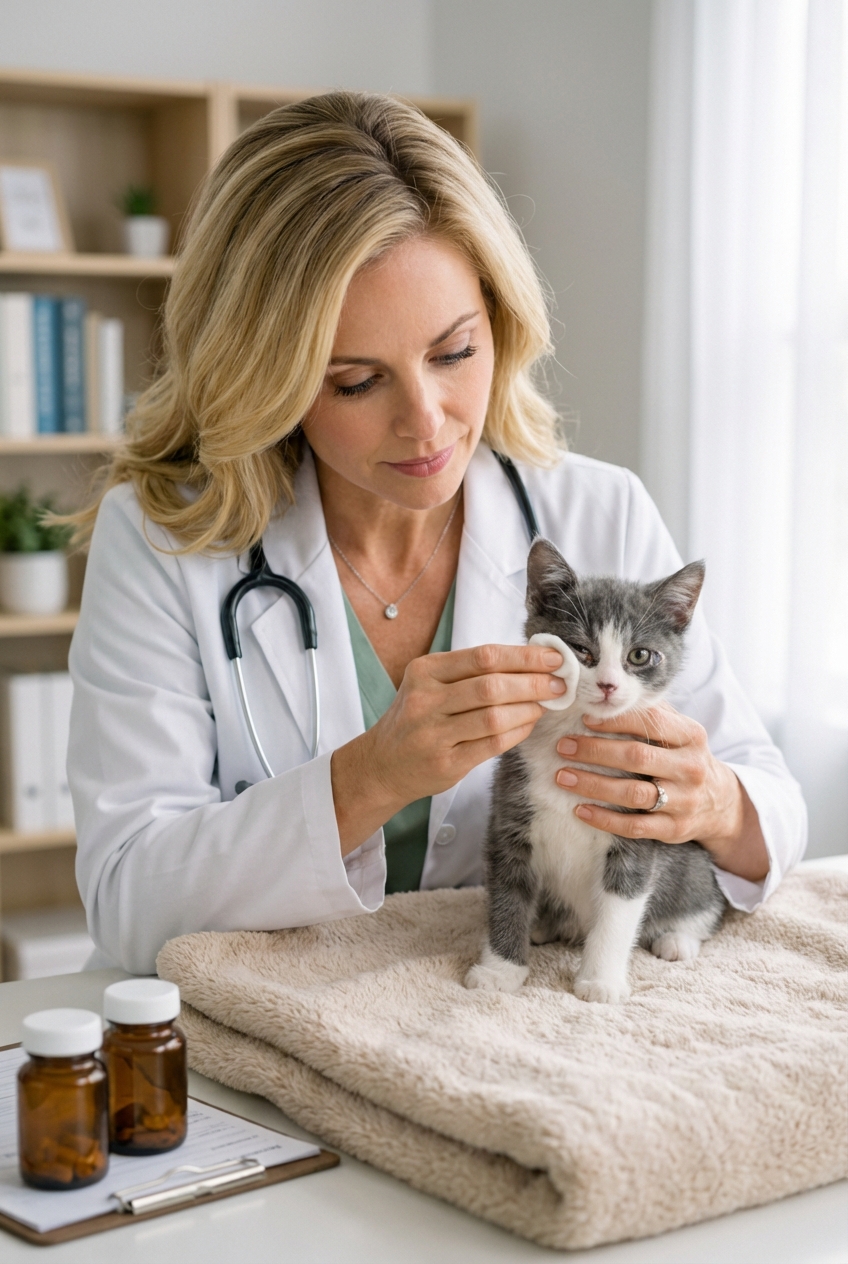
- Use a soft cotton pad with warm water or sterile saline to loosen crusts.
- Wipe gently, using a clean pad for each eye to reduce cross-contamination.
Avoid human cold medications. Decongestants, acetaminophen, ibuprofen, and many combination products can be dangerous or fatal to cats. If you are unsure, call your vet before giving anything by mouth.
When to call the vet
These are the red flags I want you to take seriously, especially for young kittens.
- Open-mouth breathing, struggling to breathe, or blue or pale gums
- Not eating for 24 hours (or less for very young kittens), or refusing to nurse
- Very sleepy, weak, collapsing, or not responding normally
- Eye issues like squinting, swelling, thick discharge, or the third eyelid showing
- Dehydration signs that can include dry gums, sticky saliva, low energy, and sometimes sunken-looking eyes
- Vomiting repeatedly or diarrhea that is significant or persistent
- Kittens under 12 weeks with respiratory symptoms: call your vet promptly for guidance, even if they seem “mostly okay”
- No improvement after 48 to 72 hours of supportive care
Some kittens need prescription medications, such as antibiotics for secondary bacterial infections, eye medications, appetite support, or fluids. In some cases, a veterinarian may consider antivirals for herpesvirus. A vet visit can also rule out parasites, pneumonia, or other conditions that can mimic a simple cold.
How long it lasts
Mild URIs often improve within 7 to 10 days, but some symptoms can linger longer, especially with herpesvirus. If your kitten has recurring watery eyes or sneezing during stress, that is something to discuss with your veterinarian. Many cats live very normal lives with good management, but they may need occasional support.
Protecting the rest of your home
Reduce spread
- Isolate the sick kitten when possible.
- Wash hands before and after handling.
- Use separate bowls, litter box, and bedding.
- Clean surfaces and wash bedding in hot water.
- Ask your vet, shelter, or rescue which disinfectant to use. Some viruses can be harder to kill than others, so product choice matters.
When to reintroduce
In general, keep separation in place until your kitten is eating well and symptoms are clearly improving, and follow your veterinarian’s guidance. Some cats (especially with herpesvirus) can carry the virus and flare during stress even after they seem “all better,” so good hygiene and stress reduction continue to matter in multi-cat homes.
Vaccines matter
The core FVRCP vaccine helps protect against major URI viruses. It does not guarantee a kitten will never get sick, but it typically reduces severity and complications. If your kitten is behind on vaccines, your vet can help you get safely back on schedule once they are stable.
Quick symptom checklist
If you are unsure what you are seeing, use this simple checkpoint.
- Mild: occasional sneezing, clear discharge, still eating and playing.
- Moderate: frequent sneezing, congestion, reduced appetite, eye crusting.
- Urgent: trouble breathing, not eating, extreme lethargy, painful eyes, very young kitten with symptoms.
If your kitten falls in the moderate or urgent category, it is smart to call your veterinarian and describe symptoms and duration. When in doubt, trust your instincts. You know your kitten’s normal best.