Learn about the Napoleon cat—also called the Minuet—including origin, personality, coat types, grooming routine, health risks to screen for, and tips for...
Article
•
Designer Mixes
Kinkalow Cat Breed Guide: Personality, Care, Health, and What to Expect

Shari Shidate
Designer Mixes contributor
Meet the Kinkalow
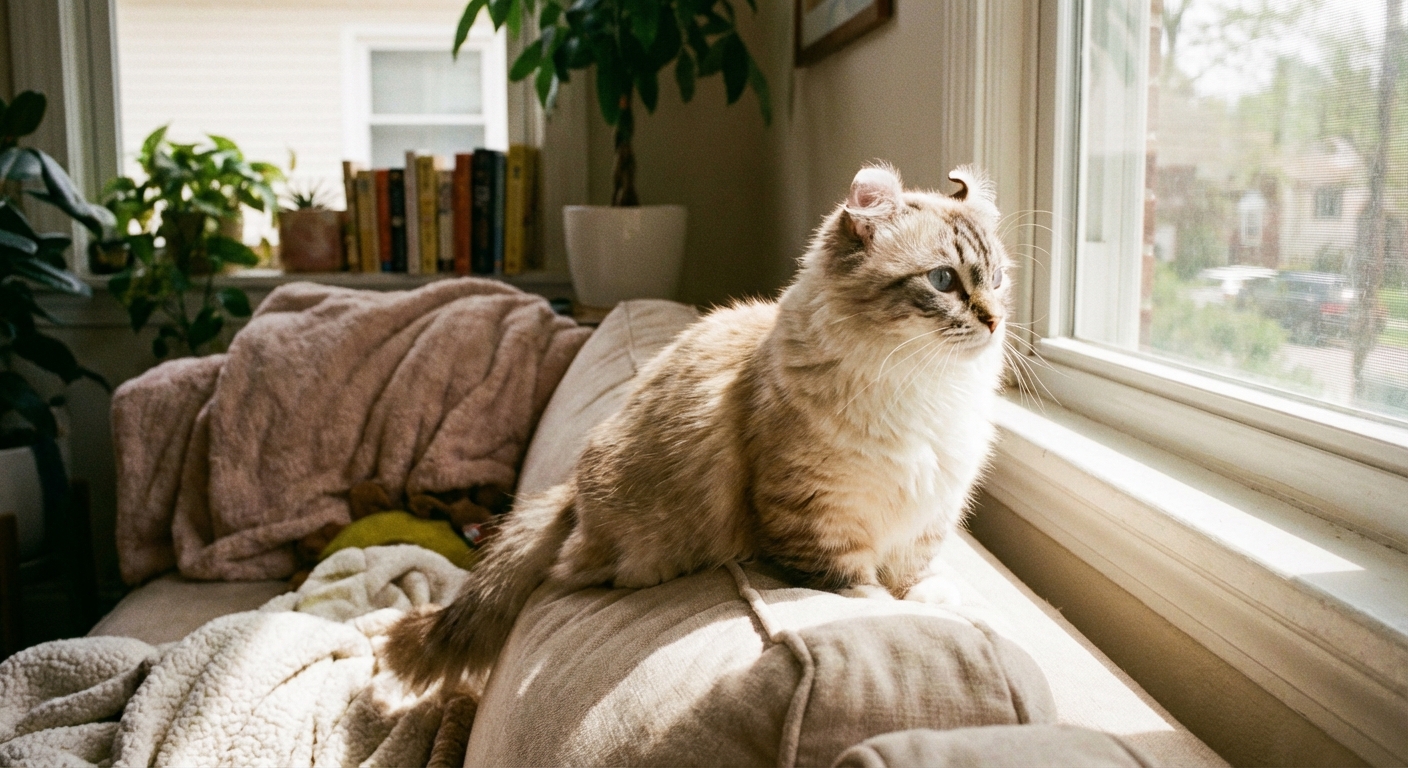
The Kinkalow is a small, companion-focused cat known for two standout traits: short legs and softly curled ears. This breed type is typically described as a cross between the Munchkin (short-legged) and the American Curl (curled ears). The result is often an affectionate, people-oriented cat that can fit well into homes with regular activity, as long as they still get daily playtime, predictable rest, and a setup that supports safe movement.
As a health and wellness practitioner, I always remind pet parents that the most important “breed trait” is the one you cannot see. It is how well a cat’s needs match your lifestyle. With the Kinkalow, that means thinking ahead about mobility support, grooming, and choosing a path to ownership that prioritizes health and transparency.
Origin and Breed Background
The Kinkalow is a newer, specialty breed type that developed from intentional breeding of the American Curl and the Munchkin. The goal was to combine the Curl’s friendly temperament and distinct ear shape with the Munchkin’s short stature.
Recognition note: The Kinkalow is generally not recognized by major cat registries such as CFA or TICA. Because of that, what you see in practice is often breeder-defined standards rather than widely standardized, registry-driven guidelines.
What this means for you: You may see differences in ear curl tightness, coat length, leg length, and overall build. Temperament is often described as social and people-forward, but personality still varies a lot by individual genetics and early socialization.
Appearance: Size, Coat, and Those Signature Features
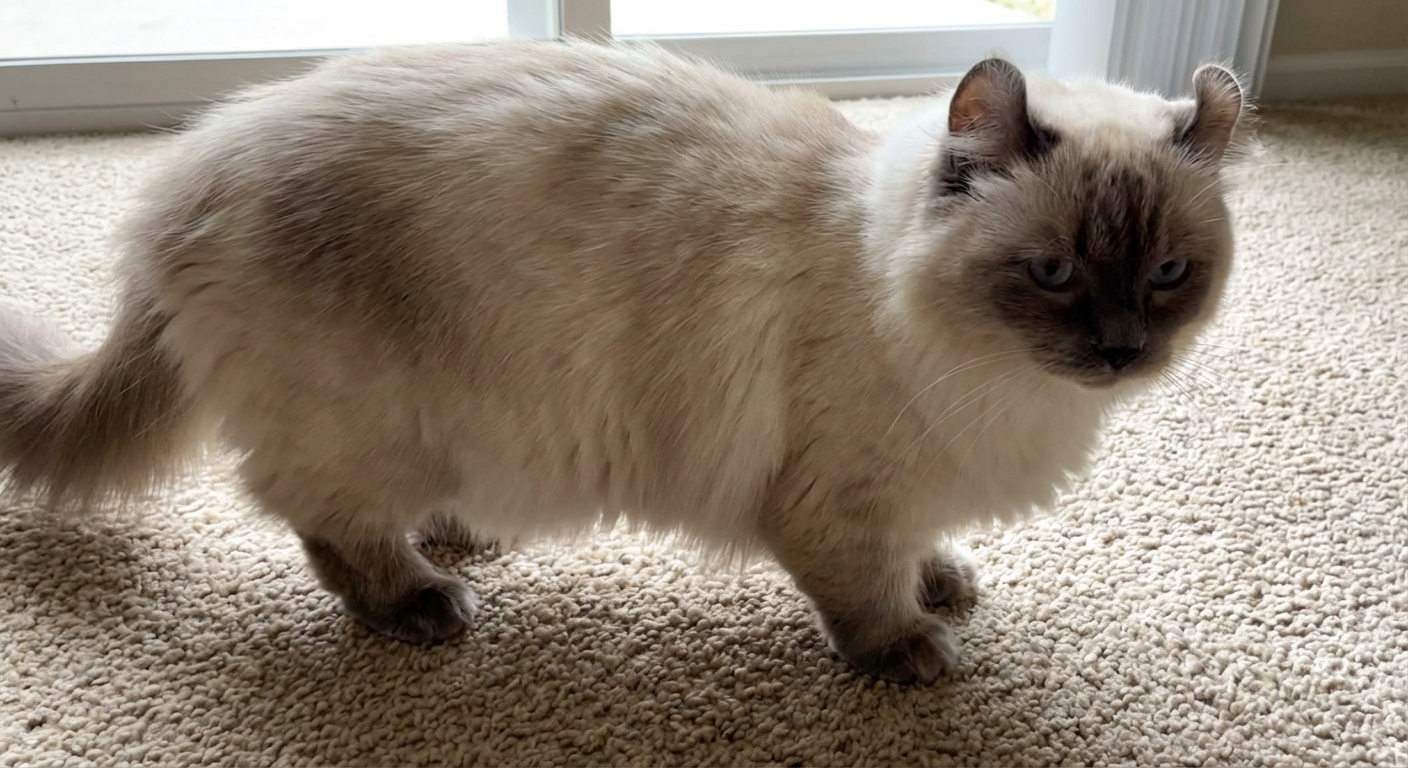
Kinkalows are usually small to medium in size with a compact, sturdy body. Their short legs are the most noticeable physical trait, and their ears curl backward like an American Curl. Coats can be short or long, and colors and patterns are wide-ranging.
Quick physical snapshot
- Body: Compact and solid
- Legs: Short, which can change jumping and climbing style
- Ears: Curled backward to varying degrees
- Coat: Short or long, many colors and patterns
Temperament: What Living With a Kinkalow Feels Like
Many Kinkalows are described as affectionate, curious, and people-focused. A lot enjoy being near their humans and like to participate in household routines, from supervised window watching to interactive play sessions. They may do well with gentle children and respectful dogs, especially when introductions are gradual, positive, and never rushed.
Common personality traits
- Social and bonded: Many follow you from room to room
- Playful: Often enjoy wand toys, puzzle feeders, and short bursts of play
- Adaptable: Commonly handle household activity well when given quiet retreat spaces
- People-sensitive: Some can become bored or lonely without enrichment
A useful reminder: breed descriptions are tendencies, not guarantees. Socialization, handling, and home environment shape behavior as much as genetics do.
Is the Kinkalow a Good Pet for Your Home?
Many Kinkalows do well as indoor cats and thrive in homes that offer safe climbing options, consistent playtime, and cozy resting spots. Because of their shorter legs, you may need to make a few small adjustments that help them move around comfortably.
Great match for
- People who want a friendly, interactive companion
- Indoor households that can provide daily play and enrichment
- Families with respectful children who understand gentle handling
- Multi-pet homes with slow, supervised introductions
Consider another breed if
- You are away for long stretches with no plan for enrichment or companionship
- You prefer a very independent cat that avoids interaction
- You cannot accommodate basic mobility-friendly setups like steps or lower perches
Health Considerations: What to Know Upfront
Any time a breed includes traits like shortened limbs or distinctive ear structures, it is wise to approach health thoughtfully. Not every Kinkalow will develop problems. Risk varies by the individual, by body structure, and by how carefully the breeding cats were selected. Your most practical tools are responsible sourcing, routine veterinary care, and a home setup that reduces unnecessary wear and tear.
Potential areas to discuss with your veterinarian
- Joint and spine health: Short-legged cats may be at higher risk for orthopedic strain, but evidence and outcomes can be mixed and very individual. A lean body condition, appropriate activity, and early evaluation matter.
- Mobility and injury prevention: Some cats can jump surprisingly well, but repeated high jumps and hard landings can add stress over time. Pet stairs, step paths, and lower perches help.
- Ear care: Curled ears can be perfectly healthy. Some cats may be more prone to wax buildup or trapped debris depending on ear shape. Routine, gentle checks are helpful. Ask your vet before using any ear cleaner.
- Dental health: Like many cats, they can be prone to tartar and gum disease. Home dental care and routine professional checks matter.
Credential-neutral best practices I recommend: Ask your vet to record a body condition score (BCS) at each visit, and consider a baseline orthopedic exam in young adulthood so you have a reference point for the future.
Daily Care: Grooming, Feeding, and Enrichment
Grooming
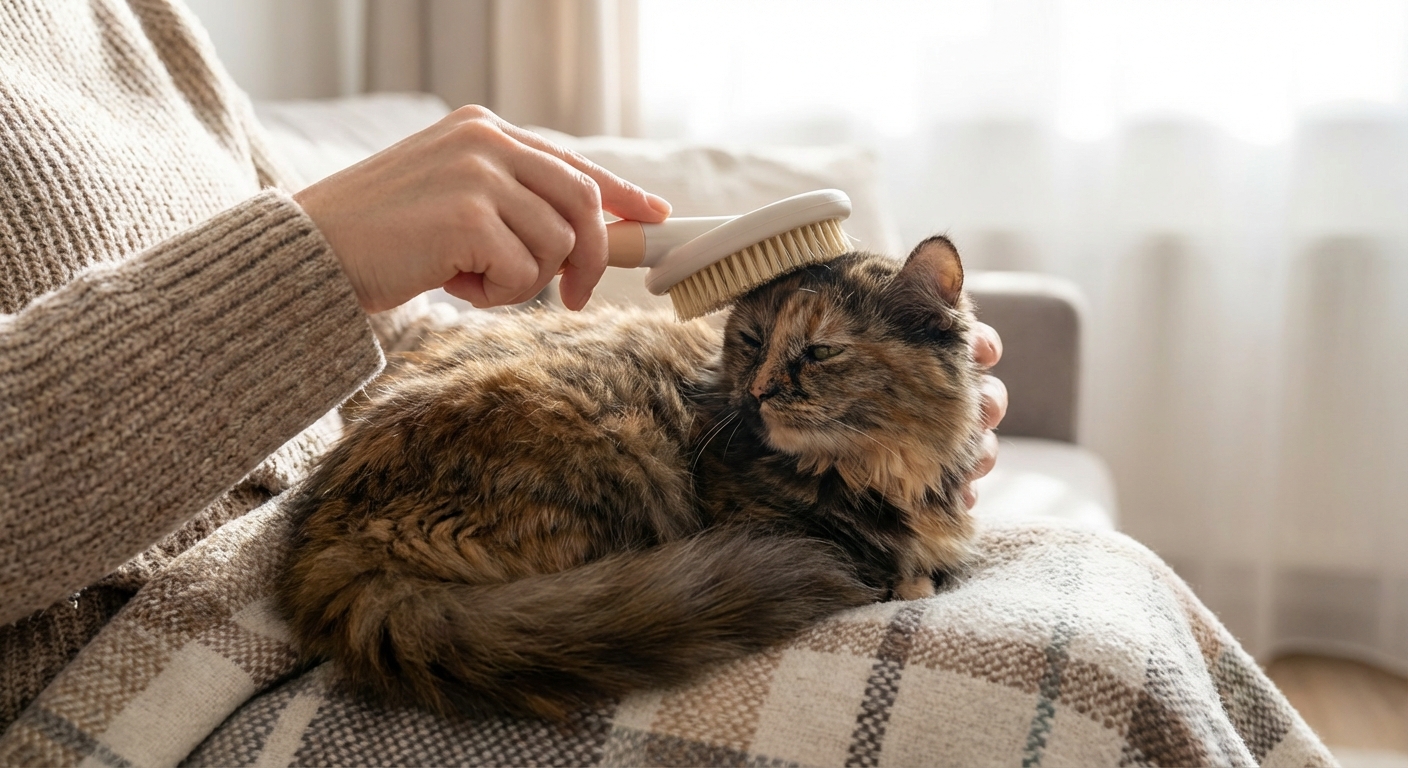
Grooming needs depend on coat length. Short-coated cats typically do well with weekly brushing, while longer coats may need brushing a few times a week to reduce tangles and hairballs. Keep nails trimmed, and check ears routinely. Always be gentle with ear handling and talk with your veterinarian if you notice redness, odor, or excessive wax.
Nutrition
A high-quality, protein-forward diet helps support muscle mass and overall health. Portion control matters, especially for cats with shorter legs where extra weight can add stress to joints. If your cat seems to be gaining, do not cut food dramatically on your own. Work with your veterinarian to adjust calories safely and keep nutrition complete.
Exercise and enrichment
- Use interactive toys for short play sessions 2 to 3 times daily
- Offer puzzle feeders to slow eating and stimulate natural foraging
- Provide low-to-mid height cat trees and stable window perches
- Add pet steps or ramps to beds and couches to reduce hard jumps
Home Setup: Making Your Space Kinkalow-Friendly
A few small design choices can help your Kinkalow move confidently and reduce strain. Think of it like good ergonomics for your cat.
- Choose stable climbing options: Wide platforms and sturdy bases are better than tall, wobbly towers.
- Create step paths: Use ottomans, benches, or pet stairs so your cat can move in smaller hops instead of one big leap. As a simple guide, aim for “one comfortable step at a time” rather than vertical climbs.
- Prioritize traction: Rugs or runners help on slippery floors.
- Keep litter boxes accessible: Low-entry boxes can be easier on joints. Many cats also do best with multiple boxes in quiet, easy-to-reach locations.
- Indoor-first lifestyle: Indoor living is typically the safest option, especially for smaller cats with shorter legs. If you want outdoor time, consider a secure catio or harness training.
Training and Socialization
Kinkalows often respond well to gentle training because they enjoy attention and interaction. Simple routines help reduce stress and build confidence.
Helpful training ideas
- Carrier comfort: Leave the carrier out with a soft blanket and treats so vet visits feel less stressful.
- Handling practice: Short, positive sessions touching paws, brushing, and quick ear checks.
- Clicker training: Many cats enjoy learning “sit,” “touch,” or coming when called using rewards.
Lifespan and Cost: What to Plan For
Lifespan: Many indoor cats live into their teens, and Kinkalows are often discussed in that general range, but exact breed-specific lifespan estimates are not well established because this is a newer, less standardized breed type. The most meaningful drivers are genetics, weight, dental care, preventive vet care, and home safety.
Cost: Purchase prices can be high for specialty kittens and vary widely by region, lineage, and availability. Whether you adopt or buy, plan for ongoing costs like quality food, pet insurance or a savings fund, routine dental care, and mobility-friendly supplies (steps, low-entry boxes, traction rugs).
Choosing a Responsible Breeder or Adoption Path
Because Kinkalows are less common and involve inherited physical traits, sourcing matters. A responsible breeder prioritizes health, temperament, and transparency. If adopting, ask for veterinary records and observe mobility, breathing, and overall comfort.
Questions worth asking
- What health screening is done for parent cats, including orthopedic evaluation and general wellness exams?
- Can you meet at least one parent cat or review temperament notes?
- How are kittens socialized in the home?
- What is the plan for vet visits, vaccines, parasite prevention, and early preventive care?
- Do you provide a written contract and a health guarantee?
Breeder red flags
- No veterinary records or no willingness to discuss health testing
- Kittens sent home too young
- No contract, no return policy, or pressure to buy quickly
- Unclean environment or kittens that seem fearful, shut down, or poorly socialized
Ethics context: Breeding for dwarfism-related traits is controversial, and it is fair to ask hard questions. Look for breeders who prioritize health and function over extreme features, avoid exaggerating traits, and are transparent about screening and outcomes. If anything feels off, it is okay to walk away.
Bottom Line
The Kinkalow can be a delightful companion: affectionate, playful, and often well-suited to indoor life with the right setup. The keys to a thriving Kinkalow are simple and very achievable: keep them lean, support safe movement around the home, prioritize enrichment, and partner with a veterinarian for routine preventive care (including dental checkups and BCS tracking).
When you match a cat’s needs to your lifestyle, you set the stage for years of comfort, connection, and those little everyday moments that make pet parenting so rewarding.