When a dog is living with kidney failure, families often do everything right: fluids, prescription diets, appetite support, anti-nausea meds, and frequent vet visits. And still, there may come a point where treatment stops helping the way it used to. If you are here because you are wondering whether it is “time,” I want you to know something important: this is a loving question, not a selfish one.
This article focuses on end-of-life signs, how to tell a temporary crisis from a chronic decline, and how veterinarians assess suffering when discussing euthanasia. It does not replace veterinary diagnosis or treatment, and it is not a substitute for an exam and lab work. If your dog is newly diagnosed, staging, long-term diet planning, and early management resources are still worth exploring with your vet.

Understanding late-stage kidney failure
The kidneys do more than make urine. They help balance hydration, electrolytes, blood pressure, and the removal of metabolic waste. They also produce hormones (including erythropoietin) that support red blood cell production. In late-stage chronic kidney disease (often called end-stage CKD) or severe kidney failure, the body can no longer keep those systems stable, even with support.
Many dogs with CKD have a “two steps forward, one step back” pattern for a while. The hard part is that late-stage decline can look subtle at first, then accelerate.
If your veterinarian has mentioned IRIS staging, it is a common way to describe CKD severity using trends in lab values (and sometimes blood pressure and protein in the urine). You do not need to memorize the stages to make good decisions, but it can help you and your vet speak the same language as things change.
Common patterns families notice
- Good days and bad days that gradually shift toward more bad days.
- Medications that used to help nausea or appetite no longer make a meaningful difference.
- Recovery takes longer after each setback, or your dog never fully bounces back.
End-of-life signs
Kidney failure can cause discomfort in several ways: nausea, stomach irritation from uremic toxins, dehydration, electrolyte imbalance, high blood pressure, anemia-related weakness, and in some cases painful mouth ulcers. Some dogs are not overtly painful in the way a broken bone is painful, but ongoing nausea, ulceration, and high blood pressure can still create significant suffering.
One sign alone does not always mean it is time. What matters most is the trend, the severity, and whether your dog can still experience comfort and connection between treatments.
Late-stage signs to discuss urgently
- Persistent nausea: repeated lip-smacking, drooling, swallowing, gagging, vomiting, or turning away from food even with anti-nausea medication.
- Appetite collapse: refusing favorite foods for 24 to 48 hours, or only eating tiny bites and then stopping.
- Dehydration that returns quickly: dry or tacky gums, weakness, panting, or your dog perks up briefly after fluids and then crashes again within hours to a day. (Sunken eyes can happen, but it is not the most reliable at-home sign in dogs.)
- Profound lethargy: staying in one spot most of the day, no interest in family, walks, toys, or normal routines.
- Weight loss and muscle wasting: the “frail” look along the spine and hips, despite trying calorie boosters.
- Confusion or restlessness: pacing, staring, getting “stuck” in corners, unusual vocalizing, or appearing disoriented, which can happen with toxin buildup or blood pressure changes.
- Breathing changes: ammonia-like breath odor, heavy panting at rest, or labored breathing. Because breathing changes can signal emergencies (including heart or lung problems, severe anemia, acid-base imbalance, or fluid overload), they warrant urgent veterinary evaluation.
- Mouth pain: oral ulcers, inflamed gums, pawing at the mouth, or refusing to chew.
- Incontinence or inability to rise: repeated accidents paired with weakness, or struggling to stand without help.
- Severe systemic signs: tremors, collapse, seizures, or extreme weakness, which can occur with dangerous electrolyte shifts (especially potassium), severe hypertension, or uremic effects on the brain.
Trust your instincts. If you are saying, “This doesn’t look like my dog anymore,” that observation matters and helps your veterinarian interpret the full picture.
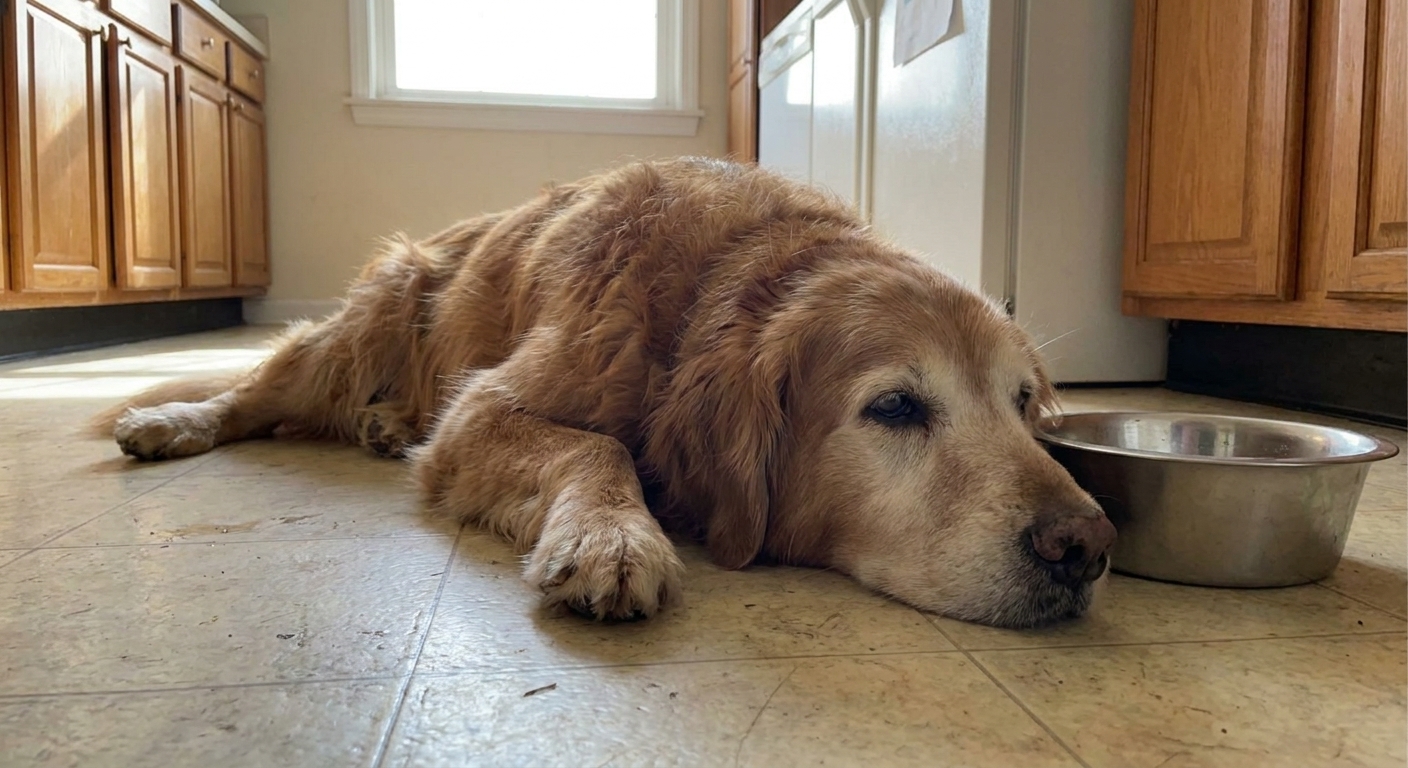
Hydration and appetite
In many dogs, the most heartbreaking turning point is when hydration and appetite support stop working. That does not mean you failed. It often means the disease has progressed to where the body can no longer stabilize.
What hydration support fading can look like
- Your dog needs more frequent subcutaneous fluids to look even a little brighter.
- The “good window” after fluids becomes shorter and shorter.
- Your dog seems uncomfortable during or after fluids, or cannot tolerate the volume well. This can happen with nausea, electrolyte or acid-base changes, or overhydration risk, so it is worth rechecking the plan with your vet rather than assuming fluids are always helpful.
What appetite support fading can look like
- Interest in food becomes inconsistent, then disappears.
- Even high-value foods are refused. If you try options like plain chicken or certain baby foods, avoid onion, garlic, and xylitol, and use them only with veterinary guidance since some are high in sodium.
- Appetite stimulants stop helping, or they cause agitation without meaningful eating.
When a dog cannot stay hydrated and cannot eat enough to maintain basic strength, quality of life can decline quickly. This is often the moment when families begin discussing euthanasia as a compassionate option.
Crisis vs chronic decline
One of the hardest decisions is knowing whether your dog is having a treatable crisis or whether you are seeing the end-stage trajectory.
A crisis may look like
- Sudden worsening after dehydration, missed meds, heat exposure, a new infection, pancreatitis, or a dietary change.
- A dog who was still enjoying life last week, then abruptly stops eating and starts vomiting.
- Lab values that worsen, but could improve with hospitalization, IV fluids, anti-nausea therapy, and electrolyte correction.
In some cases, dogs do rebound after a crisis. Hospitalization can buy meaningful time when the underlying issue is reversible.
Chronic decline may look like
- Weeks of steadily decreasing appetite and energy.
- More frequent “crashes,” less recovery, and fewer comfortable days.
- Persistent nausea and weakness even with appropriate medications, fluids, and diet adjustments.
- Complications stacking up, such as severe anemia, uncontrolled high blood pressure, recurring ulcers, or repeated hospital stays with minimal improvement.
If you are unsure, it is completely appropriate to ask your veterinarian a direct question: “Do you think this is a setback we can treat, or are we approaching end-of-life?”
How vets assess suffering
In the clinic, your vet is looking at both measurable data and your dog’s lived experience at home. Numbers matter, but quality of life matters just as much.
What your vet may evaluate
- Hydration status (gums, skin elasticity, heart rate, blood pressure).
- Body weight and muscle condition over time.
- Kidney values such as creatinine and BUN, plus phosphorus and potassium (very high or very low potassium can be dangerous).
- Acid-base balance and electrolytes that affect comfort and function.
- Anemia (low red blood cells can cause profound fatigue, weakness, and poor tolerance to activity).
- Blood pressure (hypertension can contribute to neurologic signs and further organ damage).
- Signs of uremia: mouth ulcers, GI bleeding, severe nausea, mental dullness.
- Response to treatment: does your dog reliably feel better with meds and fluids, or is the benefit minimal and brief?
In late-stage disease, your vet may also discuss whether any additional supportive options are likely to improve comfort, such as phosphate binders, anti-nausea medications (for example, maropitant or ondansetron), acid reducers or gut protectants, appetite stimulants (such as mirtazapine or capromorelin), blood pressure management, or anemia support. These are not right for every dog, but they are reasonable “ask about” topics.
At home, you are the expert on your dog’s normal. The most helpful thing you can bring to the appointment is a simple log for 5 to 7 days: appetite, water intake, vomiting, energy, mobility, comfort, and whether your dog still seeks affection.

When euthanasia may be kindest
Euthanasia is not about giving up. In veterinary medicine, it is considered when a pet’s suffering can no longer be relieved to an acceptable level, or when relief is so temporary that the animal spends most of their time feeling unwell.
Common “it may be time” situations
- Your dog is consistently nauseated and cannot keep food down, even with anti-nausea medication.
- They refuse food for multiple days or eat so little that weakness becomes severe.
- Fluids no longer restore comfort, or comfort lasts only a very short time.
- Repeated hospitalizations with diminishing improvement.
- Distress signs are frequent: panic, confusion, crying, inability to settle, or labored breathing.
- You cannot keep them comfortable at home despite closely following the treatment plan.
Many families find peace in choosing euthanasia a little earlier rather than waiting for a frightening emergency such as collapse, uncontrolled vomiting, or seizures. A planned goodbye can be calmer for your dog and less traumatic for you.
At-home hospice care
Some families choose a hospice approach for a period of time. The goal is comfort, not cure. That can mean simplifying medications to the ones that clearly help, keeping food and fluids pressure low, and focusing on rest, warmth, gentle help getting outside, and connection.
It can also mean being honest about what is realistic. Force-feeding, repeated stressful treatments, or constant trips to the clinic may not match your dog’s comfort goals. Your vet can help you choose a plan that supports dignity and reduces suffering, and can tell you what changes mean the plan should be reassessed right away.
A simple quality-of-life check
If you feel stuck, use a short daily check-in. Give each item a yes or no, or rate 0 to 10. Bring it to your veterinarian so you are making the decision together.
Daily comfort check
- Eating: Did my dog willingly eat a reasonable amount today?
- Drinking and hydration: Are gums moist and is my dog stable between fluids?
- Nausea: Was there vomiting, drooling, lip-smacking, or refusal to eat due to nausea?
- Mobility: Can my dog get up, walk, and eliminate with dignity?
- Rest: Can my dog sleep comfortably without constant repositioning or restlessness?
- Joy and connection: Did my dog seek affection, respond to family, or show interest in anything they usually love?
- More good days than bad: Over the past 7 days, are good days still winning?
If you are consistently answering “no” to the core categories (eating, comfort, rest, connection), that is a strong signal to schedule an end-of-life consultation.
What to ask your vet
It can help to walk in with a short list. Here are questions I have seen bring clarity for families:
- “Is my dog likely feeling pain, nausea, or both?”
- “What symptoms can we realistically control at this stage, and for how long?”
- “Are there any comfort-focused options we have not tried yet that are appropriate for my dog?”
- “What would an emergency look like, and how do I prevent it?”
- “If this were your dog, what would you do next?”
- “Can we plan a peaceful euthanasia at home or in a quiet room at the clinic?”
Also ask about aftercare options (private cremation, communal cremation, burial rules in your area) before you are in crisis mode.
What euthanasia is like
Families often fear the unknown. While each clinic has its own approach, a peaceful euthanasia typically includes:
- A discussion of consent and what to expect physically.
- A calming sedative or anesthetic injection first, so your dog becomes deeply relaxed and sleepy.
- The euthanasia medication given once your dog is fully comfortable.
- Time for you to say goodbye, if you want it.
Some dogs may take a deep breath, have small muscle twitches, or release urine after passing. These are reflexes, not signs of distress. Your veterinary team can talk you through every step gently and clearly.
When to seek emergency care
If your dog has kidney disease and you see any of the following, contact an emergency vet immediately:
- Collapse, inability to stand, or severe weakness that is sudden.
- Repeated vomiting with inability to keep water down.
- Suspected toxin exposure (including certain human medications).
- Seizures, severe confusion, or unresponsiveness.
- Labored breathing or blue-tinged gums.
- No urination, straining to urinate, or crying in the litter area or yard. This can signal urinary obstruction or lower urinary tract disease as well as severe kidney issues, and it is always an emergency.
Even if you are leaning toward euthanasia, an emergency team can help relieve distress and, if needed, provide a peaceful passing without prolonged suffering.
A final word
Kidney failure is a heavy diagnosis because it asks so much of families, and it can change quickly. If you are considering euthanasia, you are not “quitting.” You are weighing your dog’s comfort, dignity, and daily experience, which is one of the purest forms of love I see in veterinary care.
If you are able, schedule a quality-of-life appointment with your veterinarian, bring your notes, and talk through what is realistic from here. You do not have to make this decision alone.