A practical guide to low-phosphorus homemade meals for cats with CKD—what to avoid, safer ingredient building blocks, starter meal frameworks, and must-hav...
Article
•
Designer Mixes
Kidney Failure in Cats Stages

Shari Shidate
Designer Mixes contributor
As a veterinary assistant here in Frisco, Texas, I have met many families who are blindsided by a diagnosis of kidney disease. The truth is, chronic kidney disease (CKD) is common in cats, especially as they age, and it often moves quietly at first. The good news is that with early detection and the right support, many cats can feel good and enjoy a great quality of life for a long time.
Let’s walk through the stages of kidney disease in cats in a clear, evidence-based way, with practical tips you can use today.
What the kidneys do
Your cat’s kidneys are not just filters. They help:
- Remove waste products from the blood
- Balance water and electrolytes (like potassium and phosphorus)
- Support healthy blood pressure
- Signal the body to make red blood cells
- Help regulate acid and mineral balance
When kidneys lose function over time, waste and minerals build up and hydration becomes harder to maintain. Many cats with kidney disease drink more and pee more, and those changes are often among the earliest noticeable signs, but not every cat follows the same pattern.
CKD vs. acute kidney injury
Chronic kidney disease (CKD)
CKD is typically slow and progressive. It is more common in older cats, and many cats adapt for months or years before symptoms become obvious.
Acute kidney injury (AKI)
AKI is a sudden kidney injury. It can be triggered by toxins (like lilies or antifreeze), severe dehydration, infection, or blockage. AKI is an emergency.
If your cat suddenly stops eating, vomits repeatedly, seems painful, or stops producing urine, seek emergency veterinary care right away.
Stages of kidney disease (IRIS)
Veterinarians often use IRIS (International Renal Interest Society) guidelines to stage CKD. Staging helps guide diet, monitoring frequency, and medication choices.
A quick clarity note: IRIS stage is primarily based on fasting creatinine (or symmetric dimethylarginine, SDMA) in a stable, well hydrated patient. Then vets “substage” using blood pressure and protein in the urine. Urine specific gravity (how concentrated the urine is) is extremely helpful for diagnosis and context, but it is not part of the formal IRIS stage cutoffs.
Below is a practical, owner-friendly description of what each stage can look like at home and what your vet team is usually watching for.
Stage 1: Early CKD
What it can look like at home: Often no obvious symptoms. Some cats may drink a bit more or have slightly larger urine clumps.
What the vet may see: Creatinine may be normal, with other evidence of kidney change such as elevated SDMA, persistently dilute urine, or kidney changes on imaging.
Tips that help:
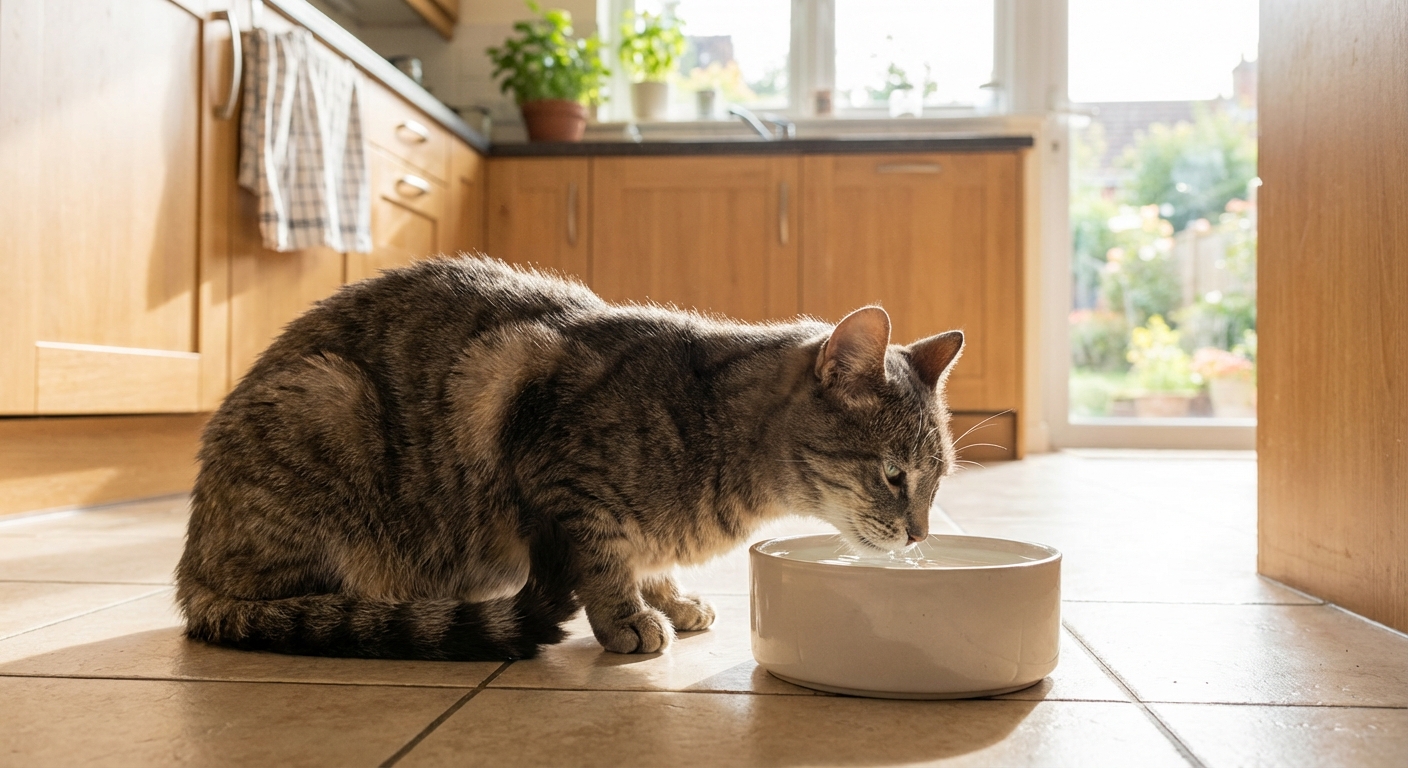
- Prioritize hydration: add water to wet food, offer a pet fountain, and keep bowls in multiple locations.
- Plan baseline monitoring: ask about a recheck schedule for bloodwork, urine testing, and blood pressure.
- Keep dental care on your radar: dental disease and oral inflammation can impact overall health and appetite, so addressing it can support the whole cat.
Stage 2: Mild to moderate CKD
What it can look like at home: Increased thirst and urination become more noticeable. Mild weight loss, picky appetite days, and occasional vomiting can begin.
What the vet may see: More consistent lab changes and reduced urine concentrating ability. Phosphorus may start to rise.
Tips that help:
- Switch food thoughtfully: many cats do well on a kidney-support diet because it is formulated for lower phosphorus and moderated, highly digestible protein. (This is different from choosing a random “low protein” diet.) Transition slowly over 10 to 14 days.
- Track weight monthly: small losses matter in cats. Use a baby scale if you have one.
- Ask about nausea support: mild nausea can cause “sniff and walk away.” Treatment can be a quality-of-life game changer.
Stage 3: Moderate to severe CKD
What it can look like at home: Appetite dips more often, weight and muscle loss become easier to see, vomiting or constipation may increase, and energy may drop.
What the vet may see: Higher creatinine and SDMA, possible anemia, higher phosphorus, and more frequent dehydration. Some cats also develop low potassium, high blood pressure, or protein loss in the urine.
Tips that help:
- Hydration plan: some cats benefit from subcutaneous fluids at home. This is not right for every cat, so it should be guided by your veterinarian. If recommended, your veterinary team can teach you step-by-step.
- Manage phosphorus: if diet alone does not control phosphorus, ask about phosphorus binders.
- Check blood pressure: high blood pressure is common in CKD and can affect eyes, brain, and kidneys.
- Address constipation early: dehydration slows the gut. Your vet can recommend safe stool softeners or diet strategies.
Stage 4: Advanced CKD
What it can look like at home: Significant weight loss, very poor appetite, nausea, dehydration, weakness, and more bad days. Some cats hide more.
What the vet may see: Marked lab changes, anemia, electrolyte issues, and difficulty maintaining hydration.
Tips that help:
- Quality of life first: focus on comfort, nausea control, appetite support, hydration support, and pain management if needed.
- Use appetite strategies: warming food, offering strong-smelling options, and vet-approved appetite stimulants can help.
- Discuss palliative care: many clinics can help you build a compassionate plan that matches your cat and your family.
One supportive mindset I share often: you are not “giving up” when you choose comfort. You are choosing love in a practical, gentle way.
Key insights
- Cats are designed to conserve water because their ancestors were desert animals. That is why many cats do not naturally drink much, even when they should.
- Wet food can be a hydration tool because it contains far more moisture than dry kibble.
- Blood pressure matters in cats with CKD. It is quick to check and can help prevent serious complications.
- SDMA can rise earlier than creatinine in some cats, which is why many vets include it in senior screening panels.
Signs to watch for
If you notice any of the following, call your veterinarian for guidance:
- Increased thirst or larger urine clumps
- Weight loss or muscle loss over the spine and hips
- Picky appetite, nausea, drooling, or lip smacking
- Vomiting or constipation
- Bad breath that smells “chemical” or like ammonia
- Sudden blindness or bumping into things (possible high blood pressure emergency)
- Hiding, weakness, or new behavior changes
Care tips that help
1) Make water easier
- Try a fountain and wide bowls (some cats dislike whisker contact)
- Offer water in multiple quiet spots
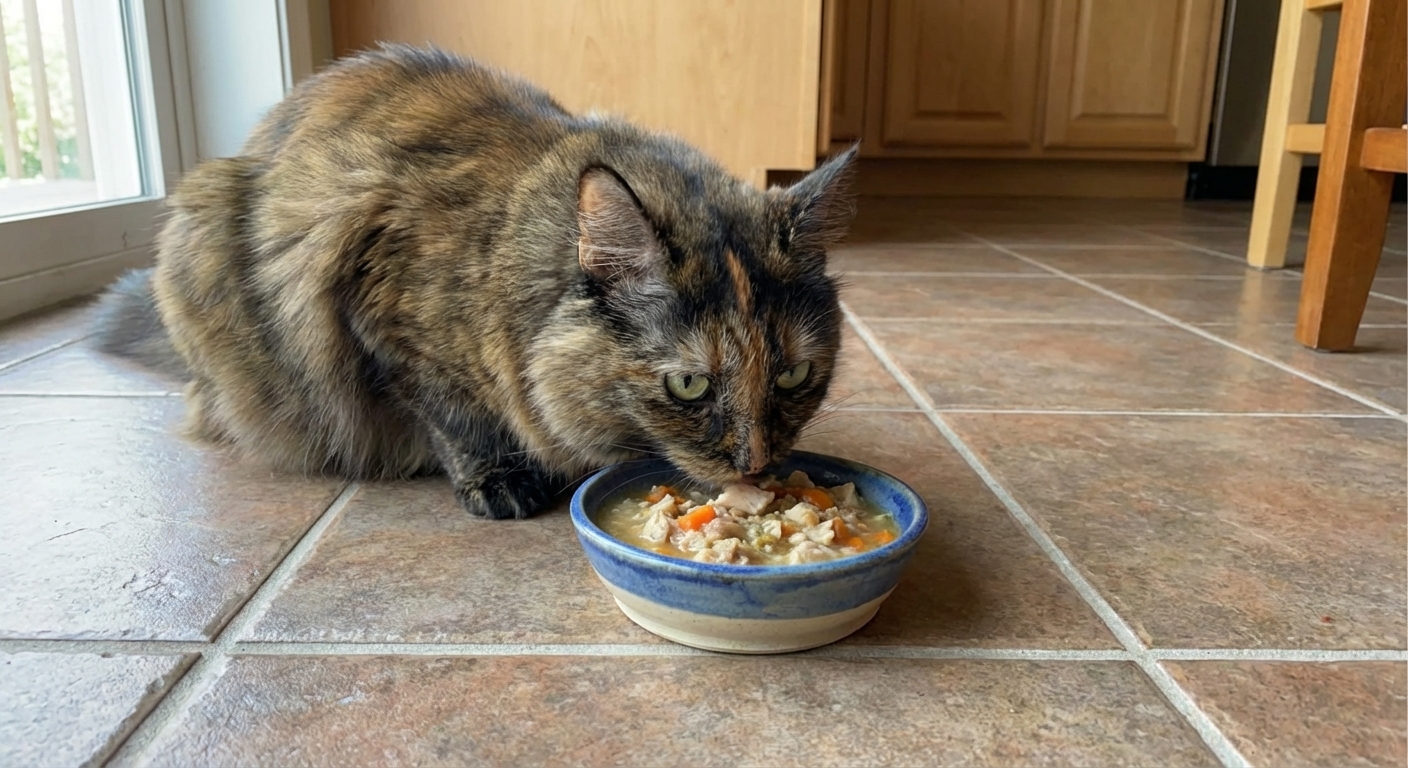
- Add a little water or vet-approved broth to wet food
2) Feed the cat in front of you
Kidney support diets are evidence-based, but cats must eat enough calories to maintain weight. If your cat refuses a prescription kidney diet, talk to your veterinarian about alternatives rather than letting them stop eating.
3) Schedule smart monitoring
Most cats with CKD benefit from routine checks of:
- Bloodwork (creatinine, BUN, SDMA, phosphorus)
- Urinalysis and urine protein
- Blood pressure
- Body weight and body condition score
4) Ask about common treatment tools
Every cat is different, but these are common categories of support your veterinarian may discuss:
- Nausea control: examples include maropitant or ondansetron
- Appetite support: examples include mirtazapine
- Blood pressure control: examples include amlodipine
- Protein in urine: examples include ACE inhibitors or ARBs when appropriate
- Electrolytes: potassium supplementation if levels are low
- Phosphorus control: phosphorus binders if diet is not enough
5) Be careful with medications and toxins
- Never give human pain relievers unless your veterinarian specifically prescribes something for your cat
- Keep lilies completely out of the home if you have cats
- Ask before using supplements, as not all are kidney-safe
When to seek urgent care
Please treat these as urgent:
- Not eating for 24 hours, or sooner if paired with vomiting, lethargy, or a known medical condition like CKD
- Repeated vomiting or severe lethargy
- Straining to urinate or producing little to no urine
- Sudden blindness, stumbling, or seizures
- Possible toxin exposure (especially lilies, antifreeze, rodenticide)
Questions to ask your vet
- What IRIS stage is my cat in, and which values (creatinine or SDMA) were used?
- Does my cat have high blood pressure or protein in the urine?
- What is my cat’s phosphorus level, and do we need a binder?
- Is my cat anemic or low in potassium?
- How often should we recheck bloodwork, urine, and blood pressure?
- What are the best appetite and nausea options for my cat?
- Would subcutaneous fluids help, and can I learn to do them at home?