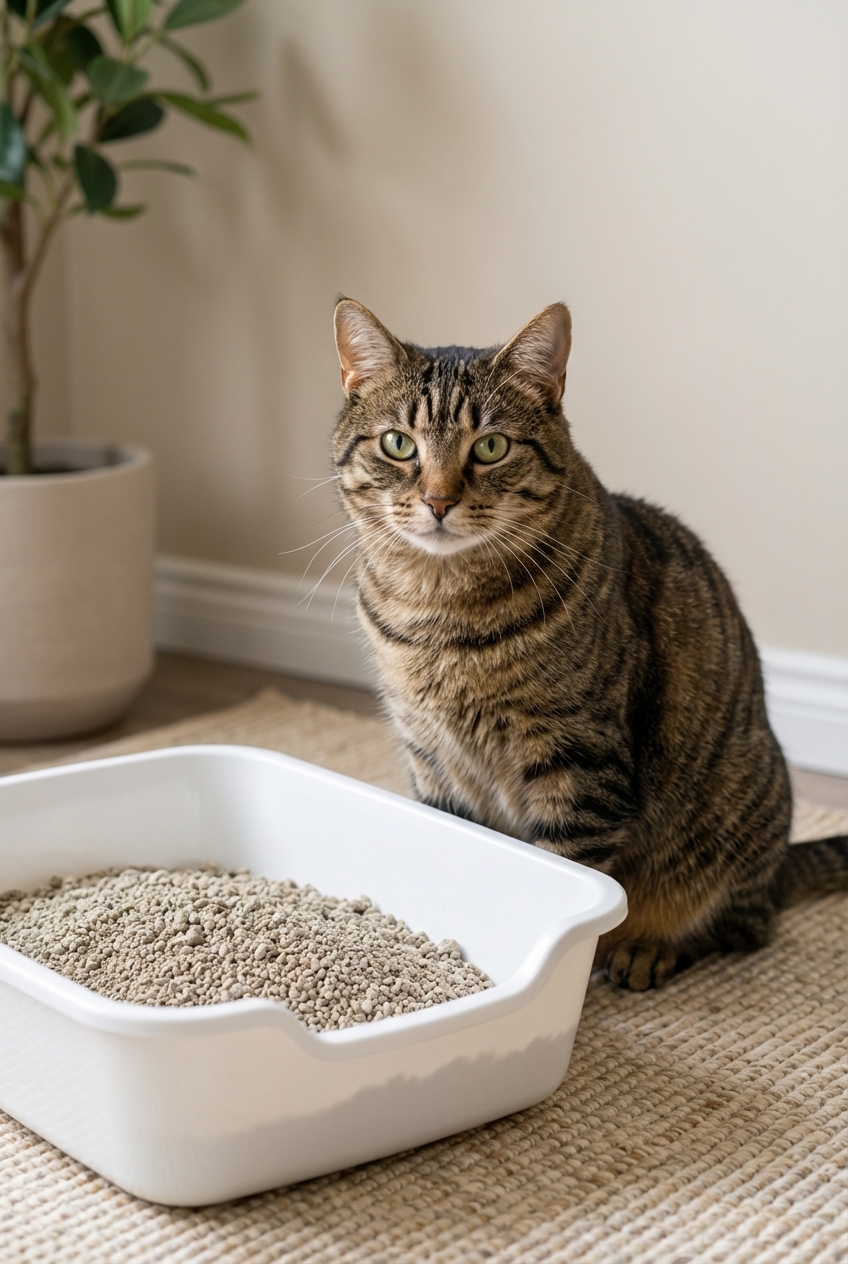
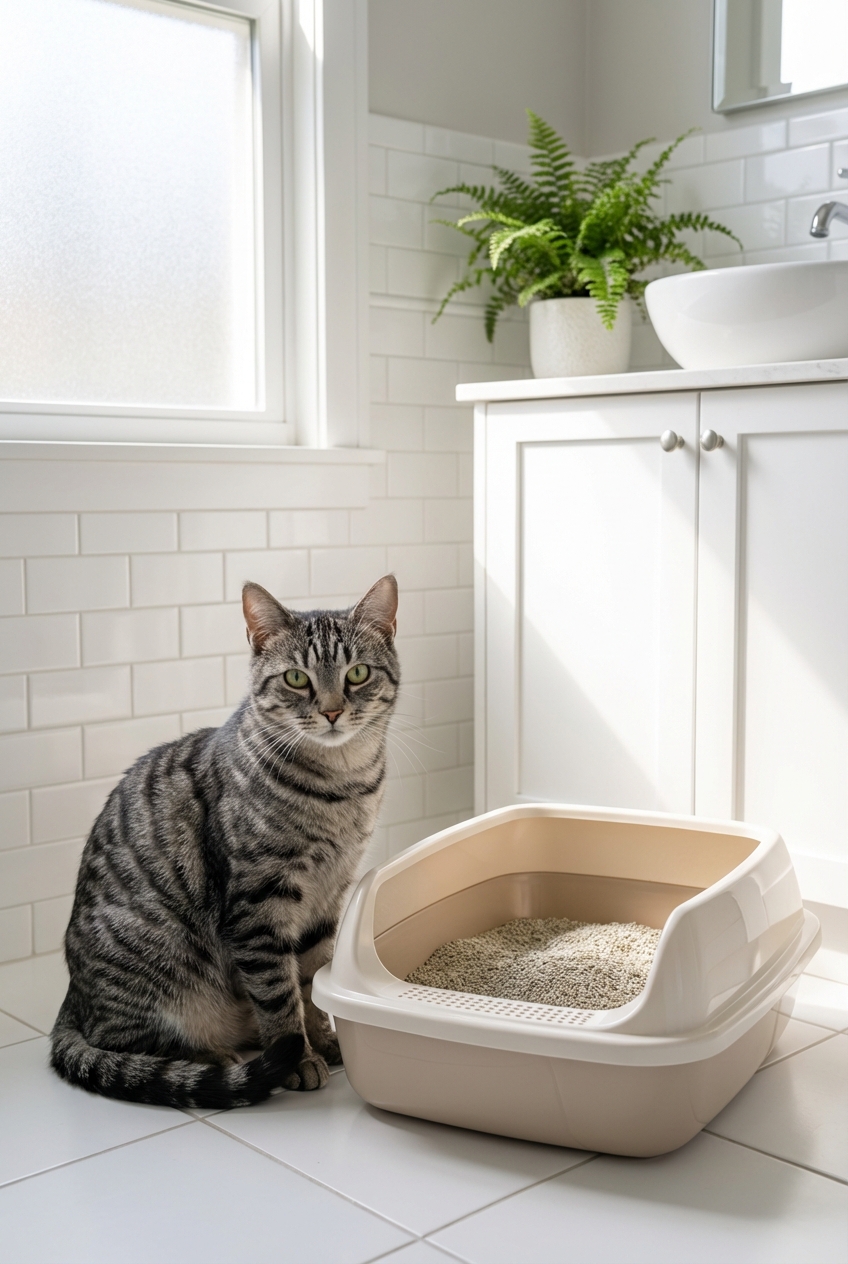
Cat urinary symptoms aren’t always a true UTI. Learn key signs, UTI vs constipation, common causes like FIC or crystals, and when a male cat may be blocked...
Article
•
Designer Mixes
Key Signs Your Cat Has a UTI

Shari Shidate
Designer Mixes contributor
As a veterinary assistant, I can tell you this: when cats have urinary trouble, it can look subtle at first, then turn serious fast. A urinary tract infection (UTI) is one possible cause, but not the only one. In younger cats, feline idiopathic cystitis (FIC) (sterile bladder inflammation, often stress-linked) is very common. Crystals or stones may be involved too, and male cats have a higher risk of a life-threatening blockage.
This guide will walk you through key warning signs your cat may have a UTI or another urinary issue, what else it could be, what to do at home today, and when it is an emergency.
Common urinary signs in cats
Cats are masters at hiding discomfort. Often, the first clue is a change in litter box habits or behavior. Here are the signs I take seriously in clinic.
1) Frequent trips to the litter box
Your cat may hop in and out of the box repeatedly, squat often, and produce only a few drops each time. This can happen with FIC, crystals or stones, a UTI, or a partial blockage.
2) Straining to urinate
Straining can look like constipation, especially if your cat is posturing and crying. A blocked cat may squat and strain repeatedly but produce little to no urine. If you are not sure whether your cat is trying to pee or poop, assume urinary until proven otherwise and call your vet.
3) Urinating outside the litter box
This is one of the most common “my cat is being spiteful” myths. Pain and urgency make cats choose nearby surfaces like bath mats, laundry piles, or the tub. If an otherwise litter-trained cat starts having accidents, a medical cause is very likely.
4) Blood in the urine
Pink urine, red spots, or small clots can show up with inflammation, infection, crystals, stones, or trauma. Any blood in urine deserves a vet visit.
5) Crying out or acting painful in the box
Vocalizing, hissing, or suddenly jumping out of the box can indicate burning, cramping, or pressure.
6) Excessive licking of the genital area
Many cats will overgroom around the urinary opening because it is irritated.
7) Strong-smelling or cloudy urine
In people, odor can be a strong UTI clue. In cats, it is less reliable. Urine can smell stronger when it is more concentrated, while cloudiness is more often from cells, mucus, or crystals. Either way, it is a reason to get checked.
8) Behavior changes: hiding, irritability, reduced appetite
Discomfort often shows up as “off” behavior: hiding under beds, not wanting to be picked up, eating less, or seeming unusually grouchy.
UTI vs other urinary problems
Here is the tricky part: many urinary signs overlap. In cats, especially younger cats, true bacterial UTIs are not always the most common cause of lower urinary tract signs.
- Feline idiopathic cystitis (FIC): Sterile inflammation of the bladder, often linked with stress. Signs can look identical to UTI.
- Crystals or stones: Some crystals can be an incidental finding, but crystals or stones can also irritate the bladder, cause bleeding, and raise obstruction risk.
- Urethral plug (mostly male cats): Can partially or fully block urine flow.
- Diabetes or kidney disease: May cause increased urination or accidents, but typically without straining.
Who is more likely to have a true bacterial UTI?
While any cat can get a UTI, bacterial infection is more likely in older cats, female cats, and cats with underlying conditions such as diabetes, chronic kidney disease, or other issues that affect the bladder’s defenses.
How vets confirm a UTI
A urinalysis helps assess urine concentration, blood, crystals, and inflammation. It can sometimes suggest infection (for example, white blood cells or visible bacteria), but a urine culture is the best way to definitively confirm a bacterial UTI and choose the right antibiotic.
Your vet may recommend collecting urine in a sterile way (often via cystocentesis, a quick needle sample from the bladder) for the most accurate culture results.
This matters because unnecessary antibiotics can create side effects and contribute to resistance, and they can delay the right treatment if the real problem is FIC, stones, or a blockage.
When it is an emergency
If you remember nothing else, remember this: a cat that cannot pass urine needs emergency care.
Go to an ER now if you notice:
- Straining with little or no urine produced
- Repeated box trips with crying and no output
- A firm, painful belly
- Vomiting, severe lethargy, collapse
- Male cat with urinary distress and you are not seeing normal urine output, or you are unsure whether urine is coming out
A complete urinary blockage can become dangerous within 24 to 48 hours due to toxin buildup and dangerous electrolyte changes. Do not wait overnight.
What you can do at home
Home care is not a replacement for veterinary diagnosis, but there are practical steps that can support many cats while you arrange care.
Increase water intake
- Switch some or all meals to wet food (higher moisture).
- Add a tablespoon or two of water to wet food if your cat tolerates it.
- Use a cat water fountain (many cats drink more from moving water).
- Offer multiple water bowls in quiet areas.
Reduce stress
Stress can worsen urinary inflammation, especially with FIC. Keep the home calm, maintain routine, and provide safe hiding spots and enrichment.
Improve litter box setup
- Keep boxes very clean and easy to access.
- General rule: one box per cat plus one extra.
- Use unscented litter if your cat is sensitive.
What not to do
- Do not give human pain meds (many are toxic to cats).
- Do not start leftover antibiotics. The wrong drug or duration can make things worse.
- Do not rely on cranberry products without vet guidance. Evidence in cats is mixed, and it will not fix obstruction or stones.
- Do not delay care if your cat is straining or acting painful. Pain relief should be prescribed by a veterinarian, and waiting can worsen outcomes.
What your vet may recommend
Your veterinarian will likely start with a history, exam, and urine testing. Depending on findings, they may recommend:
- Urinalysis: Checks urine concentration, blood, crystals, inflammation.
- Urine culture: Confirms bacteria and guides antibiotic choice.
- X-rays or ultrasound: Looks for stones or other structural issues.
- Prescription pain relief and anti-inflammatory support: Especially important for comfort and healing.
- Diet changes: Prescription urinary diets may help reduce recurrence or prevent certain stones and crystal types.
- Fluids: To improve hydration and help flush the urinary tract.
If your cat has recurring urinary signs, ask your vet whether the pattern fits infection, FIC, stones, or crystals. The long-term plan depends on the cause.
Quick checklist
If you are trying to decide whether your cat needs to be seen, this checklist can help you act quickly.
- New straining in the box
- Frequent box trips with tiny urine amounts
- Accidents outside the box
- Blood-tinged urine
- Genital licking or discomfort
- Hiding, appetite drop, irritability
If your cat is straining and you are not seeing urine, treat it like an emergency and go in right away.
FAQ
Can a cat UTI go away on its own?
Some mild urinary inflammation (like FIC) can improve with hydration and stress reduction. A true bacterial UTI typically needs veterinary treatment. Since the signs overlap, guessing at home can delay the right care.
Do indoor cats get UTIs?
Yes. Indoor cats can develop UTIs, bladder inflammation, crystals, stones, and stress-related urinary issues.
Why is my cat peeing on my bed?
Pain, urgency, or stress are common drivers. Soft items also hold scent and feel safe. Any sudden change should trigger a vet check first, then behavior and environment changes.