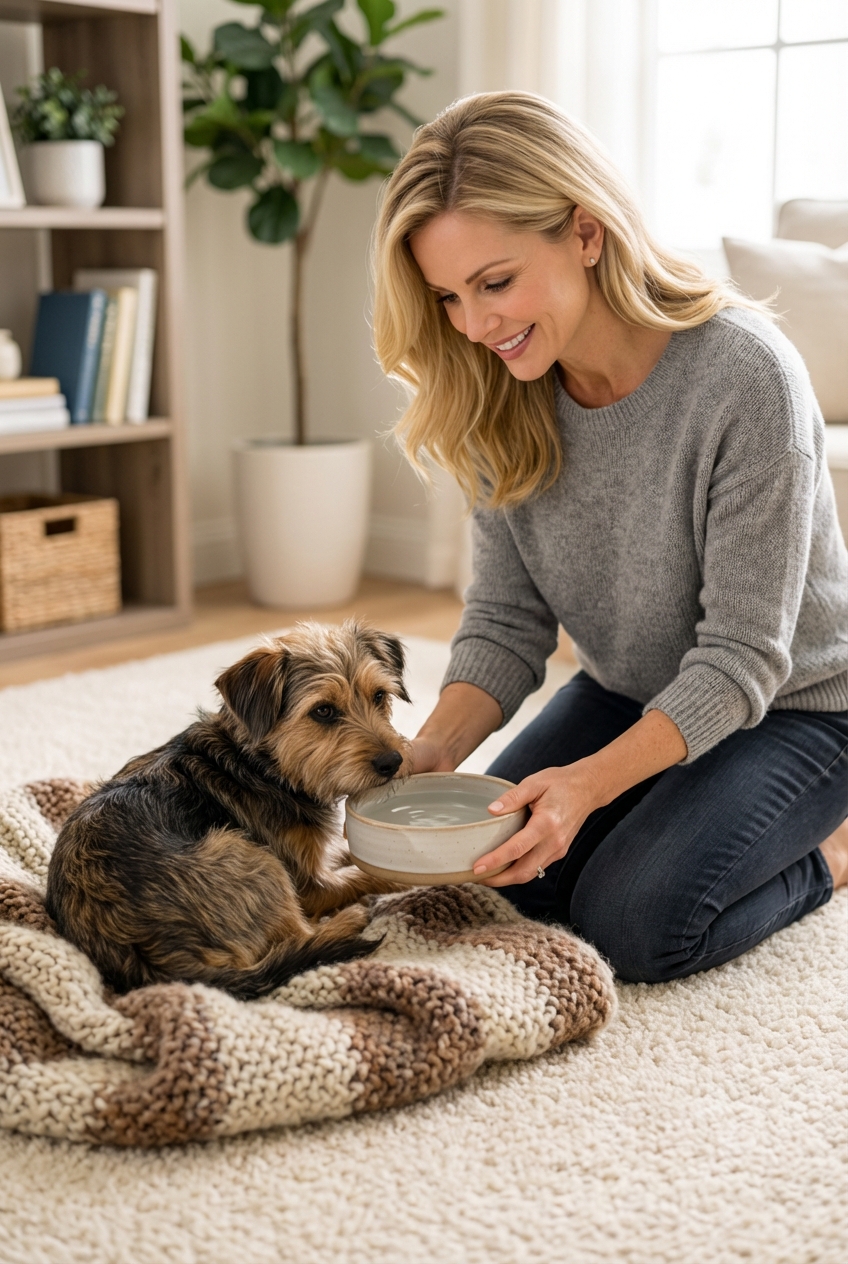
Help your dog feel better with vet-approved home care for mild kennel cough—rest, harness walks, humidity, fluids, and honey—plus when to stop DIY and ca...
Article
•
Designer Mixes
Kennel Cough Home Care: What Helps and What Not

Shari Shidate
Designer Mixes contributor
Kennel cough is one of those dog illnesses that can sound scarier than it looks. That classic dry, hacking cough often shows up after boarding, grooming, daycare, dog parks, or any place dogs share air space. The good news is that many mild cases improve with simple, supportive home care. The important part is knowing when home care is appropriate and when it is time to call your veterinarian.
One quick note up front: not every cough is kennel cough. Heart disease, collapsing trachea, allergies, pneumonia, and other issues can look similar. When you are unsure, it is always appropriate to check in with your veterinary clinic.
As a veterinary assistant, I always tell families this: your goal at home is to keep your dog comfortable, hydrated, rested, and monitored, while limiting spread to other dogs. This is general education, not a diagnosis.
What kennel cough is
“Kennel cough” is a common name for canine infectious respiratory disease complex (CIRDC). It is usually caused by a mix of viruses and bacteria. One well-known contributor is Bordetella bronchiseptica, but other players include parainfluenza virus, adenovirus, canine influenza, and others.
Most dogs get a mild, self-limiting upper respiratory infection, similar to a human cold. Some dogs, especially puppies, seniors, or dogs with other medical conditions, can develop more serious disease such as pneumonia.
Typical signs
- Dry, hacking cough that can sound like a “goose honk”
- Gagging or retching after coughing
- Sneezing, watery eyes, mild nasal discharge
- Normal or slightly reduced energy
- Usually normal appetite, though some dogs eat less
How long it lasts
Mild cases often improve in 7 to 14 days, but the cough can linger longer, especially if the airway is irritated.
Contagious periods vary by the organism involved. Many dogs are contagious for at least 1 to 2 weeks, and some infections can shed longer. Your veterinarian can give the best guidance based on your dog’s signs, risk factors, and local outbreaks.
When home care is ok
Home care can be reasonable for a bright, alert dog with a cough but no confirmed fever, who is still eating, drinking, and breathing comfortably.
Call your vet urgently if
- Labored breathing, rapid breathing at rest, or belly effort to breathe
- Blue, gray, or very pale gums
- Lethargy that is more than “a little tired”
- Not eating for more than a day, especially in small dogs and puppies
- Fever confirmed by thermometer, or strong suspicion of fever with acting sick
- Thick yellow or green nasal discharge
- Repeated vomiting or coughing up significant fluid
- Puppies, unvaccinated dogs, seniors, pregnant dogs, or immune-compromised dogs with a cough
- Cough lasting more than 10 to 14 days with little improvement
If your dog has any heart or airway history (collapsing trachea, chronic bronchitis, heart murmur, laryngeal issues), do not guess. These conditions can mimic kennel cough and can worsen without targeted care.
What helps at home
1) Rest and a calm routine
Coughing irritates the airway, and excitement makes coughing worse. For a week or two, switch to quiet activity only.
- Skip running, fetch, daycare, dog park, and rough play
- Choose short potty breaks and slow sniff walks if your dog can tolerate them
- Use enrichment that does not rev them up, like food puzzles or gentle scent games indoors
2) Switch to a harness
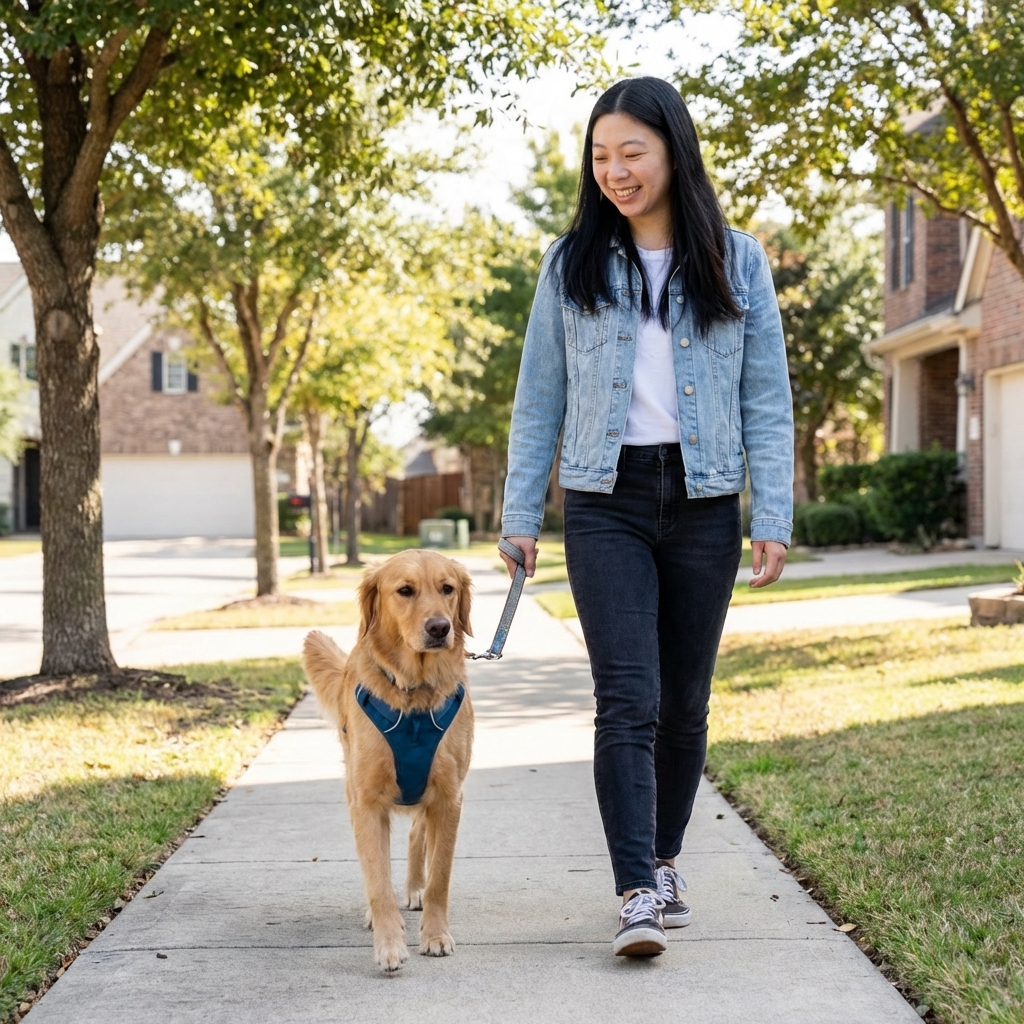
Pressure on the throat can trigger coughing, especially in small breeds and mixes prone to tracheal irritation. Use a front-clip or back-clip harness until the cough is fully gone.
3) Hydration and easy food
Hydration helps prevent dehydration and can keep mucus thinner and easier to clear.
- Make fresh water easy to access in multiple spots
- Offer low-sodium chicken broth or warm water added to meals
- If appetite is down, try warming food slightly to increase smell and interest
If your dog is coughing and gagging, they may prefer softer, moister food for a few days. Some dogs do well with a bland diet under your veterinarian’s guidance.
4) Humidity for the airway
Dry air can make the cough harsher. Gentle humidity often helps.
- Run a cool-mist humidifier near your dog’s resting area
- Or sit in a steamy bathroom for 10 to 15 minutes (no direct hot steam in the face)
Keep the room comfortable, not hot and stuffy. Always supervise, especially around cords and water.
5) Keep the air clean
Airway irritation is your enemy right now.
- Avoid smoke, scented candles, incense, strong cleaners, and aerosol sprays
- Vacuum and dust if your dog has allergies that might be adding to the cough
6) Isolate and disinfect basics
Kennel cough organisms spread through droplets, shared air, and shared items. Even mild cases can be contagious.
- Avoid contact with other dogs until your veterinarian says it is safe. Many clinics recommend isolation for at least 1 to 2 weeks, and sometimes longer, especially if coughing continues.
- Do not share bowls, toys, or bedding with other dogs
- Wash hands after handling your sick dog if you also handle other dogs
- Wash fabric items (blankets, soft toys) in hot water when possible, and clean hard bowls and toys with a pet-safe disinfectant, then rinse and dry thoroughly
What does not help
No human cold meds
This is a big one. Many over-the-counter human products contain ingredients that are toxic to dogs or unsafe at common doses, including decongestants and certain pain relievers.
- Avoid products containing acetaminophen, ibuprofen, naproxen, pseudoephedrine, or multi-symptom cold formulas
- Avoid essential oil “respiratory blends” diffused in the home, which can irritate airways and may be harmful if ingested
If you are considering any cough medicine at all, ask your veterinarian first. Dogs have different causes of cough, and suppressing cough is not always appropriate.
No forced exercise
Hard activity can inflame the airway and prolong recovery. Let healing lead the timeline.
No harsh fumes
Strong fumes can trigger coughing fits. If you must disinfect, keep your dog in another room until the smell is gone and surfaces are dry.
Do not ignore worsening signs
Worsening cough, low energy, fever, or poor appetite can signal pneumonia, influenza, or another condition that needs veterinary care.
Do antibiotics help?
Sometimes. Because kennel cough often involves viruses, antibiotics are not always needed. However, veterinarians may prescribe antibiotics when:
- Bordetella is strongly suspected
- There is fever, lethargy, or thick nasal discharge
- The dog is very young, older, or medically fragile
- There is concern about progression toward pneumonia
Only your vet can decide if antibiotics are appropriate based on your dog’s exam and risk factors. If antibiotics are prescribed, give the full course exactly as directed, even if your dog seems better sooner.
What about cough meds?
Some dogs benefit from prescription medications that reduce coughing, open airways, or decrease inflammation. These choices depend on the cause of the cough, your dog’s exam findings, and whether your veterinarian is concerned about pneumonia or an airway condition.
This is why it is important not to self-treat with over-the-counter cough syrups. The wrong product, or suppressing a productive cough, can be unsafe.
Honey and supplements
I love supportive care that is gentle and evidence-informed, but we have to be honest: natural options are not automatically safe for every dog.
Honey
Honey may soothe a scratchy throat in some dogs, but it is not a cure and it is not right for every pet.
- Avoid honey in very young puppies, and check with your veterinarian first
- Avoid in diabetic dogs or dogs on strict calorie control
If your veterinarian approves it for your dog, use very small amounts.
Supplements
There is limited direct research showing supplements shorten kennel cough. Some vets may recommend supportive options based on your dog’s overall health (for example, probiotics if antibiotics are prescribed). Check with your vet before starting anything new, especially if your dog takes other medications.
How to monitor at home
Simple tracking helps you notice improvement or red flags early.
- Energy: Is your dog greeting you normally, interested in normal activities?
- Appetite and water: Eating and drinking close to normal?
- Breathing: Comfortable at rest with no effort?
- Cough pattern: Less frequent? Less intense? Mostly triggered by excitement?
Resting breathing rate
If your dog is resting or asleep, count breaths for 30 seconds and multiply by 2. Many relaxed dogs are roughly under 30 breaths per minute, but what matters is what is normal for your dog. If you are repeatedly seeing over 40 breaths per minute at rest, or you notice effort (belly pushing, flared nostrils, cannot settle), call your vet.
Temperature basics
Do not rely on ear warmth to judge fever. Only a thermometer can confirm a fever. If you are trained and comfortable taking a rectal temperature, normal is about 100 to 102.5°F (37.8 to 39.2°C). If it is above that, or your dog seems unwell, contact your veterinarian.
If you want one practical tip: take a short video of your dog’s cough and breathing when it is happening. That can help your veterinarian assess the severity if you call in.
Prevention next time
Prevention is not perfect, but it can greatly reduce risk and severity.
Vaccination
Talk with your veterinarian about vaccines that match your dog’s lifestyle. Many facilities require Bordetella and sometimes canine influenza vaccination. These vaccines may not prevent every case, but they can reduce severity and spread.
Choose facilities carefully
- Choose boarding and daycare facilities that screen for coughing dogs and clean properly
- Ask about ventilation, isolation protocols, and vaccination requirements
Lower stress helps
Stress is not the cause of kennel cough, but stress can make dogs more vulnerable. Familiar bedding, routines, and calm handling help.
Bottom line
For many dogs, kennel cough is uncomfortable but manageable with rest, hydration, humidity, and a harness instead of a collar. What matters most is watching for the signs that the illness is more than a simple upper respiratory infection, and remembering that not every cough is kennel cough. If you are ever on the fence, call your veterinarian. A quick check can prevent a small problem from becoming a big one.
This article is for education and does not replace veterinary diagnosis or treatment. If your dog is struggling to breathe, is unusually lethargic, or stops eating, seek veterinary care right away.