A vet assistant’s guide to the most dangerous indoor plants for cats—true lilies, sago palm, oleander and more—plus early poisoning signs, emergency st...
Article
•
Designer Mixes
Is Your Houseplant Safe for Cats?

Shari Shidate
Designer Mixes contributor
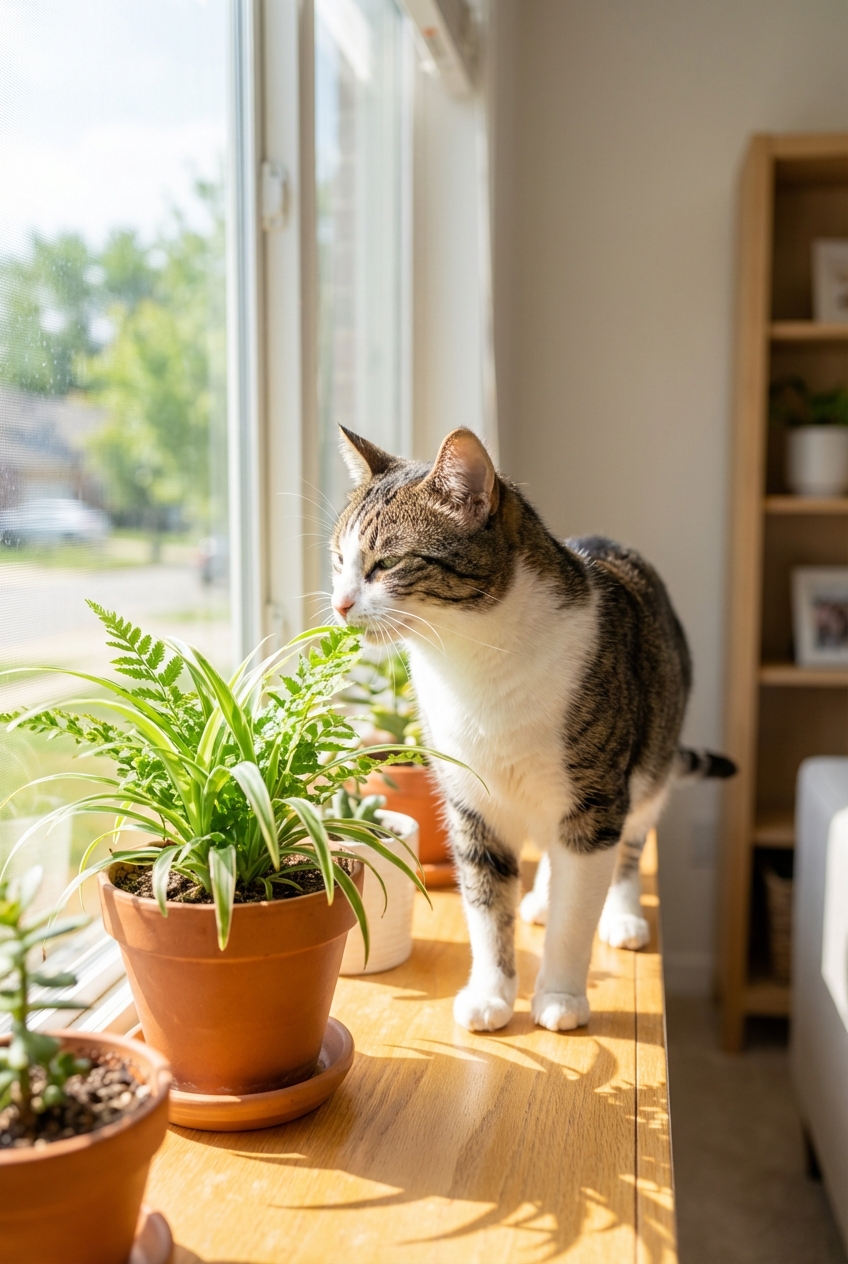
If you share your home with a cat, you already know the truth: if it’s leafy, dangling, or looks even slightly snackable, your cat will investigate it. Some cats only take a curious nibble. Others go all in like it’s a salad bar.
As a veterinary assistant, I’ve seen how quickly a “small bite” can turn into vomiting, mouth pain, or even an emergency visit, depending on the plant. The good news is that you do not need to give up greenery. You just need to know what’s safe, what’s risky, and what to do if your cat gets into something they shouldn’t.
Why houseplants can be dangerous
Plant toxicity isn’t one-size-fits-all. A plant can be mildly irritating or dangerously toxic, and reactions depend on the plant type, the amount chewed, and your cat’s size and health.
Common ways plants harm cats
- GI upset: Drooling, vomiting, diarrhea, decreased appetite.
- Oral irritation: Pawing at the mouth, head shaking, drooling, reluctance to eat.
- Organ damage: Some plants can injure the kidneys, liver, or heart.
- Airway risk: Swelling or excessive drool can make breathing harder in severe cases.
Important: True lilies (Lilium spp.) and daylilies (Hemerocallis spp.) are extremely dangerous for cats. Even small exposures can cause life-threatening kidney injury.
Quick “safe vs. not safe” lists
These lists are meant to help you make safer choices fast. If you are unsure about a specific cultivar, always verify the exact plant name before bringing it home.
Cat-friendlier houseplants (generally non-toxic)
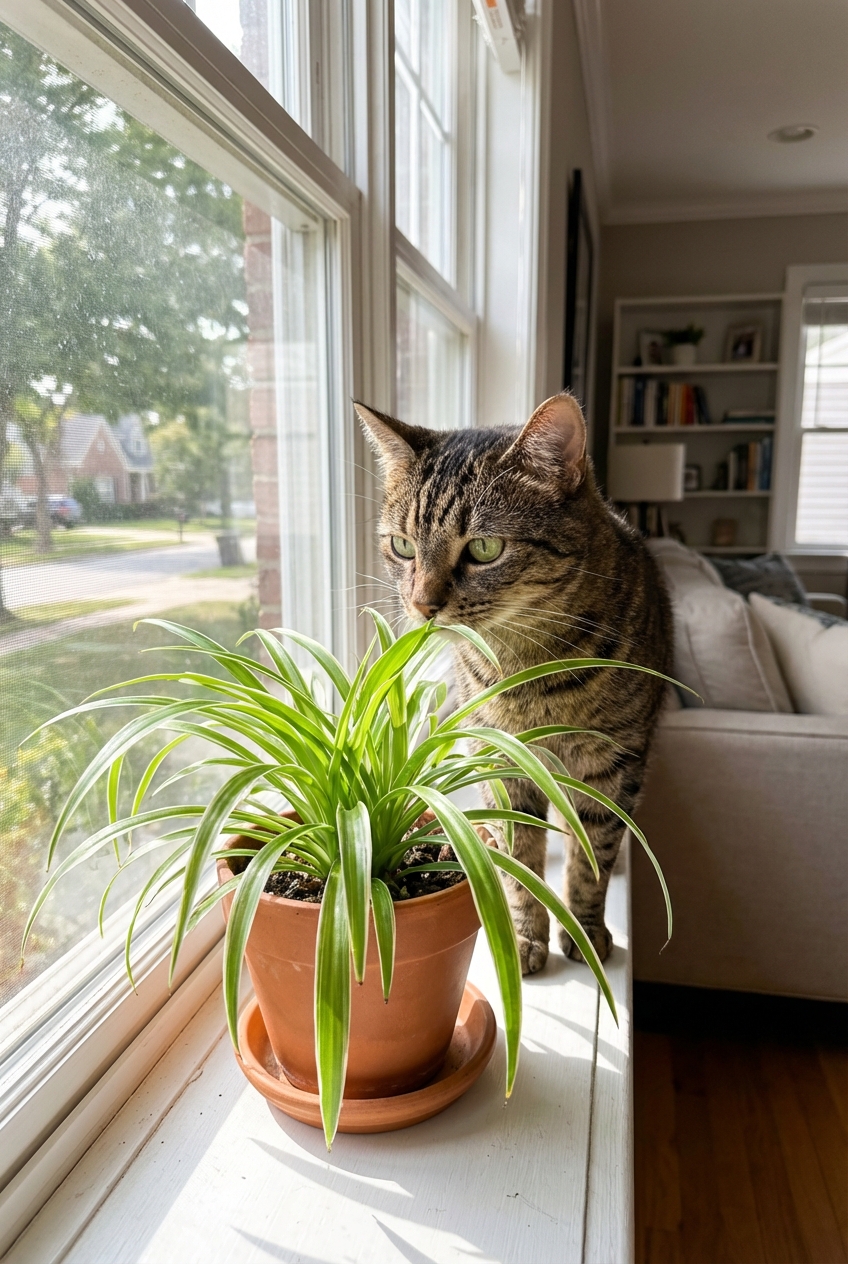
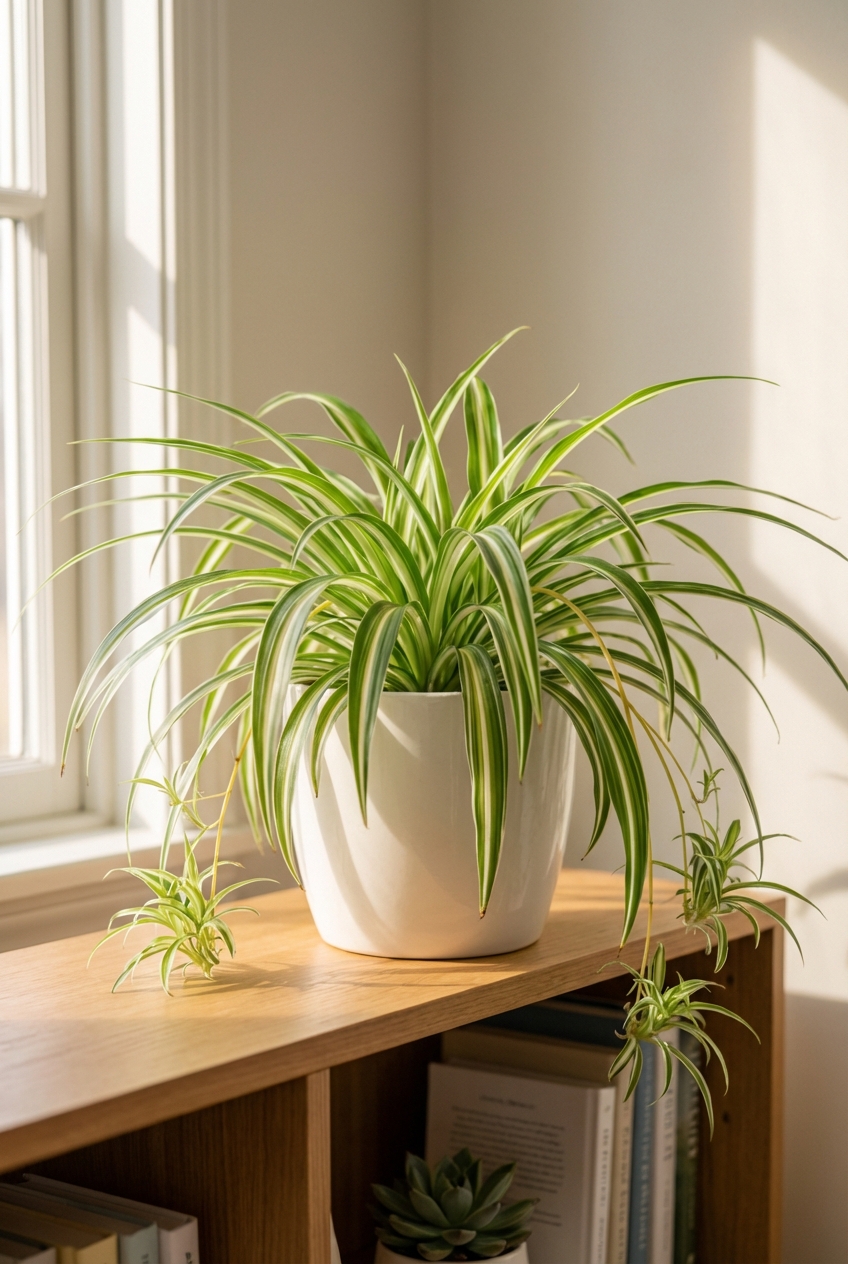
- Spider plant (often causes mild tummy upset if overeaten, and some cats get a little obsessed with it)
- Areca palm (also called butterfly palm)
- Parlor palm
- Calathea (prayer plant family)
- Peperomia
- African violet
- Orchids (Phalaenopsis orchids are generally considered non-toxic)
- Boston fern
- Cast iron plant (Aspidistra)
- Fittonia (nerve plant)
Common houseplants that are toxic or irritating
Some of these are medical emergencies. Others are usually “local irritants” that cause painful mouth and stomach signs but are less likely to cause organ failure. Either way, it is still worth a call if your cat chews them.
- True lilies (Lilium) and daylilies (Hemerocallis) (emergency)
- Sago palm (emergency, especially the seeds)
- Oleander (emergency)
- Pothos (devil’s ivy, common irritant)
- Philodendron (common irritant)
- Dieffenbachia (dumb cane, common irritant)
- Peace lily (not a true lily, but a common irritant)
- English ivy
- Aloe vera
- Jade plant
- Ficus (rubber tree and fig types)
- Snake plant (Dracaena trifasciata, formerly Sansevieria)
- ZZ plant (Zamioculcas)
Note: Many plants in the Dracaena family (including some “corn plants” and “lucky bamboo”) can also be toxic to cats.
Plants vets worry about most
Some plants come up again and again in poison helpline calls because they are popular and the effects can be severe.
True lilies and daylilies (emergency)
True lilies (Lilium) and daylilies (Hemerocallis) are some of the most serious plant hazards for cats. Exposure to petals, leaves, pollen, or even vase water can cause kidney failure. If you think your cat may have been exposed, treat it as an emergency and call a veterinarian immediately.
Sago palm (emergency)
Sago palm is highly toxic and can cause severe liver injury. Even small amounts can be dangerous.
Pothos and philodendron (common irritants)
These contain insoluble calcium oxalate crystals that can cause intense mouth irritation, drooling, and vomiting. Many cats recover with supportive care, but it still deserves prompt guidance from your vet.
Oleander (emergency)
Oleander affects the heart and can be life-threatening. It is more common outdoors, but sometimes appears as a patio or decorative plant.
What to do if your cat chews a plant
When you find bite marks on a leaf, it is easy to panic. Take a breath and move through these steps.
Step-by-step
- Remove access to the plant right away and keep your cat in a safe area.
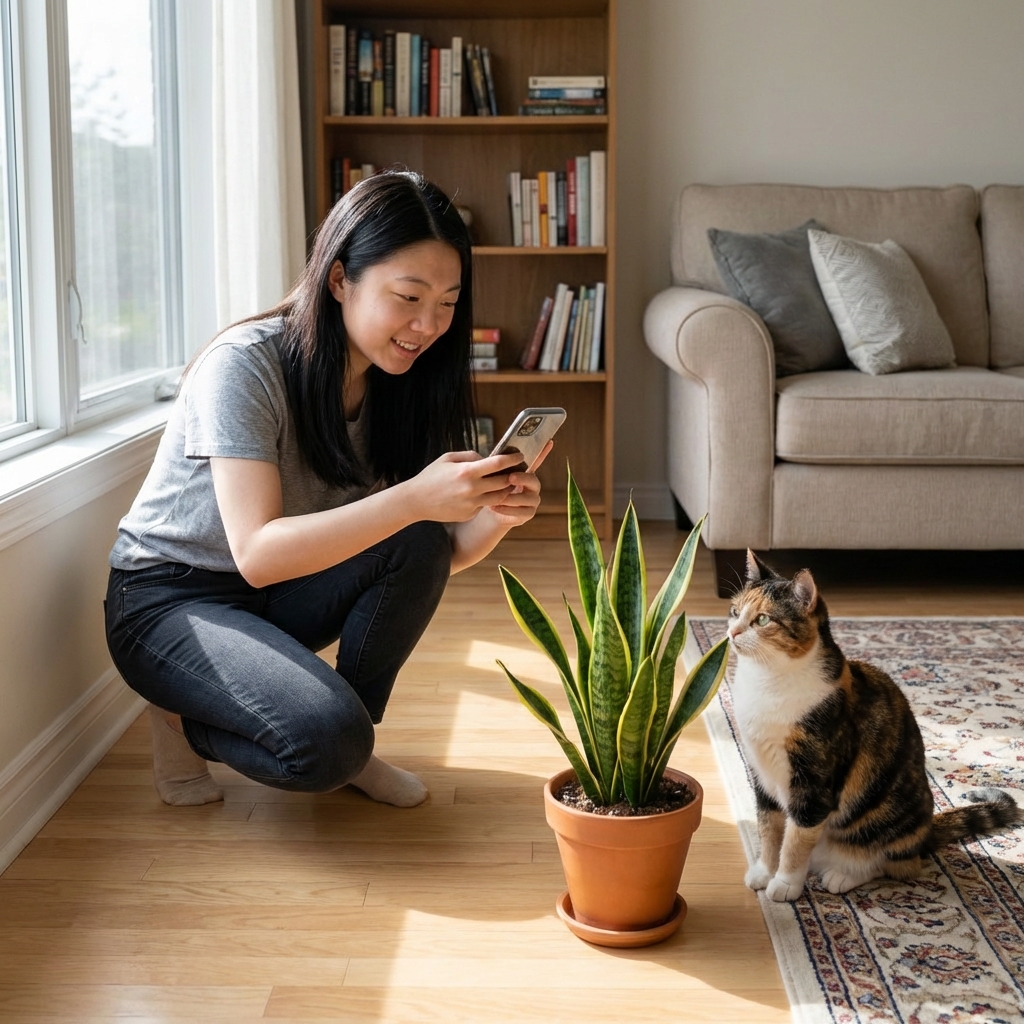
- Identify the plant as accurately as possible. Take a clear photo of the whole plant and any tag. If you are going to the vet, bring the tag or a photo. Do not bring loose plant pieces where your cat can reach them.
- Check for symptoms like drooling, vomiting, diarrhea, mouth pawing, weakness, tremors, or trouble breathing.
- Call for help with the plant name and symptoms.
- Do not induce vomiting unless a veterinarian specifically tells you to. Also skip home remedies like milk, oils, or activated charcoal unless you are instructed to use them.
Emergency contacts (US)
- ASPCA Animal Poison Control Center: 1-888-426-4435
- Pet Poison Helpline: 1-855-764-7661
If you suspect exposure to true lilies or daylilies, sago palm, or oleander, do not wait for symptoms. Go in urgently.
When it’s urgent right now
- Known or suspected exposure to true lilies (Lilium) or daylilies (Hemerocallis), sago palm, or oleander
- Repeated vomiting or vomiting with lethargy
- Tremors, collapse, seizures
- Difficulty breathing
- Severe drooling or swelling of the mouth
When you may be able to watch at home (after you call)
For many “mouth irritant” plants like pothos, philodendron, dieffenbachia, and peace lily, signs are often immediate and dramatic (drooling, pawing at the mouth), but less likely to cause organ failure. You should still call your vet or a poison hotline for case-specific advice. They may recommend at-home monitoring if symptoms are mild and improving, or an exam if your cat cannot keep water down, seems very painful, or is acting weak.
How to make a cat-safer plant home
You can absolutely have a beautiful indoor jungle and a healthy cat. The trick is setting up the environment so your cat is less tempted and you are not constantly on guard.
Practical strategies
- Choose safer plants first and reserve higher-risk plants for homes without cats.
- Place plants strategically on high shelves, in hanging planters, or in rooms your cat cannot access.
- Use physical barriers like glass cabinets or sturdy plant stands that are hard to climb.
- Offer a legal “chew” option such as cat grass (and replace it regularly).
- Increase enrichment with play, climbing spaces, and puzzle feeders. A bored cat is a more destructive cat.
- Be careful with fallen leaves. Many exposures happen after a leaf drops to the floor.
A note on deterrent sprays
Some deterrents work for some cats, but many cats ignore them. I prefer prevention by placement and offering alternatives, because it is more reliable long term. If you do try a spray, avoid products made with essential oils, and do not use anything you would not want your cat licking off their paws.
FAQs
Is “peace lily” the same as a true lily?
No. Peace lily (Spathiphyllum) is not in the true lily group, but it can still cause painful mouth irritation and vomiting. True lilies (Lilium) and daylilies (Hemerocallis) are far more dangerous for cats.
My cat only chewed a tiny bit. Should I still call?
Yes, if you are not 100 percent sure the plant is non-toxic, it is smart to call. Amount matters, but plant type matters even more.
What about cut flowers and bouquets?
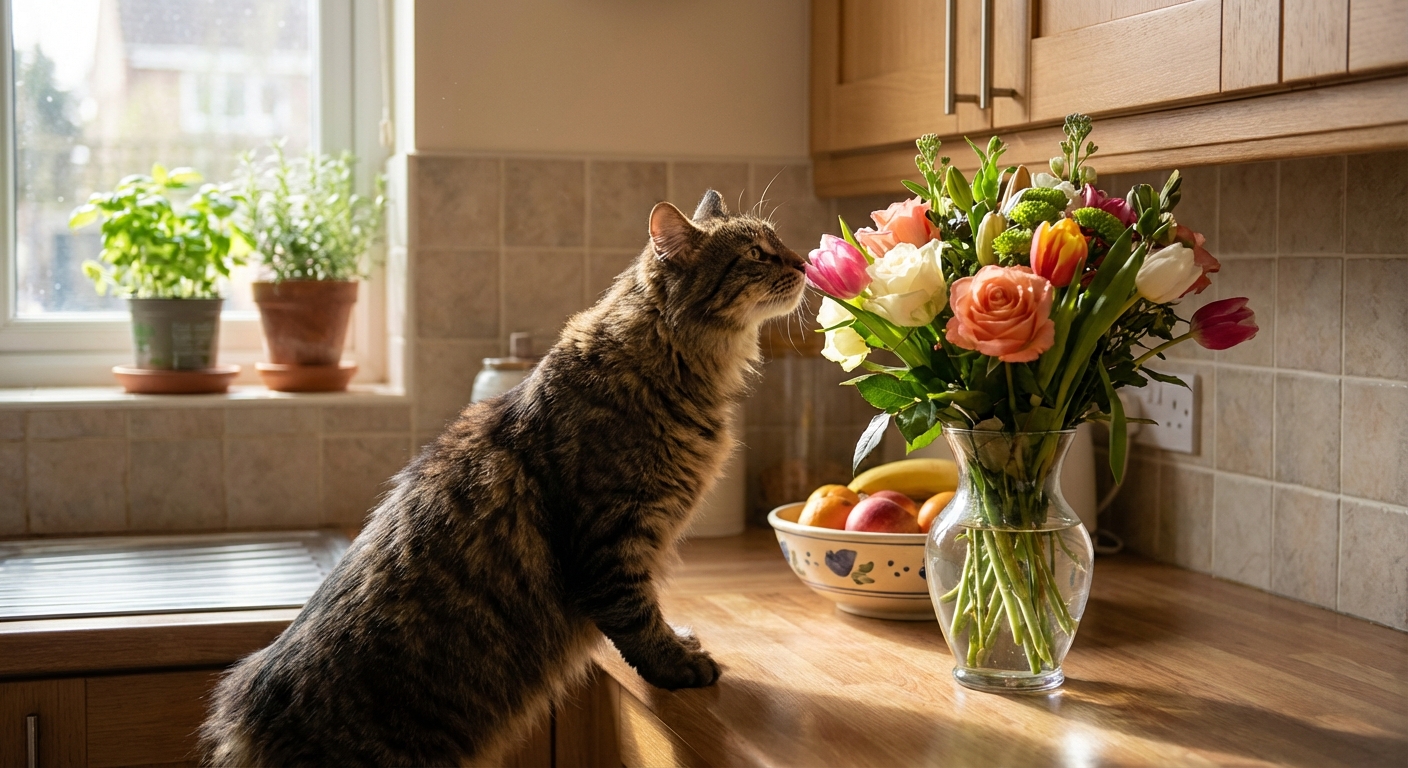
Be cautious. Bouquets commonly contain lilies or greenery that can be irritating. If you have cats, consider skipping lilies entirely and keep any bouquet well out of reach. Remember that lily pollen and vase water can also be dangerous.
Bottom line
Plants make a home feel calm and alive, and cats make it feel like family. With a little planning, you can have both. Start by removing the highest-risk plants, choose cat-friendlier options going forward, and keep your vet’s number and a pet poison hotline handy for peace of mind.
If you want a simple next step, make a quick list of the plants you have (or snap a few photos) and keep it somewhere easy to find. If an accident happens, you will be ready to identify the plant fast when you call your vet or a poison hotline.