Skip filler-heavy store treats with these 5 fast homemade options—tuna bites, chicken sprinkles, salmon flakes, freezer treats, and broth cubes—plus safe...
Article
•
Designer Mixes
Is Tuna Bad for Cats?

Shari Shidate
Designer Mixes contributor
If your cat comes running the second you crack open a can of tuna, you are not imagining things. Tuna has a strong smell, a rich taste, and a texture many cats find irresistible. In some veterinary settings, veterinarians use a little tuna water as a “high value” topper to tempt picky eaters.
The key point: plain tuna is not typically poisonous to cats in small amounts, but it can become a real problem when it turns into a habit, a daily treat, or a replacement for a complete cat food. The risks also depend on your cat’s health and the type of tuna (for example, salted, oil-packed, or seasoned products).
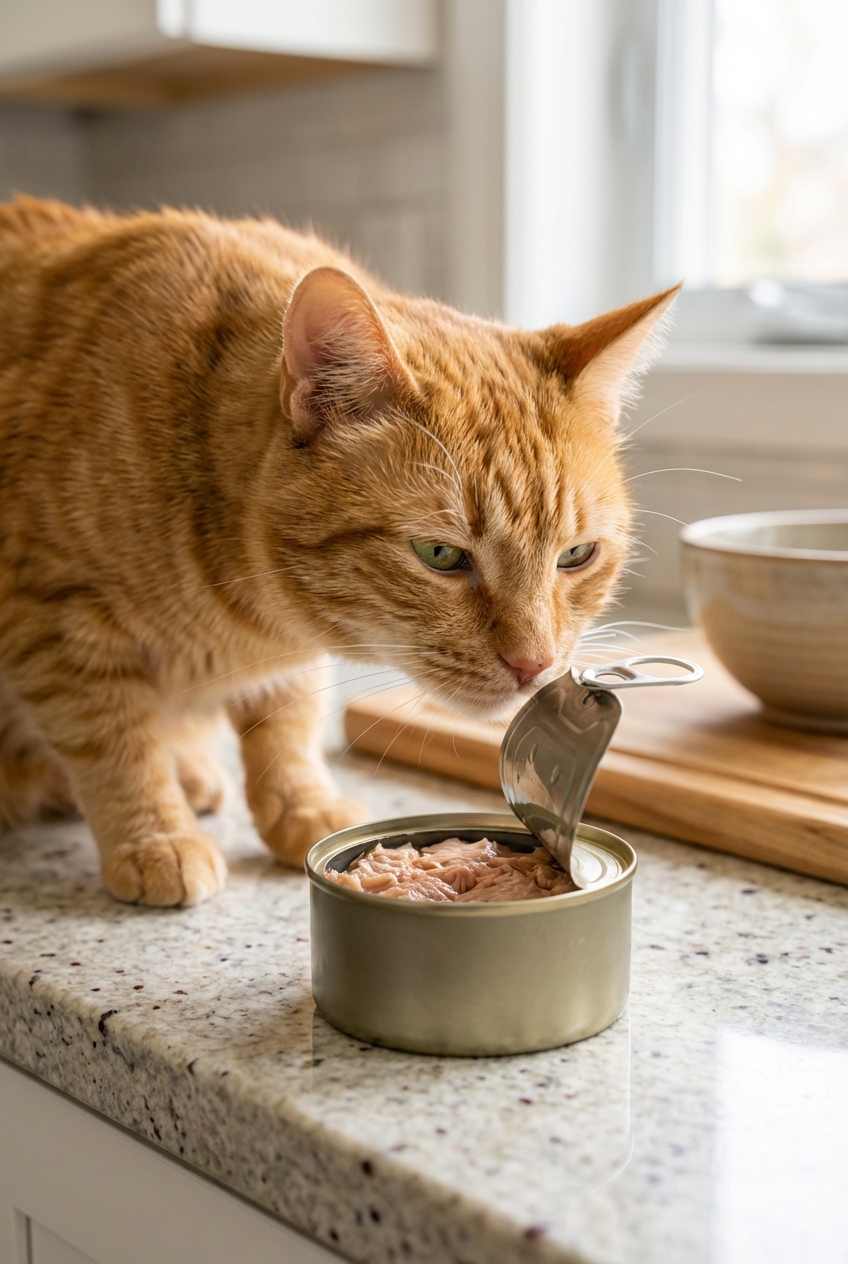
Quick answer: Is tuna bad for cats?
Occasional tuna is usually fine for healthy adult cats, especially if it is plain and fed in small amounts.
Tuna can become a problem when it is frequent because it can:
- Unbalance your cat’s nutrition if it replaces a complete diet
- Reinforce a strong preference and picky eating (a “tuna fixation”)
- Add too much sodium or fat depending on the product
- Increase mercury exposure over time (levels vary by tuna type and species)
- Cause stomach upset in sensitive cats
If your cat has kidney disease, heart disease, food allergies, pancreatitis, or is on a prescription diet, talk with your veterinarian before offering tuna.
Why cats fixate on tuna
When people say a cat is “addicted” to tuna, they usually mean the cat has learned to strongly prefer tuna’s smell and taste and will hold out for it. This is more about preference and conditioning than a true physiologic addiction. Cats are driven by aroma and palatability, and many human tuna products are also relatively rich in salt or fat, which can make them even more tempting.
There is also a training component. If a cat refuses dinner and then gets tuna, they learn that refusing works. Over time, you can end up with a cat that snubs balanced food and only wants fish.
Signs tuna is taking over
- Your cat refuses regular meals unless tuna is added
- Begging, vocalizing, or trying to get into the trash after tuna
- Weight gain from extra calories
- Loose stool or vomiting after fish
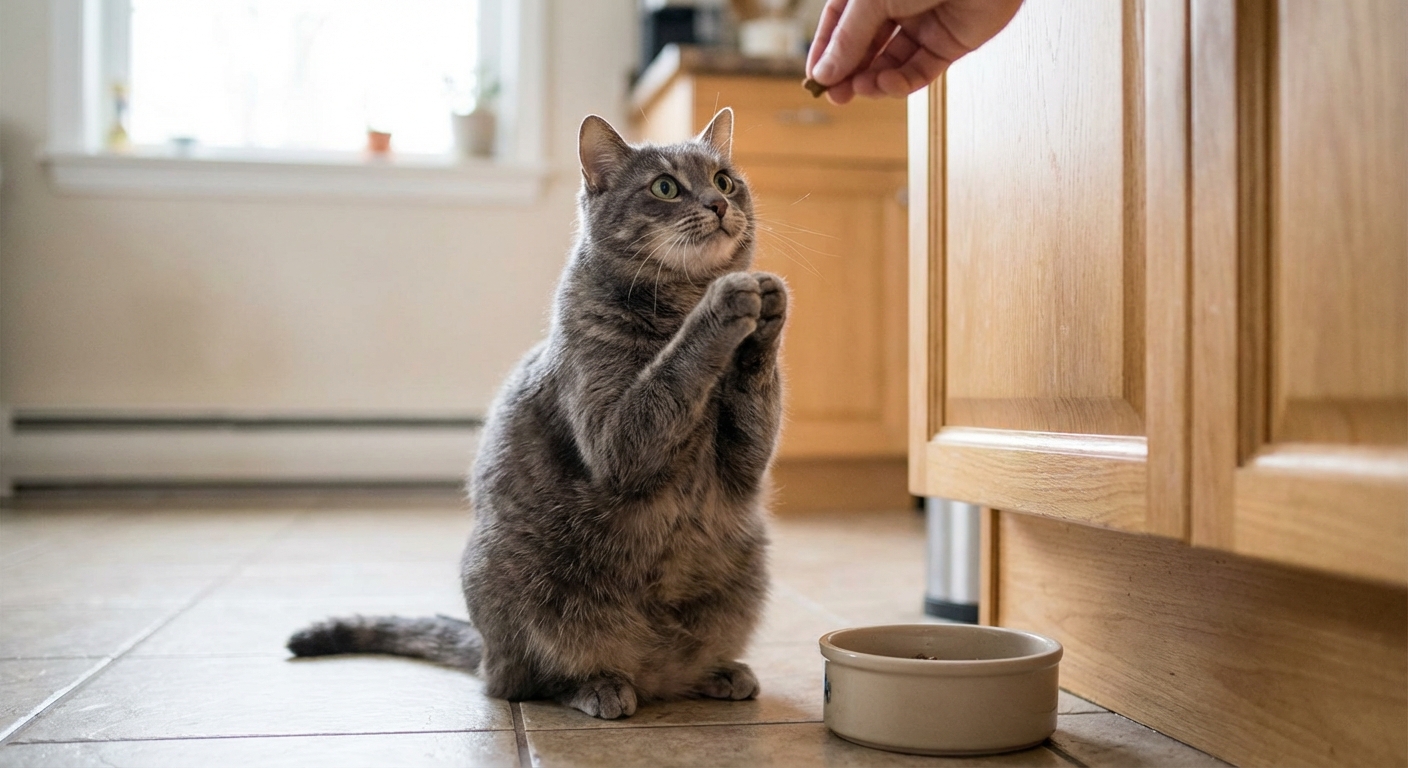
Main risks of feeding tuna
1) Nutritional imbalance
This is the number one concern. Cats need specific nutrients in specific amounts, including taurine, arachidonic acid, vitamins, and the right calcium-to-phosphorus balance. A commercially prepared cat food labeled “complete and balanced” is formulated to meet those requirements.
Plain tuna, by itself, is not complete nutrition. Human canned tuna is made for people, not formulated to meet feline nutrient requirements. If tuna becomes a large part of the diet, deficiencies can develop over time.
2) Mercury exposure
Tuna is a larger predatory fish, which means it can accumulate methylmercury. A bite of tuna is not likely to cause harm, but frequent feeding can add up. Mercury levels can vary by tuna species and product type, so it is best to keep tuna as an occasional treat rather than a routine food.
In practice, this is why I recommend using tuna like a seasoning, not a staple. If you want to use fish more regularly, ask your veterinarian about safer options and appropriate amounts.
3) Too much sodium or oil
Human tuna products may be packed in brine (salt water) or oil. That can be rough on cats who need lower sodium, and oil-packed tuna can be a lot of fat and calories in a small serving.
- Best choice if you use canned tuna: water-packed, no added salt
- Clarification: “water-packed” is not the same as brine. Brine is salt water.
- Use caution: tuna in oil, flavored tuna, spicy or seasoned tuna
4) Stomach upset and food sensitivities
Some cats do fine with fish. Others get vomiting, diarrhea, itchiness, or ear issues. Fish is a common ingredient in cat foods, so if your cat seems “mystery itchy,” tuna may not be your friend.
5) Raw tuna concerns
Raw fish can carry parasites and bacteria. There is also a well-known issue where some raw fish contain an enzyme (thiaminase) that can break down thiamine (vitamin B1). Cooking reduces that risk. In real life, thiamine deficiency is mainly a concern with frequent raw-fish feeding, not an occasional bite.
If you are offering tuna, cooked is safer than raw.
Tuna and special cases
Kittens
Kittens are growing rapidly and need very precise nutrition. Tuna treats can crowd out those essential calories and nutrients. If you want to treat, use a kitten-appropriate treat or a tiny amount of their regular wet food.
Senior cats
Many seniors have hidden kidney changes, dental pain, or digestive sensitivity. Tuna can be tempting, but it should not become the main strategy. If your senior is picky, your veterinarian can help you rule out medical causes and find a balanced plan.
Cats with kidney disease, heart disease, or on prescription diets
These cats often need specific mineral and sodium control. Adding tuna can work against that plan. Always check with your vet first.
How much tuna is safe?
There is no single perfect amount for every cat, but here is a practical, conservative rule for healthy adult cats (and yes, it is intentionally conservative to account for different cat sizes and different tuna products):
- Use tuna as a treat or topper: 1 to 2 teaspoons, 1 to 2 times per week
- Do not use tuna as a daily meal replacement
If you are feeding more than that, especially daily, it is worth dialing it back and using a more balanced option.
Safer ways to satisfy a fish-loving cat
If your cat loves fish, you do not have to take away every seafood smell forever. You just want to keep it balanced.
Better options
- Complete and balanced fish-based wet cat food (look for AAFCO “complete and balanced” language). This is different from plain canned tuna.
- Freeze-dried cat treats with single ingredients (great for portion control)
- Cooked salmon or sardine in tiny amounts, plain and unseasoned (ask your vet if your cat has health conditions)
Tuna topper trick
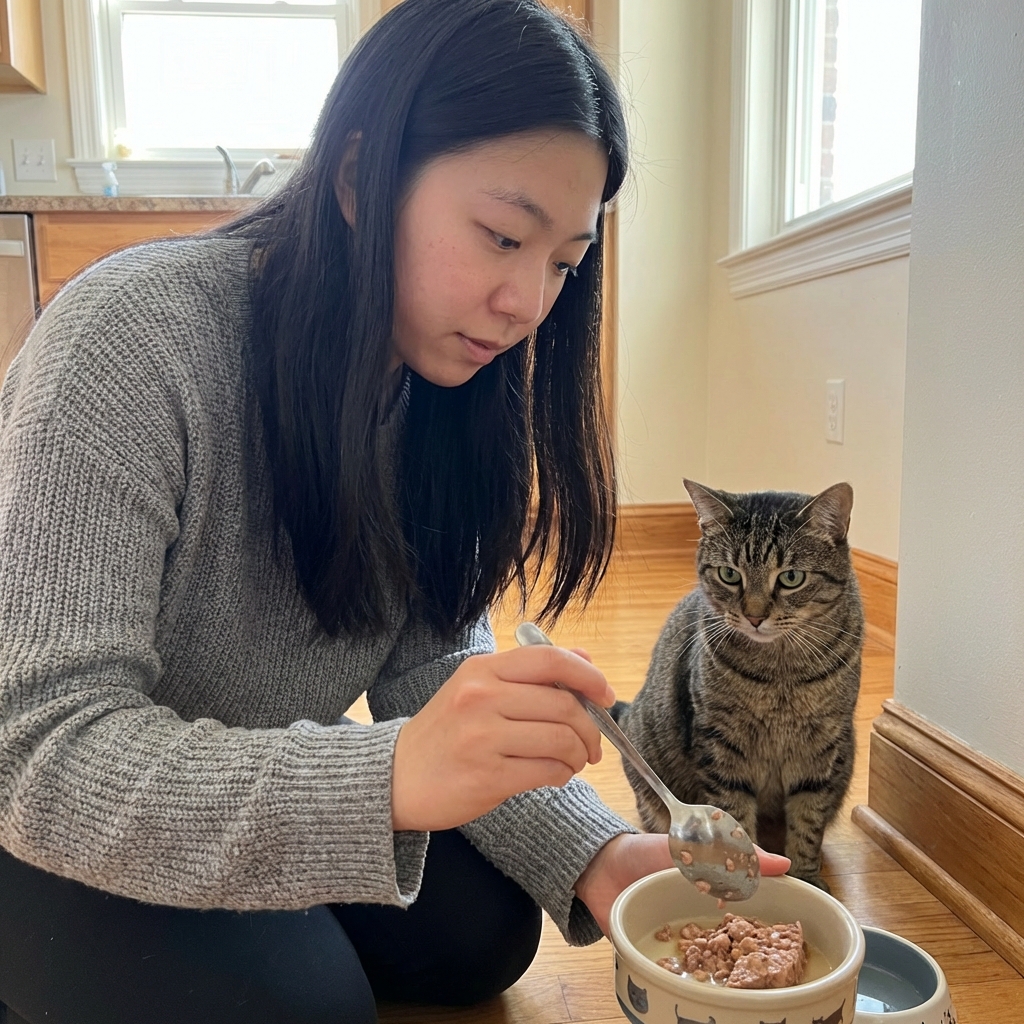
If you use tuna to tempt eating, try this gentle approach:
- Start with a few drops of tuna water mixed into their regular food
- Over several days, reduce the amount of tuna water
- Praise and reinforce when they eat the regular food
The goal is to use tuna as a bridge, not a lifelong crutch.
What to avoid
- Tuna with onions or garlic (including powders in broths or seasoning). These can be harmful to cats.
- Spicy, smoked, or heavily seasoned tuna
- Tuna salad with mayonnaise, relish, or spices
- Feeding only tuna for days at a time
When to call your vet
Contact your veterinarian if you notice:
- Repeated vomiting or diarrhea after fish
- Sudden refusal to eat anything but tuna
- Weight loss, lethargy, or behavior changes
- Signs of an allergic reaction such as intense itching or facial swelling
If your cat stops eating for around 24 hours, that is a medical concern. In kittens, seniors, and cats who are ill, it can be serious much sooner. Cats can develop dangerous complications when they do not eat.
Bottom line
Tuna is not a villain, but it is also not a health food for cats when it becomes a habit. If you keep it occasional, plain, and small, most cats can enjoy it safely. The healthiest win is making sure the core diet is complete and balanced, and treating tuna like the special bonus it is.