Spot depression-like behavior in cats: hiding, appetite or litter box changes, low play, grooming shifts. Learn triggers, when it’s medical, vet red flags,...
Article
•
Designer Mixes
Is My Cat Depressed?

Shari Shidate
Designer Mixes contributor
As a veterinary assistant here in Frisco, Texas, I hear this question a lot: “My cat is acting different. Is she depressed?” The honest answer is that cats can show depression-like behaviors, but many of the same signs can also come from pain, illness, stress, or changes at home. The good news is you do not have to guess. With a few simple observations and a vet check when needed, most families can pinpoint what is going on and help their cat feel like herself again.
What it can look like
Cats do not experience emotions exactly like humans, and we cannot measure “sadness” the same way. But cats absolutely can show depression-like patterns such as withdrawal, lower energy, and reduced interest in normal activities. In veterinary medicine, we often describe this as decreased engagement, reduced appetite, changes in sleep, and less social interaction.
It helps to think in two buckets:
- Behavioral or emotional causes such as stress, boredom, grief, or changes in routine.
- Medical causes such as dental disease, arthritis, kidney disease, thyroid problems, gastrointestinal upset, or urinary discomfort.
If your cat’s personality suddenly shifts, keep “medical” high on the list until proven otherwise.
With that framework in mind, here are the most common signs families notice at home.
Common signs
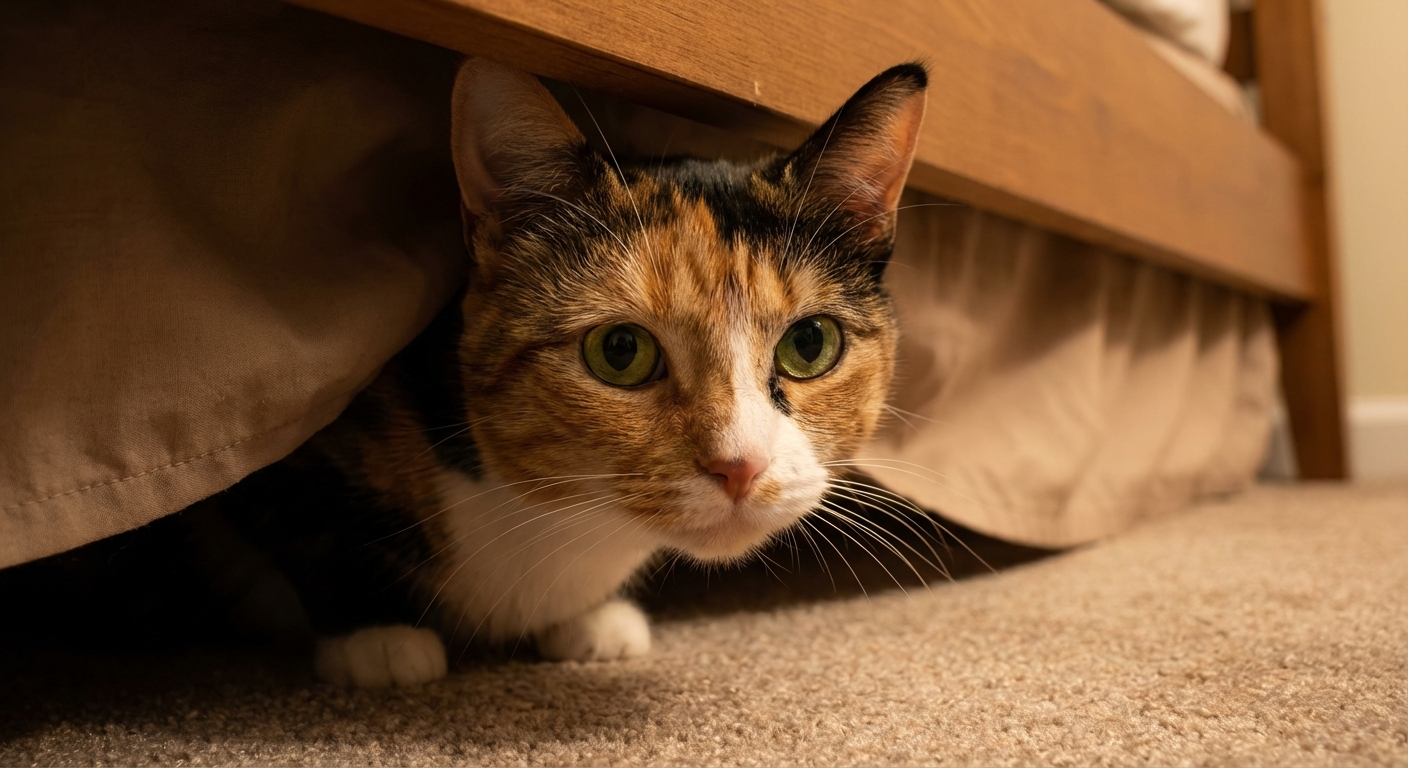
Some cats get clingier when they are not feeling well. Others hide. Both can be meaningful, especially if the change is new.
Behavior changes
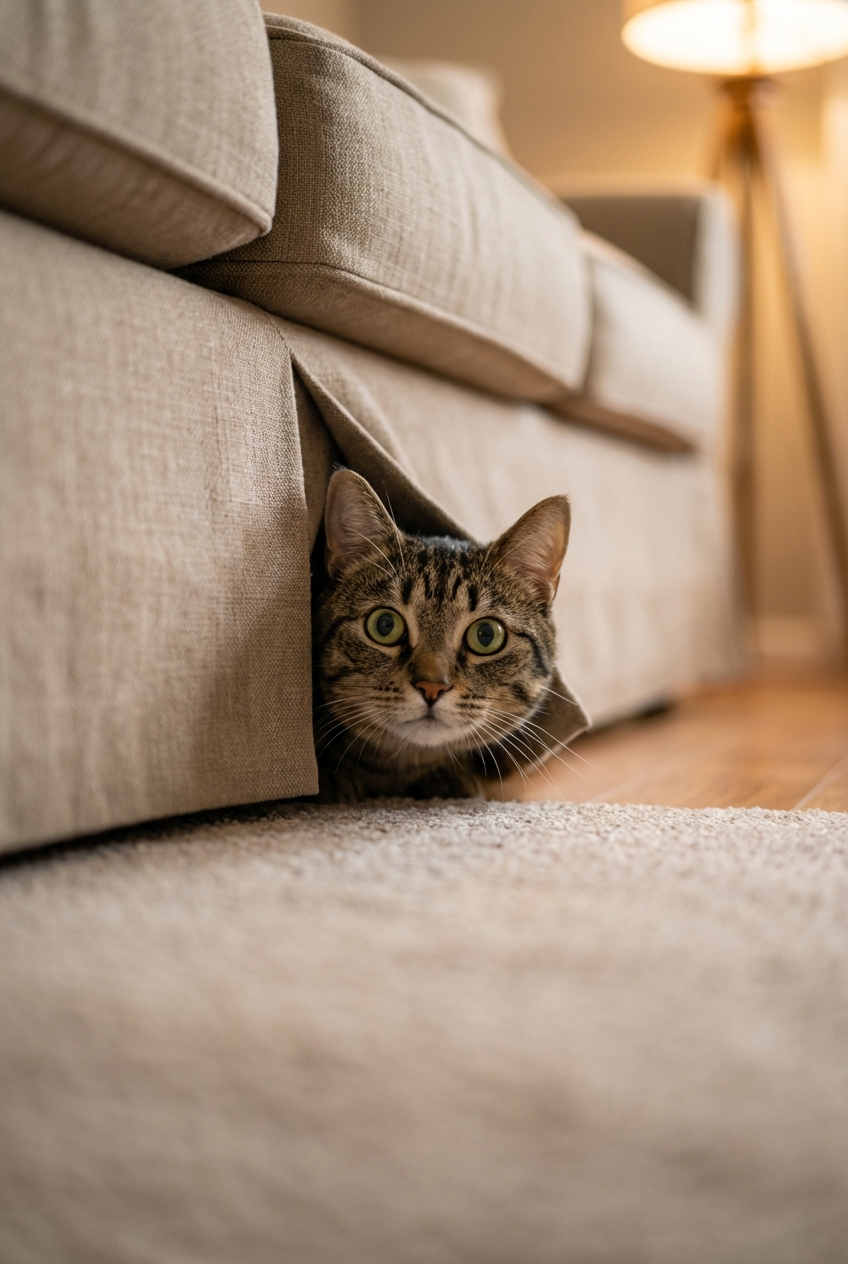
- Hiding more than usual, staying under beds or in closets
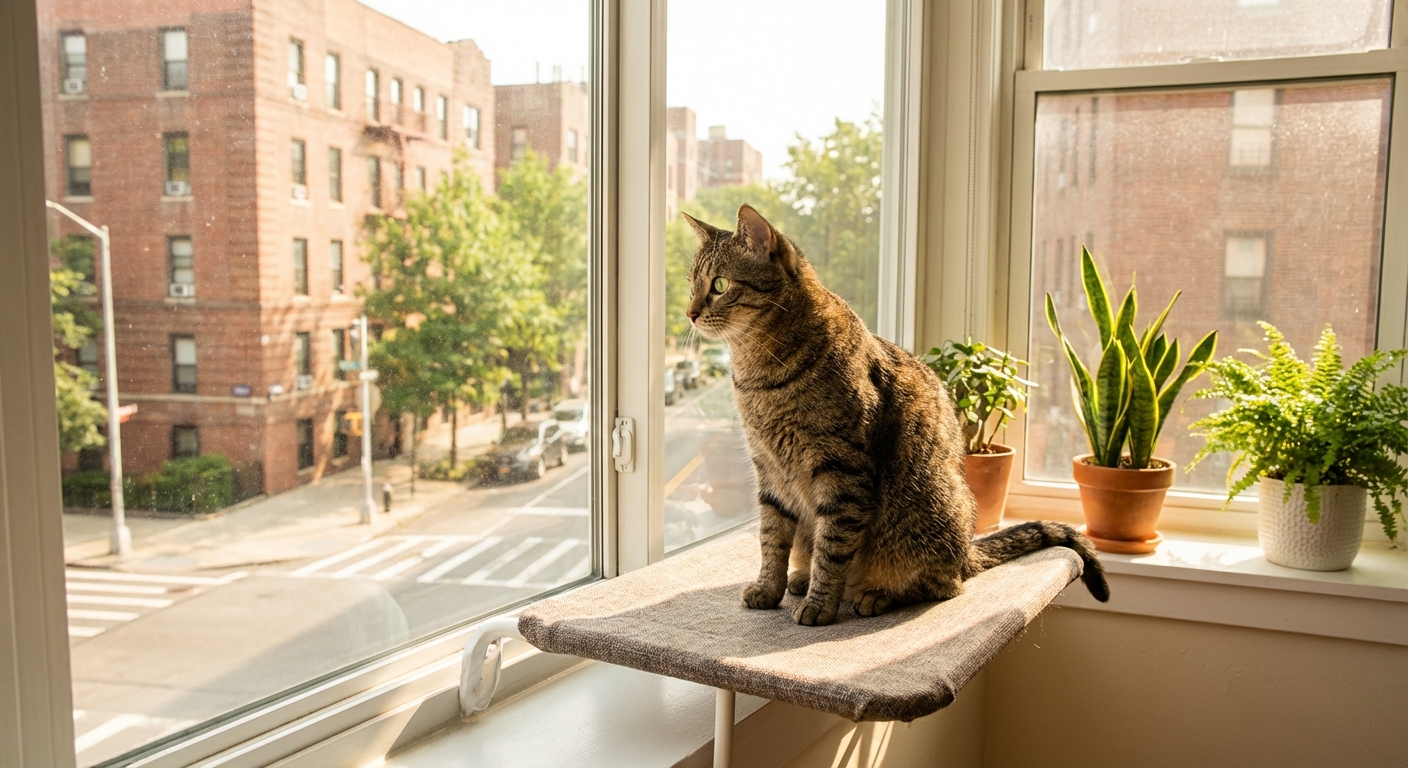
- Less interest in play, window watching, or exploring
- Reduced grooming, a dull or unkempt coat
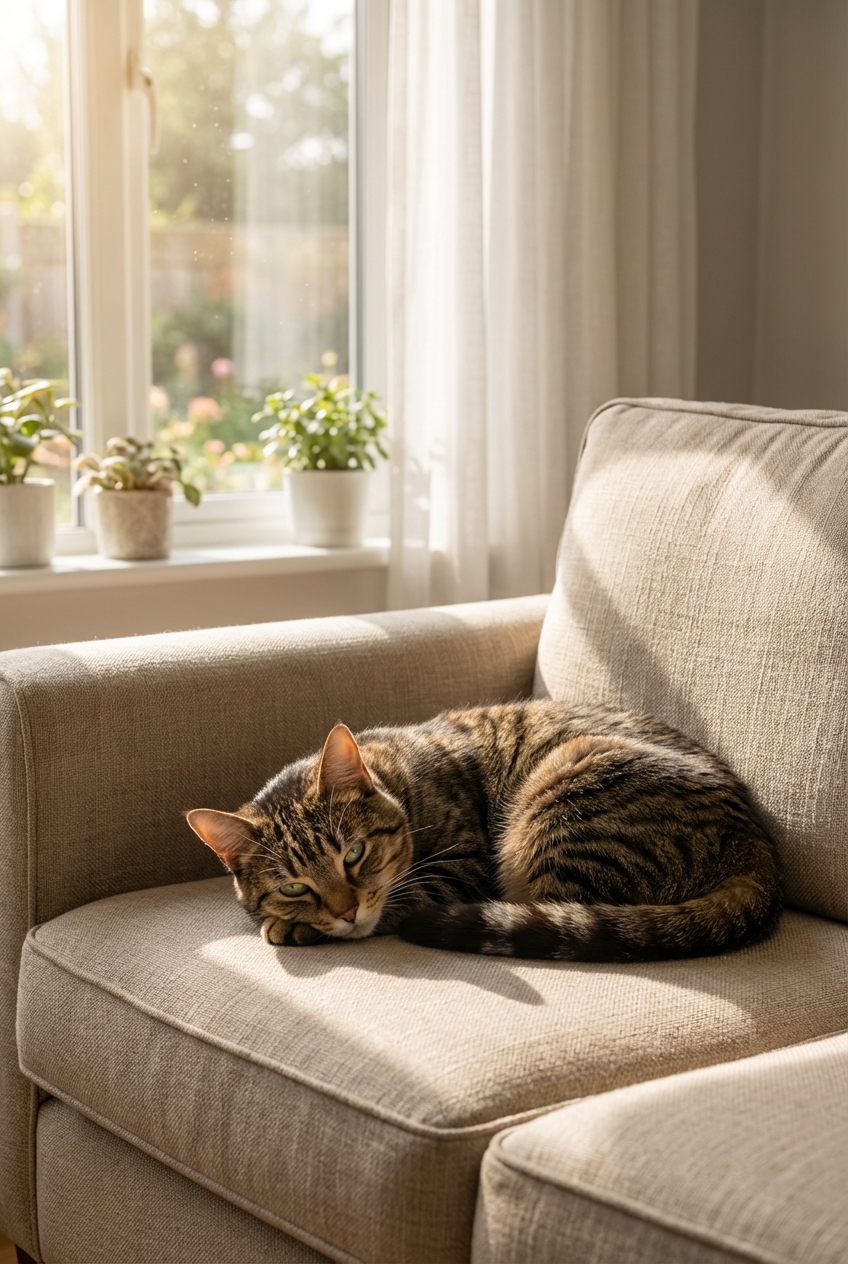
- More sleeping, especially in unusual spots
- Less tolerance for handling, or increased irritability
- Changes in vocalization, either more crying or becoming unusually quiet
Appetite and litter box changes
- Eating less, skipping meals, or suddenly seeming picky
- Weight loss or weight gain
- Drinking more or less than usual
- Urinating outside the litter box
- Straining, frequent trips, or vocalizing in the litter box
Important: If your cat has not eaten for about 24 hours, or is eating very little, call your veterinarian. Cats can develop hepatic lipidosis (fatty liver) after a short period of poor intake, and the risk can be higher in overweight cats or cats who are already ill. When in doubt, call sooner.
Common triggers
Cats are routine-oriented. Even positive changes can feel like stress at first.
- Household changes: a move, remodeling, new baby, new partner, schedule changes, visitors
- Loss: a pet companion passing away, a family member leaving for college, changes in attachment figure
- Social stress: conflict with another cat, being bullied away from food or litter boxes
- Boredom: limited enrichment, no safe vertical space, predictable days with little interaction
- Pain: arthritis, dental pain, injuries, constipation, urinary discomfort
Rule out medical causes first
This is the part many loving pet owners skip, because the signs feel “emotional.” In reality, cats are masters at hiding pain. A wellness exam is often the fastest way to get answers and real relief.
Call your vet promptly if you notice
- Not eating for about 24 hours, or eating significantly less than normal
- Rapid weight loss
- Vomiting repeatedly, or diarrhea lasting more than 24 hours
- Severe, bloody, or black stool, or any vomiting with blood
- Lethargy that is out of proportion, weakness, or signs of dehydration
- Breathing changes, open-mouth breathing, or struggling to breathe (seek urgent care)
- Any urinary straining, crying, frequent trips with little output, or inability to urinate (this is an emergency)
What your veterinarian may recommend
- Full physical exam and oral exam (dental pain is a big one)
- Weight check and body condition scoring
- Basic bloodwork and urinalysis to screen for common conditions like kidney disease, diabetes, hyperthyroidism, and infection
- Blood pressure measurement in older cats
- Additional testing if indicated, such as X-rays for arthritis or constipation
When medical issues are treated, many cats showing depression-like behaviors bounce back quickly.
5-minute daily check
You do not need to be an expert to gather helpful information. Choose one calm time each day for a week and note:
- Food: how much was eaten compared to normal
- Water: normal, more, or less
- Litter box: urine clumps and stool frequency, any straining
- Social: seeks attention, avoids attention, or normal
- Activity: plays, explores, or mostly sleeps
- Grooming: normal coat or messy coat
Bring these notes to your vet visit. They are incredibly valuable, especially for cats who “act normal” at the clinic.
If your cat is medically cleared and you are working on routine and enrichment, you should usually see at least small improvement within 1 to 2 weeks. If things are not improving, or if new symptoms show up, schedule a recheck.
Ways to help at home
If your veterinarian has ruled out medical causes, or you are supporting treatment at home, these gentle steps can help most cats.
1) Keep routine predictable
Feed at consistent times, keep play sessions short and regular, and try to maintain a calm bedtime pattern. Cats feel safer when the day is predictable.
2) Add enrichment in small doses
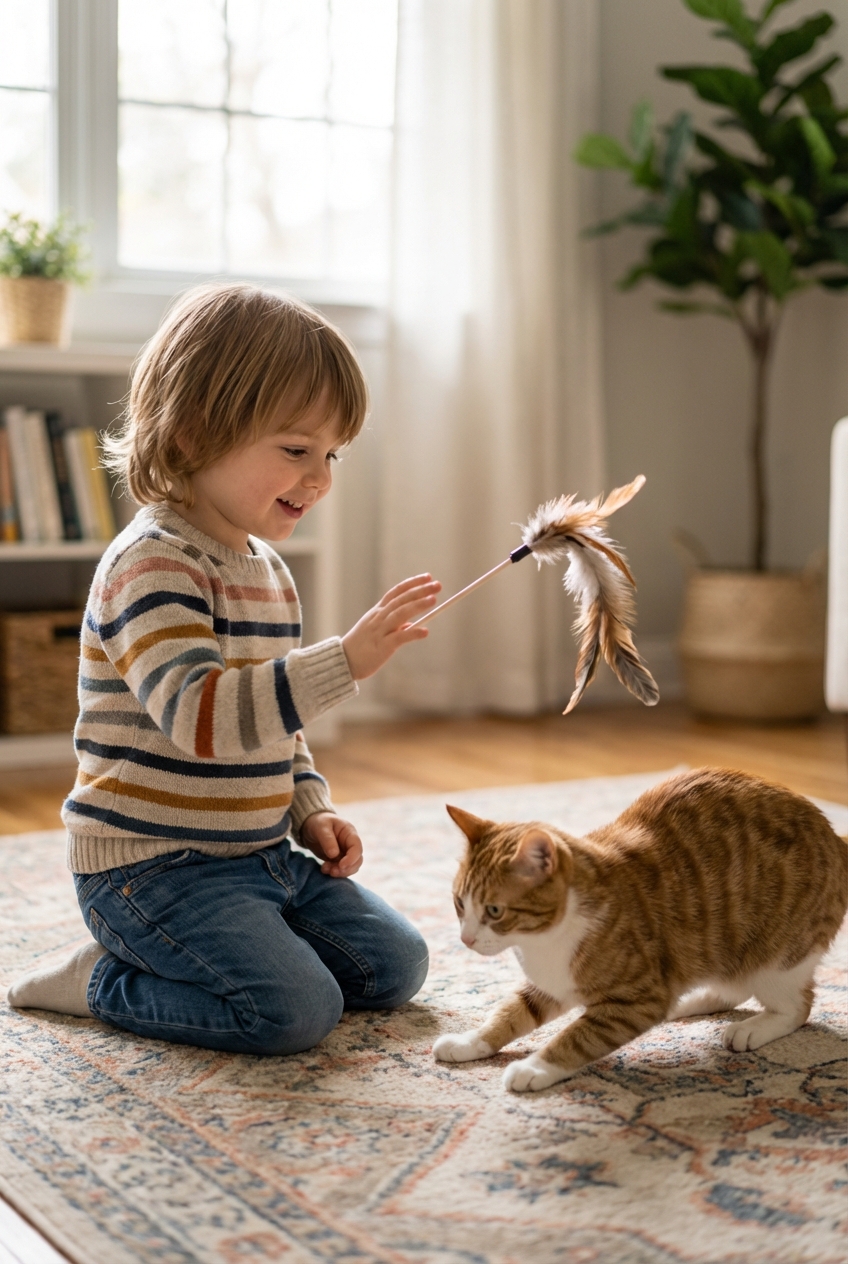
- Two 5 to 10 minute interactive play sessions daily (wand toy, feather toy, or laser). If you use a laser, end with a physical toy “catch,” then follow with a small snack.
- Food puzzles or scatter-feeding dry food in safe areas
- Window perch for bird watching
- Vertical space like a cat tree or shelves
3) Offer a no-kid safe zone
This is not about blaming children. It is about giving your cat control. A quiet room, tall cat tree, or gated area where your cat can rest uninterrupted can reduce stress dramatically.
4) Make resources easy in multi-cat homes
If you have more than one cat, stress can build quietly. Try separate feeding stations, multiple water bowls or fountains in different locations, and more than one resting area. For some cats, simply creating space between resources reduces tension and helps everyone relax.
5) Improve the litter box setup
Litter box stress can look like mood changes. A few evidence-based basics:
- One box per cat, plus one extra
- Uncovered boxes are preferred by many cats
- Unscented litter is usually best tolerated
- Scoop daily and wash the box regularly
- Place boxes in quiet, separate locations
6) Consider pheromones and calming supports
Plug-in pheromone diffusers and calming sprays may help some cats, especially during transitions. If you are considering supplements, ask your veterinarian first, particularly if your cat has kidney, liver, or heart issues or is on medication.
7) Support social needs gently
Some cats want more connection. Others need space. Offer affection, but let your cat choose. Sitting nearby and reading or working quietly can be comforting without pressure.
When grief may be part of it
Yes, cats can grieve. If you lost a pet companion, your cat may search, vocalize, cling, or withdraw. Keep routines stable and add extra play and gentle engagement. In multi-pet homes, make sure the remaining cat still has easy access to food, water, and litter without being guarded by another pet.
If appetite drops, hiding becomes constant, or your cat seems “off” in any physical way, schedule a vet check. Grief and medical issues can look very similar.
Can medication help?
For some cats, yes. If stress or anxiety is significantly impacting quality of life, your veterinarian may discuss behavioral medication. Medication is not a last resort or a failure. It can be a humane tool, especially when paired with enrichment, routine, and environmental changes.
Call the vet today?
- My cat is not eating, or is eating significantly less
- There are litter box changes, especially straining or crying
- My cat is hiding and also seems painful when touched
- There is weight loss, vomiting, diarrhea, or excessive thirst
- This is a sudden personality change
If you are on the fence, call. A quick conversation can save you stress, and it can spare your cat from suffering in silence.
Bottom line: a cat who seems “depressed” is often a cat who does not feel safe, does not feel well, or is missing something important in their environment. With a vet check and a few steady, family-friendly changes at home, most cats improve.