
Confused by vague signs like lethargy, vomiting, or appetite changes? Compare Addison’s and Cushing’s in dogs—distinctive symptoms, lab clues, key test...
Article
•
Designer Mixes
Is Cushing Disease in Dogs Painful?

Shari Shidate
Designer Mixes contributor
Cushing syndrome, also called hyperadrenocorticism, is one of those diagnoses that can feel confusing and scary at first. Many dog parents ask the same question right away: Is it painful? The honest, evidence-based answer is this: Cushing is not always “sharp pain” in the way a broken bone is, but it can make a dog feel uncomfortable, weak, anxious, and achy. And if it goes untreated, complications can become painful and even dangerous.
One quick note on terminology: people often say “Cushing disease” to mean any form of Cushing. Technically, Cushing syndrome is the umbrella term, and Cushing disease is sometimes used to describe the pituitary-driven form. In day-to-day vet clinic life, you will hear both.
As a veterinary assistant, I like to frame it this way: Cushing often causes chronic suffering and reduced comfort more than obvious pain. The good news is that with proper diagnosis, monitoring, and treatment, many dogs feel noticeably better and can enjoy a very good quality of life.

What Cushing Does to the Body
Cushing happens when a dog’s body makes too much cortisol for too long. Cortisol is a normal hormone that helps with stress response, blood sugar regulation, and inflammation. The problem is chronic excess.
In dogs, Cushing is most commonly caused by:
- Pituitary-dependent Cushing: a usually small, typically benign tumor in the pituitary gland triggers the adrenal glands to overproduce cortisol.
- Adrenal-dependent Cushing: a tumor on one adrenal gland produces too much cortisol.
- Iatrogenic Cushing: long-term use of steroid medications (like prednisone) leads to Cushing-like signs.
That ongoing cortisol overload changes how a dog’s muscles, skin, liver, immune system, and metabolism function. Those changes are why dogs often “seem off” for months before diagnosis.
So, Is It Painful?
Cushing is not usually painful in the early stages, but it can be uncomfortable and exhausting. Over time, some dogs develop pain from complications, secondary infections, and muscle breakdown.
How Cushing can feel miserable
- Constant thirst and urination, which can create stress, accidents, and sleep disruption.
- Ravenous hunger, which can look like obsession with food and agitation.
- Panting that is more persistent than “warm day panting,” and can come with restlessness.
- Weakness and muscle loss, especially in the hind end, which can make movement feel hard and sometimes painful.
- Pot-bellied appearance from weakened abdominal muscles and liver enlargement, which can make dogs feel heavy and uncomfortable.
When pain is more likely
These are some of the complications where pain or significant discomfort is more likely to show up:
- Urinary tract infections: common with Cushing. At home you may notice straining, frequent attempts to urinate, accidents, licking at the genital area, or blood in the urine.
- Skin infections: thin skin tears more easily, and bacterial or yeast infections can itch, sting, or feel sore.
- Joint and back pain: muscle wasting and weakness can worsen arthritis and spinal discomfort.
- High blood pressure: not always obvious at home, but it can contribute to eye damage and vision loss, kidney strain, and overall feeling unwell.
- Blood clots: a serious (but not everyday) complication that can cause sudden pain, weakness, breathing distress, or collapse and needs emergency care.
- Pancreatitis: some dogs with Cushing also develop pancreatitis, which is typically painful and can cause vomiting and belly pain.
If your dog with suspected or diagnosed Cushing suddenly seems painful, stops eating, vomits, collapses, or has labored breathing, treat it as urgent and contact an emergency veterinarian.
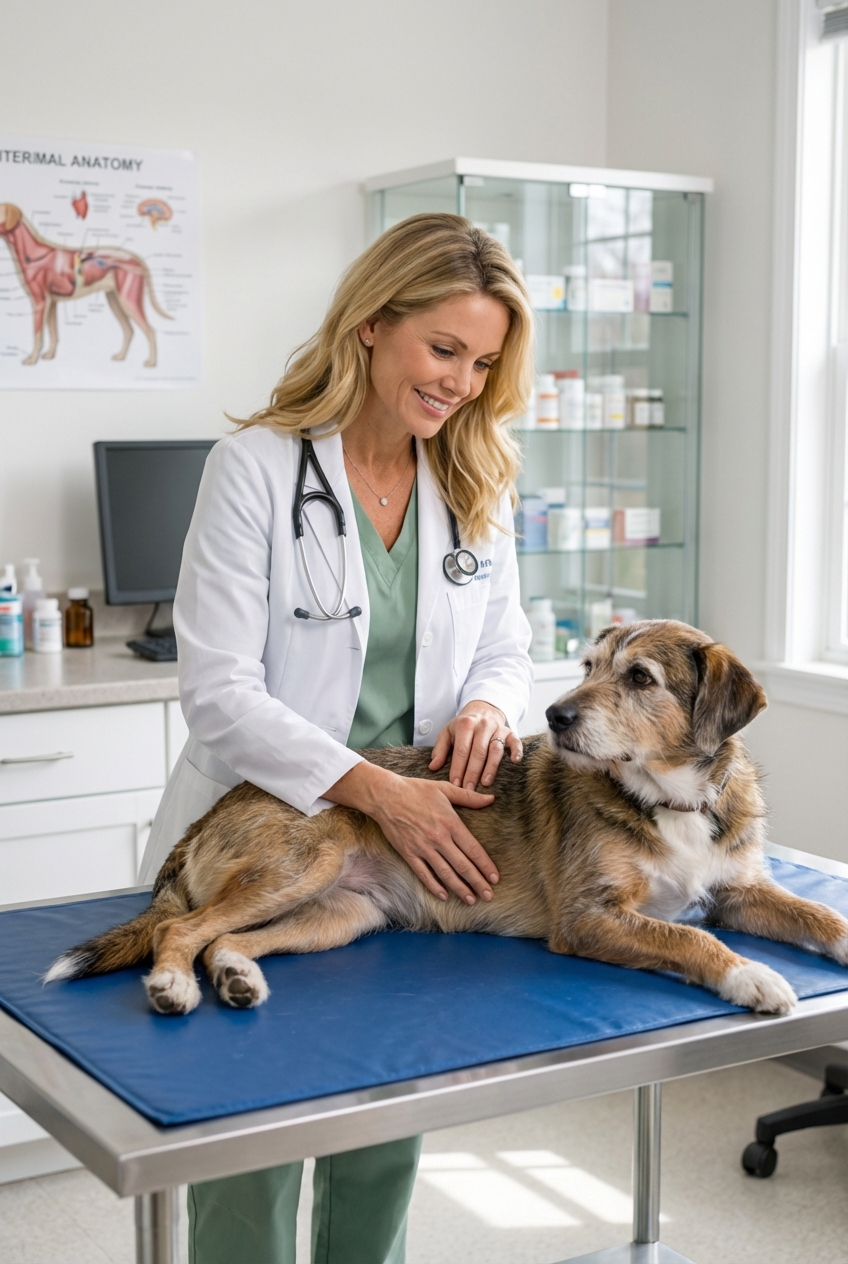
Signs Your Dog Might Hurt
Dogs are very good at masking pain, especially when it builds slowly over time. Here are subtle signs that can suggest discomfort in a dog with Cushing:
- Reluctance to jump, climb stairs, or go on walks
- Stiffness when rising or after resting
- Restlessness at night, frequent repositioning
- New irritability or withdrawal
- Excessive licking of paws or certain areas (sometimes a skin infection clue)
- Hunched posture or guarding the belly
- Shaking or trembling without obvious cause
Because Cushing can also cause anxiety-like behaviors, it helps to look at the whole picture: movement, appetite, sleep, skin, and bathroom habits.
How Vets Diagnose Cushing
Cushing can look like other common conditions, especially in older dogs. Diagnosis usually includes a combination of:
- History and physical exam: symptoms like increased thirst, urination, panting, and a pot belly are key clues.
- Baseline bloodwork and urinalysis: may show elevated liver enzymes, diluted urine, cholesterol changes, and signs of infection.
- Screening tests: most commonly an ACTH stimulation test or a low-dose dexamethasone suppression test (LDDS).
- Imaging: ultrasound to evaluate the adrenal glands and liver, sometimes further imaging depending on the case.
Your veterinarian may also check blood pressure and recommend a urine culture, since infections can hide in plain sight with Cushing.
It is also worth knowing that several other conditions can mimic Cushing signs. Your vet may be ruling out issues like diabetes, kidney disease, and hypothyroidism, which is one reason testing matters.
Treatment That Improves Comfort
When we treat Cushing well, we are not just chasing lab numbers. We are aiming for better daily comfort, better mobility, fewer infections, and calmer breathing and sleep.
Medication
- Trilostane: commonly used for naturally occurring Cushing in many dogs. It reduces cortisol production and requires monitoring.
- Mitotane: used in some cases, with careful veterinary oversight.
Monitoring matters. These medications can be very helpful, but the dose needs to be tailored and rechecked with follow-up testing. Over-suppression of cortisol can make dogs very ill, so ongoing vet partnership is essential.
In general terms, many dogs have recheck testing soon after starting or changing medication, then periodic monitoring long-term. Your veterinarian will tailor the schedule to your dog’s response and overall health.
Surgery
If a dog has an adrenal tumor and is a good surgical candidate, adrenalectomy may be recommended in select cases. It is specialized and not right for every dog, but it can be life-changing for some.
If it is iatrogenic
If Cushing signs are caused by long-term steroid use, treatment is different. The goal is typically to reduce or stop the steroid safely, but this must be done under veterinary guidance. Stopping steroids suddenly can trigger a dangerous cortisol deficiency (an Addisonian crisis).
Managing painful add-ons
Quality of life often improves dramatically when we also treat the “extras” that come with Cushing:
- Antibiotics or antifungals for skin and urinary infections
- Prescription shampoos and skin support
- Arthritis management plans (vet-approved pain relief, mobility support, physical rehab)
- Blood pressure medication if needed
- Weight and muscle maintenance strategies
What many owners notice first is improvement in thirst, urination, panting, and energy. Skin and coat changes often take longer, sometimes weeks to months, even when treatment is working.

Home Care Tips
You cannot “love” Cushing away, but you can make daily life easier while you and your veterinarian get the condition under control.
Comfort at home
- Offer more frequent potty breaks. Accidents are common and not your dog’s fault.
- Support joints and muscles with ramps, non-slip rugs, and gentle daily movement.
- Watch the skin. Check for redness, odor, scabs, or hair loss and report changes early.
- Track water intake and appetite. Sudden shifts can be a clue that the dose needs adjustment or another issue is brewing.
- Keep up with rechecks. Cushing management is a marathon, not a sprint.
Nutrition notes
No single diet cures Cushing, but nutrition can support overall health. Ask your vet what is best for your dog’s individual needs, especially if there is pancreatitis risk, kidney concerns, or diabetes.
In general, many dogs do well with:
- Balanced, high-quality protein to support muscle maintenance
- Weight management if your dog is gaining fat or losing muscle mass
- Omega-3 fatty acids (vet-approved) for inflammation and skin support
If you are interested in adding fresh foods, go slowly and keep it simple. Small, consistent improvements often beat an overnight overhaul.
When to Call the Vet
Signs are often gradual, but certain changes should prompt a same-day call:
- Vomiting, diarrhea, or refusing food
- Sudden weakness, collapse, or wobbliness
- Heavy or labored breathing
- Distended, painful abdomen
- Possible UTI signs: straining, blood in urine, frequent small pees, accidents, increased licking
- Sudden vision changes or bumping into things
And if your dog is on trilostane or mitotane and seems suddenly “not themselves,” contact your veterinarian promptly. Medication adjustments sometimes need to happen quickly.
Hope and Quality of Life
If you are reading this because you suspect Cushing or your dog was just diagnosed, please hear this: many dogs with Cushing can live comfortably for years. The goal is to reduce the day-to-day misery, prevent complications, and protect their joy.
Look for small wins. More energy on walks. Less panting. Better sleep. Fewer accidents. A calmer, more content dog. Those are meaningful markers of improvement and they are often achievable with the right plan.