Bell peppers are safe for most dogs in moderation. Compare red vs green, learn the benefits, safest prep (raw vs cooked), portions by size, and what to avoid.
Article
•
Designer Mixes
Is Bell Pepper Okay for Dogs?

Shari Shidate
Designer Mixes contributor
As a veterinary assistant here in Frisco, Texas, I get a version of this question all the time: Can my dog have bell pepper? The evidence-based answer is yes for most dogs, as long as it is prepared safely and served in the right amount. Bell peppers can be a crunchy, low-calorie treat with helpful nutrients, but like any “people food,” the details matter.
Quick answer
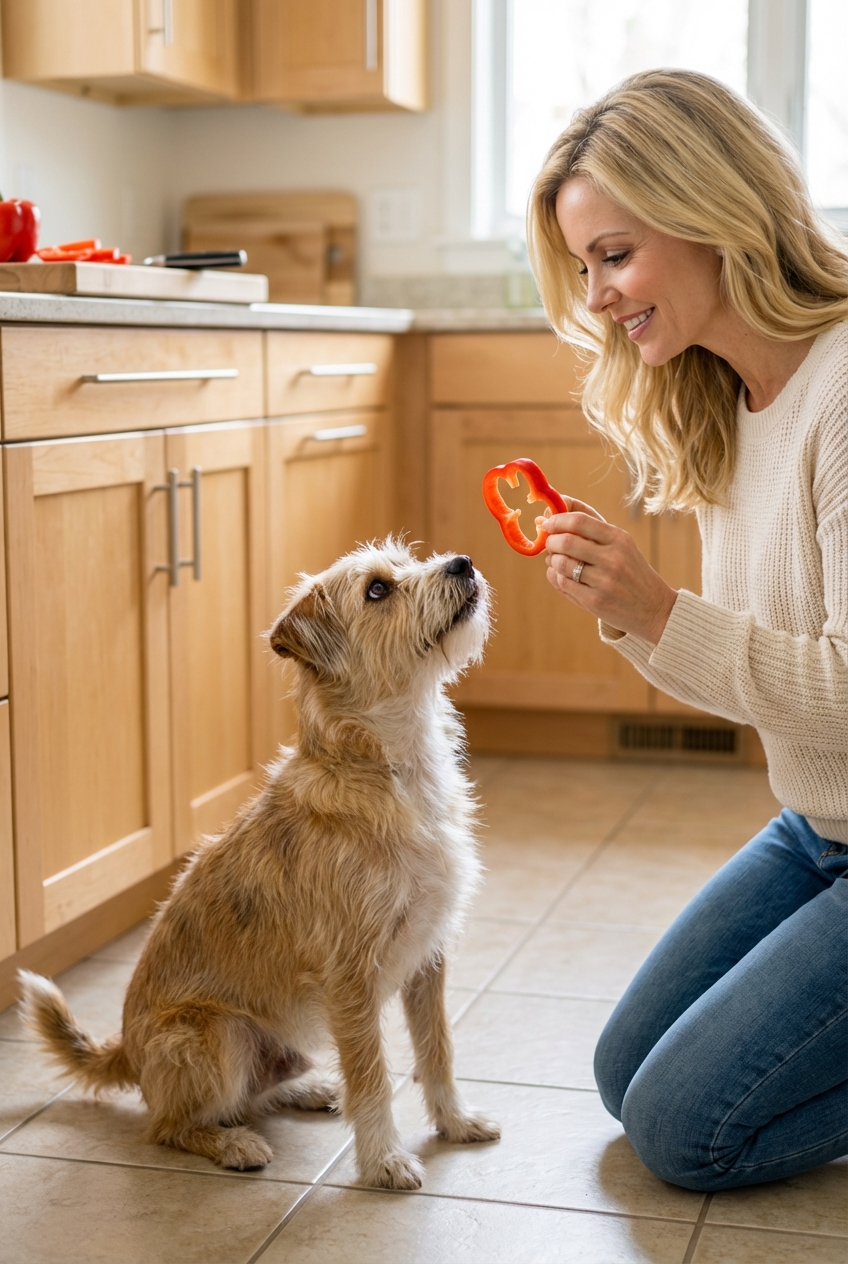
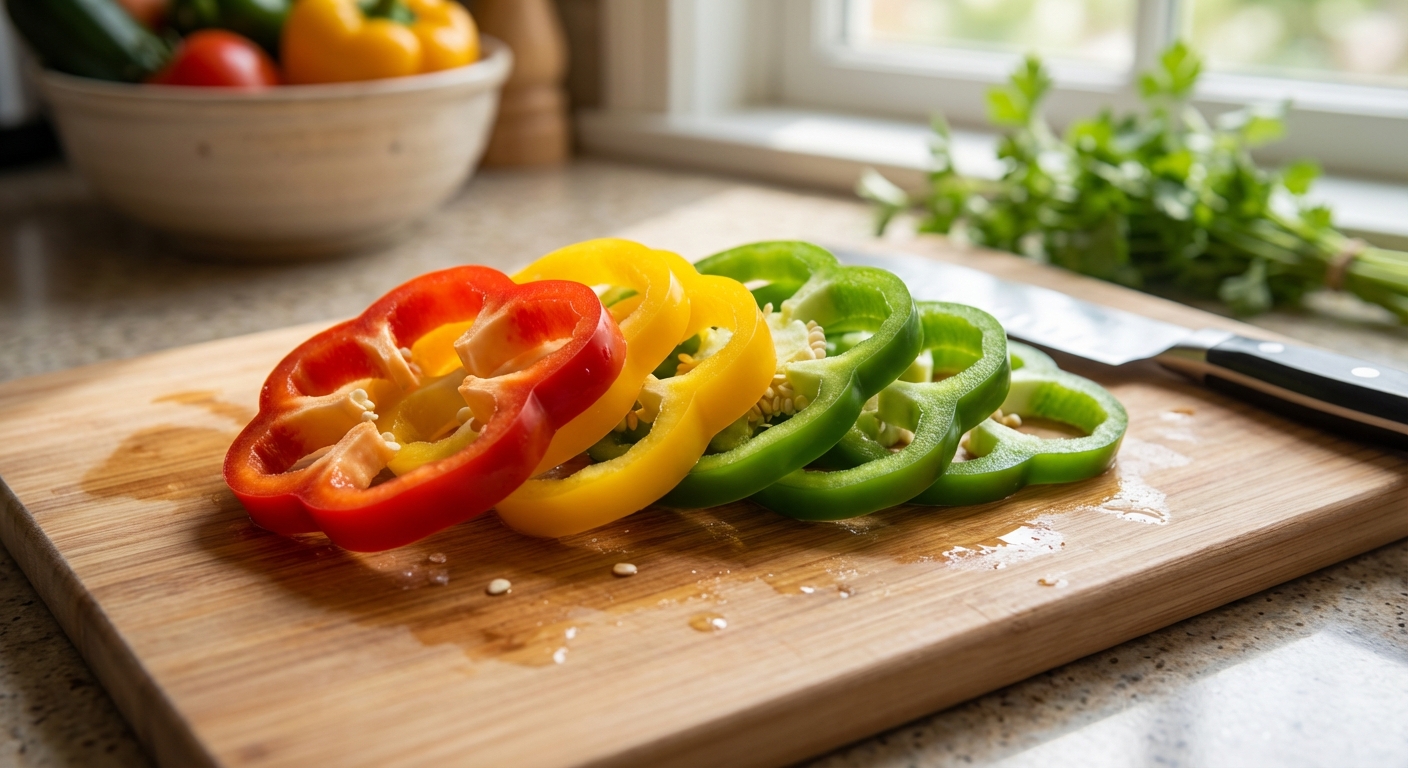
Bell pepper is okay for dogs when it is plain, in small portions, and served without seeds or stem pieces. Red, yellow, and orange bell peppers often have more antioxidants than green peppers because they are more fully ripened, although nutrient levels can vary by variety and freshness. Green bell peppers are still safe, they just tend to be a little less sweet.
Why bell pepper can be a healthy treat
Bell peppers are mostly water and fiber, which makes them a satisfying, crunchy snack without many calories. They also contain vitamins and antioxidants that support overall wellness. This lines up with general veterinary nutrition guidance for dog-safe produce when offered plain and in moderation.
- Vitamin C: Dogs can make their own vitamin C, but dietary vitamin C can still contribute antioxidant support.
- Vitamin A precursors (beta-carotene): Especially in red peppers, supporting skin, coat, and immune health.
- Vitamin B6 and folate: Helpful for normal metabolic function.
- Fiber: Can support healthy digestion when introduced gradually.
Color tip: Red bell peppers are typically highest in beta-carotene and certain antioxidants. If your dog likes them, red is a great “starter” pepper.
How to serve bell pepper safely
Best prep
- Wash thoroughly to remove pesticide residue and surface bacteria.
- Remove seeds, stem, and inner white ribs. These parts are not toxic, but they can be harder to digest and can be a choking risk if swallowed in larger chunks.
- Cut into bite-sized pieces appropriate for your dog’s size.
- Serve plain. No salt, butter, oils, garlic, onion powder, or spicy seasonings.
Raw vs cooked
- Raw: Crunchy and fun, but some dogs get gassy with raw veggies.
- Lightly cooked (steamed, microwaved, or lightly simmered with no oil or butter): Softer on sensitive stomachs and easier to chew for seniors.
If your dog has a history of stomach sensitivity, start with a few small cooked pieces first.
Choking and supervision
- Supervise, especially for dogs who inhale treats.
- Offer new foods one at a time so it is easier to spot what caused an upset stomach.
How much bell pepper can a dog have?
Think of bell pepper as a treat, not a meal base. A good general guideline is that treats should make up no more than about 10% of daily calories.
- Tiny dogs (under 15 lb): 1 to 2 small pieces (small squares cut from a thin strip)
- Medium dogs (15 to 50 lb): a few pieces (about 1 to 3 tablespoons chopped)
- Large dogs (over 50 lb): a small handful (about 1/4 cup chopped), if tolerated
Start smaller than you think, especially if bell pepper is new. The most common issue I see is too much fiber too fast, which can mean soft stool.
When bell pepper is not a good idea
Bell pepper is safe for most dogs, but there are times you should skip it or check with your veterinarian first:
- Pancreatitis history: Plain peppers are low-fat, but dogs on strict therapeutic diets may need fewer extras.
- Very sensitive stomachs or dogs prone to gas: Raw vegetables can trigger digestive upset.
- GI disease or special diets (IBD, elimination diets, prescription diets): It is often best to avoid “extras” unless your vet says they fit the plan.
- Puppies: Many do fine, but keep portions tiny and introduce new foods slowly.
- Food allergies: True pepper allergy is uncommon, but any food can cause a reaction in an individual dog.
- Diabetes or weight-loss plans: Peppers can fit well, but treats still add up. Portion control matters.
Signs your dog did not tolerate it well
- Vomiting, diarrhea, excessive gas
- Itchy skin, hives, ear redness
- Face rubbing or paw licking after eating
If you see repeated symptoms, stop feeding bell pepper and talk with your vet.
Bell pepper vs spicy peppers
This is important: bell peppers are mild. Spicy peppers (jalapeño, serrano, habanero, chili peppers) can cause mouth irritation and digestive upset. Even small amounts can be miserable for dogs.
- Avoid spicy peppers and anything seasoned with hot pepper flakes, hot sauce, or spicy salsas.
- Avoid pepper-based dips and mixed dishes that may contain onion or garlic.
- Skip stuffed peppers and cooked pepper dishes unless you are 100% sure they are plain. Many recipes include oils, extra salt, onion, or garlic.
Care and training tips using bell pepper
If your dog enjoys bell pepper, it can be a handy, low-calorie option for enrichment and training.
Training
- Cut into pea-sized pieces for quick rewards.
- Pair with higher-value treats when you need motivation (for example, mix bell pepper bits with tiny pieces of cooked chicken).
- Chewing crunchy foods can be soothing for some dogs during short, low-pressure training sessions.
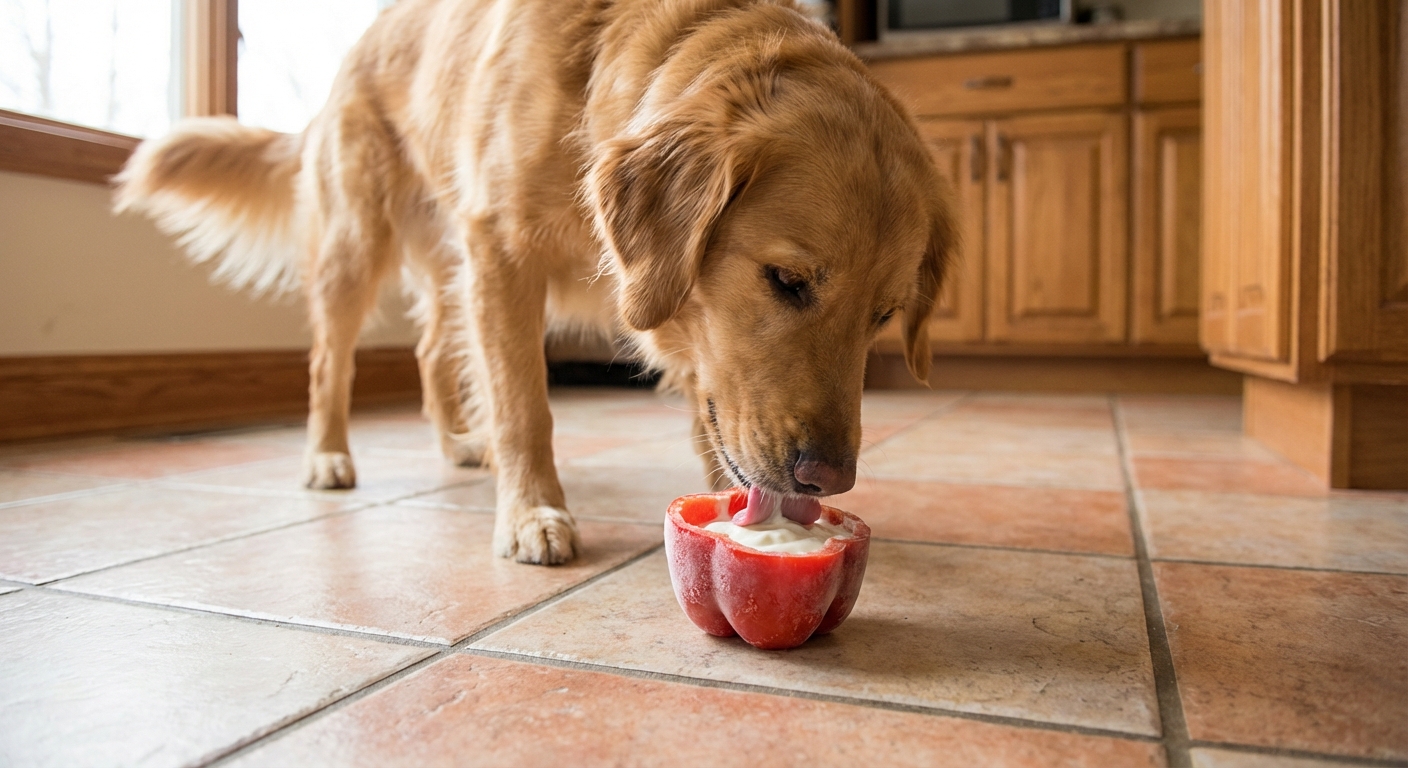
Enrichment: Stuff and freeze
- Use a hollow piece of bell pepper like a small “cup.”
- Fill with a dog-safe option such as plain, unsweetened yogurt (xylitol-free, also sometimes labeled as “birch sugar,” and lactose-free if your dog is sensitive) or a small amount of plain canned pumpkin.
- Freeze for a longer-lasting treat, especially in warm weather.
Slow intros for picky eaters
- Finely chop and sprinkle a tiny amount over your dog’s regular food.
- Lightly steam to soften the texture and bring out sweetness.
- Offer once, then stop. Let your dog decide without pressure.
Bottom line
Yes, bell pepper is okay for dogs, and for many pups it is a wonderful crunchy treat. Keep it plain, serve small portions, cut it into safe sizes, and introduce it slowly. If your dog has a medical condition or is on a prescription or elimination diet, your veterinarian can help you choose treats that fit best.