
Want a dog but have allergies? Learn what “hypoallergenic” really means, which low-shedding breeds and doodle mixes may help, and how to test compatibili...
Article
•
Designer Mixes
Irish Doodle Temperament, Energy, and Care

Shari Shidate
Designer Mixes contributor
The Irish Doodle is a mix of two famously people-oriented dogs: the Irish Setter and the Poodle. When you blend the Setter’s happy-go-lucky enthusiasm with the Poodle’s intelligence and athleticism (Poodles were originally water retrievers), you often get a companion who is friendly, energetic, and very tuned in to their family. That combination can be magical in the right home, but it also means this is not a “short walk and done” kind of dog.
Typical lifespan: Many Irish Doodles live about 10 to 15 years. Minis often trend toward the longer end, while larger dogs sometimes skew a bit shorter, but genetics, preventive care, and maintaining a lean weight matter a lot.
Below, I will walk you through temperament, energy needs, coat and grooming, sizing (standard vs mini), and the most important health considerations to keep in mind from both parent breeds.

Temperament
Most Irish Doodles are affectionate, social, and eager to be included in whatever you are doing. Many inherit the Irish Setter’s warm, outgoing nature, plus the Poodle’s sharp mind and desire to work with their person. In everyday life, that can look like:
- Friendly greetings: They often love visitors and may assume strangers are future friends.
- Strong bond with people: Many Irish Doodles prefer being near their humans rather than hanging out alone in the yard.
- Quick learning: They tend to respond well to positive reinforcement training, especially when you keep sessions upbeat and varied.
- Sensitivity: Harsh corrections can backfire with many doodle-type dogs. Calm structure, consistency, and rewards usually work best.
One thing I like to remind families is that “friendly” does not automatically mean “easy.” A bright, social dog who gets bored can invent their own fun, which is where chewing, counter surfing, or digging can sneak in. The goal is to give them appropriate outlets and a predictable routine.
Energy and exercise
If you are considering an Irish Doodle, plan on a dog that needs daily exercise plus daily brain work. Irish Setters were bred for endurance in the field, and Poodles are athletic sporting dogs too. Many Irish Doodles thrive with a mix of:
- Brisk walks: Often 45 to 90 minutes total per day for healthy adults is a reasonable starting point, split into two sessions if needed. Individual needs vary widely.
- Off-leash running in a secure area: Great for stretching out those long strides, but only if recall is reliable and the area is safe.
- Retrieving games: Fetch, disc games, or tossing a ball up a gentle slope.
- Training as enrichment: Short sessions of loose-leash walking skills, stays, place work, and impulse control games.
- Sport outlets: Agility, rally obedience, scent work, dock diving, and canine fitness are excellent fits for many.
Conditioning and weather note: Build activity gradually if your dog is out of shape, and be conservative in heat and humidity. Many doodle coats can trap warmth, so plan early-morning walks, shade breaks, and water.
What happens if they do not get enough exercise? The most common “problem behaviors” I see in high-energy mixes are really just unmet needs: pacing, jumping, mouthing, barking, or destructive chewing.
Puppy note: It is tempting to over-exercise a puppy because they seem to have endless energy. Keep high-impact activity reasonable while growth plates are still developing. Use more enrichment and short play sessions, and talk with your veterinarian about safe activity levels for your pup’s age and size.
Disc game safety: Avoid repetitive high jumps, especially for puppies and adolescents. Keep it low and smooth.

Coat colors
Irish Doodles are loved for their warm coat tones, but “red” is a wide range. Depending on genetics and coat type, you may see:
- Deep mahogany or chestnut: A richer Setter-style red, sometimes with a glossy look.
- Copper, apricot, or amber: Lighter shades that can resemble a red or apricot Poodle.
- Red with white markings: Some may have white on the chest, toes, or chin, reflecting Irish Setter patterning.
- Coat fading: Some Poodles carry genes that lighten coat color over time, so a puppy’s shade may soften as they mature.
Coat texture varies too. You may get anything from loose waves to tighter curls, and shedding can range from low to moderate. No doodle mix can be guaranteed “hypoallergenic.” Allergies can also be triggered by dander and saliva, not just hair, but many families with mild allergies do better with curlier, lower-shedding coats.

Grooming
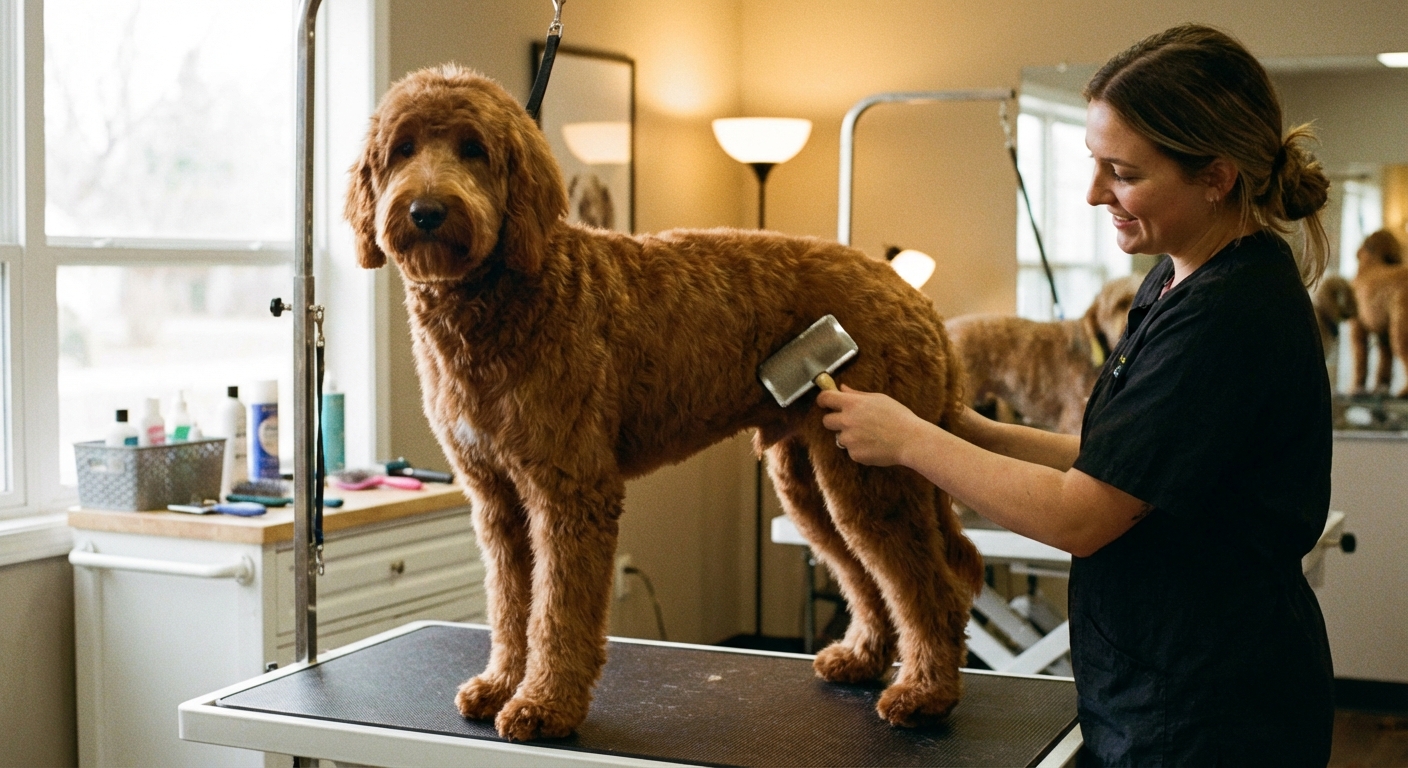
Grooming is one of the biggest make-or-break factors with Irish Doodles. That beautiful coat can mat quickly, especially behind the ears, at the collar line, in armpits, and around the tail base. If matting gets severe, the kindest option is often a short shave, so it is worth planning for maintenance from day one.
A realistic routine usually includes:
At-home brushing
- 3 to 5 times per week for wavy coats, and often daily for curlier coats.
- Use a slicker brush and follow with a metal comb to confirm you are brushing all the way to the skin.
- Lightly misting the coat with a dog-safe conditioning spray can reduce breakage and static.
Professional grooming
- Most families schedule grooming every 6 to 8 weeks.
- Ask for a style that matches your lifestyle. A shorter “sport trim” can be much easier to maintain than a longer teddy look.
Ears, nails, and teeth
- Ears: Doodles often have floppy ears that can trap moisture, and some can also have more hair around the ear opening. Check weekly, dry after swimming, and talk with your vet if you notice odor, redness, head-shaking, or repeated scratching.
- Nails: Trim every 2 to 4 weeks, depending on how quickly they grow and how much natural wear your dog gets.
- Dental care: Daily brushing is ideal. Dental chews and water additives can help, but they do not replace brushing.
Standard vs mini size
Irish Doodle sizing depends heavily on the Poodle parent used, plus whether the dog is a first-generation cross (F1) or multi-generation. You will commonly see:
- Standard Irish Doodle: Usually produced from an Irish Setter and a Standard Poodle. Many commonly land roughly in the 45 to 75 pound range, but genetics can swing smaller or larger. Heights often fall around 22 to 28 inches at the shoulder.
- Mini Irish Doodle: Typically produced using a Miniature Poodle (sometimes with careful multi-generation breeding). Many often end up around 25 to 45 pounds, again with variation. Heights are commonly around 16 to 22 inches.
My practical tip: If size is truly important to you, ask the breeder or rescue for the parents’ weights, previous litter adult sizes, and a veterinarian’s perspective. Genetics can surprise you, especially in early generations.
Also note that “mini” does not mean “low energy.” Many mini Irish Doodles are just as busy and athletic as their standard-sized relatives, only in a smaller package.
Family fit
In the right home, Irish Doodles can be wonderful family dogs. They often do best with people who enjoy an active lifestyle and want a dog who participates in it. They may be a great fit if you want:
- A dog who is social and people-focused
- A running, hiking, or sport partner
- A dog that enjoys training and learning
- A companion that tends to be playful well into adulthood
They can be a tougher fit if your household is gone for long hours daily or if you want a dog with minimal grooming needs.
Kids and other pets
Many Irish Doodles do well with respectful children and can live happily with other dogs. With cats and small pets, early socialization matters. Some individuals may inherit more “birdy” interest from the Setter side, so supervised introductions and reward-based training are important.
Training
Because Irish Doodles are typically smart and enthusiastic, early training can be a joy. It also prevents common doodle challenges like jumping up, pulling on leash, and overexcitement with guests.
- Start early: Puppy classes, controlled socialization, and gentle exposure to sights and sounds.
- Prioritize recall: A reliable “come” can be life-saving, especially for dogs that love to run.
- Teach calm: Reinforce settling on a mat, calm greetings, and impulse control around doors and food.
- Use enrichment: Food puzzles, scatter-feeding, snuffle mats, and scent games help meet mental needs.
If your Irish Doodle struggles with being alone, talk to a trainer early. Addressing separation-related behaviors is much easier when it is caught at the first signs.
Health
No mixed breed is automatically “health-proof.” Irish Doodles can inherit issues from either parent line. Responsible breeding, early screening, and good preventive care make a big difference.
Common concerns
- Hip dysplasia: Seen in many medium to large breeds. Maintaining a lean body condition and using appropriate exercise during growth helps protect joints.
- Eye disease (including PRA variants): Poodles can carry inherited eye conditions, including forms of PRA. Reputable breeders commonly use DNA tests where appropriate and regular ophthalmology exams (often listed as CAER exams) for breeding dogs.
- Addison’s disease (hypoadrenocorticism): More common in Standard Poodles than many breeds, and generally less common in Minis and Toys. Symptoms can be vague at first, like intermittent vomiting, diarrhea, lethargy, or poor stress tolerance.
- Bloat (GDV): Irish Setters and deep-chested dogs can be at risk. Ask your veterinarian about feeding routines and whether a preventive gastropexy is appropriate for your dog’s size and build.
- Ear infections: Floppy ears plus moisture from swimming can increase risk, and some dogs also have more hair around the ear opening.
- Allergies and skin sensitivity: Doodles can be prone to itchiness, recurrent ear issues, and licking paws.
- Thyroid disease and seizures: These can occur in Poodles and Irish Setters. They are not guaranteed, but they are worth asking about in a line’s history.
What to ask a breeder or rescue
- What health tests were completed on the parents (ask for documentation). Many buyers look for hips screened via OFA or PennHIP, plus current eye exams (often CAER) and relevant genetic testing.
- Whether thyroid testing is included in their health screening approach.
- What has shown up in previous litters or close relatives (joints, eyes, thyroid, seizures, allergies, chronic ear issues).
- What is the grooming and coat type history in the line (wavy vs curly, matting tendencies).
Veterinary assistant perspective: One of the most evidence-based things you can do for long-term health is to keep your Irish Doodle lean. Extra weight adds stress to joints, can worsen inflammation, and often reduces overall quality of life. Ask your veterinary team to help you track body condition score and adjust feeding as your dog grows.
Feeding note
If your Irish Doodle is trending large, ask your veterinarian about nutrition for growth. Large-breed puppies often do best with a diet formulated for controlled growth and appropriate calcium and phosphorus levels.
Daily care checklist
If you like routines, this simple checklist can help you keep an Irish Doodle thriving:
- Exercise: A solid walk plus a second play or training session daily
- Mental enrichment: Puzzle toy, sniff walk, or short training session
- Grooming: Quick coat check for tangles, especially after outdoor play
- Ears: Weekly check and dry after swimming
- Nutrition: High-quality diet appropriate for size and life stage, with regular weigh-ins
- Preventive care: Parasite prevention and routine vet visits
- Budget and time: Plan for professional grooming every 6 to 8 weeks, plus ongoing training and enrichment
Bottom line
The Irish Doodle is typically a friendly, energetic, highly interactive companion with a gorgeous red coat range and a big need for both exercise and grooming. They often live around 10 to 15 years, and that time goes best when their daily needs match your schedule. If you want a dog who will happily join your walks, weekend adventures, and training goals, this mix can be a wonderful match. If you prefer a low-maintenance coat or a low-energy lifestyle, you may feel overwhelmed quickly.
If you are deciding between standard and mini, focus less on the label and more on the individual dog’s expected adult size, coat type, and temperament, plus the time you can realistically commit each day. With the right fit and consistent care, Irish Doodles often become those once-in-a-lifetime family dogs you cannot imagine living without.