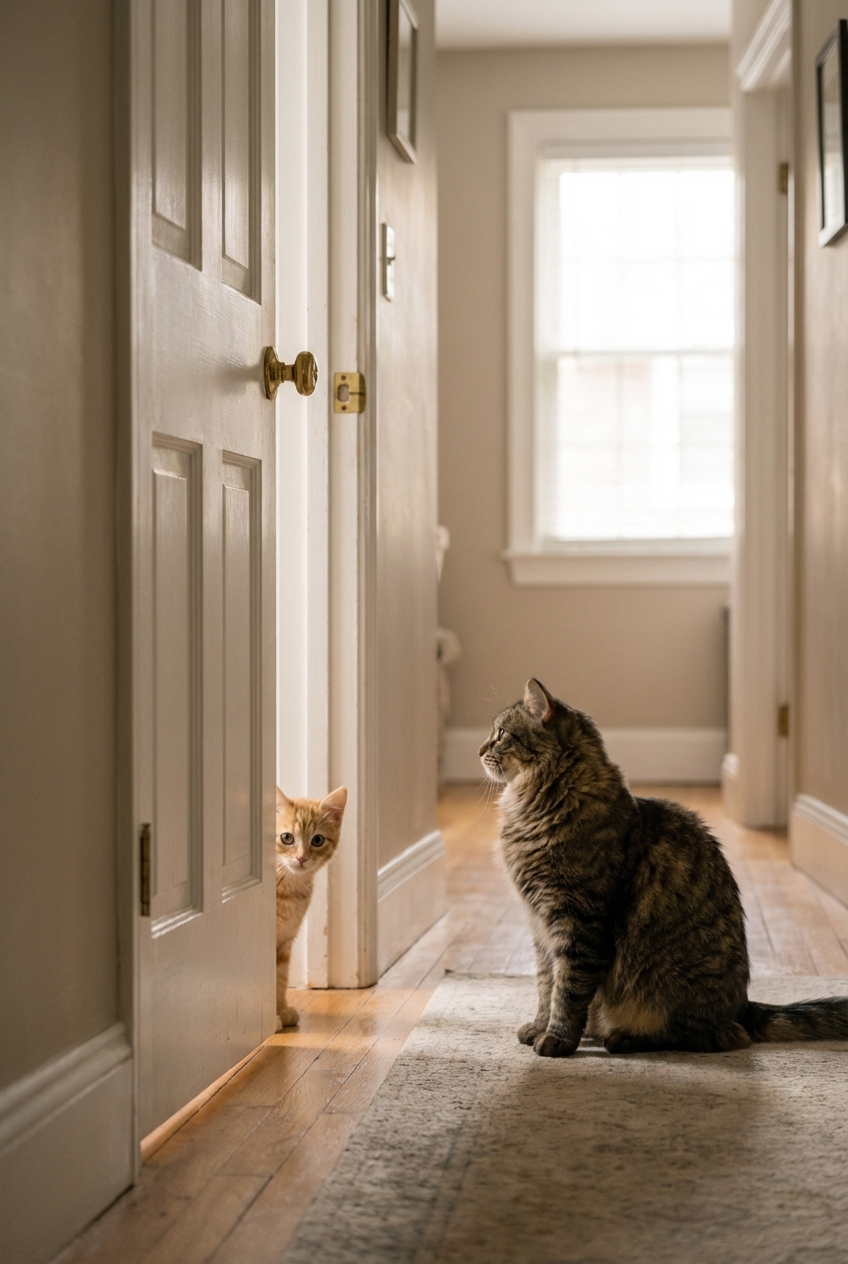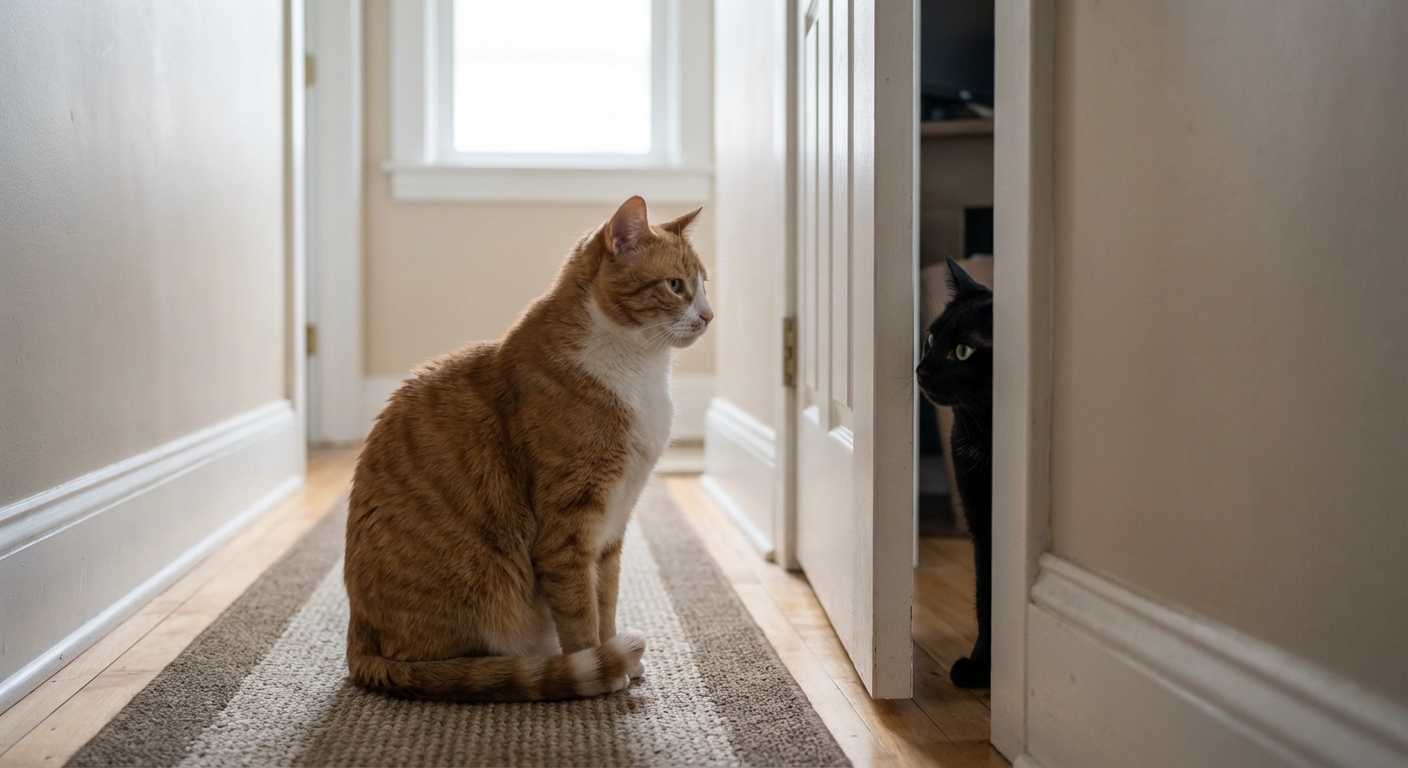
Introduce cats the right way with a proven, low-stress plan: safe room setup, scent swapping, door feeding, barrier sessions, and short supervised visits to ...
Article
•
Designer Mixes
Introducing Two Cats Without a Fight

Shari Shidate
Designer Mixes contributor
Bringing a new cat home can be exciting and a little nerve-wracking. As a veterinary assistant, I have seen the best introductions go one way: slow, structured, and scent-first. Cats are territorial by nature, and fights often happen when one or both cats feel trapped, rushed, or overwhelmed.
The good news is you can dramatically reduce hissing, swatting, and stress by following a step-by-step plan that respects how cats communicate. Think of this as helping two strangers become familiar roommates, one calm moment at a time.
Before you start: set yourself up for success
Health check and a brief separation
Before introductions, schedule a vet visit for the new cat if you can (especially if their history is unknown). In multi-cat homes, a short separation period is also a practical way to reduce the risk of sharing parasites or contagious illness.
- Vet basics: vaccines as recommended by your veterinarian, parasite control, and any testing your vet suggests based on your area and the cat’s background.
- Watch for red flags: sneezing, coughing, diarrhea, vomiting, eye or nasal discharge, poor appetite, or lethargy. Delay introductions and call your vet if you see these.
- Separate means separate: ideally, the new cat uses their own litter box and bowls in their safe room.
Create a safe room for the new cat
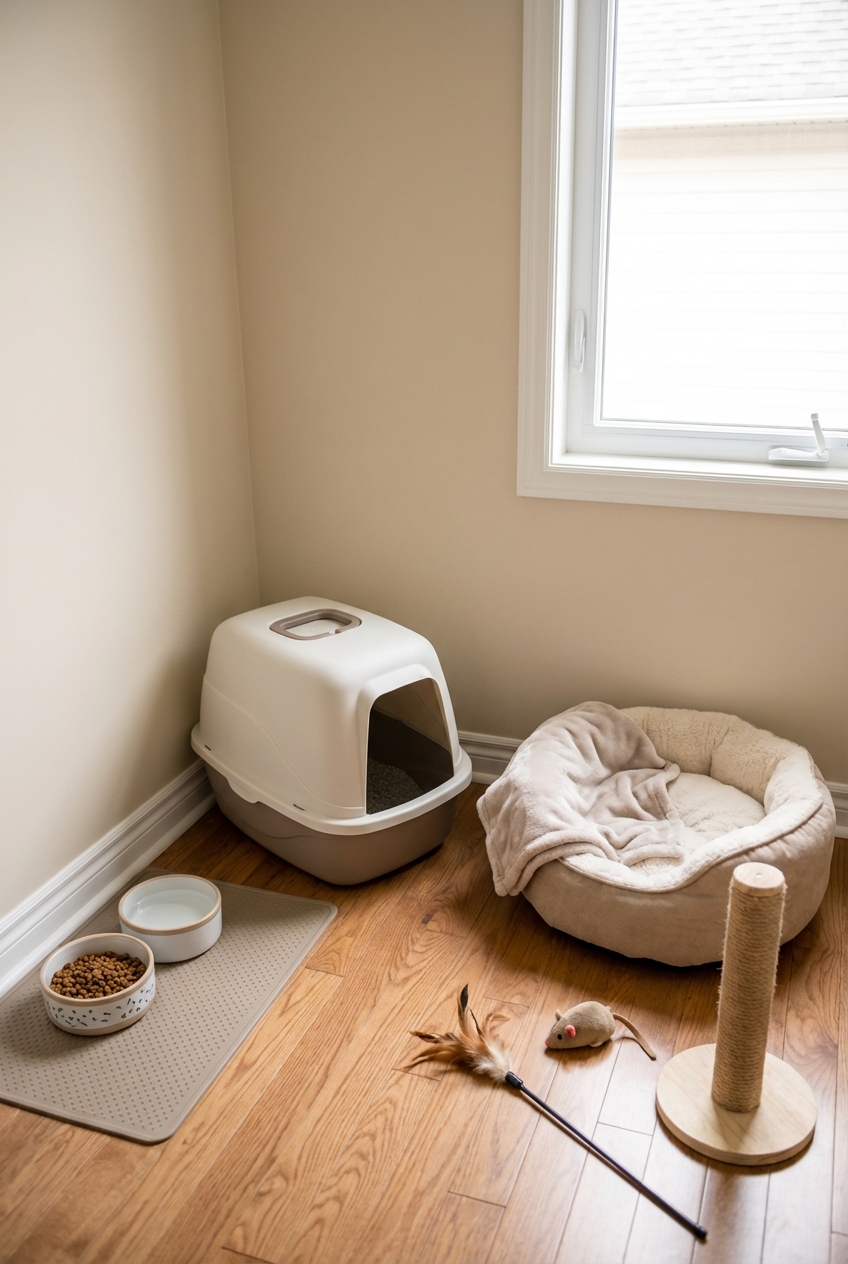
Your new cat needs a private “home base” for at least several days (sometimes longer). This prevents immediate territory disputes and helps your resident cat feel like their world has not been completely taken over.
- Choose a quiet room with a door that closes (bedroom, office, bathroom).
- Include essentials: litter box, food, water, scratching post, bed, and a hiding spot (like a covered cat bed or a box on its side).
- Add vertical space if possible, like a cat tree or a sturdy shelf. Height helps cats feel safe.
Make resources plentiful for both cats
Competition is one of the biggest drivers of tension. The goal is to make it easy for both cats to meet their needs without confronting each other.
- Litter boxes: aim for one per cat, plus one extra (for example, 2 cats = 3 boxes).
- Food and water stations: separate them so no one can “guard” access.
- Scratching and resting spots: multiple options in different rooms.
Schedule it when you can be home
Start introductions when your household is relatively calm. If you are hosting guests, moving, or working long hours, it is okay to wait a week. A peaceful start is worth it.
Cat body language: your early warning system
Many cat conflicts are preventable if you spot stress early. Watch for:
- Comfort signs: relaxed body, slow blinking, ears forward, tail resting, curious sniffing.
- Stress signs: ears flattened, tail flicking or puffed, crouching, growling, hard staring, “airplane” ears.
- Escalation signs: stalking, lunging at the door, swatting through cracks, repeated yowling.
If you see escalation signs, slow down. Successful introductions are measured in calm behavior, not in days on the calendar.
Step-by-step introduction plan (to help prevent fights)
Important: The day ranges below are common examples, not deadlines. Only move forward when both cats are consistently calm for multiple meals or sessions in a row.
Step 1: Scent swapping (Days 1 to 3, or longer)
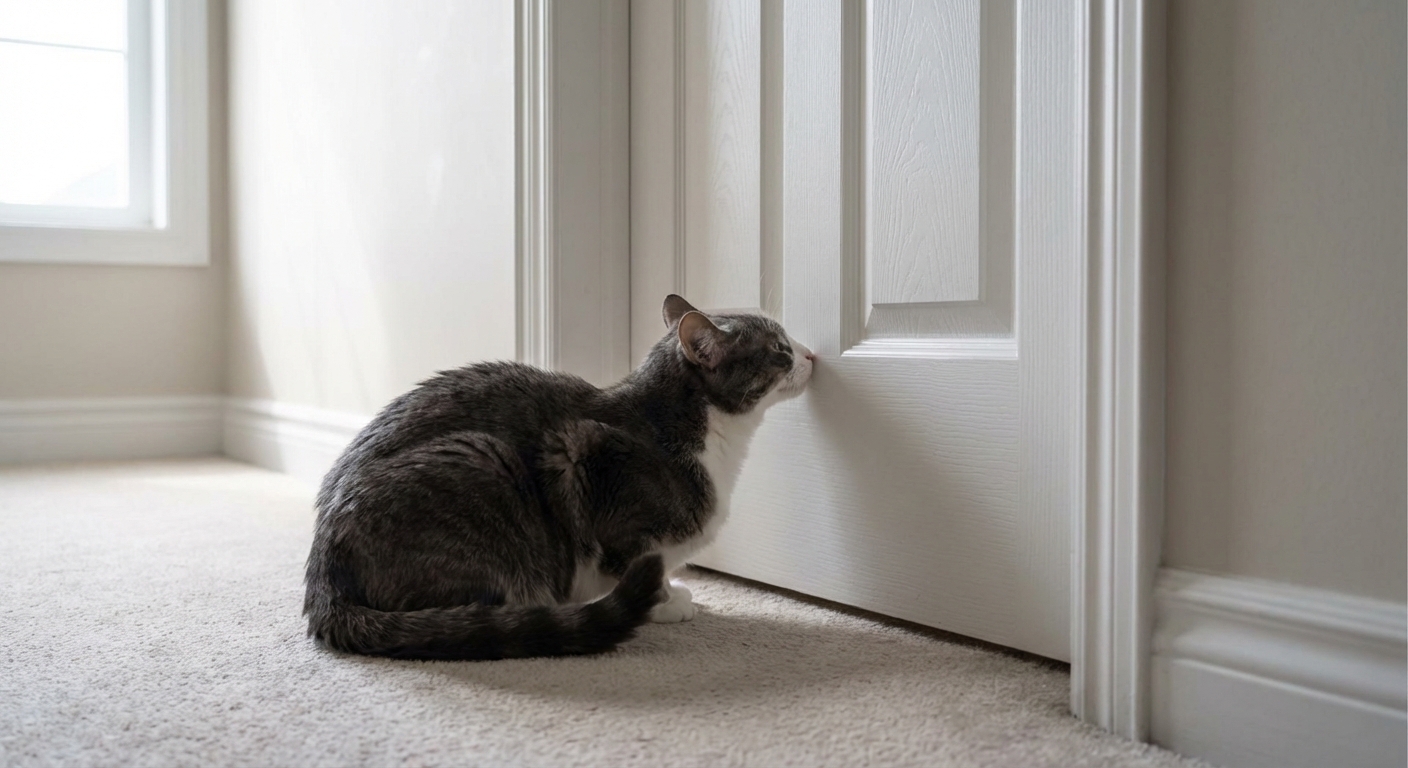
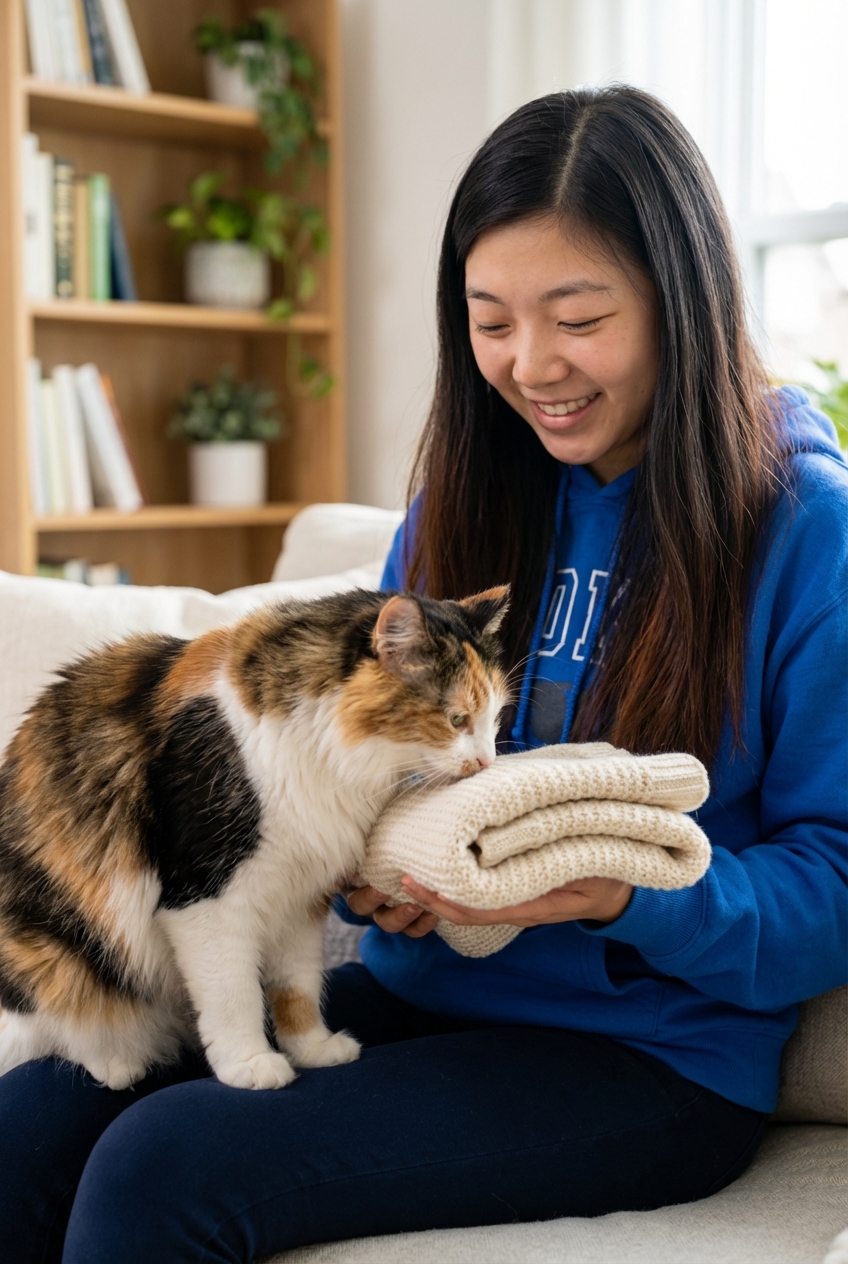
Cats recognize “friend vs. stranger” largely through scent. Before they even see each other, help them learn each other’s smell in a safe way.
- Swap bedding between cats daily.
- Use a soft cloth to gently rub one cat’s cheeks (where friendly pheromones are) and place that cloth near the other cat’s resting area.
- Rotate rooms if possible: let the resident cat explore the new cat’s room while the new cat is in another safe space. This shares scent without confrontation.
Goal: both cats can sniff the other’s scent and return to normal behavior (not hissing, not hiding for hours).
Step 2: Meal time at the door (Days 3 to 7, or longer)
Food is a powerful tool because it changes emotional association. The idea is: “I smell the other cat, and good things happen.”
- Feed both cats on opposite sides of the closed door.
- Start far enough away that both cats can eat comfortably.
- Over multiple meals, move bowls closer to the door as long as there is no hissing or refusal to eat.
Goal: both cats can eat calmly near the closed door.
Step 3: Visual introductions (short sessions)
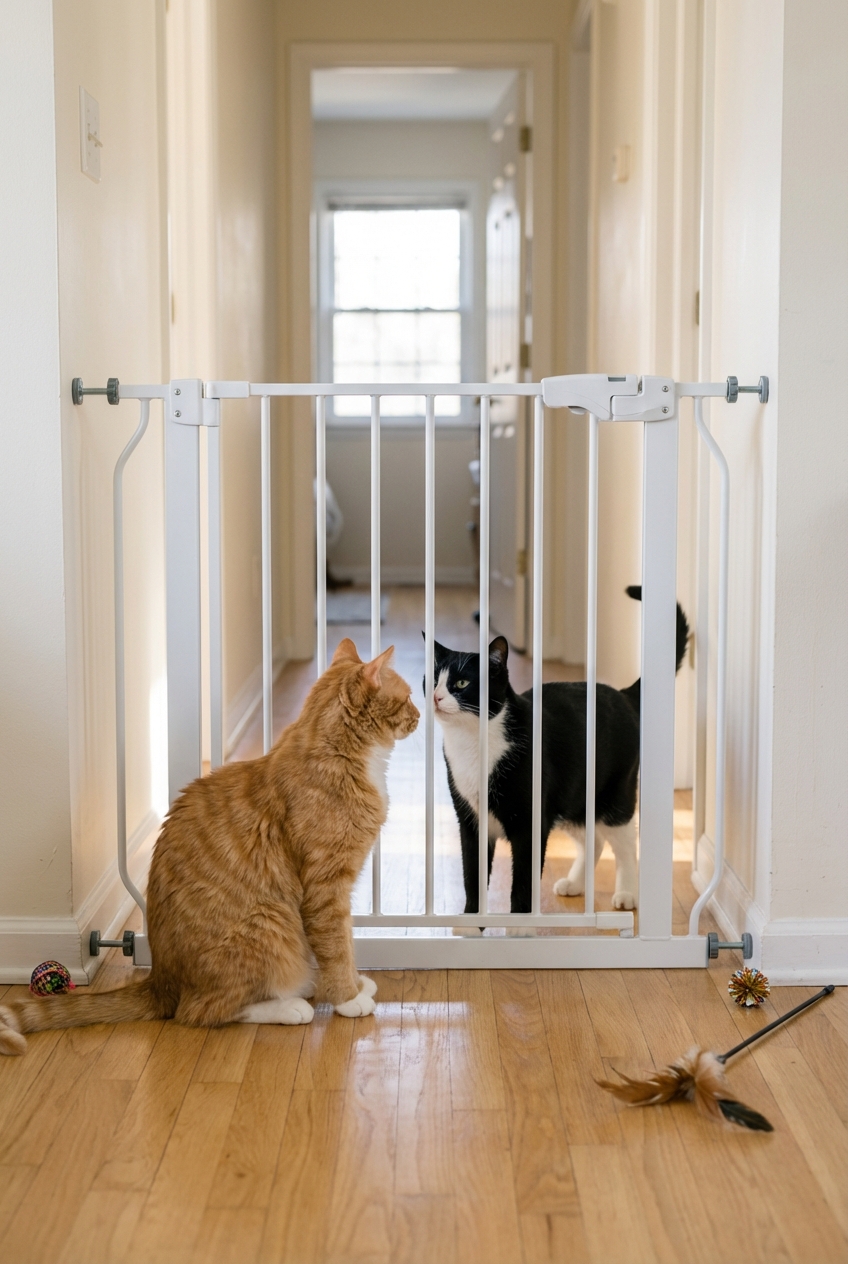
When door-feeding is calm, you can allow brief, controlled visual contact.
- Use a baby gate, screen door, or crack the door with a doorstop while you supervise.
- Keep sessions short (1 to 5 minutes) and end on a calm note.
- Offer high-value treats or a favorite toy during the session.
Tip: If one cat fixates or stares, break attention with a treat toss away from the barrier.
Step 4: Supervised time together (minutes first, then more)
Only move to this step when the cats can see each other without intense stress signals. Choose a larger room with escape routes and vertical space.
- Start with 5 to 10 minutes of calm coexistence.
- Use interactive play (wand toy) to redirect energy and reduce staring.
- End the session before either cat gets overstimulated.
Goal: cats can share space with mild curiosity and minimal tension.
Step 5: Gradually increase access
Increase supervised time, then allow short unsupervised periods once you consistently see relaxed behavior. Many pairs take a few weeks, and some take a few months. That is normal.
Ready to move on? Look for these signs
Progress tends to go smoothly when both cats are doing the basics well and not getting stuck in a stress loop.
- Eating normally (including near the door or barrier when that is the step).
- Using the litter box reliably.
- Relaxed body language like loose posture, slow blinking, and casual movement around the home.
- Curiosity without fixation: they look, sniff, then disengage and do something else.
- Quick recovery: if there is a brief hiss, both cats can settle within a minute or two with distance or redirection.
What to do if they hiss or swat
A little hissing is communication, not failure. It often means “give me space.” Your job is to prevent it from turning into a chase or cornering situation.
- Do not punish hissing or growling. It increases fear and makes future conflict more likely.
- Interrupt calmly by tossing a treat away from the other cat or using a wand toy to redirect.
- Increase distance and shorten the next session.
- Go back a step (for example, barrier-only) if either cat escalates repeatedly.
If a real fight happens
If fur is flying, cats are screaming, or they are locked onto each other, your priority is safety.
- Do not grab cats with your hands. Bite wounds can be severe and become infected quickly.
- Use a barrier like a large pillow, a piece of cardboard, or a blanket to separate them.
- Herd one cat into a room and close the door to reset.
- Skip spraying water or loud noises. These can increase fear and trigger redirected aggression.
- After a fight, give a cool-down period (at least 24 to 48 hours) and restart at an earlier step.
If either cat is injured, hiding and painful, or you notice limping, swelling, or punctures, contact your veterinarian promptly. Cat bites can seal over and abscess later.
Tools that can help
Pheromone support
Some families benefit from synthetic feline facial pheromones (diffusers or sprays). They do not sedate cats, and they may help reduce environmental stress during transitions. Results vary, so think of this as support, not a substitute for a slow introduction.
If you use a diffuser, place it in the area where the cats spend the most time and plan to run it for several weeks during the transition.
Enrichment to reduce tension
- Play: 10 to 15 minutes, 1 to 2 times daily for each cat.
- Puzzle feeders: helps channel food motivation into a calming activity.
- Vertical territory: cat trees, window perches, shelves.
- Quiet retreats: multiple hiding and resting options.
Separate litter boxes and feeding stations
This is one of the most overlooked fixes. In multi-cat homes, resource guarding can look like “random” aggression but it is often predictable once you watch where conflict starts.
Common mistakes that cause setbacks
- Rushing face-to-face contact because “they seem fine.” Early tolerance can flip to fear if the next step is too big.
- Forcing proximity by holding cats, carrying one up to the other, or placing them together.
- Letting chasing become a habit. One chase can turn into a pattern that is hard to break.
- Too few resources (litter boxes, beds, perches), which creates competition.
Special situations
Kitten and adult cat
Kittens often want to play more than adults tolerate. Keep early sessions shorter, add extra play for the kitten before introductions, and make sure the adult has easy escape routes and high perches.
Fearful or undersocialized cats
Plan for a longer scent and barrier phase. Prioritize predictable routines, quiet spaces, and very short visual sessions paired with treats. If a cat is too scared to eat near the barrier, increase distance and slow down.
Multi-cat households
Go one relationship at a time if you can. A new cat should meet the calmest resident cat first, and resources should be spread out to prevent ambush points in hallways or doorways.
History of inter-cat aggression
If either cat has a track record of serious fights, involve your veterinarian or a qualified behavior professional early. These cases often do best with a customized plan.
When to call in your vet or a behavior professional
Please get help sooner rather than later if:
- There are repeated fights or injuries.
- One cat stops eating, hides constantly, or has litter box accidents.
- You see signs of pain or illness (pain can trigger aggression).
- The tension does not improve after several weeks of a structured plan.
Your veterinarian can rule out medical causes and discuss calming options. A qualified cat behavior consultant can tailor a plan to your home layout and your cats’ specific triggers.
The bottom line: calm introductions are built on scent, space, and patience. If you move at the cats’ pace and reward relaxed moments, you are giving them the best chance to form a peaceful, stable relationship.