Vet-assistant tips to help a new cat adjust: set up a quiet home base room, prevent litter box issues, build trust with food and play, and introduce other pe...
Article
•
Designer Mixes
Introducing Cats to a New Home

Shari Shidate
Designer Mixes contributor
Bringing a cat home is exciting, but for your cat, it can feel like being dropped into a whole new planet. New smells, new sounds, new people, and a new routine can trigger stress even in the friendliest kitty. The good news is that cats adjust beautifully when we let them go at their pace and set up the environment for success.
As a veterinary assistant in Frisco, Texas, I have seen the difference a calm, step-by-step introduction makes. In this guide, I will walk you through what to do before your cat arrives, how to handle the first hours and first week, and how to spot stress early so you can help quickly.
Before your cat arrives
A smooth transition starts with preparation. Cats feel safest when they can predict their environment and control how much interaction they have.
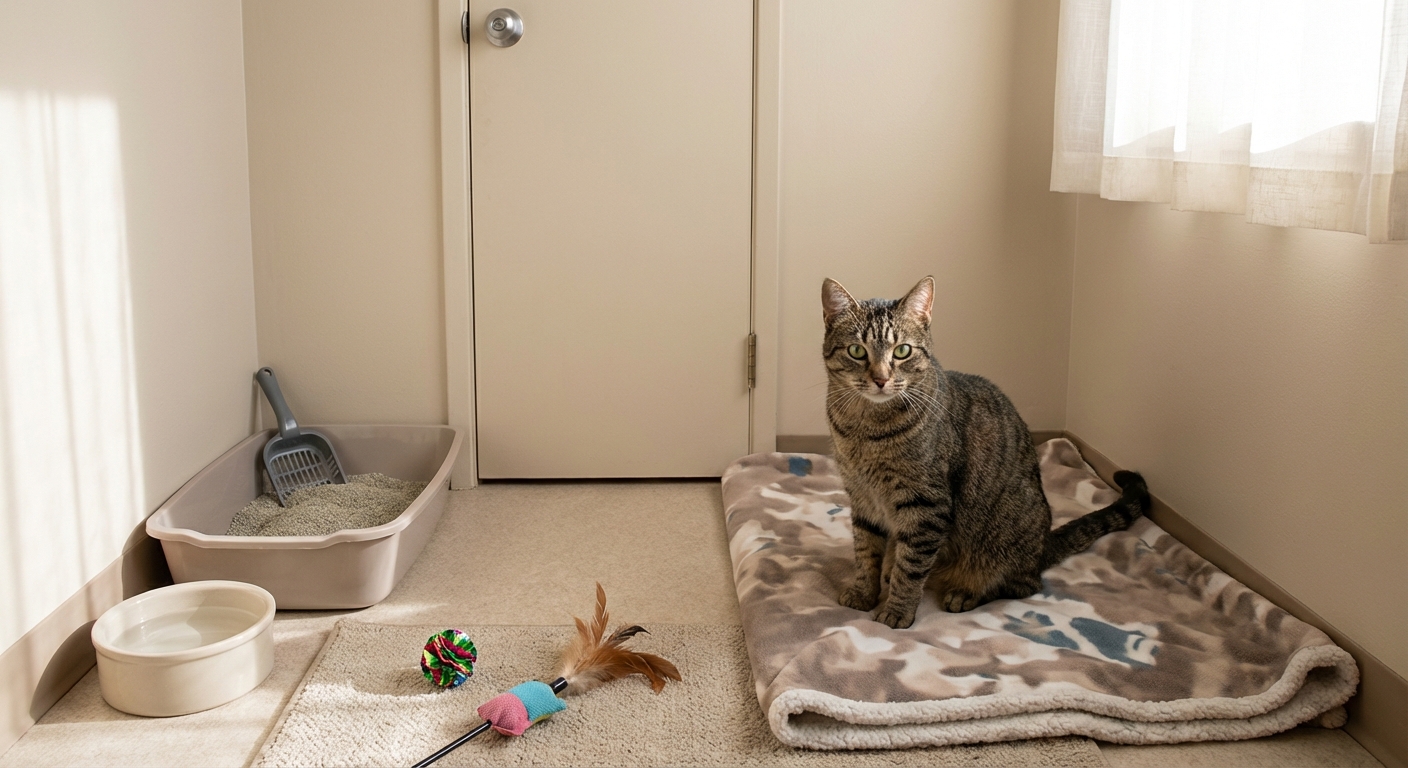
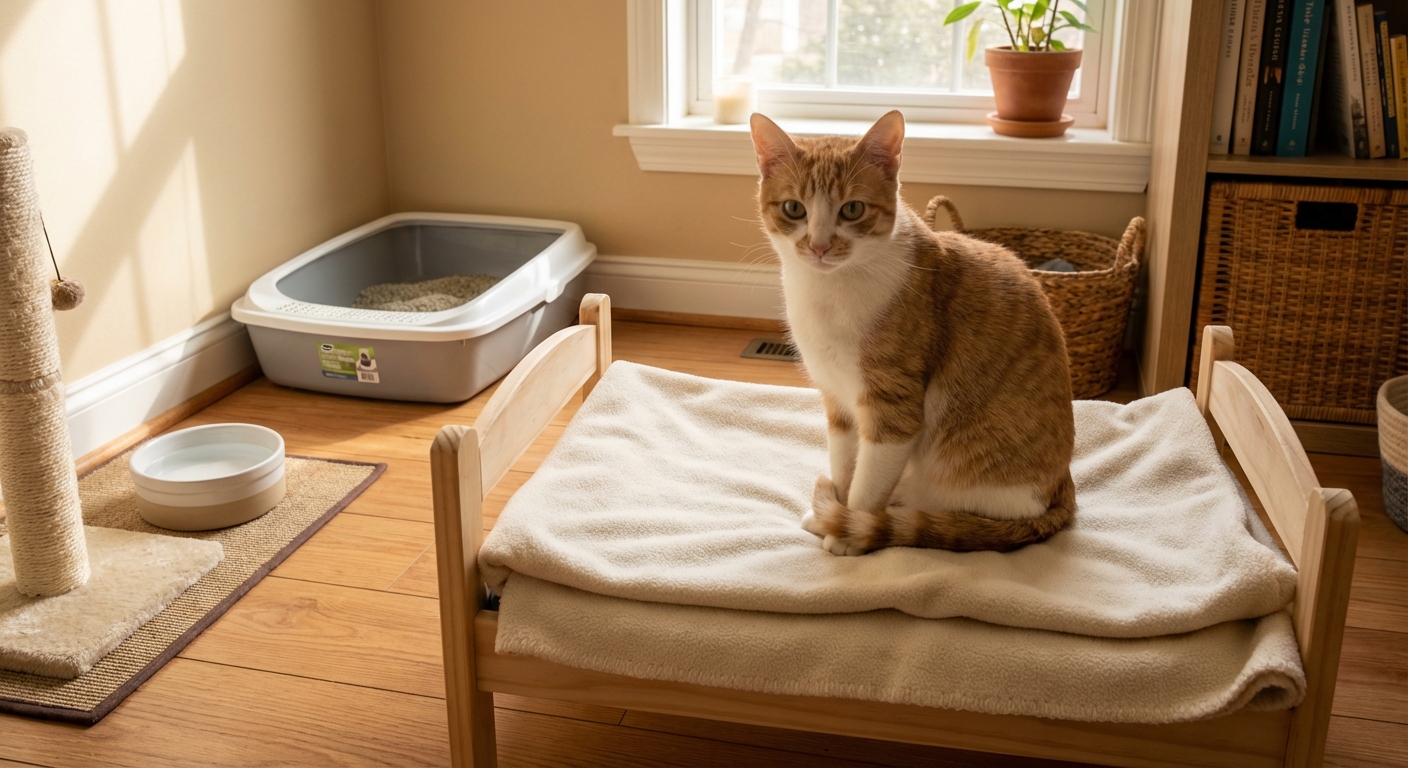
Create a “safe room”
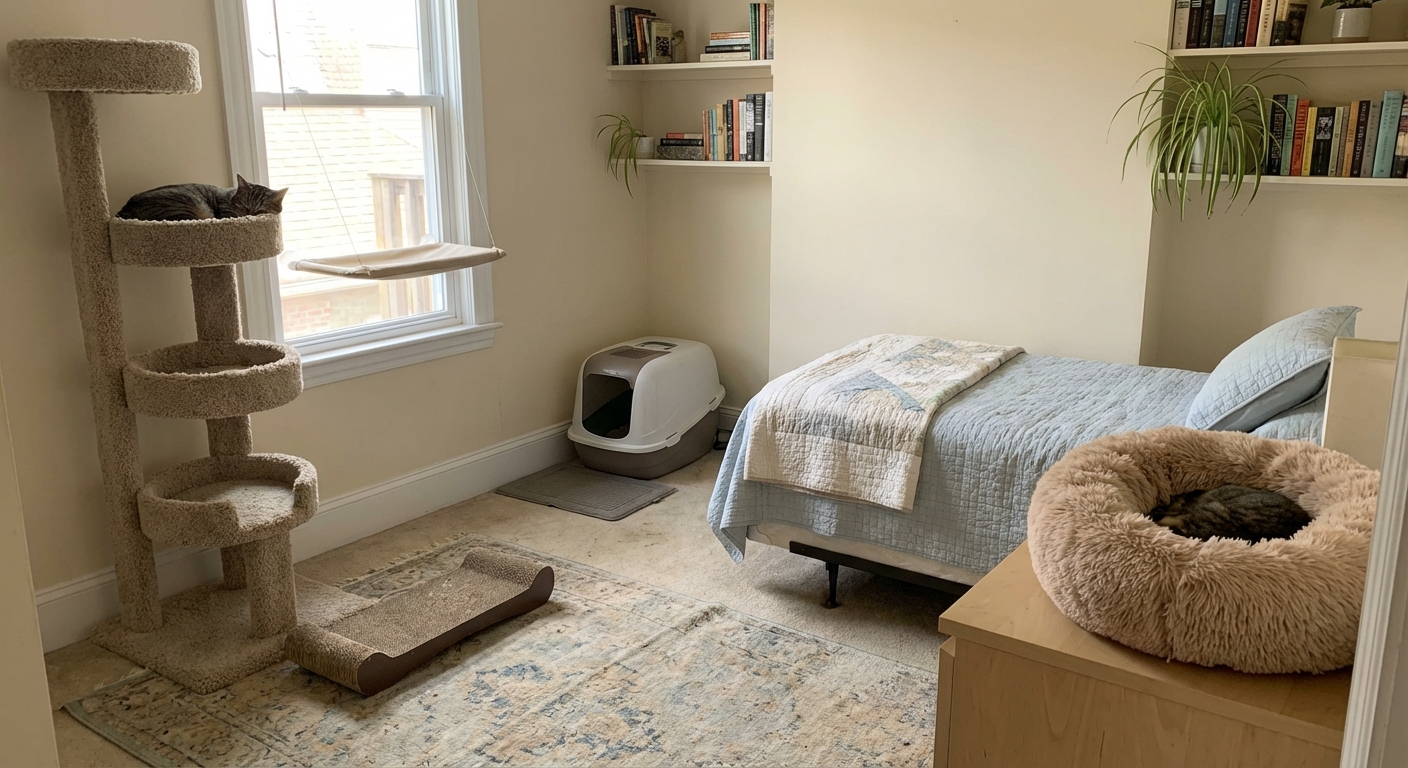
Choose a quiet room with a door you can close: a bedroom, office, or large bathroom works well. This room becomes your cat’s basecamp for the first few days.
- Litter box: Place it in a low-traffic corner, away from food and water.
- Food and water: Keep bowls separated from the litter area. Many cats prefer water away from food.
- Hiding spot: A covered bed, a cardboard box on its side, or space under a chair helps your cat feel secure.
- Vertical space: A sturdy cat tree or a cleared shelf gives your cat an observation point.
- Scratching option: Offer a vertical scratcher and a horizontal scratch pad.
- Comfort items: A soft blanket, and if possible, something that smells familiar from the previous home or shelter.
Plan the first 48 hours
- Pick a calm arrival time: Avoid parties, loud home projects, or lots of visitors.
- Keep other pets separated: Use a door and, if needed, a baby gate outside the room later for controlled viewing.
- Decide who is “primary”: One person should be responsible for feedings and calm check-ins at first.
The first day: slow, quiet, predictable
When you bring your cat home, think: small space, soft voices, minimal handling.
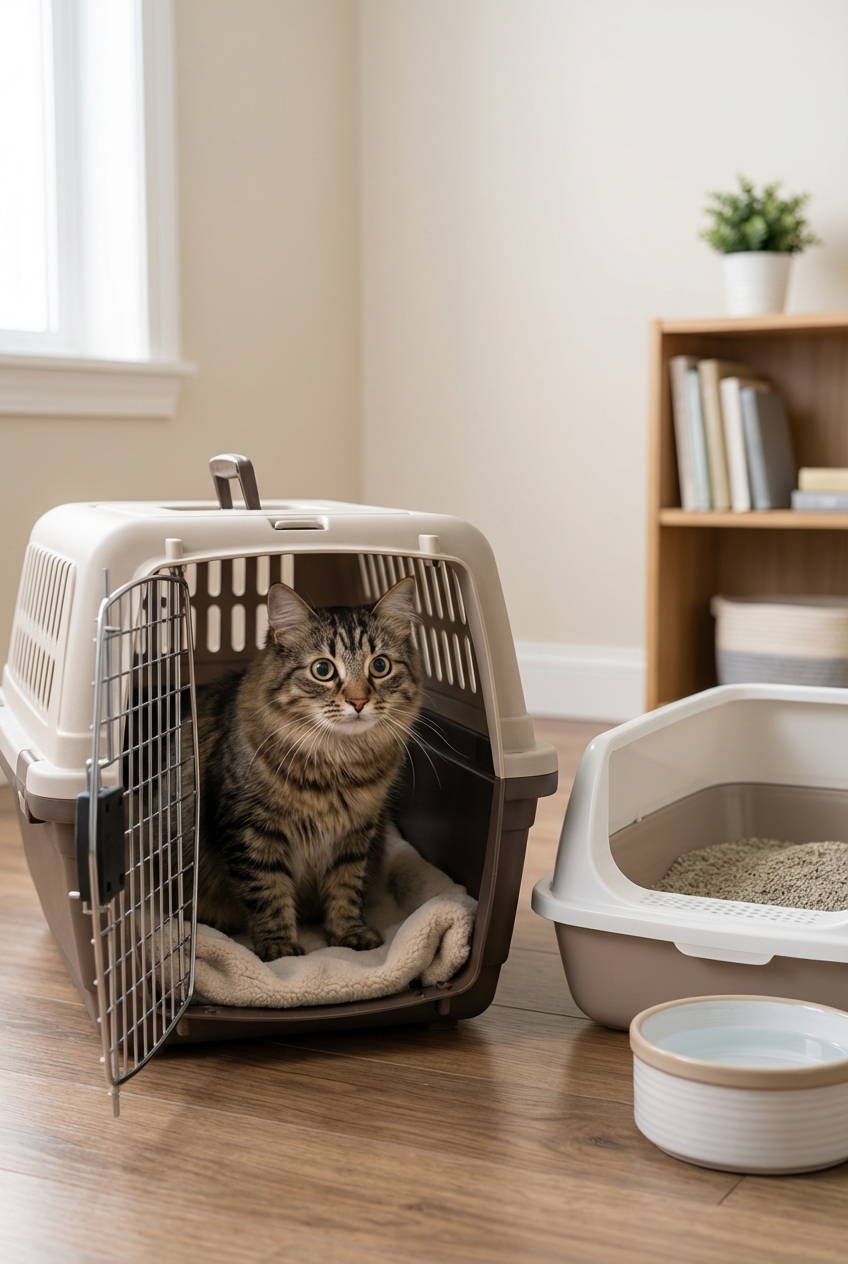
Carrier to safe room
Carry the cat (in the carrier) directly to the safe room. Close the door before opening the carrier. Then open the carrier door and let your cat come out when ready. Some cats stroll out in minutes. Others need hours. Both are normal.
- Do not pull your cat out unless there is a safety emergency.
- Sit on the floor and avoid direct staring, which can feel threatening.
- Offer a tiny treat or a small portion of their usual food, but do not worry if they skip the first meal.

Food, water, and litter basics
Stress can reduce appetite and change bathroom habits briefly. Keep offerings simple.
- Feed the same diet at first: Sudden food changes plus stress can cause vomiting or diarrhea.
- Fresh water always: Consider a second water bowl or a fountain if your cat is hesitant to drink.
- Show the litter box location: You can gently place your cat in the box once, then let them explore.
Hands-off bonding
Bonding often starts with coexistence. Read a book in the room, answer emails, or speak softly. Let your cat decide when to approach.
Progress with cats is not measured in hours. It is measured in trust.
The first week: building confidence
Once your cat is eating, using the litter box reliably, and exploring the safe room comfortably, you can begin expanding their world.
Day-by-day expansion
- Days 1 to 3: Safe room only. Short visits, calm play, gentle routine.
- Days 4 to 7: If your cat seems relaxed, allow supervised access to a second area for 15 to 30 minutes, then increase gradually.
- After week 1: Many cats can explore more freely, but keep the safe room set up for comfort.
Use play as therapy
Interactive play helps cats release stress and build positive associations with you and the new space.
- Try wand toys that mimic prey movement.
- End play with a small snack to complete the “hunt, catch, eat” cycle.
- Keep sessions short, especially for shy cats: 5 to 10 minutes is fine.

Establish a routine
Cats feel safest when life is predictable. Feed at consistent times, scoop litter daily, and keep play sessions around the same time each day if possible.
Introducing your cat to other pets
Whether you have a resident cat or a dog, slow introductions protect everyone’s confidence and reduce the chance of fear-based aggression.
Cat to cat: go by scent first
- Scent swap: Rub a soft cloth on each cat’s cheeks and place it near the other cat’s resting area.
- Site swap: Let the newcomer explore the home while the resident cat stays in a separate room, then switch.
- Visual introduction: Use a cracked door or a baby gate with supervision once both cats are calm with scent swapping.
- Short supervised meetings: Increase time only if both cats remain relaxed.
Cat to dog: safety and calm control
- Dog on leash: Always at first, even if the dog is friendly.
- Teach “leave it” and “settle”: Reward calm behavior around the cat.
- Give the cat vertical escape routes: Cat tree, shelves, or a gated area the dog cannot access.
If you see chasing, hard staring, stiff posture, or repeated barking, pause and step back to earlier stages.

Signs of stress and what to do
Some stress is expected, but ongoing or intense stress deserves attention. Cats are masters at hiding discomfort, so subtle changes matter.
Common stress signs
- Hiding constantly and not coming out to eat
- Decreased appetite for more than 24 hours
- Diarrhea or vomiting
- Inappropriate urination or defecation outside the litter box
- Excessive grooming, hair loss, or dandruff
- Hissing, swatting, growling, or sudden withdrawal
Quick steps that often help
- Reduce space: Return to the safe room setup for a few days.
- Check the litter box: Clean daily, keep it uncovered if your cat prefers, and try unscented clumping litter.
- Increase enrichment: More play, more hiding options, and more vertical space.
- Consider pheromone support: Synthetic feline facial pheromones can help some cats feel more secure.
- Schedule a vet visit: If appetite is poor, bathroom habits change, or behavior shifts suddenly, rule out medical causes.
Important: If your cat strains to urinate, cries in the litter box, or produces little to no urine, seek urgent veterinary care. Urinary blockage can become life-threatening quickly, especially in male cats.
Litter box setup that prevents problems
Many “behavior” concerns are actually litter box setup issues. Getting this right early can save you a lot of stress later.
Simple rules that work for most homes
- Number of boxes: Aim for one box per cat, plus one extra.
- Placement: Quiet, accessible locations. Avoid placing all boxes in one tight spot.
- Cleanliness: Scoop daily, deep clean regularly with mild soap and water.
- Size: Bigger is usually better. Cats like room to turn and dig.
- Type of litter: Unscented is often best, especially for sensitive cats.
Nutrition and hydration in a new environment
Food is comfort, and hydration supports everything from digestion to urinary health. During transitions, keep the plan steady and easy.
Feeding tips for the first two weeks
- Stick with the current food first: If you want to switch diets, wait until your cat is settled, then transition slowly over 7 to 10 days.
- Offer small, frequent meals: This can be less overwhelming for nervous cats.
- Use food puzzles once relaxed: Great for confidence and mental stimulation.
Encouraging drinking
- Place water in more than one location.
- Wash bowls daily. Cats can be surprisingly sensitive to odors.
- Consider a fountain if your cat prefers moving water.
Making your home cat-safe
Cats explore with their mouths and paws. A quick safety check protects your new family member.
Do a “cat-eye view” scan
- Strings and ribbons: Put away. Ingested string can cause serious intestinal injury.
- Toxic plants: Common offenders include lilies, sago palm, pothos, and philodendron.
- Medications: Store securely. Many human meds are dangerous to cats.
- Small objects: Hair ties, rubber bands, and earplugs are frequent swallow hazards.
- Windows and balconies: Ensure screens are secure. Consider window perches for safe enrichment.

When to call the vet or a behavior professional
Trust your instincts. If something feels off, it is always okay to ask for help.
Call your veterinarian if you notice:
- No eating for 24 hours, especially in kittens or seniors
- Repeated vomiting or diarrhea
- Straining to urinate, frequent litter box trips, or crying
- Lethargy, hiding with hunched posture, or obvious pain
- Sudden aggression or panic behavior
Consider a qualified feline behavior professional if:
- There is ongoing conflict between pets despite slow introductions
- Your cat is chronically fearful or unable to settle after several weeks
- Litter box avoidance persists after medical causes are ruled out
A gentle final reminder
Most cats do not need perfection. They need patience, a predictable routine, and a home that respects their need for choice and control. Start small, celebrate tiny wins, and remember: confidence is built one calm day at a time.
If you are reading this before your cat arrives, you are already doing the most important thing: preparing with love and intention.