A vet-assistant guide to introducing cats and dogs using slow decompression, scent swapping, barrier sessions, and reward-based training. Includes safety che...
Article
•
Designer Mixes
Introducing Cats to a New Dog

Shari Shidate
Designer Mixes contributor
Bringing a new dog into a cat’s home can feel like a big emotional rewrite for everyone involved. The good news is that in many homes, cats and dogs can learn to live together peacefully, and some even become true buddies, when introductions are slow, structured, and safe.
As a veterinary assistant, I’ve seen the same pattern over and over: the families who take a gradual, reward-based approach (positive reinforcement plus gradual exposure) have the smoothest outcomes. I also see the opposite in clinic: a rushed first meeting that turns into chasing can create weeks of stress and set training back. This article will walk you through a simple plan, plus practical tips you can use right away.
Before you start: set up for success
Think of this as building a cat-safe home base first, then letting your dog earn access to more space. Your goal is to keep stress low and prevent chasing, cornering, and scary surprises.
Create a cat-only zone
- One room the dog cannot enter (baby gate, closed door, or a gate with a small cat door).
- Food and water in that zone, so your cat can eat without feeling guarded.
- Litter box access that the dog cannot reach. Many dogs will investigate or eat cat stool, and it creates stress for cats.
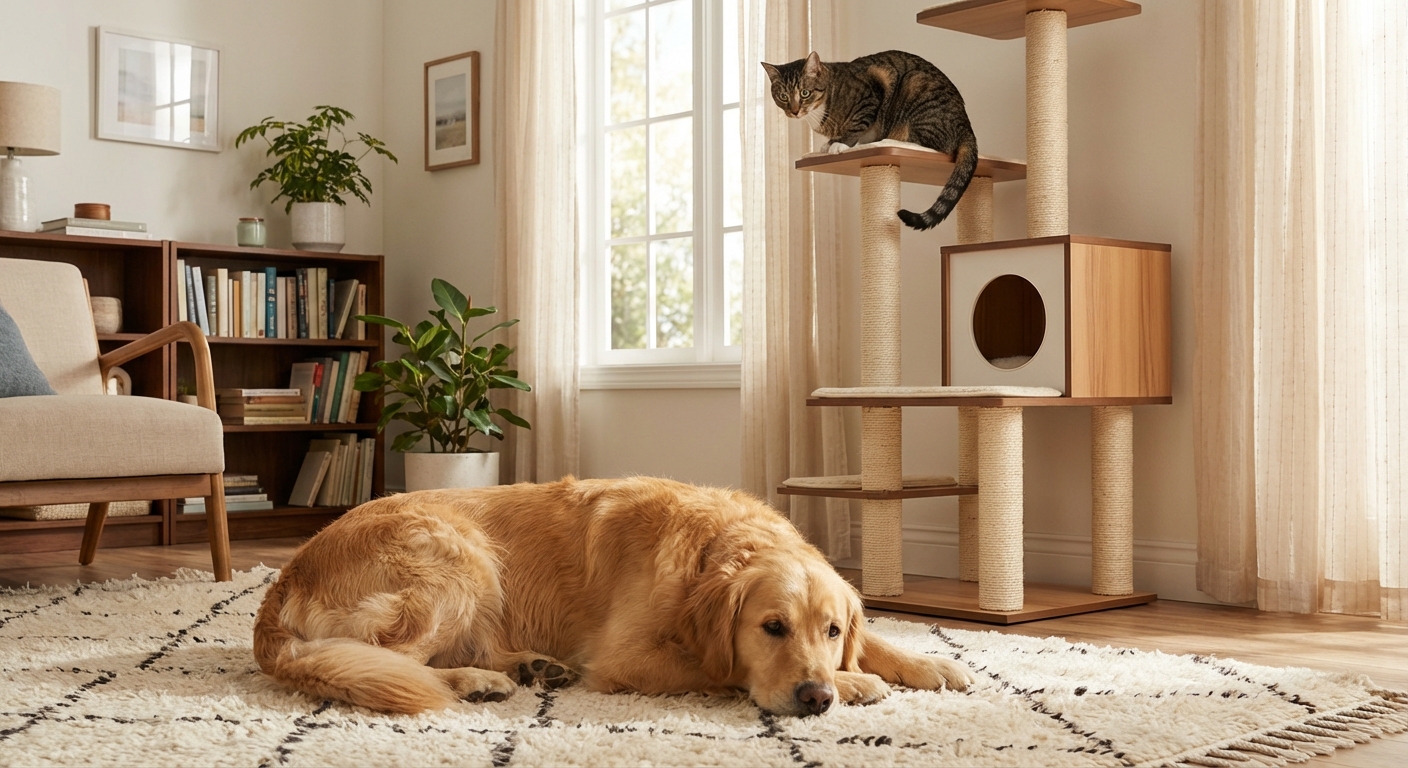
- Vertical space like cat trees, shelves, or sturdy furniture. Cats feel safer when they can observe from above.
Prepare your dog’s tools
- Secure leash and harness for all early meetings.
- Baby gates for barrier introductions.
- High-value treats for calm behavior. Tiny pieces work best so you can reward frequently.
- A crate or exercise pen if your dog is crate-trained. This can help your cat approach at their own pace.
- Optional safety layer: basket muzzle for dogs with intense fixation or a history of grabbing small animals. This should be introduced with positive muzzle training and, ideally, professional guidance.
Optional supports
- Feline pheromone diffuser (such as a cat facial pheromone product) in shared areas may help some cats feel more settled. It is supportive, not a stand-alone fix.
Fun facts that help
- Cats are territory-based. A new dog can feel like an intruder, even if the dog is friendly.
- Dogs are movement-triggered. Fast darts, zoomies, or a fleeing cat can flip on a chase instinct in seconds.
- Scent is your secret weapon. Both species gather tons of social information through smell, so scent swapping is a powerful first step.
- Stress affects behavior and health. In cats, prolonged stress may contribute to issues like hiding, appetite changes, over-grooming, and urinary flare-ups (including feline idiopathic cystitis).
The step-by-step plan
Go at your cat’s pace, not the calendar. Some households move quickly, and others need several weeks or longer. Slow is smooth, and smooth is fast.
Step 1: start with scent (as long as needed)
Before any face-to-face meeting, let them learn each other’s smell.
- Swap bedding between your cat and dog daily.
- Gently rub a clean cloth on one pet’s cheeks and then place it near the other pet’s area.
- Feed or treat both pets on opposite sides of a closed door so they associate the other’s scent with good things.
Step 2: controlled visuals with a barrier
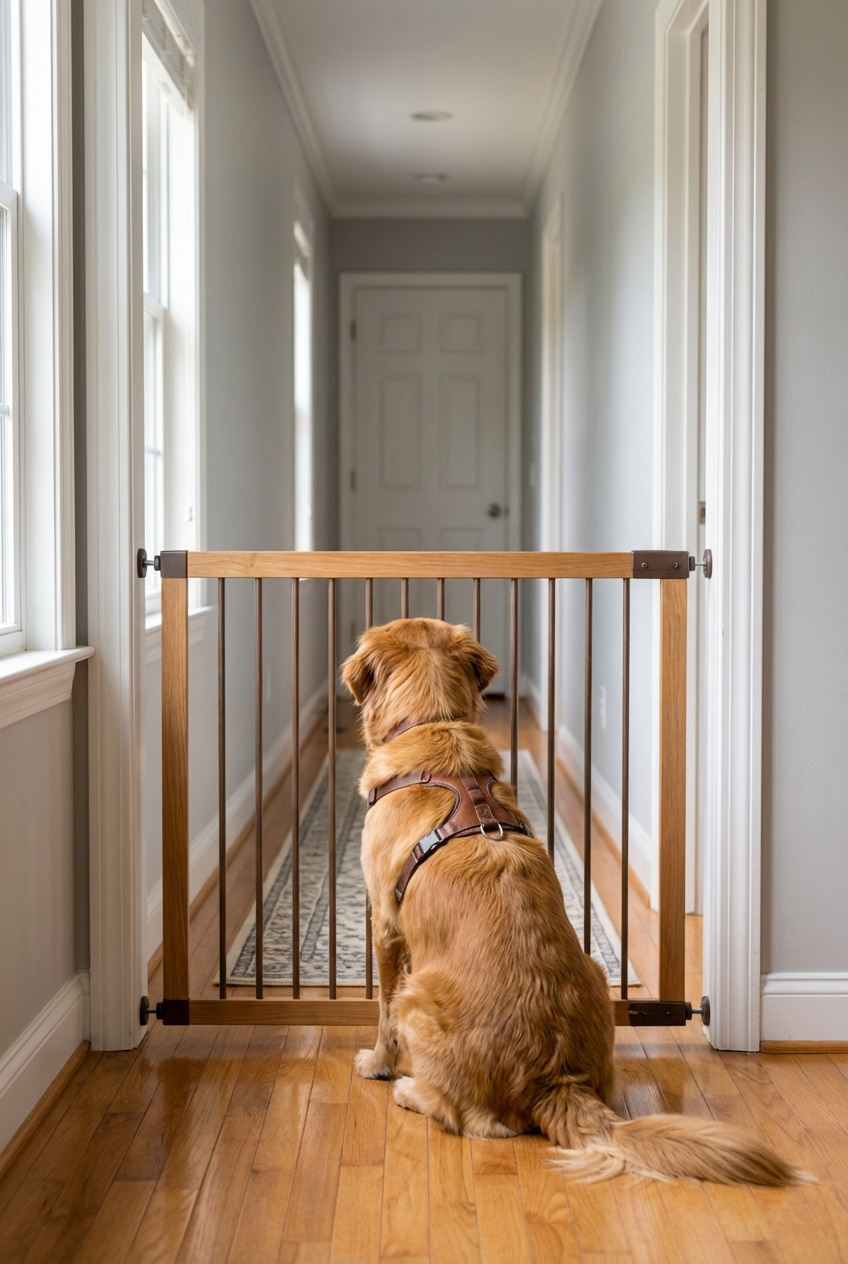
Use a baby gate, a cracked door with a doorstop, or a screen so your cat has a safe exit route.
- Dog on leash, handler calm and quiet.
- Reward your dog for looking away, sitting, and soft body language.
- Let your cat choose distance. If your cat leaves, that is okay. Do not force a greeting.
Tip: Keep sessions short. One to three minutes can be perfect at the beginning.
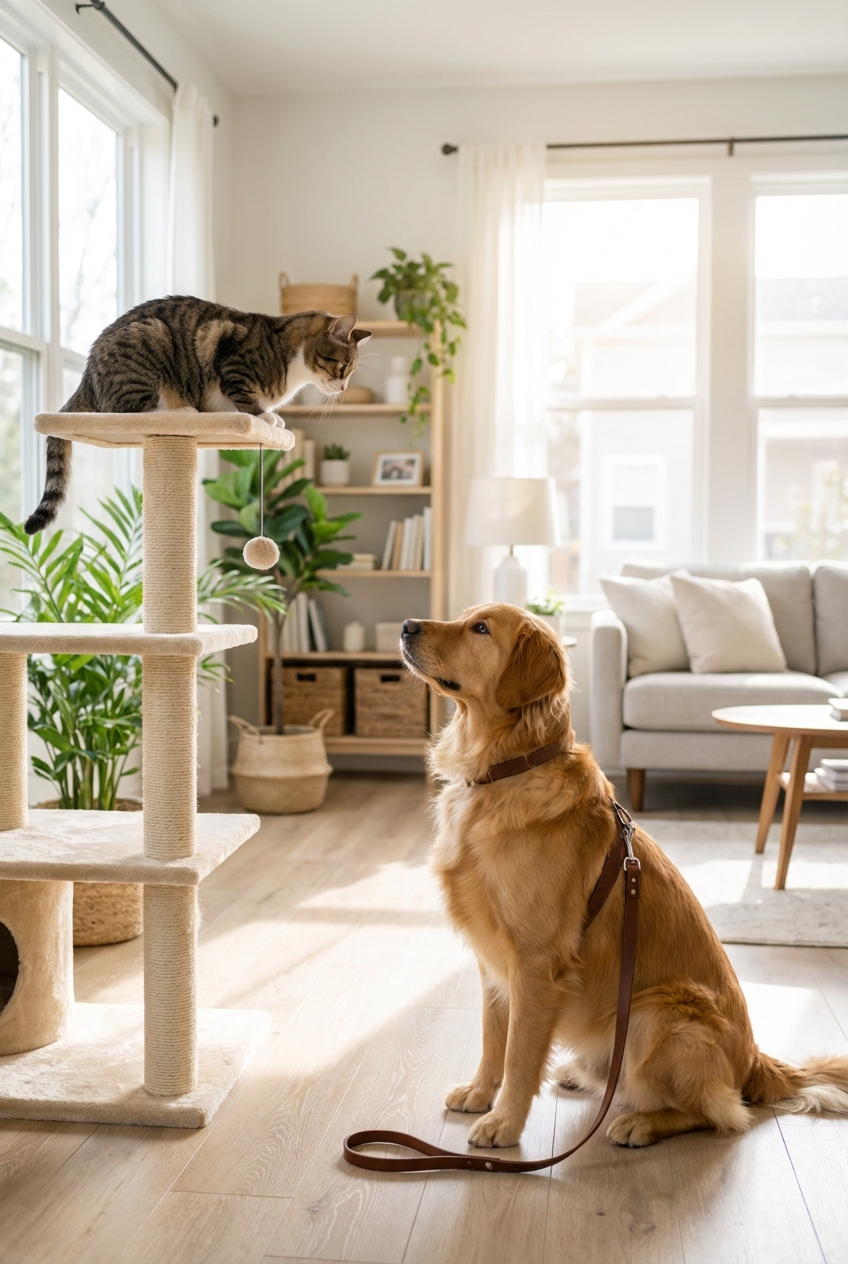
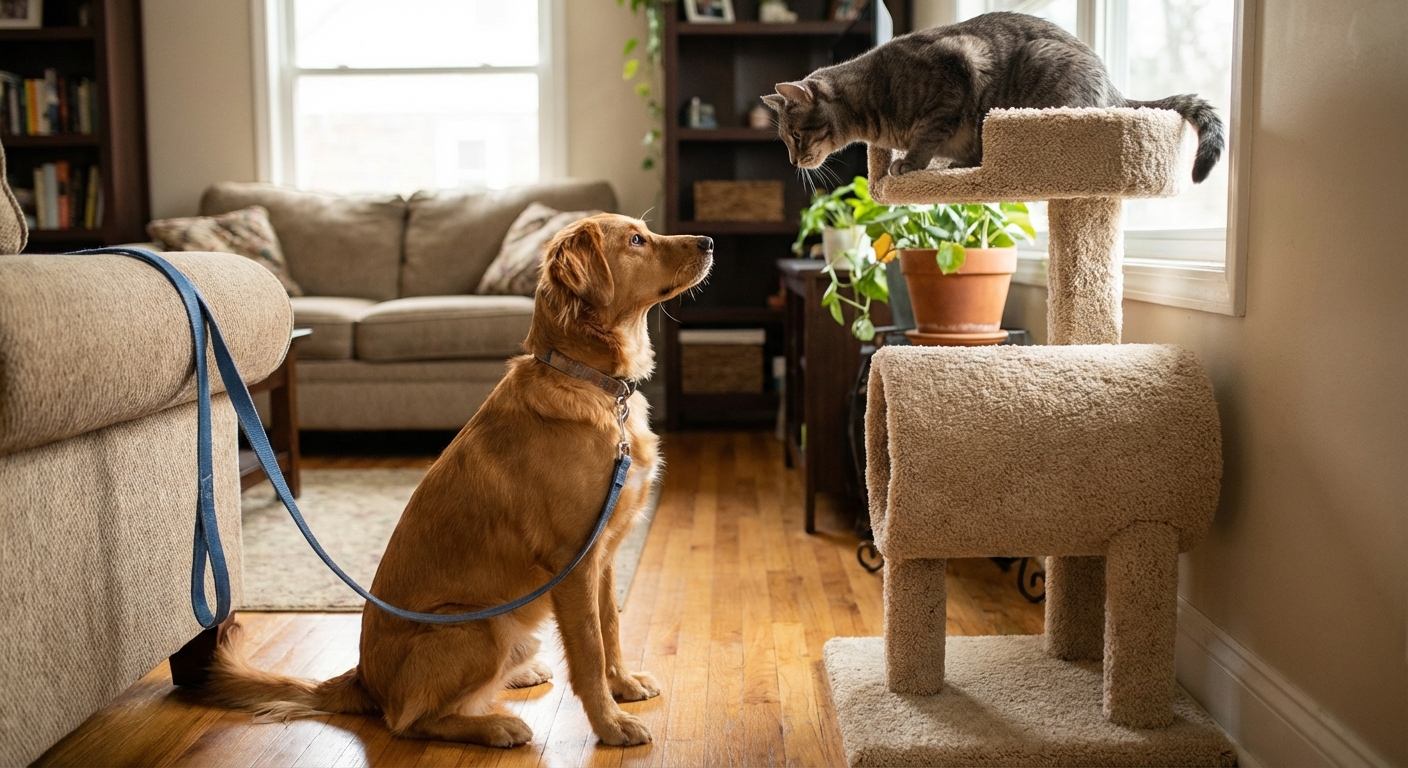
Step 3: first in-room meeting (leashed dog, cat has escape)
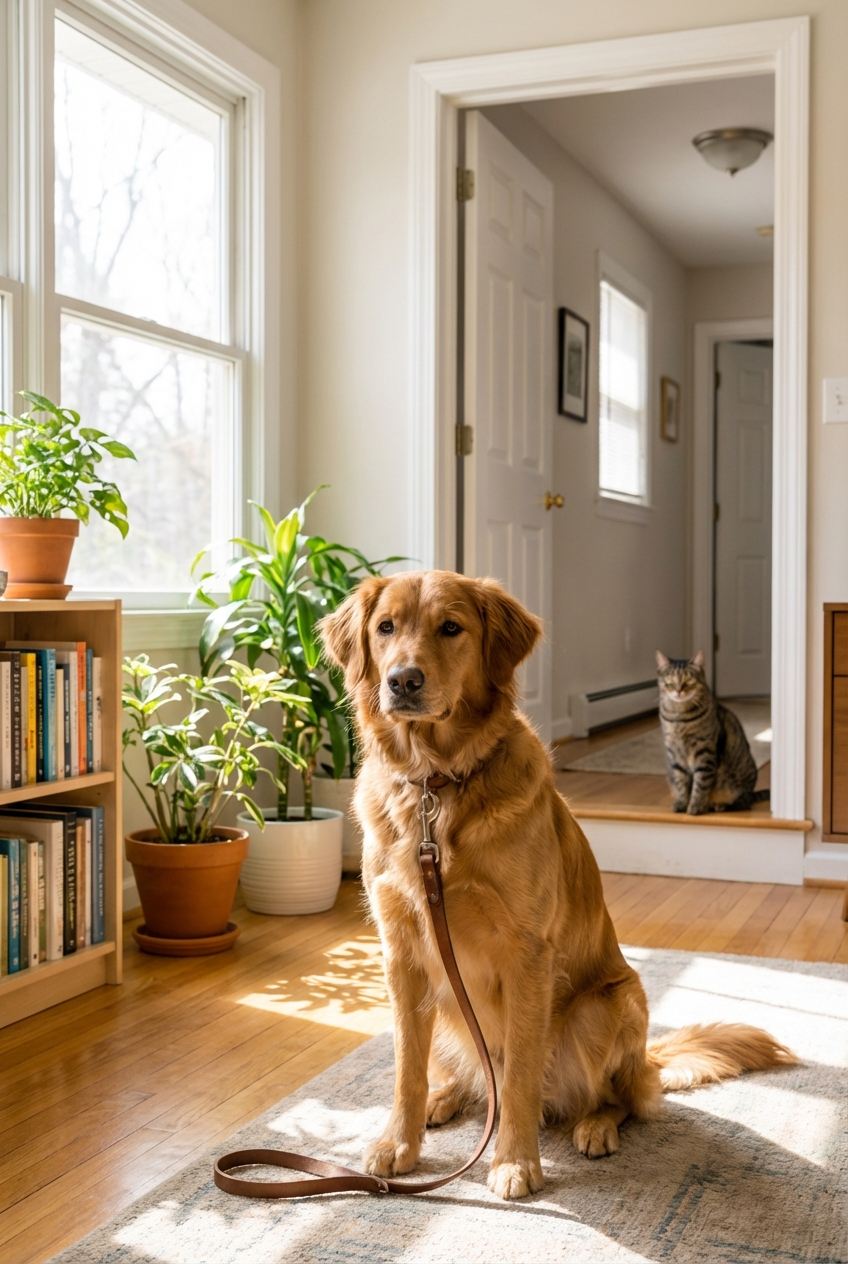
Pick a calm time of day. Exercise your dog first so their energy is lower. Then bring your dog in on leash.
- Place your dog at a comfortable distance and ask for a sit or down.
- Reward calm behavior every few seconds at first.
- Do not allow sniffing unless your cat approaches confidently and your dog remains relaxed.
- End the session while things are still going well.
One quick clinic truth: the cats that adjust best are the ones who are never chased in the early weeks. Preventing that first chase is a big deal.
Step 4: increase freedom slowly
As your dog consistently ignores the cat and your cat moves around more normally, you can begin to loosen management.
- Start with a lightweight house line indoors (supervised). Use a short line or remove the looped handle to reduce snagging risk.
- Continue using gates so your cat always has dog-free pathways.
- Gradually add time together, then add more rooms.
Safety rules
- No unsupervised time at first. Do not leave your dog and cat alone together until your dog has a long, consistent track record of calm behavior around the cat.
- Some pairings are not safe. If your dog has strong prey drive, has tried to grab the cat, or cannot disengage, the safest outcome may be long-term management or lifelong separation in parts of the home.
- Protect the cat’s exits. Never allow your dog to block doorways, stairs, litter box routes, or the path to the cat-only zone.
Body language
Signs your cat needs more space
- Hissing, growling, swatting, ears pinned back
- Puffed tail, crouched posture, wide pupils
- Hiding for long periods, not eating normally
Signs your dog is too interested
- Fixated staring, stiff body, whining, trembling with excitement
- Lunging, repeated attempts to approach, ignoring treats
- Chasing behavior, even playful chasing
If you see these signs, go back a step. More distance and shorter sessions are usually the fastest way forward.
Common mistakes
- Mistake: “Let them work it out.”
Instead: Prevent chasing and fear learning. Use barriers and leashes until calm is consistent. - Mistake: Forcing proximity.
Instead: Let your cat control how close they get. Choice builds confidence. - Mistake: Punishing growls or hisses.
Instead: Treat it as communication. Increase space, then reintroduce more slowly. - Mistake: Letting the dog rehearse staring.
Instead: Teach an alternative behavior like “look at me,” “leave it,” and settling on a mat.
Training games
For your dog: calm pays
- Mat training: Reward your dog for relaxing on a bed while the cat is present at a safe distance.
- Look and dismiss: Dog looks at the cat, then looks back to you, then gets a treat. This turns “I see the cat” into “I check in with my person.”
- Leave it: Practice with food first, then generalize to distractions.
For your cat: confidence and routine
- Predictable mealtimes in the cat-only zone.
- Play therapy with a wand toy before introductions, then a snack after. It mimics hunt, eat, relax.
- More vertical territory in shared spaces so your cat can pass through without feeling trapped.
Special situations
Puppy and adult cat
Puppies can be sweet, but their bouncy movements are exactly what many cats dislike. Focus on teaching calm, impulse control, and preventing face-first hello attempts.
High prey drive dog
If your dog is intensely fixated, cannot disengage, or repeatedly tries to chase, you may need a certified trainer experienced with dog-cat integrations. In some cases, long-term management with gates and crates is the safest plan.
Timid or senior cat
Older or anxious cats often do best with extra time, quiet meeting spaces, and more separation at the start. Watch appetite, litter box habits, and hiding behavior closely.
Kids in the home
Kids often mean extra motion and extra noise, which can raise the energy fast. Coach children to avoid chasing, carrying, or “helping” with introductions. A simple rule is that adults handle the leash and gates, and kids can help by tossing treats to the dog for calm behavior (with adult supervision).
When to call for help
Reach out for help if you notice any of the following:
- Your cat stops eating, starts urinating outside the litter box, or hides continuously
- Your dog attempts to chase, grab, or corner the cat
- Any bite, scratch injury, or near-miss that scares you
- The situation feels tense even after consistent, slow introductions
Safety matters more than speed. Your veterinary team can help rule out stress-related medical issues, and a qualified trainer can create a step-by-step plan for your specific home setup.
A simple daily routine
If you like structure, here is an easy rhythm that works well for many homes:
- Morning: Dog walk or play session, then a short barrier session with treats for calm.
- Midday: Cat play session in the cat-only zone, then quiet rest time.
- Evening: Another short, calm visual session, then separate meal times.
Keep notes on what went well. Small wins add up fast.