Learn how to introduce a new dog to your resident or senior dog safely. Use neutral territory, parallel walks, clear body-language cues, and smart home manag...
Article
•
Designer Mixes
Introducing a New Puppy to Your Dogs

Shari Shidate
Designer Mixes contributor
Bringing home a new puppy is exciting, but if you already have one or more dogs, the introduction is not something to rush. As a veterinary assistant in Frisco, Texas, I have seen the difference a thoughtful, step-by-step plan can make. The goal is simple: help your adult dog feel safe and respected, and help your puppy learn good manners from day one.
Below are practical, vet-informed tips that reduce stress, prevent scuffles, and set your whole pack up for success. This is general guidance. Individual dogs and households may need a customized plan.
Before the first meeting
1) Choose the right place
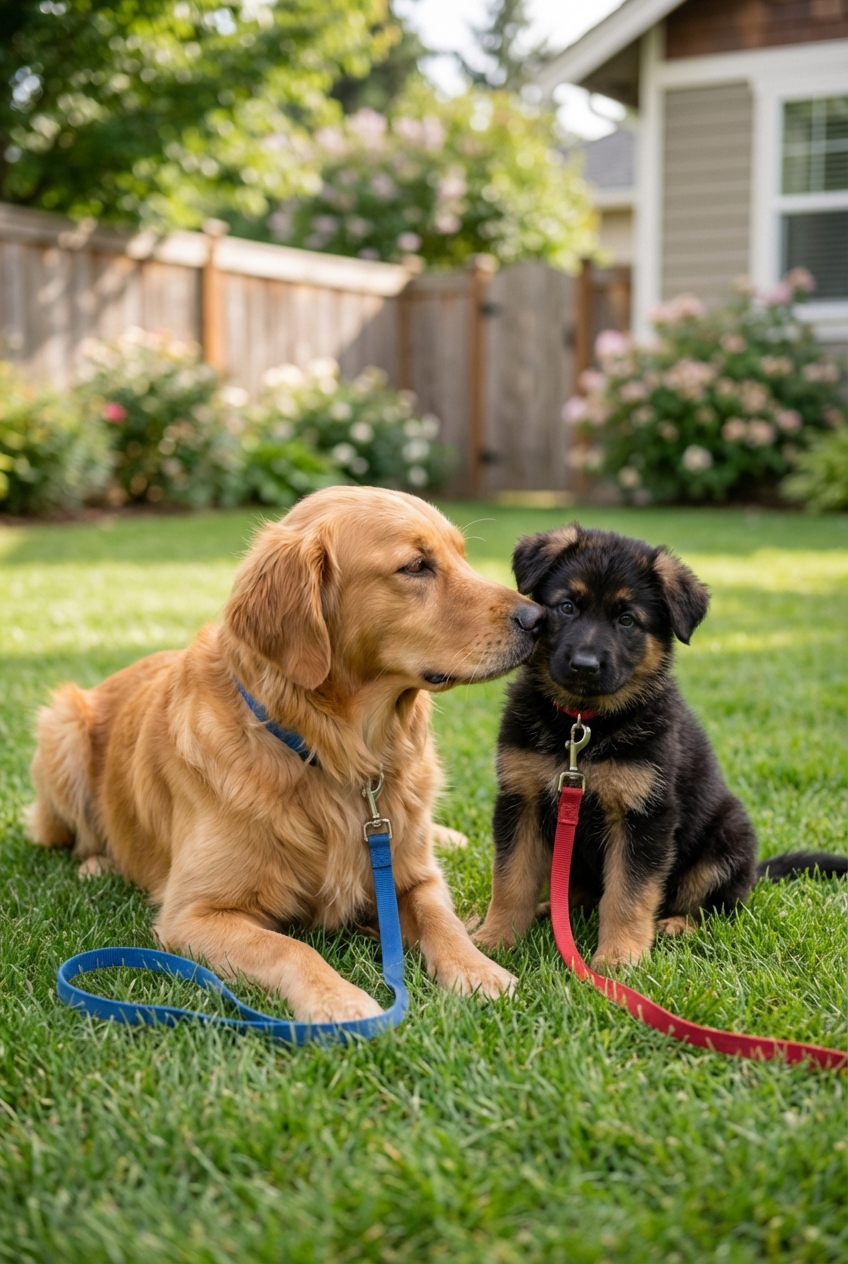
First introductions usually go best on neutral territory, like a friend or neighbor’s yard, rather than inside your home. Many dogs are more relaxed when they do not feel they must protect their space.
Puppy safety note: If your puppy is not fully vaccinated, avoid high-traffic public areas where unknown dogs have been. Choose a clean, low-traffic spot with dogs you know are healthy, or ask your veterinarian what is safest in your area.
- Avoid tight spaces like narrow hallways or small entryways.
- Pick a low-distraction spot and keep other dogs and people to a minimum.
- Have two adults if possible, one handling the resident dog and one handling the puppy.
- If you have multiple resident dogs, introduce one dog at a time, then slowly build up to short group time.
2) Set up your home
Before the puppy walks in, set up management tools that prevent problems while everyone is still learning.
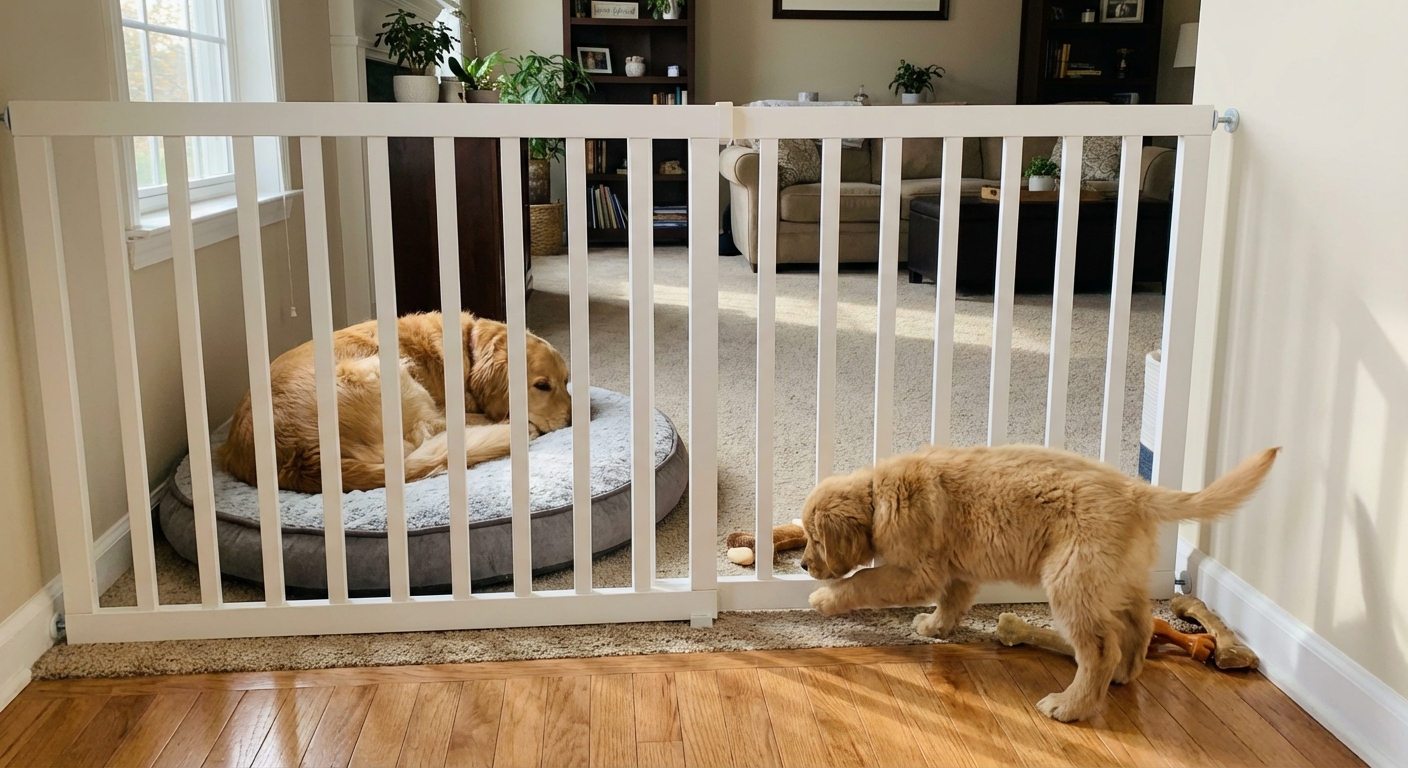
- Baby gates or exercise pens so dogs can see and smell each other without full contact.
- A crate in a calm area for puppy naps and decompression time.
- Separate feeding stations. Food and treats are a common trigger for conflict.
- Pick up high-value items like bones, favorite toys, and food puzzles for the first few days.
- Create at least one puppy-free pathway so your adult dog can move around without feeling cornered.
3) Health and parasite prevention
Puppies can bring home intestinal parasites, kennel cough, and other contagious issues, even from reputable sources. Talk with your veterinarian about:
- Age-appropriate vaccines and timing
- Fecal testing and deworming
- Flea and tick prevention
If your resident dog is elderly, immunocompromised, or has chronic disease, ask your vet whether extra precautions are needed.
The first intro
Step by step
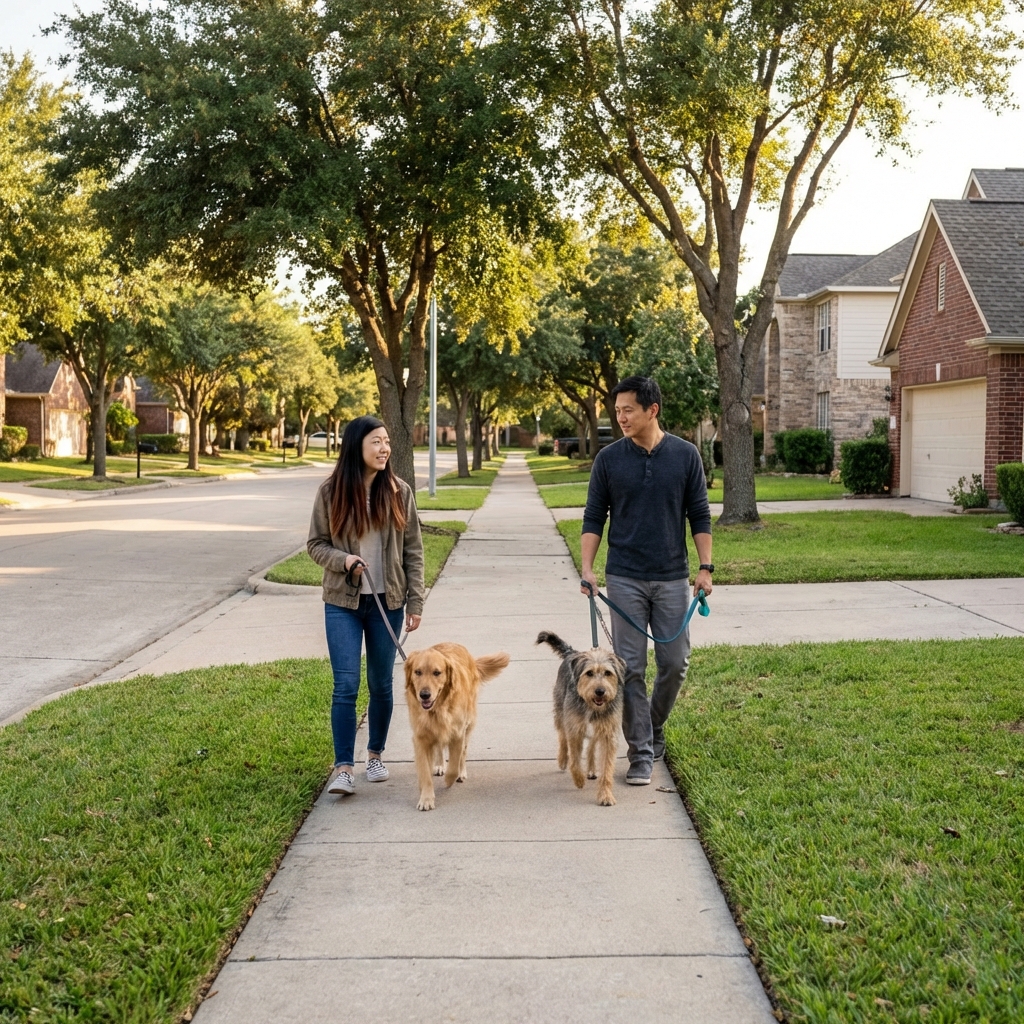
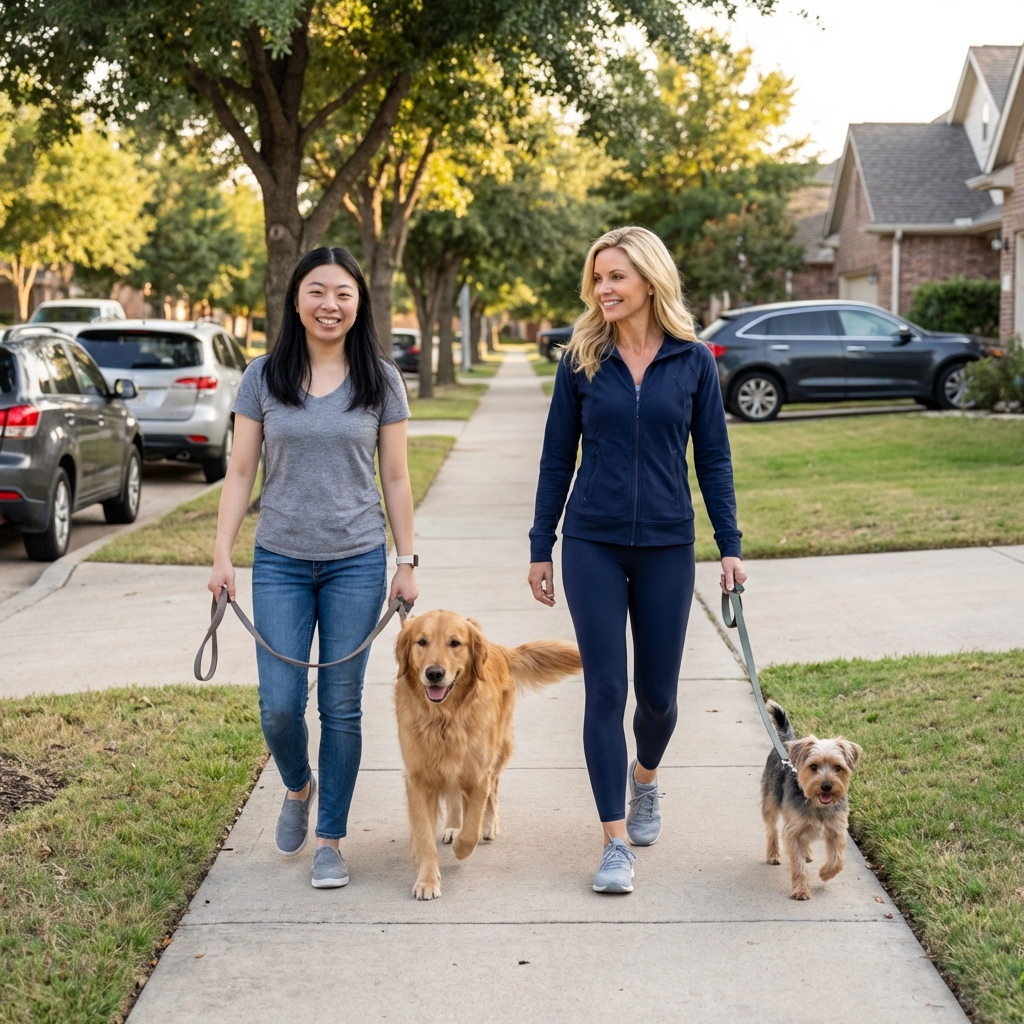
- Start with a parallel walk. Walk the dogs on leashes at a comfortable distance, then gradually close the gap if both remain relaxed. Walking gives nervous energy somewhere productive to go.
- Avoid face-to-face greetings. Keep leashes loose and let the dogs approach in a gentle curve. Do not let leashes tangle, and avoid tight leash tension, which can increase reactivity.
- Allow brief sniffing. When both dogs show loose body language, let them sniff briefly (a second or two), then calmly call them apart and reward with praise or treats. Think “short and sweet,” not “let them work it out.”
- Repeat short greetings. Several short, successful sniff-and-break interactions are often better than one long, intense greeting.
- End on a good note. Stop before anyone gets overwhelmed. You can always do another session later.
Green lights and red flags
Body language often tells you more than vocalizations do. Growling can be communication, but it also means you need to slow down.
- Green lights: loose wiggly bodies, soft eyes, curved approach, sniffing then disengaging, play bows, relaxed tails (tail height matters more than wagging).
- Yellow lights: stiff posture, intense staring, closed mouth, tucked tail, repeated mounting, puppy pestering that does not stop.
- Red flags: lunging, snapping, sustained freezing, hair raised with hard stare, guarding doorways, guarding people, or any bite attempt.
If you see yellow or red flags, create distance, take a breath, and try again more slowly. If red flags continue, involve a qualified professional.
Extra caution for size gaps
If your resident dog is much larger than your puppy, or has a strong chase or prey drive, supervise closely and keep interactions calm. Do not allow squealing, frantic running, or rough body slams. These can flip a moment from play to trouble fast.
Bringing the puppy inside
Use barriers
Once the initial greeting goes well, bring the puppy home and continue with management.
- Let your resident dog see the puppy behind a baby gate first.
- Keep the puppy on a lightweight leash indoors for the first day or two so you can gently redirect.
- Give your adult dog frequent breaks from the puppy. Puppies are adorable, but they are also exhausting.
Protect safe spaces
Your adult dog should always have at least one puppy-free zone, such as a gated room or a comfy bed area. This is not favoritism. This is stress prevention. Dogs who feel trapped may be more likely to correct harshly.
Prevent conflict
Food and treats
Feed separately, pick up bowls, and do not hand out high-value chews when the dogs are together early on. If you want to reward both, do it with space between them.
Toys and chews
Many dogs are fine sharing toys, but plenty are not. Assume toys are a potential trigger until your dogs prove otherwise.
- Start with separate play with you (fetch or tug one-on-one) rather than competitive play between dogs.
- Put away long-lasting chews unless dogs are separated.
- If you later try shared toys, keep it short, supervised, and low value at first.
Attention from people
One of the easiest ways to reduce jealousy is to keep routines predictable.
- Greet your resident dog first when you walk in.
- Schedule daily one-on-one time with your adult dog.
- Reward calm behavior around the puppy.
Teach puppy manners
Puppies learn fast, but they need guidance. A well-meaning puppy can still overwhelm an adult dog by biting ears, chasing, and ignoring “please stop” signals.
Reward calm
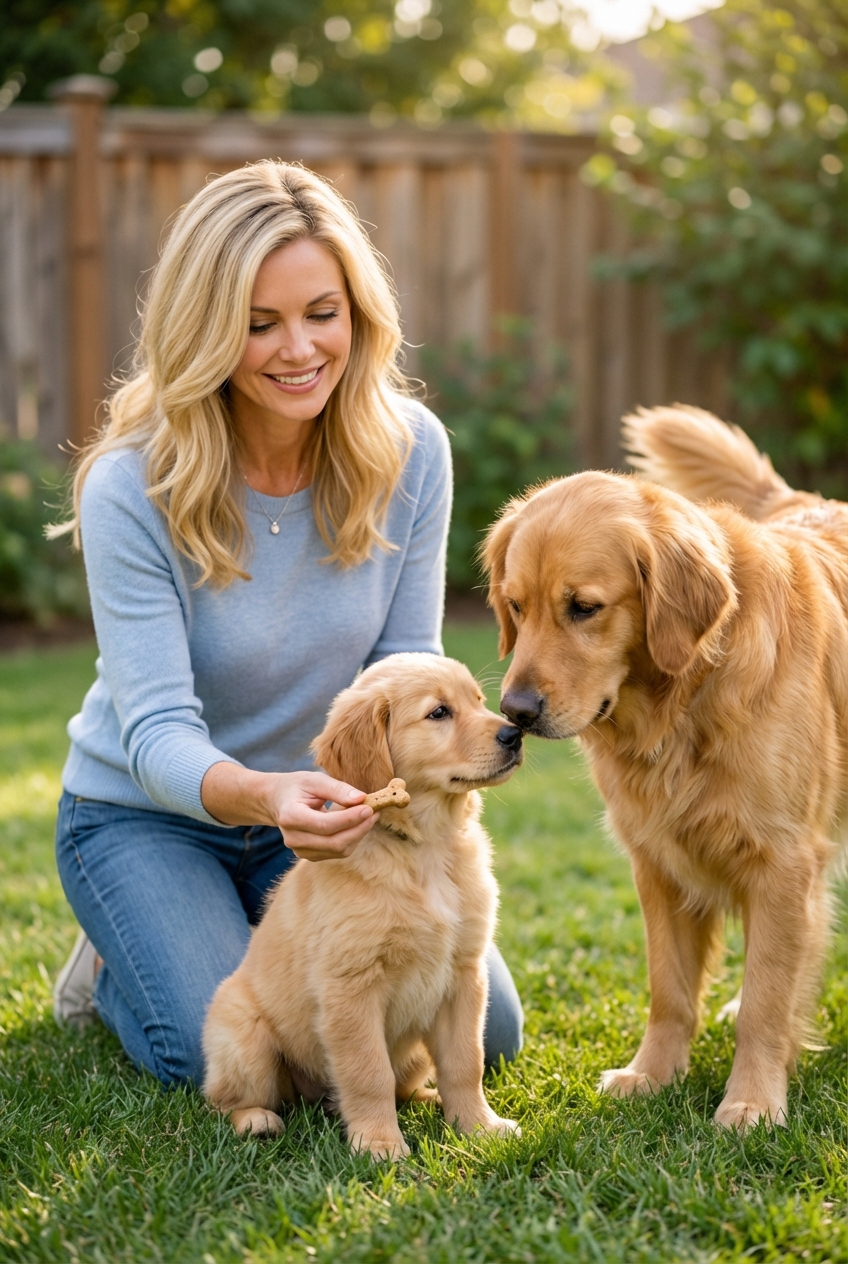
- Reward calm: When the puppy sits, lies down, sniffs gently, or disengages, mark with “yes” and give a treat.
- Interrupt chaos: If the puppy is pestering, use a cheerful call-away, offer a toy, or guide the puppy to a short break behind a gate.
- Respect appropriate corrections: A quick growl or air snap from an adult dog can be normal communication. Step in if the puppy ignores it, if either dog cannot disengage, or if the adult dog escalates.
7-day schedule
Every household is different, but this general timeline keeps things moving without pushing too fast.
Days 1 to 2
- Parallel walks
- Short, supervised sniff sessions
- Most time separated by gates or pen
Days 3 to 5
- Increase supervised time in common areas
- Practice call-aways and calm rewards
- Continue separate feeding
Days 6 to 7
- Allow more freedom if interactions stay relaxed
- Continue management for high-value items
- Keep puppy naps protected so overtired behavior does not spark conflict
If you get a setback, that is normal. Return to the previous step for a couple of days.
Get help early
Some situations deserve early support. Contact your veterinarian or a qualified behavior professional if you notice:
- Any bite that breaks skin
- Repeated snapping, pinning, or intense stalking behavior
- Guarding food, toys, or you
- A resident dog who seems shut down, hides, stops eating, or cannot relax
Look for a reward-based, credentialed trainer (for example, CPDT-KA or KPA) or, for serious aggression and anxiety concerns, a board-certified veterinary behaviorist (DACVB). Getting help early is not an overreaction. It is the fastest way to protect both dogs and keep trust intact.
Slow is faster
The best introductions are often the least dramatic. Keep greetings short, protect your adult dog’s space, and teach your puppy that calm behavior gets rewarded. Within a few weeks, many households go from “How will this ever work?” to “I cannot imagine them apart.”
If you want, you can also ask your veterinarian about age-appropriate training classes, safe socialization plans, and ways to support your puppy’s gut health and immune system during this big transition.
References
- American Veterinary Society of Animal Behavior (AVSAB): Position statements on humane training and socialization
- ASPCA: Guidance on introducing dogs and managing multi-dog households
- RSPCA: Dog behavior and safe introductions resources