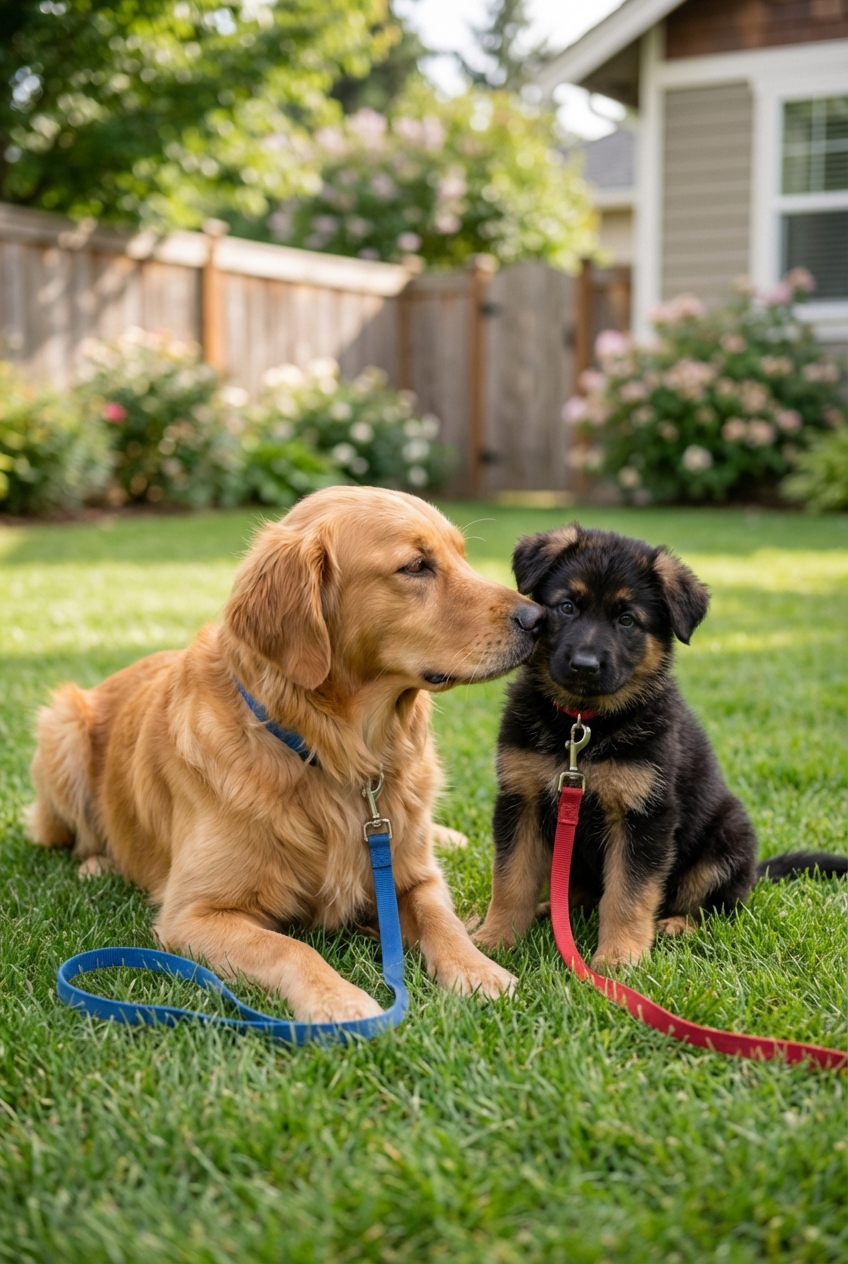
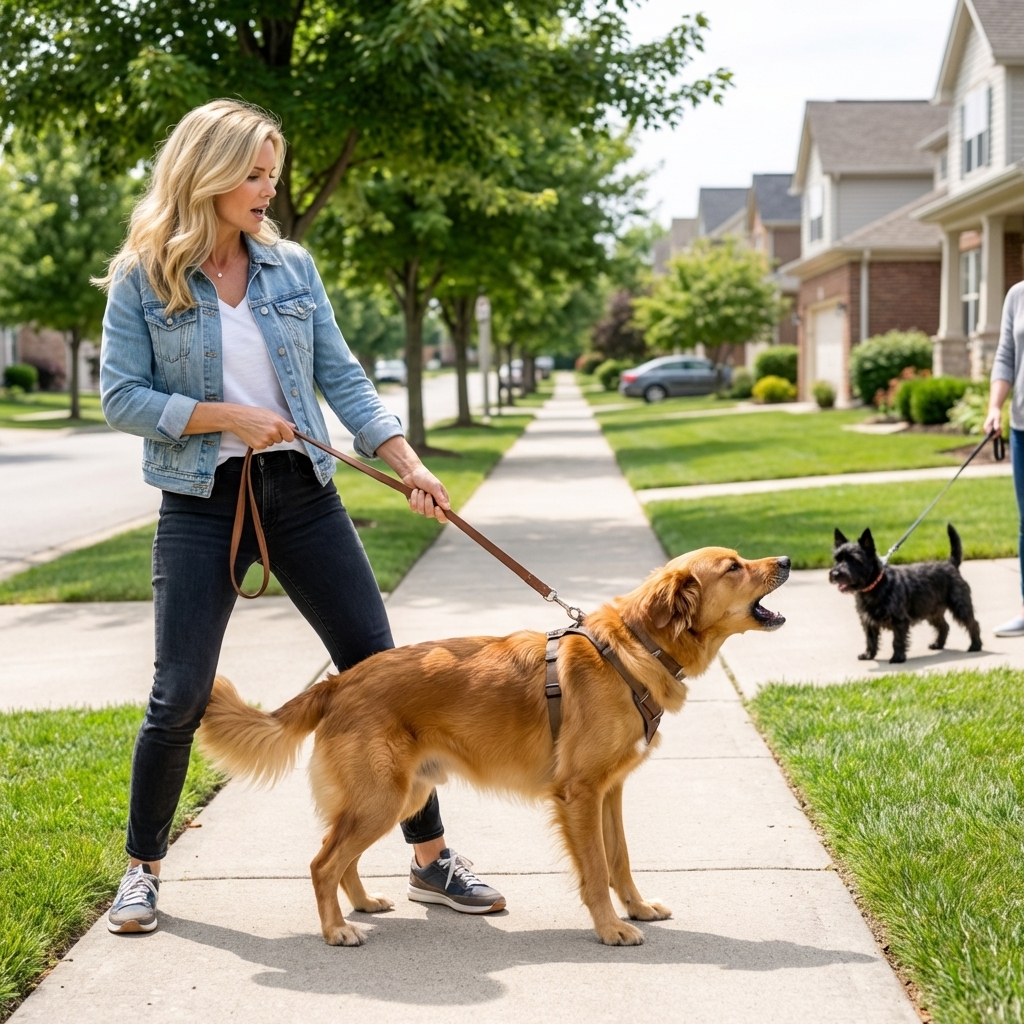
Learn how to introduce a new dog to your resident or senior dog safely. Use neutral territory, parallel walks, clear body-language cues, and smart home manag...
Article
•
Designer Mixes
Introducing a New Puppy to Your Dog

Shari Shidate
Designer Mixes contributor
Bringing home a new puppy is exciting, but for your resident dog it can feel like a surprise houseguest who does not understand the rules yet. The good news is that most resident dogs can learn to accept, and often truly enjoy, a puppy when the introduction is planned, calm, and safety-first. This guide walks you through a step-by-step, trainer- and veterinarian-recommended approach to help prevent conflict, protect your puppy during the vulnerable first weeks, and support long-term harmony.
Before You Introduce Them
Rule out health and pain issues
When a dog is uncomfortable, tolerance drops. If your resident dog has been stiff, cranky, avoiding touch, or suddenly reactive, consider a quick veterinary check. Pain, ear infections, dental disease, and arthritis are common causes of “out of character” snapping.
Set up a safe home base for the puppy
Plan physical separation before day one. A puppy who can pester nonstop is the fastest way to create tension. Use:
- Baby gates for visual access with safety
- A crate or pen for naps and calm time
- Separate feeding stations to prevent food guarding
- Separate high-value chews and toys until you know both dogs are relaxed
Choose the right timing
Do not introduce when either dog is overly excited, hungry, or exhausted. Aim for a time when your resident dog has already had exercise and a chance to potty. For the puppy, keep it short and sweet when they are calm and slightly tired, such as after a nap.
Health and Safety Checklist
Puppies are still building immunity, and adult dogs can carry some parasites or infectious agents without looking sick. Before close contact, talk with your veterinarian about your puppy’s vaccine schedule, local disease risks, and how to balance safety with appropriate socialization.
- Puppy vaccines: Your vet can tell you when your puppy is adequately protected for normal dog-to-dog contact.
- Adult dog vaccines: Make sure your resident dog is up to date on core vaccines and any veterinarian-recommended lifestyle vaccines.
- Parasite prevention: Keep both dogs on vet-recommended flea, tick, and heartworm prevention.
- Stool checks: Consider fecal testing for both dogs, especially if either has an unknown history, recent diarrhea, or exposure risk.
- Supervision: Assume all interactions are supervised until you have weeks of consistent calm behavior.
Safety rule I share with families: if you cannot actively watch, they should be separated. Most setbacks happen during “they seemed fine” moments.
Step-by-Step: The First Introduction
Step 1: Start with scent
Dogs learn a lot through smell. Before face-to-face contact, let your resident dog sniff a blanket or towel the puppy has slept on, and let the puppy sniff something that smells like your resident dog. Pair sniffing with a treat so the association is positive.
Step 2: Meet on neutral ground
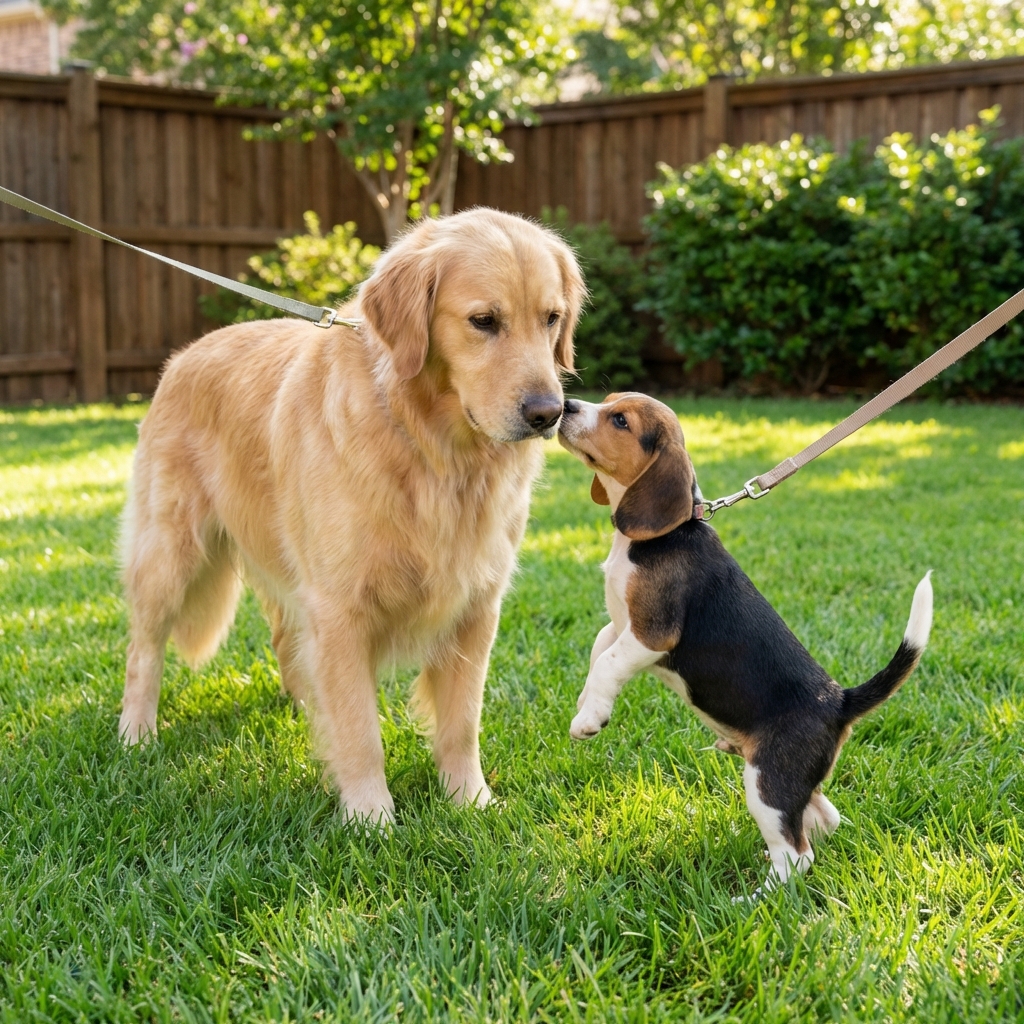
If possible, do the first meeting outdoors in a quiet area like a yard or calm sidewalk, not the living room doorway. Dogs can be more territorial inside.
- Use two handlers, one per dog.
- Keep both on loose leashes. Avoid tight leashes that add tension.
- Prevent leash tangles by giving each dog space and keeping lines from crossing.
- Stand in a wide arc rather than head-on.
If leashes make either dog feel trapped or reactive, ask a qualified professional for help and consider a secure, fenced neutral area where you can create distance safely. Do not attempt off-leash greetings unless the area is secure and you can interrupt calmly and quickly.
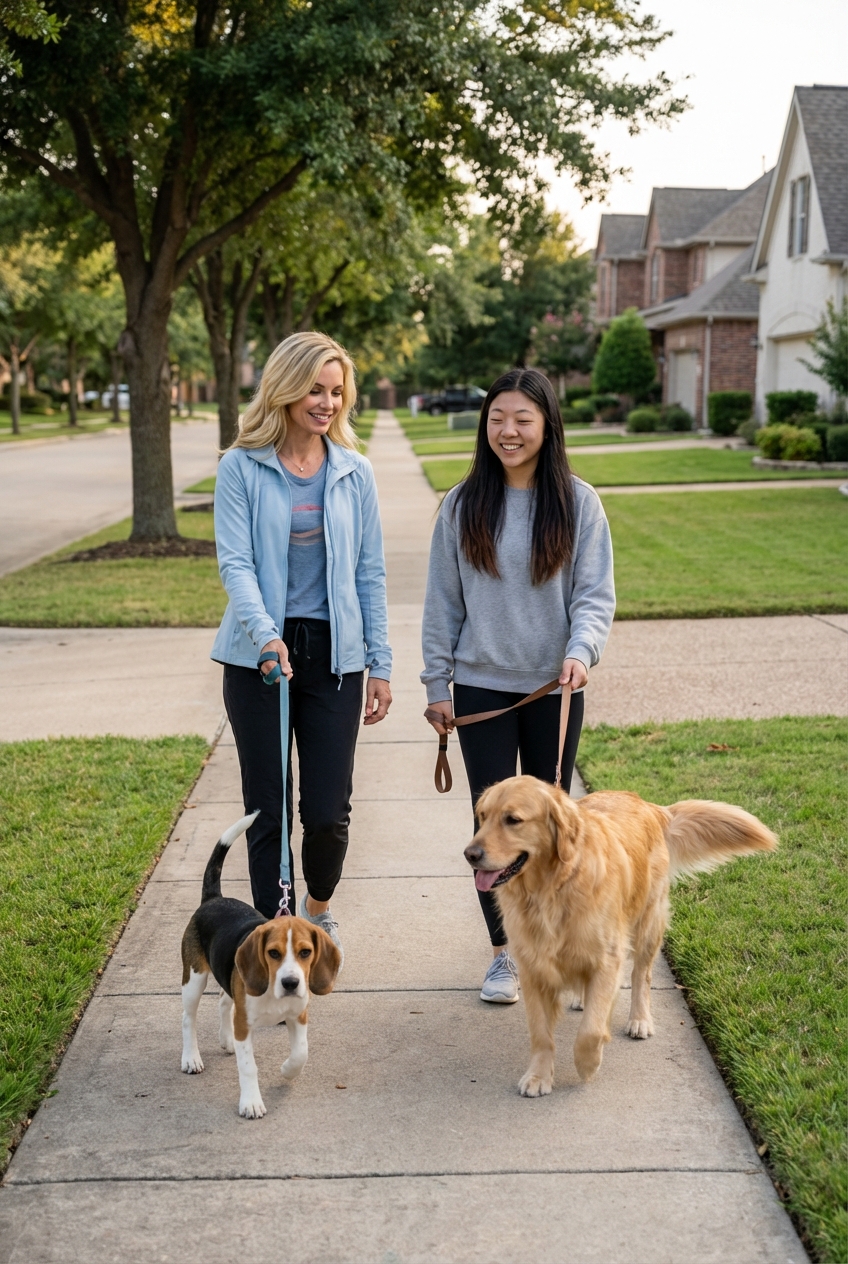
Step 3: Parallel walk first
Walking side by side with space between them is one of the most effective ways to reduce pressure. Let them glance and sniff the air. Reward calm behavior. Gradually close the distance only if both dogs look relaxed.
Step 4: Brief sniff, then move on
When they are ready, allow a brief sniff, then gently call them apart and keep walking. Think in “a second or two,” not a long meet-and-greet. Short interactions prevent the puppy from becoming overwhelming and give the resident dog an easy exit. If either dog stiffens, freezes, or stares, increase distance and reset.
Body Language
Green light signs
- Loose, wiggly bodies
- Soft face, open mouth, normal blinking
- Sniffing the ground and disengaging easily
- Play bows from either dog
Yellow light signs (slow down)
- Freezing for a second or two
- Stiff tail or tail held very high
- Whale eye (white of the eye showing)
- Lip licking, yawning, turning head away repeatedly
- Puppy jumping at the resident dog’s face nonstop
Red light signs (separate immediately)
- Hard staring, body stiff and forward
- Growling that escalates instead of resolving
- Snapping with repeated attempts to pursue
- Resident dog pinning or holding the puppy down
Note on hackles: Raised hackles (piloerection) can show up with excitement or stress. It signals heightened arousal, so read it with the rest of the body language. Hackles plus stiffness, staring, and forward pressure is your cue to create space.
Growling by itself is not always “bad.” It is communication. What matters is whether you can calmly increase distance and the situation de-escalates. If it escalates, stop the interaction and reset.
The First Week at Home
Use management, not wishful thinking
Most success comes from preventing the puppy from rehearsing annoying behavior and preventing the resident dog from feeling trapped. Rotate between together time and separate time.
- Puppy naps: Puppies need a lot of sleep. Use the crate or pen for enforced rest.
- Resident dog breaks: Schedule one-on-one time with your resident dog every day.
- Leash indoors (short-term): A lightweight house leash on the puppy can help you redirect without grabbing.
- Size mismatch safety: If your puppy is tiny and your resident dog is much larger, be extra conservative. Avoid rough play, use barriers more, and interrupt immediately if the puppy yelps, gets pinned, or struggles to get away.
Feed separately
Even friendly dogs can guard food, treats, or bones. Feed meals behind a gate or in separate rooms. Pick up bowls when finished. Save high-value chews for separated downtime until you have a consistent history of calm.
Prevent guarding before it starts
Resource guarding is not just about food. It can involve beds, doorways, couches, toys, or even access to you. Keep rules simple and predictable: no puppy climbing on the resident dog’s bed, no crowding at gates, and no shared high-value items until you are confident both dogs stay loose and relaxed. If guarding shows up as stiff posture, blocking, growling, or snapping, pause “together time” and bring in a professional early.
Teach the puppy respectful habits
Think of this as protecting your resident dog’s patience. Useful puppy skills include:
- Recall (coming when called) so you can call the puppy off
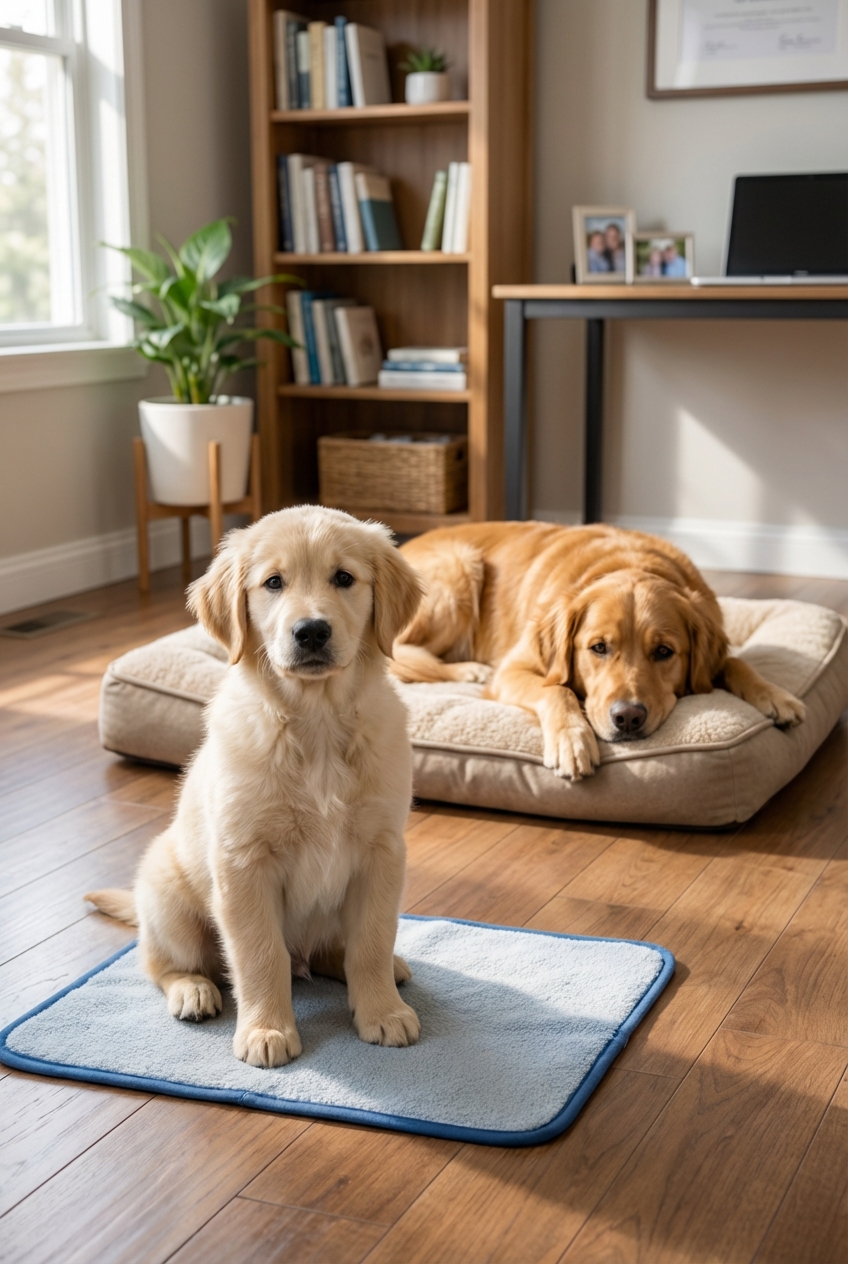
- “Place” or settling on a mat
- Gentle greetings with four paws on the floor
Support a Nervous Resident Dog
If your resident dog is anxious, reactive on leash, or easily overwhelmed, go slower than you think you need to. A careful plan now is far easier than repairing a relationship later.
- Pair puppy presence with good things: Treats, sniffy walks, or a favorite toy while the puppy is behind a gate.
- Keep interactions predictable: Same routine, same safe spaces, same rules.
- Use distance: Calm grows in space. Let your resident dog choose to approach.
- Consider professional help early: A qualified reward-based trainer or veterinary behaviorist can prevent escalation.
Common Challenges
The puppy will not stop biting the resident dog
That is normal puppy behavior, but it is not fair to your resident dog. Interrupt early. Call the puppy away, offer a toy, then give the puppy a break in the pen for a nap. If the puppy is mouthy, being overtired is often the reason.
The resident dog growls when the puppy approaches
Respect the message. Increase distance, then reward calm. Do not punish growling. If you remove the warning, you can create a dog who skips straight to snapping. Instead, manage the puppy, protect your resident dog’s space, and rebuild comfort slowly.
The resident dog seems depressed or jealous
Keep your resident dog’s routine steady. Add short training sessions, solo walks, and cuddle time if your dog enjoys that. Many dogs relax once they realize their needs will still be met.
The dogs play, then it suddenly gets too intense
Use frequent, planned breaks. Call both dogs apart every 30 to 60 seconds, ask for a simple cue like sit, reward, then release if they re-engage politely. You can also do quick “consent checks”: pause the interaction and see if both dogs choose to come back with loose bodies. If one dog repeatedly tries to leave or hide, end the session.
Worried about collars and leashes during play
In a secure area, many trainers recommend removing collars during supervised play to reduce the risk of a tooth or jaw getting caught. Only do this if the environment is safely enclosed and you can separate the dogs calmly if needed. Avoid letting dragging leashes tangle during play.
When to Get Professional Help
Reach out to your veterinarian and a qualified behavior professional if you see any of the following:
- Repeated snapping, pinning, or chasing
- Injuries, even small punctures
- Resource guarding that includes stiff posture, growling, or blocking access
- Fearful body language that does not improve with distance and time
- Any situation where you feel unsafe managing the dogs
Early support can be the difference between a manageable adjustment period and a long-term conflict.
A Calm Timeline
- Days 1 to 3: Short, supervised interactions. Lots of separation and naps. Parallel walks.
- Week 1 to 2: Gradually increase together time if both dogs stay relaxed. Keep feeding and chews separate.
- Weeks 3 to 6: Supervised play with regular breaks and consent checks. Continue protecting your resident dog’s rest time.
- After 6 weeks: Many households see a more stable rhythm, but supervision is still smart around high-value items.
Every pair is different. If things feel “fine but tense,” that is your cue to slow down and add more structure.
Bottom Line
A successful introduction is not one perfect meeting. It is a series of calm, positive experiences that build trust. Go slowly, supervise closely, and give your resident dog the gift of space. With consistency and patience, you can help your puppy grow into a polite companion and help your resident dog feel safe and respected in their own home.
References
- American Veterinary Society of Animal Behavior (AVSAB). Position statements and client resources on humane training and socialization.
- Overall, K. Manual of Clinical Behavioral Medicine for Dogs and Cats.
- AAHA. Canine life stage and preventive care guidelines (vaccination and parasite prevention discussions).