Introduce cats the right way with a proven, low-stress plan: safe room setup, scent swapping, door feeding, barrier sessions, and short supervised visits to ...
Article
•
Designer Mixes
Introducing a New Kitten to an Older Cat

Shari Shidate
Designer Mixes contributor
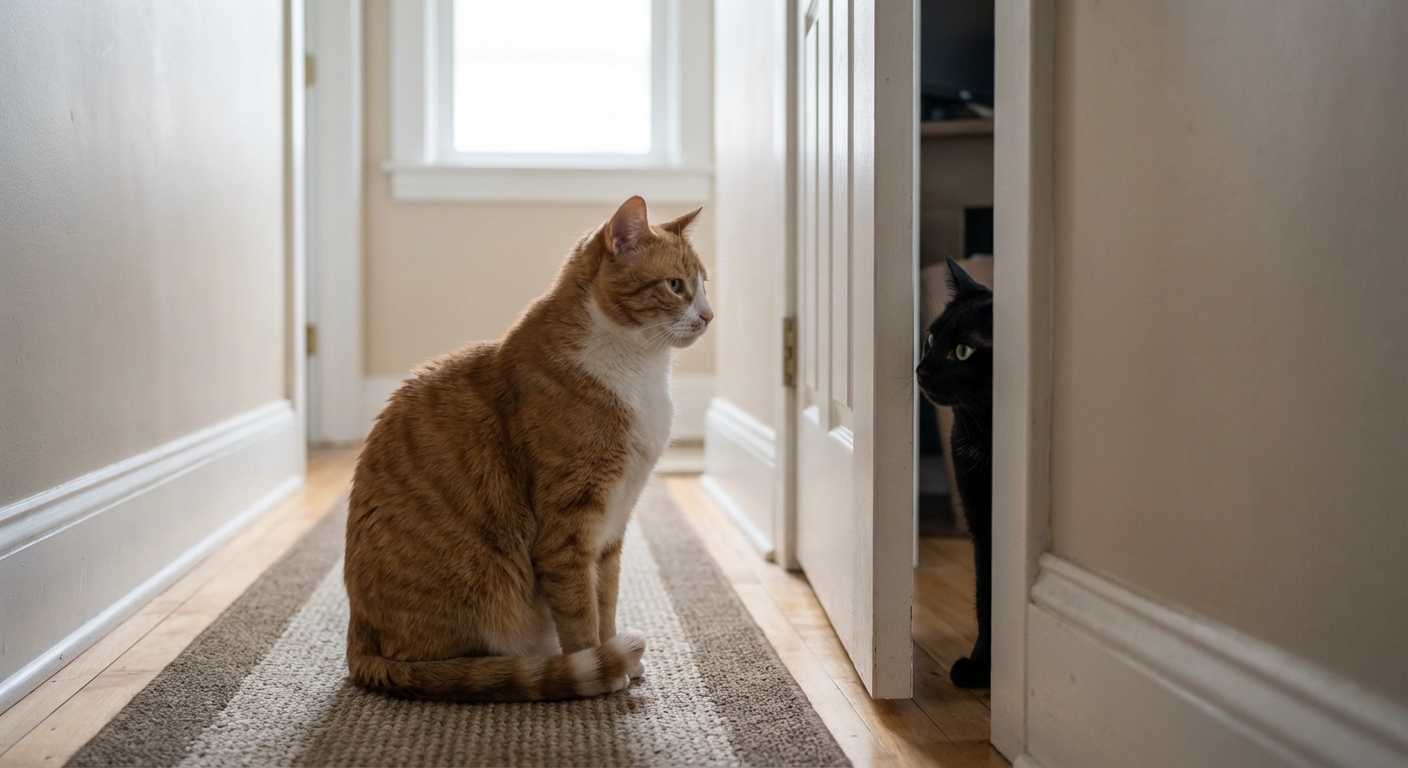
Bringing home a new kitten is exciting, but if you already have an older cat, that excitement can quickly turn into hissing, hiding, or a full-on stare-down. The good news is that many cats can learn to share a home, especially when the introduction is slow, predictable, and set up for success.
As a veterinary assistant, I like to remind families that cats rarely “work it out” by being forced together. That approach often backfires. They do best when we respect their need for territory, routine, and safe personal space. Think of the process like building trust in tiny steps.
Before the kitten arrives
A smooth introduction starts with your setup. When the environment is right, it can help lower stress and help both cats feel secure.
Vet check and health first
Before any nose-to-nose time, it is smart to plan for basic health and parasite control. This protects your resident cat and helps you avoid setbacks.
- Schedule a kitten exam soon after bringing them home.
- Ask about vaccines and deworming (and flea control if needed).
- Discuss testing (often FeLV/FIV) based on your veterinarian’s guidance, especially if the kitten came from a shelter, rescue, or unknown background.
- Keep the kitten separated at first not just for behavior, but also for a simple “health buffer” while you confirm they are eating well and acting normal.
Create a safe room
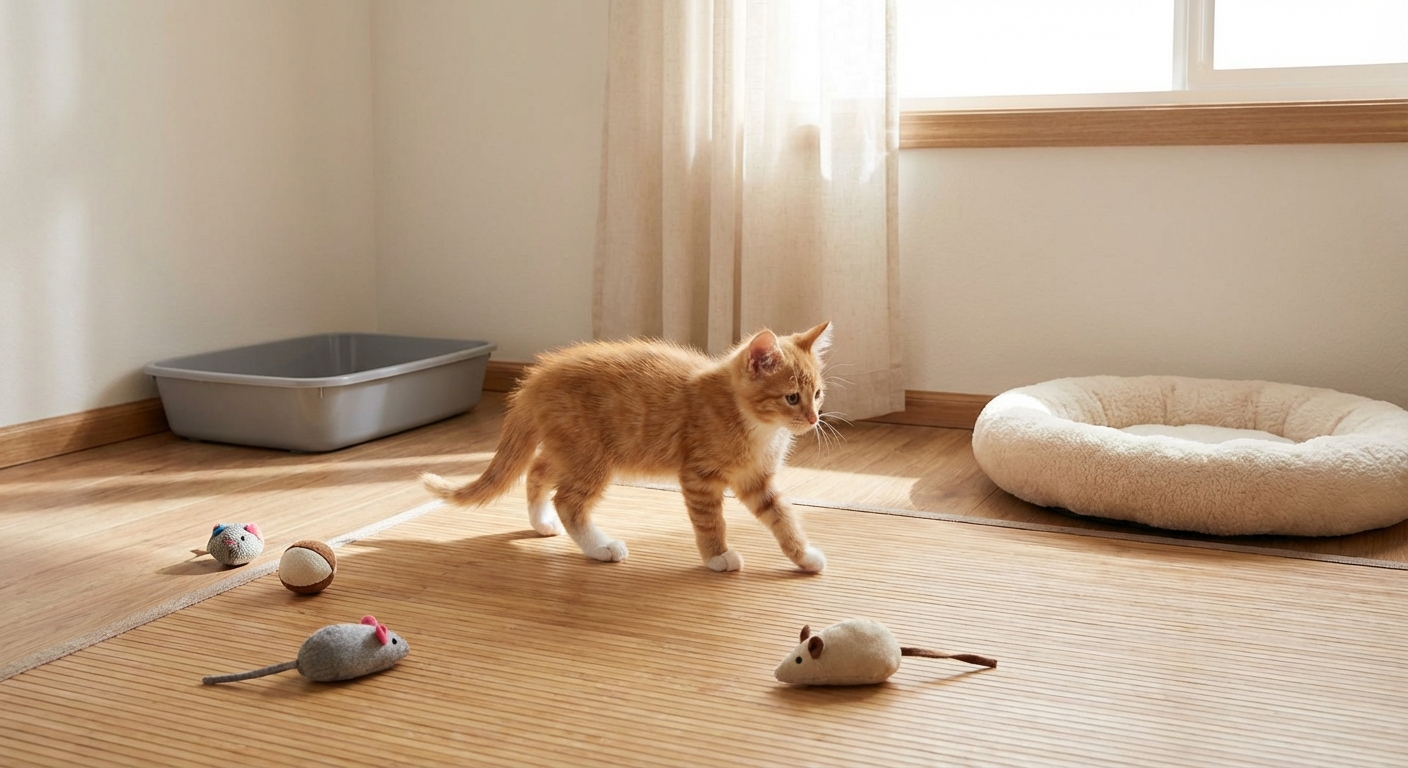
- Choose a quiet room with a door: a bedroom, office, or large bathroom works well.
- Stock it with essentials: food, water, litter box, scratching surface, a cozy bed, and toys.
- Use separate resources from your resident cat from day one to reduce conflict and scent mixing around high-value items.
Set up the house
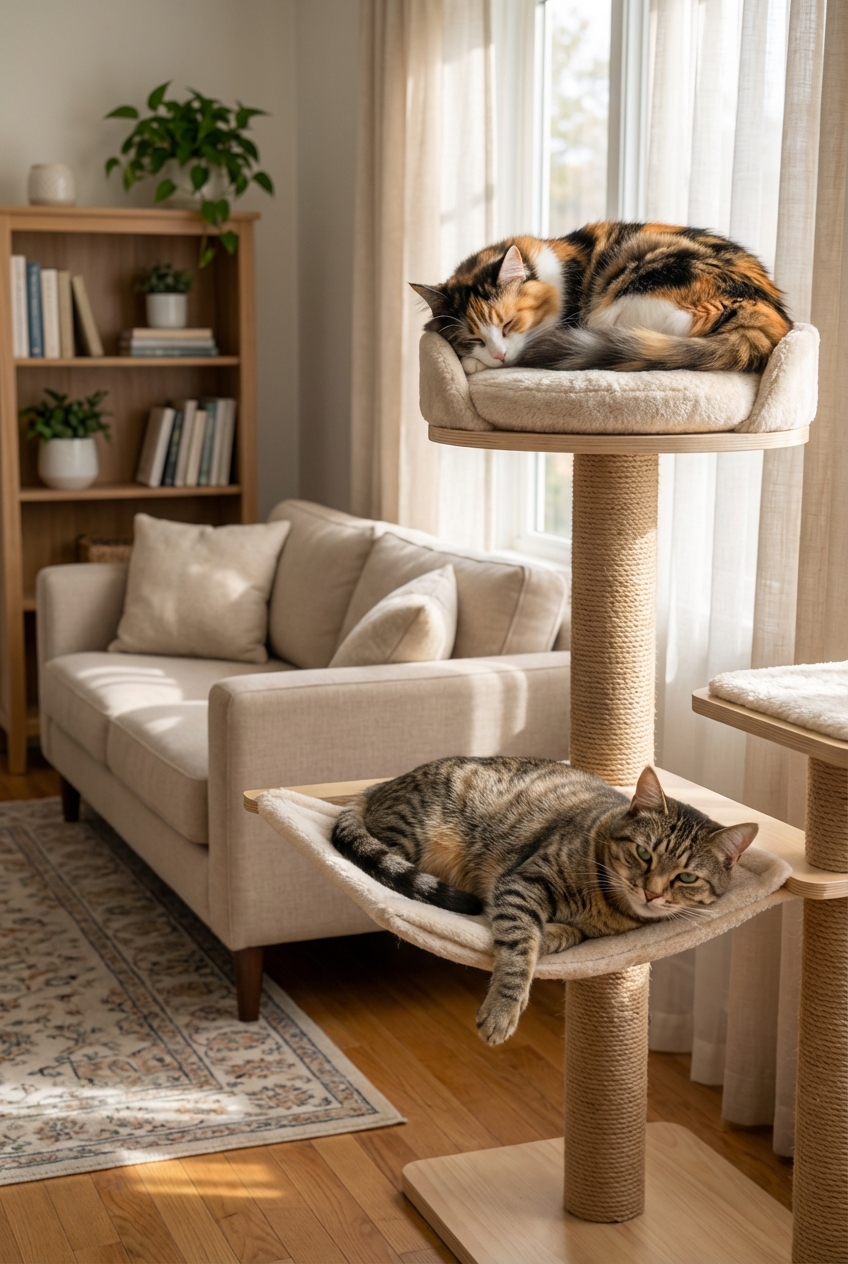
- Add vertical space if you can: a cat tree, shelves, or a cleared dresser top. Height helps cats feel in control.
- Add multiple rest spots around the home, especially in areas the older cat already loves.
- Add litter boxes: a commonly recommended rule of thumb is one box per cat, plus one extra. Place them in different locations, not side by side.
The step-by-step plan
Many introductions take a few weeks. Some go faster, and some take a couple of months. That is completely normal, especially with a senior cat or a cat who has lived as an “only cat” for years.
Step 1: Full separation (days 1 to 3, often longer)
Keep the kitten in the safe room with the door closed. Let your older cat explore the rest of the house like normal.
- Feed both cats on opposite sides of the closed door (start several feet away if either cat is unsure).
- Offer calm praise and a treat when your older cat approaches the door without hissing.
- Keep your older cat’s routine steady: same meal times, play times, and favorite nap spots.
Note: You can start scent work during full separation. These steps overlap on purpose.
Step 2: Scent swapping (days 2 to 7, and as long as needed)
Cats recognize “friend or stranger” largely through scent. This step is a big part of what makes introductions smoother.
- Swap bedding between cats once daily.
- Use a clean sock or soft cloth to gently rub each cat’s cheeks (where facial pheromones are released), then place the cloth in the other cat’s area.
- Do short room swaps: put the older cat in a bedroom for a few minutes while the kitten explores the main area, then return them to their original spaces.
The goal is simple: each cat learns that the other cat’s scent is part of the normal, safe home smell.
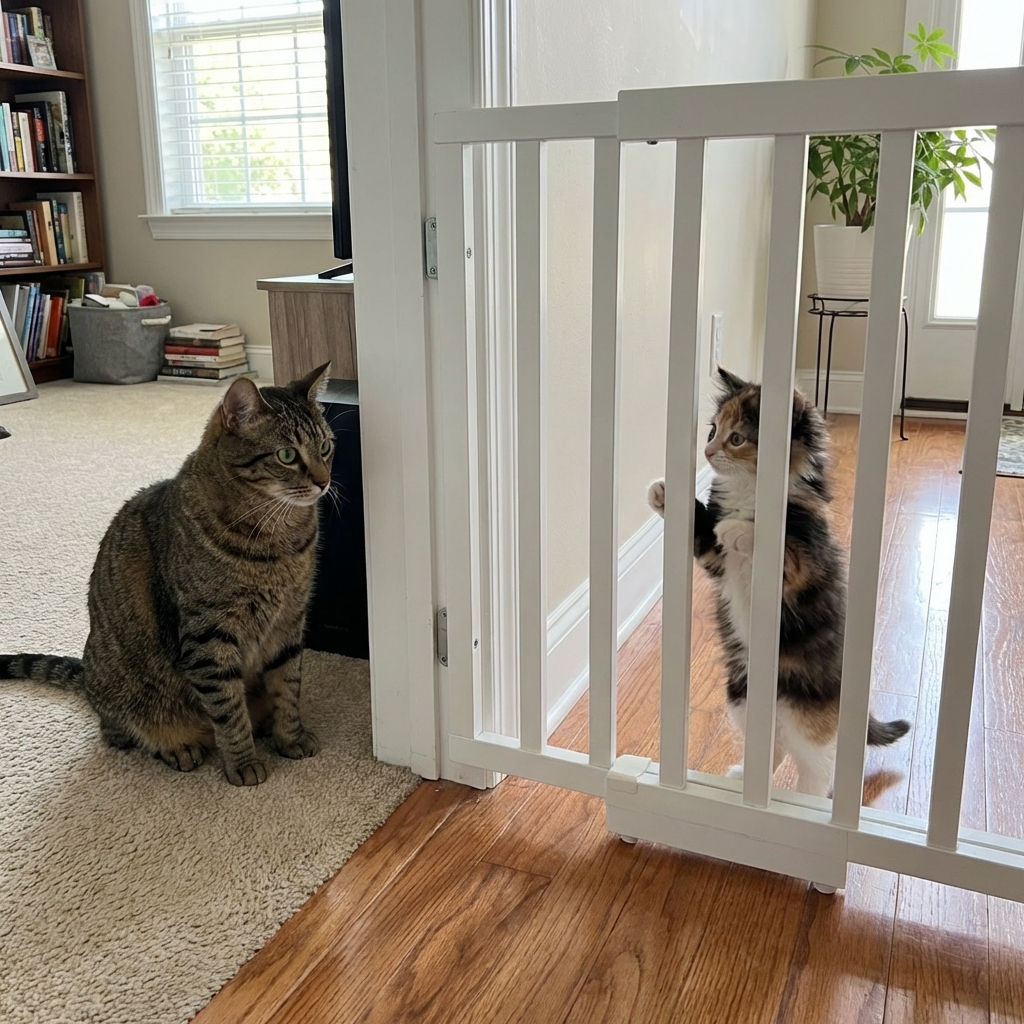
Step 3: Visual intro with a barrier (around week 1)
Once hissing at the door is minimal, introduce sight safely.
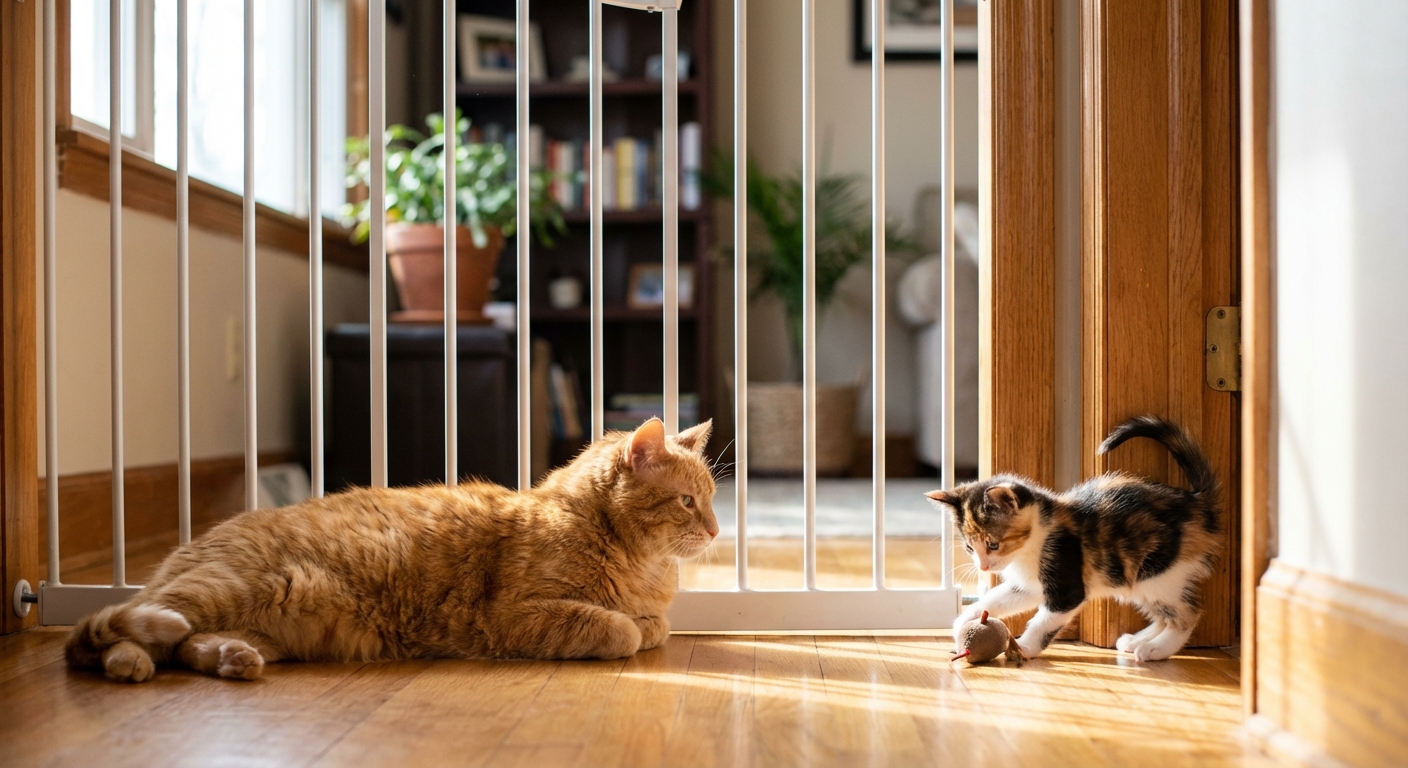
- Use a secure barrier like a screen door or stacked baby gates. A partially open or cracked door can be risky if paws slip through and a swat triggers fear.
- Do short sessions (1 to 5 minutes) a few times a day.
- Pair it with something positive: high-value treats, wand-toy play, or a small meal.
Food tip: Only use treats or meals if both cats will actually eat. If either cat is too stressed to eat, that is your sign to slow down and increase distance.
If either cat fixates, growls, or charges the barrier, go back to scent-only work for a few more days.
Step 4: Supervised time together (week 2 and beyond)
When both cats can watch each other through the barrier without big reactions, you can try supervised time in a larger room.
- Start with the kitten a little tired from play, which often reduces pouncing.
- Trim nails (both cats) before the first few supervised sessions to reduce the chance of injury.
- Keep sessions short and end on a settled note.
- Have a distraction ready: wand toy, treats, or tossing a soft toy away from the older cat.
- Do not pick up either cat in the middle of tension if you can avoid it. That can lead to redirected scratches or bites.
Increase the time together gradually. Many cats do best with a few weeks of supervised visits before full freedom.
Normal vs. not normal
What can be normal
- Hissing or growling early on
- Staring, cautious sniffing, slow movement
- Swatting without contact (a boundary reminder)
- Temporary hiding, especially from the older cat
Signs to slow down
- Repeated lunging or chasing that does not stop
- Blocking access to food, water, litter, or a hallway
- One cat is constantly hiding and not coming out to eat
- Accidents outside the litter box after introductions begin
- Fur flying, screaming, or full fights
If you see these, return to the previous step for several days. If you are dealing with urine marking, persistent fear, or fighting, it is wise to talk with your veterinarian early. Medical issues, pain, and stress-related urinary problems can look like “behavior” at first.
If a fight breaks out
This is the moment people panic, so I like to say it plainly: do not use your hands.
- Do use a barrier (a piece of cardboard, a pillow, a laundry basket) to separate lines of sight.
- Do toss a towel or light blanket between them if needed.
- Do use a brief interrupt like a loud clap or a sudden noise from a distance.
- Do not grab a cat that is aroused or cornered. Redirected bites are common and can be severe.
Once separated, give everyone time to cool down and go back to the previous step for a while.
Help the older cat
In many households, the older cat is the one who struggles most. A kitten is bouncy and curious, and an older cat may interpret that as rude or threatening. If your resident cat is senior or has arthritis, dental pain, or stiffness, you may need extra patience and a slower pace.
Kitten-free zones
- Use a tall cat tree or a gated room the kitten cannot climb into yet.
- Create a quiet retreat with a bed, litter box, and water, especially if your older cat is senior.
Play helps
For kittens, daily play reduces “ambush energy.” For older cats, play can rebuild confidence and reduce stress.
- Use wand toys to keep distance and prevent rough contact.
- End play with a small snack to mimic the hunt-eat-rest cycle.
Spread out resources
- Place food and water in separate areas, not all in one feeding station.
- Spread litter boxes around the home so no one can guard them.
Common questions
How long will it take?
Some pairs reach peaceful coexistence in 2 to 4 weeks. Others take 2 to 3 months, especially if the older cat is anxious, painful, or has had negative experiences with other animals.
Should we let them “fight it out” once?
No. Cats do not typically build a healthy relationship through fighting. One scary event can create long-term fear and make future introductions harder.
What if my kitten keeps chasing?
That is very common, especially with teen kittens. Add more interactive play sessions, increase vertical spaces, and shorten together-time until the kitten can be more settled. If needed, you can use brief, supervised timeouts for the kitten in the safe room to reset energy.
Can pheromone products help?
They can help some cats as part of a bigger plan. They are not magic, but many families notice a smoother transition when the environment feels more predictable.
A simple 7-day starter
If you like structure, here is a gentle timeline you can adjust based on your cats’ comfort.
- Days 1 to 2: Separate rooms, feeding near the door (as tolerated), scent swapping begins.
- Days 3 to 4: More scent swaps plus short room swaps.
- Days 5 to 6: Barrier visual sessions, treats and play on both sides.
- Day 7: If relaxed at the barrier, try a 2 to 5 minute supervised visit in a neutral room.
If day 7 is not relaxed, that is not failure. It is feedback. Go back one step, slow down, and try again.
When to call your vet
Reach out to your veterinarian if you notice any of the following:
- Not eating for more than 24 hours (especially in kittens)
- Vomiting, diarrhea, or lethargy during the transition
- Urinary changes: straining, frequent trips, accidents outside the box
- Escalating aggression or repeated fights
Sometimes the best next step is ruling out pain, dental disease, arthritis, or urinary stress that can make a cat less tolerant of change.

The bottom line
A family-friendly introduction is not about rushing to “best friends.” It is about helping two cats feel safe, respected, and in control of their space. Go slowly, reward relaxed behavior, and give your older cat plenty of reassurance that their home is still their home.
With time and consistency, many older cats go from “Who is this?” to “Fine, you can live here,” and honestly, that is a big win in the cat world.