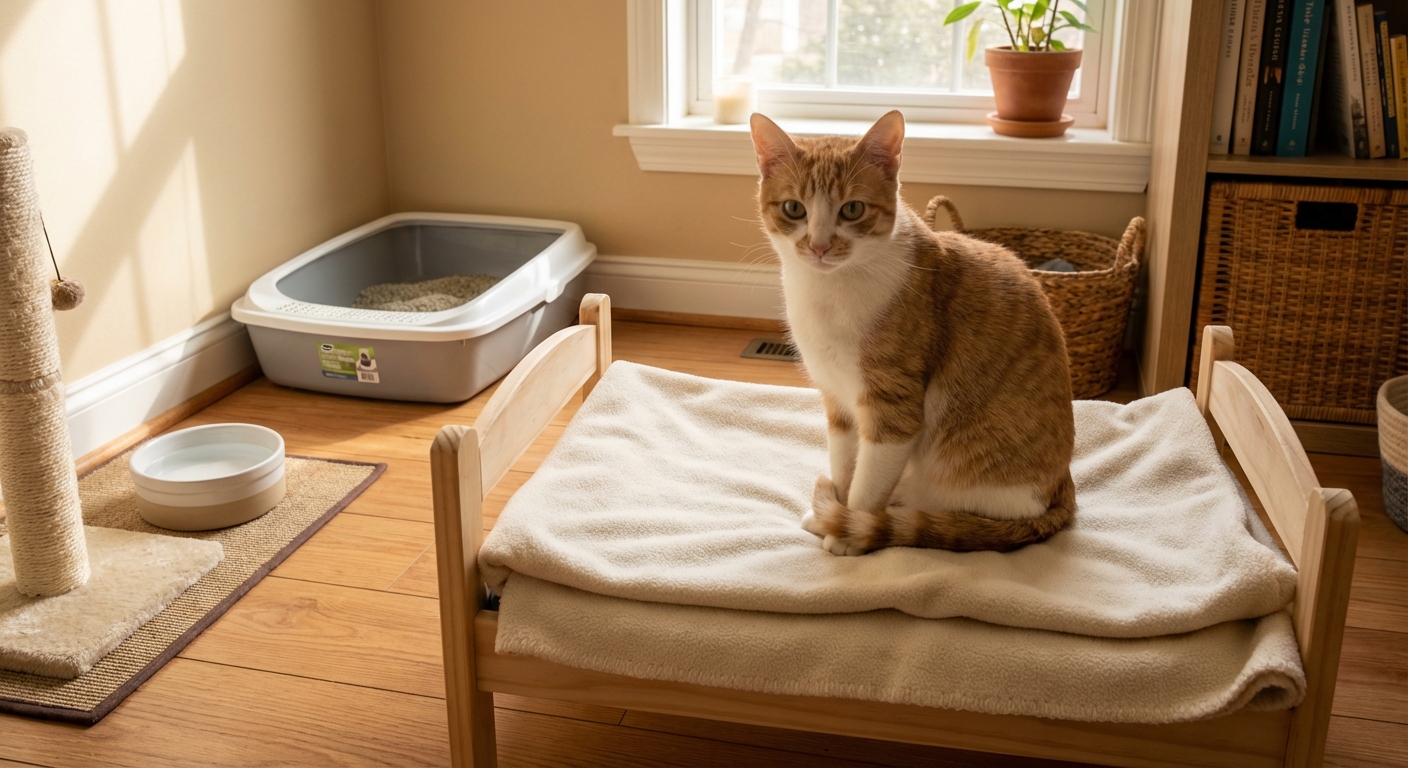
Introduce cats the right way with a proven, low-stress plan: safe room setup, scent swapping, door feeding, barrier sessions, and short supervised visits to ...
Article
•
Designer Mixes
Introducing a New Cat to Your Home

Shari Shidate
Designer Mixes contributor
Bringing home a new cat is exciting, and it can also feel a little nerve-wracking, especially if you already have pets. In my work as a veterinary assistant here in Frisco, Texas, I have seen the same truth play out again and again: slow introductions help reduce stress, lower the risk of fights, and help your cats build trust that lasts.
This guide focuses on health and harmony, because a safe, low-stress transition is not just “nice.” It can support immune health, appetite, litter box habits, and overall behavior. Stress is powerful in cats, and small environmental changes can have big effects.
Quick note: This is general guidance, not a substitute for individualized veterinary or behavior advice. If something feels “off,” trust your gut and call your vet.
Before You Bring Your New Cat Home
Schedule a vet check
Ideally, your new cat should have a vet exam within the first week, sooner if you notice sneezing, coughing, diarrhea, vomiting, eye discharge, or low appetite. If you already have a resident cat, a quick health screening for the newcomer helps protect everyone.
- Vaccines: Your veterinarian can advise what is appropriate for age and lifestyle.
- Parasite prevention: Fleas, ear mites, and intestinal parasites can spread quickly between pets.
- Testing considerations: Your vet may recommend FeLV and FIV testing, especially for cats with unknown history.
- Spay or neuter: This can reduce roaming behaviors, urine marking, and tension between cats.
Consider a short quarantine
If your new cat’s medical history is unknown, ask your veterinarian whether a brief separation period makes sense (many households do about 7 to 14 days). This can help reduce the spread of common issues like upper respiratory infections and parasites, and it also gives your new cat time to decompress.
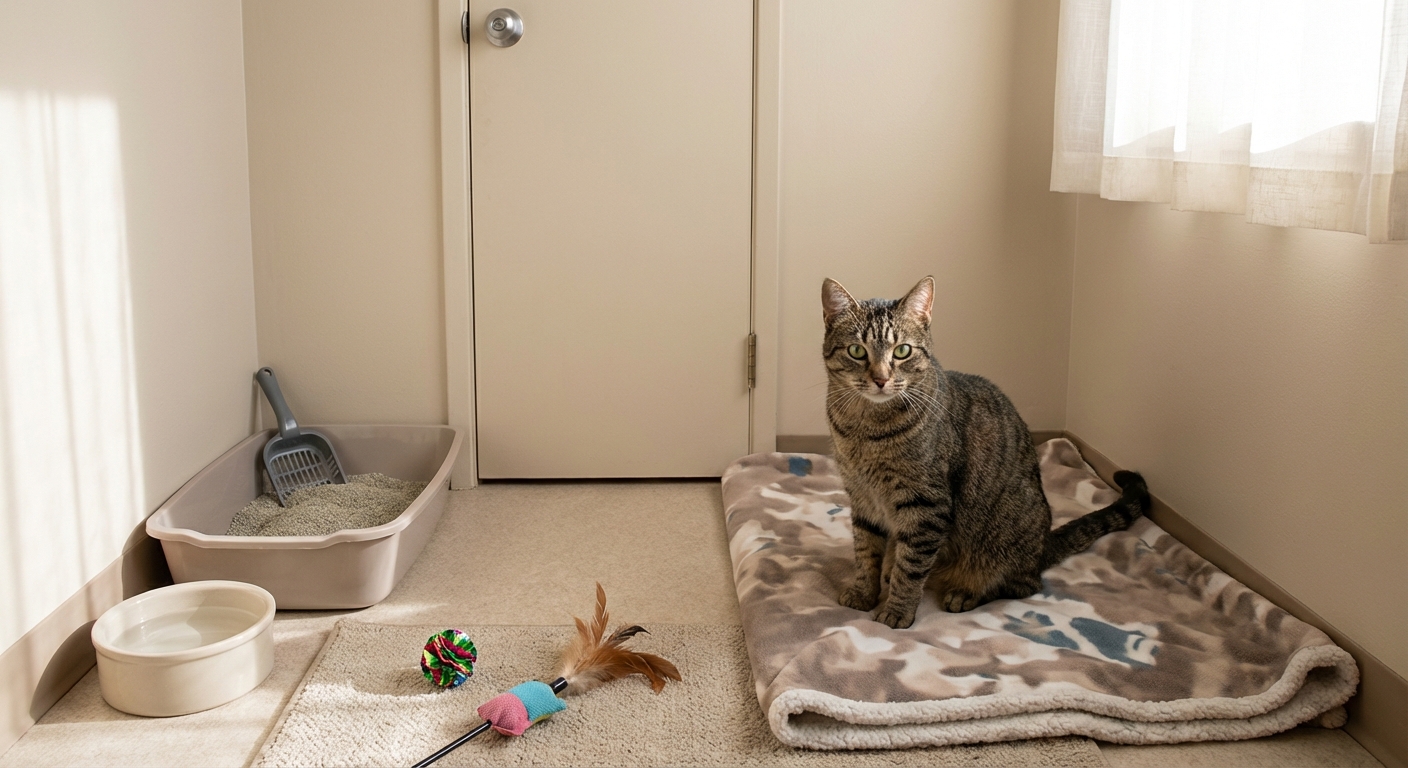
Prepare a safe room
A safe room is one of the most important setup steps. It gives your new cat a place to decompress, and it protects your resident cat from being overwhelmed.
- A quiet room with a door (spare bedroom, office, large bathroom)
- Litter box placed far from food and water
- Food and water stations
- Hiding options (covered bed, open carrier, cat cave)
- Scratching post and a few toys
- Comfort items that hold scent (blanket, towel)
Tip: Use a pheromone diffuser in the safe room if you can. Many cats settle faster when the environment “smells safe.”
The Introduction Plan
Most conflicts happen because cats are introduced too quickly. Cats are territorial by nature, and they rely heavily on scent. Your goal is to help both cats think: “This new smell means good things happen.”
Step 1: Full separation
Keep your new cat in the safe room with the door closed. Let your resident cat keep the rest of the home. This reduces stress and prevents a rough first impression.
- Feed both cats on opposite sides of the closed door.
- Start at a distance where both eat comfortably, then slowly move bowls closer to the door over time.
- Keep routines steady. Cats love predictability.
Step 2: Scent swapping
Scent introductions are the foundation. Trade bedding, swap blankets, or gently rub each cat with a separate clean sock and place it near the other cat’s feeding area.
- Reward calm sniffing with treats or play.
- If either cat hisses at the scent item, increase distance and slow down.
High-value treat ideas: Churu-style lickable treats, tiny bits of canned food, freeze-dried meat treats, or whatever your cat goes a little crazy for.

Step 3: Visual intros
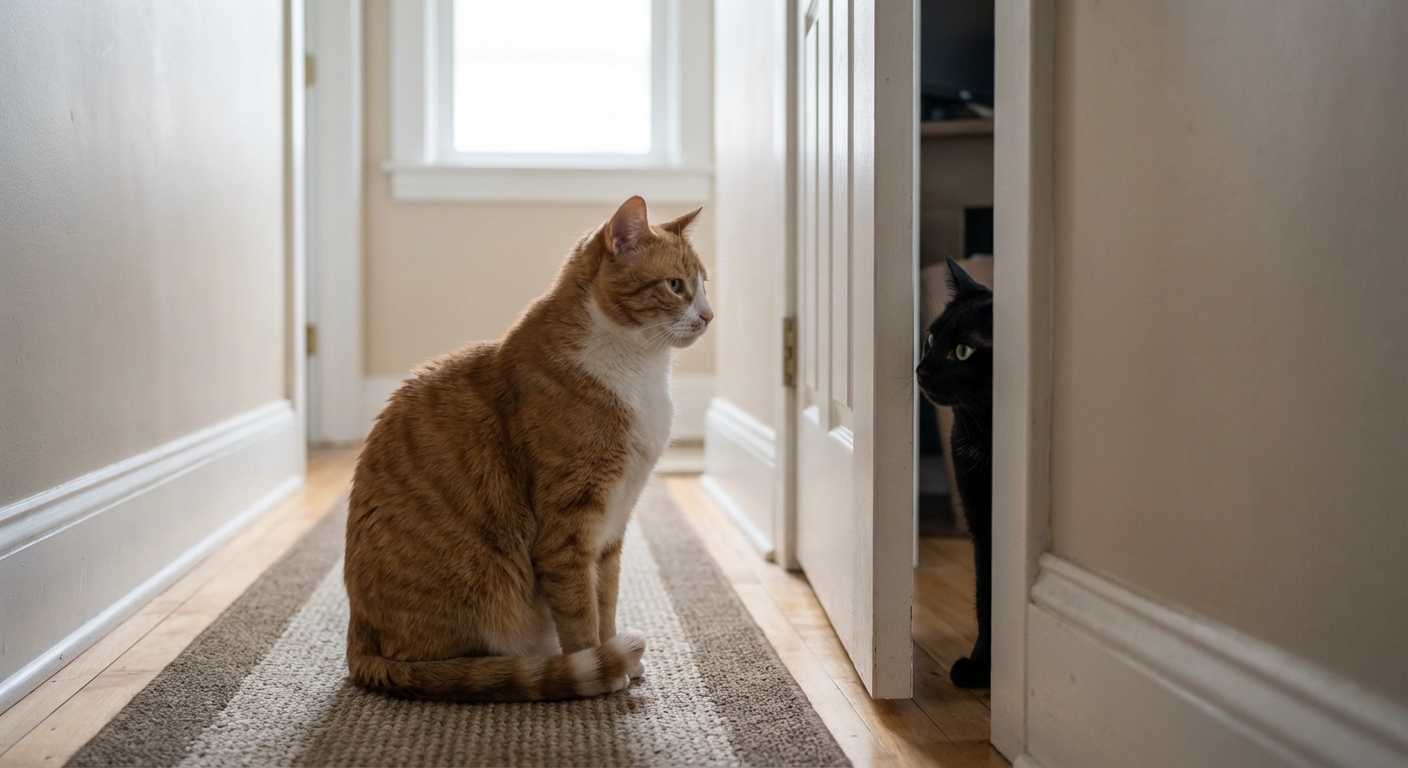
When both cats are relaxed at the closed door, introduce sight safely. Options include a baby gate, a stacked gate setup, or cracking the door just enough to see without allowing a chase.
- Keep sessions short, like 30 to 90 seconds at first.
- Pair “seeing the other cat” with high-value treats or a wand toy.
- End on a calm note, not after a stare-down.
- Safety tip: Use a secure doorstop, latch, or hook-and-eye so the door cannot swing open unexpectedly.
Step 4: Supervised meetings
When there is minimal hissing and no charging at the barrier, try short supervised time together. Keep the safe room available so the new cat can retreat.
- Use play to reduce tension and redirect energy.
- Watch body language closely (more on that below).
- Separate again before anyone gets overwhelmed.
Reality check: Some cats adjust in a week. Many take several weeks. A few need months. Slow is not failing. Slow is smart.
Also true: Not all cats need, or want, close friendship. Peaceful parallel living is a healthy end goal. If face-to-face time ramps up stress, it is okay to stay in “barrier and rotation” mode while you keep building positive associations.
Cat Body Language
Cats can look “fine” while they are actually escalating. Knowing early signals keeps everyone safe.
Green light
- Soft eyes, slow blinking
- Relaxed tail (not thrashing)
- Sniffing and then looking away
- Grooming or eating near the other cat
Yellow light
- Prolonged staring
- Tail flicking or twitching
- Ears angled sideways or back
- Freezing in place
Red light
- Hissing, growling, spitting
- Puffed tail, arched back
- Lunging at the barrier
- Chasing or cornering
Do not punish hissing. Hissing is communication. Your job is to listen and adjust the pace.
Health and Litter Box
Stress can trigger real medical issues. In cats, the urinary tract is especially sensitive to environmental change. A calm introduction is a health strategy, not just a behavioral one.
Common stress signals
- Hiding constantly or refusing to explore
- Not eating for 24 hours, or sudden appetite changes
- Diarrhea or vomiting
- Overgrooming or barbering fur
- New aggression toward people or other pets
Litter box setup
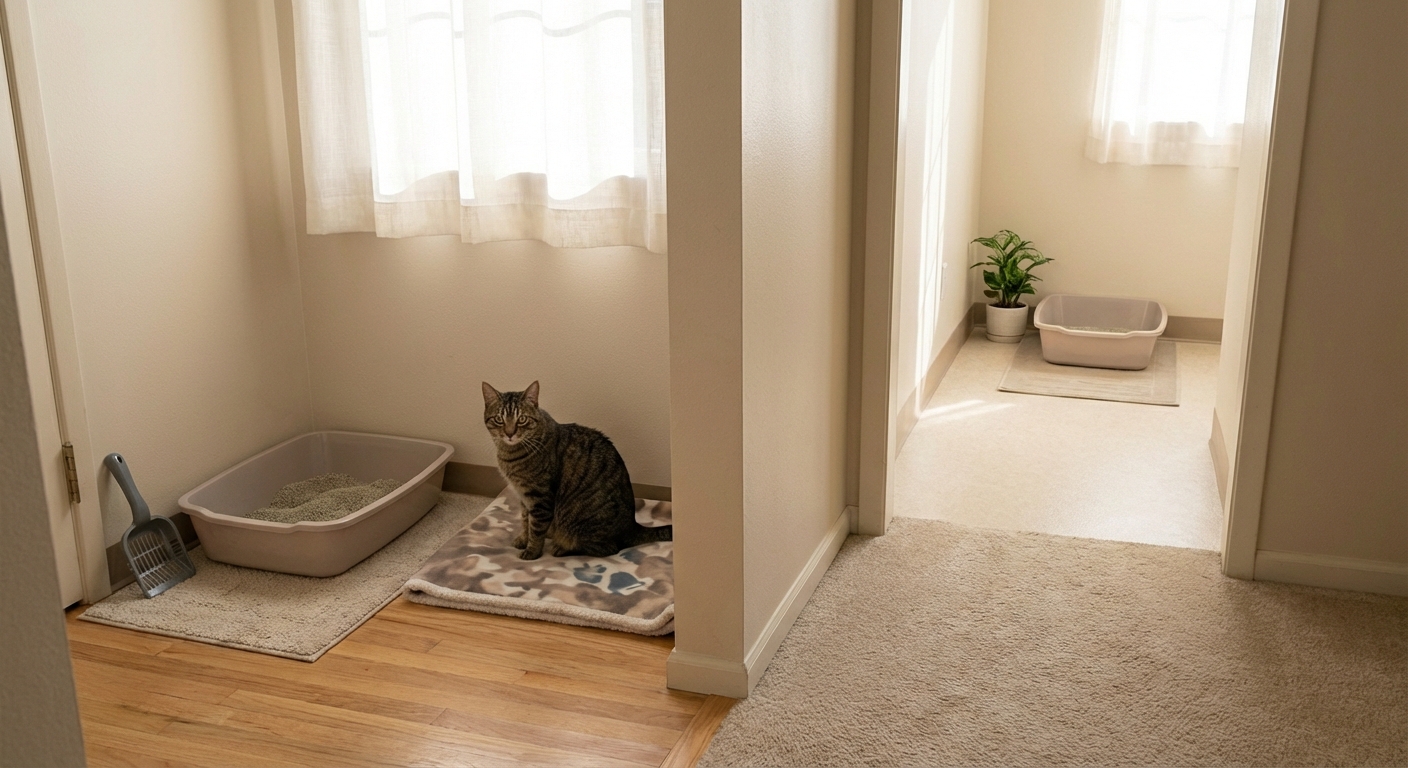
A classic rule is one box per cat, plus one extra. Place boxes in different locations, so one cat cannot “guard” them.
- Keep boxes uncovered if one cat seems anxious or ambushed.
- Scoop daily. Cats are clean, and a dirty box can create avoidance fast.
- Keep the new cat’s box in the safe room at first, then add boxes as you expand territory.
When to call the vet
Contact your veterinarian right away if you see:
- Straining to urinate, frequent trips with little output, crying in the box, or blood in urine
- Not eating for about 24 hours (sooner for kittens, seniors, or cats with medical conditions). Cats can get very sick from prolonged not eating, and your vet can help you intervene early.
- Labored breathing, open-mouth breathing, or extreme lethargy
- Repeated vomiting or diarrhea lasting more than a day (sooner if there is blood, suspected dehydration, or if the cat is a kitten)
Feeding and Resources
Cats feel safer when they do not have to compete. You can reduce tension just by spreading out the important stuff.
- Separate feeding stations at first, then gradually allow closer proximity only if both cats stay relaxed.
- Multiple water sources, including a fountain if your cats like running water.
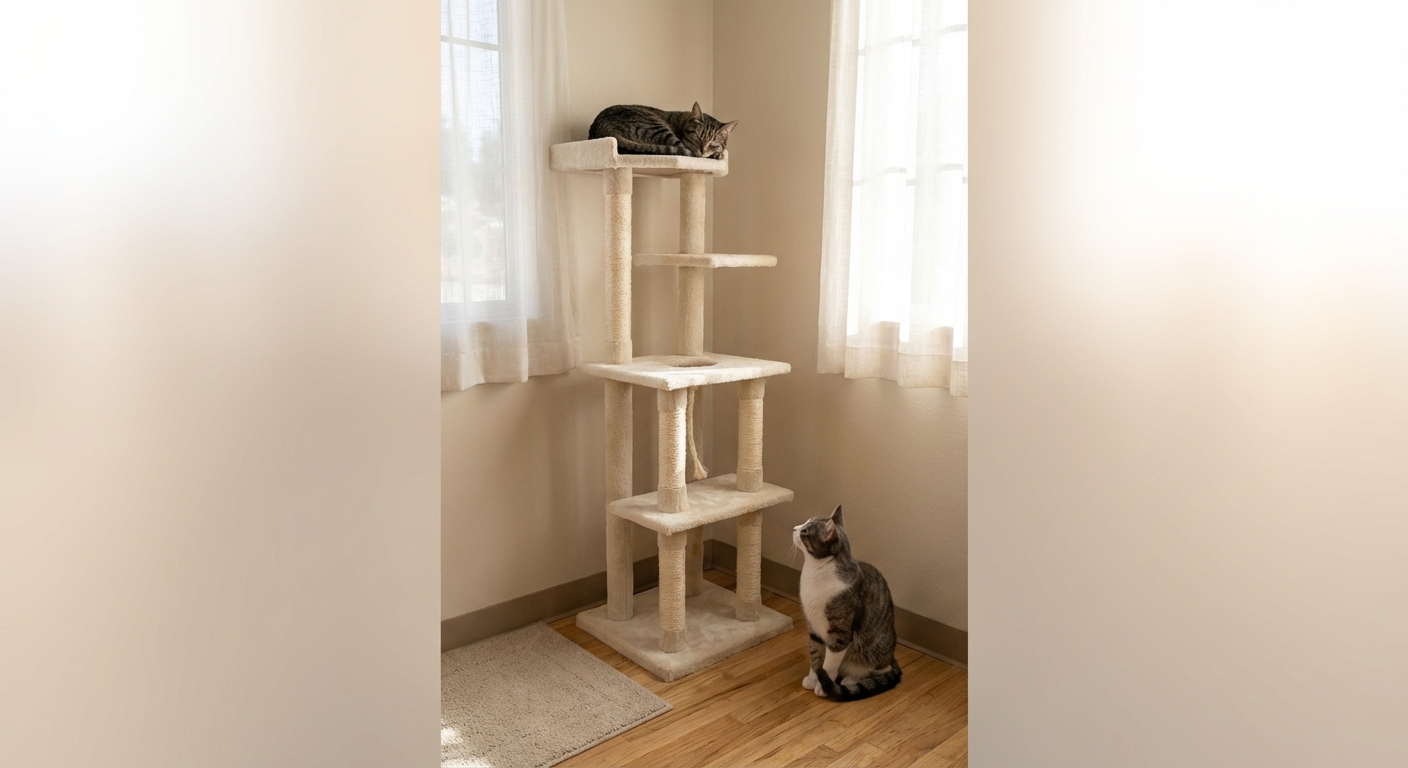
- More than one scratcher, with at least one tall vertical option.
- Vertical space like a cat tree or window perch so cats can share a room without sharing the same floor space.
Resident cat reminder: Keep your original cat’s routine as steady as possible. Make a point to give them predictable solo attention (playtime, cuddles if they like it, a quiet treat ritual). It helps prevent stress and “new cat resentment.”
If You Also Have a Dog
Dogs and cats can absolutely live together, but safety comes first. During early introductions, keep your dog leashed and calm, and give your cat an escape route like a baby gate or a tall cat tree.
- Teach and reward a solid “leave it.”
- Do not allow chasing, even if your dog seems playful.
- Feed pets separately to prevent guarding behaviors.
- Use controlled, short exposures and end sessions before arousal ramps up.
What “calm” looks like: loose body, soft face, able to respond to you, and able to disengage and look away from the cat when asked.
If a Fight Breaks Out
Even with careful introductions, scuffles can happen. The goal is to interrupt safely and reset without anyone getting hurt.
- Do not use your hands to break up a cat fight.
- Create a visual barrier with a piece of cardboard, a cushion, a laundry basket, or a large towel between them.
- Use a brief distraction if needed (a loud clap, shaking a container, or tossing a blanket over one cat). Avoid chasing them around.
- Once separated, give both cats time to calm down in separate areas. Go back to the last successful introduction step for a few days.
Troubleshooting
Some cats need a longer runway, and that is okay. If you are stuck, take a step back to the last successful stage and rebuild positive associations.
Why intros stall
- Pace moved too quickly
- Too few resources (boxes, perches, feeding stations)
- Medical discomfort (pain can worsen irritability)
- One cat is fearful and feels cornered
What to do next
- Return to separation with scent work and door feeding for several days.
- Increase play sessions to burn off tension.
- Book a vet visit if behavior changes are sudden or intense.
- Consider a feline behavior professional if there is repeated fighting.
Most cat relationships do not need to be best friends. Peaceful coexistence is a wonderful and realistic goal.
A Gentle Timeline
Every household is different, but here is a calm, evidence-based rhythm that works for many families:
- Days 1 to 3: Safe room only, door feeding begins, scent swapping starts.
- Days 4 to 7: Continue scent work, begin brief visual sessions behind a barrier.
- Week 2: Short supervised meetings if visual sessions stay calm.
- Weeks 3 to 6: Gradually increase shared time, maintain multiple resources.
If you need to slow down, that is not a setback. It is you protecting your cats’ health and emotional safety.
Final Thoughts
The best introductions are built on patience, clear routines, and lots of small positive moments. Set up the environment, respect scent and territory, and let trust grow naturally. Your future self will thank you when your home feels calm and your cats feel secure.