A vet-assistant guide to introducing cats and dogs using slow decompression, scent swapping, barrier sessions, and reward-based training. Includes safety che...
Article
•
Designer Mixes
Introducing a New Cat to Your Dog

Shari Shidate
Designer Mixes contributor
Bringing home a new cat when you already have a dog can go beautifully, but it works best when you plan for safety, calm, and very small steps. In clinical settings, I have seen the best outcomes when families slow down, manage the environment, and let trust build day by day.
The goal is not an instant friendship. The goal is peaceful coexistence first, with the option for a bond later.
Before the cat comes home
Set up a cat safe room
Choose a quiet room with a door. This is where your cat decompresses and where you control the first introductions.
- Essentials: litter box , food and water, cozy bed, scratching post, and a few hiding options like a covered bed or open carrier.
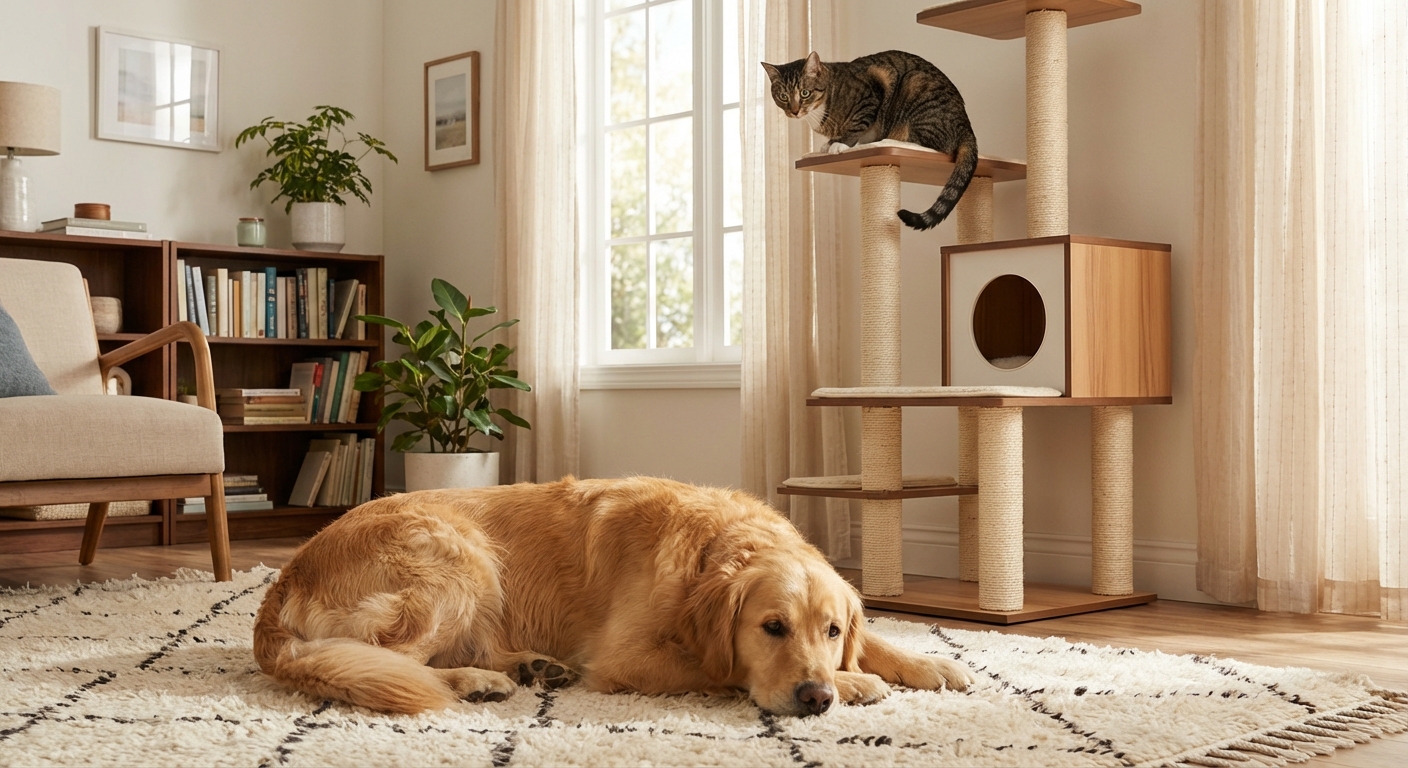
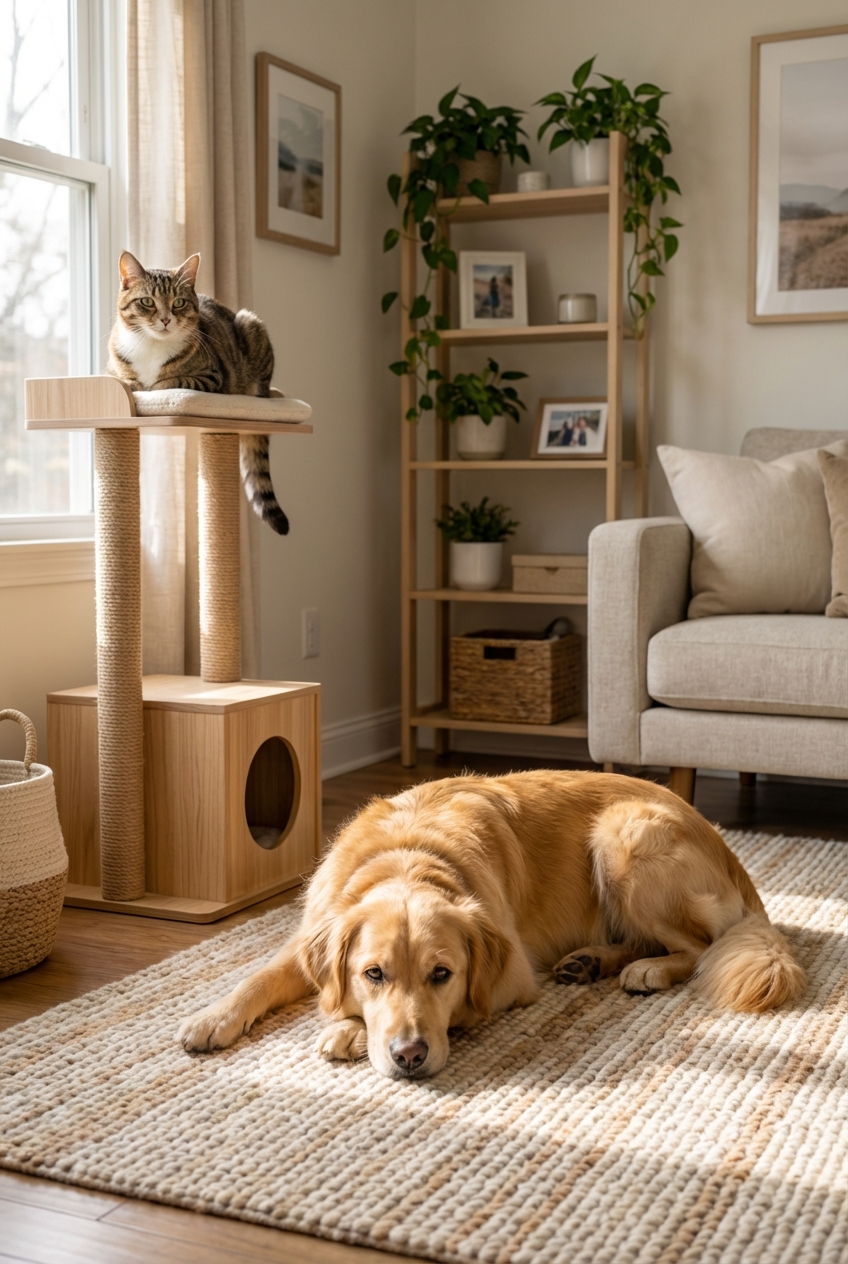
- Vertical space: a cat tree or sturdy shelves help cats feel safe because height equals security.
- Scent comfort: a soft blanket or towel that can later be swapped for scent introductions .
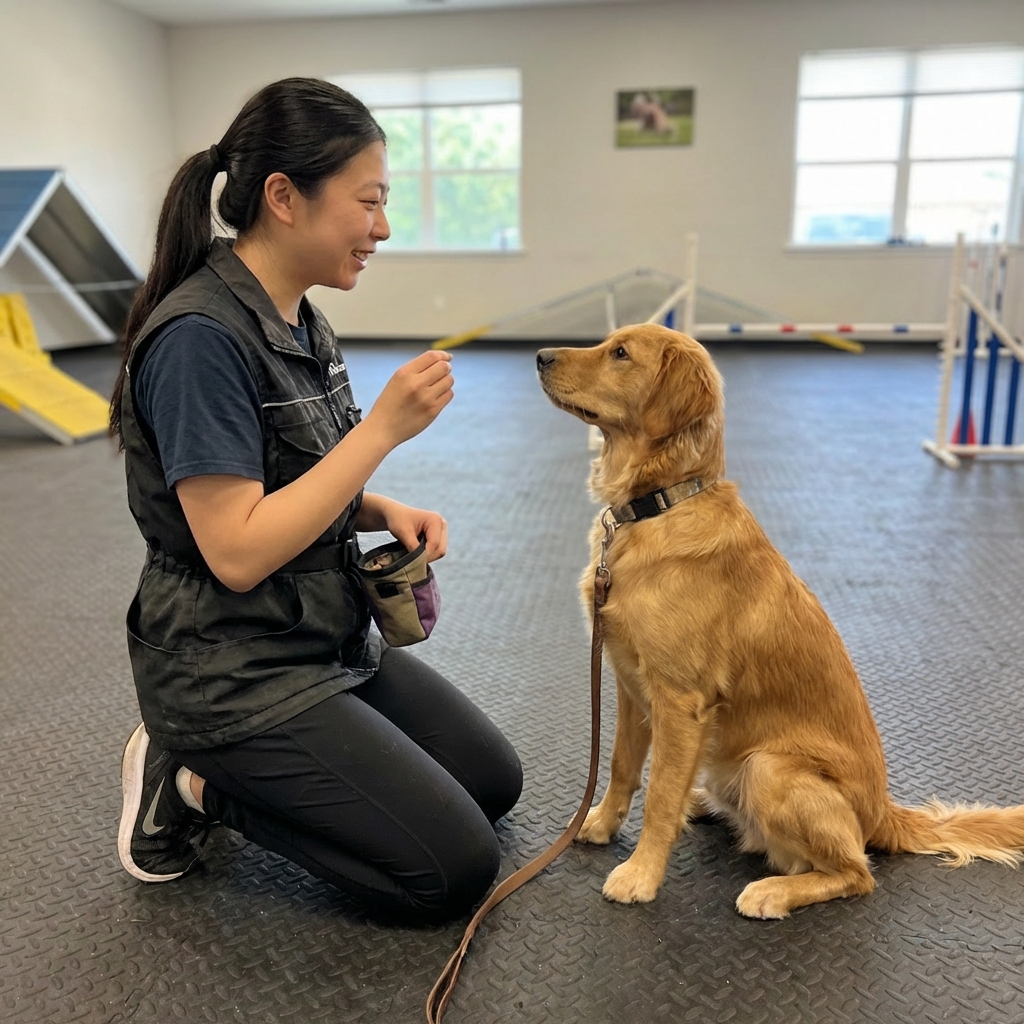
Prepare your dog’s skills
Even sweet dogs can get overly excited around a new animal. Practice these cues before the first meeting:
- “Sit” and “down” for calm positioning
- “Leave it” for disengaging
- “Place” or mat training for settling at a distance
- Loose-leash walking indoors
If your dog tends to bark, lunge, or fixate on small animals outside, plan to go slower and consider professional help early. That is not a failure. It is good prevention.
Step 1: Decompression (Days 1 to 3, often longer)
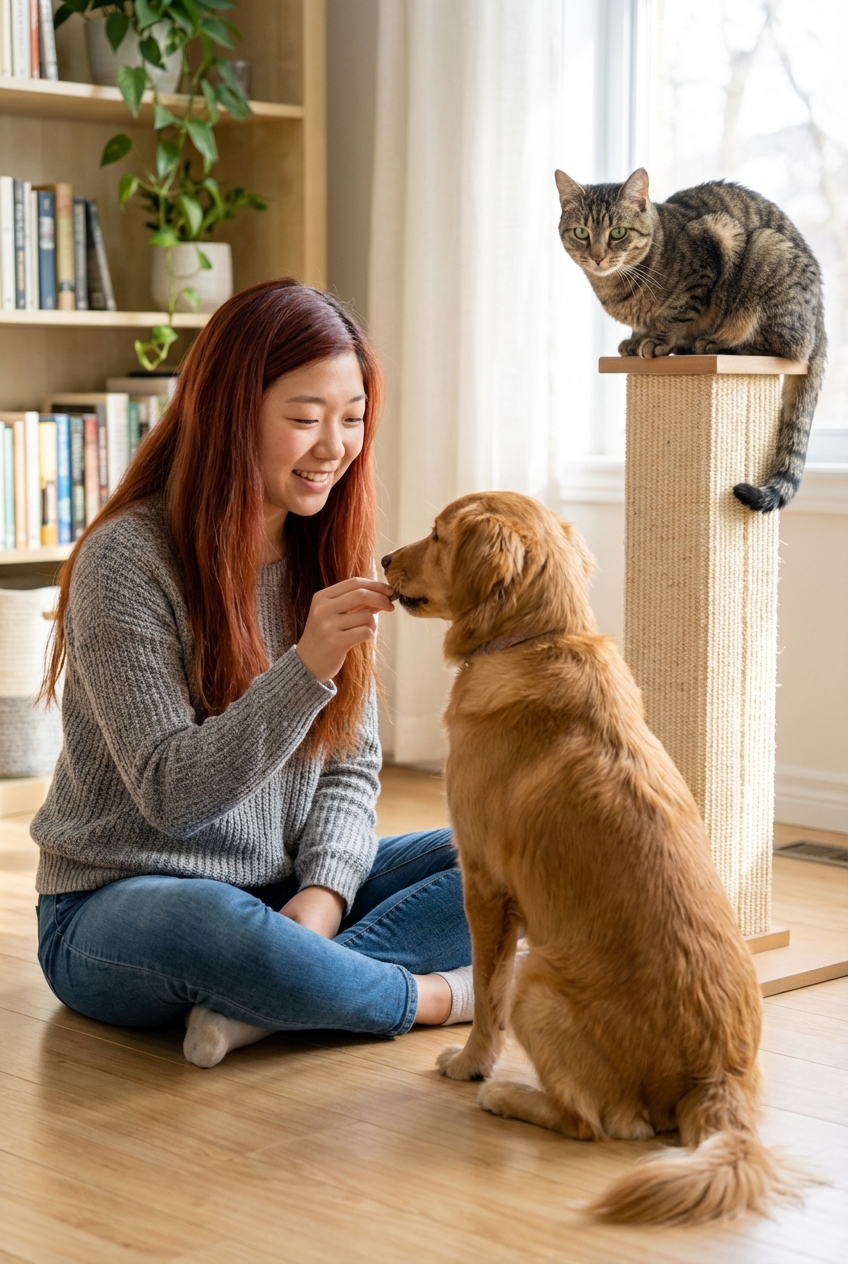
When your cat arrives, take them straight to the safe room. Let your dog sniff the outside of the door, then redirect to something positive like a chew or treat scatter. Your dog can learn, “Cat smell predicts good things and calm behavior.”
For your cat, keep the first days simple: quiet, routine meals, gentle play, and plenty of rest. Stress can show up as hiding, not eating , diarrhea, or litter box accidents.
If you have kids, visitors, or a naturally busy household, treat the first week like “quiet mode.” Lower noise, reduce door openings, and keep introductions predictable.
Tip: A new cat who is hiding is not being “stubborn.” Hiding is a normal safety behavior. Give them time and control.
Step 2: Scent swapping (Days 2 to 7)
Scent is a low-pressure way for pets to learn each other without eye contact.
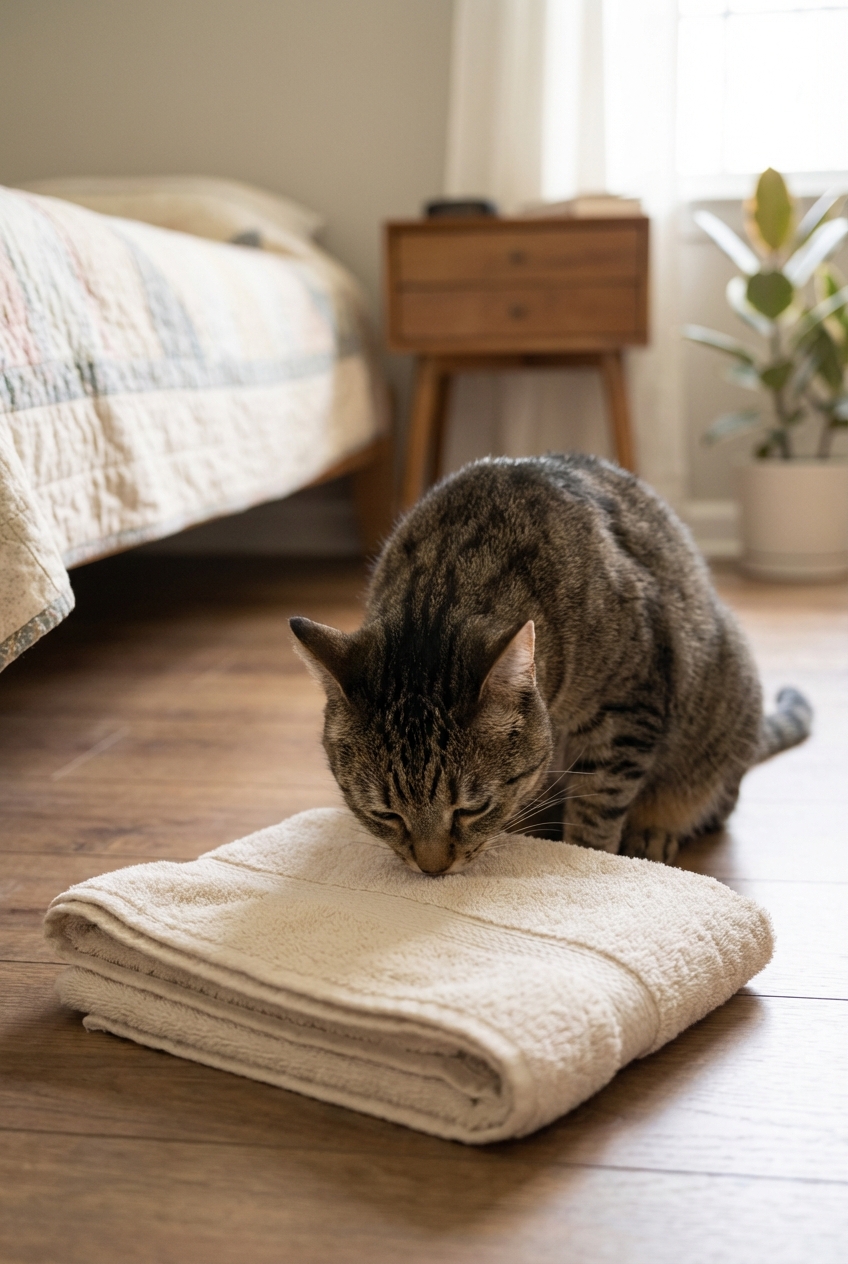
- Rub a clean towel lightly on your cat’s cheeks and head, where cats release facial pheromones associated with familiarity and comfort, then place it near your dog’s resting area at a distance.
- Do the same with a towel from your dog and place it in the cat room.
- Reward calm investigation. If your dog gets amped up, increase distance and try again later.
You can also rotate spaces briefly: let the cat explore the home while the dog is outside, crated, or behind a closed door, then swap. Keep a close eye on doors and hallways during swaps so the cat cannot slip out of the safe room unexpectedly and your dog cannot rush in.
Step 3: First visual (use a barrier)
When scent swapping is going smoothly and your cat is eating, using the litter box, and showing curiosity, you can try controlled visuals.
Barrier options
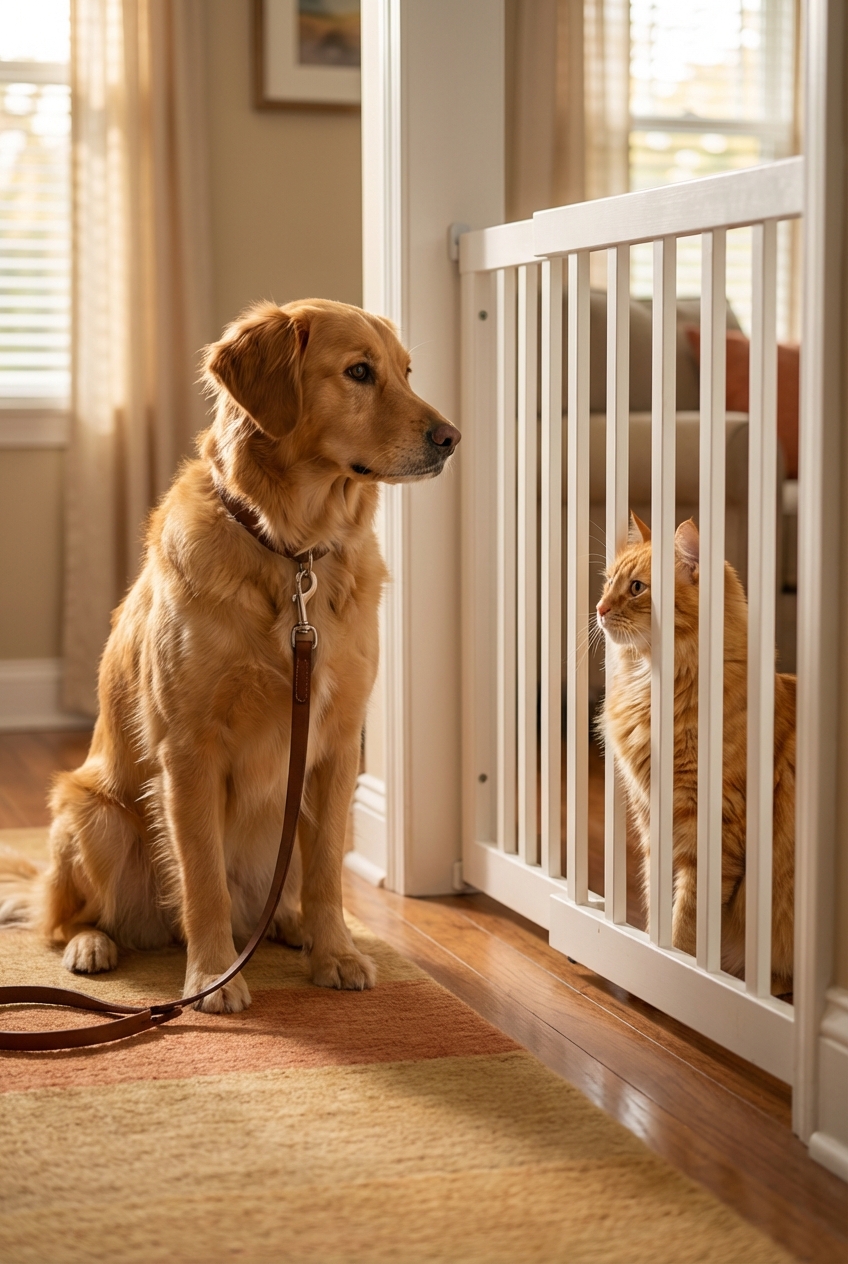
- A baby gate (ideally two stacked if your dog is tall)
- A cracked door with a doorstop, only if it is secure
- A screen door setup
Run the session
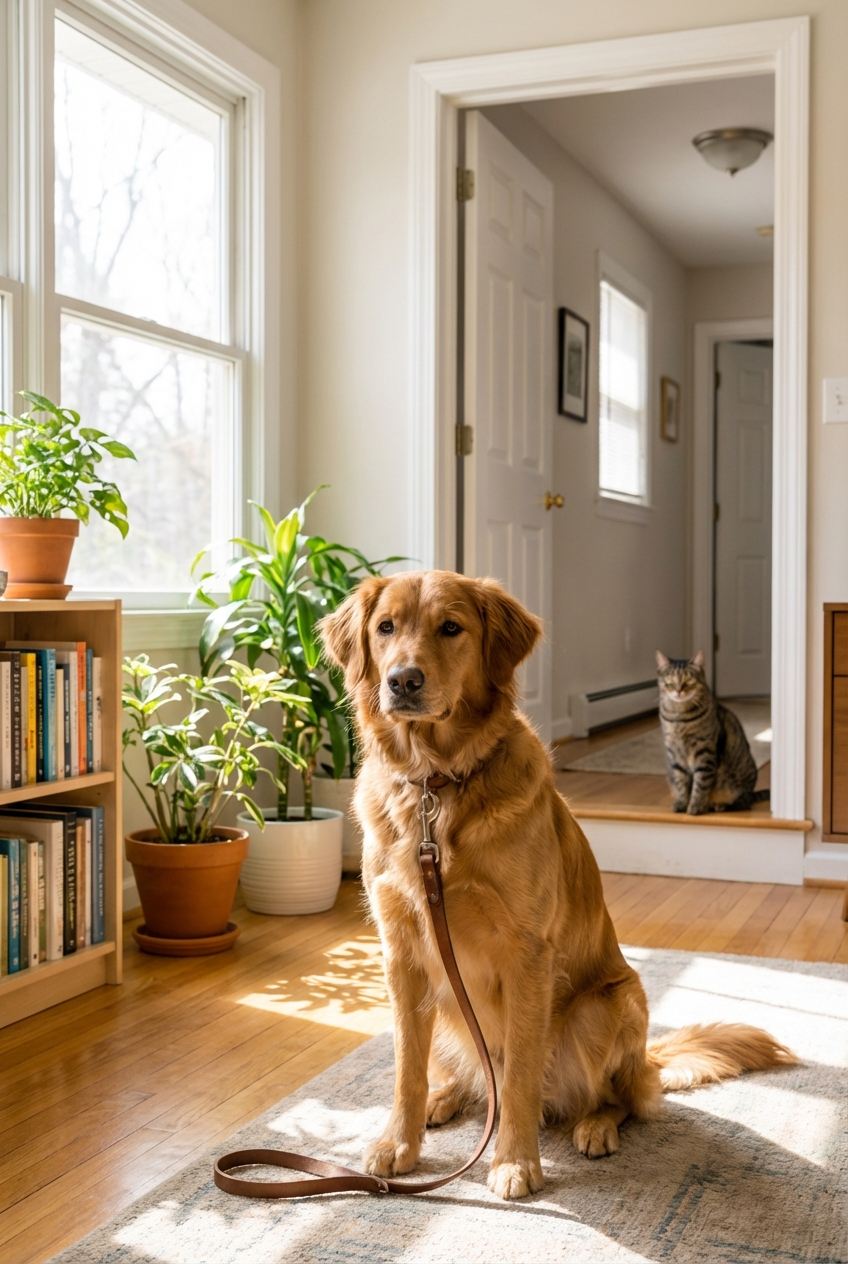
- Dog on leash, calm and at a distance.
- Cat has free choice to approach or stay back. Never force the cat to the gate.
- Short session, 30 to 120 seconds, then end on a calm note.
- Give treats to both sides for calm behavior.
Look for soft body language. In dogs, that can include loose posture, soft eyes, and the ability to look away. In cats, look for ears neutral or forward, a loose body (not crouched tight), normal sniffing or grooming, and the ability to approach and then choose to leave. If either pet stiffens, stares, growls, hisses intensely, barks, or lunges, calmly increase distance and try again later.
Step 4: Controlled meetings (only when the barrier phase is calm)
This step is where many families move too fast. If barrier sessions still involve barking, lunging, or a cat that panics and bolts, stay with the barrier longer.
Set up the room
- Dog on leash, ideally after a walk so energy is lower.
- Cat should have an easy escape route and vertical space.
- Keep toys and food off the floor at first to avoid resource tension .
What good looks like
- Dog can look at the cat, then look away when cued.
- Dog can sniff the air without pulling hard.
- Cat can observe without puffing up, freezing in a crouch, or trying to flee.
Keep sessions brief and repeatable. Many pairs do best with several short meetings per day rather than one long, stressful one.
Rule of thumb: If you are holding your breath, your pets feel it. Aim for calm and predictable, not dramatic progress.
Safety basics
Protect escape routes
Cats need a way out. Make sure there is a cat tree, a tall perch, or a doorway the dog cannot access. This reduces panic, and panic is what can trigger chasing.
Prevent chasing
Chasing can quickly become a habit. If your dog starts to fixate or spring forward, calmly interrupt and create distance. Reward your dog for re-orienting to you.
Use management tools
- Leashes during early interactions
- Baby gates to separate when you cannot supervise
- Crates for dogs who are crate-trained (never as punishment)
- Harness for better control (especially for strong or fast dogs)
Do not leave them loose together unsupervised until you have a long track record of calm behavior.
Feed separately
To reduce tension, feed pets on opposite sides of a closed door or secure gate at first. Avoid face-to-face feeding, and pick up bowls after meals so there is nothing to guard .
High-risk situations
Some homes need extra precautions from day one. If your dog has a history of injuring small animals, repeatedly tries to break through barriers, or shows intense predatory behavior (stalking, trembling fixation, “locked on” staring), do not attempt direct meetings on your own.
- Use a leash and harness for all training sessions.
- Consider a basket muzzle that is introduced with positive, step-by-step conditioning, guided by a qualified professional.
- In some pairings, lifelong separation and management is the safest, most humane plan. That outcome is not “giving up.” It is protecting both pets.
How long does it take?
It varies widely. Some pairs settle in within a couple of weeks. Others need a few months or longer. A few may never be safe together without ongoing management. Factors that influence the timeline include:
- Your dog’s prey drive and impulse control
- Your cat’s confidence level and past experiences
- How much you can supervise and manage the environment
- Whether either pet has pain, anxiety, or medical issues
If you feel stuck, that is a sign to slow down and simplify. Progress is often non-linear, especially after a startling noise or an accidental chase.
When to get help
Please reach out for help if you notice any of the following:
- Dog behavior: stalking, trembling fixation, repeated lunging, inability to take treats near the cat, or any snap attempt.
- Cat behavior: refusing food for more than 24 hours , persistent hiding with no improvement, urine or stool outside the box , or aggressive swatting at the barrier every time.
- Extra caution: kittens, senior cats, and cats with medical conditions can go downhill faster. Contact your veterinarian sooner if there is vomiting, diarrhea, lethargy, or any “not themselves” behavior.
- Either pet: sudden behavior change that could indicate pain (limping, sensitivity to touch, growling when handled).
A credentialed trainer or veterinary behaviorist can build a step-by-step plan tailored to your home. Early support can prevent long-term conflict.
Simple daily routine
If you like structure, try this gentle rhythm:
- Morning: dog walk, then calm barrier session with treats
- Midday: scent swap or space swap (one pet secured, the other explores)
- Evening: short play session for the cat in the safe room, then another barrier session
- Night: pets separated for sleep until fully reliable together
Small wins stack up. Calm is contagious, and your consistency is what builds trust.