Introduce cats the right way with a proven, low-stress plan: safe room setup, scent swapping, door feeding, barrier sessions, and short supervised visits to ...
Article
•
Designer Mixes
Introducing a New Cat to Another Cat

Shari Shidate
Designer Mixes contributor
Bringing home a new cat is exciting, but for your resident cat it can feel like a stranger just moved into their territory. As a veterinary assistant, I can tell you most introductions go best when we slow way down and let the cats communicate in their own language. In many homes, a staged approach works well: scent first, then limited sound and routine, then brief sight, and only later shared space.
The goal is not for them to be best friends overnight. The goal is safe, low-stress coexistence that can grow into companionship over time.
Note: This is general guidance. If your cat has a medical condition, a history of aggression, or severe anxiety, loop in your veterinarian or a qualified behavior professional early.
Before you start: separate room
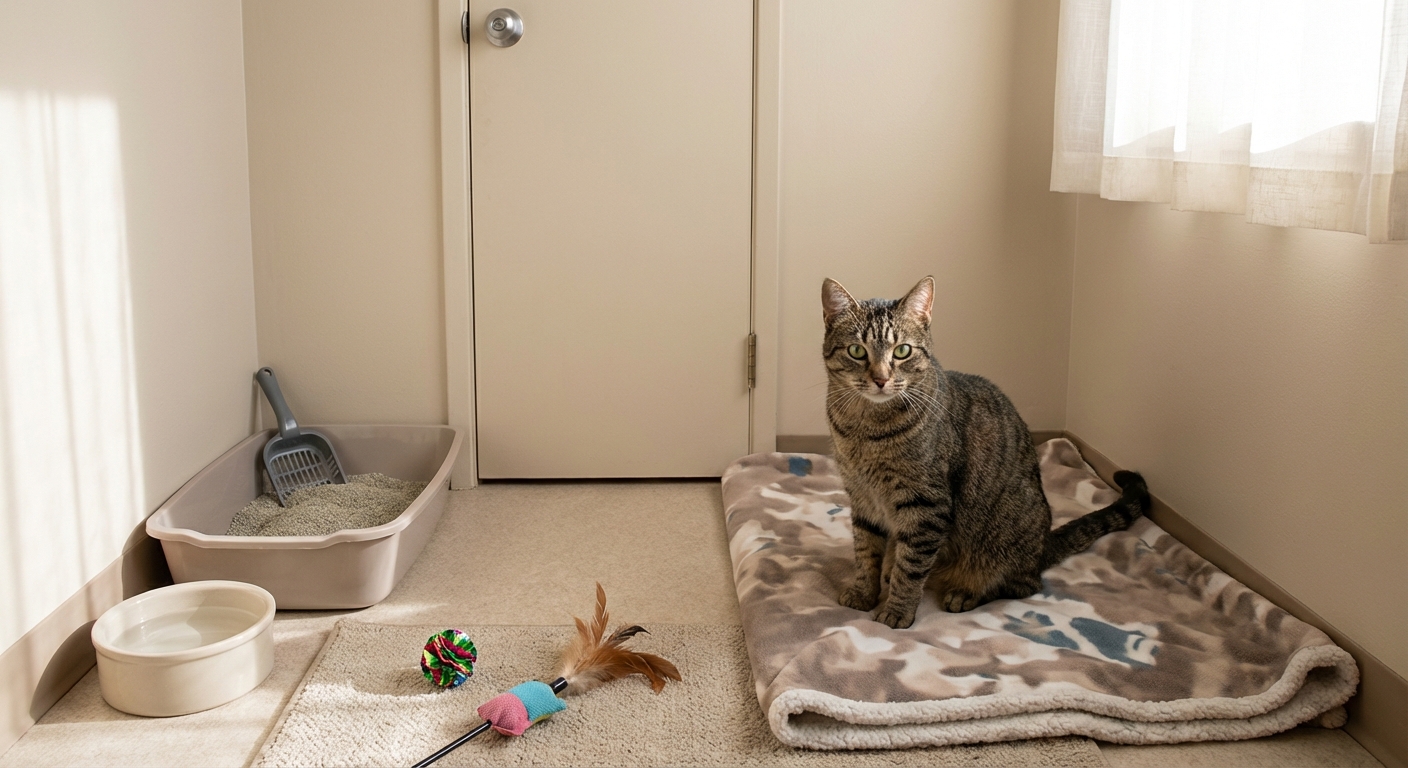
Your new cat needs a “base camp” room with a closed door for at least several days, often 1 to 2 weeks. This protects both cats and prevents a first impression that feels like an invasion.
Base camp checklist
- Litter box: unscented, easy access, scooped daily.
- Food and water: placed away from the litter box.
- Safe hiding options: a covered bed, a carrier left open, or a cat cave.
- Vertical space: a sturdy cat tree or shelves if possible.
- Scratching surface: helps reduce stress and mark territory appropriately.
- Comfort routine: scheduled play, calm talking, and predictable feeding times.
Pro tip: If you have a small home, a bedroom or office works great. What matters is that the door closes and the resident cat cannot rush in.
If you have multiple resident cats: do introductions one resident cat at a time if needed, and keep everyone’s routine steady so no one feels pushed out.
Step 1: scent first
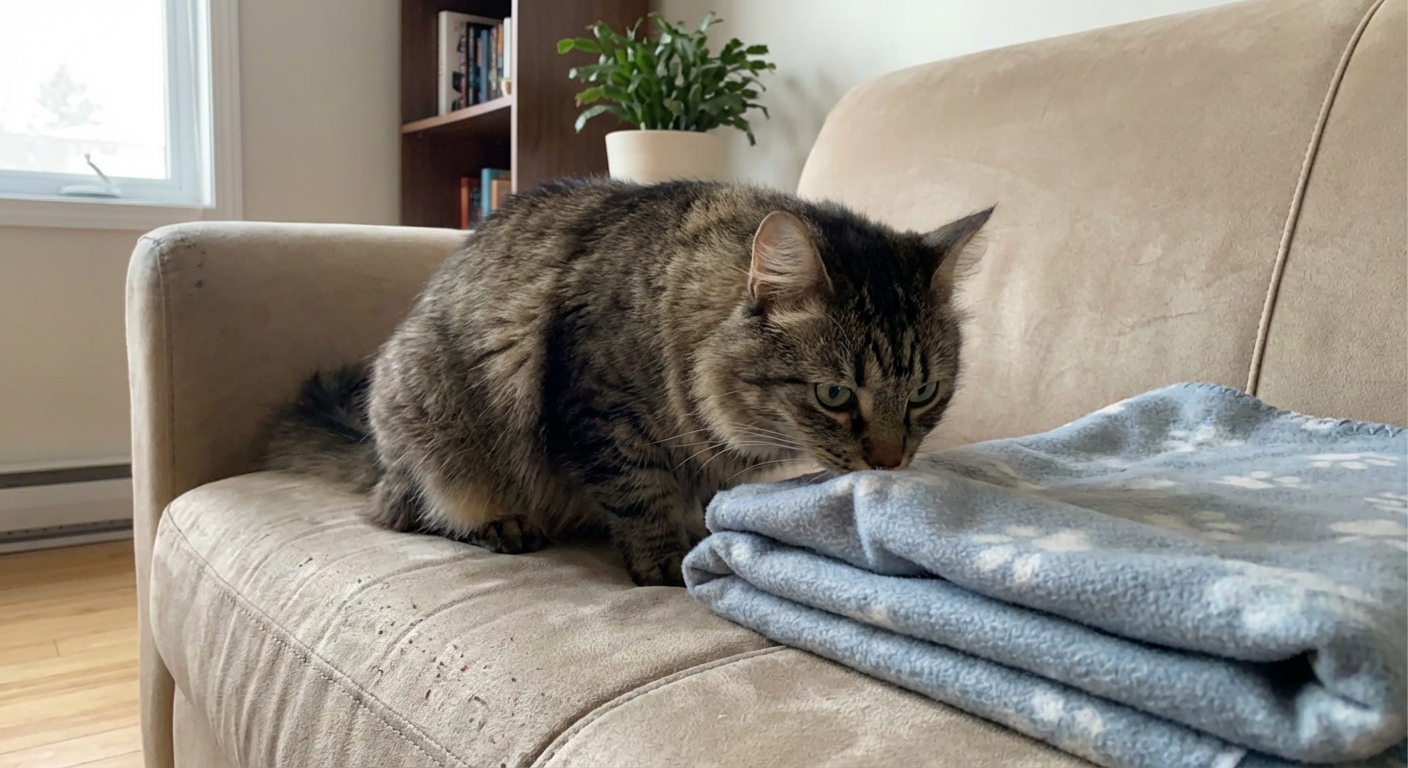
Cats gather a lot of social information through scent. When we start with smell, we give both cats a way to “meet” without the pressure of close contact.
How to swap scent
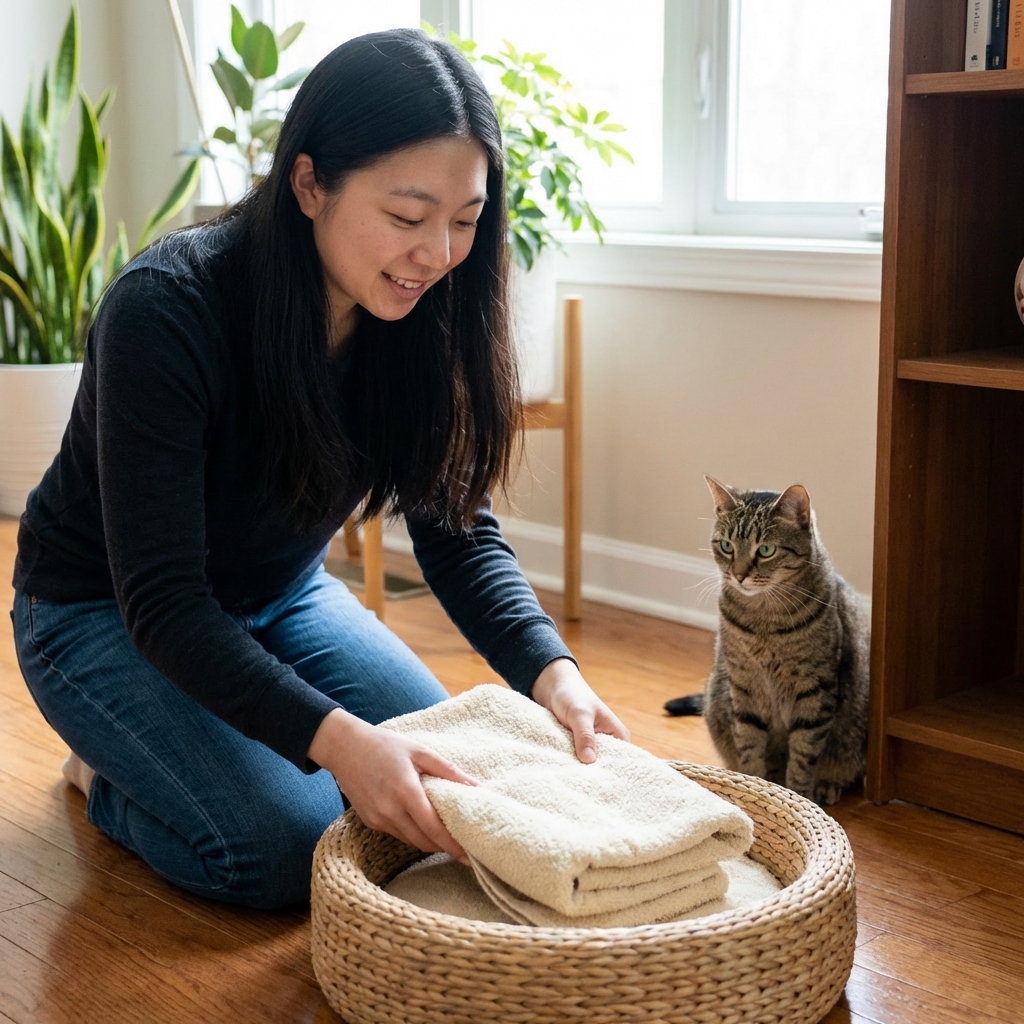
- Swap bedding: move a blanket or small towel between cats daily.
- Cheek rub method: gently rub each cat’s cheeks (where friendly pheromones are) with a soft cloth, then place the cloth near the other cat’s resting area.
- Site swapping: once both cats are calm in their spaces, let the new cat explore the home while the resident cat relaxes in another room, then switch back. Do this for short, supervised sessions.
What you want to see: curious sniffing, relaxed body, normal eating and grooming. A little hissing at an object is okay. It is information, not failure.
Step 2: door positives
Now we teach both cats that the other cat’s presence predicts good things. Food is your best helper here.
Door feeding routine
- Feed both cats on opposite sides of the closed door.
- Start far enough from the door that both cats will eat comfortably.
- Over several meals, move bowls gradually closer to the door.
If either cat refuses food, growls, or swats under the door, back up to a greater distance and move forward more slowly.
Progress is measured by calm behavior, not the calendar. Some cats need days. Others need weeks. Slow is fast with cats.
Step 3: brief sight
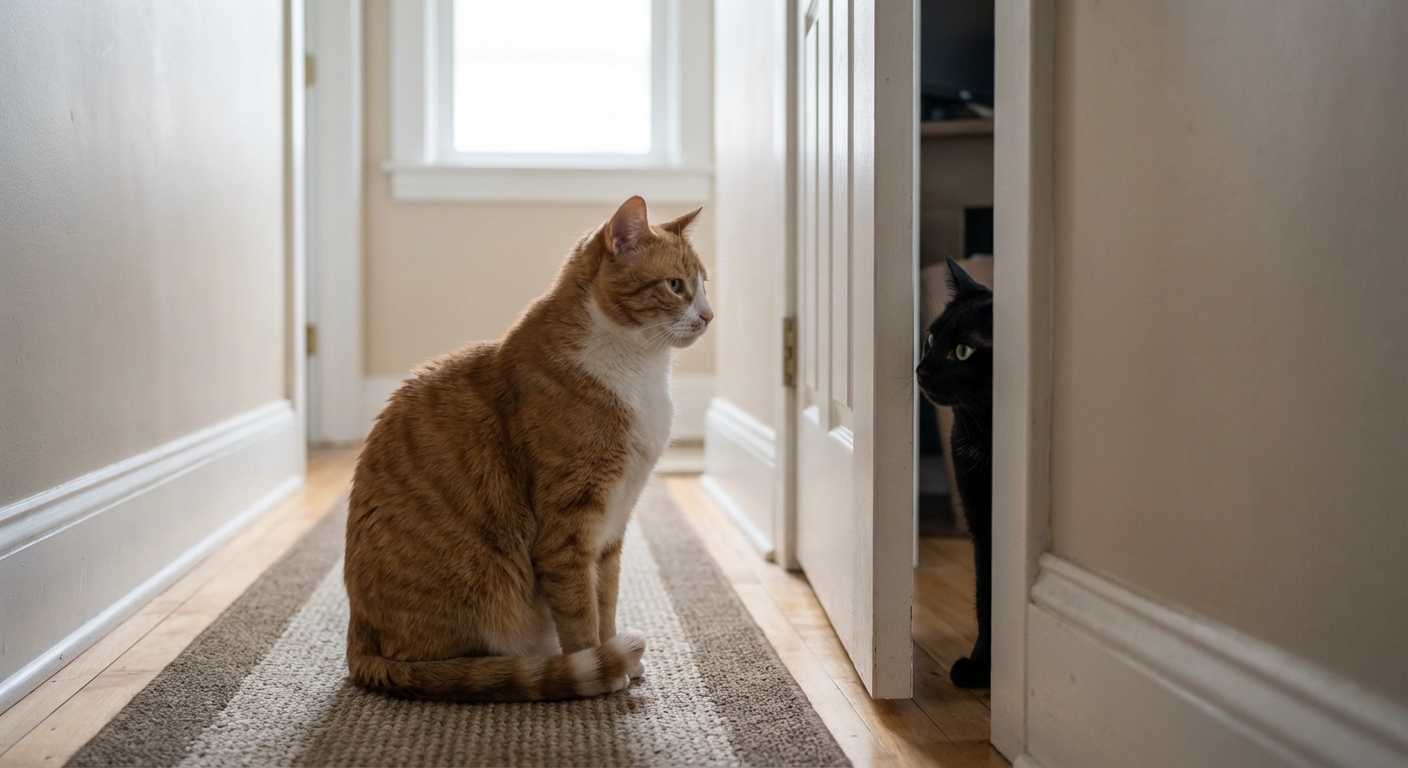
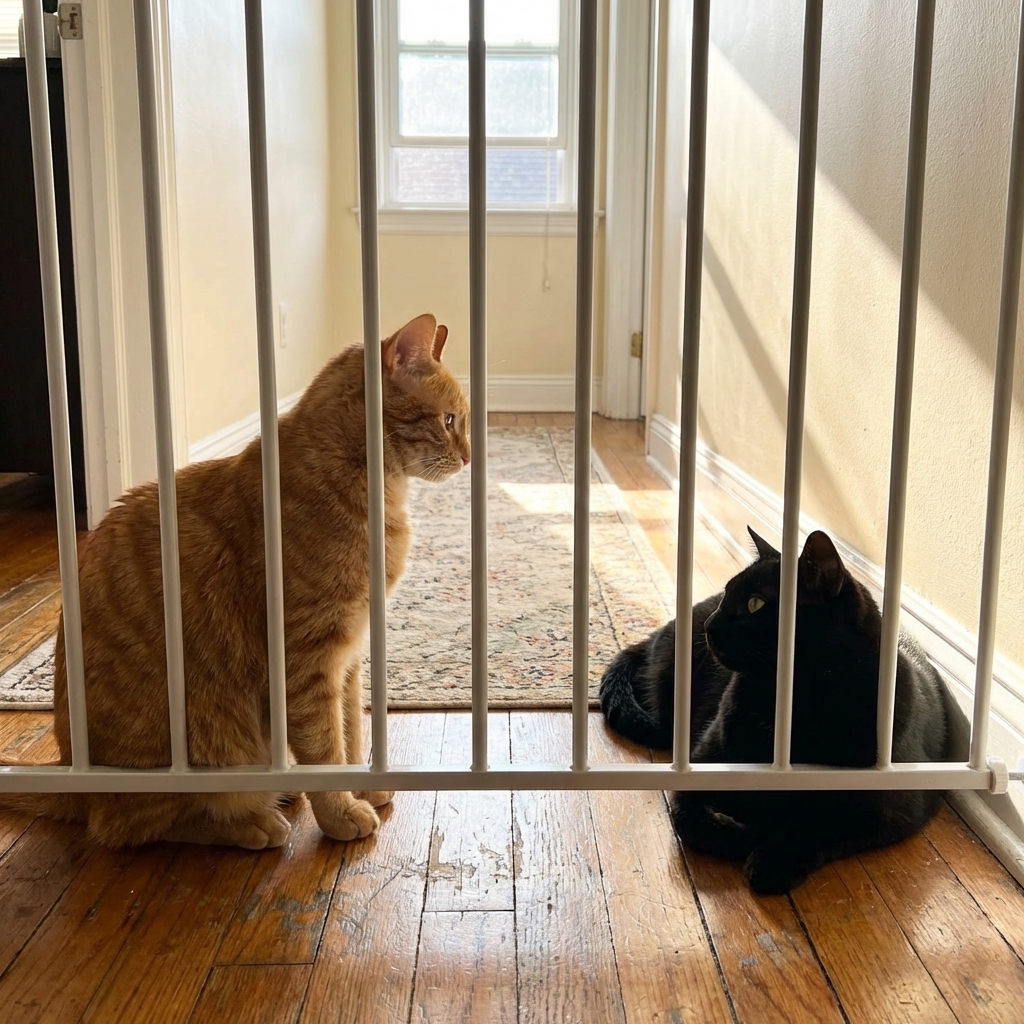
Once both cats can eat calmly at the door, introduce short “peek” sessions. Visual access is often the hardest step, so keep it brief and positive.
Safe ways to allow sight
- Baby gate plus a sheet: start with the sheet covering most of the view, then gradually lift it.
- Screen door setup: great if you already have one.
- Cracked door (only with a barrier): if you use this method, use a secure door latch, doorstop, or a second barrier (like a tall gate) so the door cannot swing open and no cat can squeeze through or grab with paws.
Pair these sessions with treats, play, or a meal. End the session while things are going well.
Step 4: same-room visits
When both cats can see each other without lunging, prolonged staring, or intense vocalizing, you can try short in-room sessions.
How to run early meetings
- Pick a neutral space: not the resident cat’s favorite sleeping corner if possible.
- Protect key resources: keep litter boxes, food, and water in locations where a cat cannot be cornered or ambushed.
- Provide escape routes: open pathways, a cat tree, and hiding spots.
- Use play to relieve tension: wand toys work well, one for each cat if possible.
- Keep it brief: 2 to 5 minutes at first, then gradually longer.
Do not punish hissing. Hissing is a boundary-setting tool. Punishment increases fear and can create negative associations with the other cat.
Body language guide
Signs you are on track
- Both cats eat, play, and use the litter box normally.
- Curiosity replaces tension: sniffing, looking away, grooming.
- Loose bodies, soft tails, ears mostly forward, normal blinking.
- They can disengage and move away without being followed.
Signs to slow down
- Flattened ears, puffed fur, tail lashing, crouching, or trembling.
- Hard staring, stalking, blocking doorways, cornering, or repeated swatting.
- Growling, yowling, or escalating vocalizing (a brief hiss is not the same as sustained escalation).
- Hiding constantly, reduced appetite, vomiting, diarrhea, or other ongoing GI upset.
- Urine marking or sudden litter box avoidance.
If you see these, return to the previous step for several days and rebuild confidence.
Resources and territory
Even cats who like each other can fight if they feel they must compete for essentials. Set up your home so nobody has to guard what they need.
Simple resource rules
- Litter boxes: the classic guideline is one per cat plus one extra, in different locations.
- Placement matters: avoid lining boxes up together and avoid dead-end areas where a cat could be trapped.
- Food and water: multiple stations can prevent blocking and stress.
- Resting spots: offer vertical choices and quiet napping areas.
- Scratching posts: place at least one in the main living area.
In many households, adding more of the good stuff solves tension faster than any correction ever could.
Helpful tools
Tools that often help
- Pheromone diffusers: can reduce stress during transitions.
- Treat puzzles and play: redirects nervous energy.
- Calm routine: predictable feeding times and quiet check-ins.
What to avoid
- Forced face-to-face meetings or “let them fight it out.” This can create lasting fear and injury.
- Holding a cat in your arms during meetings. A frightened cat may scratch to escape.
- Spray bottles or yelling. These increase stress and can worsen conflict.
If a fight happens
Even with a careful plan, scuffles can happen. Your job is to end it safely and reset.
- Do not grab cats with your hands.
- Interrupt with a barrier: slide a piece of cardboard between them, toss a blanket over one cat, or use a large cushion to block line of sight.
- Separate and decompress: return the new cat to base camp, give everyone time to calm down, then go back to an earlier step for a few days.
- Check for injuries: even small punctures can become infected.
When to call a pro
Please reach out for help if you notice any of the following:
- Injuries or repeated attempts to attack.
- Not eating for 24 hours, and call sooner for kittens, seniors, or cats with medical issues.
- Urinary signs like straining, frequent trips to the box, or blood in urine.
- Ongoing stress behaviors such as overgrooming, persistent hiding, or litter box problems.
Sometimes pain, illness, or anxiety is fueling the behavior. The earlier you get support, the easier it is to turn things around.
A flexible timeline
Every cat is different. Use this as a loose framework, and only move forward when both cats are consistently calm at the current step.
- Days 1 to 3: base camp only, scent swapping begins.
- Days 4 to 7: door feeding and site swapping.
- Week 2: brief visual sessions through a gate or screen.
- Weeks 2 to 4: short supervised meetings, slowly increasing time.
If your cats move faster, great. If they need longer, that is normal too. The most successful introductions are the ones where you listen to what the cats are telling you.
One more helpful note: spay and neuter can reduce some hormonally-driven conflict, and intact cats may need more management. If you are unsure, your veterinarian can guide you.