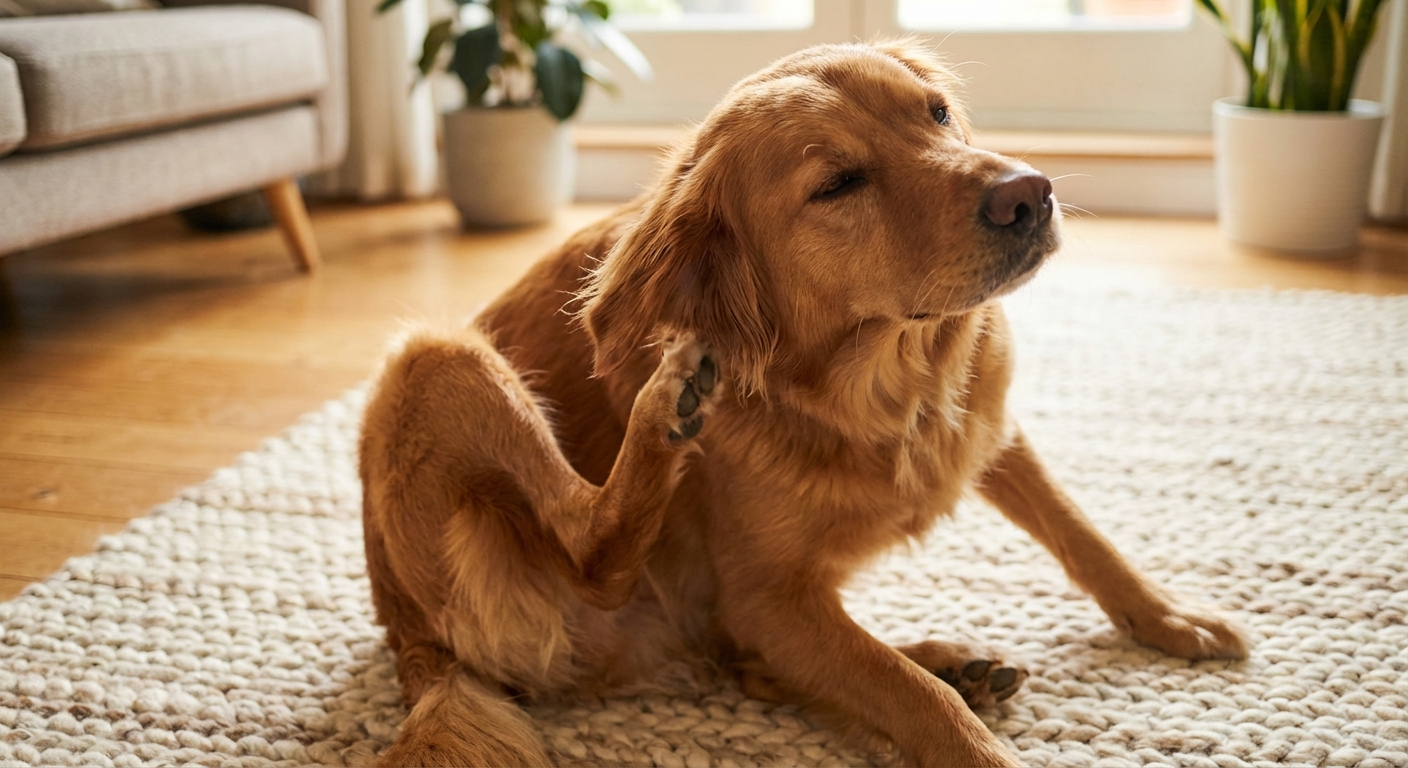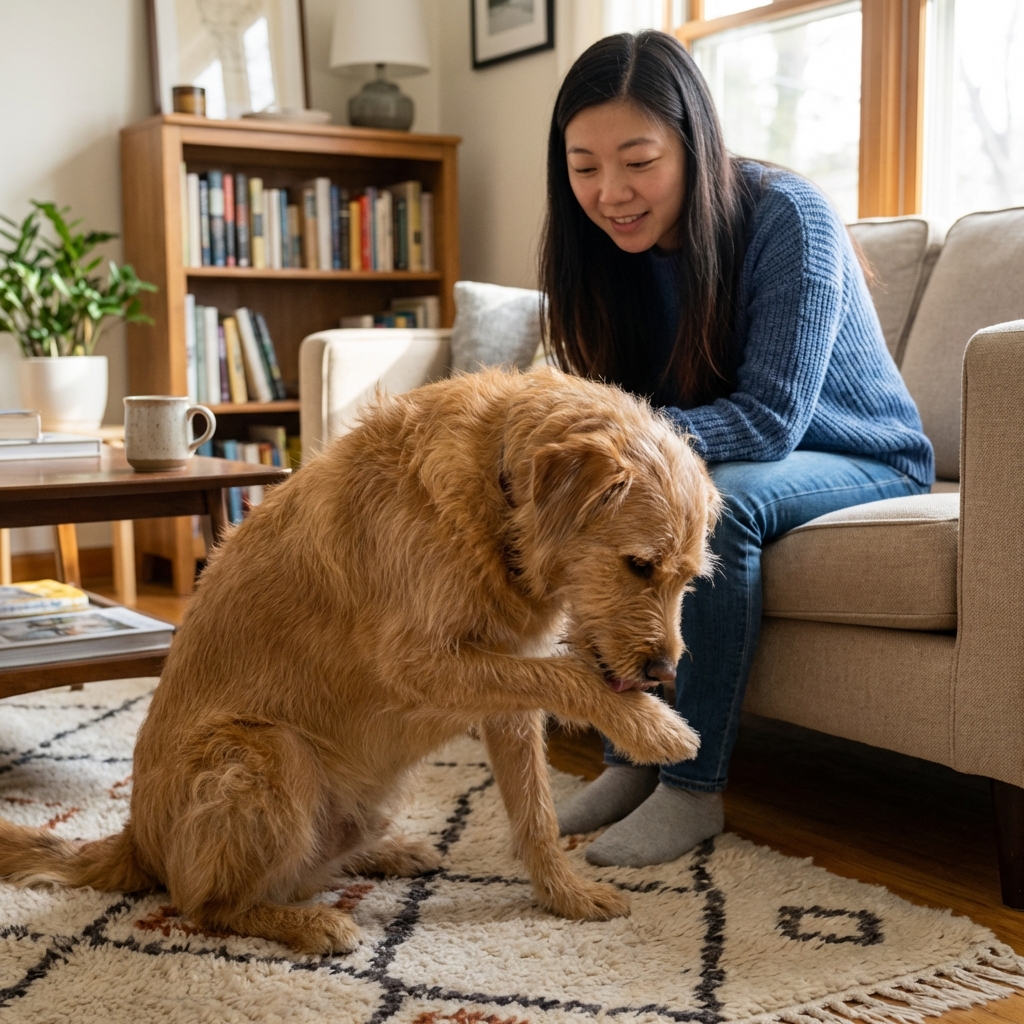
From allergies and yeast to injuries and anxiety, discover the most common reasons dogs lick their paws. Follow a quick paw-check routine, safe home tips, an...
Article
•
Designer Mixes
Interdigital Cysts in Dogs

Shari Shidate
Designer Mixes contributor
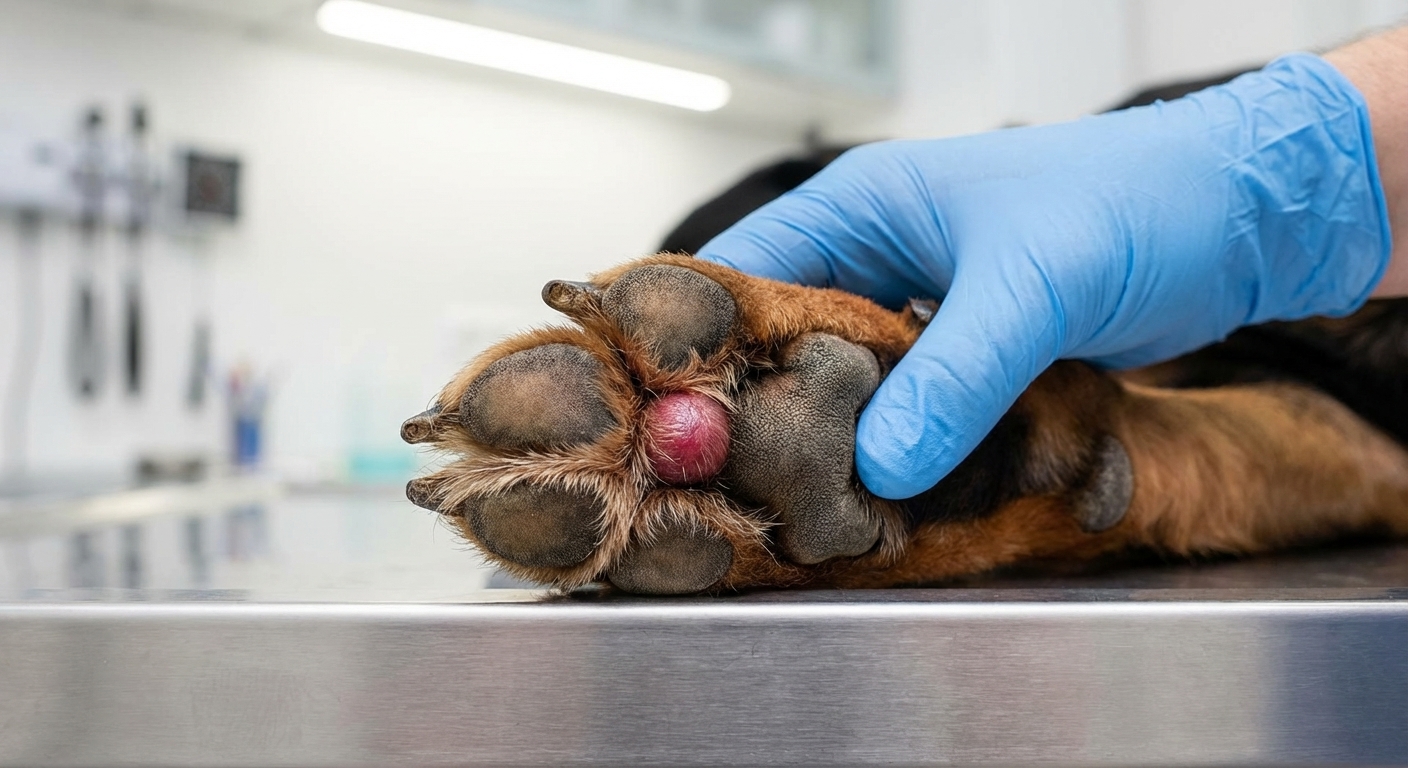
If your dog is suddenly licking one paw nonstop and you notice a tender bump between the toes, you are not being paranoid. Interdigital cysts, also called interdigital furuncles, are a common cause of painful paw licking. They can look like a pimple, boil, or swollen red nodule in the toe webbing, and they sometimes rupture and drain.
As a veterinary assistant, I can tell you this is one of those issues where calm, consistent home care helps, but waiting too long can turn a small problem into a painful infection. Let’s walk through what these bumps are, why they happen, what you can safely do at home, and when it is time to call your vet.
Quick note: This article is educational and not a substitute for an in-person veterinary diagnosis.
What are interdigital cysts (furuncles)?
An interdigital cyst is a deep, inflamed lesion that forms in the skin between a dog’s toes. Even though people call them “cysts,” many are actually furuncles, meaning inflammation and sometimes infection involving the hair follicle and surrounding tissue.
Interdigital furunculosis is often multifactorial. Depending on the dog, it can involve:
- Sterile (non-infected) inflammation early on, often triggered by allergies or follicle trauma
- Follicular rupture from friction and mechanical stress (pressure on the webbing, repeated impact, or anatomy that increases rubbing)
- Secondary infection with bacteria, yeast, or both
- Foreign material like a grass awn or foxtail that creates a stubborn draining tract
- Parasites (such as Demodex mites) in some cases, especially if there are other skin issues
Because these lesions can sit deep in the tissue, they may be slow to resolve and may recur unless the underlying trigger is addressed.
Common signs at home
Interdigital cysts do not always start as an obvious bump. Many dogs show discomfort first, then the skin changes become visible.
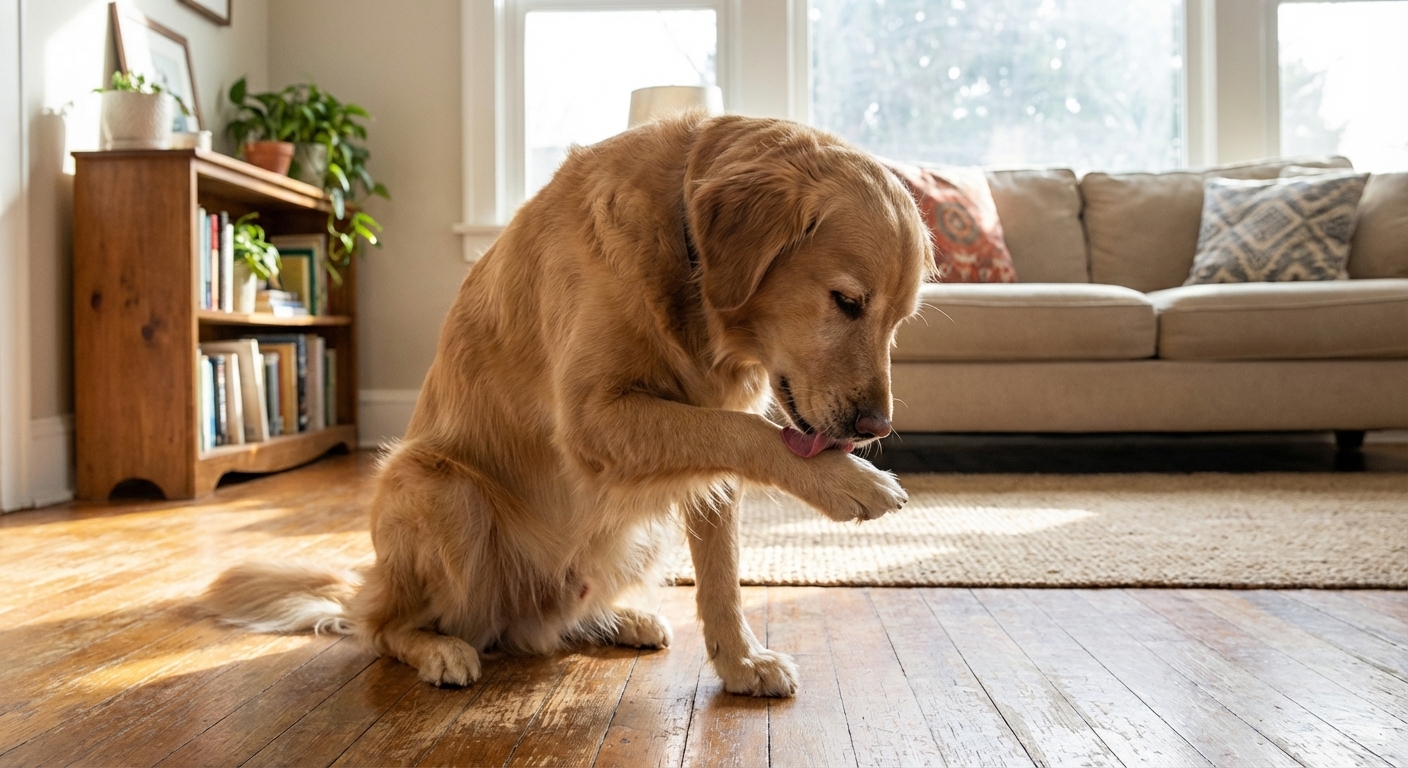
- Persistent licking or chewing at one paw
- Limping or “tip-toeing” on one foot
- Redness and swelling between toes
- A firm lump or raised nodule in the webbing
- Drainage that looks clear, bloody, or pus-like
- A strong odor from the paw (commonly reported with yeast, but bacteria can smell too)
- Staining of the fur from saliva
Why they form
Think of the skin between toes as a high-friction, high-moisture zone. When something irritates that area repeatedly, the barrier breaks down, hair follicles get inflamed, and infection can set in.
1) Allergies
Environmental allergies (like pollens, grasses, and dust mites) and food allergies can cause chronic paw inflammation and itching. Dogs lick, the skin gets damaged, bacteria and yeast overgrow, and furuncles can form.
If your dog has recurring paw issues, you may also notice ear infections, itchy belly or armpits, or seasonal flare-ups.
2) Yeast overgrowth
Yeast thrives in warm, moist places, especially if a dog is licking a lot or has allergies. The “corn chip” smell is often described with paw problems, but it is not specific. The only way to confirm yeast versus bacteria is with a quick in-clinic test like cytology.
3) Bacterial infection (pyoderma)
Staphylococcal bacteria commonly live on skin and can overgrow when the skin barrier is compromised. Once the lesion is infected, it tends to be more painful, swollen, and may drain.
4) Foreign bodies (foxtails, grass awns, splinters)
A tiny plant awn can burrow into the webbing and create a stubborn, recurring draining tract, especially after running in tall grass. If the same paw, same spot keeps reopening, a foreign body should be high on the list.
5) Mechanical stress and anatomy
Dogs with heavier bodies, tight webbing, short stiff hairs, or splayed toes can get repeated follicle trauma. Hard surfaces, repetitive jumping, and high-impact play can contribute too.
Breeds more at risk
Any dog can get interdigital cysts, but short-coated, allergy-prone breeds and dogs with higher friction in the toe webbing are overrepresented. Commonly mentioned breeds include:
- Bulldogs (English and French)
- Boxers
- Labrador Retrievers
- Golden Retrievers
- German Shepherd Dogs
- Shar-Peis
- Pit Bull-type breeds
Designer mixes can be prone too, especially mixes that inherit allergy-prone skin or dense paw hair that traps moisture and debris.
Safe home care
Home care is best for mild, early lesions when your dog is comfortable, the bump is small, and there is no spreading redness, heavy drainage, or limping. Your goals are to reduce surface microbes, calm inflammation, and keep the paw clean and dry.
Important: Do not squeeze, pop, or lance an interdigital cyst at home. Because these lesions are deep, squeezing can drive infection further into tissue.
Step 1: Inspect and rinse
- Rinse the paw with lukewarm water to remove dirt and allergens.
- Check between toes for obvious debris, a thorn, or a small cut. If something is visibly embedded and you cannot remove it easily, stop and call your vet.
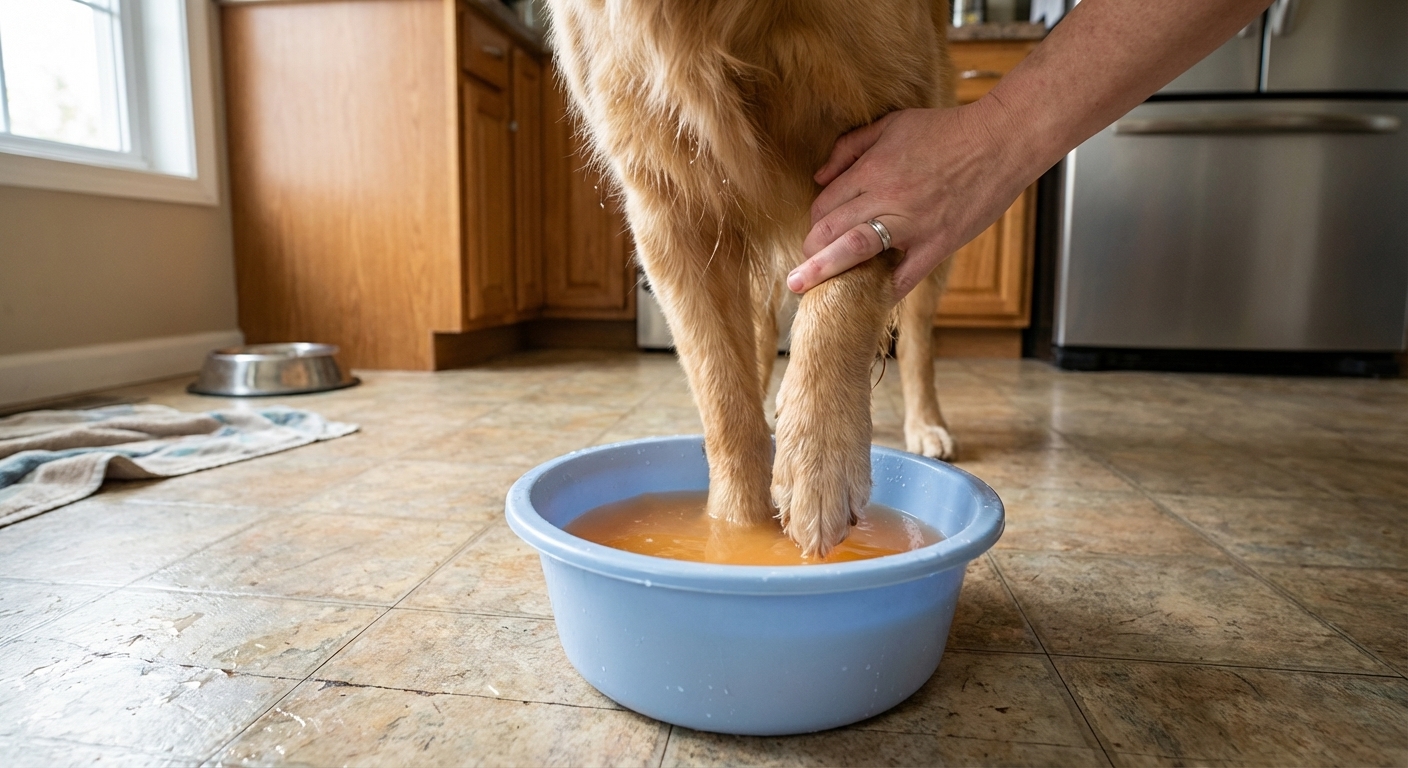
Step 2: Soak (5 to 10 minutes)
Soaking helps soften crusts, reduce surface microbes, and soothe inflamed skin.
- Option A: Chlorhexidine soak (often recommended in vet clinics). Use a pet-safe chlorhexidine product as directed on the label or by your veterinarian. Avoid using high-concentration chlorhexidine scrub products unless your vet has told you exactly how to dilute them.
- Option B: Diluted povidone-iodine. The soak should look like weak tea, not dark brown. Too strong can irritate skin. Do not use if your dog has a known iodine sensitivity.
- Option C: Epsom salt soak can help with mild swelling and comfort, but it does not target yeast and bacteria as effectively as antiseptics.
Frequency: 1 to 2 times daily for a few days, then reassess. If you are not seeing improvement within 48 to 72 hours, it is time to involve your vet. If it is rapidly worsening, go sooner.
Step 3: Dry thoroughly
This matters more than most people realize. Moisture trapped between toes encourages yeast and delays healing.
- Pat dry with a clean towel.
- Use a cool setting hair dryer if your dog tolerates it, focusing between toes.
Step 4: Prevent licking
Most paw lesions fail to heal because the dog keeps licking.
- Use an e-collar or inflatable collar if needed.
- Consider a breathable bootie for short supervised periods, but avoid trapping moisture for long stretches.
When prescription meds are needed
Interdigital cysts often require prescription treatment when they are infected, deep, painful, or recurring. Your veterinarian may recommend:
- Oral antibiotics for bacterial infection, often for several weeks because these lesions are deep
- Topical antibiotics or antiseptics to reduce surface bacteria
- Antifungal therapy if yeast is present (topical, oral, or both)
- Anti-inflammatory medication to reduce pain and swelling
- Allergy control (for example, Apoquel, Cytopoint, and other targeted plans) if allergies are the underlying driver
- Medicated wipes or shampoos as part of a longer-term skin plan in recurrent cases
For dogs with repeated episodes, your vet may recommend diagnostics like skin cytology (a quick microscope check for bacteria and yeast), culture and sensitivity (to choose the right antibiotic), skin scraping for Demodex, or imaging if a foreign body is suspected. For chronic, non-healing, or unusual masses, a biopsy may be recommended to rule out tumors or other conditions.
When to see the vet
Please call your veterinarian promptly if you notice any of the following:
- Your dog is limping, crying, or unwilling to bear weight
- The swelling is rapidly increasing or spreading up the foot
- There is thick pus, significant bleeding, or a foul smell
- The area is very hot to the touch
- Your dog has a fever, low appetite, or seems “off”
- The cyst keeps coming back in the same location
- You suspect a foxtail or other foreign body
- Home care has not clearly improved things within 48 to 72 hours
What else could it be? Not every toe-web lump is an interdigital cyst. Other possibilities include a bee or wasp sting, a cut or puncture wound, a nail-bed infection, allergic pododermatitis without a furuncle, mites, fungal infections, or (less commonly) a growth such as a mast cell tumor. If you are unsure, it is safer to have it checked.
Interdigital furuncles can sometimes form draining tracts and scar tissue. Early treatment is often simpler and less expensive than trying to fix a chronic, recurring problem.
Preventing recurrence
If your dog gets interdigital cysts more than once, prevention is less about “finding a better soak” and more about addressing what is repeatedly irritating the paw skin.
1) Control allergies
- Wipe paws after walks during high pollen seasons.
- Talk to your vet about diet trials if food allergy is suspected.
- Keep consistent flea prevention, since flea allergy can amplify overall itch.
- Use vet-recommended allergy therapies when needed. Many dogs do best with a proactive plan rather than chasing flare-ups.
2) Keep paws clean and dry
- After baths, swims, or rainy walks, dry between toes.
- Trim excess hair between paw pads if your dog’s coat traps moisture and debris (a groomer can help).
3) Reduce exposure to foreign bodies
- Avoid tall dry grass during foxtail season when possible.
- Do quick paw checks after hikes.
4) Support skin health
Ask your vet if an omega-3 supplement is appropriate for your dog. Omega-3s can support the skin barrier and reduce inflammatory itch in many dogs, especially those with allergies.
In rare chronic cases with long-standing draining tracts or significant scar tissue, your veterinarian may discuss advanced options such as longer treatment courses or procedural therapies. The plan depends on the cause.

FAQ
Are interdigital cysts contagious?
The lesion itself is not contagious. However, some conditions that can mimic or contribute to paw lesions, such as mites or certain fungal infections, can spread between pets. If other pets in the home are itchy or your dog has widespread skin lesions, schedule a veterinary exam.
Will it go away on its own?
Some mild cases improve with good hygiene, soaking, and preventing licking. Many do not fully resolve without addressing infection, allergies, or a foreign body. If it is not improving within 48 to 72 hours, it should be assessed sooner.
Should I use hydrogen peroxide or rubbing alcohol?
I do not recommend them for interdigital lesions. They can damage healthy tissue and delay healing. Pet-safe antiseptics like chlorhexidine are usually better tolerated, but follow your veterinarian’s direction.
The bottom line
Interdigital cysts are painful toe-web lesions that are often tied to allergies, mechanical stress, yeast, bacteria, or a hidden foreign body. Gentle soaking plus keeping the paw clean and dry can help early cases, but limping, deep infection, rapid worsening, and recurring bumps deserve a veterinary exam.
If you are unsure, take a clear photo of the paw today and compare it after 48 hours of home care. If it looks worse or your dog seems uncomfortable, trust your instincts and get your vet involved.