Hands-off slow cooker dog food for busy owners: 3 easy recipes (chicken/rice, turkey/sweet potato, beef/pumpkin) plus calcium guidance, safe ingredients, por...
Article
•
Designer Mixes
Instant Pot Homemade Dog Food

Shari Shidate
Designer Mixes contributor
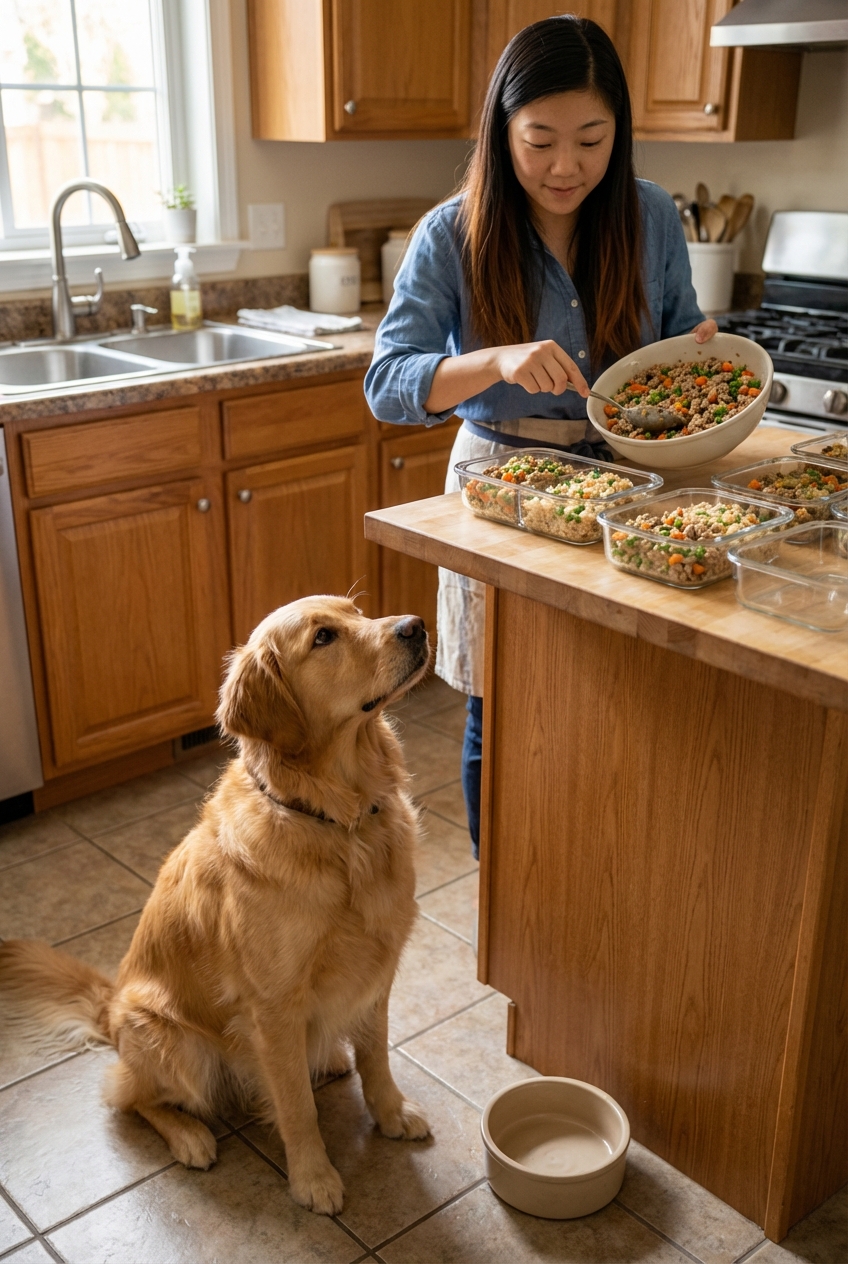
If you are a busy dog parent, you are not alone. In our clinic in North Texas, I hear the same worry all the time: “I want to feed better, but I do not have hours to cook.” The Instant Pot can be a game changer because it lets you cook real, whole ingredients with minimal hands-on time, then portion and freeze for the week.
Homemade does not have to mean complicated. It means you control the ingredients, avoid mystery additives, and can tailor meals to your dog’s needs with your veterinarian’s guidance.
Why the Instant Pot helps
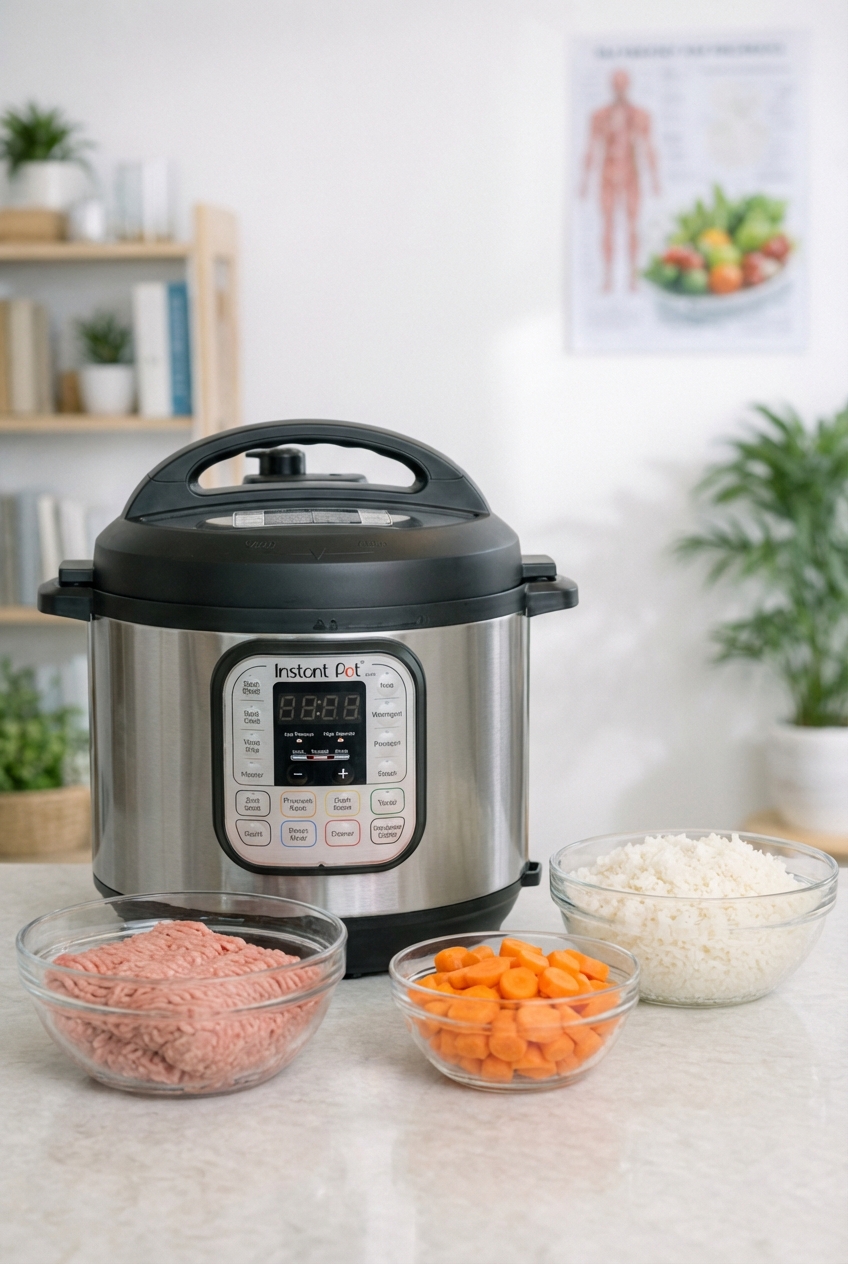
The Instant Pot is helpful for three reasons: it cooks quickly, it is mostly hands-off, and it makes batch cooking easy. For many families, batch cooking is what makes homemade sustainable.
- Time: A full pot can cook while you answer emails, help with homework, or do laundry.
- Consistency: Reliable cook times help you avoid undercooked starches or tough meats.
- Texture: Some dogs, especially seniors or dogs with dental disease, do better with softer foods that are easier to chew. Others prefer more texture, so you can adjust (see tips below).
Safety note: Homemade diets can be wonderfully healthy, but they need to be balanced. Dogs require specific amounts of calcium, essential fatty acids, and key vitamins and minerals. If you plan to feed homemade as more than an occasional topper, partner with your veterinarian or a board-certified veterinary nutritionist (DACVN) for a complete recipe.
Balanced bowl basics
To keep this simple, think in categories. Your dog’s exact needs depend on age, weight, activity level, and health conditions, but these building blocks will help you plan.
1) Protein
Choose a high-quality, plainly cooked protein as the foundation. Common options include chicken, turkey, lean beef, pork, eggs, and certain fish.
- Pick leaner cuts if your dog is prone to pancreatitis or needs weight management.
- Rotate proteins when possible to broaden nutrients and reduce boredom.
- If using fish, choose boneless options and talk with your veterinarian about frequency (some fish are higher in mercury).
- Cook eggs fully.
2) Carbohydrates (optional)
Carbs are not “bad” by default. For many dogs, they provide digestible energy and help meals feel satisfying.
- Good options: white or brown rice, oats, quinoa, barley, sweet potato.
- If your dog has diabetes or needs weight loss, talk with your vet about portions and carb choices.
3) Vegetables
Lightly cooked vegetables add fiber and phytonutrients. Dogs generally digest cooked vegetables better than raw.
- Great choices: carrots, green beans, zucchini, spinach, broccoli, pumpkin.
- Avoid the allium family: onions, garlic, chives, leeks, and anything seasoned with them (including powders).
4) Fat and omega-3s
Dogs need fat, but the type and amount matter. Many homemade meals are low in omega-3s unless you add them.
- Consider a veterinarian-recommended fish oil to support skin, coat, joints, and inflammation balance.
5) Calcium and micronutrients
This is the biggest “make or break” area. Meat-heavy homemade meals are typically low in calcium and can be unbalanced in calcium-to-phosphorus ratio.
- Use a complete and balanced premix or supplement formulated for homemade diets, or follow a veterinary nutritionist recipe that specifies calcium and micronutrients.
- Do not rely on guesswork with eggshell powder unless you have exact amounts from a professional recipe.
Complete and balanced
“Complete and balanced” means a recipe meets established nutrient targets for dogs (often based on AAFCO profiles and NRC guidelines) when fed as the main diet. Most well-meaning homemade recipes fall short without a correctly chosen supplement and the right portions.
If you want homemade to be your dog’s primary diet, ask your veterinarian or DACVN which type of balancing product fits your dog (for example, a complete vitamin-mineral premix designed for cooked diets) and how much to use based on daily calories.
Instant Pot recipe: Turkey, rice, and veggies
This is a simple topper base you can use right away, or a foundation to build a complete diet with the right supplement plan. It is not complete and balanced on its own. It is intentionally straightforward and uses common, budget-friendly ingredients.
Ingredients
- 2 to 3 pounds ground turkey (93% lean is a good middle ground)
- 1 cup uncooked rice (white or brown)
- 2 cups chopped carrots
- 2 cups chopped green beans or zucchini
- 1.5 to 2 cups water or low-sodium broth (no onion, no garlic added)
Consistency note: This amount of liquid typically makes a scoopable, “stewy” dog food texture. If you want it looser (porridge-like), use up to 2.5 cups. Since Instant Pots have little evaporation and turkey and veggies release liquid, start lower and add water after cooking if needed.
Steps
- Clean and prep: Wash hands, utensils, and cutting boards. Keep raw meat separate from other ingredients.
- Add ingredients: Put rice and water or broth in the pot first. Crumble the turkey into smaller chunks and add it on top, then add vegetables.
- Cook: Pressure cook on High. Use 22 minutes for brown rice and 10 minutes for white rice. Cook times can vary by rice type and model, so follow your Instant Pot’s guidance if it differs.
- Natural release: Let pressure release naturally for about 10 minutes, then carefully vent the rest.
- Check doneness: Stir well and confirm the turkey is fully cooked (165°F in the thickest portion).
- Adjust texture and cool: Break up any remaining turkey clumps. If it is thicker than you want, stir in a little warm water. Let the mixture cool completely.
- Portion: Divide into meal containers and refrigerate or freeze.
Important: If you are going to feed this as more than an occasional topper, ask your veterinarian what balancing supplement or premix to use and how much to add based on your dog’s weight and daily calories.
How much to feed
Because every dog’s calorie needs are different, the safest evidence-based approach is to start with your dog’s daily calorie target, then portion meals to match that. Your veterinarian can calculate this quickly, especially if your dog is trying to lose or gain weight.
- Start small: If this is new, begin by replacing 10 to 25% of your dog’s current food.
- Watch stool quality: Loose stool often means the transition is too fast or the recipe is too rich.
- Track weight weekly: A quick weigh-in helps prevent slow creep weight gain.
Meal prep system
If you do nothing else, do this: cook twice a week, portion, freeze, and rotate proteins. That is the routine I see work for real families.
Storage
- Refrigerator: Store up to 3 to 4 days in airtight containers.
- Freezer: Store 2 to 3 months for best quality.
- Thaw safely: Thaw in the fridge overnight, not on the counter.
Portioning
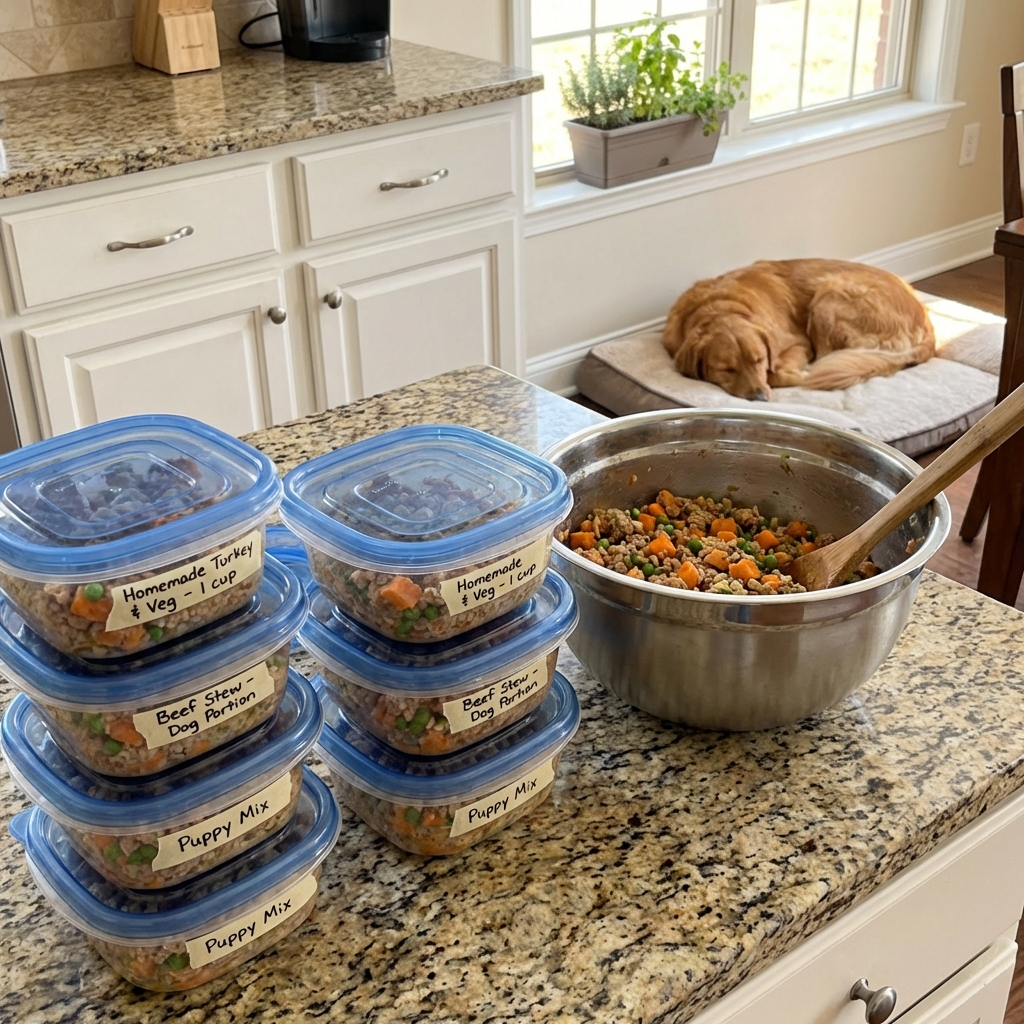
- Freeze in daily portions so you do not have to think each morning.
- Use silicone muffin trays for small dogs, then transfer frozen “pucks” to a freezer bag.
Common mistakes
- Unbalanced calcium: The most common issue in homemade diets. Work with your vet for a complete plan.
- Too much fat too fast: Rich foods can trigger digestive upset and can be risky for dogs with pancreatitis history.
- Seasonings: Keep it plain. Avoid onion, garlic, chives, and heavy salt.
- Toxic foods: No grapes or raisins, no xylitol, no macadamia nuts, and avoid cooked bones.
- Broth pitfalls: Many broths are high sodium or include onion or garlic. Read labels carefully.
When to call your vet first
Please loop in your veterinarian before switching diets if your dog has any of the following:
- Kidney disease, liver disease, pancreatitis, diabetes, heart disease
- Food allergies or chronic ear and skin issues
- Puppy growth needs or a pregnant or nursing dog
- A history of bladder stones
A tailored recipe can make homemade safer and more effective, especially for medical conditions.
Homemade dog food can be one of the kindest things you do for your dog’s daily health. The Instant Pot simply makes it realistic on a busy schedule.