Batch-cook cat food in a slow cooker with two simple options: a complete premix-based chicken recipe and a safe meat-and-broth topper. Includes taurine, calc...
Article
•
Designer Mixes
Instant Pot Homemade Cat Food

Shari Shidate
Designer Mixes contributor
As a veterinary assistant here in Frisco, Texas, I love how an Instant Pot can take homemade cat food from “I want to do this” to “I can actually do this.” You can cook a big batch, portion it, freeze it, and feel good knowing exactly what went into your cat’s bowl.
That said, cats are not small dogs. They are true carnivores with very specific nutritional requirements. This article will walk you through quick Instant Pot batch recipes you can use as a fresh topper or transition food, plus the safety tips that matter most, and the simplest, safest way to turn homemade into a complete and balanced plan (hint: a feline premix used exactly as directed).
Quick definition: A “topper” is a small add-on to your cat’s regular complete diet to boost palatability. For safety, keep toppers to 10% or less of daily calories unless your veterinarian tells you otherwise.
Before you cook: the safety checklist
Homemade can be wonderful, but it must be done with the same seriousness as any nutrition plan. Here are the essentials I want every cat parent to know.
- Never feed cooked bones. Pressure cooking softens bones, but cooked bones can still splinter and cause choking, intestinal injury, or obstruction.
- Food safety comes first. Wash hands, sanitize surfaces, and cool cooked food quickly to reduce bacterial growth.
- Cats need taurine. Taurine is an essential amino acid for cats. Deficiency can lead to serious heart and eye problems. Many homemade plans require added taurine because taurine is water-soluble and can be lost during cooking (especially if drippings are discarded) and over time in storage.
- Calcium must be balanced. If you are not using edible raw bone (not recommended for most households) you need a safe calcium source (commonly eggshell calcium or a veterinary-formulated premix). Meat alone is not balanced.
- Liver is important, but do not overdo it. Too much liver can contribute to excess vitamin A. Most balanced recipes use liver in small, measured amounts.
- Onions, garlic, chives are not cat-safe. These can damage red blood cells. Also avoid grapes, raisins, xylitol, and alcohol.
- Salt, seasoning blends, and broths made for humans can be risky. Many contain onion or garlic. Keep it plain.
- Talk to your veterinarian if your cat has kidney disease, urinary crystals, diabetes, IBD, pancreatitis, or is a kitten. Those situations need a targeted diet, not a generic homemade approach. Clinic-style tip: if your cat has a history of urinary issues, avoid casual diet changes and get guidance first.
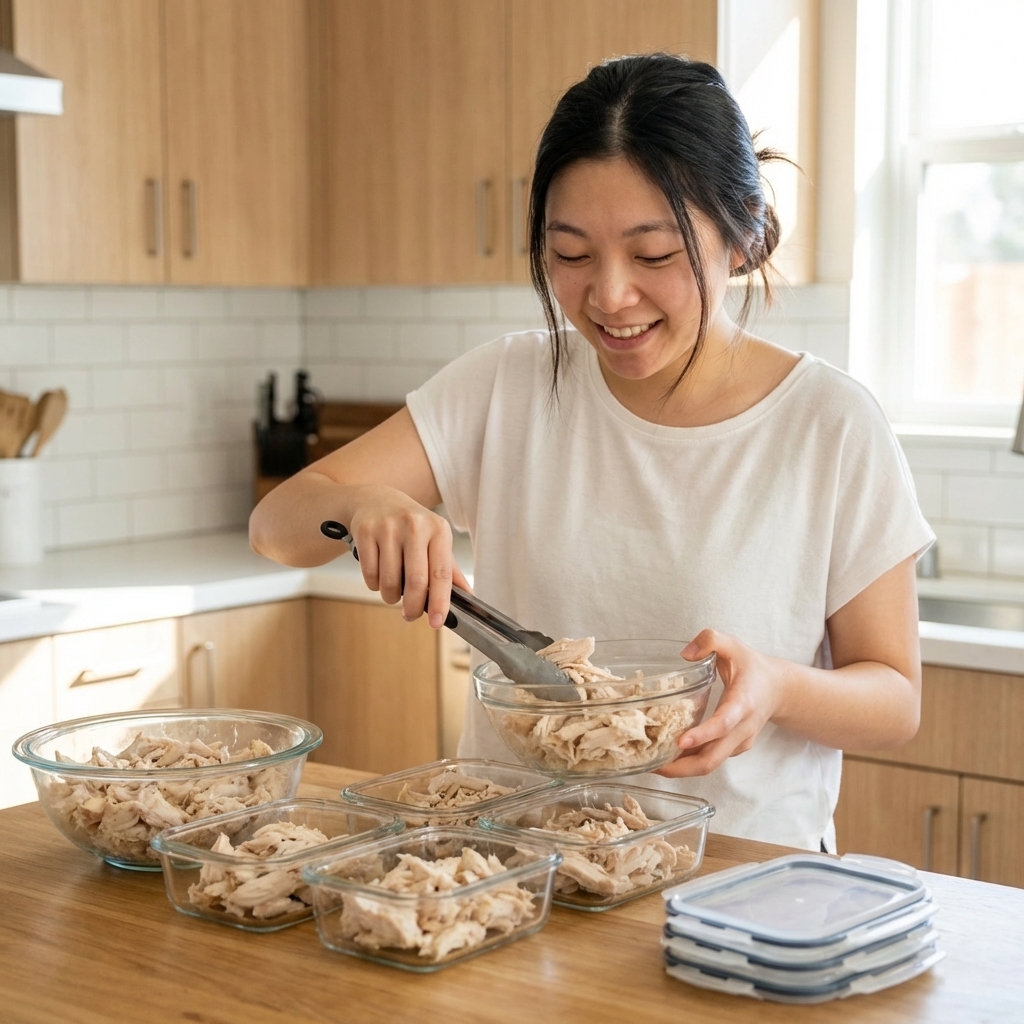
Instant Pot basics for batches
Why the Instant Pot helps
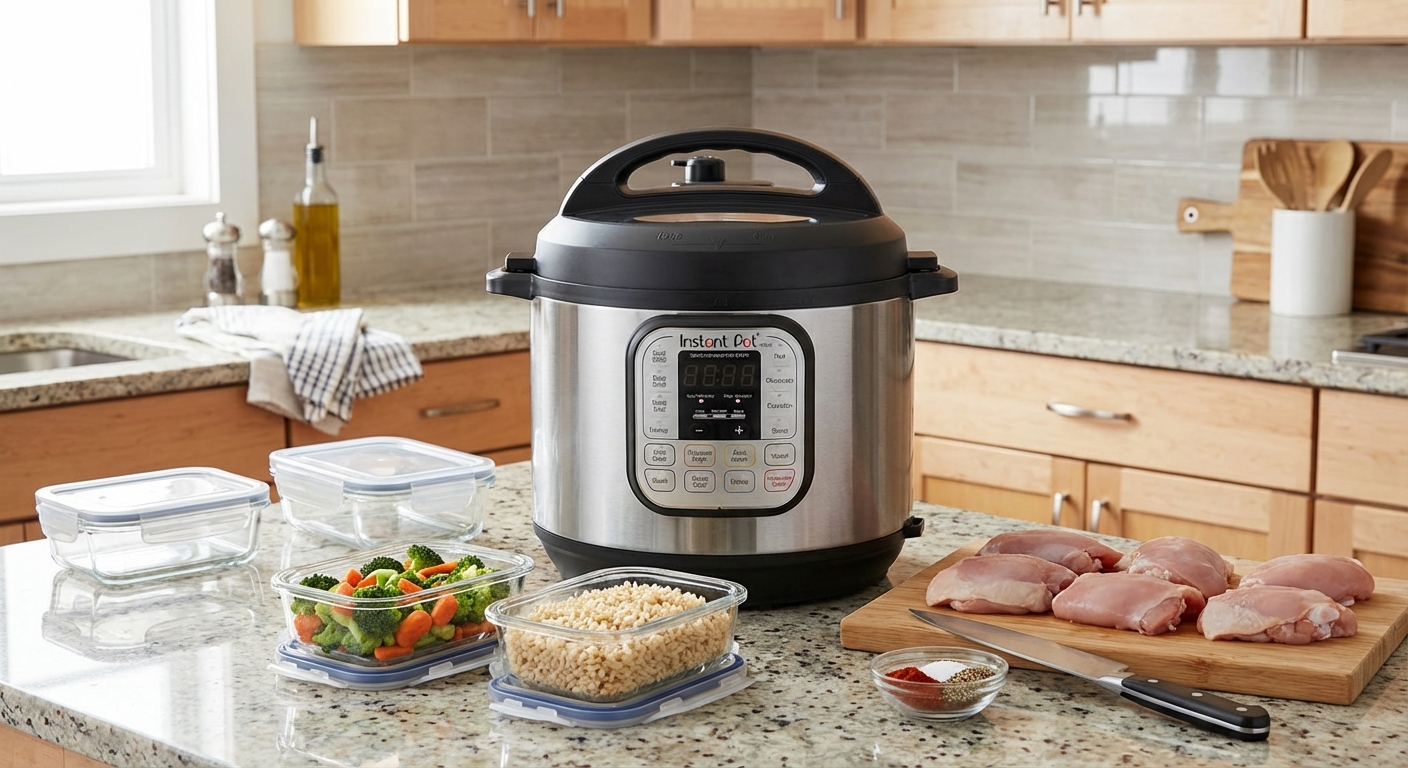
It cooks meat quickly, keeps moisture in, and makes it easy to shred and portion. For many cats, that warm, meaty aroma also boosts appetite, which is helpful for picky eaters.
Good starter proteins
- Chicken thighs (dark meat is often higher in taurine than breast, and naturally higher in fat)
- Turkey thighs (great for batch cooking)
- Rabbit (for cats with food sensitivities, when available)
- Lean beef (some cats love it, but watch fat content and tolerance)
Note on fat: Thigh meat is richer, which many cats love. If your cat is pancreatitis-prone or does poorly with higher-fat foods, talk with your veterinarian before leaning on fattier cuts.
Cook settings that work
- Shredded texture: 10 to 12 minutes on High pressure for boneless thighs with 1 cup water, then natural release 10 minutes.
- Very soft texture: 15 minutes on High pressure, natural release 10 minutes.
Important timing note: Pressure-cook time does not include the time it takes the pot to come to pressure.
Food safety check: Cook poultry to at least 165°F (74°C) and check the thickest pieces if you are unsure.
Tip: Skip “keep warm” for long periods. After cooking, you want to cool the food down promptly.
Batch recipe: Shredded chicken topper (not complete)
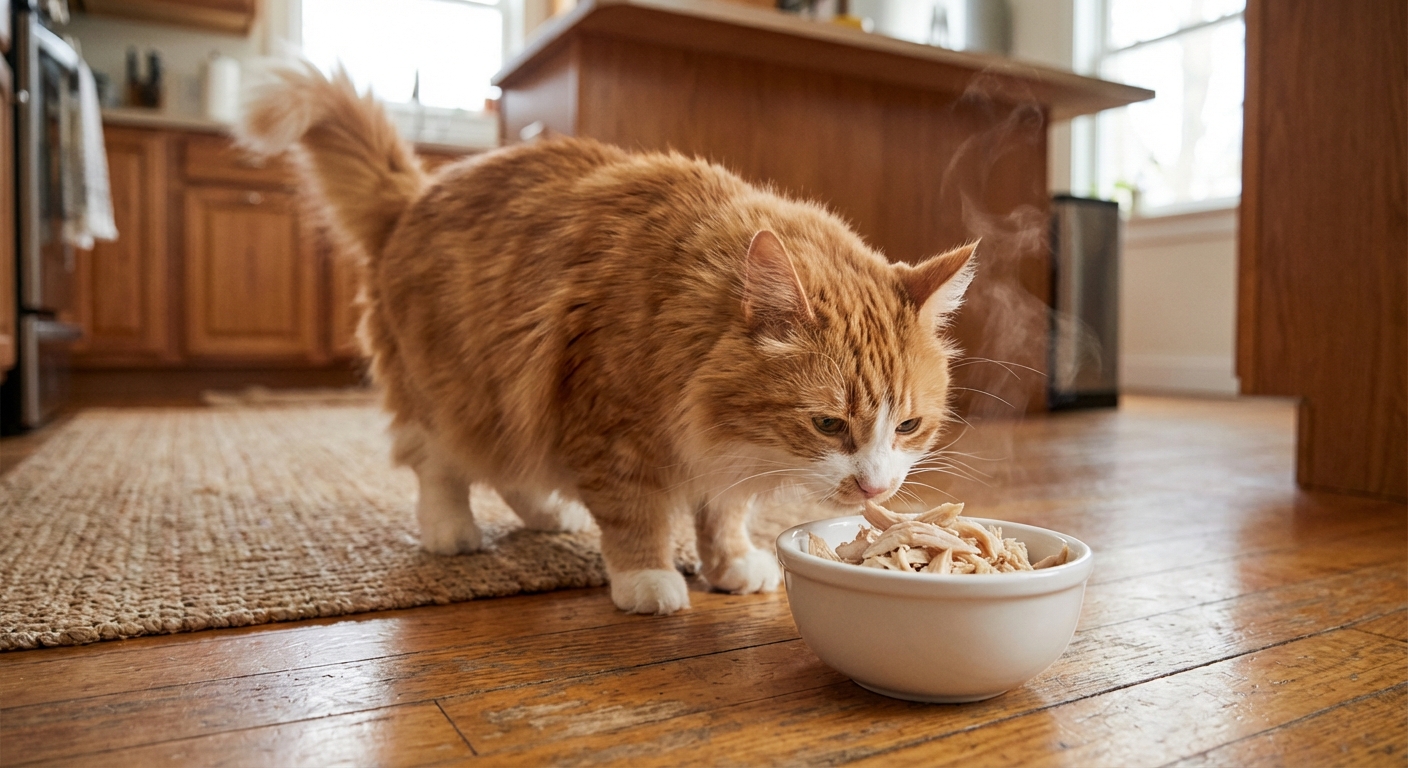
This is my favorite “starter” recipe because it is simple and gentle. Use it as a topper to improve palatability, or as a short transition tool while you work with your veterinarian or a board-certified veterinary nutritionist on a complete plan.
Ingredients
- 2 to 3 lb boneless, skinless chicken thighs
- 1 cup water
Instant Pot steps
- Add water, then chicken thighs.
- Cook 10 to 12 minutes on High pressure.
- Natural release 10 minutes, then release remaining pressure carefully.
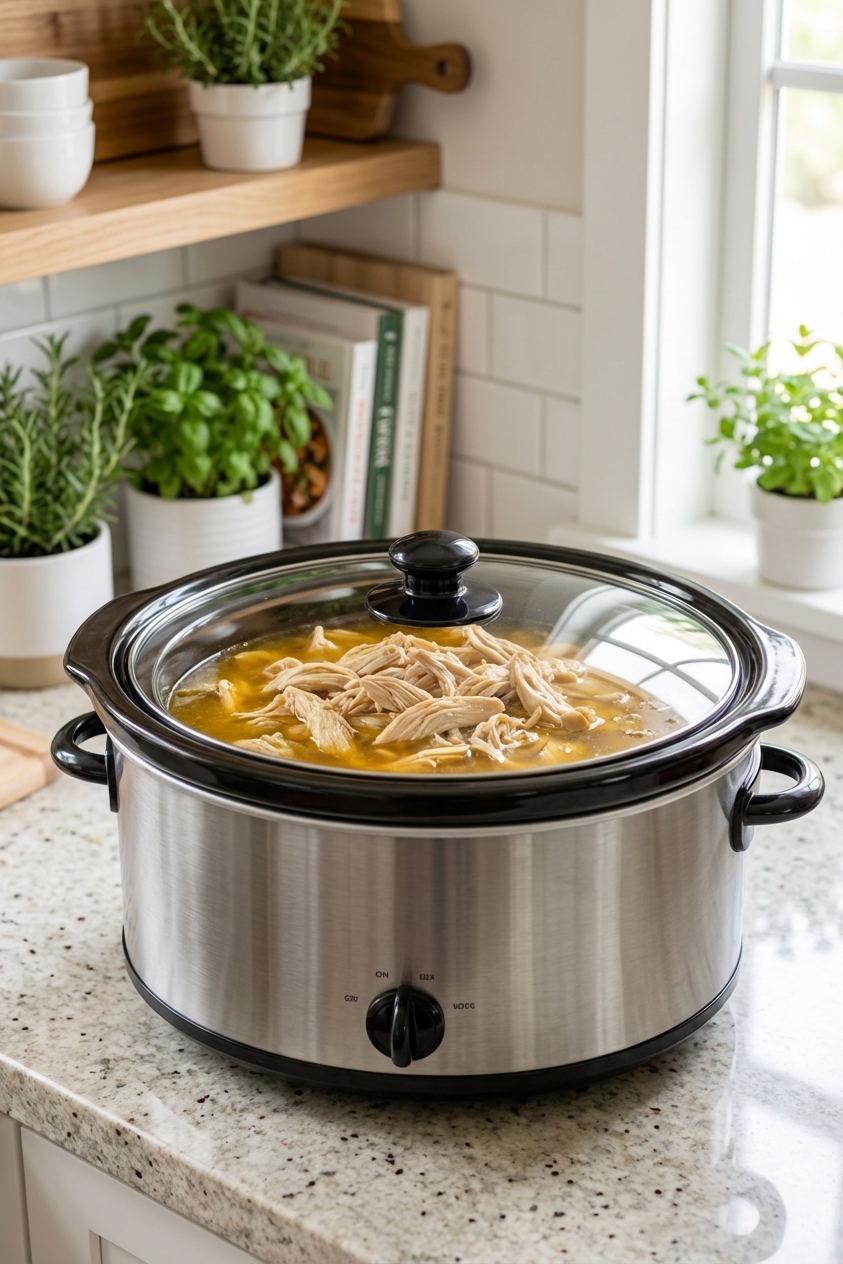
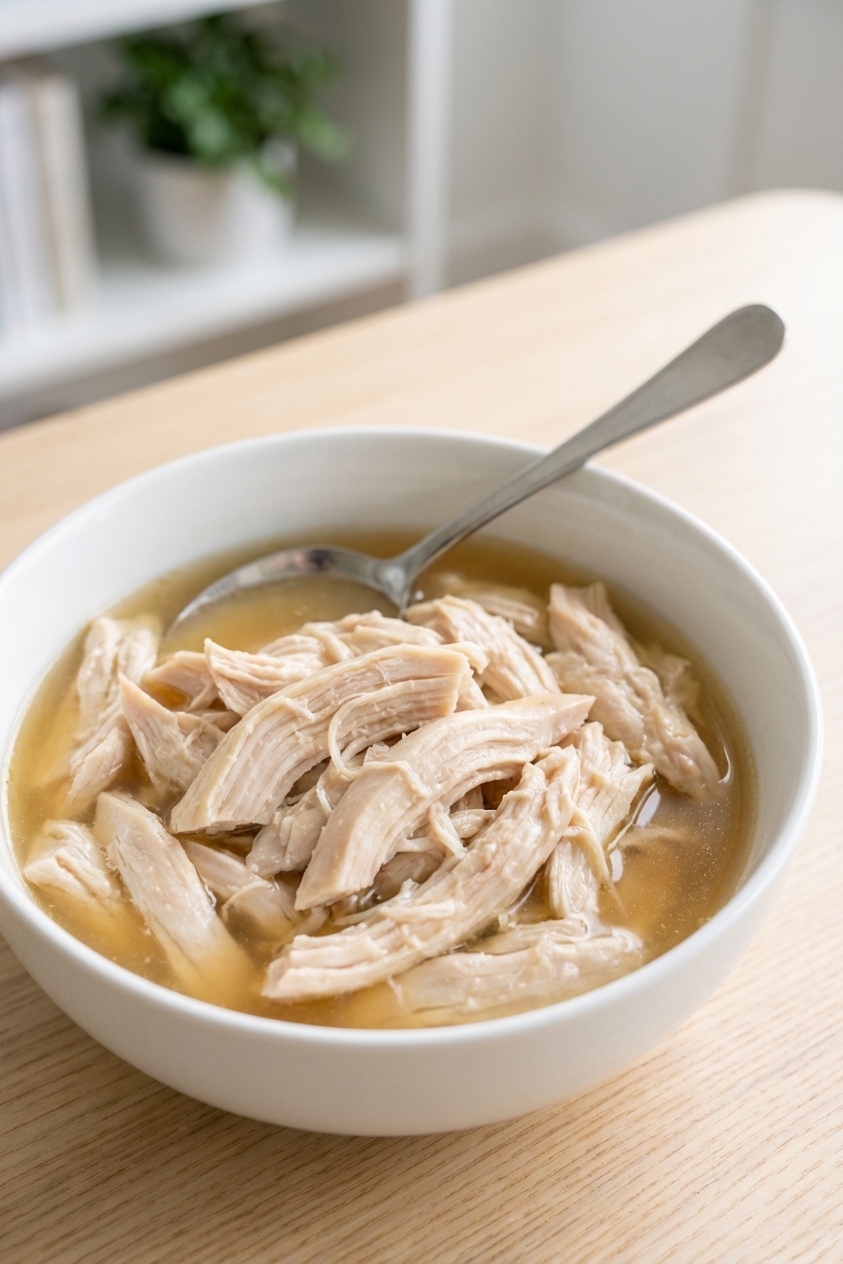
- Shred, then mix shredded meat with some of the cooking liquid to reach your cat’s preferred texture. Keeping the liquid helps retain nutrients that can leach into drippings.
How to serve
- Start with 1 to 2 teaspoons mixed into your cat’s usual food.
- Keep toppers to 10% or less of daily calories unless your veterinarian directs otherwise.
- Increase slowly over 7 to 10 days if stools remain normal.
Important: This recipe is not nutritionally complete as a full-time diet.
Batch recipe: Turkey and pumpkin topper (not complete)
If your cat occasionally has mild digestive upset, a little plain pumpkin can add gentle fiber. It is not a cure for chronic diarrhea or constipation, and it is not a perfect fit for every cat. For some cats, pumpkin can worsen stool quality either direction depending on the situation and the amount.
Ingredients
- 2 lb ground turkey (85 to 93% lean)
- 3/4 cup water
- 2 to 4 tablespoons plain canned pumpkin (not pie filling)
Instant Pot steps
- Add water and turkey. Break the turkey into chunks so it cooks evenly.
- Cook 8 minutes on High pressure.
- Quick release, then stir well.
- Let cool slightly and mix in pumpkin.
Pumpkin tips
- Most cats only need 1/4 to 1 teaspoon per meal, if they tolerate it.
- Too much can loosen stools, and in some cats it can make constipation feel worse.
- If vomiting, diarrhea, constipation, or straining lasts more than 24 to 48 hours, call your veterinarian rather than trying to “pumpkin your way through it.”
Reminder: Still a topper, not a complete diet. Keep toppers at 10% or less of daily calories unless your veterinarian advises otherwise.
Full meals: balanced homemade with a premix
If you want homemade cat food to be a true “main diet,” the simplest evidence-based path for most households is to use a feline-specific, veterinary-formulated premix and follow its exact instructions. This helps cover essentials like taurine, calcium, iodine, vitamins, and trace minerals.
How to choose a premix
- Species-specific matters: Choose one formulated for cats, not dogs or “all pets.”
- Clear directions: It should provide precise meat, liver (if required), water, and supplement amounts.
- Complete and balanced when prepared as directed: Look for a statement that it is intended to make a complete diet when used per label, and ask your veterinarian if you are not sure what you are reading.
- Quality practices: Prefer companies that describe quality control and testing.
General method (follow your premix label)
- Cook a batch of boneless dark meat (chicken or turkey thighs work beautifully in the Instant Pot).
- Cool the meat and cooking liquid.
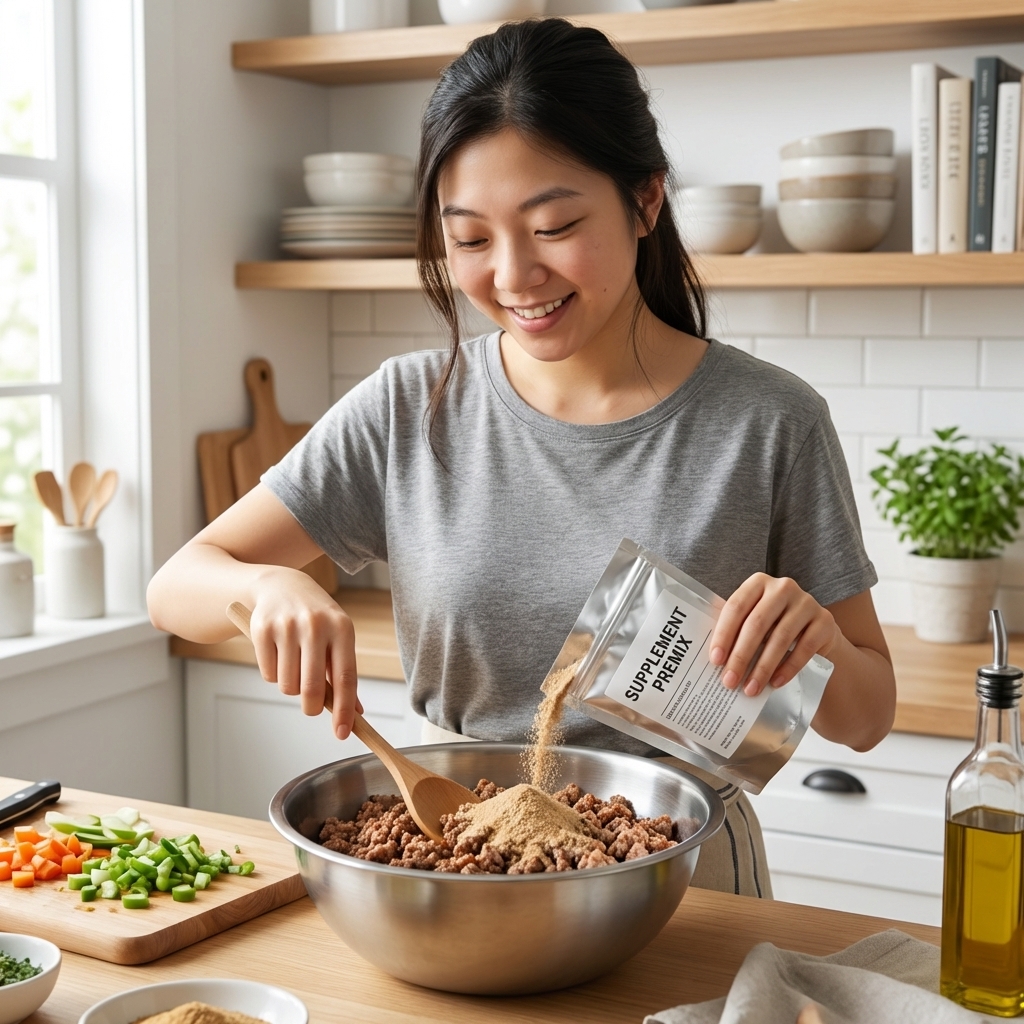
- Mix the premix into the amount of meat and liquid specified on the label.
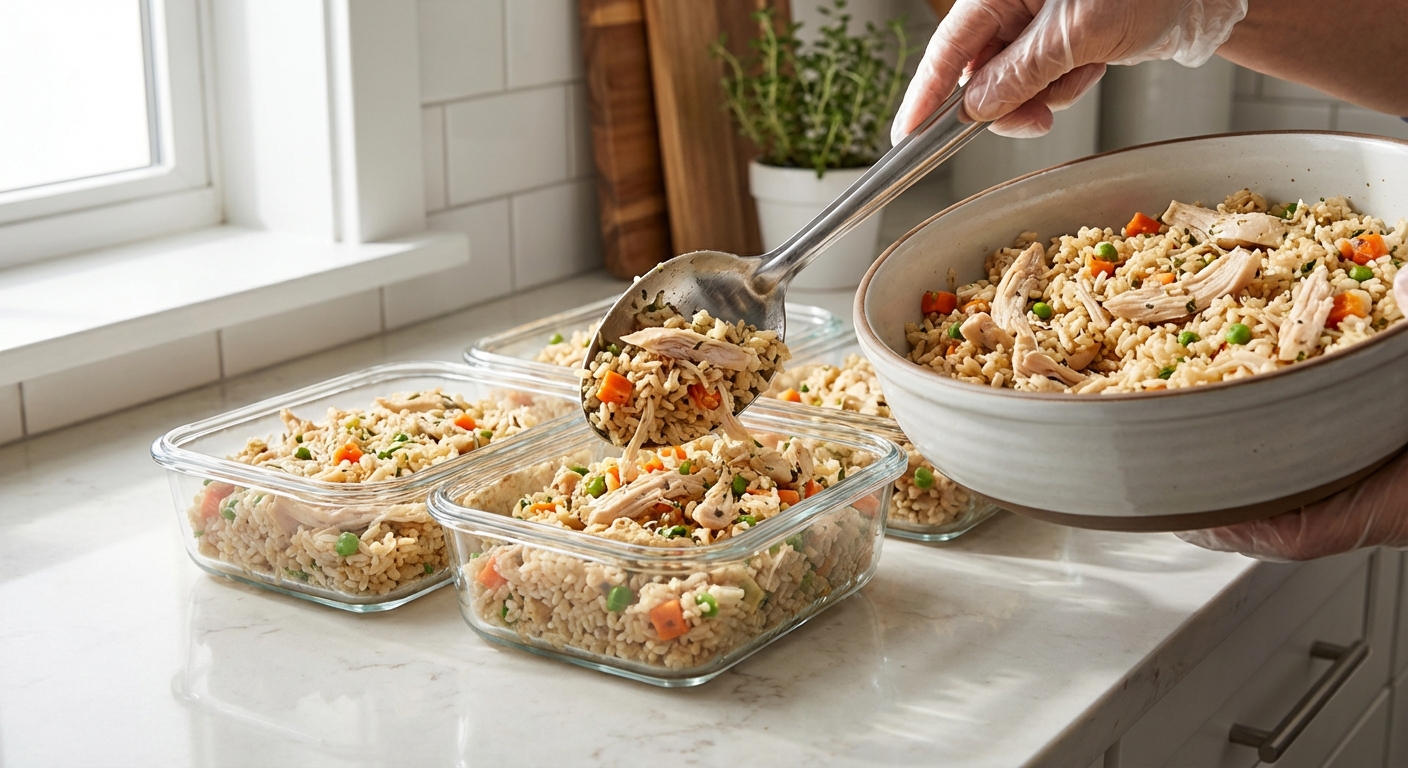
- Portion into meal-sized containers and freeze what you will not use within a couple of days.
Why I like this approach: It keeps homemade realistic while still respecting feline nutrition.
Portioning, storage, and reheating
Cooling
- Divide food into shallow containers so it cools faster.
- Refrigerate within 2 hours of cooking (sooner if your kitchen is warm).
Fridge and freezer
- Refrigerator: Use within 48 to 72 hours for best freshness.
- Freezer: 1 to 2 months is a practical home guideline for best quality. If kept continuously frozen, food can remain safe longer, but texture and flavor can decline over time.
Reheating
- Warm gently. Cats often prefer food served lukewarm, around body temperature (about 100°F to 102°F).
- Stir and check temperature before serving to prevent mouth burns.
- Do not leave moist food out for hours. Pick up leftovers after 20 to 30 minutes.
Transition tips
Many GI upsets happen because we change too much, too fast. If your cat is healthy and you are adding a topper:
- Days 1 to 3: 10% new food mixed in
- Days 4 to 6: 25% new food mixed in
- Days 7 to 10: 50% new food mixed in (if stools stay normal)
Consistency matters: Once you find something your cat tolerates, try not to rotate proteins and recipes constantly. Frequent switching is a common reason I see soft stool and food refusal.
If vomiting, diarrhea, straining, or appetite drops, pause the transition and talk with your veterinarian.
Common Instant Pot mistakes
- Mistake: Cooking with onions, garlic, or seasoned broth.
Fix: Cook plain meat with water only. - Mistake: Feeding “meat-only” as a long-term diet.
Fix: Use a balanced recipe from a veterinary nutritionist or a reputable feline premix. - Mistake: Relying on tuna as a main protein.
Fix: Keep fish as an occasional treat unless your veterinarian recommends otherwise. - Mistake: Guessing on supplements.
Fix: Measure carefully. More is not better with vitamins and minerals.
When to call your veterinarian
Please get help promptly if your cat shows any of the following during a diet change:
- Repeated vomiting or diarrhea
- Not eating for 24 hours (or 12 hours for kittens)
- Weight loss, weakness, or hiding
- Constipation lasting more than 48 hours
- Straining to urinate, frequent trips to the litter box, or crying in the box (urgent)
Homemade food should support health, not create a new problem.
The bottom line
The Instant Pot is a wonderful tool for making fresh cat food batches quickly, especially as a topper or transition option. If your goal is a fully homemade diet, the safest path is a balanced recipe designed for cats, ideally with guidance from your veterinarian or a board-certified veterinary nutritionist, or by using a feline premix exactly as directed.
You do not have to be perfect on day one. Start simple, go slow, keep toppers small, and keep your cat’s nutrition in the “evidence-based” lane.