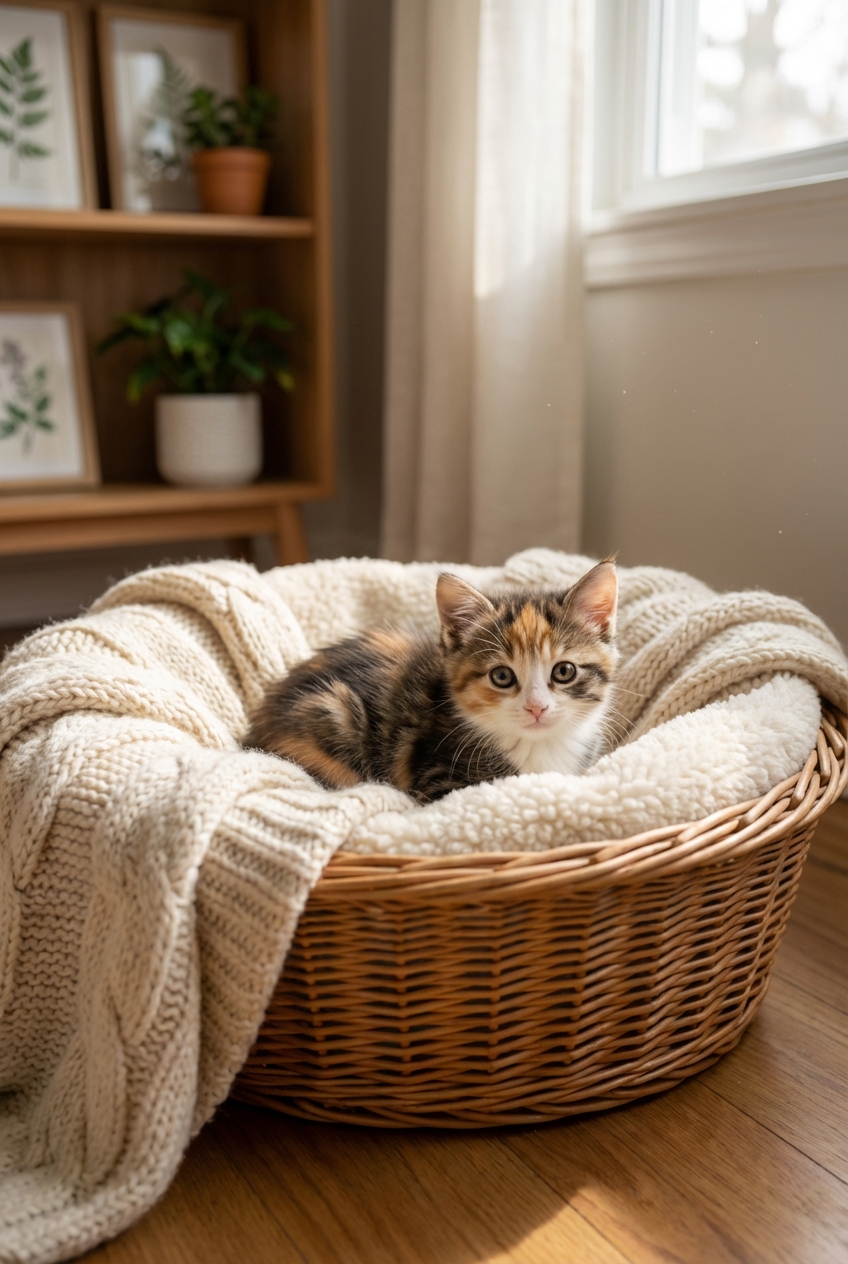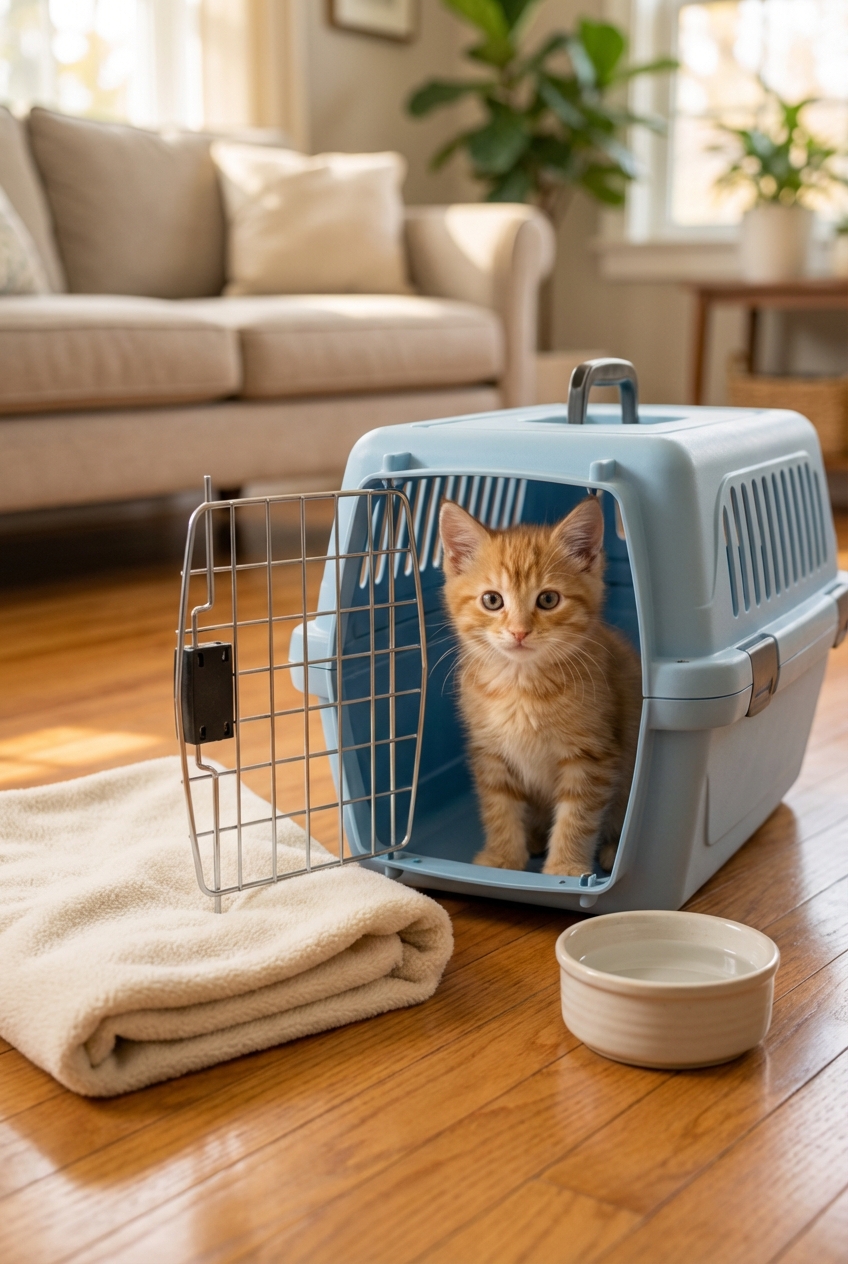
Get ready for your new kitten with a vet assistant’s practical guide: safe room setup, kitten-proofing to prevent emergencies, must-have supplies, feeding ...
Article
•
Designer Mixes
Insightful Kitten Care Help & Care

Shari Shidate
Designer Mixes contributor
Bringing home a kitten is pure joy, until the first time they sneeze, skip a meal, or decide your curtains are the perfect climbing wall. As a veterinary assistant in Frisco, Texas, I have seen how a few evidence-based basics early on can prevent common health problems later. The goal is simple: create a safe home, support healthy growth, and build routines that make vet visits and daily care easier for both of you.
Quick note: This guide is general education and not a substitute for veterinary diagnosis. When in doubt, call your clinic.
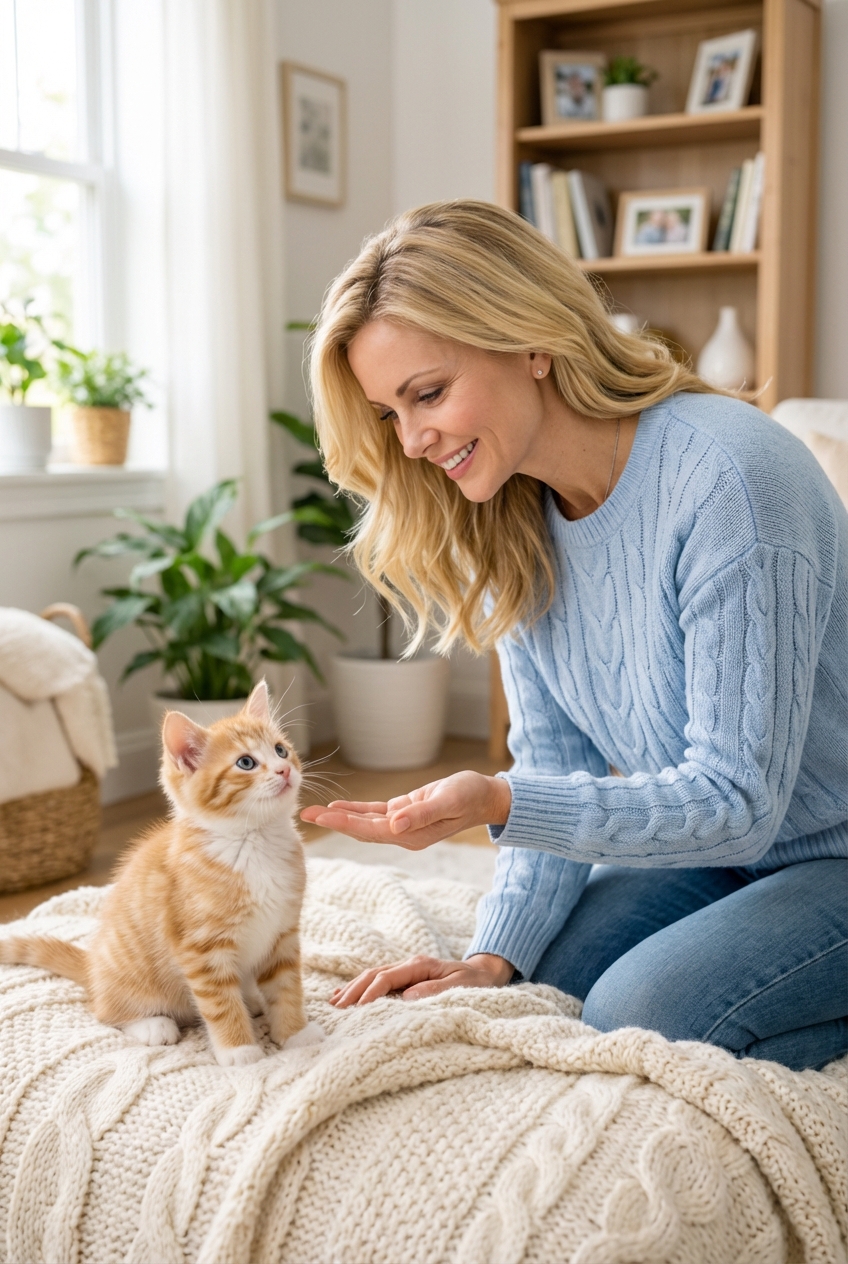
The first 72 hours at home
Kittens can act brave one minute and overwhelmed the next. A calm start helps them eat, use the litter box, and settle faster.
Set up a small home base
- Quiet room with a bed, water, food, and litter box (separate food and litter by a few feet).
- Hiding spot like a covered bed or a box on its side. Feeling safe reduces stress behaviors.
- Warmth: young kittens lose body heat quickly. Provide a cozy blanket and a warm area they can move away from if they get too hot.
Watch the basics
- Eating and drinking: appetite may be small at first, but a kitten should show interest in food within the first day.
- Litter box use: most kittens naturally seek litter. If you do not see urination within 24 hours, or you see straining, crying, or frequent trips with little output, call your vet. For very young kittens or any kitten that seems uncomfortable, call sooner.
- Energy level: playful bursts are normal. Concerning lethargy looks like a kitten who will not wake up to eat, does not engage with toys, feels limp, or hides constantly.
If your kitten came from a shelter or rescue, ask what food and litter they used and keep it consistent for at least a week before changing anything.
If your kitten is under 8 weeks
Ideally, kittens stay with mom and littermates until at least 8 weeks. If you have a younger kitten, call your veterinarian promptly for specific feeding and care instructions. Very young kittens are more prone to low body temperature, low blood sugar, and dehydration, and they can decline fast if they miss meals.
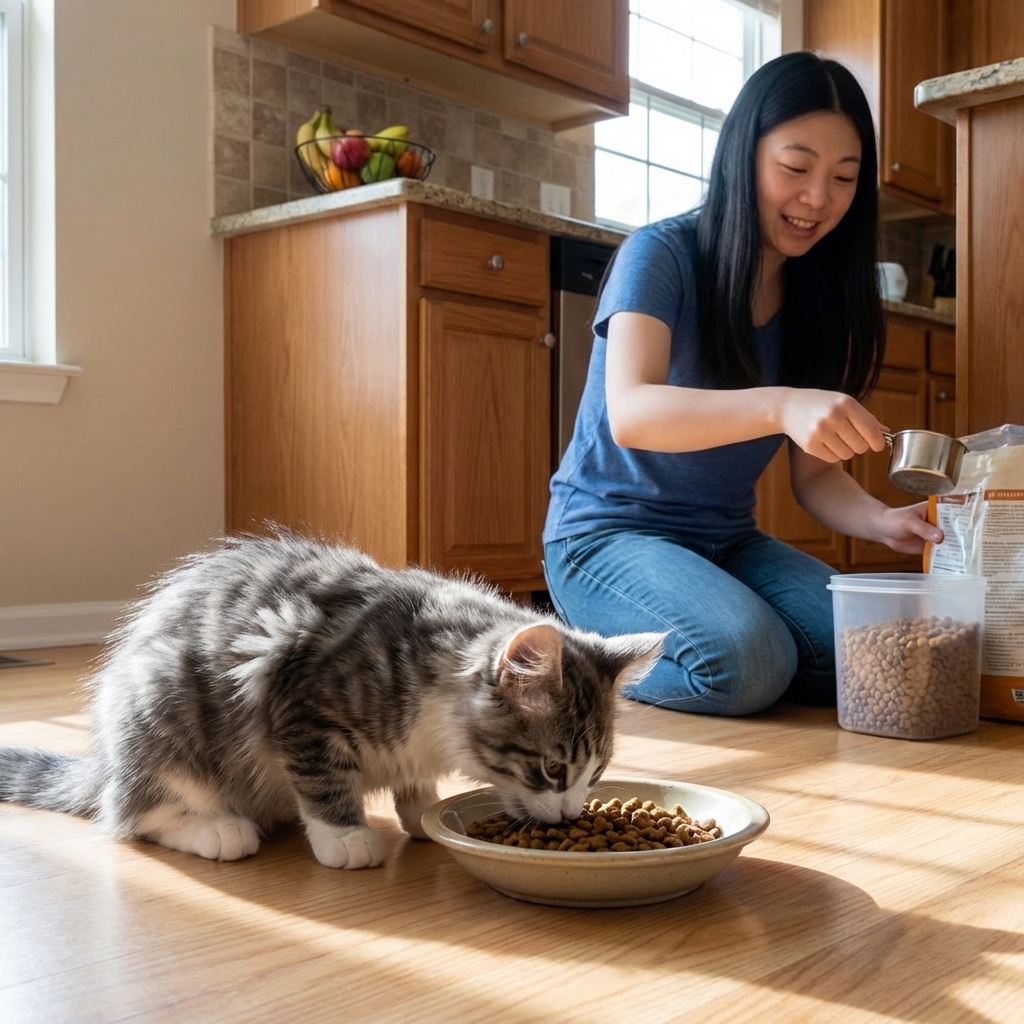
Feeding for growth
Kittens are growing fast and need more calories, protein, and specific nutrients than adult cats. A complete and balanced kitten diet is not a marketing phrase, it is the nutritional foundation for healthy bones, muscles, vision, and immune function.
What to feed
- Choose a complete and balanced kitten food that states it meets AAFCO nutritional adequacy for growth and reproduction (or all life stages).
- Wet food helps hydration and is often easier for tiny mouths. Many families do a mix of wet and dry for preference and convenience. For dental health, ask your vet about tooth brushing and dental diets, since regular dry kibble is not a reliable toothbrush.
- Avoid cow’s milk. Most cats are lactose intolerant, and it can cause diarrhea.
How often
- Under 6 months: 3 to 4 small meals per day for many kittens.
- 6 to 12 months: 2 to 3 meals per day, adjusted for body condition and your vet’s guidance.
Switching foods
When you switch foods, go slow to protect the gut. Mix the new food in gradually over 7 to 10 days, increasing the new portion every couple of days. If diarrhea, vomiting, or refusal happens, pause and talk with your veterinarian.
Litter box success
Most litter box problems are really setup problems. The good news is that simple changes usually fix them.
Best practices
- Box style: low-entry boxes are easiest for small kittens.
- Litter type: start with an unscented, fine-grain litter similar to what the kitten already knows.
- Placement: quiet, easy-to-access locations. Not next to loud appliances.
- Cleanliness: scoop daily. Wash with mild soap regularly. Strong cleaners can create odors that drive kittens away.
- How many boxes: a helpful rule of thumb is number of cats plus one, especially as your kitten grows and gains access to more rooms.
If your kitten has accidents, do not punish. Instead, clean thoroughly (enzymatic cleaner is best), then review box location, litter type, and stressors in the home.
Vet visits and prevention
Preventive care is where you get the biggest return for your effort and your wallet. Many kitten illnesses are preventable, and parasites are extremely common in young cats.
Typical kitten care timeline (your vet may adjust)
- First exam: ideally within 3 to 5 days of bringing your kitten home.
- Core vaccines: often start around 6 to 8 weeks of age, then boosters every 3 to 4 weeks until at least 16 weeks. Some kittens in higher-risk situations may continue a bit longer based on your veterinarian’s guidance.
- Rabies vaccine: timing is state-dependent and clinic-dependent. In Texas, many clinics vaccinate around 12 to 16 weeks, but your veterinarian will follow local law and your kitten’s situation.
- Deworming and fecal testing: commonly done early and repeated as needed because roundworms and other parasites are so common.
- Flea prevention: ask your vet for a kitten-safe product and the correct dose for your kitten’s age and weight. Never use dog flea products on cats, and avoid permethrin-based products around cats.
Spay and neuter
Many kittens are fixed around 4 to 6 months, sometimes earlier depending on shelter policy and health status. Spay and neuter helps prevent unplanned litters and can reduce certain behavior and health risks. Your veterinarian can recommend the best timing for your kitten.
Microchip and ID
Even indoor-only cats can slip out. A microchip and a breakaway collar with an ID tag (if your cat tolerates it) greatly improve the odds of getting your kitten home quickly.
Kitten-proofing your home
Kittens explore with their paws and their mouths. A safe environment prevents emergency visits and gives you peace of mind.
Common hazards to remove or secure
- Strings and cords: yarn, ribbon, hair ties, dental floss, and dangling wand toys left out. Swallowed string can be life-threatening.
- Toxic plants: lilies are especially dangerous for cats. Also watch out for pothos, sago palm, and many others.
- Human medications: store in closed cabinets. Even small amounts can be harmful.
- Essential oils and strong cleaners: many essential oils are unsafe for cats, especially when diffused or applied to fur or paws. The safest approach is to avoid essential oils around cats unless your veterinarian specifically confirms a product and use is safe.
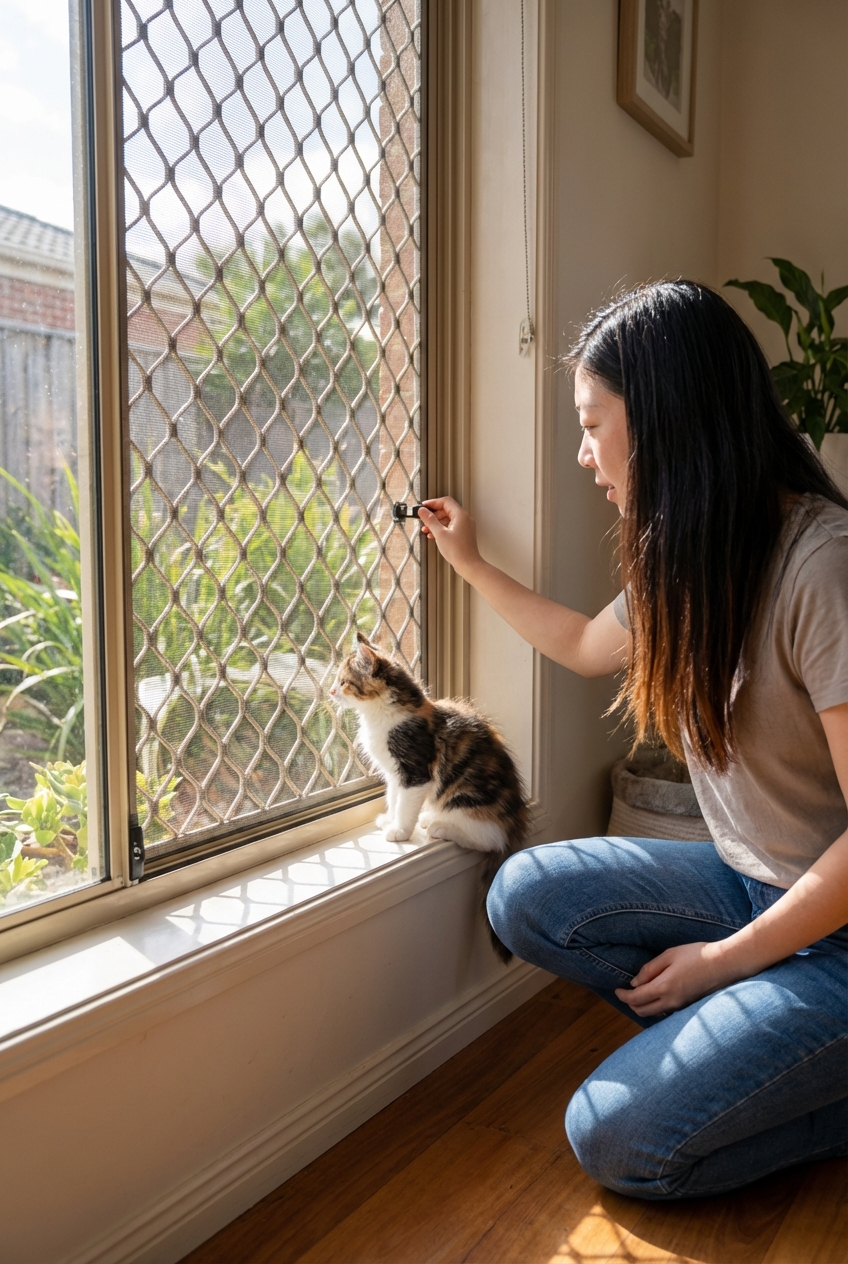
- Open windows and balconies: use sturdy screens and supervise high places.
Socialization and play
Play is not just entertainment. It builds coordination, confidence, and appropriate bite inhibition. It is also your best tool for preventing behaviors that are actually normal kitten instincts.
Socialization basics
The prime socialization window is roughly 2 to 9 weeks, but gentle exposure continues to matter after that. Aim for calm, positive experiences: different people, safe household sounds, brief handling, and carrier time paired with treats and praise.
Play the right way
- Use wand toys to keep hands out of biting range.
- Short sessions: 5 to 10 minutes, a few times a day, is a great target for most kittens.
- End with a catch so your kitten feels successful.
- Offer scratching options: at least one vertical and one horizontal scratching surface.
Biting and scratching basics
If your kitten bites during play, freeze your hand, gently disengage, and redirect to a toy. Consistency matters more than volume. Avoid rough play with hands because it teaches kittens that skin is a toy.
Introducing other pets
Go slow. Start with scent swapping (blankets, supervised room rotations), then brief visual meetings, then short supervised interactions. Rushing introductions is one of the most common reasons new-kitten homes feel stressful.
Grooming and home checks
Start gentle handling early. Kittens who learn that touch is safe are easier to groom, medicate, and examine later in life.
Weekly mini-check routine
- Eyes: clear, bright, no thick discharge.
- Nose: mild clear discharge can happen, but frequent sneezing or thick discharge should be evaluated.
- Ears: clean, minimal debris, no strong odor.
- Mouth: pink gums, no strong odor. Ask your vet when to start tooth brushing training.
- Coat and skin: look for fleas, dandruff, bald spots, or scabs.
- Weight: kittens should gain steadily. Your vet can tell you what good growth looks like for your kitten.

Call the vet right away
Kittens can go downhill quickly, especially if they stop eating or develop dehydration. Trust your instincts. If something feels off, it is worth a call.
- Not eating for 24 hours, or a very young kitten missing multiple meals
- Repeated vomiting, diarrhea, or any blood in stool
- Labored breathing, open-mouth breathing, or blue or pale gums
- Extreme lethargy, weakness, collapse, or inability to stand
- Straining to urinate, crying in the litter box, or no urination within 24 hours
- Swallowing string, ribbon, or a foreign object
- Sudden swelling of the face, hives, or signs of an allergic reaction
One of the most helpful habits you can build is keeping notes: appetite, water intake, litter box use, and energy. Those details help your vet make faster, safer decisions.
A simple daily routine
If you are feeling overwhelmed, keep it simple. A predictable routine helps kittens feel safe, and it helps you notice changes early.
- Morning: food, fresh water, quick litter scoop, 5 minutes of play
- Midday: small meal, short cuddle and handling practice
- Evening: food, longer play session, then a calm wind-down
- Weekly: grooming and a quick head-to-tail check
You do not have to be perfect to be an excellent kitten parent. Start with safe food, a clean litter box, a playful environment, and timely veterinary care. Then let your kitten teach you the rest, one pounce at a time.