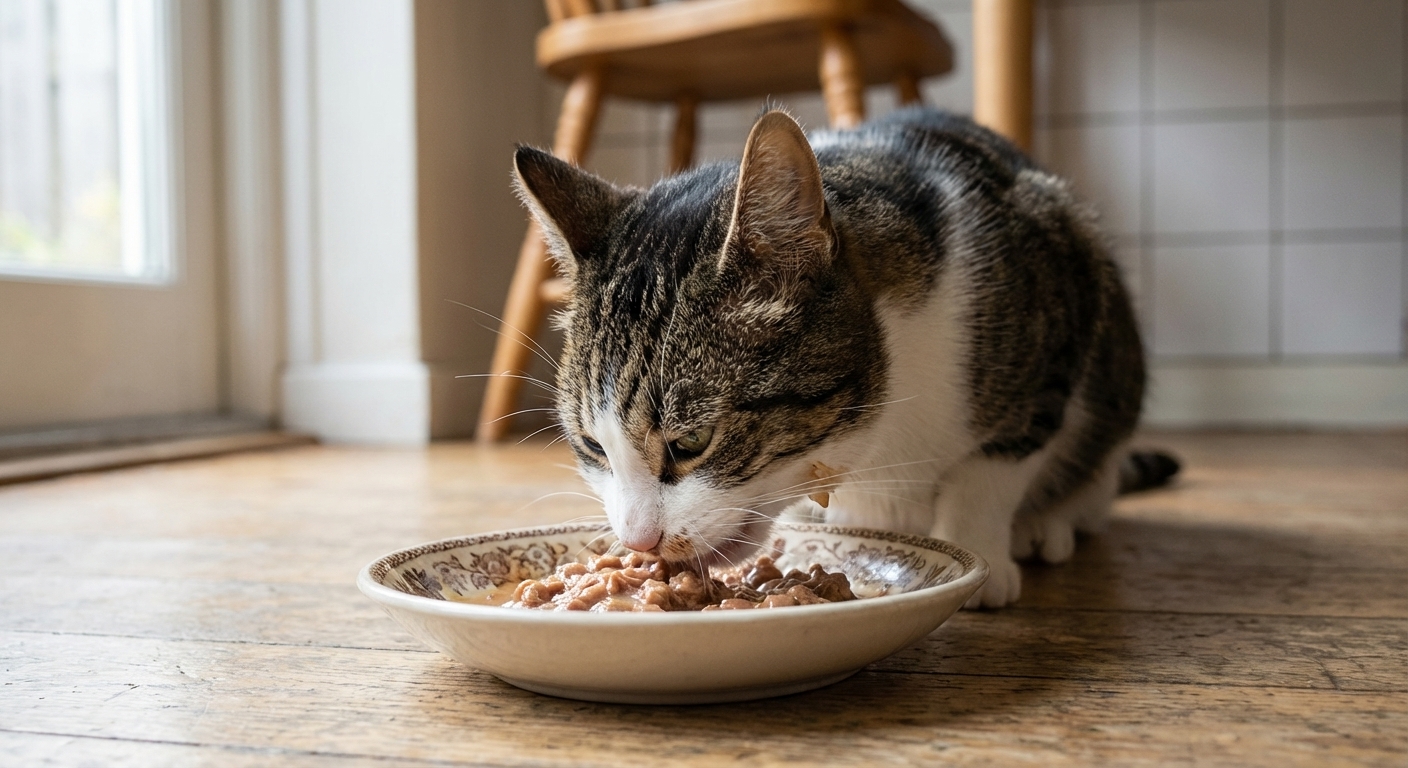
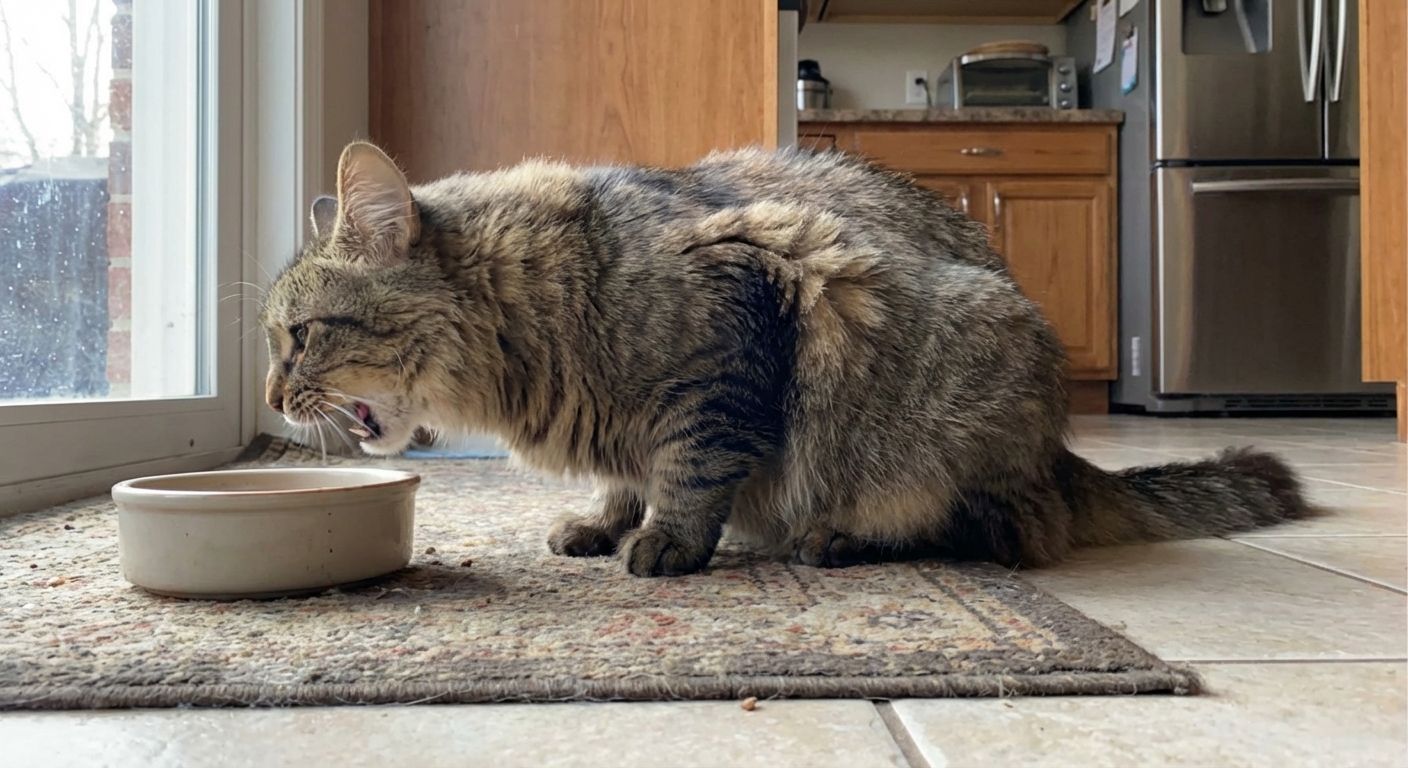
Indoor cats are adorable little homebodies, but their lifestyle can make weight gain sneak up fast. As a veterinary assistant, I see it all the time: a cat who “barely eats” according to the family, yet gradually moves from sleek to squishy over a year or two.
The fix is not punishment or crash dieting. It is clarity. How many calories does your cat actually need, what does that look like in a measuring scoop, and how do you adjust before extra weight becomes a health problem?
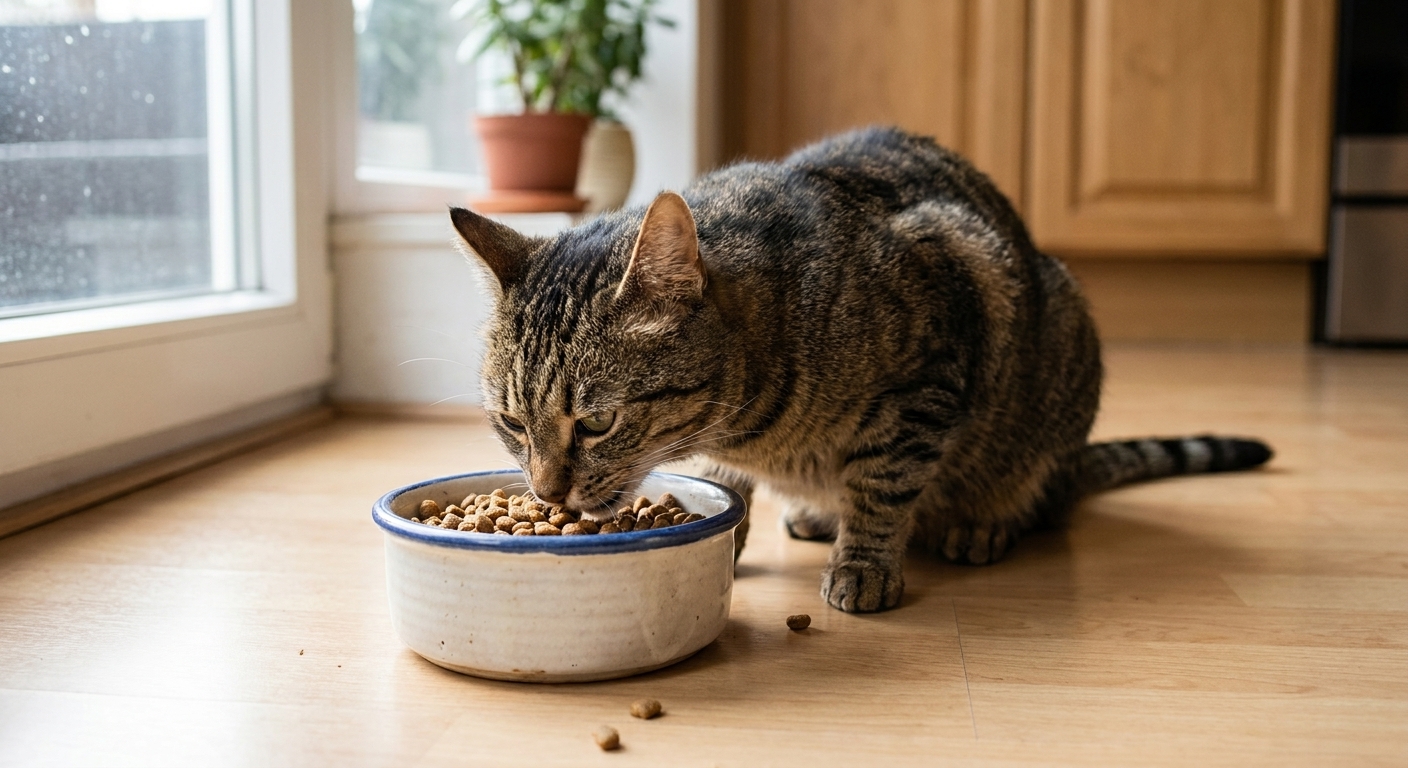
How much should an indoor cat eat?
Most indoor cats need fewer calories than we expect, especially if they are spayed or neutered and spend most of the day napping.
A realistic calorie range for many indoor cats
Calorie needs vary by age, body size, muscle mass, and activity. They also depend on your cat’s ideal body weight, not just what the scale says today. Two “10-pound cats” can have very different needs if one is stocky and lean and the other is carrying extra fat.
As a starting point, many average-sized indoor adult cats do well around:
- About 180 to 250 calories per day for a typical 8 to 12 pound indoor adult cat
- Less if your cat is already overweight or very inactive
- More if your cat is young, lean, and truly active
Important: kittens, pregnant or nursing cats, and high-energy outdoor cats have very different calorie needs. If that is your situation, use this guide as a structure, but get a specific target from your vet.
Why labels can mislead: the feeding chart on the bag can overfeed some cats because it is often written for “average” activity. Indoor-only is usually below that.
A quick vet-style way to estimate calories (optional)
If you like numbers, many veterinary teams start with RER (Resting Energy Requirement), then adjust up or down based on lifestyle and body condition:
- RER ≈ 70 × (body weight in kg)0.75
- Many indoor adult cats land somewhere around 1.0 to 1.2 × RER for maintenance, but it varies
This is a starting estimate, not a perfect prescription. Your cat’s weight trend and body condition tell the real story.
Turning calories into everyday scoops: dry food and wet food
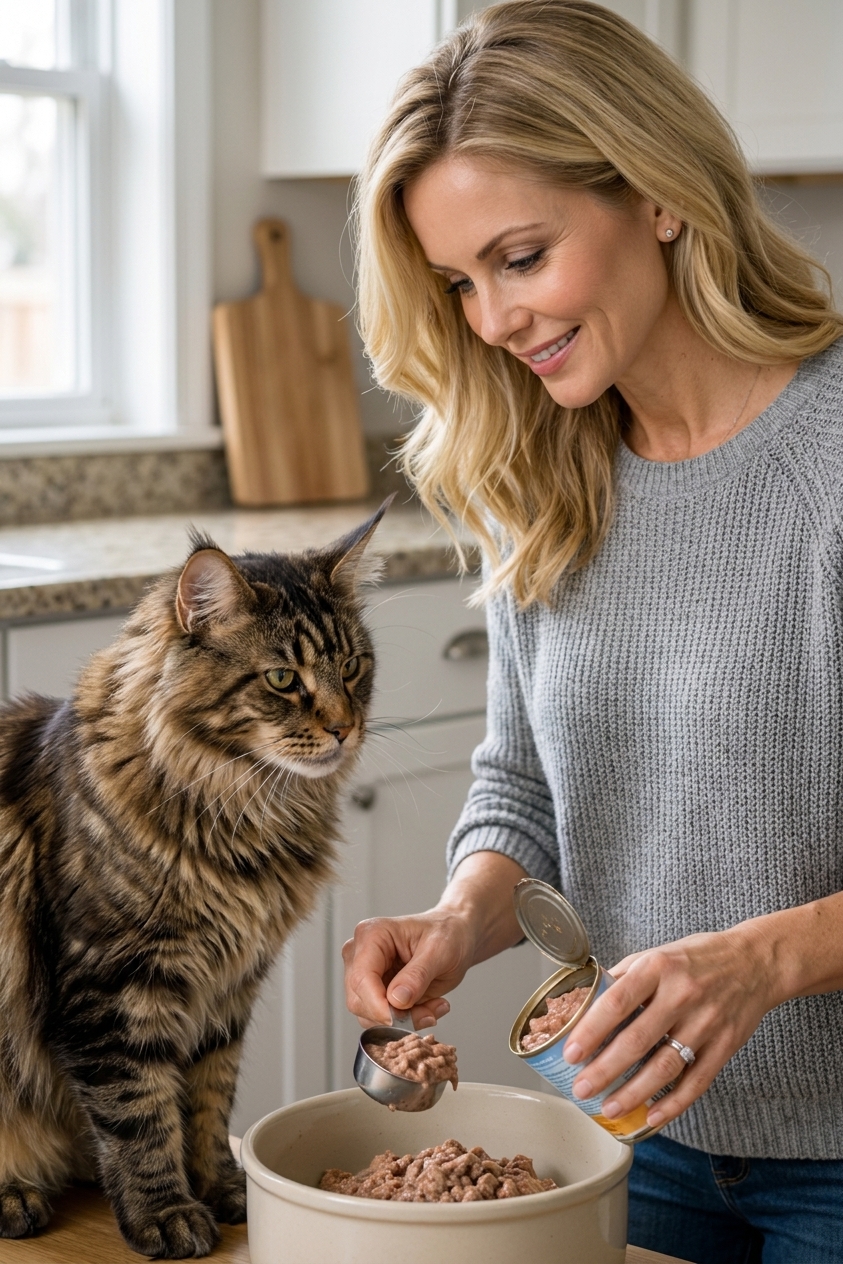
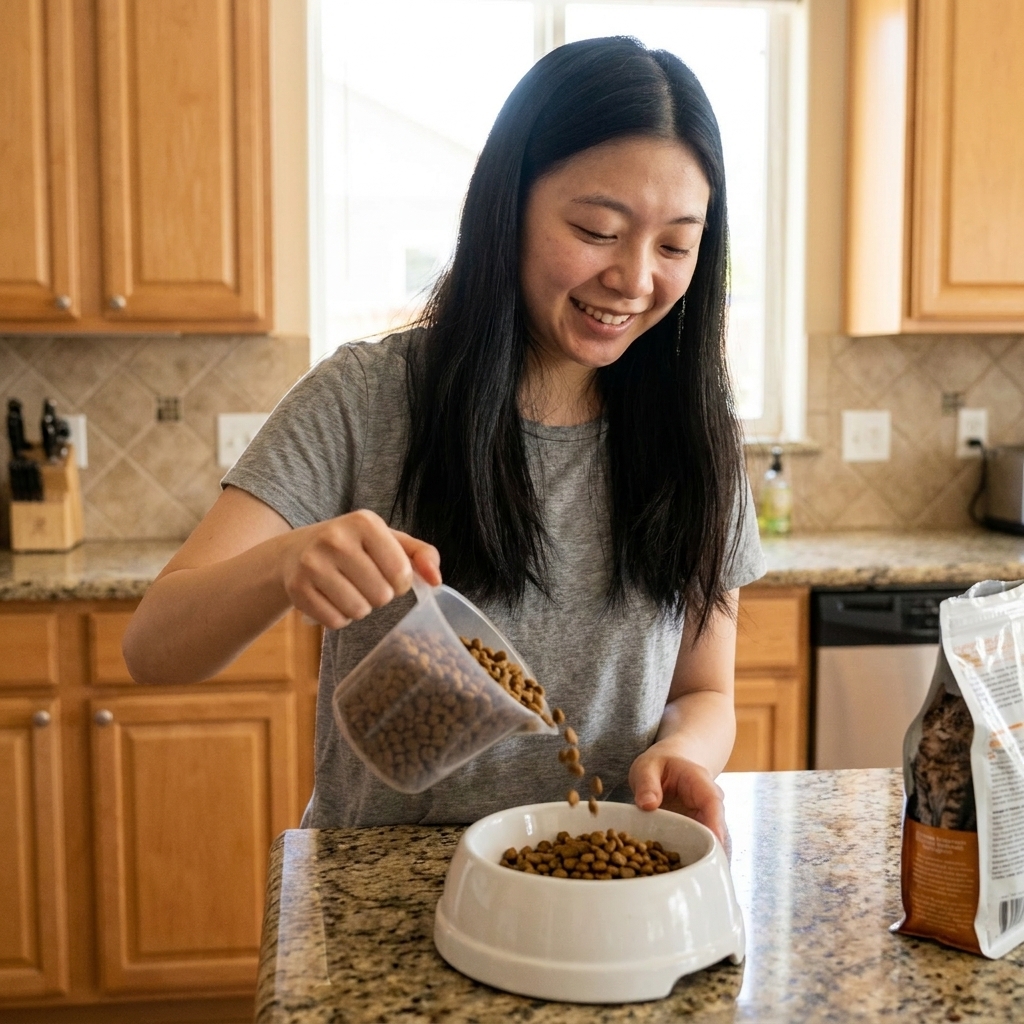
Here is the part that helps most families: translating calories into a measuring cup or can amount you can repeat daily.
- Dry food: many kibble formulas are roughly 350 to 450 kcal per cup. That means 1/2 cup can be 175 to 225 kcal all by itself.
- Wet food: many 3 oz cans are roughly 70 to 110 kcal, and many 5.5 oz cans are roughly 150 to 220 kcal. It varies a lot by brand and recipe.
Your best tool: find the “kcal per cup” (dry) or “kcal per can” (wet) on the label, then build your daily portion from there.
Quick portion examples (adjust to your label)
- Goal 200 kcal/day, dry food at 400 kcal/cup: 200 ÷ 400 = 0.5 cup per day (split into meals)
- Goal 220 kcal/day, wet food at 90 kcal per 3 oz can: 220 ÷ 90 = 2.4 cans per day
- Combo feeding: 1 can (90 kcal) + 1/3 cup kibble at 400 kcal/cup (about 133 kcal) = 223 kcal/day
Cups vs a kitchen scale
Measuring cups are convenient, but they are not very precise because kibble size and air gaps vary. If your cat needs to lose weight or you are seeing slow creep upward, a cheap kitchen scale is one of the best upgrades you can make. Weighing food in grams is more consistent than “a little heaping scoop.”
If you are unsure what your cat should weigh or how many calories to aim for, your vet can give you a target weight and a safe calorie plan based on your cat’s body condition.
If you change foods: transition gradually over about 7 to 10 days when possible to reduce tummy upset.
Free-feeding vs scheduled meals
There is no one perfect method. The best feeding schedule is the one that keeps your cat at a healthy weight and fits your household.
Free-feeding (leaving food out)
Pros: convenient, can reduce food anxiety for some cats, and may work for naturally self-regulating cats.
Cons: easy to overeat, hard to track intake, and boredom snacking is common in inactive indoor cats.
If you free-feed, do this:
- Measure the entire day’s portion in the morning
- Put only that amount in the bowl or feeder
- Do not top off “just a little more”
Meal-feeding (set meals)
Pros: best for weight control, easier to notice appetite changes, helps multi-cat households manage portions.
Cons: some cats beg between meals, and busy schedules can make consistency tough.
A solid indoor-cat schedule: 2 meals per day is a great baseline. Many cats do even better with 3 to 4 smaller meals if they tend to scarf and barf or get cranky between meals.
Multi-cat households
If you have more than one cat, portion control gets harder fast. A few practical options I see work well in real homes:
- Feed in separate rooms and pick bowls up after 15 to 20 minutes
- Use microchip feeders for the cat who steals meals
- Do occasional “bowl audits” so one cat is not quietly eating everyone’s share
Where puzzle feeders and “hunting for food” help
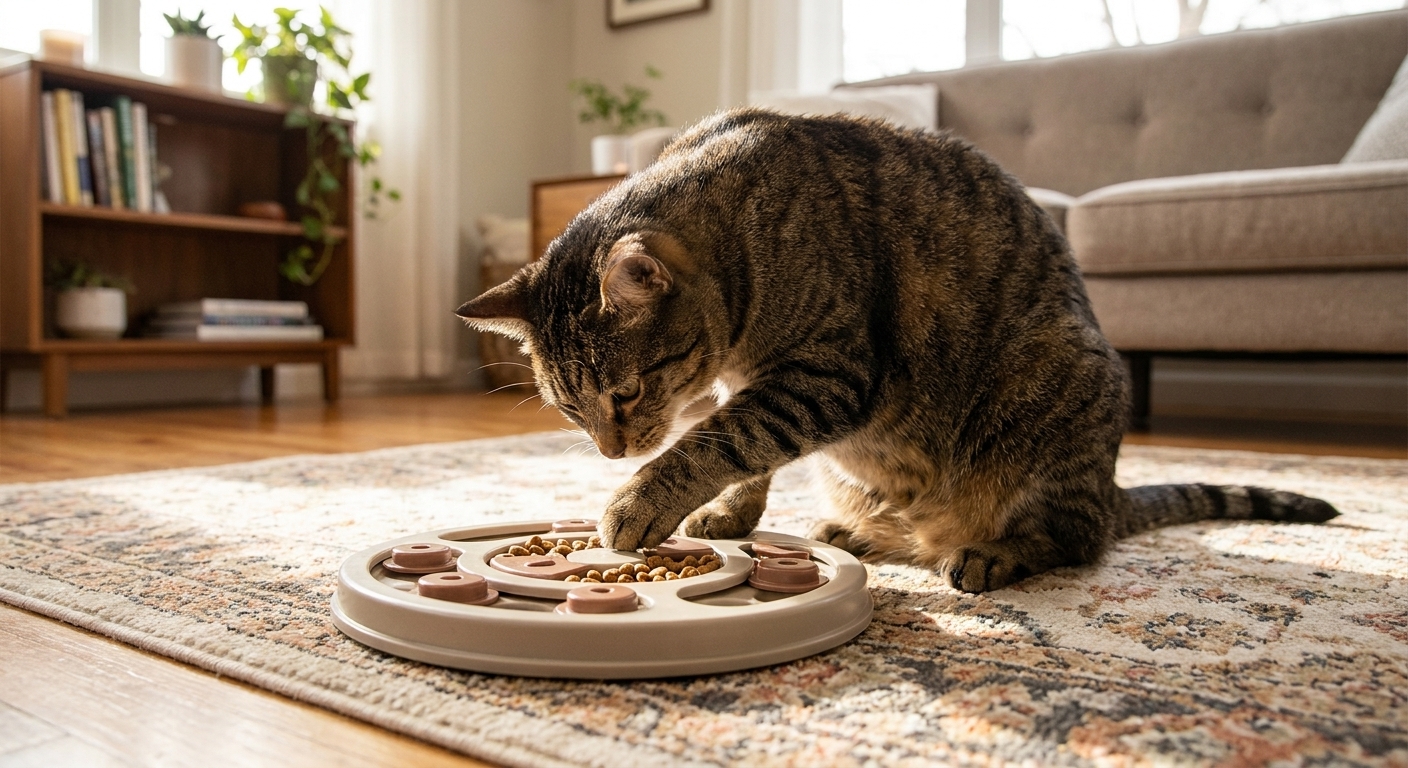
Indoor cats are designed to hunt. When food is too easy, they can eat fast and then look for entertainment elsewhere. Puzzle feeders and slow feeders can:
- Slow down eating
- Reduce boredom snacking
- Add gentle daily movement
Use body condition scoring
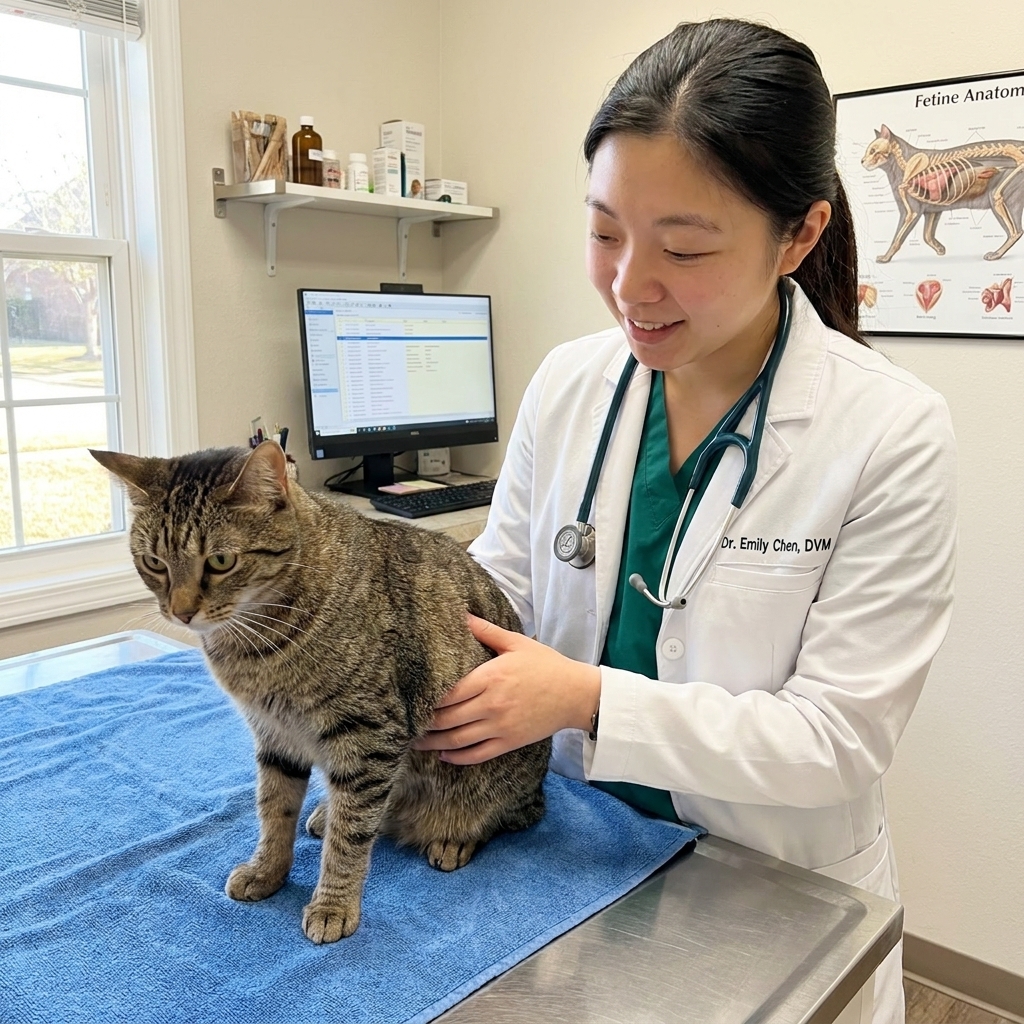
The scale number matters, but your cat’s body shape matters even more. On the 9-point Body Condition Score (BCS) chart, 5/9 is typically ideal. Some charts and some cats fall into a healthy “lean to ideal” range of 4 to 5 out of 9.
At-home BCS check
- Ribs: you should be able to feel ribs under a light layer of fat, like feeling the knuckles on the back of your hand.
- Waist: looking from above, there should be a visible waist behind the ribs.
- Tummy tuck: from the side, the belly should slope up, not hang down.
If ribs feel hard to find and the waist is gone, your cat is likely overweight. If ribs are sharply visible and there is no padding, your cat may be underweight.
How fast to adjust food
For safety, changes should be gradual. A common approach is to adjust the daily calories by about 5 to 10 percent, then reassess in 2 to 4 weeks with a weigh-in and BCS check.
Do not crash diet cats. Rapid weight loss can be dangerous and can contribute to hepatic lipidosis (fatty liver disease). In many cases, a safe weight loss rate is roughly 0.5 to 2 percent of body weight per week, but your veterinarian should set the plan, especially if your cat has a lot to lose or has any medical issues.
Hairballs, constipation, and food
Hairballs and constipation are common indoor-cat complaints, and feeding plays a role. The tricky part is that they can overlap: a constipated cat may strain and appear uncomfortable, and owners sometimes assume it is “just hairballs.”
Why indoor cats struggle more
- Grooming: more time indoors often means more grooming and more swallowed hair.
- Lower activity: movement helps gut motility.
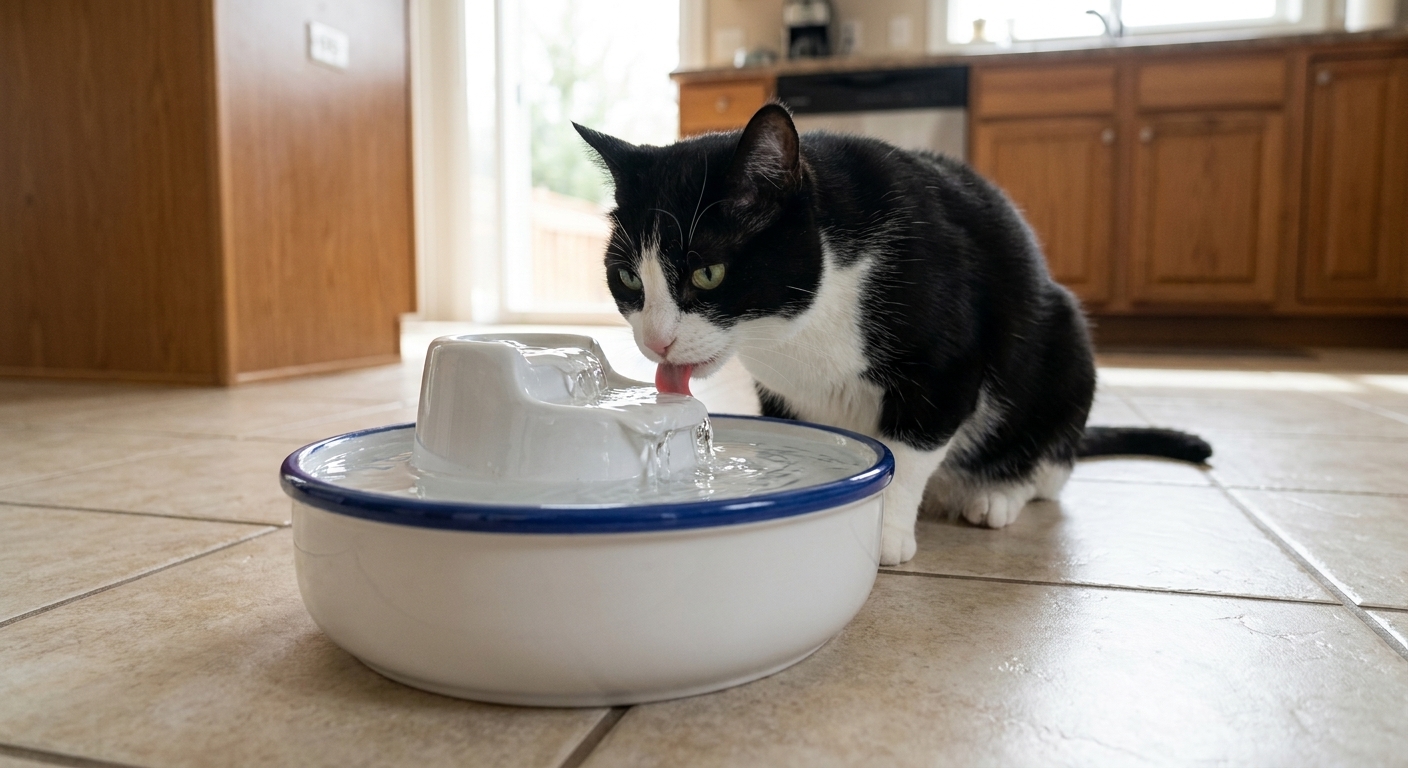
- Lower moisture intake: cats naturally have a low thirst drive, and dry-only diets can contribute to firmer stools for some cats.
Food and routine tips that often help
- Increase moisture: consider adding some wet food, or add water to wet food if your cat accepts it.
- Fiber, but not too much: some cats do well with modest dietary fiber, but too much can backfire. Follow your vet’s guidance if constipation is recurring.
- Regular brushing: less loose hair in the coat means less hair swallowed.
- Encourage movement: play sessions can support motility and weight control.
Call your vet promptly if you see repeated unproductive retching, vomiting, loss of appetite, lethargy, straining in the litter box, crying, or no stool for more than about 48 hours. Those can be signs of constipation or even obstruction, not just routine hairballs.
Senior cat adjustments
Many cats are considered seniors around age 10, but “senior” is really about what is happening in the body. Some older cats gain weight because they move less. Others lose weight because they cannot absorb nutrients as well or because of age-related medical conditions.
Common senior feeding shifts
- Weight gain trend: reduce calories slightly, increase gentle play, and prioritize protein quality to protect lean muscle.
- Weight loss trend: do not assume it is normal aging. Unplanned weight loss deserves a vet visit. You may need a higher calorie intake or a different diet texture and palatability.
- Dental changes: sore teeth can reduce eating. Some cats do better with wet food or softened kibble.
How often to recheck
For seniors, I love a simple routine: monthly home weigh-ins if possible, plus regular veterinary wellness checks. Early weight change can be the first hint that something internal has shifted.
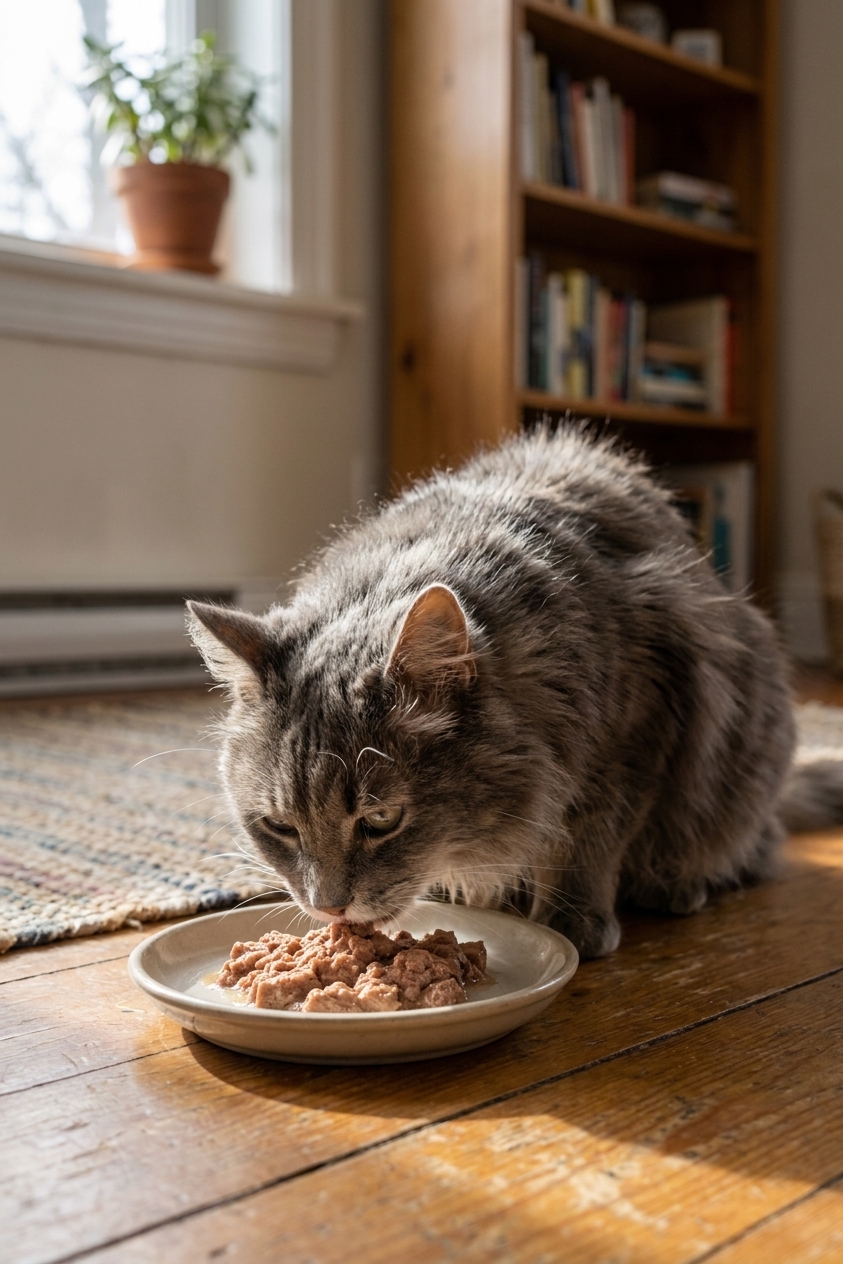
Healthy treat rules
Treats are not the enemy, but they are often the hidden calories that tip an indoor cat into steady weight gain. In the clinic, this is one of the most common “we had no idea it added up” surprises.
- Keep treats to 10 percent or less of daily calories when possible.
- Measure treats like you measure food. “A few” adds up fast.
- Table scraps and human food count too, and some are unsafe for cats. When in doubt, skip it.
- Use play, brushing, or cuddle time as rewards too.
If treats are a big part of your bond, consider swapping some treat calories for a slightly smaller meal portion so your daily total stays steady.
When this guide is not enough
This article is meant for general maintenance feeding for indoor cats. If your cat has a medical condition, your feeding plan may need to be very specific.
Please work with your veterinarian if your cat has or may have:
- Diabetes
- Kidney disease
- Food allergies or inflammatory bowel disease
- Urinary crystals or repeated urinary blockage
- Hyperthyroidism or unexplained weight loss
- Any history of hepatic lipidosis or severe obesity
If you want one simple next step: pick a daily calorie target with your vet, measure that amount exactly for two weeks, then reassess your cat’s body condition and weight. Small, consistent adjustments are where long-term success lives.