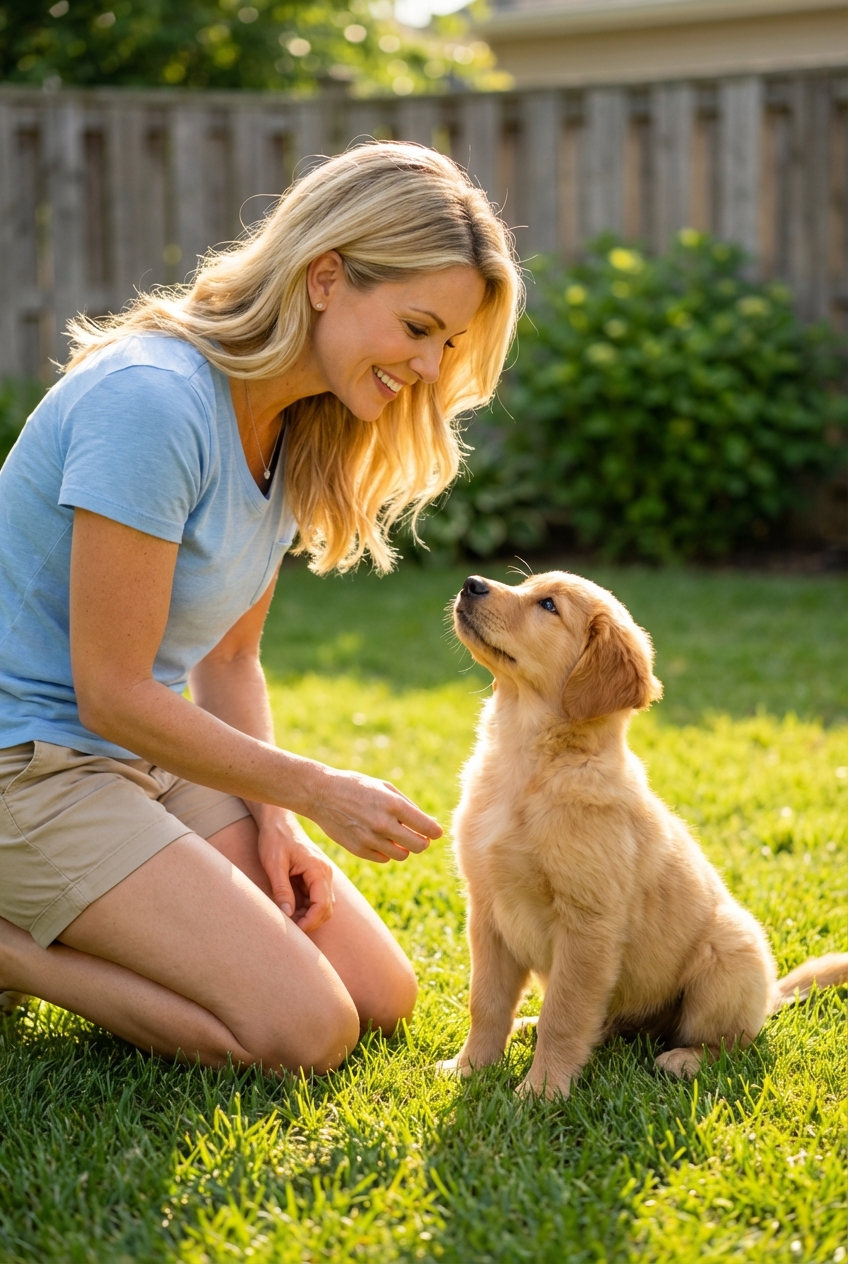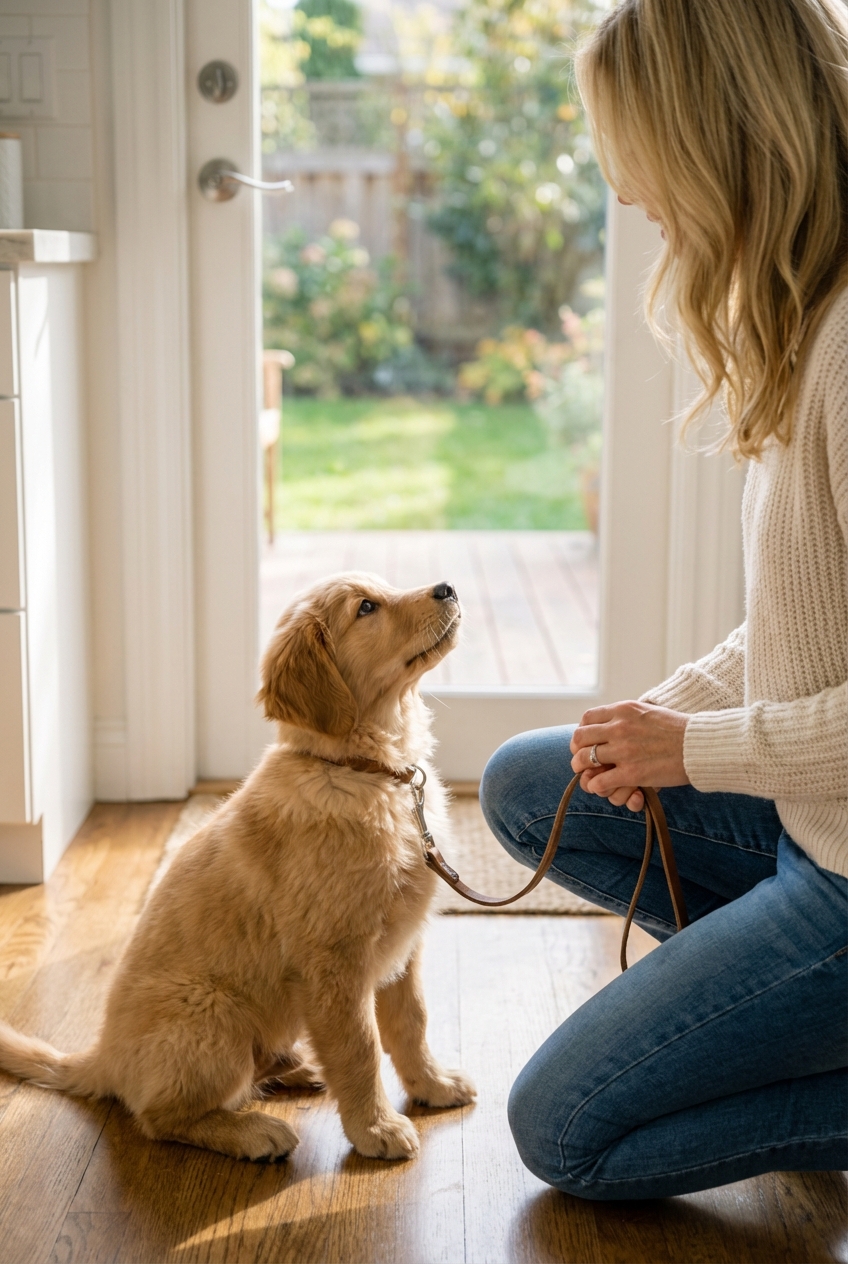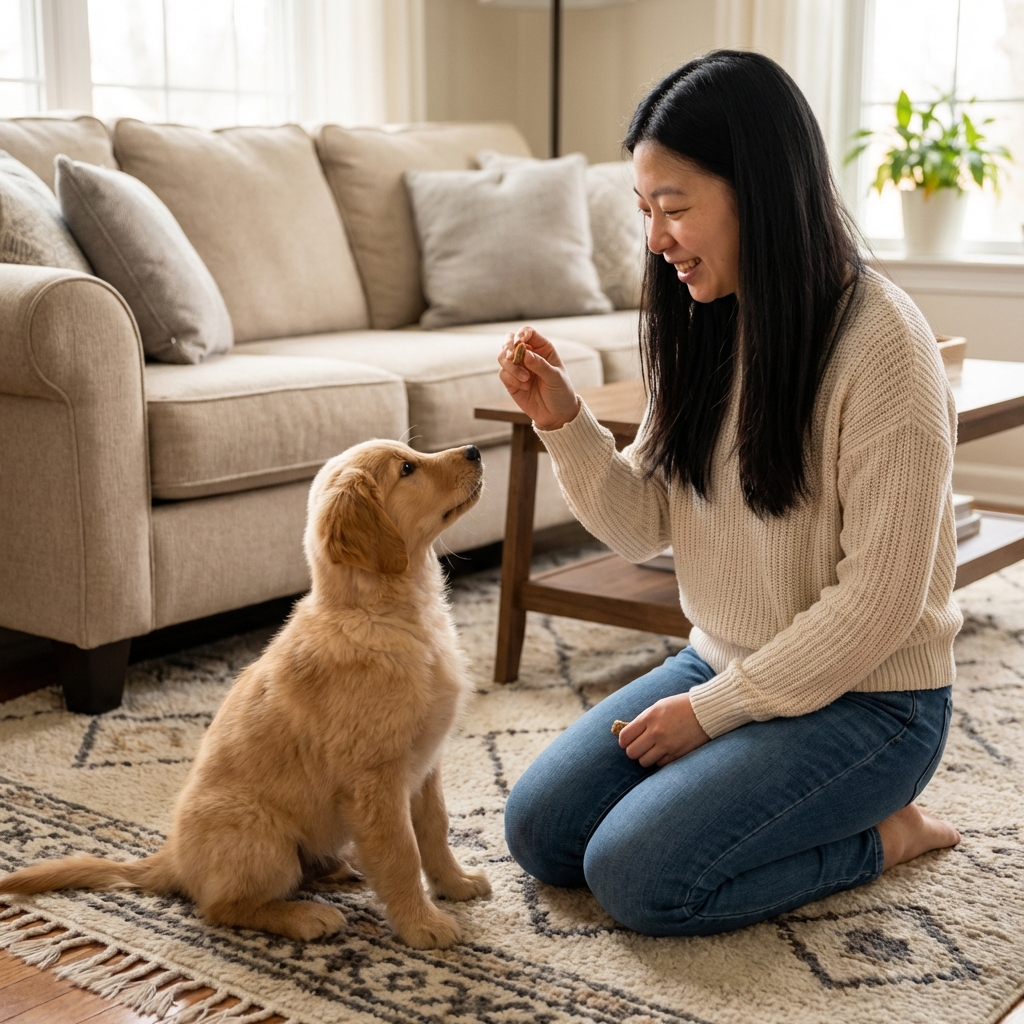
A practical, reward-based puppy training guide: week-one routine, house and crate training, nipping help, loose-leash basics, socialization, and the 5 cues t...
Article
•
Designer Mixes
In-Depth Puppy Training Tips

Shari Shidate
Designer Mixes contributor
Bringing home a puppy is exciting, and a little overwhelming. As a veterinary assistant here in Frisco, Texas, I see the same pattern over and over: the puppies who thrive are not the “perfect” ones, they are the ones with families who train consistently, reward what they like, and set up the home so good choices are easy.
Puppy training is not about dominance or punishment. Modern, evidence-based training focuses on reinforcement, clear communication, and preventing unwanted habits before they get big.
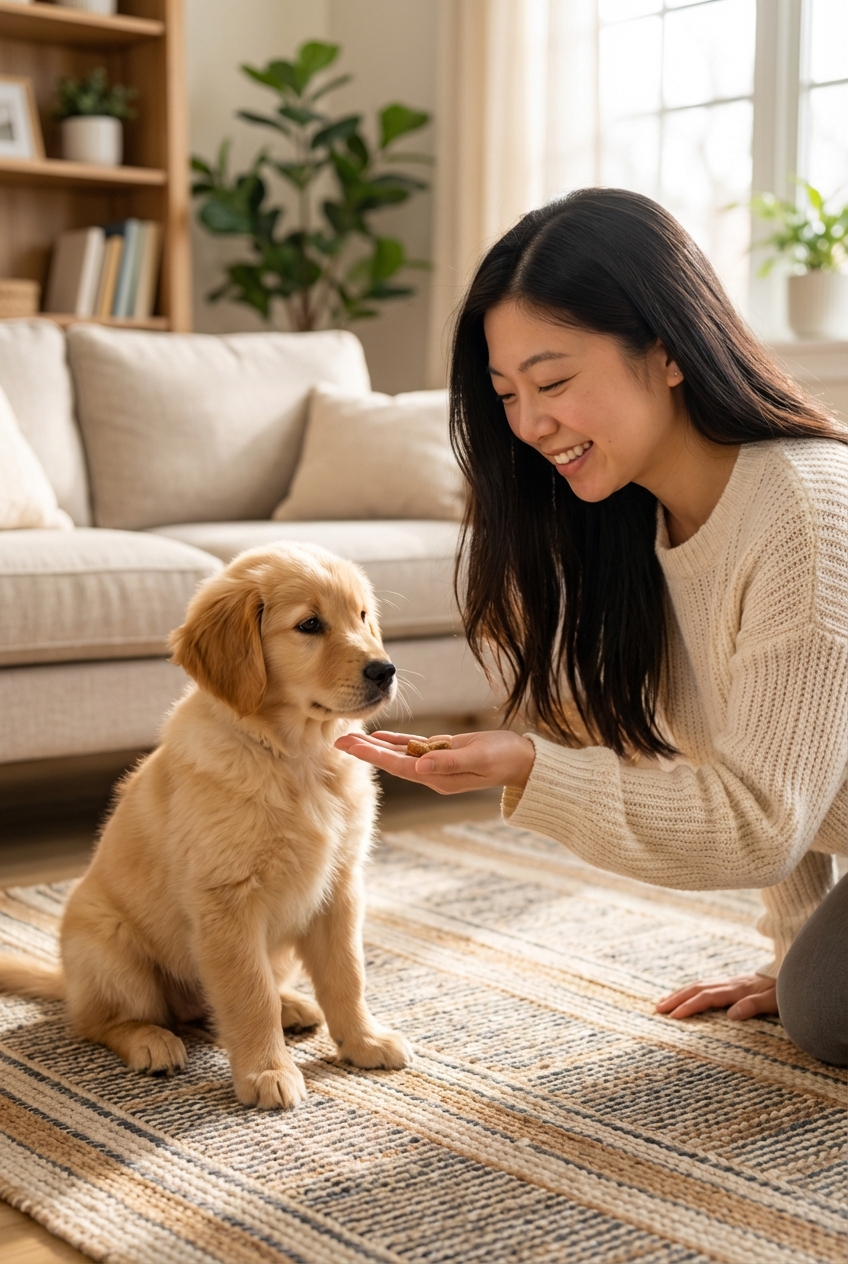
Start with the basics
Puppies repeat behaviors that work for them. If jumping earns attention, jumping grows. If sitting earns treats, sitting grows. Your job is to make the behaviors you want pay well and to prevent the behaviors you do not want from being rewarding.
Positive reinforcement
- Reward the behavior you want (tiny treats, praise, a toy, a sniff break).
- Mark it the moment it happens (a clicker or a simple “Yes”).
- Repeat in short sessions so your puppy stays eager.
Keep treats pea-sized. Puppies learn best with lots of quick wins, not big snacks. For many young puppies, 1 to 3 minutes per session is plenty. You can do several mini-sessions per day.
Management is training
Baby gates, crates, exercise pens, and leashes indoors are not “cheating.” They are how you prevent rehearsing bad habits like chewing cords, stealing food from counters (counter surfing), or potty accidents.
What to focus on first
1) Potty training
Potty training is mostly about timing, supervision, and rewards. Puppies often do not generalize well, meaning they might be clean in the kitchen but not understand the hallway yet.
- Take your puppy out after waking, after eating, after drinking, after play, and every 1 to 2 hours at first.
- Younger puppies may need to go closer to hourly, especially during active play.
- Go to the same spot and stand still. Give them time.
- The second they finish, mark (“Yes”) and reward.
- If you catch them starting to go inside, calmly scoop them up and take them out. No scolding.
Accidents are information: you needed a faster schedule, closer supervision, or a smaller safe area.
2) Crate training (and alone time)
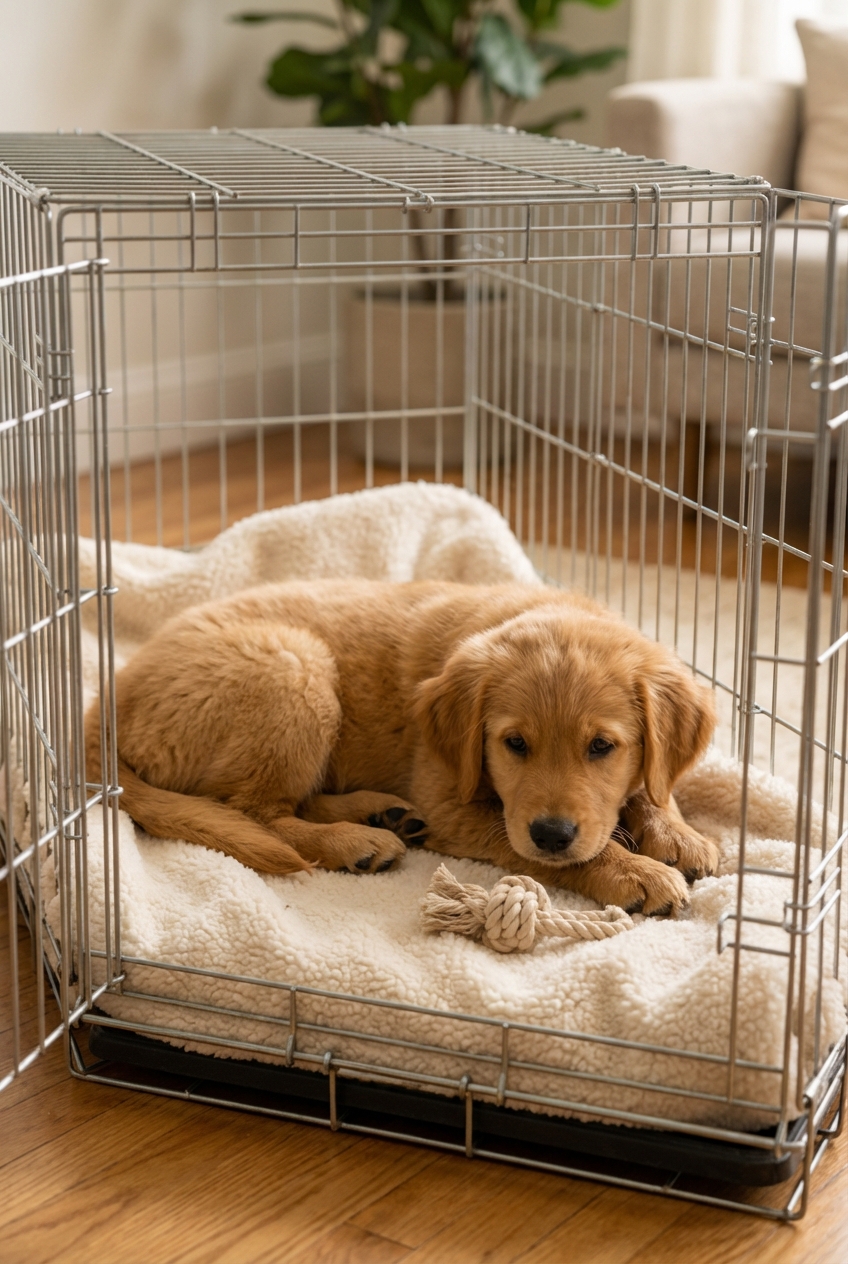
A crate should feel like a safe bedroom, not a punishment. Crate training supports potty training, prevents unsafe chewing, and helps puppies learn to settle.
- Feed a few meals in the crate with the door open.
- Toss treats in, let them walk in and out freely.
- Close the door for short moments while they enjoy a chew, then open before they worry.
- Build duration gradually.
If your puppy panics, that is a sign to slow down and pair alone time with higher-value chews, shorter intervals, and more practice.
Socialization
Socialization is not “letting everyone pet the puppy.” It is safe, positive exposure to the world: people, surfaces, sounds, handling, and environments. The goal is a puppy who thinks new things are normal or even great.
Many trainers and veterinary behavior professionals describe a key socialization window that is often discussed as roughly 3 to 14 (sometimes up to 16) weeks. That said, socialization continues after that window. You are building confidence for life, not checking a box.
Do it safely
Ask your veterinarian about your puppy’s vaccine plan and what is safe in your area. In many cases, you can still do plenty of socialization while avoiding high-risk dog traffic areas like dog parks. Options may include carrying your puppy in busy places, visiting friends with healthy vaccinated dogs, and enrolling in a puppy class with vaccine requirements and good sanitation.
Simple checklist
- Different people: hats, hoodies, beards, kids at a distance, people using walkers.
- Sounds: doorbell, vacuum, thunder audio quietly while eating treats.
- Surfaces: grass, gravel, tile, rubber mats.
- Handling practice: gentle ear touches, paw holds, brief tooth checks.
- Car rides ending in something pleasant.
Watch your puppy’s body language. If they freeze, tuck tail, or try to retreat, increase distance and feed treats until they relax.
Life skills that matter
You do not need 20 tricks. A few skills, taught well, create a polite, safe dog.
Sit
Hold a treat to your puppy’s nose, slowly lift it up and back. When their bottom hits the floor, mark and reward. Do not push their rear down.
Down
From sit, bring the treat to the floor and slowly pull it forward. When elbows touch down, mark and reward. If your puppy pops up, slow your movement.
Come (recall)
This one is a lifesaver. Use a happy voice, crouch down, and reward with something great.
- Start indoors, short distance.
- Say their name once, then “Come.”
- Reward when they reach you, then release them to play again.
Big rule: do not call your puppy to you and then do something they dislike (nail trims, end of fun) every time. Keep recall “worth it.”
Leave it
Show a treat in a closed fist. Your puppy will sniff and paw. The moment they back off, mark and reward from your other hand. Later, progress to an uncovered treat with your hand hovering to block if needed.
Drop it
Trade, do not wrestle. Offer a high-value treat near their nose. When the item falls, mark, treat, and then give the toy back sometimes. This helps build comfort with trading and can reduce the risk of resource guarding habits.
Leash training
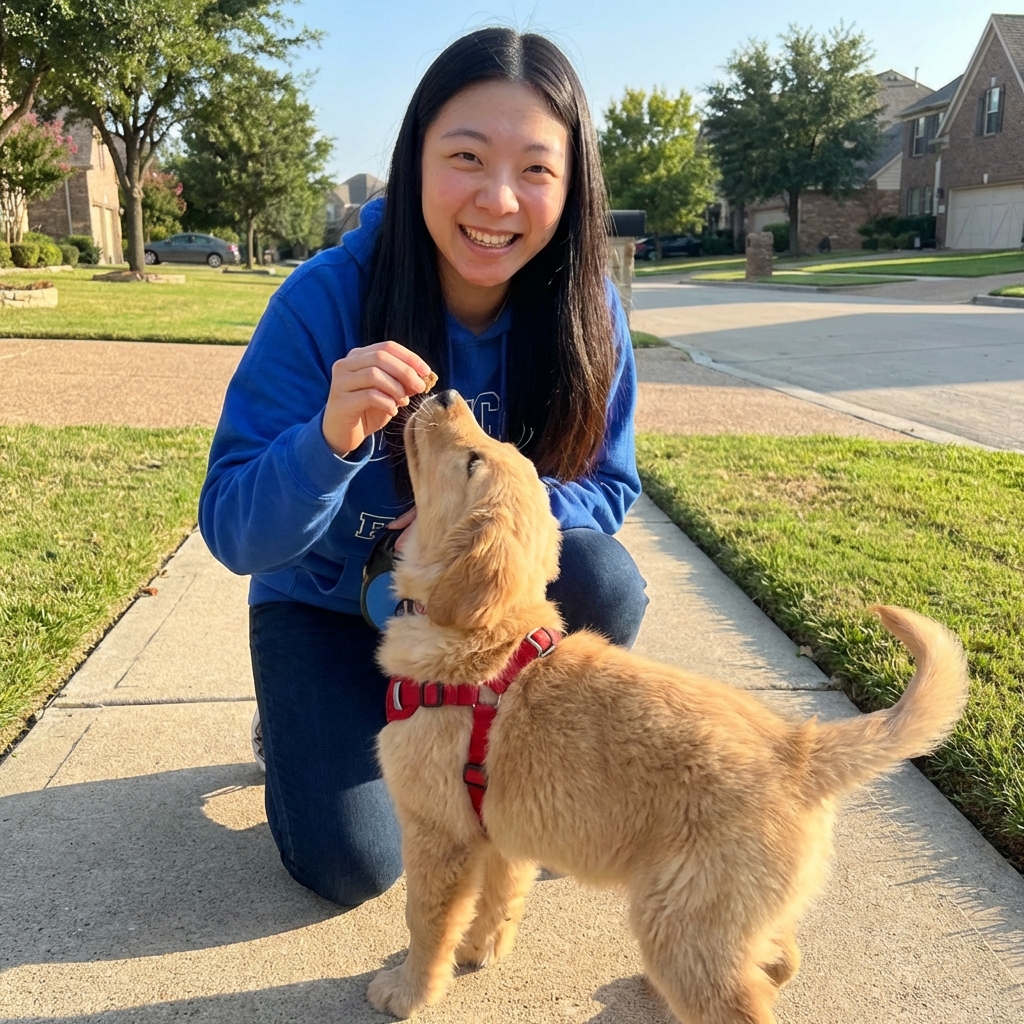
Loose leash walking is a skill, not a personality trait. Puppies pull because forward motion is rewarding.
Start easy
- Reward your puppy for being near your leg.
- Take 3 to 5 steps, treat, repeat.
- If they hit the end of the leash, stop. Wait for slack, then move again.
For many families, a properly fitted front-clip harness can reduce pulling and reduce pressure on the neck compared with a collar while you train. Fit matters. If you notice rubbing, awkward movement, or your puppy seems uncomfortable, adjust the fit or ask your veterinary team for guidance. Avoid devices that rely on pain or fear.
Mouthing and bite skills
Puppies explore with their mouths and they also teethe. Your goal is to teach gentle mouths and give safe outlets.
What works
- Keep chew options everywhere: rubber toys, safe long-lasting chews approved by your veterinarian, and frozen wet washcloths for teething. Supervise, and remove any loose threads or fabric pieces so nothing gets swallowed.
- If teeth touch skin, calmly stop interaction for 5 to 10 seconds.
- Redirect to a toy, then praise when they chew it.
- Ensure enough sleep. Overtired puppies get mouthy fast, and many do best with planned nap breaks during the day.
What to avoid
- Rough hand play that encourages grabbing.
- Yelling or physical corrections that can increase arousal or fear.
Quick chew safety note: supervise any chew, choose sizes that cannot be swallowed, and avoid items that splinter or break into sharp pieces. When in doubt, ask your veterinarian what is appropriate for your puppy’s age and chewing style.
Prevent common problems
Jumping
Jumping is usually social and attention-seeking. Teach an alternative.
- Ask for “Sit” before greetings.
- Reward four paws on the floor.
- Coach guests to ignore jumping and reward calm.
Chewing
Chewing is normal, especially during teething. The key is to control access and provide legal chew items.
- Rotate toys so they stay interesting.
- Use baby gates to keep puppies out of tempting rooms.
- If you cannot supervise, use a crate or pen with a safe chew.
Barking
Barking can come from excitement, frustration, alerting, or fear. First, identify the trigger. Then teach an alternative like “Go to mat” and reward quiet moments. If barking seems fear-based, work at a distance where your puppy can stay relaxed.
Kids and puppies
If you have children in the home, plan for extra supervision. Puppies and kids can accidentally overwhelm each other.
- Teach kids to pet gently and avoid hugging, climbing, or grabbing.
- Use gates and pens so your puppy has a safe break area.
- Do not allow chasing games. If either the puppy or the child gets wild, it is time for a reset and a calm break.
A simple weekly plan
Consistency beats intensity. Aim for several tiny sessions per day, plus training woven into real life.
- Daily: potty routine, name game, short recall practice, handling practice.
- 3 times per week: leash skills in a calm area.
- 2 times per week: short field trips for safe socialization.
- Any time: reward calm behaviors you like, especially settling.
Warm tip: If your puppy is struggling, it is not a character flaw. It usually means the environment is too hard, the reward is too low, or the steps are too big. Adjust one variable and try again.
Health and training
If training suddenly falls apart, look at health and stressors. Behavior and health are connected. If your puppy suddenly has accidents, seems irritable, cannot settle, or stops eating treats, check for medical issues.
Common disruptors
- GI upset from diet changes or parasites can derail potty training.
- Pain (ears, joints, teething discomfort) can make a puppy reactive or avoidant.
- Too many treats can cause diarrhea, so use tiny pieces and subtract from meals.
If you are unsure, talk with your veterinarian. It is always okay to rule out health issues early.
When to get help
Early support can prevent long-term problems. Consider a certified trainer or a veterinary behavior consult if you see:
- Growling or snapping around food, toys, or resting spots.
- Intense fear of everyday things.
- Separation distress that escalates.
- Persistent biting that is not improving with normal puppy strategies.
Look for professionals who use reward-based methods and can explain the “why” behind their plan.
Quick checklist
- Use rewards your puppy truly cares about.
- Train in short sessions and end on a win.
- Prevent mistakes with gates, crate, and supervision.
- Socialize safely and gently, at your puppy’s pace.
- Teach recall and “leave it” early.
- Prioritize rest, routine, and calm.
Puppyhood goes fast. The daily little choices you make now, especially the calm repetitions, become your adult dog’s habits later.