
Hypertrophic Cardiomyopathy (HCM) in Cats

Hypertrophic cardiomyopathy, or HCM, is the most common heart disease in cats. It happens when the muscular wall of the heart, especially the left ventricle, becomes abnormally thick. That extra thickness makes it harder for the heart to relax and fill properly, which can raise pressures inside the heart and lungs over time.
One important nuance: veterinarians use the term primary HCM when the thickening is believed to be inherited or idiopathic. We also have to rule out secondary causes of heart thickening, especially high blood pressure and hyperthyroidism, before labeling it primary HCM.
The tricky part is that many cats look completely normal in the early stages. As a veterinary assistant, I have seen sweet, quiet kitties who seemed “just a little less playful” turn out to have significant heart changes on an echocardiogram. The good news is that early diagnosis and smart long-term care can make a real difference for comfort and longevity.
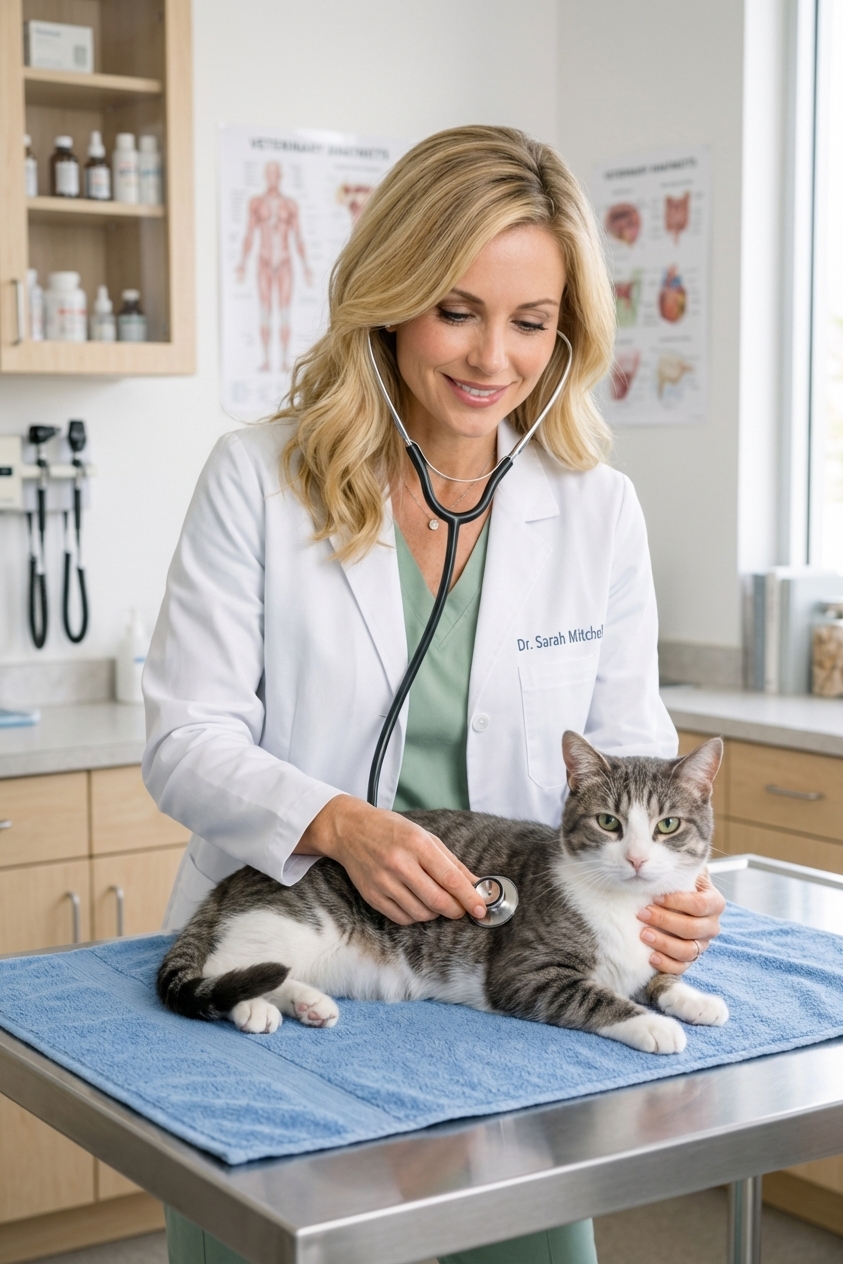
What HCM is, in plain language
In HCM, the heart muscle thickens. When that thickening reduces the space inside the heart chamber or stiffens the wall, the heart has to work harder to move blood forward. Over time, HCM can lead to:
- Diastolic dysfunction: the heart cannot relax and fill normally
- Left atrial enlargement: the “receiving room” of the heart stretches from increased pressure
- Congestive heart failure (CHF): fluid can build up in or around the lungs
- Blood clots: especially a painful “saddle thrombus” (arterial thromboembolism) that can block blood flow to the back legs, often linked to left atrial enlargement
Some cats have a heart murmur with HCM, but not all. And some cats have a murmur for reasons that are not HCM. That is why imaging is so important.
Subtle early signs cat parents often miss
Cats are experts at masking illness. Early HCM signs can look like personality changes or “normal aging.” If your cat is doing any of the following, it is worth a veterinary visit, especially if your cat is a higher-risk breed.
Behavior and activity changes
- Hiding more than usual or choosing isolated resting spots
- Reduced activity, less jumping, or stopping mid-play sooner
- Sleeping more and seeming less social
- Lower appetite or being picky (sometimes subtle)
Breathing changes that need attention
- Faster breathing at rest or increased effort when breathing
- Open-mouth breathing (treat this as urgent in cats, even if it might be triggered by stress or overheating)
- Breathing with the belly or elbows held out to the side
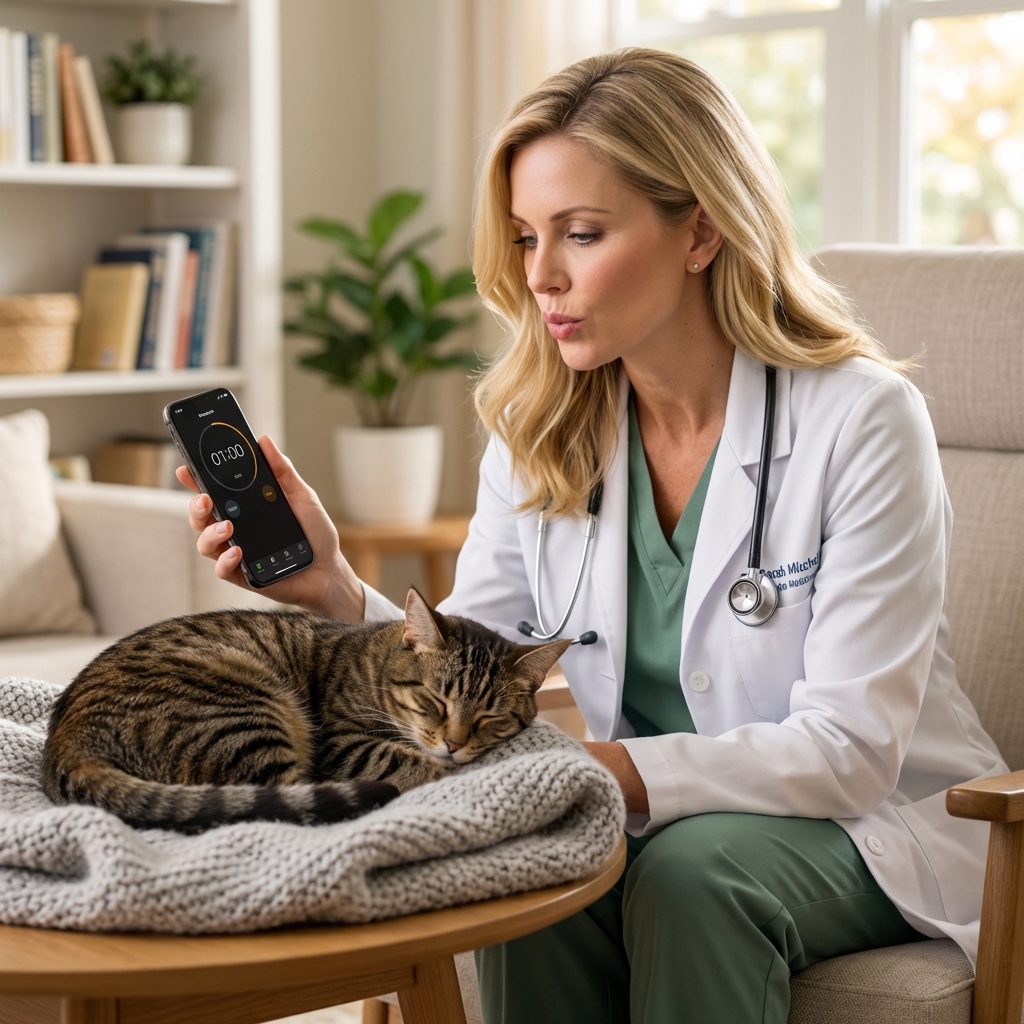
If you are unsure, one practical tip is to count your cat’s resting respiratory rate when they are asleep. A commonly used benchmark is under 30 breaths per minute at rest, and many veterinarians get concerned when a sleeping rate is consistently over 30 to 40, especially if the number is rising compared to your cat’s usual.
When to seek emergency care
Please seek urgent veterinary care right away if you see any of the following:
- Open-mouth breathing or severe breathing effort
- Blue or gray gums
- Sudden weakness or collapse
- Sudden paralysis or dragging of the back legs, crying out, or cold back paws (possible saddle thrombus, often sudden and extremely painful)
These situations can be life-threatening, and fast treatment matters.
How HCM is diagnosed
Because HCM can be subtle early on, diagnosis is usually a combination of physical exam findings and heart-focused testing.
Physical exam and baseline tests
- Heart murmur, a gallop rhythm, or an abnormal heart rhythm heard on exam
- Blood pressure measurement (high blood pressure can cause or worsen heart thickening)
- Bloodwork to check kidney values and thyroid function (hyperthyroidism can contribute to heart changes)
The gold standard: Echocardiogram
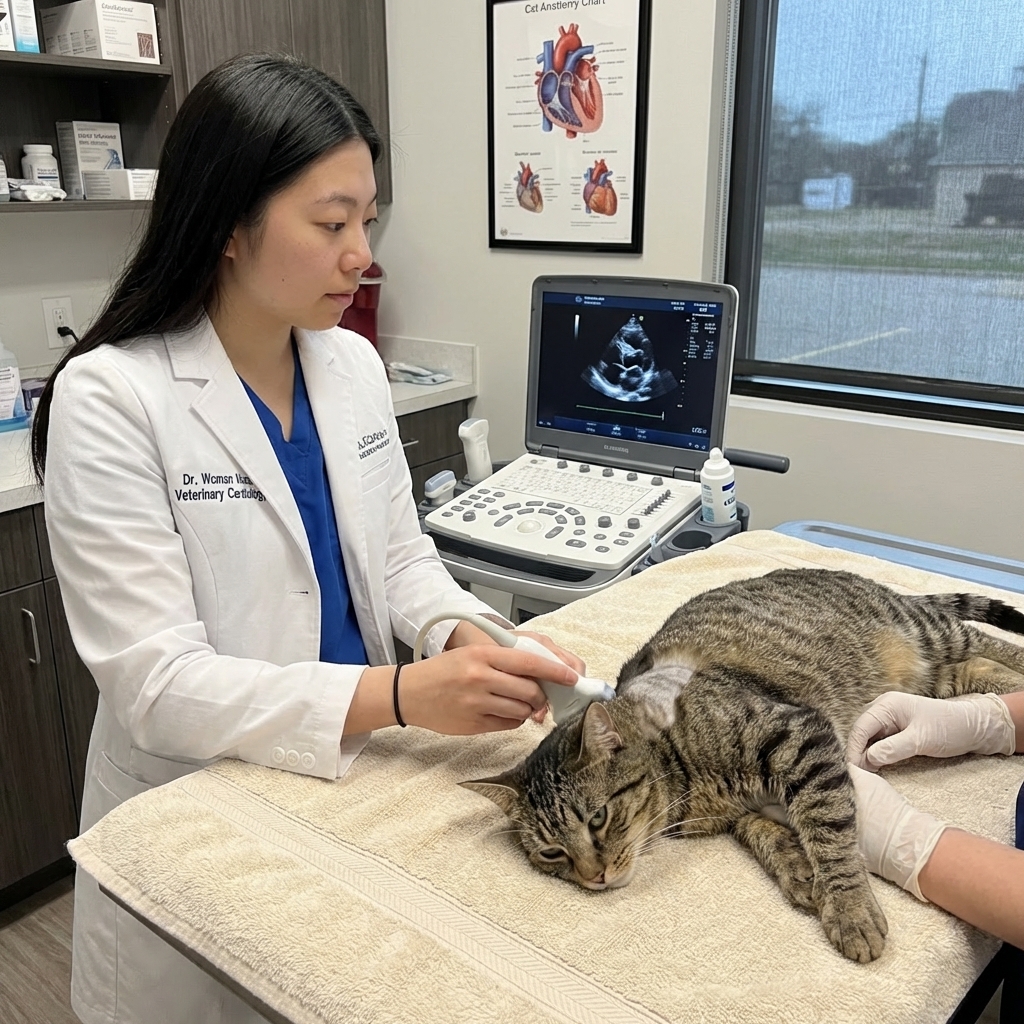
An echocardiogram is an ultrasound of the heart, typically performed by a veterinary cardiologist or a vet with advanced ultrasound training. This is the best test to confirm HCM because it allows the doctor to:
- Measure heart wall thickness and chamber size
- Evaluate how well the heart relaxes and pumps
- Check for left atrial enlargement
- Look for outflow obstruction in some HCM cases (sometimes described as dynamic obstruction or SAM)
Other tests your vet might recommend
- Chest radiographs (X-rays) to look for fluid in or around the lungs
- ECG to assess abnormal rhythms
- NT-proBNP blood test as a supportive screening tool in some situations, especially when an echo is not immediately available. It can help raise or lower suspicion, but it does not confirm HCM and false positives and negatives can occur.
If your cat has a murmur, an echocardiogram is often the most direct path to answers, because a murmur alone does not tell us how severe the underlying disease is.
Breeds at higher risk
Once you understand what HCM looks like on an exam and on imaging, the next question is often, “Is my cat more likely to have it?”
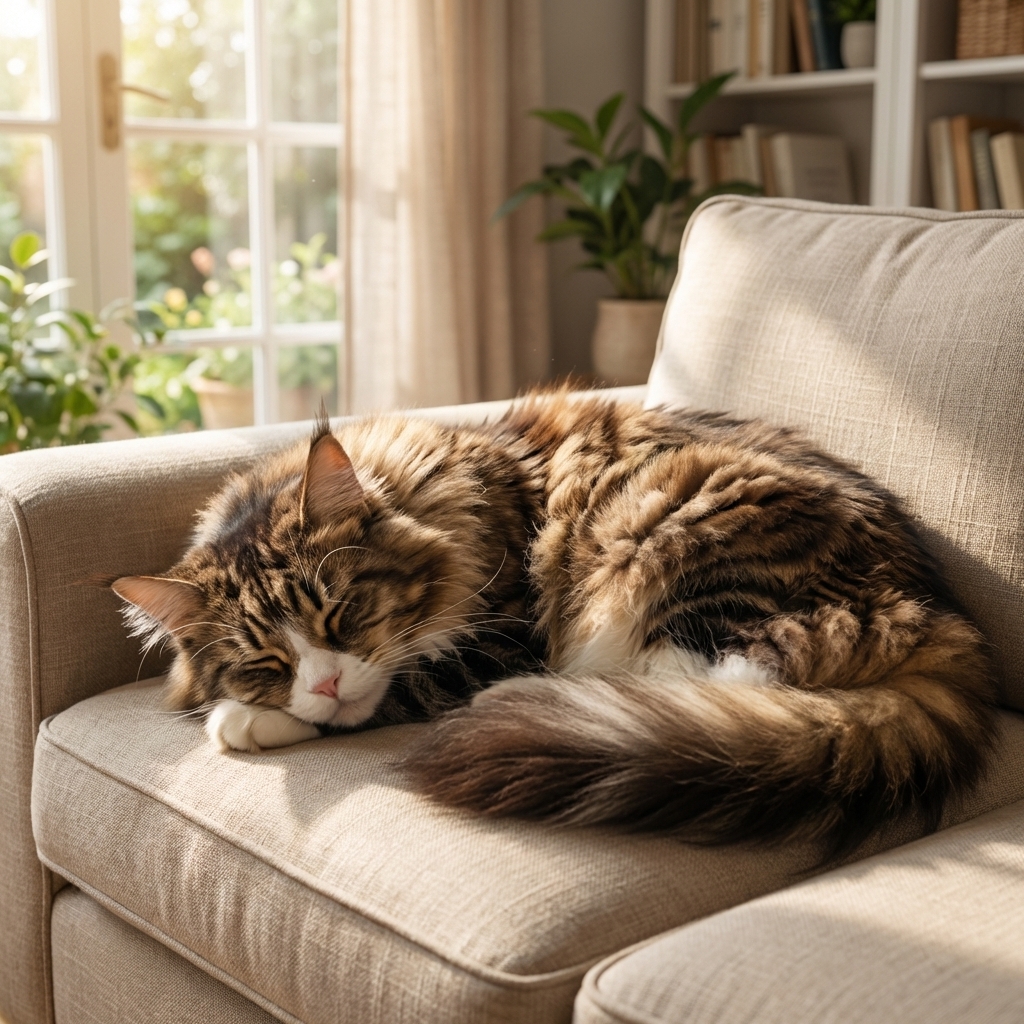
HCM can affect any cat, including mixed-breed cats, but some breeds have a higher inherited risk. Two commonly discussed breeds are:
- Maine Coon
- Ragdoll
In these breeds, veterinarians often recommend proactive screening, even if a cat seems totally healthy. There are also DNA tests available for specific known HCM-associated mutations in Maine Coons and Ragdolls. These tests can be helpful for breeding decisions and risk awareness, but they do not replace an echocardiogram, and a negative test does not guarantee a cat will never develop heart disease.
If you have a Maine Coon or Ragdoll, talk with your veterinarian about the right timing for cardiac screening, and whether a cardiology visit makes sense for your cat’s age and family history.
Treatment and long-term care
There is no one-size-fits-all medication plan for HCM. Treatment depends on whether your cat has symptoms, whether there is outflow obstruction, whether the left atrium is enlarged, and whether there are signs of congestive heart failure. One quick clarification that helps many families: a cat can have heart disease (like HCM) without being in heart failure (CHF). The goals and medications can look very different depending on where your cat falls on that spectrum.
Medication management
Your veterinarian or cardiologist may prescribe medications such as:
- Diuretics (commonly furosemide) if there is fluid buildup from CHF
- Antiplatelet or anticoagulant medications to reduce clot risk in certain cats with enlarged left atrium or prior clot history
- Heart-rate or rhythm support medications in select cases
- Other heart medications based on echo findings and blood pressure
Important: never start, stop, or adjust heart medications without your veterinarian’s guidance. Cats with heart disease can be sensitive to dose changes, and kidney values may need monitoring.
Home care that truly helps
- Track resting respiratory rate a few times a week, or as directed, and write it down. Many cats are under 30 breaths per minute at rest. A consistent sleeping rate over 30 to 40, or a steady upward trend, is a good reason to call your vet for guidance.
- Keep stress low, especially for cats that panic during changes in routine
- Maintain a lean body condition, since obesity increases cardiac workload
- Give meds consistently and ask about flavored compounding if pilling is a struggle
- Schedule rechecks as recommended, often including repeat echocardiograms and periodic lab work
Activity, nutrition, and routine
Most cats with HCM do best with steady routines and normal activity as tolerated. Gentle play is usually fine, but avoid forced exertion or intense exercise sessions unless your veterinarian specifically recommends a plan.
For cats in CHF, your veterinarian may discuss sodium considerations and how to choose an appropriate diet. Please avoid over-the-counter supplements marketed as “heart cures” unless your cardiologist approves them, since some can interfere with medications or worsen certain conditions.
Life expectancy with HCM
Life expectancy varies widely because HCM ranges from mild and stable to severe and progressive. Some cats live for many years with minimal symptoms and careful monitoring. Others may develop complications such as congestive heart failure, arrhythmias, or blood clots that shorten lifespan.
In general, cats diagnosed before severe complications, then monitored and treated appropriately, often do better than cats diagnosed after an emergency event. The best thing you can do is treat this like a long-term partnership with your veterinarian or a veterinary cardiologist.
Questions to ask your veterinarian or cardiologist
- Does my cat’s exam suggest a murmur, gallop rhythm, or arrhythmia?
- Should we schedule an echocardiogram, and how soon?
- Are we concerned about secondary causes like high blood pressure or hyperthyroidism?
- What signs at home mean I should call right away?
- Should I monitor resting respiratory rate, and what number is too high for my cat?
- How often should we recheck imaging and lab work for my cat’s specific stage?
- If my cat is a Maine Coon or Ragdoll, should we discuss DNA testing and screening?
If your cat is hiding, slowing down, or breathing differently, trust your instincts. Cats do not complain loudly, but their bodies do give us clues. Getting answers early is one of the kindest things you can do.