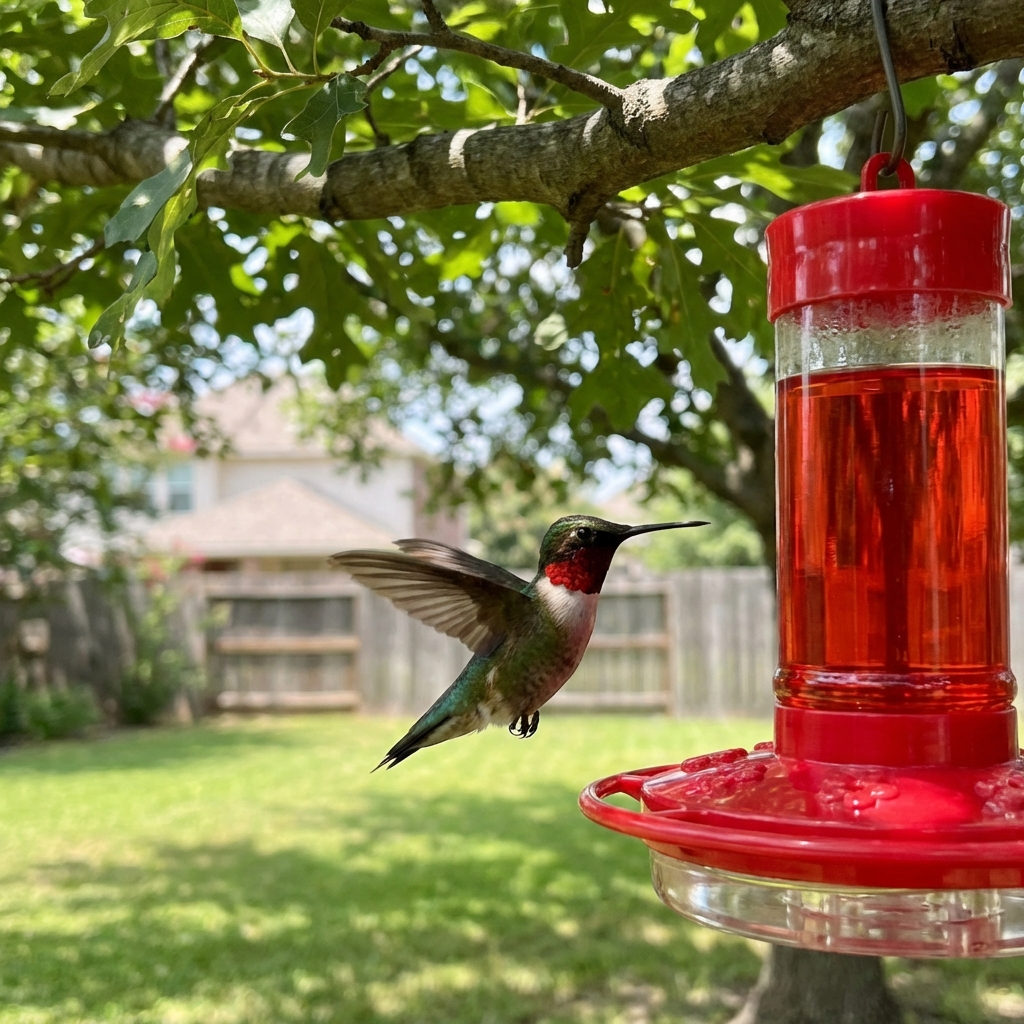
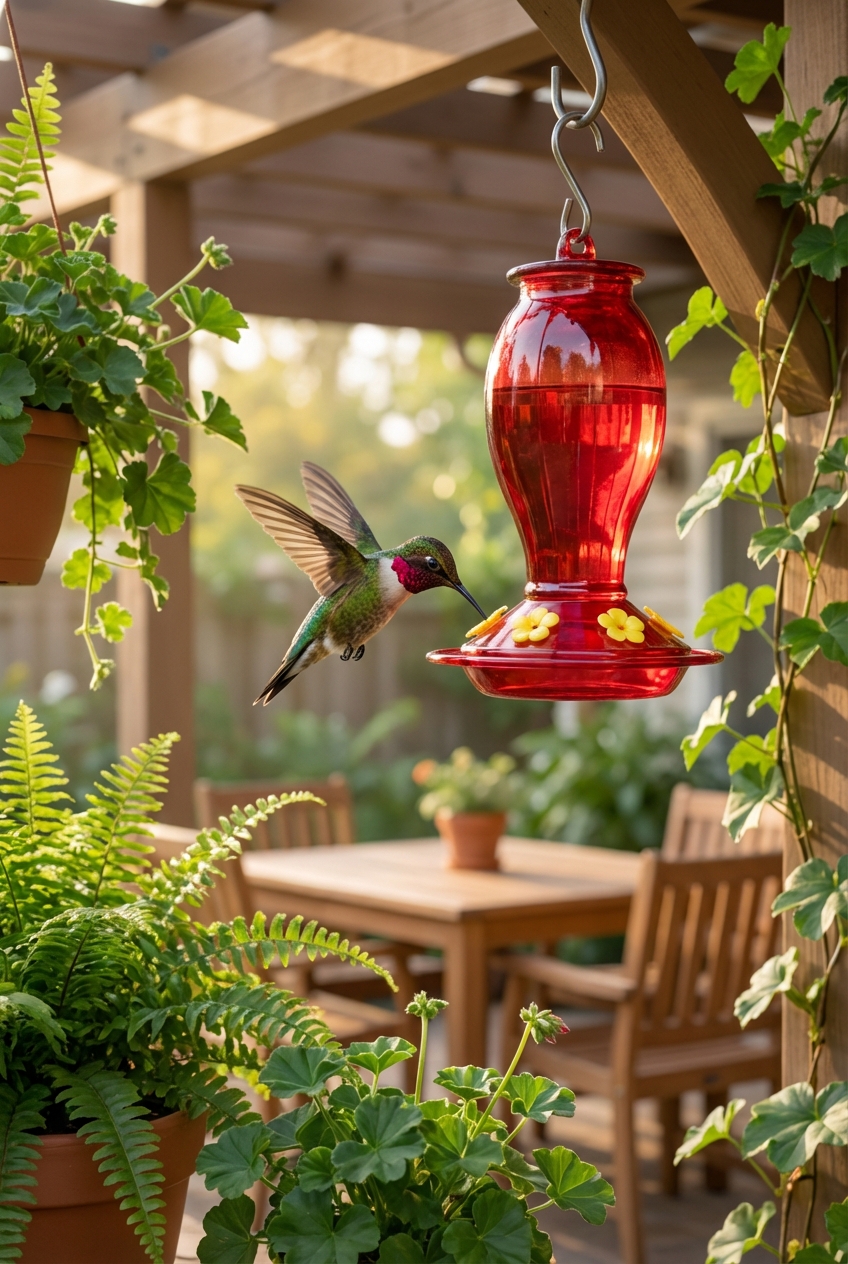
Place your hummingbird feeder for maximum visits: part shade, 4–6 ft high, near cover (but away from cats), and safely close to or far from windows. Includ...
Article
•
Designer Mixes
Hummingbird Feeder Placement

Shari Shidate
Designer Mixes contributor
Hummingbird feeders can bring an incredible little burst of life to your yard. But placement is everything. Put a feeder in the wrong spot and you may get ants, bees, window strikes, spoiled nectar, or no visitors at all. Put it in the right spot and you can create a safe, steady feeding station that hummingbirds return to day after day.
Start with what hummingbirds need
Think like a hummingbird. They are tiny athletes that burn energy fast, and they are also cautious. The best feeder location supports three basics: easy access, safety, and fresh nectar.
- Easy access: clear flight paths and a spot they can find quickly.
- Safety: protection from predators and fewer chances of collisions.
- Fresh nectar: shade and temperature control so sugar water does not ferment quickly. (Use a simple mix of 1 part white sugar to 4 parts water, and skip red dye.)
Height and spacing
How high should you hang a feeder?
A practical target is about 4 to 6 feet off the ground. That is usually high enough to be away from most ground predators, but low enough for you to clean and refill easily. If you have frequent neighborhood cats, hang it a bit higher if you can and keep the area below as open as possible.
How far apart should multiple feeders be?
Hummingbirds can be surprisingly territorial. If you want to serve more than one bird at a time, place feeders as far apart as your yard allows. A good starting point is 10 to 20 feet apart, and out of direct sight of each other if possible. That spacing often reduces squabbles.
Sun and shade
In hot weather, nectar can spoil quickly in direct sun. Ideally, place your feeder in bright shade, meaning a spot that is well lit but protected from the hottest afternoon rays. Good examples include under a light tree canopy or on the east side of the house.
- Best: morning sun with afternoon shade.
- Avoid: full sun all day, especially in summer.
- Note: cooler placement can also help slow fermentation, which may make the area less attractive to some pests, but wasps can still show up and usually need additional tactics.
Freshness rule: the warmer it is, the more often you should change nectar, even if the feeder is not empty.
- Very hot days: change nectar every 1 to 2 days.
- Mild weather: every 3 to 5 days is often fine.
If it smells sour or looks cloudy, dump it and scrub the feeder.
Prevent window strikes
One of the most important placement tips is also the most overlooked: reduce collision risk. Hummingbirds can hit glass at high speed.
- Very close is safer: hang the feeder within 3 feet of a window, so birds cannot build up much speed if they misjudge the reflection.
- Or far away: place it more than 30 feet from windows when possible.
- Use visual cues: if you have frequent strikes, consider adding exterior window decals or screens that help birds recognize glass.
Use cover the right way
Hummingbirds love having a nearby perch and quick shelter. Place feeders near shrubs or small trees, but keep a little breathing room so the feeder is not right in the thicket. As a rule of thumb, try several feet away from dense cover so birds can stage and scan for danger.
Avoid placing feeders deep inside dense bushes. It can make birds feel trapped and can encourage insects to gather in still air.
Reduce predators and pests
Watch for cats
If outdoor cats are common in your neighborhood, do not hang feeders where cats can hide and pounce. Keep the ground underneath fairly open, and avoid spots next to fences or thick hedges that give cats cover.
Keep ants and wasps under control
- Use an ant moat above the feeder and keep it filled with water.
- Skip oily or sticky home remedies on poles or hooks. They can trap beneficial insects and create a mess.
- Choose bee-resistant feeders with recessed ports if wasps are a problem.
- Fix drips: a leaky feeder (or overfilling) attracts ants and wasps fast, so place it where you can notice and address leaks.
- Avoid nearby attractants: do not place feeders near trash cans or fallen fruit that already draws wasps.
Make it easy to maintain
This is the practical part people forget. The best feeder placement is one you can maintain. Pick a spot where you can comfortably:
- refill without dragging out a ladder
- take the feeder down for scrubbing regularly
- notice leaks, mold, or cloudy nectar right away
Hummingbirds do better when feeders are clean and reliable. A convenient location helps you stay consistent, especially during hot spells when nectar needs frequent changing.
Add flowers nearby
Feeders work best when they support a bigger habitat. Add tubular, nectar-rich blooms nearby so hummingbirds can feed naturally too. A feeder plus flowers also tends to reduce territorial behavior because there are more feeding options.
Many gardeners have great luck with salvias, Turk’s cap, lantana, bee balm, and native honeysuckle types. (Avoid invasive varieties in your area.)
Placement checklist
- Height: roughly 4 to 6 feet (adjust for cats and convenience)
- Light: morning sun, afternoon shade when possible
- Windows: within 3 feet or beyond 30 feet
- Cover: near shrubs or small trees, but several feet out
- Multiple feeders: space them out, ideally out of sight of each other
- Pests: ant moat, bee-resistant ports if needed, address drips quickly
- Convenience: easy to clean, refill, and monitor
If you are not seeing hummingbirds yet, do not panic. Adjust one variable at a time: a bit more shade, a clearer flight path, or moving the feeder away from frequent disturbance like busy doors, playful pets, or high-traffic patios. Small tweaks can make a big difference.