A vet assistant’s quick list of cat-safe human foods, with simple serving rules, portion guides, “maybe” foods, and a clear avoid list for common toxins.
Article
•
Designer Mixes
Human Foods for Cats: Fun Facts and Tips

Shari Shidate
Designer Mixes contributor
If you have ever watched your cat stare you down while you eat, you already know the truth. Cats are curious. They are also picky, and their bodies have very specific nutrition needs. As a veterinary assistant, I love helping pet parents safely share a little “people food” without accidentally causing an upset stomach, nutrient imbalance, or worse.
Let’s talk about which human foods can be cat-friendly, which ones are never worth the risk, and a few fun facts that make feline nutrition so fascinating.
Quick reminder: When in doubt, do not offer it. Ask your veterinarian first.
First, a quick cat nutrition reality check
Cats are obligate carnivores. That means they are designed to get the majority of their nutrition from animal tissue. Unlike dogs and humans, cats have a limited ability to thrive on plant-based ingredients alone.
Fun fact: cats need taurine from animal sources
Taurine is an amino acid critical for a cat’s heart, vision, and reproduction. Cats cannot make enough taurine on their own, so it must come from their diet. That is one reason a “little bite of meat” can be more meaningful to a cat than a cracker or veggie nibble.
Golden rule
Human foods should be treats or toppers, not a replacement for a complete and balanced cat food. If you want to feed a home-prepared diet long-term, do it with your veterinarian or a board-certified veterinary nutritionist so key nutrients like taurine, calcium, and essential fatty acids do not get missed.
Cat-safe human foods (best choices)
These options are generally considered safe for healthy adult cats when served plain and in small amounts. Introduce any new food slowly, especially if your cat has a sensitive stomach.
1) Cooked lean meats
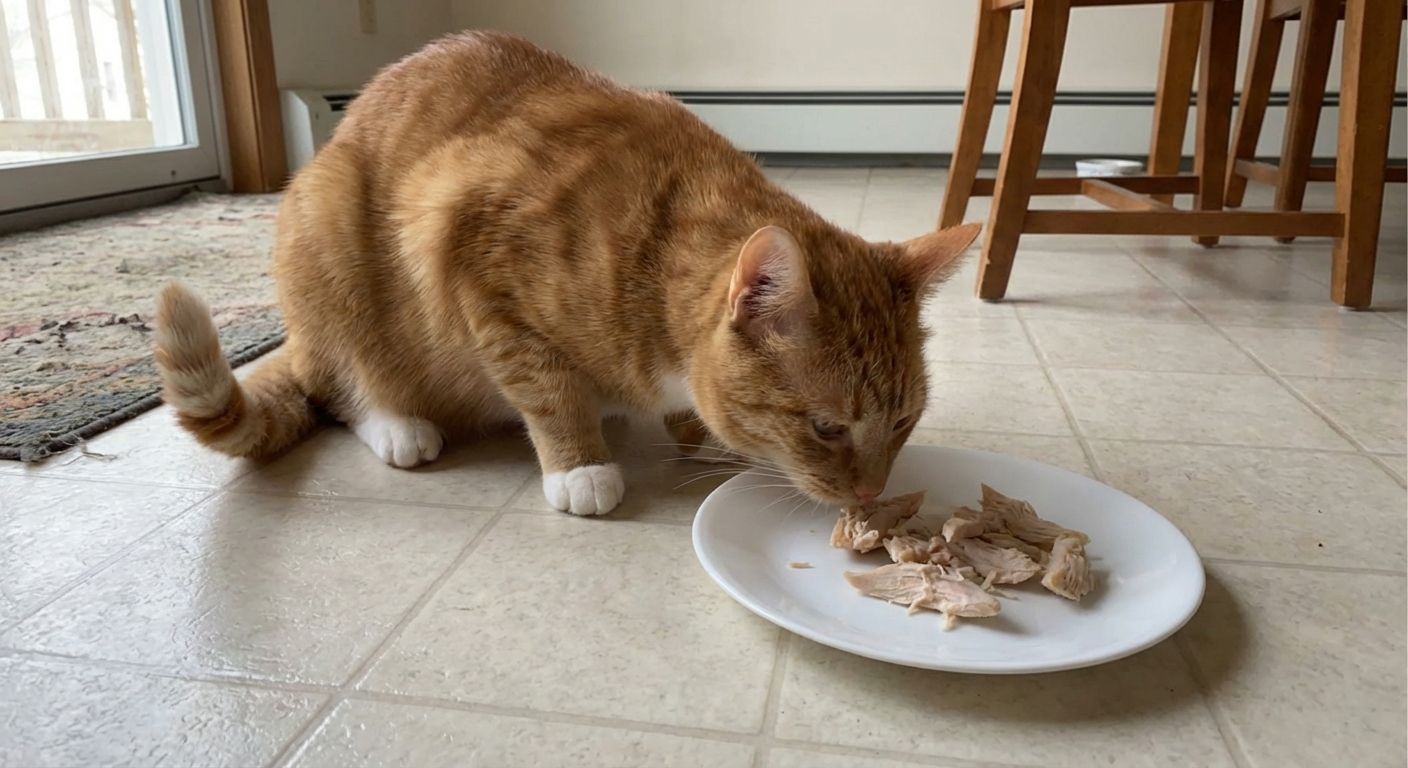
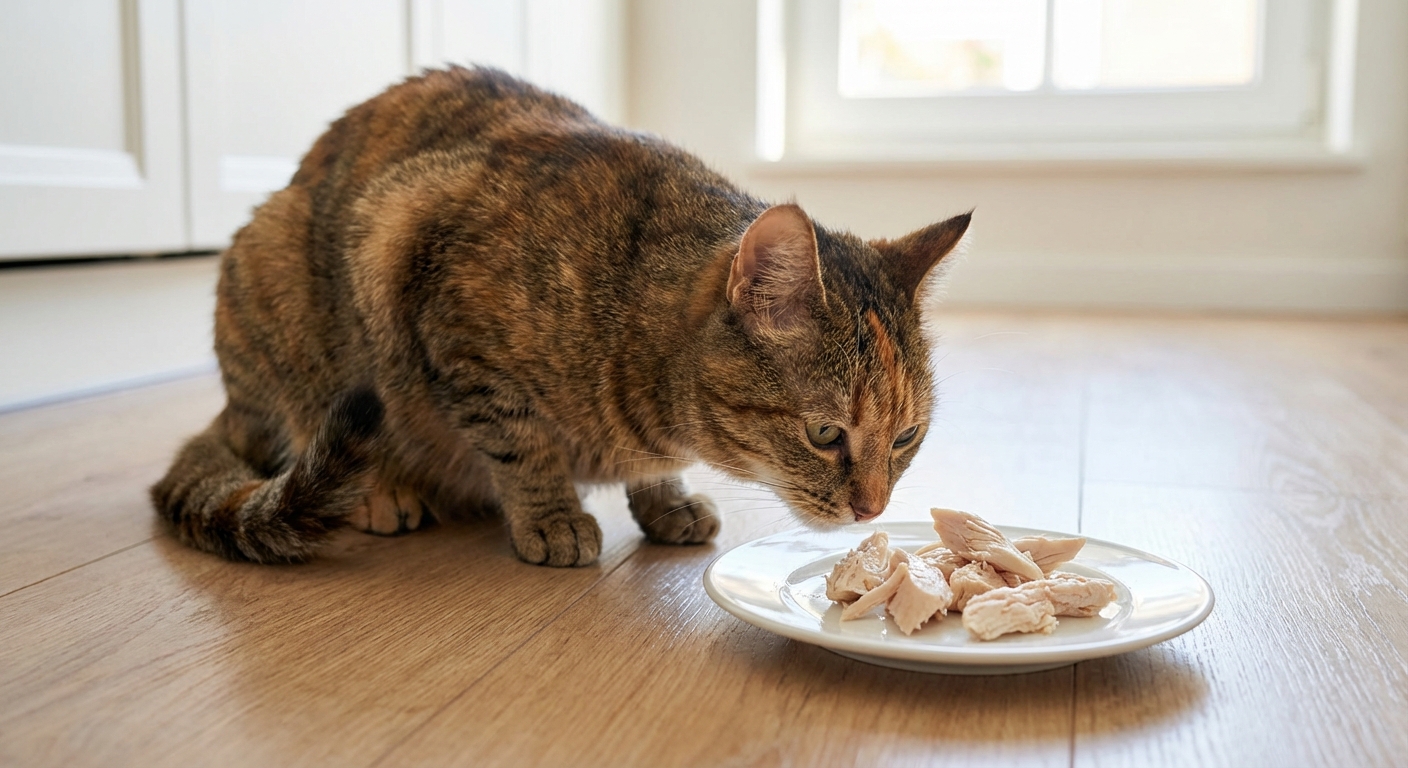
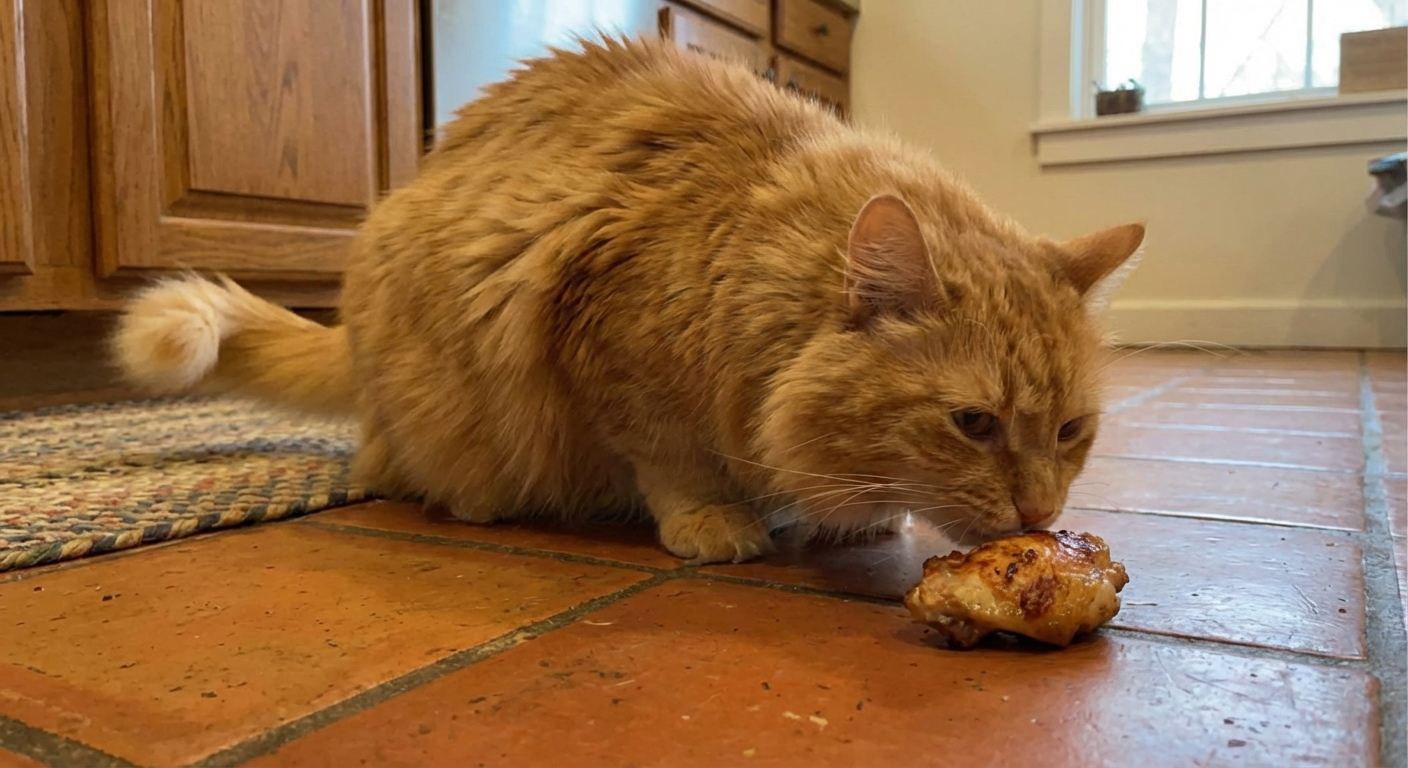
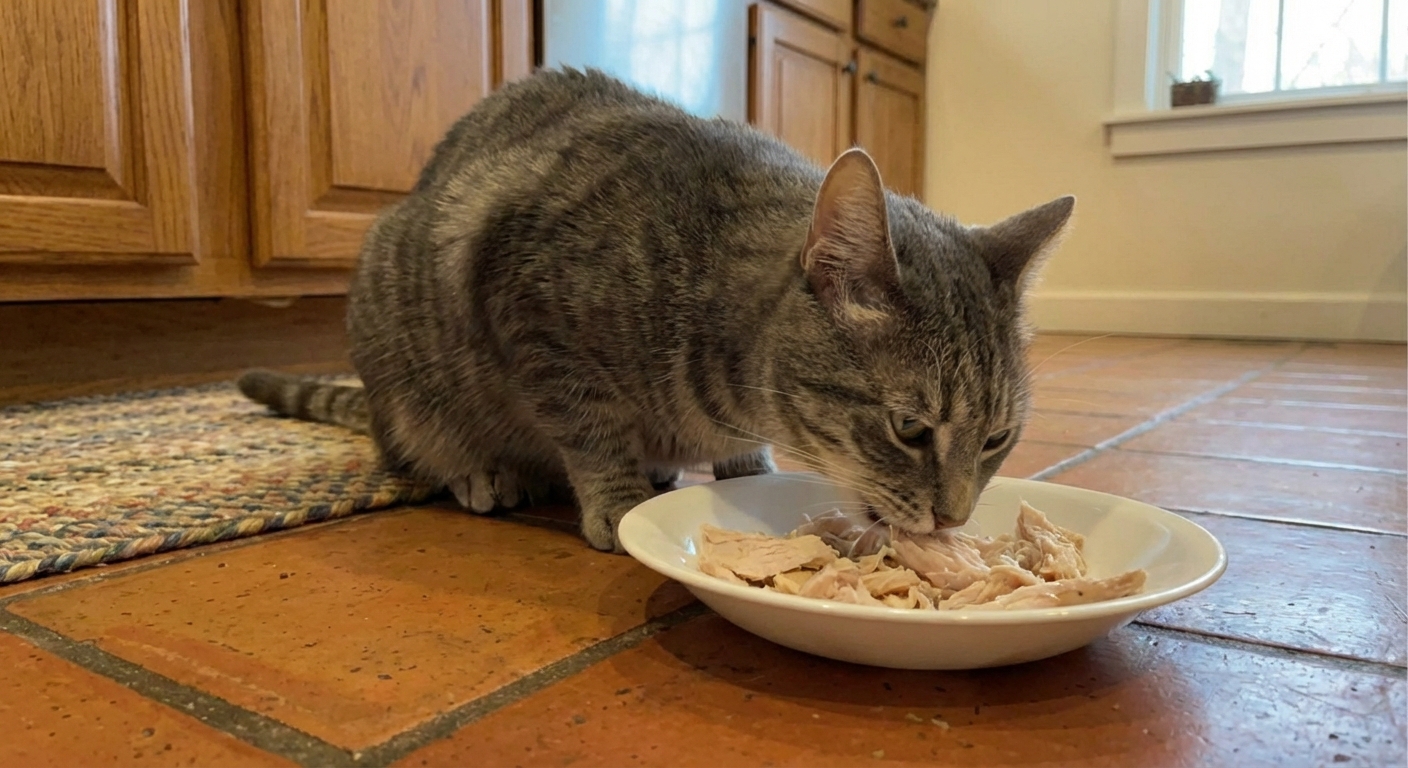
- Chicken, turkey, lean beef: cooked thoroughly, no skin, no bones, no seasoning.
- Skip processed meats like deli slices, sausage, bacon, and hot dogs. They are often too salty and may contain preservatives and seasonings.
- Portion tip: think teaspoon-sized pieces for most cats.
Why I like it: It matches what cats are built to digest and provides high-quality protein.
2) Cooked fish (occasionally)
- Salmon or white fish: fully cooked, plain, and offered as an occasional treat.
- Avoid fish prepared with oil, butter, garlic, onion, heavy salt, spicy rubs, or sauces. Watch for hidden seasonings like onion powder and garlic powder.
Fun fact: many cats love fish. Too much fish can create a “treat preference” in some cats, but the bigger concern is that frequent fish snacks can displace complete and balanced nutrition. Treat it like a special snack, not a daily habit.
What about tuna? Plain tuna is not automatically “bad,” but it should be a small treat, not an everyday food. If you use canned tuna, choose options packed in water with no added salt, and avoid anything in brine or with flavorings.
Also skip raw fish. Raw diets and raw fish can carry bacteria and parasites. Some raw fish also contain thiaminase, which can interfere with vitamin B1 (thiamine).
3) Eggs (fully cooked)
- Scrambled or hard-boiled: plain, fully cooked.
- Avoid raw egg due to bacteria risk and because raw egg white contains avidin, which can interfere with biotin absorption.
Eggs can be a gentle, protein-rich option for many cats.
4) Plain pumpkin
- 100% plain pumpkin puree (not pie filling).
- Often used in small amounts to support stool consistency, depending on the cat.
Tip: Start with about 1/4 to 1/2 teaspoon mixed into food, then reassess. Pumpkin is not the right answer for every constipation case, especially if dehydration is part of the problem. Make sure fresh water is available, and consider wet food for extra hydration if it fits your cat’s needs. If diarrhea or constipation continues, call your vet because cats can dehydrate quickly.
5) Tiny tastes of certain fruits and veggies
Most cats are not strongly drawn to produce, but some enjoy little nibbles.
- Steamed carrots or steamed green beans
- Cucumber (small pieces, peeled if needed)
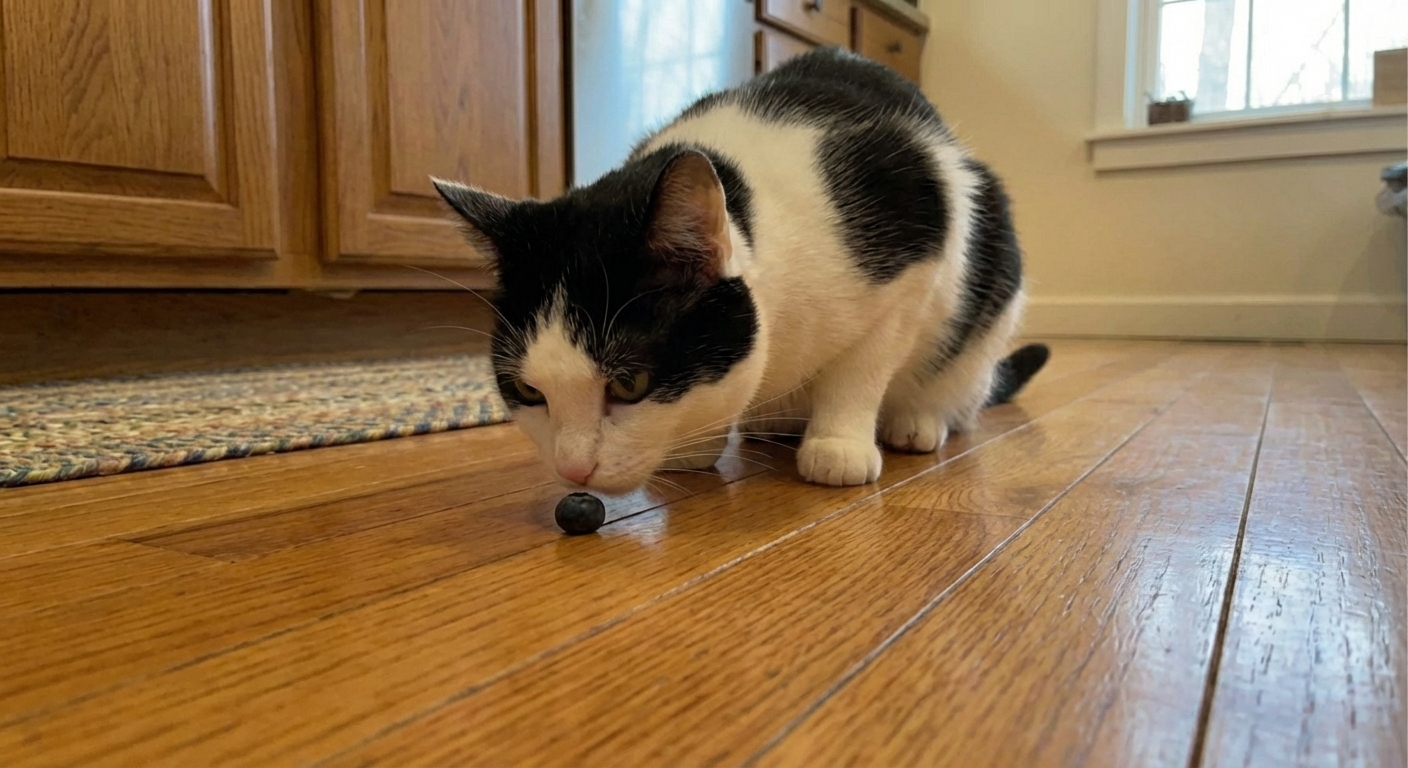
- Blueberries (one or two, smashed or cut in half for cautious chewers)
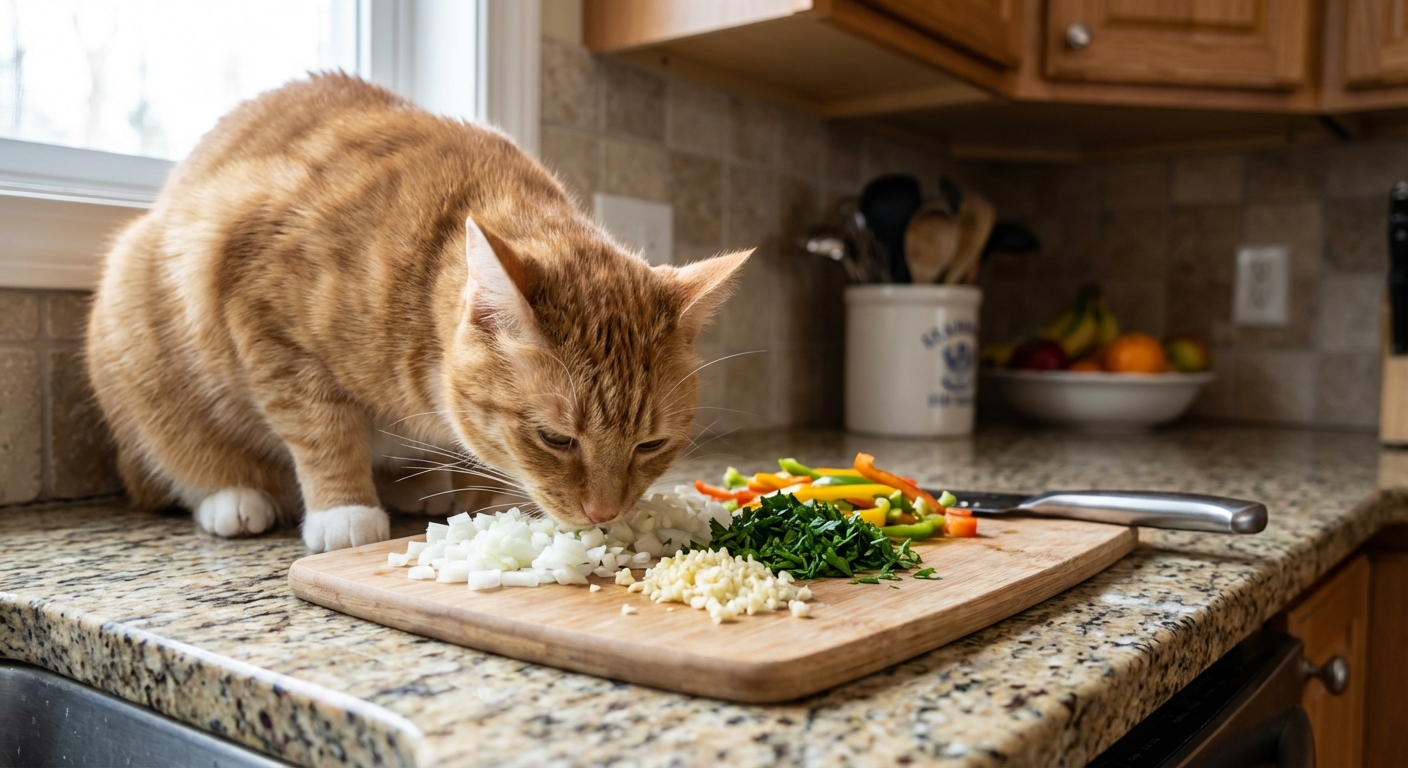
Keep portions very small, and skip anything seasoned or cooked with onion or garlic.
Foods that are risky or toxic for cats
This is the part I wish every pet parent had on their fridge. Some foods are dangerous even in small amounts.
Never feed
- Onion, garlic, chives, leeks: can damage red blood cells and lead to anemia.
- Grapes and raisins: kidney injury is well documented in dogs. In cats, cases are rarer and the risk is less clear, but because serious kidney effects have been reported, it is safest to avoid them.
- Chocolate, caffeine: toxic to the nervous system and heart.
- Alcohol: highly dangerous.
- Xylitol: a well-known emergency in dogs. In cats, the exact risk is less established, but it is still best to avoid and treat exposure as urgent. Call your vet or pet poison control for guidance.
- Cooked bones: splinter risk and potential intestinal damage.
- Fatty foods like bacon grease: can trigger GI upset and may contribute to pancreatitis.
- Dough with yeast: can expand in the stomach and produce alcohol.
- Milk and ice cream: many adult cats are lactose intolerant and get diarrhea.
If your cat gets into something questionable, call your veterinarian or a pet poison hotline right away. Do not wait for symptoms to “prove” it was a problem.
Easy shareable snack ideas
If you want safe ways to include your cat in the kitchen routine, here are simple options that are usually well tolerated.
Simple protein topper
- Shred a small amount of plain cooked chicken.
- Add 1 to 2 teaspoons on top of your cat’s regular meal.
Egg bite treat
- Make plain scrambled egg.
- Offer a pea-sized bite, then stop. A little goes a long way.
Pumpkin mini dab
- Mix a tiny dab of plain pumpkin into wet food.
- Monitor the litter box over the next day and keep water available.
Actionable tip: if your cat has never had a food before, offer it earlier in the day. That way you can observe appetite, energy, and stool before bedtime.
Portion and frequency
Treat calories add up quickly in cats. A good general target is to keep extras at 10% or less of daily calories. For many indoor cats, that can be just a few bites.
Watch for these signs you should stop
- Vomiting or repeated hairball-like heaving
- Diarrhea or very soft stool
- Straining in the litter box
- Itching or new ear debris (possible food sensitivity)
- Sudden pickiness with regular food
If you notice any of these, go back to your cat’s normal diet and check in with your vet, especially for kittens, seniors, or cats with kidney disease, diabetes, or urinary issues.
More fun cat nutrition facts
- Cats do not taste sweetness well, which is one reason they are not impressed by many fruits.
- Texture matters as much as flavor. Some cats love shredded chicken but refuse ground meat.
- Strong smells win. Warmed food releases aromas that can encourage picky eaters.
- Hydration is a big deal. Wet foods and water-rich toppers can support urinary health for many cats, but any diet changes should match your cat’s medical needs.
When to ask your veterinarian first
Please check with your veterinarian before offering human foods if your cat:
- Has a history of urinary crystals or blockages
- Has kidney disease, hyperthyroidism, IBD, or suspected food allergies
- Is on a prescription diet
- Is a kitten or a senior with weight loss
The right treat for one cat can be the wrong choice for another, and a quick call can prevent a big problem.