A vet assistant’s quick list of cat-safe human foods, with simple serving rules, portion guides, “maybe” foods, and a clear avoid list for common toxins.
Article
•
Designer Mixes
Human Foods Cats Can and Cannot Eat

Shari Shidate
Designer Mixes contributor
As a veterinary assistant here in Frisco, Texas, I get this question weekly: “Can my cat have a bite of this?” Cats are curious little kitchen supervisors, and many truly do want what you are eating.
The tricky part is that cats are obligate carnivores, meaning their bodies are built to run on animal-based protein and fat, not a wide variety of “people foods.” Some human foods are safe in small amounts, while others can cause vomiting, pancreatitis flare-ups, anemia, kidney injury, or worse. Also, treats and extras should not replace a complete and balanced cat food.
This guide gives you an evidence-informed, easy-to-scan list of human foods cats can and cannot eat , plus what to do if your cat gets into something unsafe.
Before you share a bite
Quick safety rules
- Keep portions small: Treats and extras should generally stay under 10 percent of daily calories. As a practical guide for an average adult cat, think a pea-sized bite or up to 1 teaspoon of plain food.
- Plain is best: Avoid salt, garlic, onion, chives , heavy seasoning, butter, creamy sauces, and spicy foods.
- Cook it safely: Skip raw eggs, raw fish, and undercooked meat due to bacterial and parasite risk.
- Watch the fat: High-fat foods can trigger stomach upset and may contribute to pancreatitis in susceptible cats.
- When in doubt, do not feed it: If you cannot confirm safety, keep it out of reach.
Important: This article is general education and not a substitute for your veterinarian’s advice. If your cat has kidney disease, diabetes, IBD, a history of urinary crystals, or is on medication, ask your vet before adding new foods.
Safe human foods (in moderation)
These foods are generally considered safe for most healthy cats when served plain and in small amounts. Think “taste,” not “meal replacement,” unless a veterinarian or board-certified veterinary nutritionist has formulated a complete homemade diet .
Cooked meats
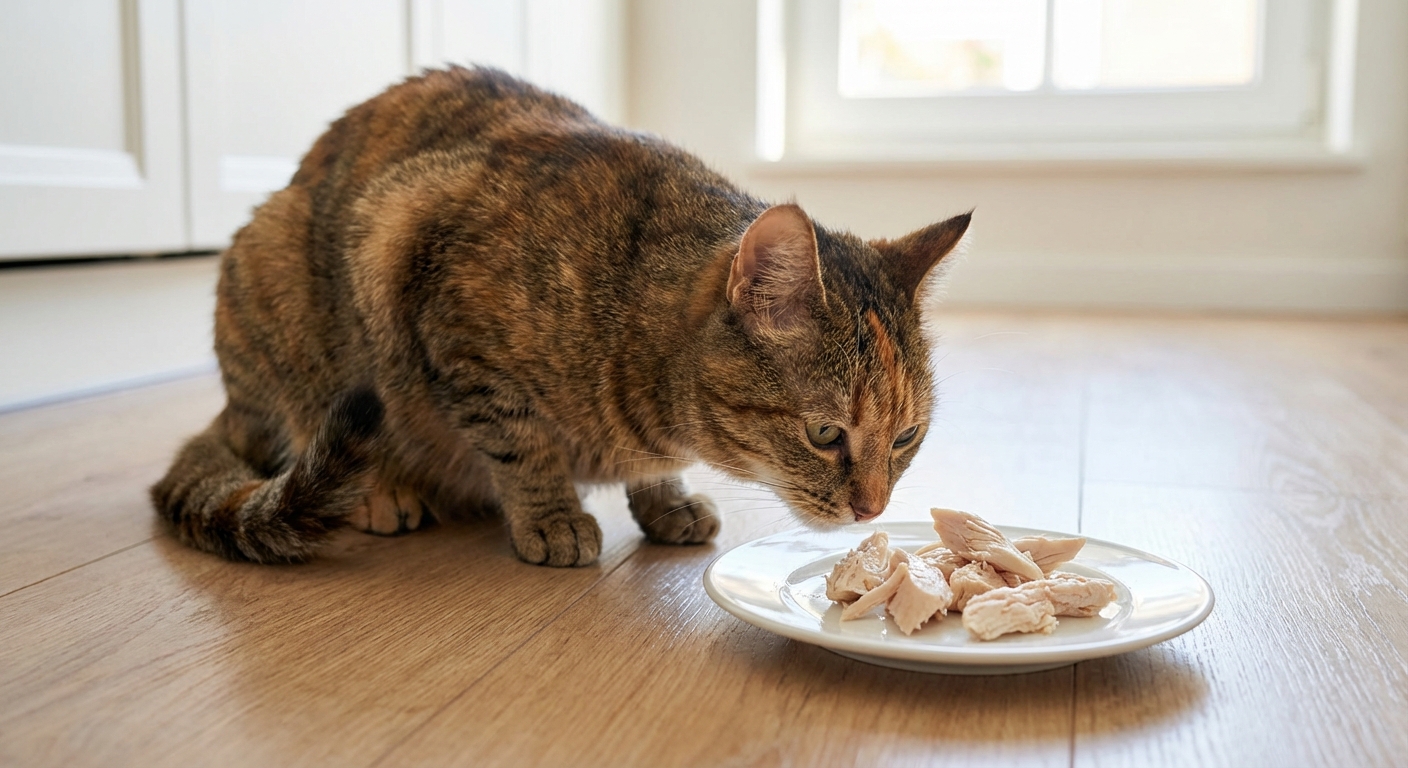
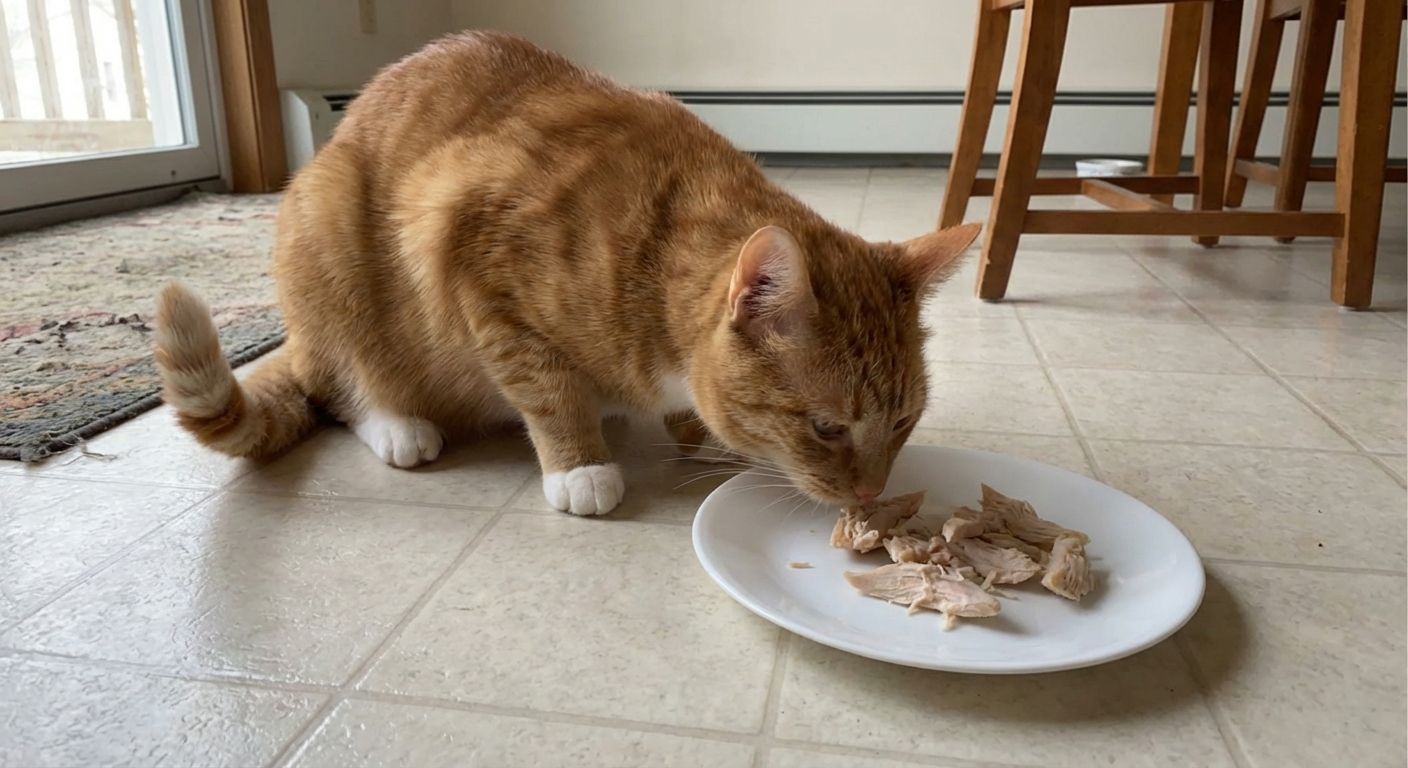
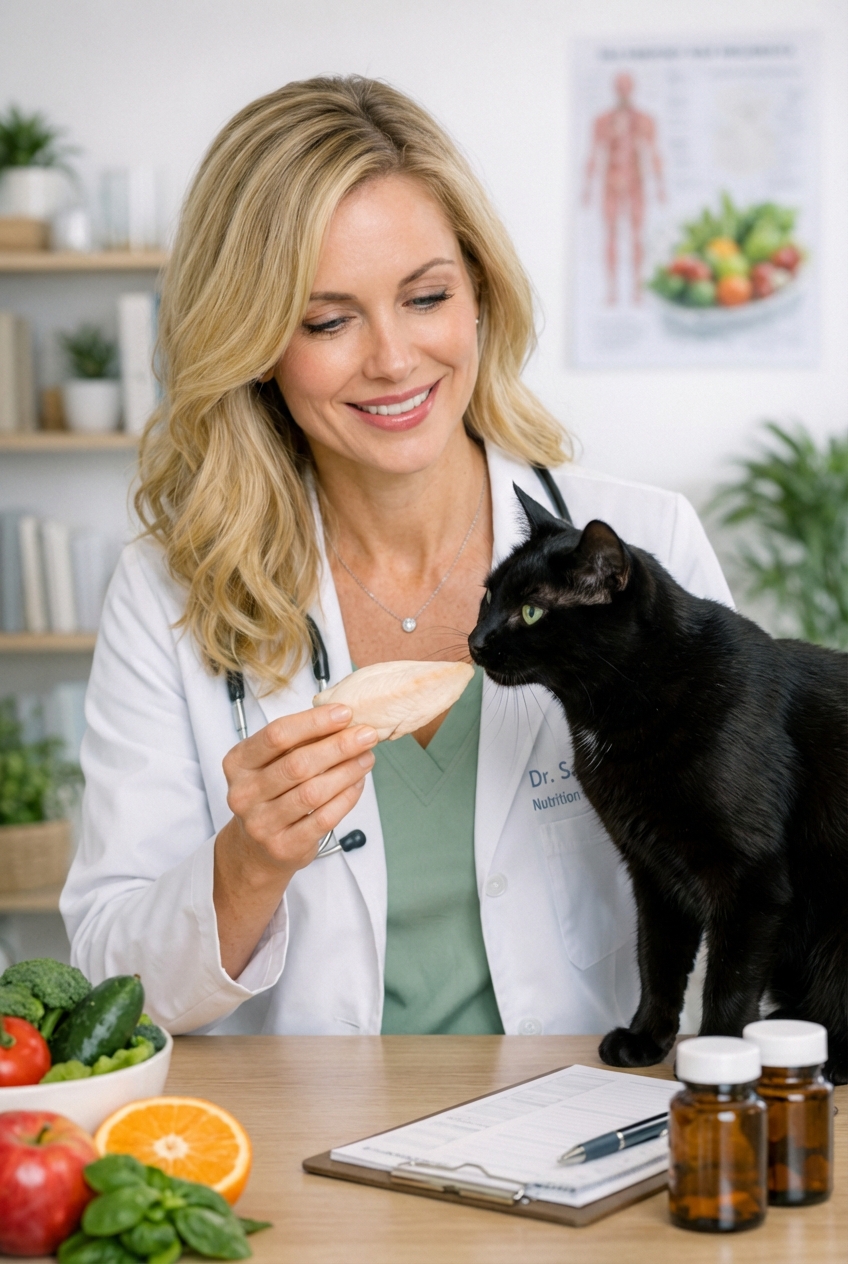
- Chicken, turkey: Cooked thoroughly, no skin, no bones, no seasoning.
- Lean beef: Cooked, plain, small pieces.
- Pork: Fully cooked and lean. Avoid salty processed pork (bacon, ham).
- Lamb: Cooked and lean, in small amounts.
Why it works: Cats thrive on animal protein. The biggest risks are seasoning, fat, and bones.
Fish and seafood (occasional)
- Cooked salmon or white fish: Plain, fully cooked, boneless, occasional treat.
- Canned tuna in water: Tiny amounts as a treat only, not daily .
- Cooked shrimp: Plain, chopped, fully cooked, remove shells and tails.
Note: Fish should be occasional. Too much can contribute to nutritional imbalance, and some cats get GI upset. Also avoid heavily salted or smoked fish.
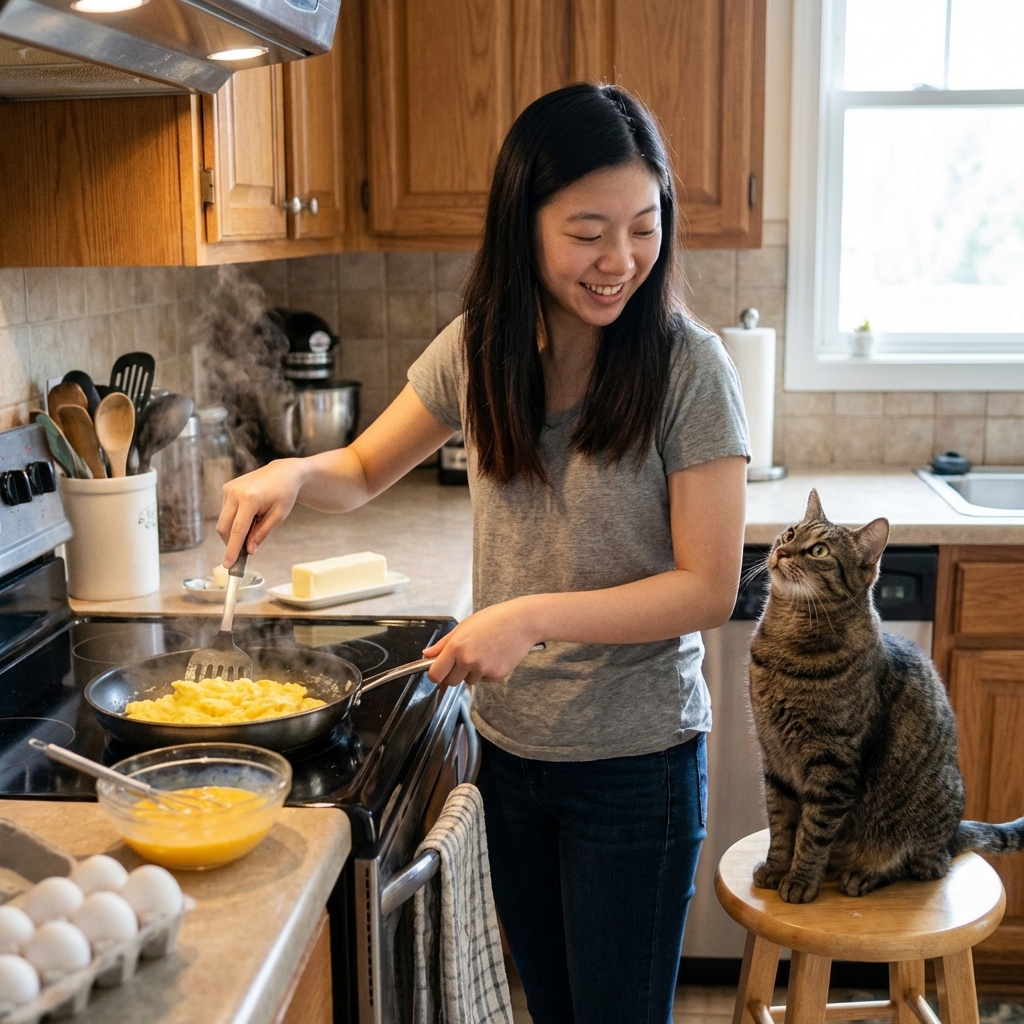
Eggs (cooked)
- Scrambled or hard-boiled: Plain, fully cooked.
Cooked egg is a nice protein boost, but keep portions small.
Vegetables (cooked)
Cats do not need veggies the way humans do, but small amounts can be fine.
- Steamed carrots
- Steamed green beans
- Cooked pumpkin (plain): Sometimes used to support mild constipation or loose stool, but ask your vet if symptoms persist .
- Cooked peas
- Cooked zucchini
Serve soft-cooked and mashed or finely chopped for easier digestion.
Fruits (tiny bites)
- Blueberries
- Seedless watermelon
- Peeled apple (no seeds)
- Banana
Fruit is optional. Many cats are not impressed, and that is completely fine.
Grains and starches (optional)
- Plain cooked rice
- Plain oatmeal
- Plain cooked pasta
These are not necessary for cats, but a small nibble is usually not harmful.
Dairy (often not worth it)
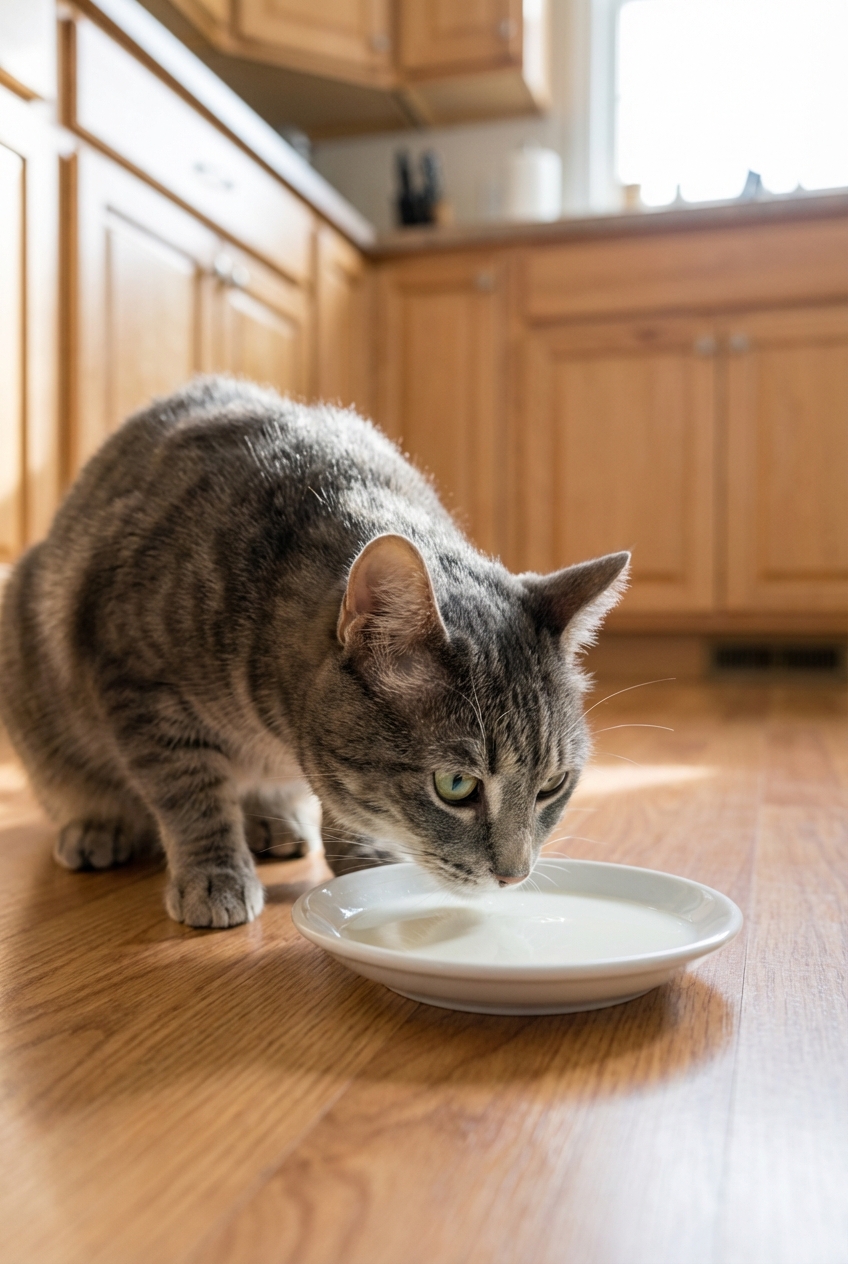
Lactose intolerance is common in adult cats, meaning milk, ice cream, and soft cheeses can cause diarrhea .
- Small tastes of plain yogurt may be tolerated by some cats, but do not assume.
Foods to avoid
These foods are toxic, risky, or commonly cause significant digestive upset and other health problems.
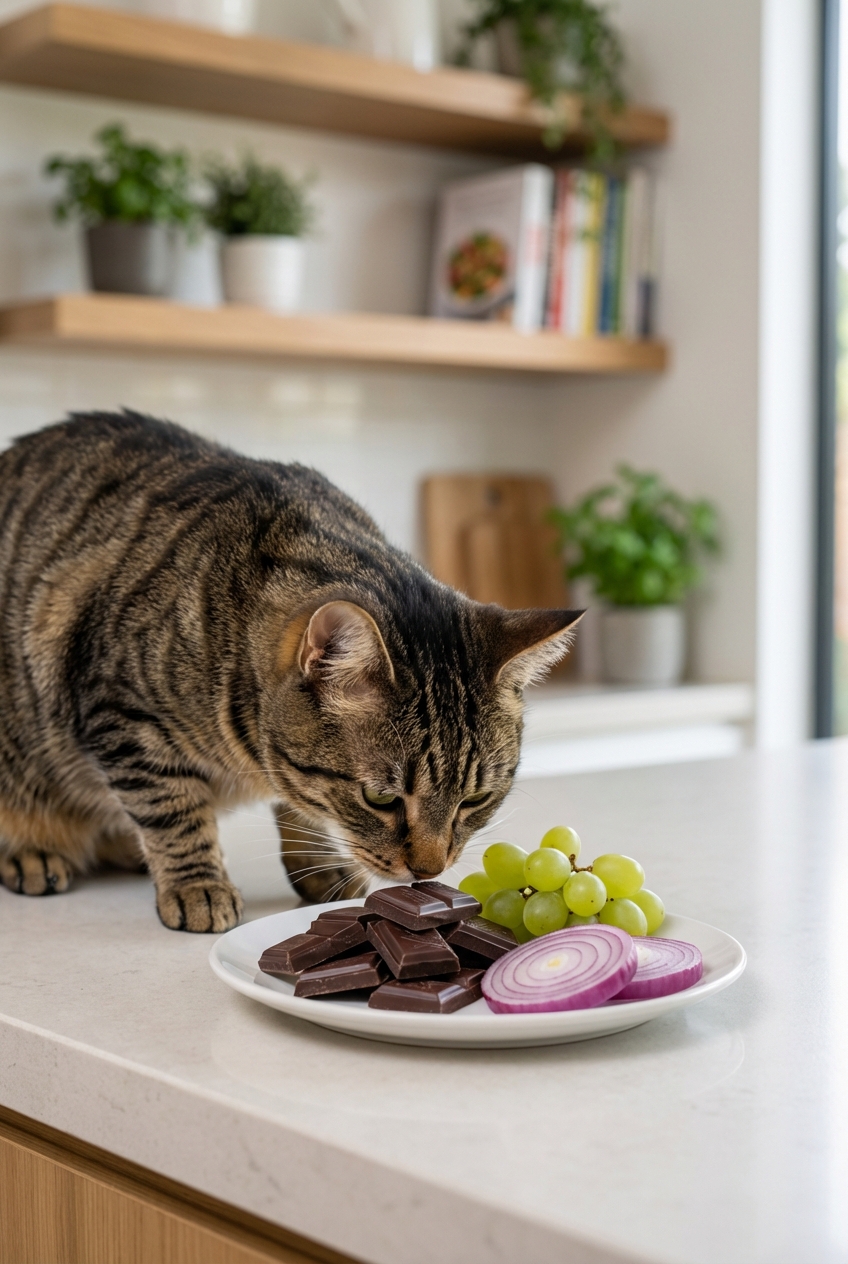
Alliums (onion, garlic, chives, leeks)
Avoid completely. These can damage red blood cells and lead to anemia. Risks apply to raw, cooked, powdered, and dehydrated forms, including onion or garlic powder in seasoning blends .
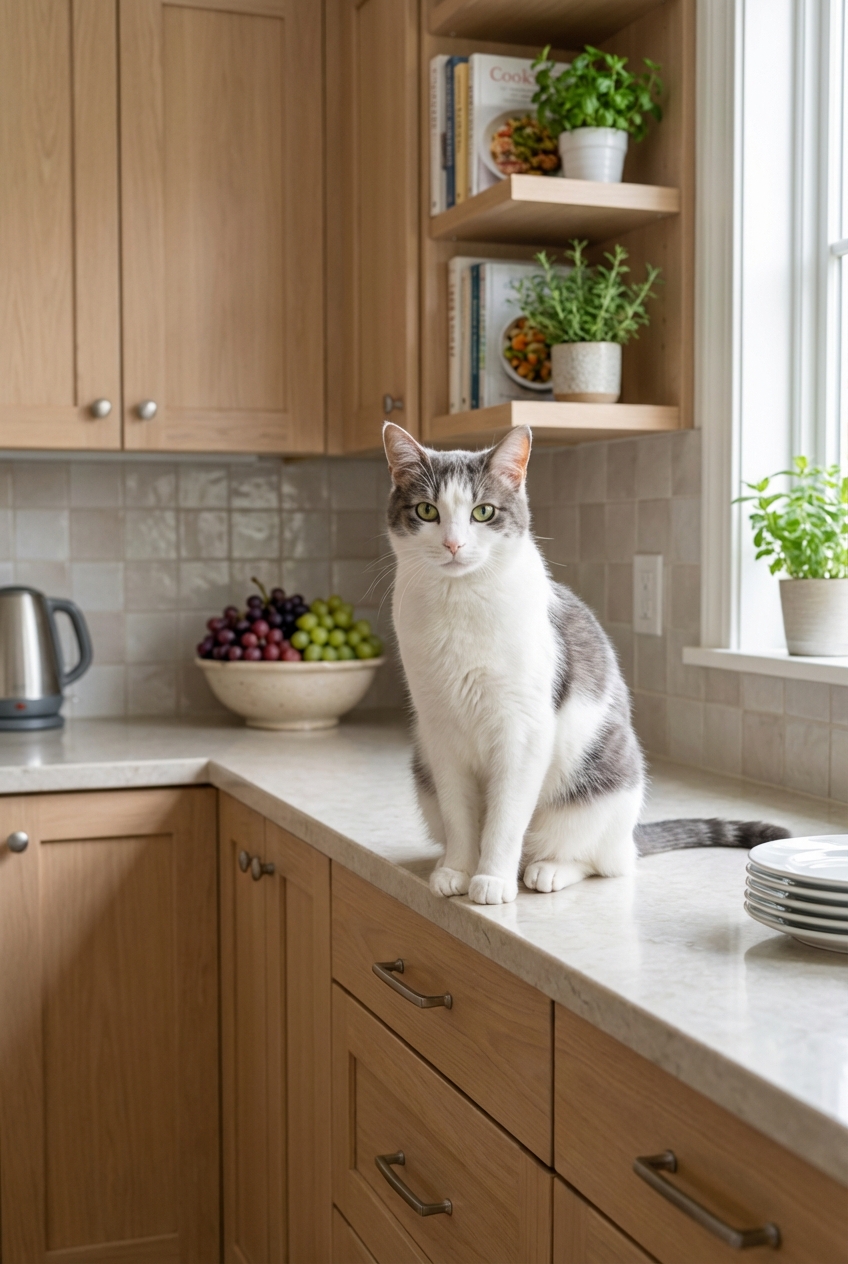
Grapes and raisins
Best avoided. Kidney injury has been reported in pets after grape or raisin ingestion, and the dose and mechanism are not predictable. While it is discussed more often in dogs than cats, it is still safest to keep them away from cats .
Alcohol
Avoid completely. Even small amounts can be dangerous.
Xylitol (sugar-free products)
Avoid completely. Xylitol is a sweetener found in many sugar-free gums, mints, candies, peanut butters, and baked goods . Severe low blood sugar and liver injury are well-documented in dogs. In cats, toxicity is unproven and rarely reported, but it is still not worth the risk. Keep all xylitol products out of reach.
Chocolate and caffeine
Avoid completely. Caffeine and the methylxanthines in chocolate can cause serious toxicity.
Raw dough (yeast)
Avoid completely. Dough can expand in the stomach and produce alcohol during fermentation.
Raw or undercooked meat, eggs, and fish
Avoid. This is primarily due to bacterial and parasite risk. Also, frequent or long-term feeding of some raw fish can lead to thiamine (vitamin B1) deficiency due to thiaminase.
Bones and pits
Avoid completely. Cooked bones (especially cooked poultry bones) and fish bones can splinter and cause choking, mouth injury, intestinal blockage, or perforation.
High-fat, salty, or seasoned foods
- Bacon, sausage, deli meats
- Fried foods
- Fat trimmings, grease
- Gravy, creamy sauces
- Chips and salty snacks
- Foods with spice blends
These are common triggers for vomiting and diarrhea. High-fat foods can be especially rough on sensitive cats and may contribute to pancreatitis.
Milk and ice cream
Not “toxic,” but very commonly causes diarrhea. Cats do not need cow’s milk.
Avocado
Best avoided. Some pets get vomiting or diarrhea. It is not a good “share food” for cats.
Macadamia nuts
Best avoided. This is a more common concern in dogs, but it is still a high-risk snack to keep away from cats.
Citrus and essential oils
Avoid. Citrus fruits, peels, and especially essential oils can cause GI upset and other reactions in cats. Keep diffusers, oils, and concentrated products out of reach .
Dog food (as a habit)
A bite is not an emergency, but cats need specific nutrients (like taurine and arachidonic acid) that dog food is not formulated to provide. Feeding dog food long-term can create deficiencies .
Plants to watch
This article is about foods, but I have to mention one common and serious hazard: lilies are extremely dangerous to cats. Even small exposures can lead to severe kidney injury. If you suspect lily exposure, contact your veterinarian or a pet poison hotline immediately .
Quick list
Use this as a fast reference. When a food is “safe,” it still means plain and small amounts.
Generally safe
- Cooked chicken, turkey, lean beef
- Cooked egg
- Cooked salmon or white fish (boneless, occasional)
- Cooked shrimp (fully cooked, remove shell and tail)
- Plain pumpkin (small amounts)
- Cooked carrots, green beans, peas, zucchini
- Blueberries, banana, seedless watermelon, peeled apple (no seeds)
- Plain rice or oatmeal
Avoid
- Onion, garlic, chives, leeks (including powders)
- Grapes and raisins
- Chocolate and caffeine
- Alcohol
- Xylitol-containing foods (sugar-free gum, mints, some peanut butters)
- Raw dough with yeast
- Cooked bones and fish bones
- Raw or undercooked meat, eggs, fish
- Bacon, sausage, fatty trimmings, gravy, heavily salted or seasoned foods
- Milk and ice cream (often causes diarrhea)
- Avocado, macadamia nuts
- Citrus and essential oils
If your cat eats something unsafe
Step 1: Note details
- What was eaten?
- How much?
- When?
- Your cat’s approximate weight and any medical conditions
Step 2: Call for help
Contact your veterinarian, an emergency veterinary hospital, or a pet poison hotline. Early guidance can make a huge difference.
- ASPCA Animal Poison Control Center (APCC): 1-888-426-4435 (fees may apply)
- Pet Poison Helpline: 1-855-764-7661 (fees may apply)
Step 3: Do not induce vomiting
Do not induce vomiting unless you are instructed to do so by a veterinarian or poison expert. Some substances can cause more damage coming back up, and dosing is tricky in cats.
Go to the ER now if you see
- Repeated vomiting or diarrhea
- Drooling, pawing at the mouth
- Trouble breathing
- Weakness, collapse, tremors, seizures
- Severe lethargy
- Pale gums
When it comes to toxins, time matters. If you are unsure, it is always okay to call and ask.
Tip: Bring the packaging or a photo of the ingredient list if you can.
Smarter treat ideas
If your cat begs every time you walk into the kitchen, you are not alone. Here are a few safer “treat swaps” that feel special without adding much risk:
- Single-ingredient freeze-dried treats (chicken, salmon) with minimal additives.
- A teaspoon of plain cooked chicken set aside before you season your own dinner.
- Food puzzles using your cat’s regular diet to satisfy the urge to snack.
- Measured treats and reduce the next meal slightly if your cat is gaining weight, with your vet’s guidance.
Bottom line
Many human foods are safe for cats in small, plain portions, especially cooked meats and a few gentle vegetables. But several everyday items, like onions, garlic, grapes, raisins, chocolate, alcohol, and xylitol, are not worth the risk. If your cat gets into something questionable, call your vet or an emergency clinic right away and bring the packaging if you can.
If you are building a treat list for your cat, your veterinarian can help you choose options that fit your cat’s age, weight, and health history.