Wondering if your cat loves you? A vet assistant explains 12 bond and trust signals—slow blinks, bunts, purring, greetings, sleep habits—plus stress look...
Article
•
Designer Mixes
How You Know Your Cat Loves You

Shari Shidate
Designer Mixes contributor
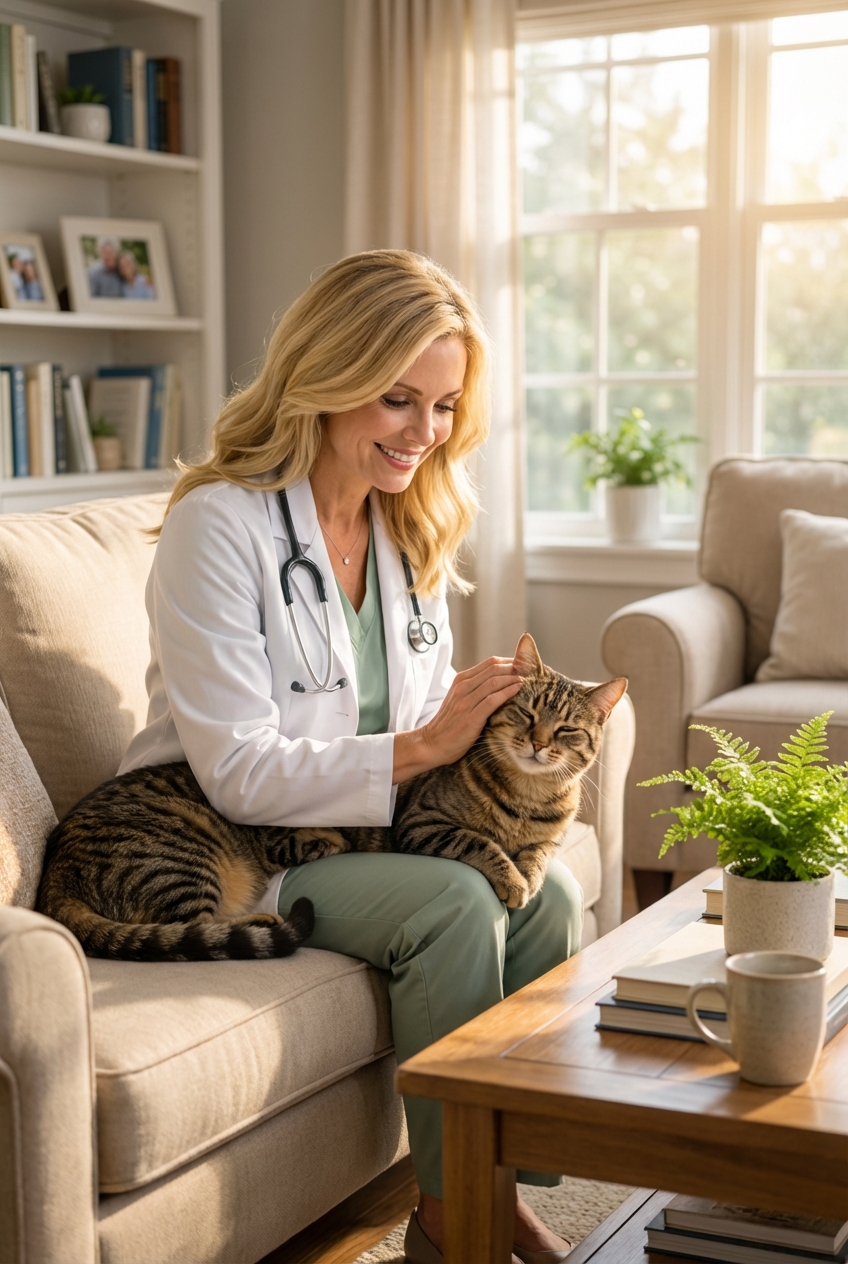
Cats do love deeply, but they show it in quieter, more subtle ways than most dogs do. As a veterinary assistant here in Frisco, Texas, I hear this question all the time: “Does my cat actually love me, or am I just the food person?”
The research-backed answer is that many cats form real social bonds with their humans, including attachment-like patterns in some cats. They simply communicate affection through body language, scent, proximity, and routines. This handbook will help you read those signals clearly, and respond in ways that build trust.
What cat love looks like
Cats evolved as both predators and prey, so their social signals often emphasize safety, distance management, and choice. In practice, that means a cat’s version of love often looks like:
- Choosing to be near you without being forced
- Sharing scent and creating a “family smell”
- Soft facial expressions and relaxed posture
- Trust behaviors like resting or grooming around you
Instead of focusing on one sign, look for a pattern over time. A single behavior can have multiple meanings, but a cluster of signs is more reliable.
15 clear signs your cat loves you
1) Slow blinking at you
The slow blink is one of the clearest friendly signals in cats. A relaxed cat may look at you, partially close their eyes, and slowly blink. Many behaviorists describe this as a cat version of a friendly smile.
Try this: slow blink back, then look slightly away to reduce pressure.
2) Head bunting and cheek rubbing
When your cat rubs their cheeks, forehead, or body on you, they are depositing facial scent from glands. This is not just “marking territory.” It is social scent sharing, which is a bonding behavior.
3) Purring in a relaxed context
Purring can mean comfort, but it can also show up when a cat is stressed or in pain. The love signal is when purring is paired with loose muscles, a soft face, kneading, or settling in next to you.
Quick check: if your cat is hiding, tense, not eating, or breathing fast, purring may not mean happiness. Call your vet if something feels off.
4) Kneading (making biscuits)
Kneading is a kitten comfort behavior that can carry into adulthood. Many cats knead when they feel safe and content, especially on a favorite blanket or your lap.
5) Following you from room to room
A cat who chooses to track your movement is showing social interest. They may not always want to be held, but they want to be part of what you are doing.
6) Sitting with you, not necessarily on you
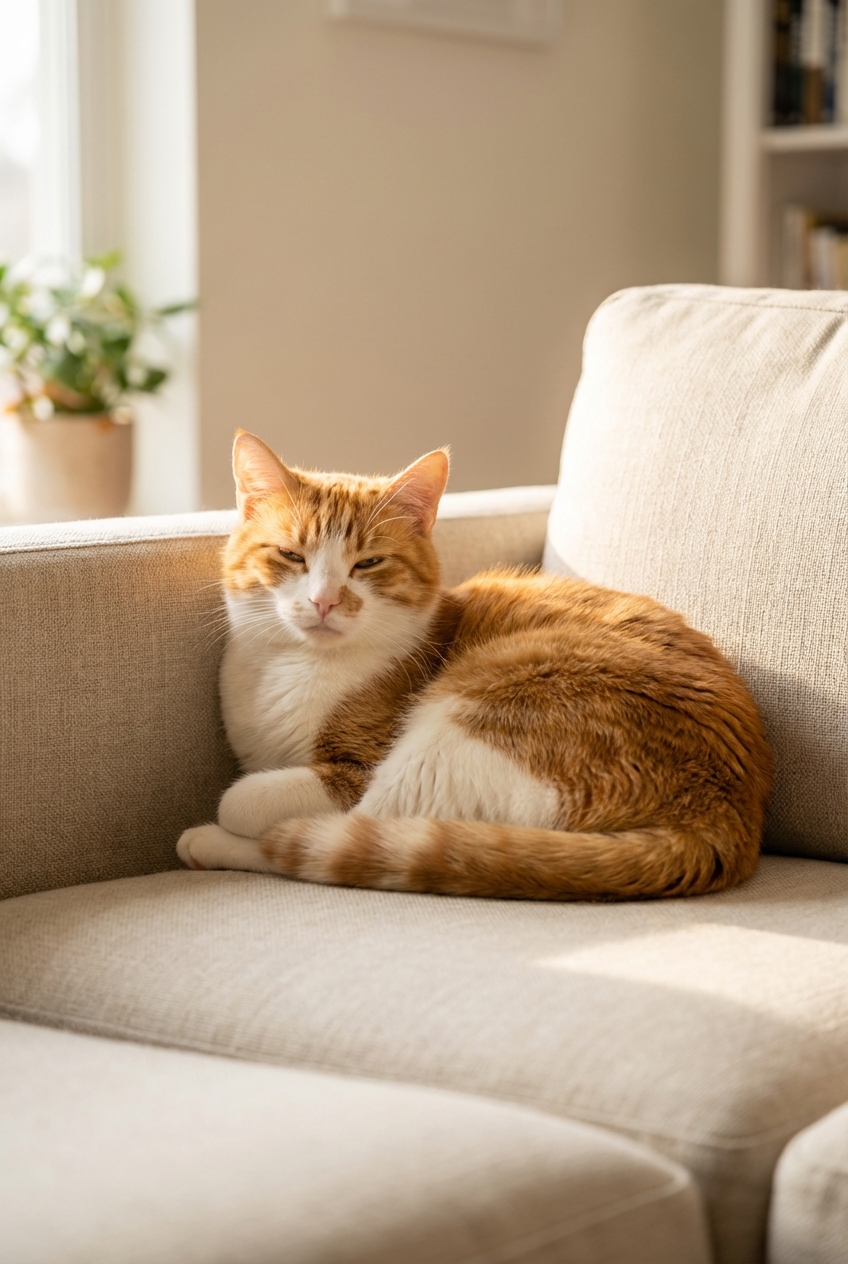
Some cats show love by simply being present. A cat who rests a few feet away, facing you, with relaxed posture is often saying, “I feel safe with you.”
7) Bringing you toys (or “gifts”)
Offering a toy can be a play invitation, a sharing behavior, or a sign your cat sees you as part of their social unit. If your cat brings prey, it can reflect hunting instinct plus a tendency to “share” with the household.
What to do: respond calmly, praise gently, then redirect to interactive play with a wand toy. Avoid punishment. If your cat goes outdoors, consider wildlife-safe options like a catio or supervised time outside.
8) Showing their belly (with a big caveat)
A belly display often signals trust, not necessarily an invitation to pet. Many cats will still swat if you touch their abdomen because the belly is vulnerable.
Respect the message: you can admire the belly without touching it. Offer cheek or head rubs instead.
9) Grooming you
When a cat licks your hand, hair, or face, it can be social grooming. In cat groups, mutual grooming supports bonding and peacekeeping.
10) Tail signals: upright tail and tail tip curl
A tail held upright like a flag is typically a friendly greeting. If the tip curls slightly, that is often an especially warm, affectionate signal.
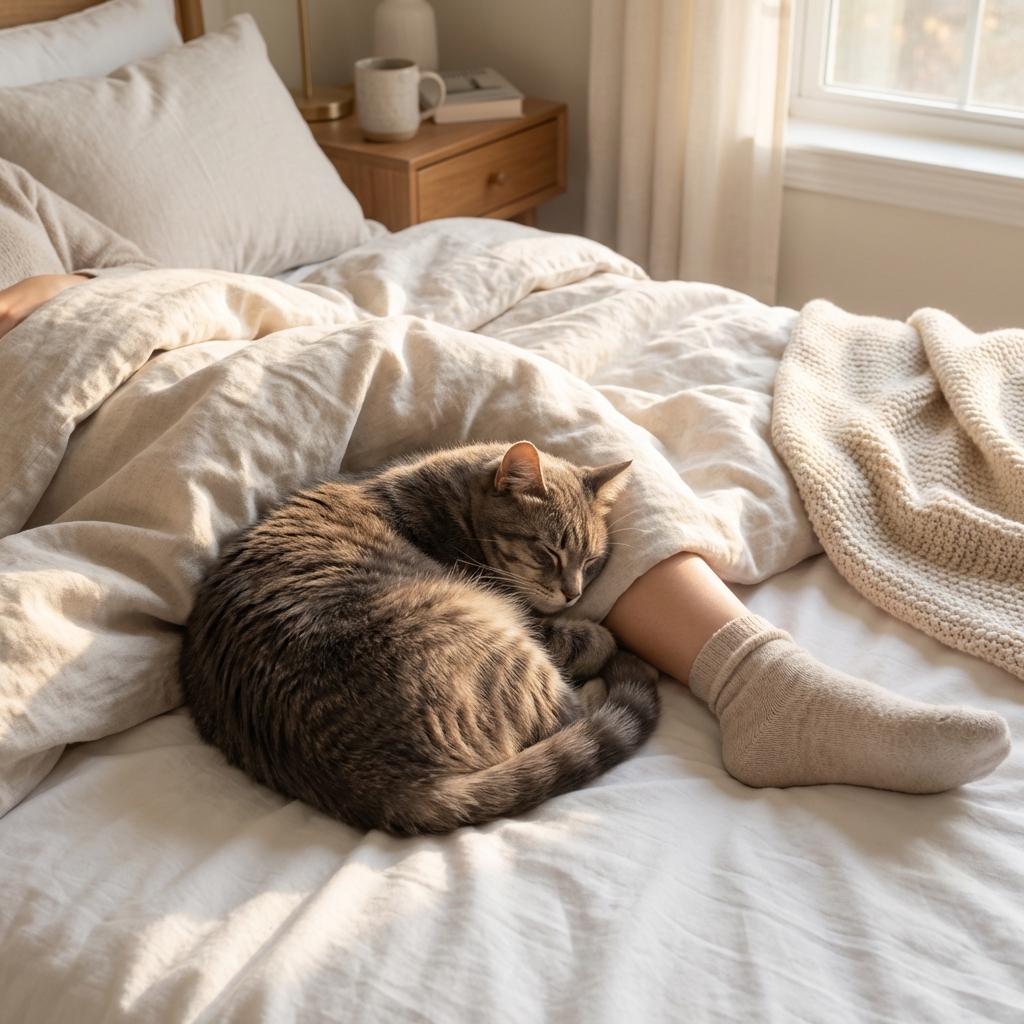
11) Sleeping near you
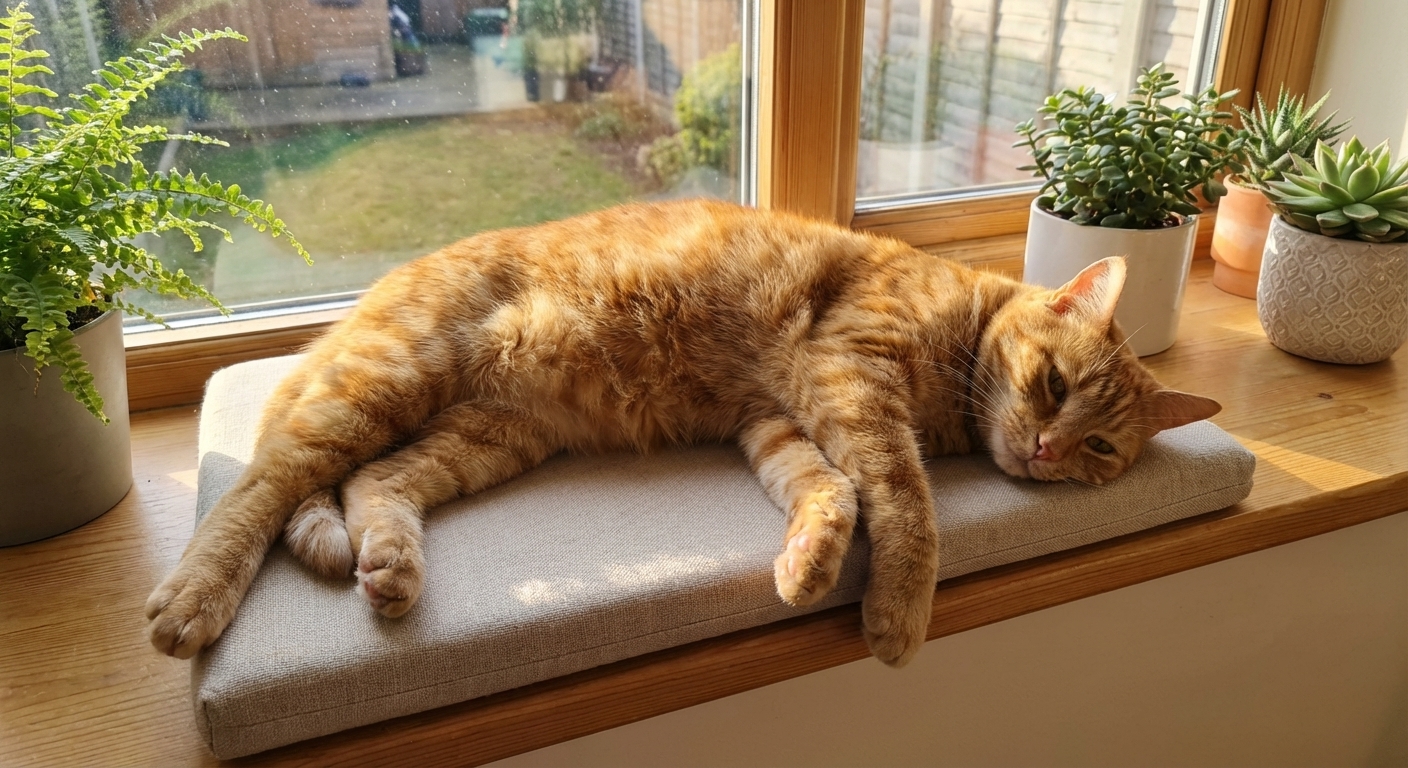
Sleep is when cats are most vulnerable. If your cat sleeps near you, on your bed, or in your room, it usually means they trust your presence and feel secure.
12) Greeting rituals
Does your cat meet you at the door, chirp when you walk in, or weave around your legs? Those predictable routines are often relationship behaviors, not random habits.
13) Gentle nibbles or soft mouth play
Some cats give gentle “love bites” during petting. These should be light and not break skin. If biting escalates, it may be overstimulation instead of affection.
14) Relaxed ears, whiskers, and posture around you
A content cat often has neutral ears (not pinned), whiskers in a natural position (not thrust forward aggressively), and a body that looks loose rather than crouched.
15) They choose you, even when they could leave
This is the big one. If your cat has options, other cozy spots, other people, and still consistently chooses your company, that is a strong indicator of a bond.
Trust signs (love grows from trust)
Trust and love overlap a lot in cat relationships. Some trust behaviors look like:
- Eating with you nearby without acting vigilant
- Using the litter box normally without hiding or rushing (in a calm household)
- Turning their back to you or resting with eyes closed
- Letting you handle them briefly, then choosing to stay close
If you are building a relationship with a shy or newly adopted cat, trust usually comes first, then the more obvious affection behaviors show up later.
What people misread
Rubbing can be bonding
Yes, your cat is leaving scent. In a healthy relationship, that is often a social bond signal, not “dominance.”
Purring is not always happiness
This is worth repeating because it matters. Cats can purr when anxious, sick, or painful. If purring appears alongside poor appetite, hiding, weight loss, vomiting, or behavior changes, it is time to check in with your veterinarian.
Headbutting is affectionate, biting can be “too much”
Many cats love short, frequent petting sessions and get overstimulated by long ones. Watch for skin twitching, tail flicking, sudden head turns, or ears rotating sideways.
Is your cat bonded to you?
If you live with other people, these clues often point to a primary bond:
- Your cat seeks your lap, bed spot, or work area
- Your cat relaxes faster when you enter the room
- Your cat brings toys to you more often
- Your cat accepts handling best from you
That said, cats can bond with multiple family members, and those relationships can look different.
Also important: individual differences matter. Age, early socialization, past experiences, pain levels, and personality all shape how a cat shows affection. A cat can be deeply attached and still not be a lap cat.

Show love your cat understands
If you want more affection, the fastest route is to increase your cat’s sense of control and safety.
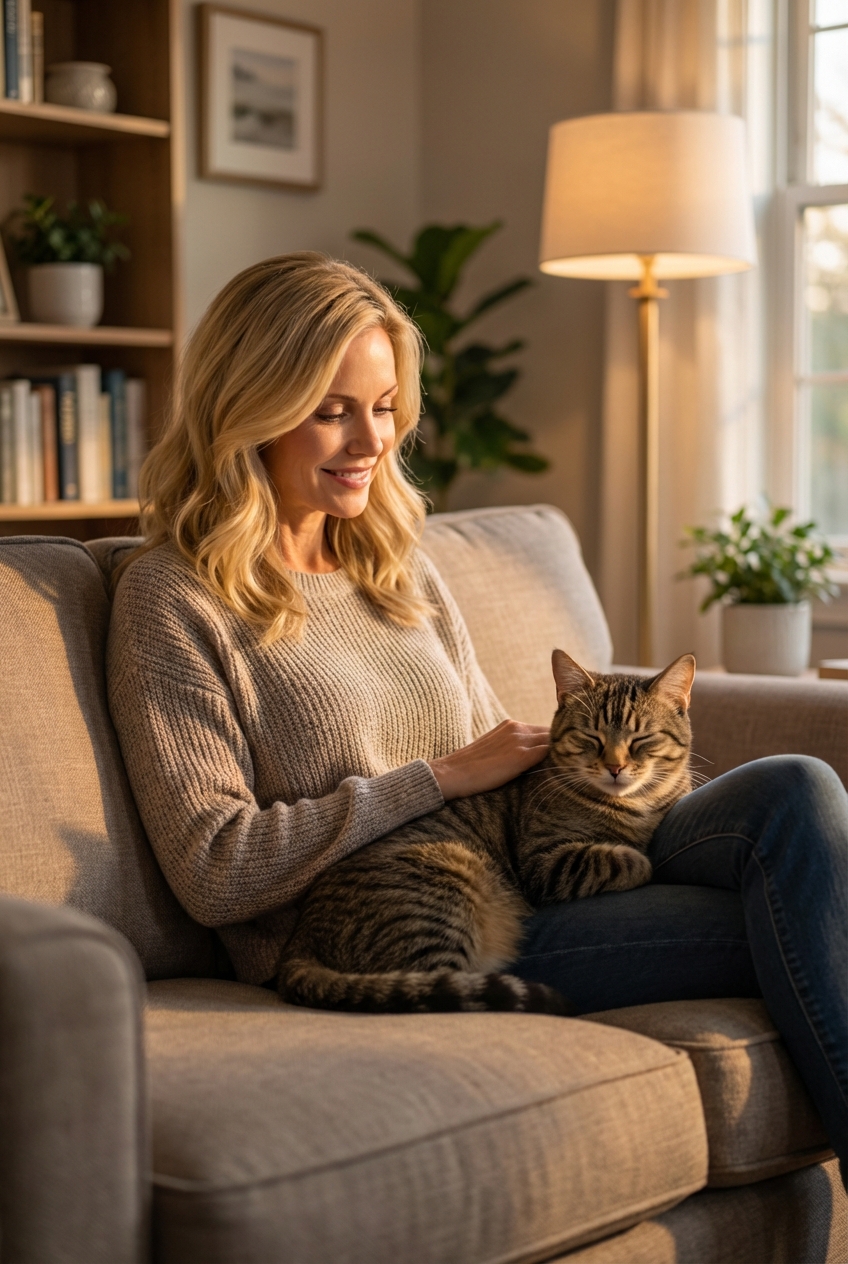
Use consent-based petting
- Start with cheeks, chin, and the base of the ears.
- Pause every few seconds and see if your cat leans in for more.
- Stop if your cat pulls away, tail flicks sharply, or their skin twitches.
Mimic the hunt
Two short play sessions daily can dramatically improve mood and bonding. Use a wand toy to mimic prey, then offer a small meal or treat afterward. That sequence often follows a natural hunt-eat-groom-sleep cycle.
Make your home cat-friendly
- Add vertical space like a cat tree or window perch.
- Provide at least one quiet hiding area per cat.
- Keep litter boxes clean and easy to access.
Speak their language
- Slow blink.
- Approach from the side, not straight on.
- Let them sniff your hand before contact.
What not to do
- Do not force cuddling or chase a cat who is trying to leave.
- Do not treat a belly display like a guaranteed invitation to pet.
- Do not punish biting or hissing. Pause, give space, and adjust the interaction.
- Teach kids to offer a hand to sniff, pet gently on the head or cheeks, and stop when the cat walks away.
When affection changes
A cat who becomes less social, stops cuddling, hides more, or becomes irritable may be dealing with pain or stress. In the clinic, we commonly see changes like this with:
- Dental disease
- Arthritis or joint pain
- Feline lower urinary tract disease (FLUTD)
- GI upset
- Thyroid disease in older cats
Trust your instincts. If your cat’s affection level changes quickly or you notice appetite, litter box, grooming, or weight changes, schedule a vet visit. Ruling out medical issues is one of the kindest things you can do.
Quick love checklist
If you want the fastest answer, look for at least a few of these consistently:
- Slow blinks
- Chooses to sit near you
- Head rubs and scent sharing
- Relaxed sleeping nearby
- Greets you when you appear
- Plays with you and brings toys
When those signs show up together, you can feel confident your cat’s bond is real.
Cat love is often quiet: a slow blink across the room, a warm loaf near your feet, a head rub that says, “You’re important to me, and I feel safe here.”