Make bath time stress-free with a vet-assistant routine: how often to bathe, what supplies to prep, the right shampoo, thorough rinsing and drying, plus trai...
Article
•
Designer Mixes
How to Wash Your Dog

Shari Shidate
Designer Mixes contributor
Bathing your dog sounds simple, but the details matter. The right prep, water temperature, shampoo choice, and drying technique can make the difference between a fresh, comfortable pup and itchy skin, ear infections, or a bathroom disaster.
As a veterinary assistant here in Frisco, Texas, I like to remind people of one evidence-based truth: many “bath problems” come back to the skin barrier. So our goal is not just a good-smelling dog. It is a clean dog with healthy skin.
How often should you bathe your dog?
There is no one schedule that fits every dog. Coat type, skin health, lifestyle, and even allergies all play a role. In general, bathing too often can dry the skin, while bathing too rarely can let oils, allergens, and debris build up.
Helpful frequency guidelines
- Most healthy dogs: about every 4 to 6 weeks is a common range.
- Dogs that swim, roll in dirt, or visit dog parks often: may need baths more frequently, or at least a rinse with fresh water.
- Allergy or yeast-prone dogs: sometimes do better with more frequent bathing using a veterinarian-recommended medicated shampoo. Your vet can tell you the ideal contact time and schedule.
- Puppies and seniors: can be bathed as needed, but keep them warm and dry quickly to avoid chilling.
If your dog starts to smell “doggy” quickly, look beyond the bath. Recurrent odor can be a sign of skin infection, dental disease, anal gland issues, or ear problems.
Before you start: prep
The best baths are the ones that start before the water ever turns on. A little prep reduces shedding, helps prevent matting, and makes shampoo work better.
Quick checklist
- Brush first: removing loose hair and tangles helps water and shampoo reach the skin.
- Choose the right location: tub, walk-in shower, utility sink, or an outdoor wash station in warm weather.
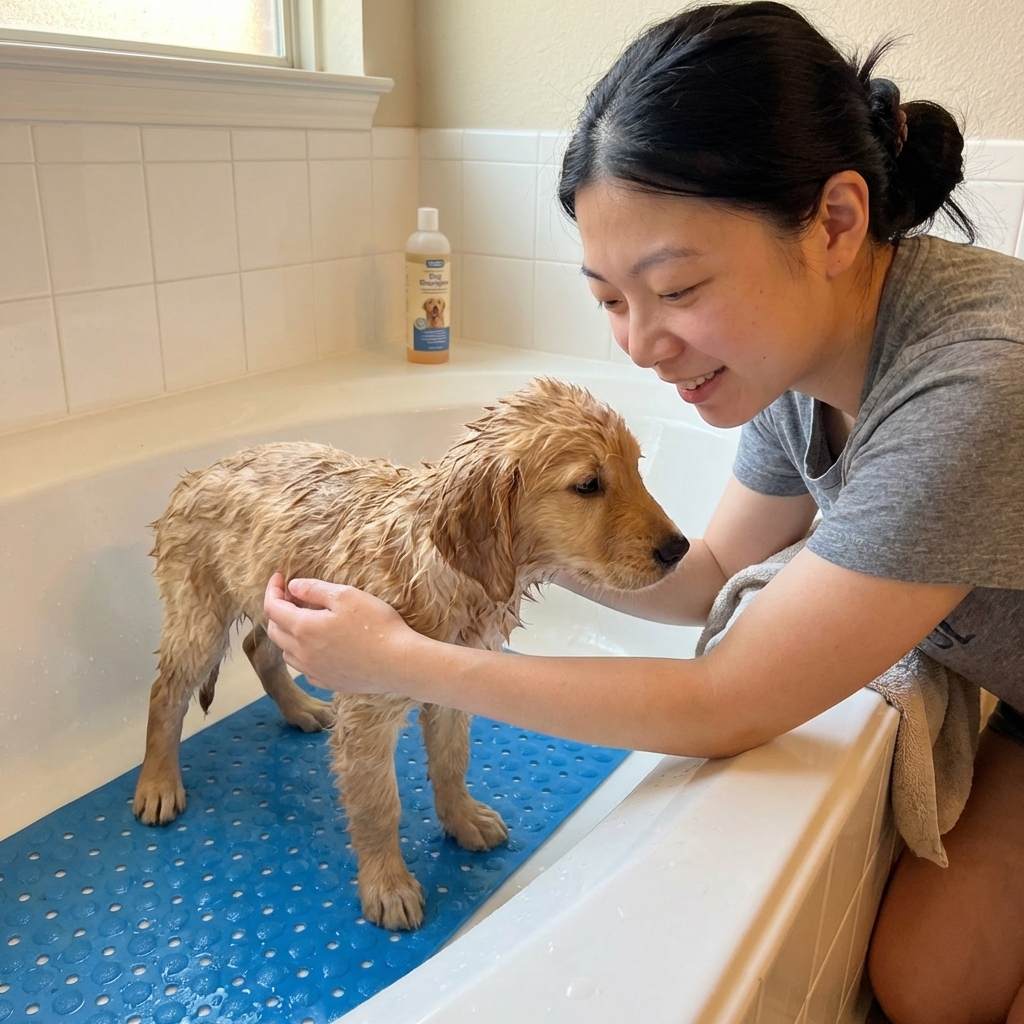
- Use a non-slip surface: a rubber mat or towel helps your dog feel secure.
- Gather supplies: dog shampoo, towels, cotton balls for ears (optional), a cup or sprayer for rinsing, treats, and a brush or comb.
- Protect the ears: you can place a cotton ball loosely at the ear opening to help keep water out. Never push anything down into the ear canal.
Safety note: Avoid getting shampoo or water in the eyes, nose, and mouth. For many dogs, a damp washcloth is the easiest option for the face.
Step-by-step: wash
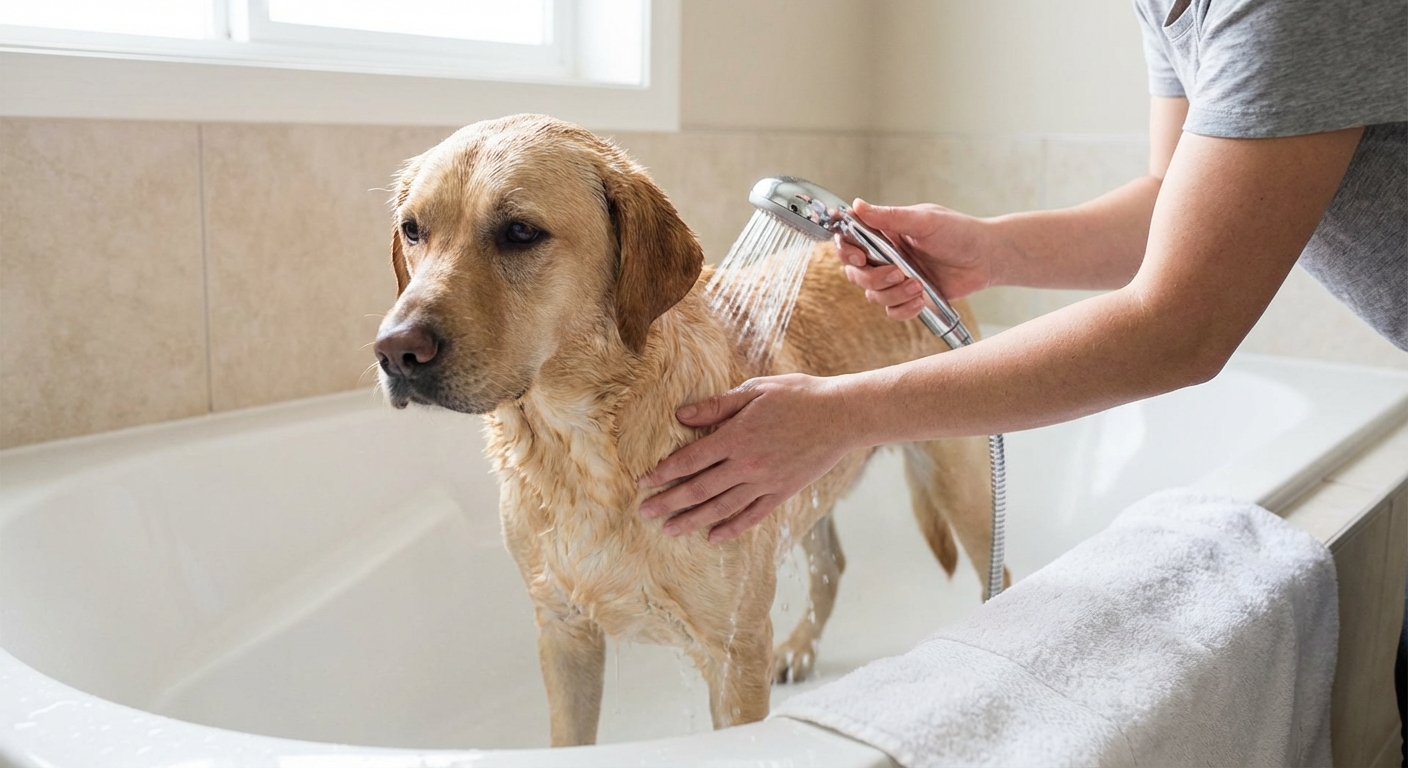
1) Use lukewarm water
Water that feels “just right” to you is usually fine. Hot water can irritate skin, and cold water can make the experience stressful, especially for small dogs.
2) Soak the coat to the skin
Thick coats take time to saturate. If the undercoat stays dry, shampoo tends to sit on top and rinsing becomes harder.
3) Apply shampoo and lather gently
Use a dog-specific shampoo. Canine skin is different from human skin, and many human shampoos have different pH and cleansing agents that can disrupt the skin barrier and increase dryness or irritation. Start at the neck and work back, then do legs, belly, and tail.
- Face tip: use a damp washcloth around the eyes and muzzle instead of pouring water over the face.
- Medicated shampoos: many require a 5 to 10 minute contact time. Set a timer and reward calm behavior. Use medicated products under veterinary guidance, and follow label and veterinary instructions exactly.
4) Rinse longer than you think
Leftover residue is a common cause of post-bath itching. Rinse until the water runs clear, then rinse once more, especially in armpits, groin, skin folds, and under the collar area.
5) Condition if your dog needs it
Conditioners can help dogs with dry skin or long coats. If you use one, rinse thoroughly. Heavy residue can make some dogs itchy.
6) Towel dry, then dry fully
Moisture trapped in dense coats or skin folds can contribute to hot spots and yeast overgrowth. Towel dry well. If using a blow dryer, use cool or low heat, keep it moving, and stop if your dog seems uncomfortable. Avoid high-heat human styling settings, which can overheat skin quickly.
Shampoo: what matters
When I help clients pick a shampoo, I focus on a few practical, skin-friendly basics.
Look for
- Dog-specific formulas with clear ingredient lists.
- Fragrance-light or fragrance-free options for sensitive skin.
- Veterinarian-recommended medicated shampoos when there is yeast, dandruff, recurrent itching, or bacterial infections.
Use caution with
- Essential oils: “natural” is not always gentle, and some oils can irritate skin or be unsafe if licked.
- Flea and tick shampoos: these can be harsh and are not usually the best long-term parasite plan compared with topical or oral preventives recommended by your veterinarian. They may have a role in some situations, like an active infestation, but talk with your vet about the safest approach for your dog.
- DIY mixes: some homemade recipes can disrupt skin balance or leave residue that causes itching.
If your dog has chronic skin issues, ask your veterinarian about a skin and coat plan. That may include bathing, nutrition, omega-3s, and allergy management.
Ears: keep them dry
Water in the ears is one of the easiest ways to invite trouble, especially for floppy-eared dogs or dogs with narrow ear canals.
Simple ear-safe approach
- Do not aim the sprayer into the ear.
- Wipe the outer ear flap with a damp cloth.
- If your dog is prone to ear infections, ask your vet if you should use a veterinarian-approved ear cleaner after baths or swims.
Do not use Q-tips in the ear canal, and do not pluck ear hair unless your veterinarian has specifically advised it for your dog.
Call your vet if you notice head shaking, ear odor, redness, discharge, or pain. Early treatment is so much easier on your dog.
Special situations
Puppies
Keep baths short, warm, and positive. Use treats and gentle handling. A good puppy bath is more about comfort and training than perfect grooming.
Double coats
Huskies, German Shepherds, and similar coats need thorough soaking and complete drying. Never shave a double coat unless a veterinarian recommends it for a medical reason.
Doodles and curly coats
Mats hold moisture and debris close to the skin. Brush well before the bath and consider professional grooming if matting is heavy.
Seniors
Older dogs can get cold quickly and may have arthritis. Use a non-slip mat, keep sessions short, and support them when they step in and out.
Mistakes that cause itching
- Not rinsing enough: in my experience, this is the most common cause of post-bath itchiness.
- Using human shampoo: can dry and irritate skin due to different pH and cleansing systems.
- Bathing too frequently without a skin plan: can strip oils and disrupt the barrier.
- Leaving the coat damp: especially in skin folds or thick coats.
- Spraying water into the ears: increases ear infection risk.
If your dog is itchy for more than 24 to 48 hours after a bath, or you see redness, bumps, odor, greasy coat, or hair loss, it is time to check in with your veterinarian.
Go sooner if you notice hives, facial swelling, vomiting, sudden intense scratching, or heavy face rubbing. Those can be signs of an allergic reaction.
After-bath add-ons
A bath can be a convenient time to do a few basics, but only do what you are comfortable doing safely.
- Nail trims: if you are trained and your dog tolerates it, trimming after a bath can be easier because nails are slightly softer. If you are unsure, ask your vet team or groomer to show you how.
- Anal glands: I do not recommend DIY expressing unless you have been trained by a veterinary professional and your dog truly needs it. Many dogs do not need routine expressing, and doing it incorrectly can cause irritation or injury.
- Ear cleaning: only use a veterinarian-approved ear cleaner and avoid putting anything down into the canal.
Make bath time easier
Dogs do better when bath time is predictable and rewarding. You do not have to force a perfect bath on day one.
- Start slow: practice stepping into the tub without water and reward with treats.
- Use a lick mat: a thin smear can keep many dogs calm. Use dog-safe treats and xylitol-free peanut butter, and always check the ingredient label.
- Stay calm and steady: your dog reads your body language.
- End on a win: one good rinse and praise is better than a wrestling match.