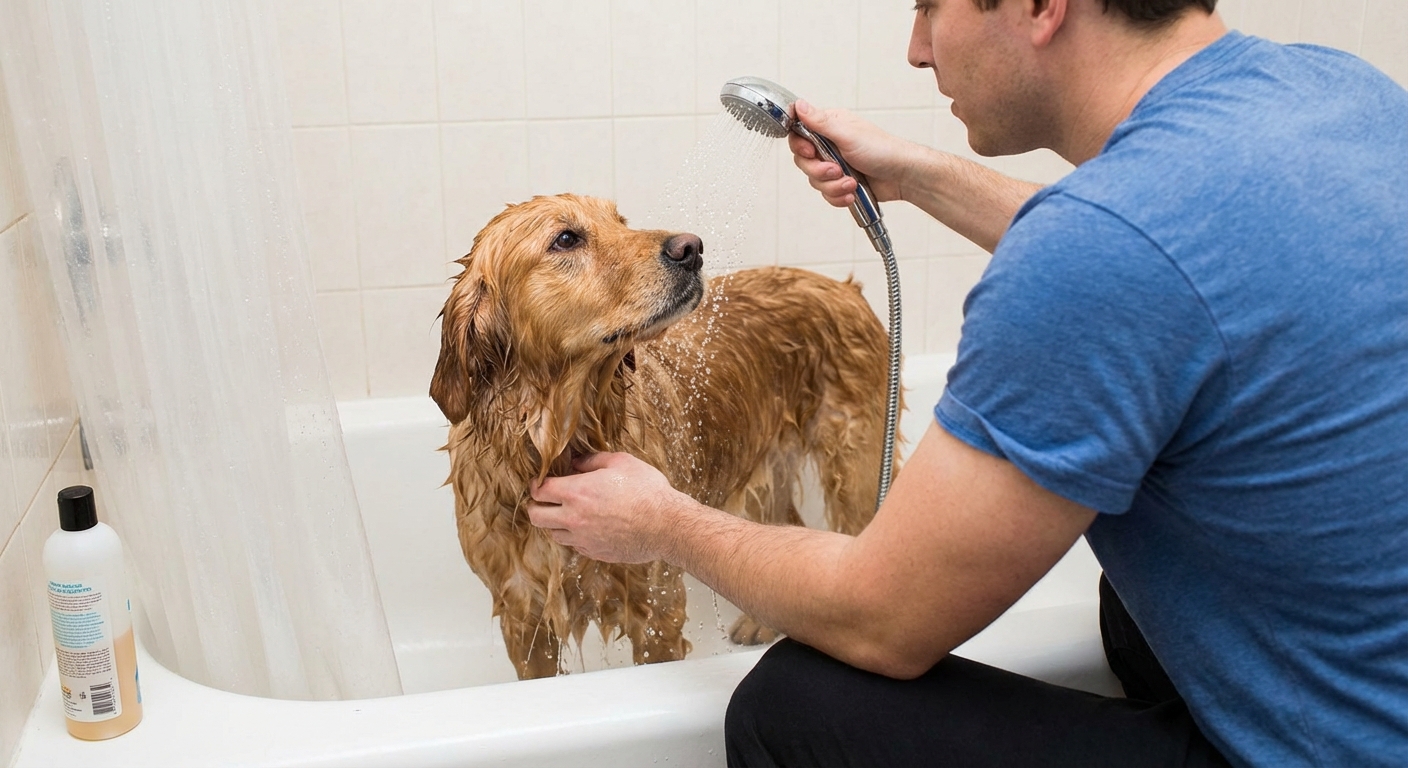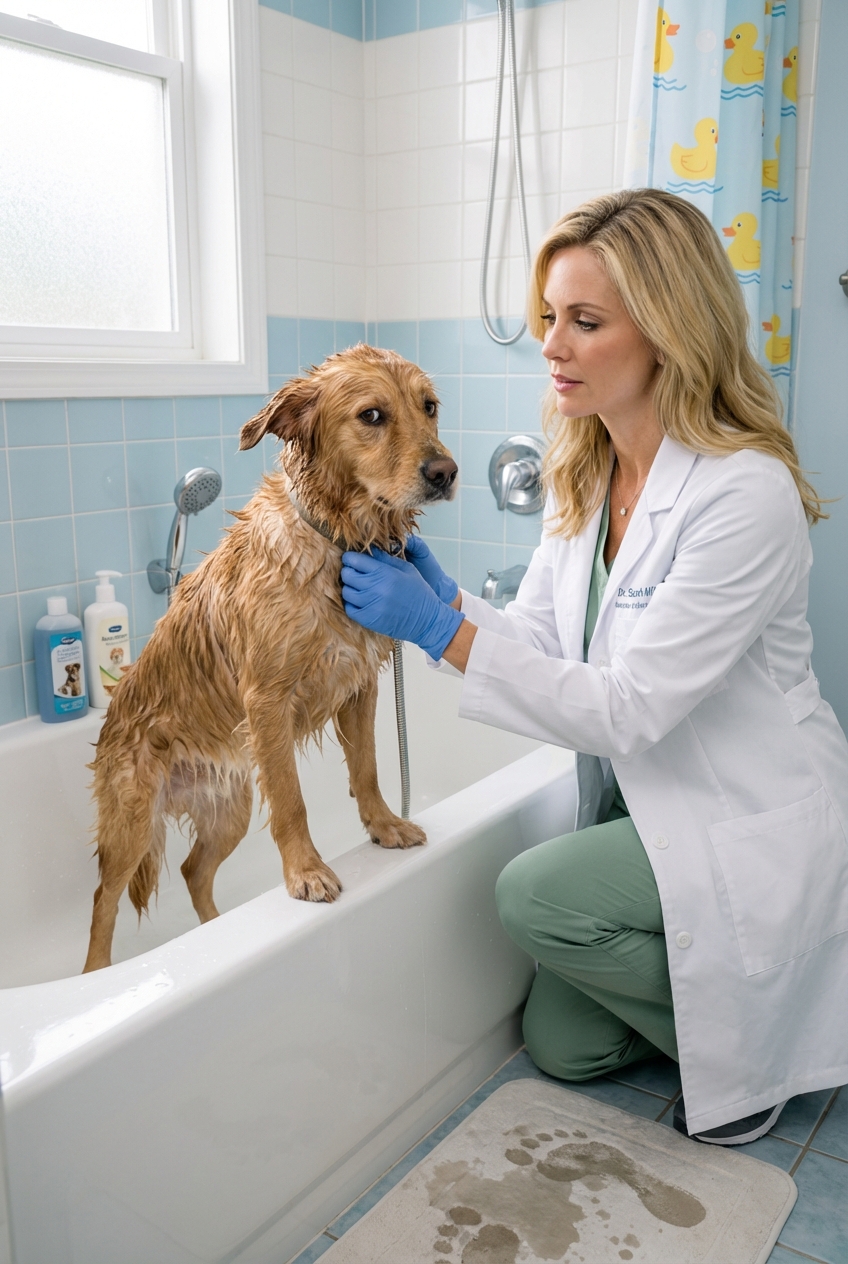
Your dog got skunked? Follow calm first steps, use the proven peroxide + baking soda + dish soap mix safely, protect eyes and ears, deodorize your home, and ...
Article
•
Designer Mixes
How to Wash Skunk Off a Dog

Shari Shidate
Designer Mixes contributor
If your dog just got skunked, you are in the right place. The smell is intense because skunks spray sulfur-containing compounds (thiols and related compounds) that cling to fur. Some of that odor can seem to “come back” later, especially when the coat gets damp again. The good news is you can neutralize it at home with the right steps, and you can also protect your dog’s skin, eyes, and stress level while you do it.
First, keep everyone safe
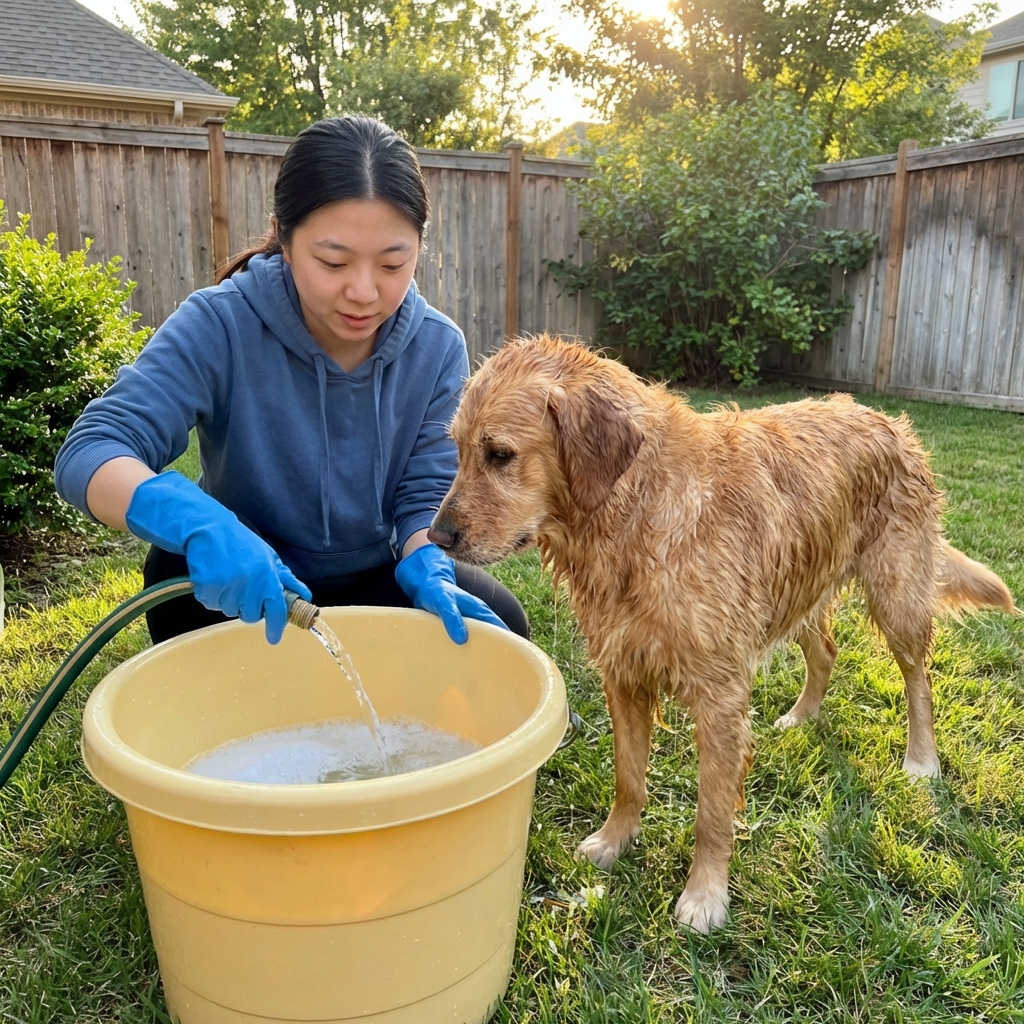
Before you grab shampoo, pause for a moment and set yourself up for success. Skunk odor spreads fast when dogs rub on furniture, roll on rugs, or shake inside the house.
- Keep your dog outside if it is safe and the weather is mild. If you must bring them in, confine them to a bathroom or laundry room with hard floors.
- Separate other pets (and curious kids) from the skunked dog. Odor transfers easily from coat to noses, paws, bedding, and carpets.
- Put on gloves and old clothes. Consider eye protection if your dog was sprayed near the face.
- Do a quick injury check. Skunk encounters can involve bites or scratches. If you see wounds, call your vet.
- Do not let your dog lick their coat while waiting. Skunk spray tastes awful and can cause drooling and stomach upset.
When to call the vet
Most skunk sprays are gross but not dangerous. Still, there are times a veterinary visit is the safest move.
- Spray in the eyes: squinting, redness, pawing at the face, or keeping the eye closed. Discharge can develop later.
- Breathing trouble: coughing, wheezing, or significant stress in a brachycephalic breed (Pug, Bulldog, Shih Tzu).
- Vomiting, weakness, or trembling that does not settle quickly.
- Puppies, seniors, or chronically ill dogs who may not tolerate stress or strong odors as well.
- Bites or direct contact: If you suspect your dog was bitten or there was a scuffle, call your vet right away. You may also be advised to contact local animal control due to rabies risk, depending on your area and your dog’s rabies vaccination status.
Skunk spray can irritate the eyes and mucous membranes. If your dog’s eyes were hit, it is worth calling your vet for guidance even if symptoms seem mild.
The best home formula
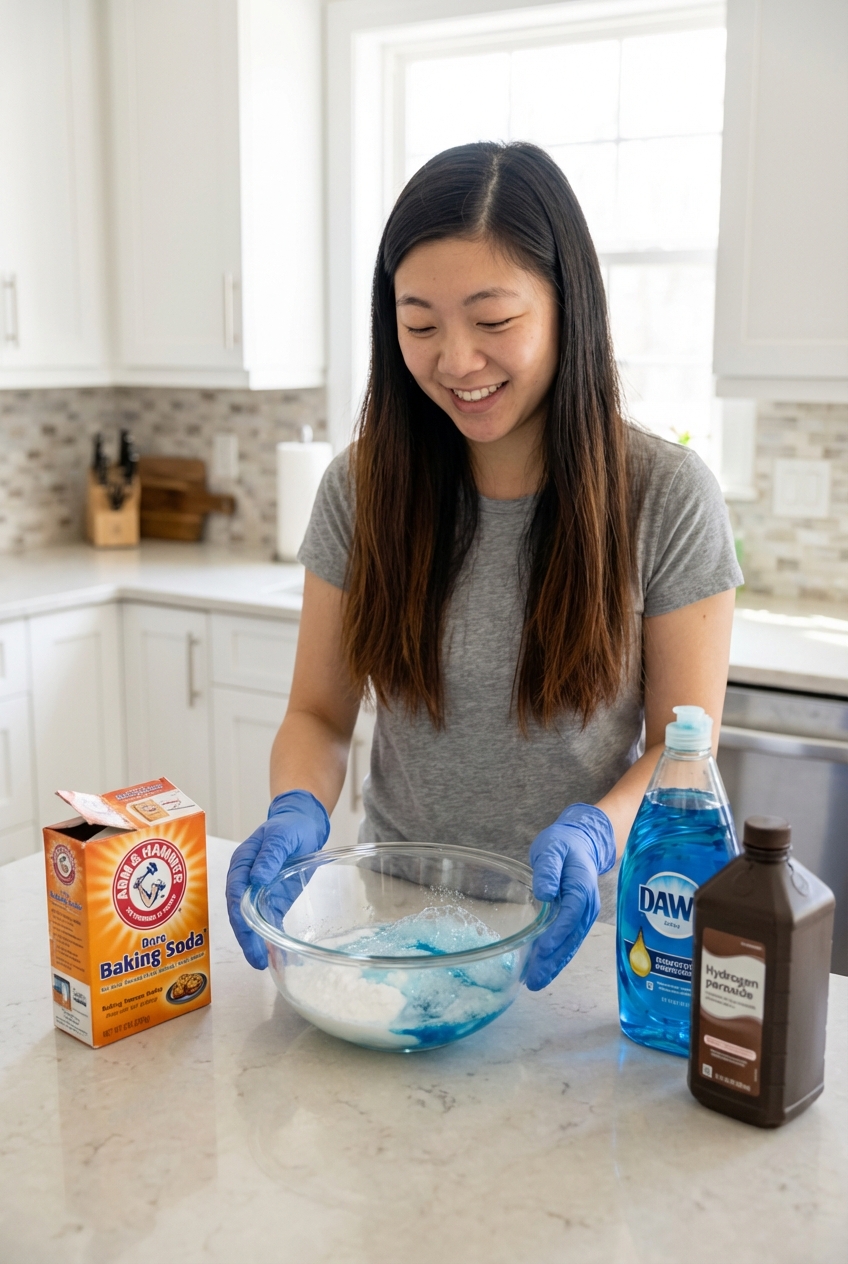
Tomato juice is a classic, but it mostly masks odor. What you want is a neutralization method. The most commonly recommended home approach (often called the Krebaum formula) uses hydrogen peroxide, baking soda, and dish soap. Together, these help break down odor compounds and lift oily residue from the coat.
Skunk odor mix
- 1 quart (4 cups) of 3% hydrogen peroxide
- 1/4 cup baking soda (sodium bicarbonate)
- 1 to 2 teaspoons liquid dish soap (grease-cutting, unscented if possible)
How much to make: This amount is usually enough for one medium dog. For a large dog or heavy coat, you may need to double it. For a very small dog, you can make half.
Important: Mix fresh each time. Do not store this mixture in any container because it can build pressure. Also, peroxide can discolor some fabrics and surfaces, so keep it off towels, rugs, and upholstery.
How to wash your dog
Go slowly, speak calmly, and keep your dog from shaking in your direction if you can. Skunk events are stressful, and a calm handler makes everything easier.
- Try not to wet your dog first. Water can spread the oily spray and make coverage harder to control.
- Blot, do not rub. If the spray is fresh and wet, use paper towels to blot the area.
- Apply the fresh mixture to a dry coat. Work it in with gloved hands, especially around the neck, chest, and shoulders.
- Avoid eyes, nose, mouth, and inside ears. Use a damp washcloth for the face instead of pouring solution there.
- Let it sit for 5 minutes. Try not to exceed about 5 to 10 minutes, especially on sensitive skin.
- Rinse thoroughly with lukewarm water.
- Shampoo with a gentle pet shampoo. This helps remove residual oils and soap.
- Rinse again and towel dry. If you can, use a pet-safe dryer on low heat. Keep your dog warm.
If the odor is still strong after drying, you can repeat one more time. I recommend stopping and letting the skin rest if you notice redness or dryness.
Extra caution: Avoid using the peroxide mixture on open wounds, raw skin, or dogs with active dermatitis. If your dog has very sensitive skin or is very young and tiny, consider a commercial pet skunk shampoo and contact your vet if you are unsure.
Face and eye care
Skunk spray near the face is common and tricky. The priority is protecting the eyes and helping your dog feel safe.
- Eyes: If you suspect eye exposure, flush gently with sterile saline eyewash if you have it, and call your vet. Do not use the peroxide mixture in or near the eyes.
- Muzzle and cheeks: Use a damp cloth with a tiny amount of dish soap, then wipe with plain water until no slick residue remains.
- Ears: Wipe the outer ear flap (pinna) only. Do not push liquids into the ear canal. If your dog is shaking their head or the ears smell strongly days later, ask your vet about an ear exam.
What not to do
- Do not use tomato juice as your main plan. It can be messy and usually does not neutralize odor.
- Do not use bleach or harsh cleaners. Many are irritating or toxic to pets, especially if licked.
- Avoid essential oils unless your vet directs you. Many are unsafe for dogs and especially risky around cats.
- Do not over-bathe. Multiple harsh washes can inflame skin and worsen itching.
Helping your dog recover
I see it all the time: the smell is the headline, but stress is the hidden problem. Many dogs are startled by the spray, then overwhelmed by the bath, the scrubbing, and the changed routine.
During the bath
- Use calm restraint, not force. A slip lead or harness can help you control without wrestling.
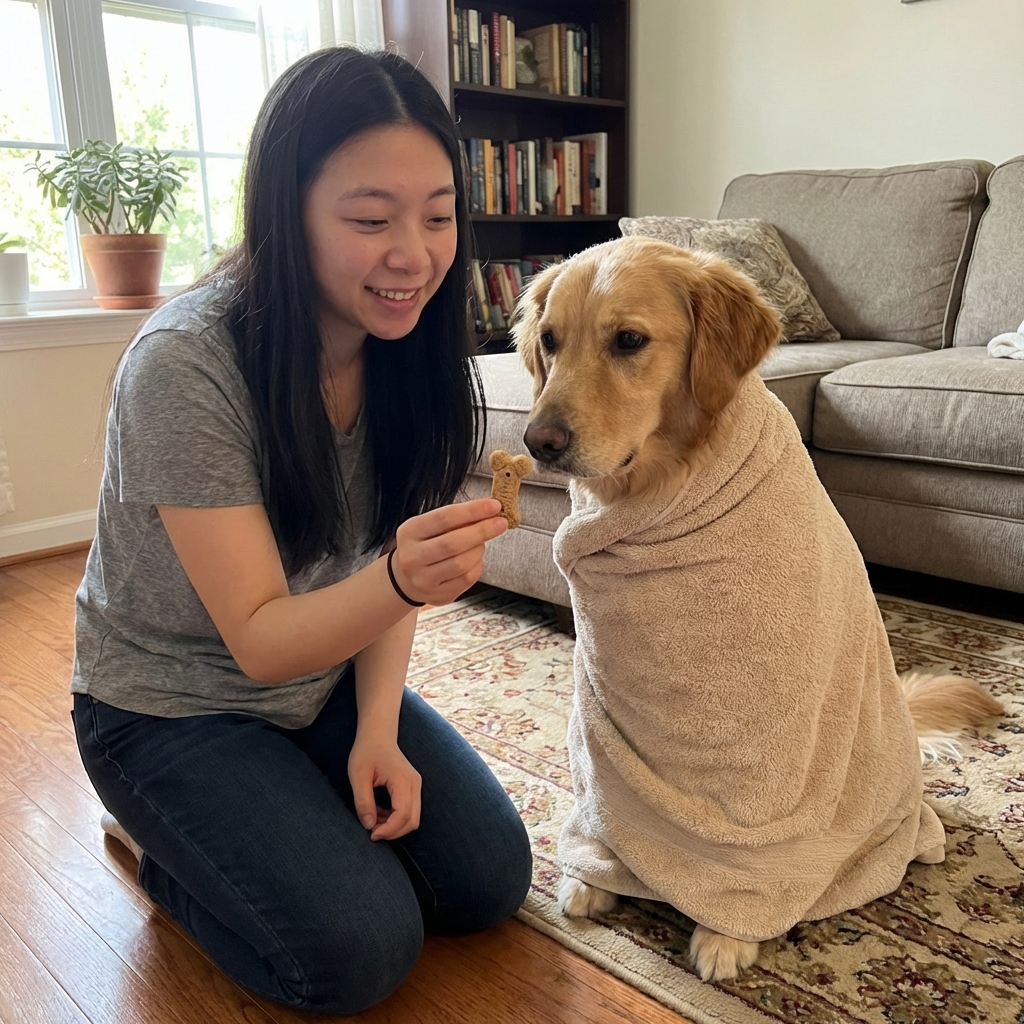
- Offer tiny treats between steps if your dog is able to eat. Lickable treats can be especially soothing.
- Keep your voice low and steady. You are teaching your dog that you have it handled.
After the bath
- Give your dog a warm, quiet place to rest. Stress hormones can stay elevated for hours.
- Watch for rubbing and frantic rolling. That is often a coping behavior plus an attempt to re-scent. Redirect with a chew, enrichment toy, or a short sniff walk.
- Support the skin. The peroxide mix and repeat baths can be drying. After the final rinse, consider a gentle oatmeal-based pet shampoo or a vet-approved conditioner if your dog tends to get itchy.
Preventing the next encounter
- Leash at dawn and dusk when skunks are most active.
- Use a strong flashlight in the yard before letting your dog out.
- Secure trash and outdoor pet food. Food attracts skunks.
- Block access under decks and sheds where skunks may den.
- Practice recall and “leave it.” Prevention is largely training plus management. Practice when there is no skunk around.
Cleaning your home and gear
Even if you keep your dog outside, skunk odor can cling to collars, leashes, bedding, and your own clothes.
- Wash collars and leashes in warm water with dish soap. Rinse well and air dry outside.
- Wash fabrics with your usual detergent plus 1/2 cup baking soda. Air drying in sunlight can help.
- Hard surfaces: wipe with a mild degreasing cleaner, then rinse.
- Skip the peroxide mix on household fabrics. It can discolor carpets, upholstery, and some clothing.
- Ventilation matters. Open windows, run fans, and replace HVAC filters if the smell got inside.
FAQ
Why does my dog still smell the next day?
Residual odor is common, especially when the spray was concentrated or your dog has a thick undercoat. As the coat dries and oils shift, you can notice odor again. It can also reappear when the coat gets wet. A second wash or a pet-safe deodorizing shampoo can help, but avoid overdoing it if the skin looks irritated.
Can I use the peroxide mix on a dark-coated dog?
It can slightly lighten fur in some dogs, especially with repeated use. If coat color is a concern, a commercial skunk shampoo made for pets is a great alternative.
What if my dog has sensitive skin?
Use minimal contact time, rinse thoroughly, and follow with a gentle, moisturizing pet shampoo. If your dog becomes itchy, develops redness, or seems painful to touch, call your veterinarian.