Learn how often to give your cat catnip, how much to use, and how to avoid overstimulation or tummy upset. Includes tips for kittens, seniors, and multi-cat ...
Article
•
Designer Mixes
How to Use Catnip for Cats

Shari Shidate
Designer Mixes contributor
Catnip can feel like a little magic trick: one minute your cat is lounging, the next they are rolling, purring, and batting at a toy like a kitten again. But there are a few best practices that make catnip safer, more effective, and a whole lot more useful for everyday enrichment. As a veterinary assistant, I love catnip because it is simple, low-cost fun when you use it thoughtfully.
Note: This is general education, not individualized medical advice. If your cat has health conditions or you are unsure what is safe, check with your veterinarian.
What catnip does
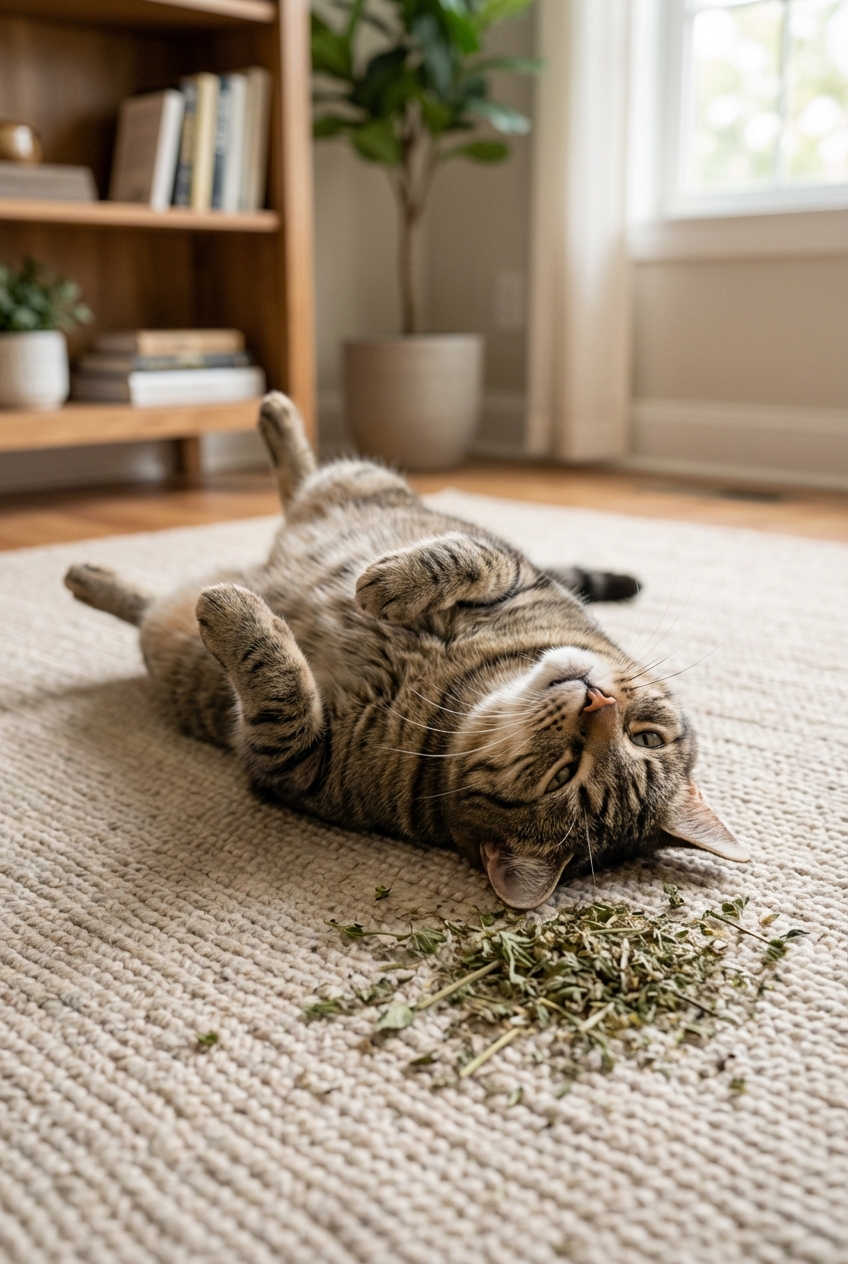
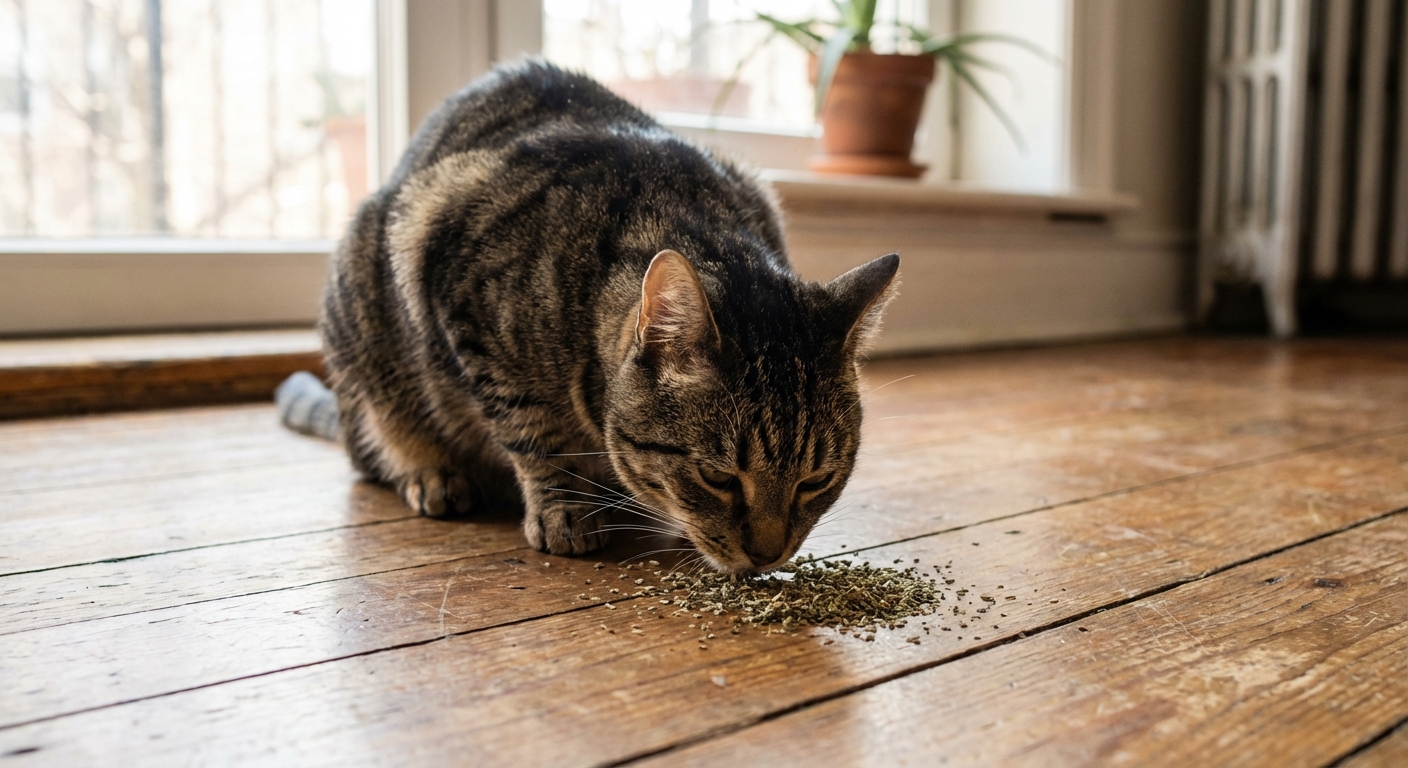
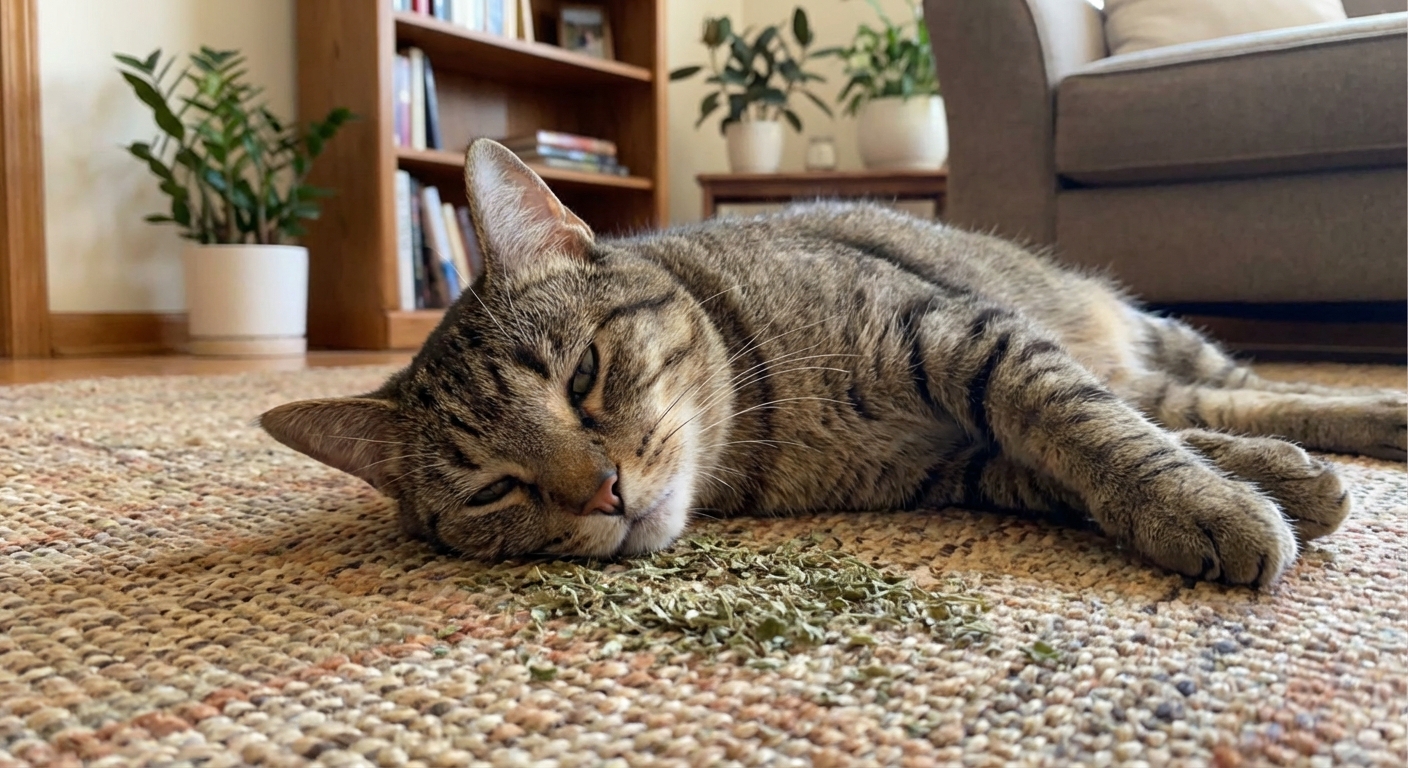
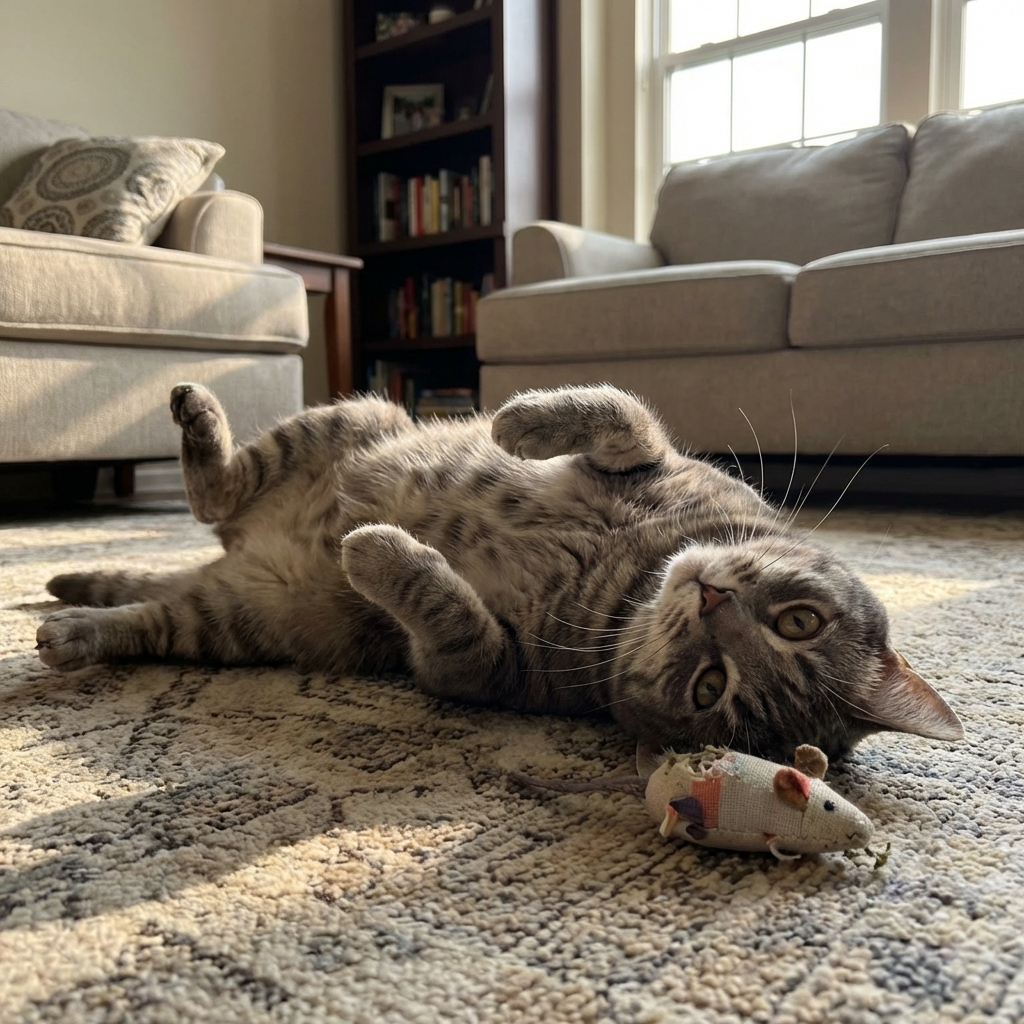
Catnip (Nepeta cataria) contains a natural compound called nepetalactone. When many cats smell it, it binds to receptors in the nose and triggers a temporary behavior response that often looks like playful excitement. When eaten, some cats may become calmer and more mellow, although effects vary and eating too much can also cause mild stomach upset.
Most cats who respond will react quickly, and the effects of smelling catnip typically last around 5 to 15 minutes before they lose interest.
Key wellness takeaway: catnip is not a “sedative” or “stimulant” in the medical sense. It is best viewed as enrichment, meaning it can support mental health by encouraging play, exploration, and stress relief in cats who enjoy it.
- Response rate: about half to two-thirds of cats respond strongly.
- Age: kittens under about 3 to 6 months often do not react yet, and some cats start responding later (sometimes closer to puberty).
- Genetics: some cats simply do not respond, and that is normal.
Wellness benefits
1) Stress relief and confidence
In the right cat, catnip can help reduce boredom and encourage a timid cat to engage with their environment. This can be useful during routine changes, after a move, or when introducing new enrichment.
2) More play, more movement
For indoor cats, encouraging play is a real health strategy. Regular activity supports weight management, joint health, and mood. Catnip can make toys more exciting and help extend play sessions for some cats.
3) Better scratching habits
If you sprinkle catnip on a scratching post or cardboard scratcher, many cats will choose it more often. This is a win for your cat’s natural behavior and for your furniture.
Best practices
1) Match the form to the goal
- Dried catnip: Great for sprinkling on scratchers, in a box, or on bedding.
- Catnip spray: Less messy, good for rotating toys, carriers, and cat trees. (Sprays can be weaker depending on brand and storage.)
- Catnip-filled toys: Best for play routines and solo enrichment.
- Fresh catnip plant: Very aromatic and often more appealing. Use a cat-safe potting soil and keep it out of reach if your cat eats plants aggressively.
2) Timing beats quantity
If cats get catnip too often, many become temporarily less responsive (more like short-term desensitization than a true “immune” effect). A commonly reported reset window is around 1 to 2 hours, but it varies by cat. Practically, the easiest plan is to use it a few times per week instead of every day.
3) Make it a routine
Cats thrive on predictability. Try a short “catnip play session” at a consistent time, like after work or before dinner. Use it as a cue for movement, then end with a small meal or treat to complete the natural hunt-catch-eat cycle.
4) Store it well (potency fades)
Catnip loses aroma when exposed to heat, air, and light. Once opened, potency often fades gradually over weeks to months, depending on storage and the product quality. For best results:
- Store in an airtight container.
- Keep it in a cool, dark spot.
- Consider storing extra catnip in the freezer to help preserve potency.
How to use it
For play and exercise
- Choose a wand toy or a small kick toy.
- Add a pinch of dried catnip or refresh the toy with spray.
- Play for 5 to 10 minutes, letting your cat stalk and pounce.
- Put the toy away afterward so it stays special.
For scratching training
- Place a scratcher near the area your cat already targets.
- Rub catnip into the scratcher or sprinkle a small amount on it.
- Praise and reward any scratching on the right surface.
- Gradually move the scratcher to your preferred spot.
For carrier and travel stress
This can help, but use it carefully. Some cats get more energetic, not calmer.
- Test catnip at home first to see your cat’s typical response.
- If your cat becomes relaxed, lightly spray the carrier bedding 10 to 15 minutes before loading.
- Avoid overdoing it. A small amount is plenty.
How much is safe?
For most healthy adult cats, catnip is considered low risk in small amounts. The most common issue is mild digestive upset if a cat eats too much.
- Start small: a pinch of dried catnip (think 1/8 to 1/4 teaspoon) is plenty to test interest.
- Watch behavior: if your cat gets overstimulated and play turns into biting or swatting, reduce the amount and shorten sessions.
- Watch the stomach: if your cat eats large amounts, they may vomit or get diarrhea. Clean up leftovers if your cat tends to take big mouthfuls.
Skip catnip and call your veterinarian if your cat has vomiting, diarrhea, lethargy, or unusual behavior after exposure, especially if symptoms last more than a day.
When to avoid it
- During cat-to-cat conflict: catnip can increase excitement and trigger squabbles over territory or toys. In multi-cat homes, offer it in separate rooms, use multiple identical toys, and supervise.
- If your cat gets rough when stimulated: some cats get too wound up. Switch to calmer enrichment like food puzzles, lick treats, or gentle play without catnip.
- Right before a vet visit if it makes your cat hyper: test your cat’s response at home first.
- If your cat has asthma or respiratory irritation: avoid airborne sprays and keep dried herbs minimal. If you notice coughing or wheezing, stop and contact your veterinarian.
- Pregnant or nursing cats (caution): safety data is limited, so check with your veterinarian before using catnip regularly.
If catnip does nothing
Some cats are non-responders. The good news is you have options.
- Silver vine (matatabi): often works for cats who ignore catnip.
- Valerian root: can be attractive to some cats, but the odor is strong to humans.
- Tatarian honeysuckle wood: another enrichment option found in some cat toys.
- Food enrichment: puzzle feeders, treat balls, and scatter feeding for a natural foraging outlet.
A simple weekly plan
If you want a no-stress routine, here is an easy schedule that supports enrichment without overdoing it:
- 2 days per week: catnip on a scratching post for 5 minutes.
- 2 days per week: catnip toy play session for 5 to 10 minutes.
- 1 day per week: refresh a “special” toy and rotate it back into the toy basket.
- Daily: non-catnip enrichment like window time, gentle play, or a food puzzle.
Wellness is not just food and vet visits. For cats, mental health and daily enrichment are part of preventive care.